‘Man up’ – Johnson’s Sexist Parlance Continues

This time it’s a phrasal verb that demonstrates Prime Minister Johnson’s fluency in sexist language. While Johnson didn’t invent the phrase to man up, he has borrowed it from the underbelly of popular culture. According to the Google dictionary, it means to ‘be brave or tough enough to deal with an unpleasant situation.’ Yet, the definition is more than that. To man up is one of those expressions that carries its etymology with it – that is, its full meaning is to be brave and tough like a man. Many phrases and words in English (and other languages) linguistically operate in this metaphorical way. We have to break the ice and cherry picking, to name a couple. Unlike these examples, to man up gets its meaning from gender stereotyping, from a world where men are brave and tough and women are the antithesis. It’s a fantasy world that has disregarded women’s work and women’s voices for centuries.

Whenever I see what I think is sexist language or behaviour, I check myself by running the reversal test – I first heard of this back in the early 90s from American feminist Gloria Steinem. It goes like this – replace ‘woman’ with ‘man’ or ‘man’ with ‘woman’ and see what you get. I’ve never heard of ‘woman up.’ Pulling yourself together and acting like a woman is not in our public discourse. Further, whereas the underlying sense of ‘to act like a man’ means to be brave, ‘to act like a woman’ is nearly always used as a slur, saying that someone is emotional or bitchy.

It could be argued that Johnson is merely reflecting in his language the sexism that festers in our society. Maybe Johnson is copying a phrase that has a modern ring about it. But this PM has already leapt farther than that. He recently called Jeremy Corbyn a ‘big girl’s blouse’ when the Labour leader argued against a snap election.  Similarly sophomoric, Johnson referred to former PM David Cameron as a ‘girly swot.’ I find these examples of degradation by feminisation even more disturbing than using man up. These boys’-school-sounding phrases are not found in dictionaries. Both expressions are unique to the Johnson idiolect, no mimicry of popular culture or trying to sound cool involved.

What does that say about the man-child living at 10 Downing Street?

Suzy
Suzy Kassem

While Johnson has not turned his sexism into misogynistic legislation in the way Tr**p has (e.g. removing funding for women’s health in developing countries), I don’t think we should take the PM’s language lightly. To quote poet Suzy Kassem, ‘Never underestimate the power of a single word, and never recklessly throw around words. One wrong word, or misinterpreted word, can change the meaning of an entire sentence – and even start a war. And one right word, or one kind word, can grant you the heavens and open doors.’

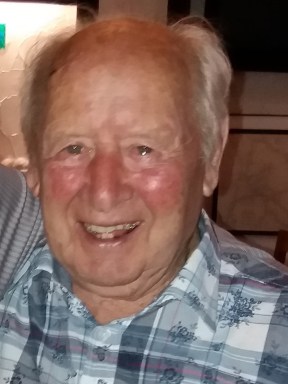
 

Two kind men

Former French President Jacques Chirac and my husband’s Uncle Dennis died within a week of each other. Both had lived long, full lives, one in the spotlight, the other not.

Eulogies about Chirac have evoked images of a slick-haired politician who had his share of enemies, whom he also treated as friends, and of a man who was convicted (but never served time) for fraud. He wasn’t the leader of heroic war years, nor did he leave a name synonymous with some grand social movement. Politically, his greatest accomplishments were keeping France out of the second Gulf War and keeping his right-winged party closer to the centre. Bizarrely, within these commentaries and testimonials, the word kind often came up. He was a kind man. Not just ‘underneath it all’ as they say, but outwardly as well. When he met with friends or the public, he was tactile and engaged. Sympa, as they say in France.

Kind was one of the first words that came to mind after hearing of Uncle Dennis’s death. Of course, talk about him we did and continue to do. When someone is no longer there it’s only natural to want to bring them back to life through reminiscences, or to get used to talking about them in the past tense – a training of the mind, fighting against the loss. I didn’t know Dennis during his working life, and the life of a man who ran a fish and chip shop doesn’t fill the headlines in the way presidents of countries do. Dennis, without any higher degrees, was one of my teachers. Nearly everything I know about gardening I learned from Uncle Dennis. What is more important is that he shared this knowledge not to act the role of the expert, but out of genuine kindness, always in a helpful mode.

In Buddhism, kindness is embedded in the four immeasurables and has its place in the meditation practice of the DennisMetta Prayer. These are my ways of tapping into the practice of kindness and trying – with mixed results – to live it. As far as I know, neither President Chirac nor Uncle Dennis practiced Buddhism. Yet, these two starkly different men exemplified one of its leading principles and leave us touched by it.


Climate protests – has the time really come?

When I was a child I wrote a poem about pollution and I rhymed it with solution. My younger self believed that the problems of dirty air and toxic waterways would be remedied by the time I reached adulthood. I had already witnessed a change in the ways our Chicago streets were cleaner once the word litterbug entered our lexicon. For a decade or so, I allowed myself to be seduced by the view that the ecology movement (as we called it then) was finding that solution. We had unleaded fuel, the Clean Air Act and the Clean Water Act. We had taken the CO2 out of our refrigerators and attics were being insulated. It was just a matter of time.

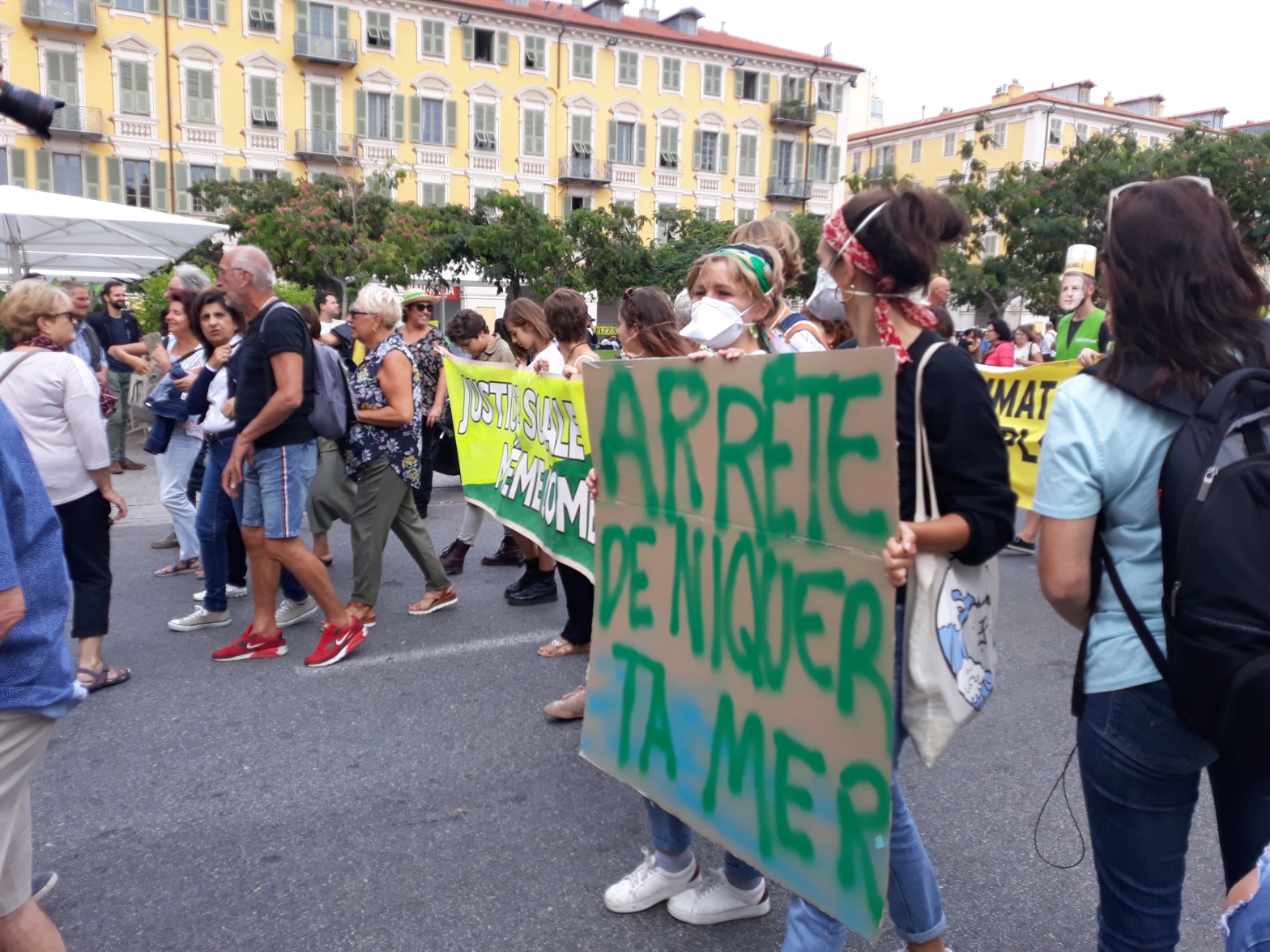
Some forty years later, I find myself supporting Extinction Rebellion and last week, David and I joined in the Climate March in Nice. I was walking down Felix Faure heading towards Place Massena at an aging tortoise’s pace when I realised that this march was strikingly different from other marches. Unlike anti-brexit marches, there weren’t any protesters at the side lines swearing at us or calling us stupid. After all, who’s going to disagree with wanting to save our planet and improve our health and quality of life? That view hadn’t changed since my childhood.

But something else had changed. There are now climate change deniers. I know, I have waxed on about this sub-human form before.  But to date, the only ones I know are far-right politicians and the companies that sponsor them, those who have the most to lose financially by switching to clean energy. These are not the kind of protesters who take their arguments to the streets. Their methods are more insidious.

I also noticed a few gilets jaunes in the crowd in Nice. These are the people in highClimate 2

-viz yellow vests that have been protesting every Saturday across France for nearly a year now. Most of their protests have been aimed at tax reforms and the lack of spending power for low to medium income individuals. Ironically, the origins of the gilets jaunes movement were over the carbon tax on petrol,  a way of reducing France’s carbon footprint. The gilets jaunes were against it. Is it that they now join any protest that comes along? Or has the last year of climate protests and public discourse about our environment changed their minds?

I don’t want to be seduced into positive or complacent thinking again.

I’ll end this blog as I started it with lines from a poem. This from American poet Rita Dove:

Hold your breath: a song of climate change

The water’s rising
but we’re not drowning yet.
When we’re drowning
we’ll do something.
When we’re on our roofs.
When we’re deciding between saving
the cute baby or the smart baby.
When there aren’t enough helicopters
or news crews to circle
over everyone. When sharks
are in the streets. When people
are dying…


Kang’s The Vegetarian and what it means to be different

It’s not just that Koreans are big meat eaters – which, yes, includes dog stew – it’s the extreme reaction to someone who doesn’t eat meat. I was often greeted with a blank stare, followed by a twist of the head and then a steely-eyed glare. Sometimes I would be asked ‘why not?’ ‘do you have an illness?’ By illness, I suspect they meant allergy. Eventually, I would fib and say ‘yeah, it’s like an allergy’ just for peace of mind. As a vegetarian who lived in Seoul between 1995 and 1998, I can relate to Han Kang’s award-winning novel, The Vegetarian, set in Seoul in the early 2000s.Korea vege 2 001 (2)

That’s not to say there aren’t any vegetarian dishes in Korea – the national dish, Kimchi, which can be eaten at breakfast, lunch or dinner is basically pickled cabbage and peppers. But too often at restaurants in Seoul, I would order a vegetarian side dish like kimchi but as a main dish, only to have it served with meat. I lost count of the number of times I’d ask for a vegetable soup, which would be placed in front of me with strips of beef surfacing to the top like pieces of driftwood. It turned out that the chef, seeing the white woman, assumed that I hadn’t realised that I hadn’t ordered any meat and had decided to do me a great favour. On occasion, a colleague would go into Korean on my behalf to explain to the baffled locals that I simply didn’t eat meat. At the time, there was no word in Korean for ‘vegetarian.’

In Kang’s novel, a young Korean married woman is terrified by a dream that causes her to become a vegetarian. Yeong-Hye’s conversion to vegetarianism isn’t depicted in anecdotes about the life of a vegetarian in Korea. This is a much more serious and complex story, where becoming a vegetarian, scandalous to her family, triggers a string of events that are dark, violent, sexual and surreal. The writing beautifully describes these consequences in patterns that develop into motifs and metaphors.

But the problem with Yeong-Hye isn’t so much her vegetarianism as it is her mental illness, even though the two are linked by the other characters. Once she is put into a mental institution, her husband leaves her. The reader is put into a position of wondering if the family’s reactions to Yeong-Hye’s eccentricities are what created her madness. This suspicion is heightened when her brother-in-law, a conceptual artist, also pays for his individuality and a brief extra-marital encounter with an arrest and an attempt to have him institutionalised. The vegetarian

Though it was a couple of decades ago, I do recall (and probably wrote about) a conversation I had with one of my Korean colleagues who spent many years in America. He explained to me that unlike Americans, Koreans do not celebrate the individual, the person who is too different. He said, ‘Same is good for us. Maybe…’ Korean’s use maybe a lot…’Maybe it is safe that way.’ Safe from what exactly was never explained, and after nearly three years there, I never figured it out.

For me these challenges to the individual were intimated in Kang’s novel, though another reader could legitimately see it as a struggle between traditional beliefs and a modern-reaching society.

Reminiscing about my time in Korea and coping with being a vegetarian there, I’m reminded of the ironic fact that one of the best restaurants in Seoul was the vegetarian one – the only one in those days. Run by a group of Buddhist monks, it was technically speaking vegan. The food was served on wooden platters with bamboo utensils to customers seated cross-legged on floor cushions. Writing about it now, I can smell the gentle aromas.  If you find yourself in Seoul, the restaurant is Sanchon in Insa-dong.

Some Advice for Environmental Activists

The psychoanalyst, writer and activist Susie Orbach, writing in This is Not a Drill, the Extinction Rebellion handbook, makes this cogent point: ‘The feminist movement taught us that speaking with one another allows truths to enter in and be held together.’ This is crucial when we are living in a time where evidenced reports are brazenly referred to as fake news, while lies and distortions are foisted on the public as undisputed facts.

Orbach notes the need ‘to create spaces in which we can share how difficult this hurt is and how to deal with our despair and rage.’ This might sound touchy-feely at first, but for those of us who live in Brexit-inflicted Britain, it rings too true. The Leave campaign created a public space for those hit by economic despair at a time when income inequality is writ large. The fact that these domestic problems had little to do with the European Union didn’t matter. The space for feelings of despair and rage had been created. The problem, of course, with this Brexit example, is that truths were not allowed to enter in.

Even though the environmental movement has science on its side, the selection and interpretation of the science can also be manipulated. Just listen to Pat Michaels, a climate scientist with legitimate credentials, who claims, often on Fox News, that human contribution to global warming is minor and that our planet is just going through a natural cycle.

I’m also bothered by the arguments that try to turn the climate crisis on its head. The growing interest in the Arctic by governments such as China, Russia and the US sees the melting ice as opening up sea passages and making undiscovered mineral and fuel resources accessible. I find this annoyingly paradoxical coming from the Trump administration that denies the existence of global warming.

Orbach’s advice to environmental activists is well-meaning, but doesn’t take into account all of these complexities. But she concludes her piece by encouraging us to ‘accept our own feelings of grief and fear and…to provoke conversations that touch the hearts of others.’ I think this is already taking place and can help to explain why the environmental crisis that has been talked about in some circles for decades is now part of our public discourse.

I’ll add to this my own advice to keep these conversations going and to translate them into actions. ExtinctionRebellion1

Throwaway Thoughts on Politics and Religion

They say you should never talk politics or religion in polite company. As blogs are the antithesis of polite company, I can share a passage that struck me from Alan Johnson’s memoir In My Life:

‘Mine is a privileged generation. Not only have we prospered from the postwar rise in living standards, the creation of the NHS, significant advances in science and technology, the virtual eradication of diseases such as polio and diphtheria and the absence of world wars, we have also witnessed a transformation in public attitudes away from the casual barbarity of previous decades towards ethnic minorities, the disabled, the mentally ill, homosexuals and single mothers. Ironically, as the country has become less Christian in its adherence to religion, it has become more Christian in its way of life.’

This sound observation is one that we can see in other countries in recent decades, where the inverse has happened and more religious governments have stripped away peoples’ freedoms and equalities. I’m thinking about countries like Iran, which I remember being more liberal and women having more rights before the revolution and the religious state that followed.

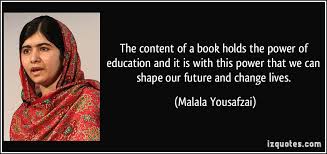
Yet, the correlation between the dwindling numbers engaged in formal religions and the increase in liberalism isn’t as straightforward as this or as Alan Johnson would like us to believe. The advances in science and technology, which Johnson mentions,  and the accessibility of education, which he doesn’t,  are more likely contributors to marginalising religion while at the same time replacing intolerance and discrimination with acceptance and equality. When Nelson Mandela said, ‘Education is the most powerful weapon you can use to change the world,’ he was talking about making the world fairer and less impoverished.

Where Johnson writes of a ‘more Christian in its way of life,’ he is referring more generally to society and the laws that protect ethnic minorities, the disabled etc. I accept this generalisation, but at the same time I despair at all of the present-day laws that work to the detriment of women. (Dear Reader, please read Caroline Criado Perez’s Invisible Women: Exposing Data Bias in a World Designed for Men, if you haven’t already.)

To be fair to Alan Johnson, what I have quoted was probably not intended to be dissected like this. A passage of deep thought in an otherwise light romp through the former politician’s childhood, these lines give the book more weight and texture. Perhaps too, I don’t want to be too hard on any writer who names each volume of his memoir after a Beatles song.

Malala
Malala’s version of the Mandela quote.

Coming to Terms with Invisible Women

I’m currently reading Caroline Criado Perez’s wonderful book Invisible Women: Exposing Data Bias in a World Designed for Men. She addresses many issues convincingly, such as the way drivers’ seats in cars are made and safety tested with men in mind and the amount of medical research that uses male as the default, leaving women’s health and medicine in the Middle Ages.  Statistics and studies are blended with entertaining – though often infuriating – anecdotes.

But I do have a bone to pick. After discussing the male-voice bias in voice recognition databases, raising some good points, Perez tackles corpora of written texts, which she notes are used by translators, CV-scanning software and web search algorithms. She failed to mention that these corpora were compiled by linguists, who are the main users of these databases for language research.  Because she has missed this point, her own research using corpora comes up short. This is what she did:

‘Searching the BNC [British National Corpus] (100 million words from a wide range of late twentieth century texts) I found that female pronouns consistently appear at around half the rate of male pronouns. The  520-million-word Corpus of Contemporary American English (COCA) also has a 2:1 male to female pronoun ratio despite including texts as recent as 2015.’

From this, Perez criticises the ‘gap-ridden corpora’ for giving ‘the impression the world is actually dominated by men.’

As someone who has used both corpora, I have a problem here. Representativeness is always taken into account when drawing data from these large corpora.  It is as much as part of the discussion as the results of the research itself. If I were looking at gendered pronoun use, I would first isolate my search to newspapers only, where I would expect the ratio of male to female pronouns to be even higher than what Perez found looking at all text types. Newspapers are not only written mostly by men, but report and comment on the world around us – its predominantly male politicians and public figures. And then there are the sports pages, where women’s sports struggle to get even a tenth of the column inches given to men’s sports. That is, newspapers, one of the main sources in the BNC, skew the figures. It might be more accurate to say that the world of news print is ‘actually dominated by men.’

Furthermore, corpus research is not just about frequency – it’s also about the context these search terms appear in. For example, a search on the word ‘hysterical’ will show that it is often in the context of ‘she’ or some women mentioned by name. This for me is more telling than the frequency of ‘she’ in printed texts. There is so much more to learn about gendered pronouns in a more rigorous search. The conclusions could reflect the biases in our societies more than the biases in the collection of data.

hysterical
Taken from a quick search on Webcorp of internet texts.


Okay, I’ve had my linguist’s rant and I don’t wish to labour the point. Many of the studies in this book – and it is an avalanche of studies – are thoroughly considered against other studies, often revealing gaps in data, where sex difference hasn’t been taken into account, or where it has, women have been deliberately and shamefully excluded.

Atlas Shrugged and I Sighed

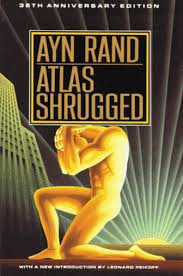
An advantage of writing a blog over a book review is that I don’t have to finish the book to write about it. Such is the case with Ayn Rand’s classic Atlas Shrugged. This philosophical/sci-fi/thriller/romantic fiction, written in 1957, is over 1000 pages. I got as far as approximately 300 pages (I was reading a Kindle edition) when I decided to press the home button and find another book.

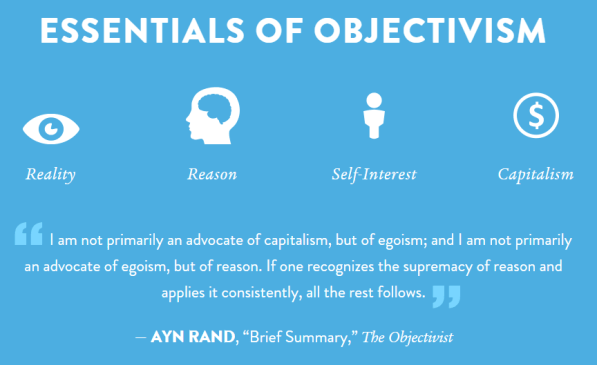
With all the talk these days about Libertarianism, the name of Ayn Rand often comes up. The Russian-American philosopher developed the theory of Objectivism, which has influence the brand of right Libertarianism having some currency in the US. Rather than go on a philosophical tangent, I offer this image from the Objectivists’ website:

objectivism summarised

The other popular book by her is The Fountainhead, said to be a favourite of MP Sajid Javid (now Chancellor of the Exchequer), former US Representative Paul Ryan and – I know it’s hard to imagine him reading – Donald Tr**p.  All well-embedded in right-wing capitalism. I thought it best to stay away from that one given the current political climate – just another thing to get me angry.

In brief, Atlas Shugged is about the expansion of American industry, involving railways, metal mining, and steel production, to name a few. This is going on within plots straight out of romance fiction and thrillers, with a bit of a mysterious element to it. The science fiction label for this novel comes from the sense that this is in the not too distant future (for a 1950s readership). The enemy in this story is the government and its regulations on businesses.

I didn’t find the book particularly engaging at first. The prose is rather dry and the dialogue artificial at times, in the vein of 1930s film noir. But there was something a bit quirky about it that kept me going. The phrase ‘Who is John Galt?’ would pop up anytime a character was exhausted from talking about the state of the world. It clearly placed the novel in another time when idiomatic language has changed. I’ve discovered from reading proper book reviews by people who finished the book, I’d like to think, that John Galt becomes a main character two-thirds into the novel. Speaking of characters, I also liked that the main female character is a brilliant engineer and business woman named Dagny.

But even she wasn’t enough. My enthusiasm waned further when it became too obvious that this is one of these works of fiction which tries to espouse a certain philosophy. It explores reasoning and capitalism at the expense of good fiction writing. Too often characters engaged in speech-making and philosophising in otherwise casual conversational settings. It’s the old ‘show and don’t tell’ adage of writing. By contrast, some of the best philosophical works I have read have also been great works of fiction – Camus’ The Stranger, Le Guin’s The Left Hand of Darkness, Diderot’s Jacques the Fatalist and Clarke’s Childhood’s End come to mind.

Perhaps this is just a third of a book review, but as a full blog its intention – or warning – is to inform writers on one way to lose their reader.

World Population Day

You missed it. It was 11 July and is every year on the same day. This year, I thought I’d write about it here in my blog, but then thought twice as the day approached – I didn’t want to write on a topic that the newspapers were covering ad nauseam. Or not, as it turned out. On the morning of 11 July, I started with my Guardian app, and found nothing, not even an editorial about our growing world population. Nothing about how the mere presence of humans is endangering our environment from a paper that runs climate change and ‘our toxic lifestyles’ stories on a near-daily basis. The only article of note was about a Sicilian town which is heading to extinction due to depopulation. The irony of publishing this piece on this particular day seems to have escaped the editors.

BBC Online – same thing. So, I did a quick search. While I didn’t find anything about World Population Day, I did find a news story from earlier this year about the shrinking population in Japan. I started to wonder if I was living in an inverse parallel universe.

I also checked a couple of the French papers, where I learned about the growing wolf population. And a couple of Italian papers – niente – before I ran out of languages.

I guess it’s up to me then. It’s quite obvious that this day isn’t a holiday as such. It’s not something to be celebrated joyously, and there’s no day off work for it. It’s one of those ‘awareness days’ marked on the calendar mostly by charitable organisations, NGOs and governmental bodies to bring population issues into the public discourse.

What are these issues? First of all, the date of the 11th of July isn’t just a random date chosen because there was a gap in the awareness day calendar somewhere between Clean Air Day and World Hepatitis Day. The 11th of July marked the day the world population reached 5 billion – in 1987. Today, world population is estimated to be 7.7 billion. In other words, it may have taken thousands of years to reach the first 5 billion, but at the current rate, we will reach the next 5 billion by 2050 – that’s less than 100 years between the 5 billion markers. You can watch the world grow in numbers at World Population Clock.

In some parts of the world overpopulation is creating poverty and contributing to global warming, pollution, overcrowding and the spread of diseases. Even if we live in a country that is experiencing a decline in its population, such as Italy and Japan, with world population growth, food sources are being drained from our planet while expanding urbanisation and industrialisation are heating it up.

Maybe this day of apocalyptic warnings hasn’t received the attention it deserves because the ways of tackling the problem seem beyond people’s control. It’s not as easy as recycling our bottles and newspapers or choosing public transport over driving our cars (though this isn’t so easy if you live in East Anglia, UK). The solutions involve healthcare and education systems across the globe, and we all know how difficult it is to get these systems working just within our own countries and communities. From an international perspective, it’s also a messy topic to broach. It clashes up against religions, cultural heritage and the rights of women over their own bodies.

My contribution to this cause – supporting NGOs, such as Planned Parenthood and Human Population Growth, along with not having children myself. Not to sound holier-than-thou, but the oversized world population was one of my reasons for choosing to not have children. (Of course, there were other reasons, e.g. dysfunctional families, student-loan debt and gay boyfriends.) And my minor contribution is today’s blog, albeit late.

The Exonerated Five

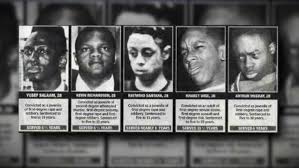
Like millions across the world, I’ve recently seen the Netflix programme When They See Us, a dramatization of the ‘Central Park Five’ story.

The four-part series has not been easy to watch. Even though I knew the five – teenaged boys at the time – were eventually exonerated, it was still painful viewing. This is more than just a story of African-American and Latino teenagers being interrogated by white police to the point of signing false confessions. The story follows the five convicted men and their families during the periods of incarceration (6-12 years) and their lives after prison before their verdicts were changed.

While the programme is being applauded for its accuracy, its verisimilitude, it’s important not to forget that this is drama. I don’t say that as a criticism – in fact, just the opposite.  As a work of dramatic art, it sometimes plays with the timeline, jumping back and forth to isolate each man’s story as a mixture of conviction and so-called ‘freedom’ once they were released with criminal records. And like any good dramatic script, the worst case was saved for last – one of the men, Cory Wise, was 16 at the time and was sent to Richter’s Prison for adult men, where the treatment by his fellow inmates was so excruciating he opted for years of solitary confinement. These renderings that truncate the years and reorder and select their most emotive moments for maximum effect are clearly features of art. In my eyes, the director/co-writer, Ava DuVerney is an artist of the highest calibre in creating these effects.

I also know that this is art because I enjoyed it so much and bring it to the attention of anyone I know who watches Netflix. True, it’s painful and sad and evokes a sense of fear. It’s what Aristotle called the paradox of negative emotions. We enjoy pity and fear in tragic drama even though we would not in real life. The fact that this drama was based on real life didn’t take away from that. If anything, the work blurred the lines of emotional responses as it blurred the lines of dramatization and reality.

And yet another emotion emerged from watching When They See Us – a palpable sense of shame. I remember when the story first broke. It was April of 1989 and I was still living in Edinburgh. The news story came to me as one of a woman jogger in Central Park in the wrong place at the wrong time – out on an evening when gangs of youth were ‘wilding’ – just acting wild, scaring passers-by, vandalising property and raping and beating a woman and leaving her for dead. That’s how it was reported at the time, consistently across Channel 4, BBC and any newspaper I happen to be reading. I later learned that this is how it was reported in the US as well. The story seemed so straight forward – a horrible, sickening crime. When the five teenagers were arrested, I remember thinking that it was a good thing someone was caught. But I also felt uneasy that they were all black and one Latino – ‘black and brown boys’ a phrase I have heard since – and that the victim was white. Such happenings feed into the racist’s view of the world, leaving us liberals appearing naïve and soft on crime.  I allowed myself to fall for the media interpretation – the story wasn’t about race, but about women being victims of rape, and this was one rare time when the guilty were caught. And if that wasn’t bad enough, shameful moment number 2 – the idea of confessing to crime a person didn’t commit wasn’t even in my world of possibilities.

Sometimes it takes a case like this to shake people out of their comfortable thoughts. This true-life story was obviously about race – the discrimination against African-Americans – and the DNA evidence confirmed that people – especially teen boys under interrogation – can confess to crimes they did not commit.

Exonerated five 2

Postscript – I’ve entitled this ‘the exonerated five’ to help the language and labelling to catch up with the truths.