The DRC: Another Chapter of The Poisonwood Bible

It’s hard to follow the elections in the Democratic Republic of the Congo without a sense of disbelief coupled with exasperation. As I write, voting has ended, although millions have not been allowed to vote supposedly due to security issues and another outbreak of Ebola. While the votes are being counted, amidst rumours of fraud and both main parties claiming victory, Congolese officials have shut down the internet and SMS services. I feel as though I’m still in the storyline of The Poisonwood Bible.

Barbara Kingsolver’s novel is a heart wrenching and often humorous saga about an American family whose patriarch transports his family to the Belgium Congo to convert people to Christianity. Unfortunately for them it’s 1960, when the Belgians give the Congolese their independence after more than 100 years of oppressive, exploitative colonial rule, started by the notorious King Leopold II. The Price family, already having difficulties – many self-inflicted – with living in the Congo, become entangled in the hostilities against whites, while Belgium and American companies continued to have a stronghold on the rubber plantations and diamond mines. Tensions grow within the Price family following the death of one of the daughters and for the country after President Eisenhower had the CIA assassinate the first democratically-elected prime minister. The Congo becomes Zaire and the Prices split in several directions, some returning to America, others remaining in Zaire and elsewhere in Africa. All of them scarred for life from their time in the Congo.

The engaging narrative weaves together five monologues told by the four daughters and the mother. Each passage of monologue is marked by turns of phrase and the limited wisdom and naivete of each narrator. This made me think of my childhood growing up in America when I thought that Africa was a country prefaced by the phrase ‘starving people.’  Some forty plus years later, Africa is a continent and the Democratic Republic of the Congo is a country still suffering under the weight of poverty while its mineral resources are now being drained by multi-national companies for use in high-tech industries. In the intervening years and since the publication of The Poisonwood Bible in 1998, the country has been through civil wars, outbreaks of Ebola and famine and large-scale corruption, essentially giving corporate sponsorship to territorial warlords. This week’s elections marred by violence and injustice are a testament to this oppressive way of life, but also to the resilience of its people.

This week as I watched television and read the newspapers, amidst the reports from the DRC, I saw the New Year’s fireworks and festivities at the usual places – London, Paris, New York, Sydney, Rio de Janeiro, Dubai, Hong Kong. But not one African capital. Our media coverage of world events makes Price family members of all of us.

poisonwood bible 2

My ’68 (or forgetting 2018)

Instead of saying good-bye to 2018, I thought I’d do what people have been doing throughout the year and have a look back at 1968. But on my own terms. Since I was born on the cusp of the baby-boomer generation, I hadn’t developed the hormones to appreciate the summer of love. Nor can I share the memory of hearing the Beatles White Album when it first came out, talk about John and Yoko nude having been filtered from my ears. Uprisings in Prague and Paris had to wait for me to discover arthouse films decades later. Martin Luther King’s final speech is a second-hand recollection created from grainy footage, a cracking soundtrack. Yet, for all these missed experiences, 1968 was a pivotal year in my life.

A typical Chicago deep freeze ushered in the New Year and kept us indoors with the television, fighting over what to watch with such ironically limited choice in those days. I’d escape the arguments by visiting my grandmother’s apartment, the unit above ours. Grandmother preferred radio to television and was always baking something sweet. Her apartment had white walls and ceilings, a white carpet running throughout – no shoes allowed – and cream soft furnishing. For all the lightness this color scheme brought in, a sense of sadness brought on by my grandfather’s death some months earlier filled the rooms with darkness.

Joy returned to our lives in the early spring. Most of the black snow, soiled by the city’s pollution, had melted and the maples were starting to bud. My grandmother had baked a devil’s food cake, a dark chocolate sponge with thin white icing. We were celebrating that night, marking the date on our mental calendars for future years. My parents’ divorce had been finalized and my mother and grandmother saw it as a day to be commemorated. Not a private clicking of glasses with a sense of relief that a legal ordeal was over. This was louder, cheerier and more public with all seven children involved in overeating and joking. My mother’s laughter like a song floated over the long dining table. I can’t remember what was said that evening, aside from hearing the word divorce being bandied around. I don’t recall my older siblings appearing upset or unhappy with this twisted display of victory. With hindsight, I’m certain the older children, a few in their teens, were angry and saddened but dared not show it.

I was too young to realize how sick and inappropriate this divorce party was. While these off-color festivities became less exuberant over the years, fading away by the time I was in high school, the residue stayed with me for decades. My social self had been born. Marriage was a form of imprisonment and divorce was women’s emancipation.

Within a month of this inaugural divorce party, Martin Luther King had been assassinated. My world suddenly stretched beyond our apartment, my grandmother’s apartment and our Chicago neighborhood. Downtown and the south side of the city became battle grounds for three days of riots, watched by my family on our black-and-white Zenith television. On one of these afternoons during the riots, I sat combing Barbie’s hair and staring out our first-floor window when I saw a large khaki vehicle roll down our residential street. I remember seeing a couple of soldiers with their helmets on – the characters from the news were now outside our building and in my life. Only it looked like the news about Vietnam and not the riots. I must have briefly entertained the idea that Vietnam was being fought on American soil, in the middle of the country. I would later learn that the National Guard had been called in, some 11,000 soldiers, alongside 10,000 Chicago policemen.

So strong was this true-life moment that I wrote about it in my early teens, when I had learned the word juxtaposition.  I described the army tank – or was it a truck? Childhood memories are not always the most reliable. The khaki vehicle, its soldiers, its rumbling wheels and roaring engine against the narrow street of parked cars created a juxtaposition. And like any juxtaposition, it created a meaning greater than the sum of its parts. For the six-year-old child with the Barbie doll, it was the first experience of sensing fear brought on by government authorities, government agents in the form of soldiers.

The drama of the riots tumbled into the last days of school before the summer break. The late afternoon sun streaked into our living room and I had parked myself in front of the television to watch The Flintstones. My mother, in her paisley housedress, appearing large and formidable, had entered just as the ads came on.  A brief announcement about the news coming up at six droned as it did to my ears in those days. Anything that wasn’t comedy or cartoon sounded like a monotone din.  The news was about Robert F. Kennedy. His death in hospital had been confirmed. He had been shot just after midnight at the Ambassador Hotel in Los Angeles soon after winning the California primary elections.

Within seconds my mother’s eyes and cheeks glowed with wetness. It was the first time I saw her cry. I didn’t think she was capable of such a weak, babyish thing. I hadn’t seen her cry over the death of her stepfather (the only grandfather I ever knew), or over anything to do with her marriage ending. I struggled to understand it. I wondered if she had a crush on this Kennedy person, this man with foppish hair, large ears and a row of teeth too big for his mouth.

My mother wasn’t the only one crying that afternoon for a man she had never met. I saw that too on the black-and-grey news. Men as well as women wiping the tears from their faces, talked about RFK and JFK and Martin Luther King all in the same breath.  I was starting to put pieces together. This grieving over the loss of a famous person was part of something bigger and people were afraid of an uncertain future when the present and immediate past was so unpredictable and fierce.

In the last days of summer, just a week before school was to start, riots erupted again in Chicago – this time at the Democratic Party National Convention.  I watched television with my mother and grandmother, seeing cars alight and hippies and police batting at each other. My siblings joined us, squeezing into the sofa, finding space on the floor – all except for my eldest brother. He returned home in the small hours of the next morning, smelling of smoke as he passed my bedroom door, his pony-tail disheveled, a rip in his jeans. I assumed he was in the riots but was too afraid to ask.

Later that morning, my mother berated my brother for taking risks and being out past the curfew. In my childhood, we always had a curfew and could be stopped by police if we were out past ten – midnight for older kids. But these riots brought about a special curfew and no one was allowed on the streets after sunset. A city in lockdown.

The autumn was all about school and being in the first grade, the first time I spent all day at school. I liked being around other children who were not my siblings and adults who were not my parents or grandmother. But I didn’t like the air-raid drills, the fear of the Soviets attacking America from the sky. We masked our terror with laughter – and people we didn’t like were called commies.

One night in November of that year, the news interrupted our family viewing of The Beverly Hillbillies with images of a stand-off on the tarmac of JFK Airport. A Pan Am jet had been hijacked by guerrillas and was going to Cuba. My brother with the pony tail scratched his armpits and made gorilla noises until a sister explained to me that animals had not broken out of a zoo. Vietnam wasn’t the only place under siege.

The year ended on a high note as everyone was talking about the Apollo 8 mission, with men actually inside a space capsule orbiting the moon. We were all drinking Tang like the astronauts. It wouldn’t be long now before they would be walking on the surface that we knew was not made out of cheese.

It was Francis Xavier who said, “Give me a child until he is seven and I will give you the man.” As 1968 came into my sixth year, it played a part in the making of this woman. But gratefully, perspectives change with hindsight and memories can be altered with time.

Yellow Vests and Black Days

As I write this, hundreds of protesters are being arrested in Paris. In my years of living in France part-time, I’ve witnessed dozens of protests – participated in a couple myself – and have been inconvenienced by countless strikes. But I’ve never seen anything as violent and inexplicable as the current wave led by the gilets jaunes, so named for the yellow safety vests, required by drivers, that they wear as they pace down the streets, stopping traffic and causing chaos.

What started as a demonstration against a rise in vehicle-fuel taxes has snow-balled into a general protest against President Macron. While some protesters on the news complain about a litany of changes to taxes and pensions that help the rich more than the poor, others speak in vague mantras about Macron’s arrogance and that he should resign.

While my natural inclination is to support the underdog, I have mixed feelings. I can understand people protesting against a rise on taxes, but the fuel tax is to help fight climate change – there are other taxes and issues to fight. Incidentally, the climate change protesters were also out in force this week in France. I’m also uneasy with the claims that these protesters are supporting those who are ‘starving’ and ‘becoming poorer.’ I don’t doubt that a growing number are struggling to make ends meet or are experiencing real poverty. Yet, these demonstrations have coincided with the Black Days of shopping, where what started in America as Black Friday has morphed into Black Days, a long weekend of discounted shopping for clothes and electronics. The shops and boutiques of France have been packed. The irony – or perhaps it’s juxtaposition – makes me question people’s sincerity.

Perhaps I’m not as sympathetic as I ought to be because I’ve been appalled by the breaking of windows, looting of shops and setting cars ablaze. Such actions merely hurt people and the cause. What’s happened to peaceful protest (which could include non-violent civil disobedience) and voting in another government when the time comes?

Black days also come in the form of something larger, more sinister. In France, the extreme right and extreme left have hitched on to these protests, twisting them into justifications for their own forms of government. And the political opportunism doesn’t stop there. The sad excuse of a US president first claimed these protests supported climate-change deniers – like himself. Later he claimed that the protesters were screaming out ‘We want Trump.’ Of course, that’s already been disproved by several reputable sources. I mention it only because it allows me to end on a laugh.

Postscript – if I weren’t laughing, I’d be crying.

Walls

Last week, I visited Berlin with the intention of, among other things, dipping into the world of Cabaret and the writings of Christopher Isherwood. This might sound odd given that Isherwood’s Berlin was during the 1930s. But I haven’t been in this city since the early 80s, when I could only go to West Berlin, and I rationalised that the present day with a reunited Berlin might appear more like the days of Weimar Germany than my last visit.

We stayed in a hotel in the former East Berlin, with its 60s and 70s austere blocks of buildings and its wide roads, intended for tanks to topple any revolution. Aside from the timeless train stations and pillar boxes covered with posters, little else felt like Goodbye to Berlin, Christopher and his Friends or those iconic scenes from Cabaret. My imagination could have filled in the gaps if I hadn’t run up against a wall – the Berlin Wall, of course.

The remnants of the wall serve as reminders of the latter half of the 20th century and fears that the cold war would escalate into a combative war, or worse still, a nuclear war. My mind shifted far from the world of seedy night clubs and Sally Bowles. I was once again tainted by living in the age of Trump. With the reign of the 45th president, literal and metaphorical walls have become pervasive. While I write this, armed guards along the US-Mexican border have started using teargas against economic migrants and asylum-seeking refugees.  These acts seem that much more ludicrous in the knowledge that illegal crossings at this border are at their lowest since they peaked in the early 2000s (Source: USGov Border Statistics).

I’m reminded of a poem I first read as a child. Robert Frost’s ‘Mending Wall,’ pointed to the absurdity of such walls with obvious political metaphors:

There where it is we do not need the wall:

He is all pine and I am apple orchard.

My apple trees will never get across

And eat the cones under his pines, I tell him.

He only says, “Good fences make good neighbours.

The physical wall that Trump is trying to build has been drummed up with the president’s usual bluster and hate-filled rhetoric. More concerning to me are those other walls being built behind the scenes and not necessarily from Trump himself, but from the far-right that supports him and have been empowered by him. Again, I return to Frost:

I see him there

Bringing a stone grasped firmly by the top

In each hand, like an old-stone savage armed.

He moves in darkness as it seems to me,

Not of woods only and the shade of trees.

For Germany, and more importantly for western Europe, the tale has a happy ending. Not only did the wall come down – as ideological walls inevitably do – but it also helped to nurture the peace movement that continues in many forms across Europe today. One stretch of the old wall captures this spirit with paintings and graffiti.

As I return to life in France and England, I wonder what Christopher Isherwood, who became an American citizen and died three years before the wall came down, would have thought of all of this.

To Autumn

No political metaphors here. I just wanted to say something about my favourite season. There have been many great poems in English about autumn, its imagery well exploited. Even though its symbolism has found its way into idiom – the autumn of our lives – I’m still moved by it.

Perhaps there is some nostalgia at work here. I first read Henry Wadsworth Longfellow’s famous poem in primary school and remember the experience largely because it was autumn at the time. It is favourite season by far. It brought words to the images I saw outside the classroom window:

Thou comest, Autumn, heralded by the rain,

With banners, by great gales incessant fanned.

At the same time it fed my escapist’s fantasies, adding scenes and aromas of a rural idyll far removed from anything I had seen in Chicago:

Thy steps are by the farmer’s prayers attended;
Like flames upon an altar shine the sheaves;
And, following thee, in thy ovation splendid,
Thine almoner, the wind, scatters the golden leaves!

At secondary school, I discovered Keats’ often quoted ‘Ode To Autumn’ (‘Season of mists and mellow fruitfulness…’) and a glut of other writers taking up the subject – Edna St Vincent Malay, Carl Sandburg, William Blake, Katherine Mansfield, to name a few.

Contemporary poets have also borrowed from this season, either as a subject in itself or as a leitmotif. But these works appear far and few between. Is it that urban landscapes have replaced rural ones for the majority of the world’s population? Or do we comment about it more visually with computers? Instead of poetry, my Facebook friends and I have often posted photos of our gardens or nearby countryside and city parks in the autumn months.

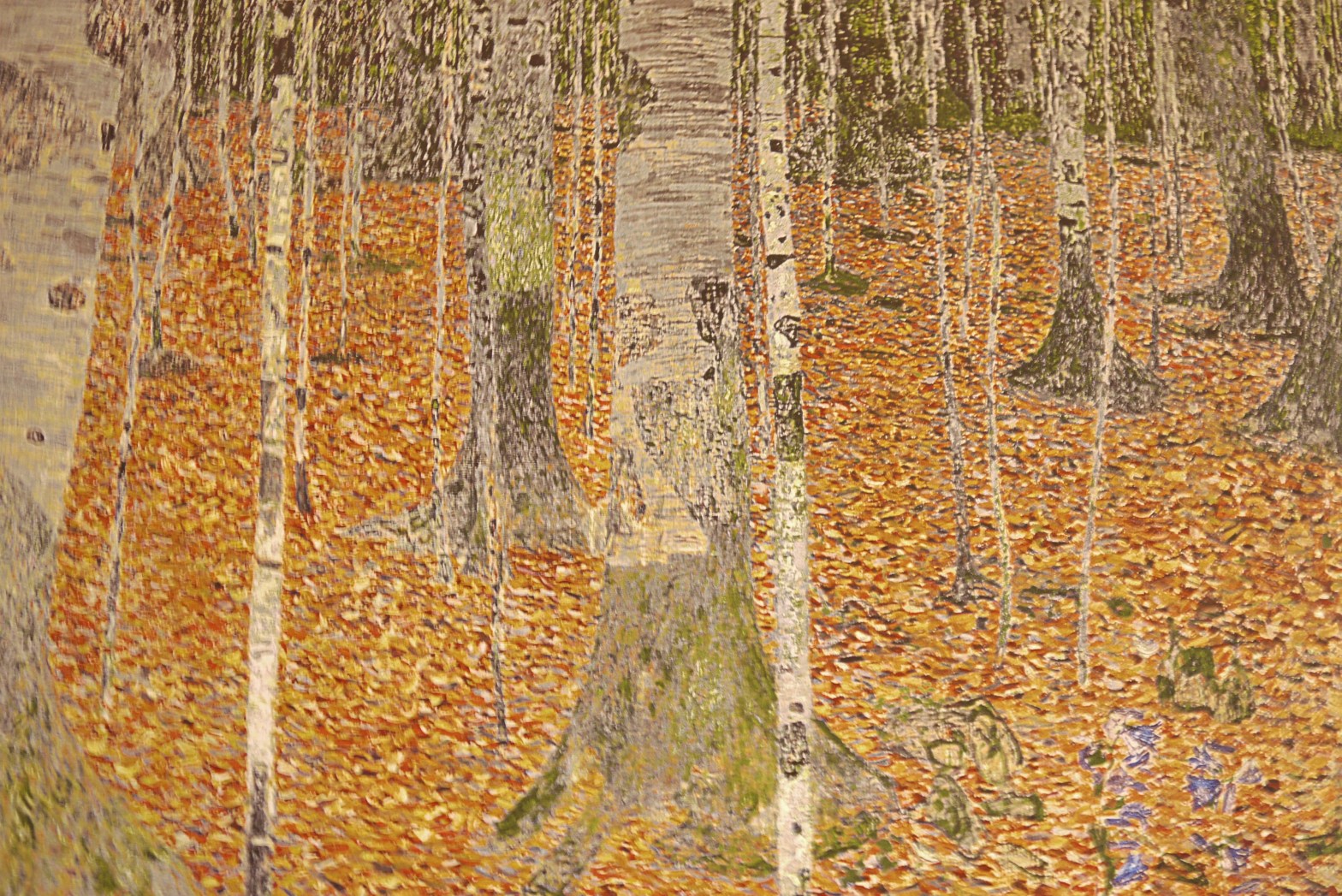
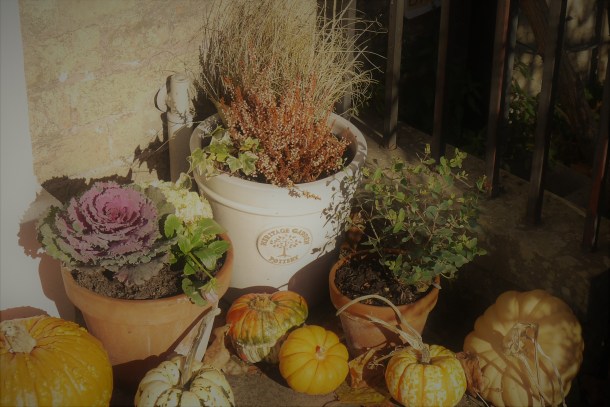
As a short-story writer, I pay my respects to the season by having the occasional character slip on wet leaves or take in the bright red-brown spectrum of colours or inhale the scents of dried lawns and wood-burning fireplaces. As I can’t paint or draw, here I reproduce Klimt’s The Beech Forest, alongside my photos of Ely at this time year. But whatever I do, I fear it pales next to the real thing. As with my childhood, autumn still provides escape, only now I take these meditative moments to allow my brain a rest from the toxic illiberal world we live in – political, but not a metaphor.

Autumn 2018-1.JPGAutumn 2018-5

The Last Anti-Brexit March

I only uploaded one photo on Twitter and Facebook this time. It’s one of me looking half-awake on an early morning train to London, wearing my People’s Vote t-shirt, holding a sign that says, ‘Ely for Europe.’ There was no point in uploading my other photos from the march in London on Saturday as my pictures looked, well, very much like everyone else’s – thick crowds, placards, flags and silly hats, splashes of blue and gold.

David and I ended up joining the march near Piccadilly, where the police decided to extend the front of the march to deal with the massive turnout – half a million more than expected. Our tranche of the march started rather quietly – no songs, chants or horns. David commented that it was like a funeral march. That seems appropriate as this would probably be the last time anti-brexit protesters are going to come together like this in London. With the government’s withdrawal agreement with Brussels coming to some sort of denouement, the next phase will go back to parliament. Activist will be busy writing to their MPs en masse instead of organising a protest march. Of course, there will be other marches related to and in part resulting from Brexit in the future – anti-austerity, workers’ rights, jobs, saving our NHS and so on. Based on what Brexit has already done to this country, the future looks bleak.

As we reached Trafalgar Square, protesters taking the official short version of the march started to filter in. We were in a logjam. But it was chaotic, loud and invigorating. It was a thing of beauty. The spirit of the movement came back into my being.

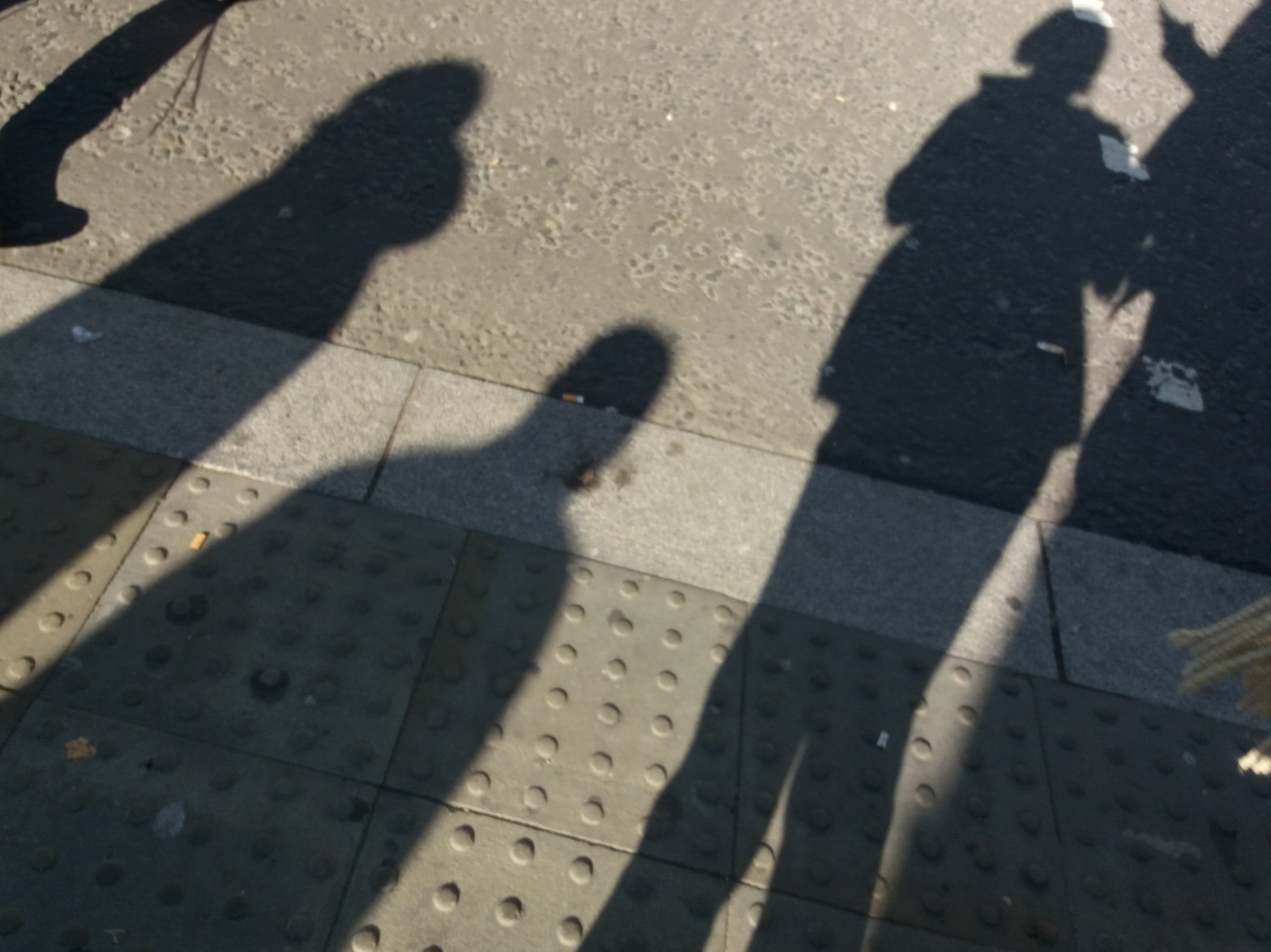
But it only lasted a few hours. On the train heading back home to Ely, I was feeling nostalgic about the Britain that is being lost and about my time as an anti-Brexit activist as if it were some point in the distant past. I went to my phone and noted that we had clocked over 15,000 steps that day. I thumbed through my photos, already reminiscing, and found one taken by accident as I was jumping up trying to get a shot of the crowds in Parliament Square. It’s a photo of shadows across a patch of empty pavement. It doesn’t represent in any way the excitement and sense of purpose I experienced during the march. But it was taken there and managed to capture the feeling I’m left as the time between the march and the present grows wider.

Toxic Tribalism

Dare I write about this subject at the risk of being trolled? Okay, I’m bursting to exorcise the feelings of revulsion I have been living with since Brett Kavanaugh was sworn into the Supreme Court.

Like millions of people, men as well as women, I believe Christine Blasey Ford’s testimony. More importantly, if I imagine that I did not believe her, I would still think that Judge Kavanaugh’s testimony was appalling. His display of petulance, self-pity and political partisanship is not befitting a member of America’s highest court.

With only one week allowed for the FBI to investigate and with a Republican majority in the Senate, Kavanaugh’s appointment came as no surprise. The appointment of Clarence Thomas in 1991 after the compelling testimony of workplace sexual harassment by Anita Hill yielded the same results. But here are the key differences that stirred my disgust these past weeks. Firstly, Anita Hill was alone in her allegations; two other women have come forward in the Kavanaugh case. The Hill vs Thomas standoff was over 30 years ago, before Harvey Weinstein and before #MeToo – this time, the nomination process could have ended differently. The greatest differences of all have been the reactions of the sitting presidents. In 1991, President George Bush (senior) accepted the Senate’s decision to place Clarence Thomas on the Supreme Court without accusing Anita Hill of giving ‘false testimony,’ as Trump did of Christine Blasey Ford. Nor did President Bush publicly mock Anita Hill or say anything to discredit her during the judge’s swearing in ceremony.

This country of polarised ideals has escalated into a cold civil war. And it didn’t start with Trump.  The conservative/liberal polemic has been deepening since the Clinton administration, when Speaker of the House Newt Gingrich went after all things liberal, especially the Clintons – a modern couple, where the lawyer wife earned more than her politician husband. This anti-liberal fervour took on another level with the Tea Party Movement, started during the Obama years.Tribalism 2

Unlike these other waves of intense opposition, this time the initial surge is not in reaction to the presidency, but is being instigated by it. Trump has fuelled old hatreds and fears, using rallies to drum home the message, touring the political polemic into tribalism.

Some members of the Republican tribe, mainly women, actually believed Ford’s testimony, but said that Ford was ‘mistaken’ about the identity of the perpetrator. They ignore (or think we won’t notice) the fact that Ford said she was ‘100%’ certain that it was Brett Kavanaugh. In other words, these Republicans know better, but pretend that they don’t in order to remain loyal to their tribe. I don’t meant to oversimplify this – of course, there’s also political motivation. Once the questions about Kavanaugh emerged, other conservative judges could have been nominated in Kavanaugh’s place, but given the realistic time constraints and the mid-term elections coming up, the Republicans couldn’t risk having an even harder time still if there were more Democrats in the Senate.

If, dear reader, you’ve been reading my blog for a while, you know that I too have strong political opinions. I’m a proud feminist and a liberal. I’d like to think that my feelings of being incensed over the Kavanaugh vs Ford spectacle have come from my intellect and not because I belong to a tribe that has been threatened. I fear that there could be a point in my future when my passionate views tip over into tribalism.

Greek Tragedies and Shamsie’s Home Fire

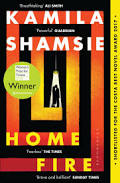
Occasionally, I plunge into a book without any foreknowledge – no reviews, no jacket blurbs (thanks to Kindle), no personal recommendations. I added Kamila Shamsie’s novel Home Fire to my Kindle collection solely on the basis that it had won the Women’s Prize for Fiction 2018.

In brief, the story is set in Britain’s Pakistani community at a time when Britain has its first Muslim Home Secretary (the book went to press before MP Sajid Javid became Home Secretary – a fortuitous coincidence). The Secretary’s son gets involved with a young woman whose twin brother, desperate to learn about their dead jihadi father, has left the UK to join ISIS. As the narration weaves its plot, it reflects on the nature of grieving and the power of loss alongside the machinations of our 24-hour media.

When one of the principle characters dies (no spoiler here) the reaction from one of the other characters is fierce and edges on melodrama. At that point in my reading I started to think about this as a Greek tragedy. Then the unburied corpse appeared. Lightbulb – this is a retelling of Antigone. For me, this realisation happened well into the novel. That, I think, is a good sign. The story reads as something very modern and gratefully without all of the self-righteous suicides of Sophocles’ original play – apologies to classicists.

This modern-day Antigone veers from the original in several other ways, which really would be a spoiler to talk about. But I will say this, unlike other versions (Brecht, Anouilh, etc.), this one has a cracking sense of humour that I wouldn’t have expected had I been told about the book and its themes beforehand. Clever banter between the characters, especially the adult twins who jibe each other in text messages, keeps the story pacey and the tragic elements more shocking and poignant.greek tragedies 2

Of course, by reading this blog, you won’t have the same lightbulb going on in your head somewhere in the middle of the story. But in our time of online reviews, book groups and reader talk, you probably would have heard it from someone anyhow.

Brexit:  The next steps for this activist

Working with grassroots organisations like Ely for Europe and the European Movement is one way of tackling a problem like Brexit. It’s helped me to become better informed on the issues and to participate in the protest against the inanity that is Brexit. While I’ve had the honour and pleasure of Co-Chairing Ely for Europe over the past two years, I’m now stepping down from my chairing post. I’ll still be involved with the group and on their committee. But if there’s one thing I’ve learned from years of volunteering it’s that the helm has to be passed around from time to time to keep others involved and to ensure the group doesn’t become a clique.

So, what now? In a matter of weeks, the big decisions concerning Brexit will be made, whether it’s how we’re going to leave the EU or if battle-weary politicians seek to save face by implementing a people’s vote. Much of this will be in parliament’s hands. This leaves me with the feeling that a lot of my work has been done on the Brexit front.

I’ve been getting more involved with local politics and the workings of the local councils – in Ely, we have city, district and county levels. I’ve been somewhat involved in the past, but stayed on the fringes. My willingness to plunge in – if I’m not mixing my metaphors – has come from a sense of hopelessness at the national level. In Britain, our politicians have let us down. They aggressively spout forth on the ‘will of the people’ but seem blind to the majority of polls and surveys over the past two years showing that most people in Britain do not wish to leave the European Union. Before that, there were austerity measures and the growing gap between rich and poor. Anyone who has been following British politics will tell you that these ills are entangled in party politics and not in the best interest of the country. That is, we’re not talking about competing ideologies – we’re talking power games.

Last night I was having drinks with friends from America and South Africa. International travellers, broadsheet readers – yes, I know, the chattering classes. Our consensus:  Britain was turning into another Italy. The political sway of Nigel Farage, the popularity of Jeremy Corbyn, the bumbling incompetence of Boris Johnson and Therese May are paralleled by Berlusconi, Matteo Salvini and so on. Britain, like Italy, has become a laughing stock. But what makes Italy work, and has kept it working since the war despite political chaos at the top, has been local governments and concerned citizens. With that thought in mind, I take my next steps.

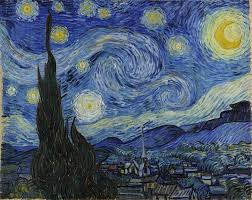
Starry, Starry Night

I’m hoping this blog will purge the song from my head. The original tune by Don Mclean was never a favourite. Like its topic, the life and paintings of Vincent Van Gogh, it’s riddled with clichés and imagery of the ubiquitous works of art. The song was released when I was nine and Van Gogh was already an industry. Like any self-respecting kid, I rebelled against things cross-generational and ultra-popular. I adopted the view that Van Gogh wasn’t such a great painter, but merely the first pop artist, creating his own celebrity as he suffered for his sanity, clipped off his own earlobe and took his own life as lovers often do.Starry starry night 1

It wasn’t until I visited the Van Gogh Museum in Amsterdam some 25 years later that I felt a genuine admiration for the artist’s work. Yes, of course, Vincent (I think we’re on first names here) is still an industry, arguably an even larger one than he was in my childhood. But he’s not just about starry nights after a day of daffodils that catch the breeze from the painter with a severed ear. There’s the earthiness of his potato eaters and the delicacy of his Japanese-style almond trees that speak volumes for his skill and renderings of life around him and in his imagination (he never went to Japan). I’ve since toured the museum a few more times, searching for the lesser known works and avoiding the gift shop.

The song wouldn’t have lodged in my head had it not been for a reinterpretation by Lianne La Havas which featured at the end of the film Loving Vincent. La Havas’s version is more soulful, slightly less melodic, than Mclean’s. In case you haven’t seen it or heard about it, Loving Vincent (directed by Dorota Kobiela and Hugh Welchman) is an animation using Van Gogh’s paintings for the scenes and characters, including the master himself. It’s the only film of its kind, using 125 artists to hand paint the 65,000 frames. Many of the scenes appear to move slightly as if being painted or repainted before our very eyes – it’s visually hypnotic. This entrancing state is helped by the soft, rhythmic soundtrack (by Clint Mansell) to lift the audience into another world. The only thing holding the film back, as many critics have noted, is the mediocre script that revolves around the artist’s sudden death, suggesting that it wasn’t intentional.

Nevertheless, this melange of paintings, film and music needed to come together for me to remember, Vincent, this world was never meant for one as beautiful as you. (Oh, I wish it would stop). Starry starry night 3