The Queen’s English?

‘Brexit Day,’ as some are calling it, was just over a week ago. On that day, these signs were stuck on doors of all 15 floors of a residential building in Norwich, in the east of England:

Brexit Day poster

Aside from the blatant racism, which I don’t mean to diminish or trivialise, I have several linguistic points to make. Not in any particular order.

What is the Queen’s English? For the spoken language, which the moron who wrote this poster appears to be obsessed with, the Queen speaks RP (Received Pronunciation). It’s an accent of English with no regional associations. That’s because it’s a ‘social accent’ taught in certain private schools and reinforced in the homes and social circles of the upper classes. It’s an accent that clips its vowels and makes toast sound like taste. Today RP is spoken by roughly 2% of the British population. I suspect that the cretin who wrote this poster does not speak the Queen’s English.

The British Library website has 77 recordings of different accents and dialects of English from across England, Scotland, Wales and Northern Ireland (https://www.bl.uk/british-accents-and-dialects). I wonder how many of these British-English accents would be fully understood by the imbecile who wrote this poster.

English is not the only native language of Britain. There’s Welsh, Scots, Scots Gaelic, Irish Gaelic and Cornish to name a few. And the flipside of this – Britain is not the only country where English is spoken as a native or official language. If the idiot who wrote this poster wants only people whose ‘mother tongue’ is English to live in Britain, he or she would appear to be perfectly fine with people from Canada, America, Australia, New Zealand, South Africa, Liberia, Cameroon, Kenya, Malawi, Uganda, Tanzania, Nigeria and Papua New Guinea – among others.

The ignoramus who wrote this poster has a problem with people who speak foreign languages. Don’t get me started. During this week that saw Britain enter another dark age, the polymath George Steiner passed away at the age of 90. Steiner was trilingual, speaking French, German and English, and he once described his mother as ‘a Viennese grande dame who used to begin a sentence in one language and finish it in another without even noticing.’ Brexit hasn’t really happened yet – we’re in a transition period – yet, I’m already feeling nostalgic.

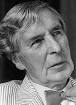
Steiner
Professor George Steiner

Not ready to say goodbye

Since June 2016, I have marched down the streets of London four times, Cambridge twice and Ipswich once. I’ve attended countless rallies and delivered thousands of leaflets. All in the hope of bringing an end to this lunacy called Brexit. Over the past three and a half years I have shifted in my goals from fighting to overturn the freak election results of the referendum to accepting  defeat following the last general election to where I am today with a new goal – I’m trying to stifle the feeling of ungroundedness and the anxiety that eventually comes with it.

Leaving the EU is stripping me of my EU citizenship and that seems remarkably unfair. The rug that has been pulled out from under me was more like a magic carpet.  Now there is only air between me and the ground and I can’t seem to land.

I have to visualise and remind myself that a sense of groundedness exists with my David, his family, our friends and with some of the things I do – writing, jogging, walking and of course meditating. Not to underestimate these attachments and therapeutic activities, but these last few years make me aware that outside of these inner concentric circles, I’m no longer living in a place where I feel I belong. This isn’t the first time. I left the United States in 1984 to live in Scotland, among other practical reasons, as an act of self-imposed political exile against Ronald Reagan and the many – even Democrats – who were prepared to re-elect him. Instead of wondering if the world had gone mad, I turned it on myself and thought there was something wrong with me.

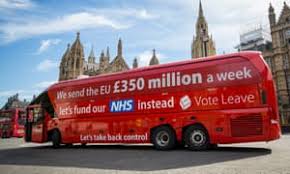
Older, more confident, this time, it’s not me. The cult of pro-Brexitism has brought hate and isolationism to the foreground. Brexit has never really been about leaving the EU, or to ‘gain back control’ as the slogan claimed. In order to justify those sentiments, people had to believe a lot of lies about what the EU does and Britain’s place in it. I’ve toyed with the idea that millions of people were lazy when it came to researching and discovering the truths (it’s in another blog). While laziness might be a factor, I also suspect that those who voted to leave to varying degrees pretended to believe the lies in order to find a cause of, or someone to blame for, their own unhappiness. For some this unhappiness has been economic, for others it festers in feelings that our more tolerant, liberal society has been foisted upon them.

Perhaps this is just a coping strategy – an attempt to get my dangling feet back on the ground – but I will only permit myself to say goodbye to the EU as a British citizen. In a year’s time, this will be enforced by laws and regulations. What the Brexit elite at the helm of this operation cannot take away from me is my Italian heritage, my second home in France, my abilities in romance languages or my spiritual connection to some European countries and their peoples. This time, I won’t flee into self-imposed political exile.


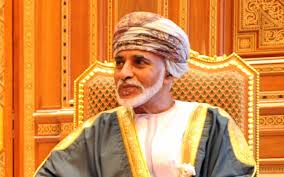
Memories of Sultan Qaboos

Nizwa, Oman, spring of 2015. I was circling the university car park looking for a space. The car park was packed. This wouldn’t have been unusual at 8 in the morning, but this was 4 in the afternoon. I wondered if there was some ceremony or conference going that I didn’t know about. The bewildered foreigner once again.

When I eventually stepped into my department’s offices, the Omani admin workers were all gathered in one room speaking excitedly in Arabic about something. One woman in the group appeared to be crying. I saw one of my Jordanian colleagues in the hall and asked what was going on. Full of ennui, she rolled her eyes and explained that on television the previous night Sultan Qaboos spoke to his nation from Germany to say that his cancer treatment went well and that he would be home soon. This broadcast created such a stir that people stayed at work the next day just to talk about it.

In the days that followed, Omani flags went up all over campus and throughout the small town on Nizwa. Large companies and banks hung posters and displays welcoming the Sultan back home. The great man’s image appearing gigantic showed him seated in full traditional clothes, an Omani boomerang-looking sword, the khanjar, his beard more white than grey.

It’s hard to imagine in our cynical times a country where its leader is genuinely adored and worshipped and where political satire is non-existent. Sultan Qaboos was rightly admired for taking his country from illiteracy and poor health to public education and modern hospitals, from dirt roads to highways. Above all else, while neighbouring countries have had to deal with wars and terrorist attacks, Oman has remained at peace.

These decades of peace have been in part circumstantial. Oman doesn’t have the abundance of gas and oil that its neighbours have and hasn’t been fought over or exploited by foreign interests. The country has also stayed out of the fray by the simple fact that it practices Ibadi Islam and is neither Sunni nor Shiite. In Western newspapers, Oman often appears on colourful maps as grey. Taking advantage of this neutral greyness, Sultan Qaboos often played the part of arbiter and intermediary in the region.

What Sultan Qaboos brought to his beloved country which cannot be denied him is the country’s reputation of holding to many of its traditions and at the same time being one of the most socially progressive societies in the Middle East. Oman has modernised, but even its capital Muscat does not have the commercial glitz found in Dubai, only a few hours’ drive away. Where I lived in the town of Nizwa, every Saturday morning the goat market is held and people from neighbouring villages come to barter and bid in ways their ancestors did centuries ago. But this is not a backward country by any means. Not only do the local women drive cars, they also hold public office and managerial positions. It still is a male-dominated culture and many of the laws and customs are discriminatory, but they’ve made huge advances under the paternal gaze of Sultan Qaboos.

Just over a week ago, this ‘father of the nation,’ who has been in charge for nearly 50 years, died peacefully at the age of 79.

When I departed Oman over four years ago now, I typed these thoughts into my journal:  ‘It’s good I’m leaving now. I don’t wish to be in Oman when the much-loved Sultan passes away, leaving behind a country not only in mourning, but more worryingly, a country vulnerable to radical conservative takeover and upheaval.’

The people of Oman are in my thoughts today.


Watching flames through a firewall

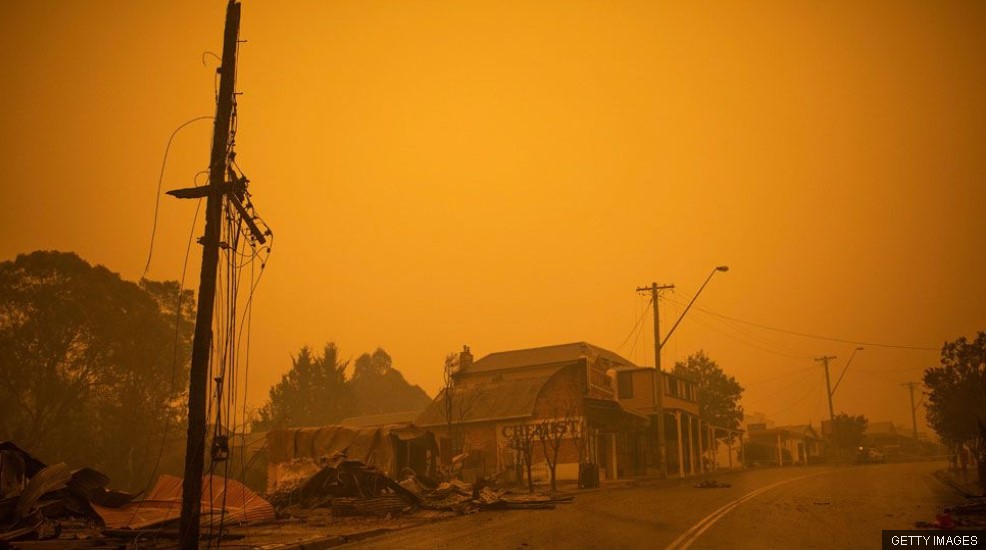
As apocalyptic stories from Australia are already starting to play second fiddle to Trump’s war games, Harvey Weinstein’s trial and Harry and Megan’s flashy fugae , happenings down under and across the world are continuing to play out – even if we stop watching it or reading about it.

A couple of things are going on here. First, there’s the media’s coverage of these events. In ‘media’ I include social media and other spreaders of news – real and manufactured. These outlets inhabit the edges of the entertainment industry and will only repeat the same story so often. As the affects of climate change are becoming as common as the buddy movie, the media and their audiences quickly move on.

Of course, unlike the buddy movie, climate change is real and frightening. With that comes another reason why media coverage is waning and audiences are retreating. It’s what author Margaret Heffernan calls wilful blindness – there are things that we refuse to see. Taking insights from a range of people involved with deception, including whistleblowers, criminals, politicians and psychologists, Heffernan points out that people turn a blind eye to ‘avoid conflict, feel safe, reduce anxiety and protect prestige.’ To some extent the media is reacting to our putting on blinkers.

The other factor at work here still involves the media but runs deeper than that. Climate change deniers have gone into full throttle this past week to distance the catastrophes in Australia from man-made climate change.

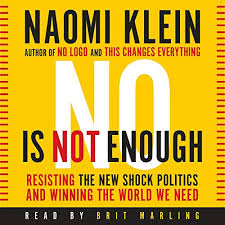
When looking at neoliberal policies of recent decades, Naomi Klein points out the tremendous tax cuts to the wealthy classes and their corporations. Offsetting climate change involves investment in the public sphere – ‘in new energy grids, public transit and light rail, and energy efficiency.’ Given the scale of such projects, they couldn’t happen without raising taxes on the wealthy. Klein also points out that many green initiatives, such as ‘buy local’ to reduce CO2 emissions, clash with corporate free trade details.  Klein comes to this conclusion:NaomiKlein

‘In short, climate change detonates the ideological scaffolding on which contemporary conservatism rests. To admit that climate change is real is to admit the end of the neoliberal project. That’s why the Right is in a rebellion against the physical world, against science.’

The fires in Australia is the story of our day, the one the media has grown tired of or sees dwindling profits in, the one neoliberals don’t want us to engage with, and the one story that we ignore or play down at our own peril.

Some things I learned in 2019

Please forgive this listacle – at least it’s not another top 10 of this or that. As I try to sum up 2019 in a way that doesn’t sound as bleak as the way it ended, I offer these thoughts of some of the year’s more enlightened  moments.

  • Are Alain de Botton and Slavoj Zizek really philosophers of our time? I’ve learned more this past year from Kenan Malik of the Guardian/Observer and Hasan Minhaj on Netflix.
  • I’ve learned a great expression in French – la poudre de perlimpinpin. Great, largely because of the way it sounds, ending /pɛʁ lɛ̃ pɛ̃ pɛ̃/. I’m told it’s onomatopoeic and meant to sound like abracadabra.   It’s the French equivalent of snake oil. I was talking to a French person about Trump and Johnson at the time.
  • Unconscious bias – it’s become a buzzword. Like many, I’ve had awareness training through my employer. It’s made me more aware of myself, especially the myopia of my younger self, and gives me a handy phrase that sounds less caustic when describing the ways of others. Yet, I’m still left flummoxed at the receiving end. That is, I can’t stop it from happening to me. But this year I’ve learned to expect it and acknowledge that I can’t change it.
  • With the help of YouTube, I’ve learned how to remove a car battery without getting electrocuted, how to take in trouser legs and the difference between Italian R’s and Spanish RRRR’s.
  • Before this year, when it came to politics, I would have said that some people are ignorant and latch on to any populist that comes along. As 2019 appears in the corner of my screen for the last time, I now believe that those people aren’t ignorant, but they are politically lazy, wanting someone else to think for them and not bothering to fact check. Unfortunately, for the rest of us, these people have just as much a right to vote as we do.
  • Selling a collection of short stories is more difficult than I had imagined. It might even be harder than the research, soul-searching and writing and rewriting that went into the stories in the first place. I’m reminded of Salman Rushdie’s words of advice to Milan Kundera when he said that 50% of writing is strategy. Saving Spike and other stories is available at Amazon.

During 2019, there were loads of other things that I learned – surely, I must have –given my daily consumption of newspapers, magazine articles and books and other things I’ve probably gleaned from television, radio and conversation. And then there’s writing – I’ve learned, as I always have from writing. Apart from my obsessive journaling, I couldn’t write without an audience in mind. Thank you, readers, for being that audience during 2019. Best wishes to you for 2020.


Dipping into British Herstory

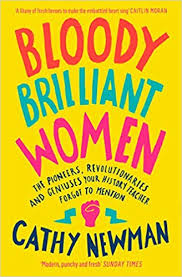
In Bloody Brilliant Women Cathy Newman writes about one of my heroines, Gertrude Bell, with a couple of lively examples exposing male perspectives that has kept Bell out of the history books. In the film version of Michael Ondaatje’s fabulous The English Patient, there is a scene where British soldiers are examining a map, trying to find a way through the mountains. One says, ‘The Bell map shows the way,’ and the other replies, ‘Let’s hope he’s right.’ Newman remarks on this unconscious bias, the assumption that a map maker must be male, behind this scriptwriting. For me, the more astounding point is that this error went unnoticed and unchecked by the script editor and the director’s assistant as well and made it to the screen.

Having read some of Gertrude Bell’s travelogues and letters and having seen an excellent documentary-cum-docudrama about her, Letters from Baghdad , I was pleased by Newman’s find of a letter from Sir Mark Sykes (he of the Sykes-Picot Agreement that carved up parts of the former Ottoman Empire for the likes of Britain, France and Russia). Sykes wrote to his wife describing Bell as ‘a silly chattering windbag of a conceited, gushing, flat-chested, man-woman, globe-trotting, rump-wagging, blithering ass.’ No need to deconstruct the misogyny here. Newman follows this quote with a simple ‘Wow!’ An example of the laid back journalistic style used throughout the book.

Newman’s version of herstory covers some familiar territory with Emmeline Parkhurst, Millicent Fawcett and accounts of women impersonating men in order to fight in wars. But it is well worth a read as the book explains the significance of these pioneering women in their pursuit for justice and equality given the socio-political and legal contexts of their time.

As much of my understanding of herstory is of a more international variety, I’m grateful to Newman for introducing me to a few personages that I would have otherwise missed, and who I now feel compelled to read or read about. There’s Dora Russell who championed contraception, recognising that childbearing wasn’t only controlling women’s lives, but also shortening them. Dora is otherwise known as the second wife of Bertrand Russell. And there is Claudia Jones, a journalist and activist, who founded the Notting Hill Carnival. I close with one of Jones’s most quoted remarks: ‘A people’s art is the genesis of their freedom.’

Defeated

It’s been a week since the UK General Election. I’m not going to blame Corbyn, the People’s Vote, the electoral system or the LibDems for what happened. Instead of seeing this as their loss or folly, I have been struck down by the realisation of the Brexit movement’s victory. I must acknowledge it. The falsehoods and misinformation are immaterial. They out-campaigned us and out-manoeuvred us.

As I try to untangle this, I take little solace in the knowledge that my side may have lost the vote, but we still have won the argument. That kind of thinking helped me through the aftermath of the referendum, but it’s not working now. I say this in all sincerity. I’m not looking to be right. I’m too busy wallowing in my own defeat for that.

Defeat is a monstrous burden to bear. Maybe it’s because the three and a half years of my life engaged in Brexit conversations, delivering leaflets, attending rallies and marches and above all else, wishing it away. I turn once again to Buddhism, the Zen variety this time. In this tradition, and I paraphrase Thomas Merton, when a person feels kicked, crushed and defeated , a spiritual path is the best place to be. I meditate and breath.

But that’s only part of it, since the GE, I live in a world that feels alien to me and this is not an exaggeration. I recall the Reagan/Thatcher years, where I strongly disagreed with the policies of both and had to live with them as a US resident and then a British one. But I could understand then, and especially now, why people voted for them. Both politicians benefitted from the economic boom at the time while the left on both sides of the Atlantic experienced a paucity of leadership. I feel on safe ground saying that if Reagan or Thatcher had behaved in the ways of Trump and Johnson – the bare-faced lies, the racist and sexist remarks, the stirring up of hatred – they would not have been re-elected. This is where it hurts, I’m having to acknowledge that I live in a new world order, where cult-like charlatans rule the most powerful countries on our planet. Historians will be quick to point out that this is not a new world. This is an old world that was around before my lifetime, the interwar years in Germany comes to mind.

So I take inspiration from Michael Tippett, who composed A Child of Our Time in response to the disunity in Europe just before WWII. ‘The world turns on its dark side — it is winter,’ the chorus sings. But we know that after winter the flowers will start to bloom again.m tippett

Apophenia and Zombie Statistics

It’s polling day in the UK. If you’ve come to this blog seeking my election predictions, think again dear reader. My political crystal ball shattered into a million pieces in 2016 – first the Brexit Referendum, then Trump.

This election day is certainly the most important in my lifetime as a British citizen up against losing my rights as an EU citizen and as a citizen of a world that is facing a climate emergency. With all of this, what am I thinking about today – the spurious nature of truths.

There’s apophenia. That’s the tendency to mistakenly see connections between unrelated things. The term was first used back in the 50s to describe types of mental disorders like schizophrenia. Examples include gamblers who think they see meaning patterns in numbers or people who see images of the Virgin Mary in their cappuccino froth.

Zombie statistics are numbers that are bogus but are repeated so often they are assumed to be true. There are loads of these out there. My personal favourite is that only 10% of Americans hold passports. Interesting, given that some 20% of Americans were not born in the US – how did they get there? The actual figure, according to the US State Department, is that 42% of Americans have passports. (Okay, I know, it’s 66% for Canadians and 76% for Brits). Zombie statistics are believable because they feed into popular myths or make for good headlines.

In both apophenia and zombie statistics, the mind plays tricks with people, even otherwise intelligent people. As this election campaign comes to an ignominious end – it’s been plagued by concocted ‘news’ stories against rivals and blatant, easily disprovable  lies from a sitting Prime Minister – I can’t help but to think about the way our minds play with us and how we convince ourselves and create our own truths.

apophenia

Black Friday

Black Friday didn’t start with Amazon, gift wrapping or 30% off this or that. It didn’t even start, as the story goes, with shopkeepers coming out of the red and into the black due to the hordes of Christmas shoppers on the day after Thanksgiving.

The first Black Friday was on 18 November 1910, and it was in England. This was the day that some 300 women marched on Parliament, furious that Prime Minister Asquith called an election, meaning that Parliament would soon be dissolved and that the Conciliation Bill, giving some women the right to vote, was going to be scuppered. The Conciliation Bill was far from ideal, allowing only women property owners to vote, but it had already passed its first and second readings and was likely to pass into law. This was going to be momentous, a start of things to come on the road to full suffrage for women.

The women who converged on Parliament were angry and loud, but not violent. The violence came from police officers and men in the crowd. Some 30 women were seriously injured and a few days later two women died from what some sources believe d were conditions brought on by the police beatings.

Equally disturbing was the level of sexual violence perpetrated on these women. One suffragette noted: ‘Several times constables and plain-clothes men who were in the crowds passed their arms round me from the back and clutched hold of my breasts in as public a manner as possible, and men in the crowd followed their example… My skirt was lifted up as high as possible, and the constable attempted to lift me off the ground by raising his knee. This he could not do, so he threw me into the crowd and incited the men to treat me as they wished.’ (Source: British Museum)

Black Friday has come to mean an orgy of consumerism, the start of the Christmas shopping season. On the internet it takes place all weekend and in France it’s a week of ‘Black Fridays’. (Obviously, something got misplaced in translation.) So far removed from its original use and so little known to the average English-speaking person, Black Friday serves as a reminder of what we have come to value and what we choose to forget.

black friday

Not Writing About Brexit

You’ve probably noticed that I haven’t been writing about Brexit of late. My last Brexit tagged blog was in early May, and you have to go back to March to find Brexit in the title. Unlike a lot of people in the UK, I can’t with hand on heart say that I’m tired of Brexit. The topic is complex and multi-layered. It can be looked at from the standpoints of trade and economics, climate change and the environment, human rights, shared research or cultural exchange. Brexit can be seen as a phenomenon of voter and media manipulation or as the catalyst to end party politics as we’ve know it in Britain. That is, for someone like me who enjoys reading and problem-solving through deconstruction, Brexit has been the gift that keeps on giving.

Writing about it has become another matter altogether. As soon as I get an idea for another Brexit blog, I read about it in a newspaper or magazine or hear that a book has come out with the same thesis. Among my favourite Brexit writers – I think this is a start of a genre – are Andrew Rawnsley, Nick Cohen and Will Hutton from The Observer, Polly Toynbee from The Guardian, Stephanie Baker from Bloomberg News and Steve Richards of The Independent and The New European.

Only a few days ago, I stumbled across the perfect quote for what I was going to write about in this blog – another failed attempt. Roger Cohen of the New York Times wrote: ‘The fantasy voted for in 2016 is not the reality of 2019… Democracies are exercises in constant reassessment. The core reason nobody has been able to deliver Brexit is that it makes no sense.’

It’s hard to improve on that.

All I can offer are a few reports gathered from my academic life. I’ve been hearing directly from researchers based at UK universities (many of them not British themselves) who have been excluded from funding applications because Brexit makes them ‘too risky.’ In another case, an academic organisation has changed its plans to have a British university host an international conference over worries that EU27 citizens might need visas to enter the UK. Underlying these examples, as with all changes to our lives brought on by Brexit is a sense of anxiety – sometimes it’s about the unknown, and at other times it’s about losing the good things that we do know have come from our EU membership.

As I struggle to find words to describe this anxiety – a vapid and overused word – I appear to be not writing about Brexit again.

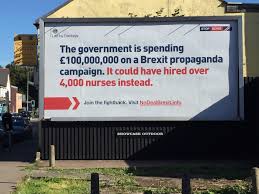
ledby donkeys