Lincoln in the Bardo

With few exceptions, the Man Booker Prize winner is not as good as half of its shortlist. I’m afraid for me George Saunders’s Lincoln in the Bardo follows this rule. I say this with some hesitation because I’ve enjoyed Saunders’s short stories over the years and because at times the writing in Lincoln is nothing less than brilliant.

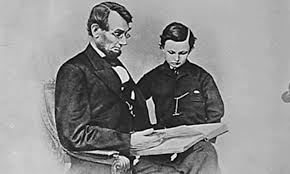
Lincoln in the Bardo deals with the true-life story of the death Willie Lincoln, son of the famous president. An exploration of grieving and beliefs about death, it’s set primarily in the bardo – a concept taken from Tibetan Buddhism for an intermediate state between death and rebirth.  In this bardo the reader encounters several subplots with a host of fictional (and some fictionalised) characters of which the child Willie Lincoln is one.

Outside of the bardo lies the real world, told through the accounts of present-day historians and journals and memoirs of those living at the time. This genre mixing is a clever way of telling a story. But in order for it to work, the disparate parts, with their different voices and styles, need to be of roughly equal merit. For me, the accounts of Lincoln’s contemporaries were far more moving and interesting than the lives of most of the characters in the bardo. I found myself speed reading through the bardo in order to arrive at and savour the non-fiction passages.

The blending of fiction with non-fiction is an art. True mastery of this art formSaunders 1 can be found in Hilary Mantel’s Wolf Hall and Digging up the Bones and closer to the non-fiction end of the scale in Truman Capote’s In Cold Blood. While Saunders’s Lincoln in the Bardo hasn’t reached its ambitions, it’s still a better, more innovative, read than much of what’s out there.
Writing Essays

This was supposed to be a writer’s blog, writing about my writing and others’ writings. But other aspects of life have funnelled in – politics, feminism, visual arts. I make no apology. What brings all of these disparate parts together is actually essay writing. Blogs for me are a warm-up activity, a brain and language stretch for writing essays.

Before I write another word, I should explain that by ‘essay’ I mean creative non-fiction. What I don’t mean, for those of you who have searched #essay writing and landed here, is the formulaic student essay – that academic rag of assessment that takes all of the fun out of essay writing.

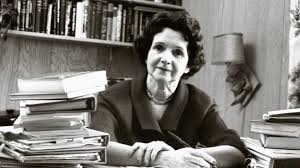
Without the structural constraints or the timeliness needed for newspaper articles or columnists’ pieces, essays can have a more varied existence. The Pulitzer Prize-winning author Annie Dillard once said ‘The essay is, and has been, all over the map. There’s nothing you cannot do with it; no subject matter is forbidden, no structure is proscribed.’

Annie Dillard
Annie Dillard

In some of my essays, I’ve worked within an overriding chronological story-telling, but without fictional characters to get in my way and with space for more philosophical ideas than I can get away with in fiction. With other essays, I’ve used more of a mini-collection style, with each vignette on the same theme and some indirectly answering to other vignettes. I try to not ramble in my essays. Perhaps it’s because I ramble in my journals or perhaps because I fear the work won’t get published – being mistaken for bad writing.

That reminds me of something I read a few years ago in Prospect Magazine: ‘The essay is more than an assembly of literary conventions: it ought to be an examination of the facts of the world. This has become clearer with the emergence of new technologies, which threaten to deprofessionalise one of the main historical strands of the essay, the egotistical ramble.’ (P. Hensher)

Aside from the above comment about rambling, this quote is also interesting for its inclusion of ‘facts.’ One thing I’ve learned from writing essays over the years is that while they are not fictional, their ownership of ‘facts’ or ‘truths’ is a bit slippery. I write about what I know to be factual at the time, sometimes having to rely on elusive memories that I’m aware are from my viewpoint. I choose to write about some facts and not others because this fact or that fact has been meaningful to me.

My favourite essayists have been mostly male. In part this is because men are more likely to have collections of essays published as single volumes. I’m thinking Gore Vidal and Clive James. I suspect this has its origins in the essays of the great Western philosophers. Women’s essays appear more often in anthology form along side other authors, such as the works of Rachel Carson and Margaret Atwood (underrated as an essayist).  I’ve noticed the trend too of the rare collection by a single female author being labled ‘women’s writing’ or ‘feminism.’

Well, if I’m going to buck this trend, I had better stop by rambling – I’ve exercised enough with this blog – and get on with essay writing.


Reading Lolita in Tehran

Even though I’ve done research into reading groups, until recently I hadn’t read Azar Nafisi’s best-seller Reading Lolita in Tehran. While it’s not an academic source for me to cite, it does confirm what the research has found. Simply put, reading is a social activity. We might read a book in a room or on public transport in our own little worlds, but then we talk about books and we integrate our experience of books into our social lives.

Reading Lolita in Tehran uses the reading group, along with classrooms of university students, as vehicles to describe how the revolution in Iran has affected its people, especially its women. It details stories of injustice and oppression in the lives of Nafisi, her students and colleagues, taking readers through the uprisings against the West and the Iran-Iraq war to the post-war period followed by the death of Ayatollah Khomeini and the attempts at liberalising that continue today. (Bearing in mind, the book was published in 2003.)

The reverence for literature permeates throughout this memoir. Along with Lolita, the author covers Daisy Miller, The Great Gatsby and Pride and Prejudice, showing how she and her students reacted to these works. In her own responses, Nafisi provides some passages of literary criticism of the type that reminded me of my years of teaching literature to undergraduates.   Reading Lolita 2

I’m glad that I’ve finally caught up with Reading Lolita and hope to find other such books obviously written for Western audiences that contribute to understanding the Middle East in a modern context.

Allende’s The Japanese Lover – another mistitled book

Book promoters must believe romance and chick lit sells better than stories about families affected by war and human trafficking. The Japanese lover in Isabel Allende’s novel is really a character of a subplot that draws other characters (not the lovers) together and as a loose commentary about interracial relationships in post-war America. The romantic elements play second fiddle to a story that starts with Jewish immigrants fleeing Hitler’s Europe and continues with a Japanese family in California sent to an internment camp. These elements run alongside a more modern story of immigration from poverty in Moldovia only to face slavery and child abuse in America. Embedded in both stories are romantic relationships, but two of which are not truly romantic – an unrequited love and a marriage of convenience.

The novel should have been entitled Lark House as that’s the name of the free-spirited and eccentric residential home that brings together the two stories and their main characters. Alma is one of Lark House’s more independent residents. A painter and designer from a wealthy family who was brought to America as a child to escape the war in Europe, at the end of her life, she meets Irina, a young care worker. While Irina struggles to come to terms with the abuse of her past, she befriends Seth, Alma’s grandson. The young friends piece together Alma’s mysterious past, uncovering the older woman’s affair with Ichimei, the son of her family’s gardener.Allende 1

While Allende weaves these plots together seamlessly, her prose isn’t remarkable. At times, the omnipotent narrator is so distance from the characters and their physical surroundings, some passages read like journalistic reportage. That aside, it still was a good read and often hard to put down.

A flying visit to Le Petit Prince

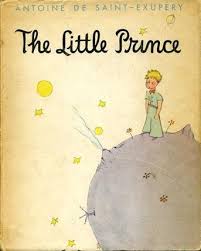
The first time I read The Little Prince I was twelve and naturally read it in English. This was when pop psychology ruled my thinking, and I saw the book as a fictionalised dialogue between the author, Antoine de Saint-Exupery, and his inner child.  I recently reread this novella, this time in French, which gave it a different flavour in my mind – more intellectual and whimsical at the same time. With this reading, I’m more struck by what it says about human nature in broader political contexts than with the personal and psychological. From here it was easy to see how it reflects the age we’re living in now.

Early in the story, the little prince asks a stranded aviator to draw him a sheep. After a couple of awkward attempts, the aviator draws a picture of a box with some holes in it and tells the prince the sheep is in the box. The prince accepts this and their friendship is cemented. In the present day, I’ll call this image the current British government, who received the picture of the box from the Leave campaign. I don’t think I need to explain this metaphor in any great detail. Any sensible person knows that the box is filled with the likes of a well-funded NHS, a robust economy and a lucrative trade deal with the remaining EU. The air holes are there to make this world seem real, a place where people live and breathe.

Another passage reflects pertinently in our age of the internet. The little prince climbs up to the top of a mountain and calls out to see if anyone is there. All he gets is an echo, which he mistakes for conversation.

The story also has plenty of characters suited for today’s headlines – an illogical king who claims he controls the movement of the starts, a vain man who craves attention, but whose vanity keeps him isolated, and a geographer who draws maps, but never leaves his own desk to experience the world he has helped to construct. I don’t think I need to mention the true life characters by name.

I’ve met people who reread Le Petit Prince every few years or once a decade. I don’t think I’ll join either of those clubs. Having read it once as a child going through puberty and now in my middle-age, my next appointment with this book could be in my very-old age. Who knows what metaphors, insights, ideas this little literary gem will conjure up then.

Petit Prince 2

Brexit, Trump and W.B. Yeats

Yeats’ ‘The Second Coming’ has had a revival over the past year or so. With reactions to Brexit and Trump, the poem was quoted more in 2016 than in the total of the previous 30 years. (Wall Street Journal and Factiva).


Now here we are in 2017. So far, Brexit has unleashed a rise in hate crimes, economic uncertainty and feelings of general incomprehension in the UK as ‘things fall apart’ and as we watch as ‘the centre cannot hold.’ In Trump’s America, a ‘blood-dimmed tide’ is both present and inevitable as mass shootings are condoned and conflicts overseas are rekindled with heated rhetoric.

But what is to come of all of this? I revisit the poem:

The Second Coming

Turning and turning in the widening gyre
The falcon cannot hear the falconer;
Things fall apart; the centre cannot hold;
Mere anarchy is loosed upon the world,
The blood-dimmed tide is loosed, and everywhere
The ceremony of innocence is drowned;
The best lack all conviction, while the worst
Are full of passionate intensity.

Surely some revelation is at hand;
Surely the Second Coming is at hand.
The Second Coming! Hardly are those words out
When a vast image out of Spiritus Mundi
Troubles my sight: a waste of desert sand;
A shape with lion body and the head of a man,
A gaze blank and pitiless as the sun,
Is moving its slow thighs, while all about it
Wind shadows of the indignant desert birds.

The darkness drops again but now I know
That twenty centuries of stony sleep
Were vexed to nightmare by a rocking cradle,
And what rough beast, its hour come round at last,
Slouches towards Bethlehem to be born?

Written in 1919, soon after the First World War and the Russian Revolution, this work reacts to the horrors and violence of such conflicts. More importantly, it expresses apprehension over what is to come. Over the years, many have seen this poem as an accurate premonition of a second coming in the form of an anti-Christ – Adolph Hitler. As has been pointed out by many in the press, the present day holds startling parallels to pre-War Germany, with the rise of nationalistic propaganda and untruths capable of seducing millions.

Yet, I feel the need to put this into perspective. Others have alluded to this poem over the years. Joan Didion’s collection of essays Slouching Towards Bethlehem, Chinua Achebe’s Things Fall Apart and Joni Mitchell’s song ‘Night Ride Home’ are among the many works to keep this poem alive. These works were written long before Brexit and Trump and each with their own political concerns and fears at their time.  Seen collectively like this, I do wonder if the recent malaise – the far-right, the hate crimes, the nationalistic fervour – are all part of a tide that will inevitably ebb back to something perhaps different, but manageable, less worrying.

Yet, the recent surge in quoting from ‘The Second Coming’ is still significant in itself. Most of these allusions can be found in the press, where the educated, the so-called ‘urban elite,’ dwell. As recent investigative reporting and British and American government enquiries are starting to show, it was the elite class of billionaires who indirectly funded both Brexit and Trump’s presidential campaigns. Both employed social media, which spread into mainstream media, to disseminate their propaganda and untruths. The response to this has come, during these campaigns and even more now, from the true masses – the urban and educated. We are the ones seeking to understand what is going on, turning to Yeats en masse. In our bewilderment and fear, we ask if what we have witnessed is a sign of the ‘rough beast, its hour come round at last.’

Online Book Groups – The People’s Literary Criticism

When we think of book groups or clubs, our first thoughts are likely to be of a group of suburban women gathered around a coffee table with sweet snacks and hot drinks. Or we think of libraries and bookshops, were such groups draw on more diverse and urbane memberships. Common to these face-to-face groups is the idea of socialising around books – indeed, linguistic studies of face-to-face book groups have pointed out that a great deal of social interaction takes place that is not about the book at all. Online book groups are a different matter altogether. With the exception of private book groups on social media sites, online participants usually don’t know each other offline. These groups cultivate discourse often devoid of personal stories that aren’t book related. More book talk than social talk, might online discussions about books become a new form of literary criticism?

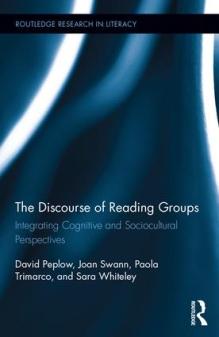
I wouldn’t have asked this question some five years ago when I started my research on online book groups (published as The Discourse of Reading Groups). First of all, book groups are largely about readers’ opinions of books. Which books they liked and which they didn’t. Genre book groups, such as crime, thriller and romance, tend to focus on book recommendations and comparing one book to another. Some readers appear to use these groups to build identities as fans of one author or another, listing all of the books they’ve read. This was my introduction to online book groups and hardly the stuff of literary criticism. But that was me being a professional reader – academic/reviewer – or perhaps just a snob.Discourse Book-best

Some professional readers also look down upon the emphasis on reading for pleasure that can dictate opinions and impressions in book group discussions. This is specially the case with genre books. But this is where I break ranks. Reading as a leisure activity goes back to the days of Aristotle – the first literary critic. Though he may not have used those exact words, the relationships between learning, aesthetic experience and pleasure were fundamental in Aristotelean thought.

Once I moved on to other types of online book groups, I discovered that in giving opinions, what often emerges is a sense of empathy – the ways that books reflect the narratives of our own lives or have characters whose reactions, feelings of pain, love and fear touch our own experiences. But online book groups, unlike face-to-face, are inadvertently recording these opinions and experiences. They make them available to anyone with internet access to read. From these postings, consensus and debate flourish. And from them we can see cultural trends and ways of thinking – much like the job of the literary critic.

Close readings of the type found in literary criticism are also not lost in online book groups. This is because not only is social talk diluted among strangers, but also because most online communication is asynchronous. The time between postings in online conversations could be as little as a few minutes and as long as several weeks. These time gaps allow readers to think about their interpretations of books and about their responses to other readers’ points. Readers can draw from other written sources, including other books by the same author or with similar themes, journalistic book reviews and literary criticism, and can comment on language in ways more considered than in synchronous face-to-face contexts. For close readings, I recommend the online book group Booktalk.org and the discussion group around The Guardian book blog.

Could the array of online book group discussions from the highly empathetic, Oprah-style book club, to the analytical be harnessed in a way to give it credence as a new wave of literary criticism? To answer this, we need to recognise the unspoken opposition. It’s not just about the absence of professional readers, the self-identification or the idea of pleasure reading lurking in the background. It’s the internet. Open to all, the web has become the world’s soapbox. It’s abundant with opinions masquerading as news, unsourced arguments and photos of people’s cats. Literary criticism, on the other hand, has been cultivated in universities and has been spread through the written word in the required peer-reviewed publication. But there’s an overlap going on here – traditional literary criticism in its peer-reviewed forms is also a part of the internet, accessible to all.

It was Tim Berners-Lee, the inventor of the worldwide web, who said that he had hoped the internet would ‘cross barriers and connect cultures.’ I share this hope.  I’d like to think that online book groups and other online discussions about literature will help to bridge the gaps – educational, social, class-based – between professional and ordinary readers.

Unfinished Fiction

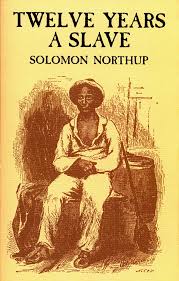
Consider this an un-review. In recent years I’ve surprised myself with a growing number of books that I’ve abandoned before finishing. Sometimes I’m inspired by a film adaptation to read the original story. Such was the case with Twelve Years a Slave, which I thought as a film was an intriguing slave narrative. The book, however, was written as a memoir by Solomon Northup in the mid-1800s. For this modern reader, the prose was too formal and laden with description. Ten pages in, I gave up. But I wasn’t alone. According to Kobo, their e-book of Twelve Years a Slave was left unfinished by over 70% of readers who started it.12 years a slave

When choosing books, another draw for me has been the shortlists of major prizes, such as The Booker and Bailey’s Prize for Women’s Fiction.  This gave me both Ann Pachett’s Bel Canto and Eleanor Catton’s The Luminaries. With both, the writing and pace held my interest until I was just past the halfway mark.  For me, these applauded books sagged in the middle. Bel Canto, a modern-day hostage drama, took its grip off me when I didn’t care about the characters anymore. Some of the hostages were so two-dimensional I was wishing for their release or death just to have them out of the way. With The Luminaries, the middle lost me when I realised the plotlines and characters were too familiar. Of contemporary fiction, I’ve read many a novel set in Australia or New Zealand in the 19th century.  Like other books of this sub-genre, the focus was on characters, many humorously flawed, seeking their fortunes. Without the laughs, I probably wouldn’t have made it halfway.

Perhaps the most disappointing category of unfinished novels is the shelf inhabited by some of my favourite writers who let me down later in their careers. Annie Proulx’s Barkskins did just that. I thought The Shipping News and Brokeback Mountain were exquisite pieces of writing, with passages and scenes that I still remember years later. Barkskins started out well, but killed off a couple of the main characters too soon. I stayed with it for a while into the next part as it is historically interesting, being about logging and the clearing of forests in French Canada in the 17th and 18th centuries. But grieving for these deceased characters, without replacing them with equally or even more interesting ones, got the best of me and I couldn’t continue.

Are there lessons to be learned from all of this? Just a few. The main one is that the appreciation of writing is highly subjective – something I try to remind myself of every time I get a rejection from a publisher.  The other involves the need to give up. Reading shouldn’t be a competition, even with oneself. Giving up on reading a book is not the same as giving up on writing one, especially if what I’m reading isn’t entertaining or helping me to grow as a person.

Crime Fiction and Tana French

When I occasionally read crime fiction I feel as if I’m watching television. That isn’t necessarily a bad thing. In recent years television has improved immensely, especially in the crime department, with the likes of Line of Duty, The Wire, The Fall and Luther, to name a few. But where crime fiction and television fall short are in being plot-driven. With fiction, I invest my time and soul into the activity of reading and I expect at the least a story which is character-driven – for me, a mark of good writing. Of course, some of the best television crime, like those already mentioned, have strong characters, whose lives and character journeys develop as subplots to the main crime plots.

I’ve recently read Tana French’s The Trespasser, a murder story set in Dublin. While it’s a plot-driven page turner, it’s equally about Detective Antoinette Conway. As narrator, Conway is opinionated and fierce, encapsulated in an entertaining Irish idiom. As a detective, she can be sarcastic, brisk and aggressive, especially with her co-workers. She knows that she ‘lacks charm’ but believes it’s her best defence against the squad that wants to be rid of her. With the murder story taking its twists and turns, this character makes her own journey of self-awareness and identity. And like Line of Duty, the story thrives on long, but gripping, interrogation scenes that explore the psychology of the interviewers as much as those of the interviewees.Tana French trespasser

I do wonder if The Trespasser didn’t have detectives and a dead body, it may have been shortlisted for awards in 2016, alongside Sarah Perry’s The Essex Serpent and Rose Tremaine’s The Gustav Sonata.

Gertrude Bell in Persia

She’s been described as ‘the female Lawrence of Arabia.’ I confess that I’ve used that glib and convenient phrase myself. But it doesn’t do her the least bit of justice.  One could argue that she accomplished a great deal more than T.E. Lawrence and that she had more barriers to overcome along the way.

Gertrude Bell (1868-1926) was an archaeologist, scholar, writer and a political advisor, helping to establish modern-day Iraq and the National Museum of Iraq. As a contemporary of Lawrence, she worked with him at one point in Egypt. Both were British born and both developed a love and consequently insider’s knowledge of what was then called Arabia and Persia (or even more broadly and strangely to modern ears ‘the Orient.’) While Lawrence’s Seven Pillars of Wisdom is still read by British and American forces stationed in the Middle East, Bell’s writings on Iraq and Syria are studied by military experts and scholars the world over.

I recently read the first book she wrote, Safar Nameh: Persia Pictures.  It’s a journal of her travels in 1892 to what was then Persia, covering modern-day Iran and much of Turkey. She was accompanying her uncle, Sir Frank Lascelles, the British Minister to the region, which gave her access to people and places unavailable to most Westerners, especially women.Gertrude bell

Persia Pictures shows us a travel writer at the naissance of her writing life, before she knew herself the role writing would play in her career and the mark it would leave on her legacy. She relays impressions of the landscape, the towns and villages and the people that inhabit them with a sense of wonderment – that first discovery – of a part of the world few in the West knew much about. With this is her discovery of the Persian language and some of its most revered writers – in preparation for the adventure, she became highly proficient in Persian. (At this point in her life, she was already fluent in French and had begun studying Arabic.) Among the gems of this book are her fragments of translations of the Persian poet Hafiz into English. A few years later she published her translations of The Divan of Hafiz.

Bell concludes this short volume with what can be best described as a meditation on travelling. Here, she summarises her encounters with the locals in her role as traveller: ‘Although your acquaintance may be short in hours, it is long in experience; and when you part you feel as intimate as if you had shared the same slice of bread-and-butter at your nursery and the same bottle of claret in your college hall. The vicissitudes of the road have a wonderful talent for bringing out the fine flavour of character.’

With the films Queen of the Desert and Letters from Baghdad, Bell is slowly emerging from obscurity, but still appears to be relegated to ‘women’s studies’ as opposed to the writer, scholar and historical figure that her feats deserve. Yet, the day might come when T.E. Lawrence is referred to as ‘the male Gertrude Bell.’