Note to self – don’t judge a book by its title. Hannah Rothschild’s The Improbability of Love is not genre romance at all. I’d say it’s middle-brow literary fiction. The only love story in it is a small subplot. The rest is a delightful satirical romp through the world of masterpiece art collecting, complete with the avarice, pretence and money-laundering one would expect. ‘The Improbability of Love’ is the title of a painting by Antoine Watteau, a real-life French painter of the rococo period. At some point in its 300-year past the painting went missing and in this story it turns up in a junk shop in London and eventually into the hands of our clueless heroine.
The story integrates elements within the painting, the artist’s emotionally-wrought life and the painting’s history of ownership with a modern-day story depicting many of the same themes. While other novels have fused a painting into a storyline (e.g., Frayn’s Headlong, about a long-lost Bruegel), this is unique in giving voice to the painting – literally. In keeping with the painting’s provenance, the narrative voice of this masterpiece has traces of French and snobbery from years of living in grand homes, including a stint at Buckingham Palace. Rothschild wisely uses the painting to tell only part of the story, allowing for a more tradition third-person omniscient narrator for the bulk of the novel.
But the painting does get some of the best lines, such as this gem:
Like other successful religions, art has evolved and offers glorious temples and learned high priests as well as covenants and creeds. The new churches are known as museums, in which the contemplation of art has become a kind of prayer and communal activity. The very wealthy can create private chapels stuffed with the unimaginable rarities and guarantee a front row seat. It was ever thus.
Although The Improbability of Love is on the whole clever and imaginative, it does falter by bringing into the plot the Nazis and their notorious looting of art works. That plotline is getting worn out.
That aside, it’s an excellent book, deserving of its position on the Bailey Prize shortlist 2016.
I’m surprised at myself for not writing about film sooner. Between cinemas and television, I must see on average three films per week. On top of that, there were my years of writing and teaching others to write screenplays. Perhaps this delay reflects the fact that 2016 was not a particularly good year for film.
Enough introduction, I begin the film strand of this blog with T2 Trainspotting. Filled with the same sense of fun and visual weirdness as the first Trainspotting, this instalment starts in real time 20 years after the original. Yes, it really has been 20 years. Mark Renton returns to Edinburgh to see his father after the death of his mother. Naturally, he visits his old friends, who had no idea that he’s been working at a low-level admin job in Amsterdam, where he’s been living with his Dutch wife. With these reunions, we get caught up with the characters’ lives. Spud is still a junkie and dealer, Sick Boy – now Simon the man – and his prostitute girlfriend are extorting public figures with sex scandals and Franco is in prison – but breaks out just in time to go after Renton, who stole money from him some 20 years earlier.
While the pacing and music make this an enjoyable dark comedy, the dramatic moments form the framework and give the film an underlying profundity. No truer is this than in a scene where the prostitute girlfriend asks Renton what Simon means when he says ‘Choose life.’ After he explains that it’s a reference to a 1980s anti-drug campaign, Renton offers this fuller answer:
Choose life. Choose Facebook, Twitter, Instagram and hope that someone, somewhere cares. Choose looking up old flames, wishing you’d done it all differently. And choose watching history repeat itself. Choose your future. Choose reality TV, slut shaming, revenge porn. Choose a zero-hour contract, a two-hour journey to work. And choose the same for your kids, only worse, and smother the pain with an unknown dose of an unknown drug made in somebody’s kitchen. And then… take a deep breath. You’re an addict, so be addicted. Just be addicted to something else. Choose the ones you love. Choose your future. Choose life.
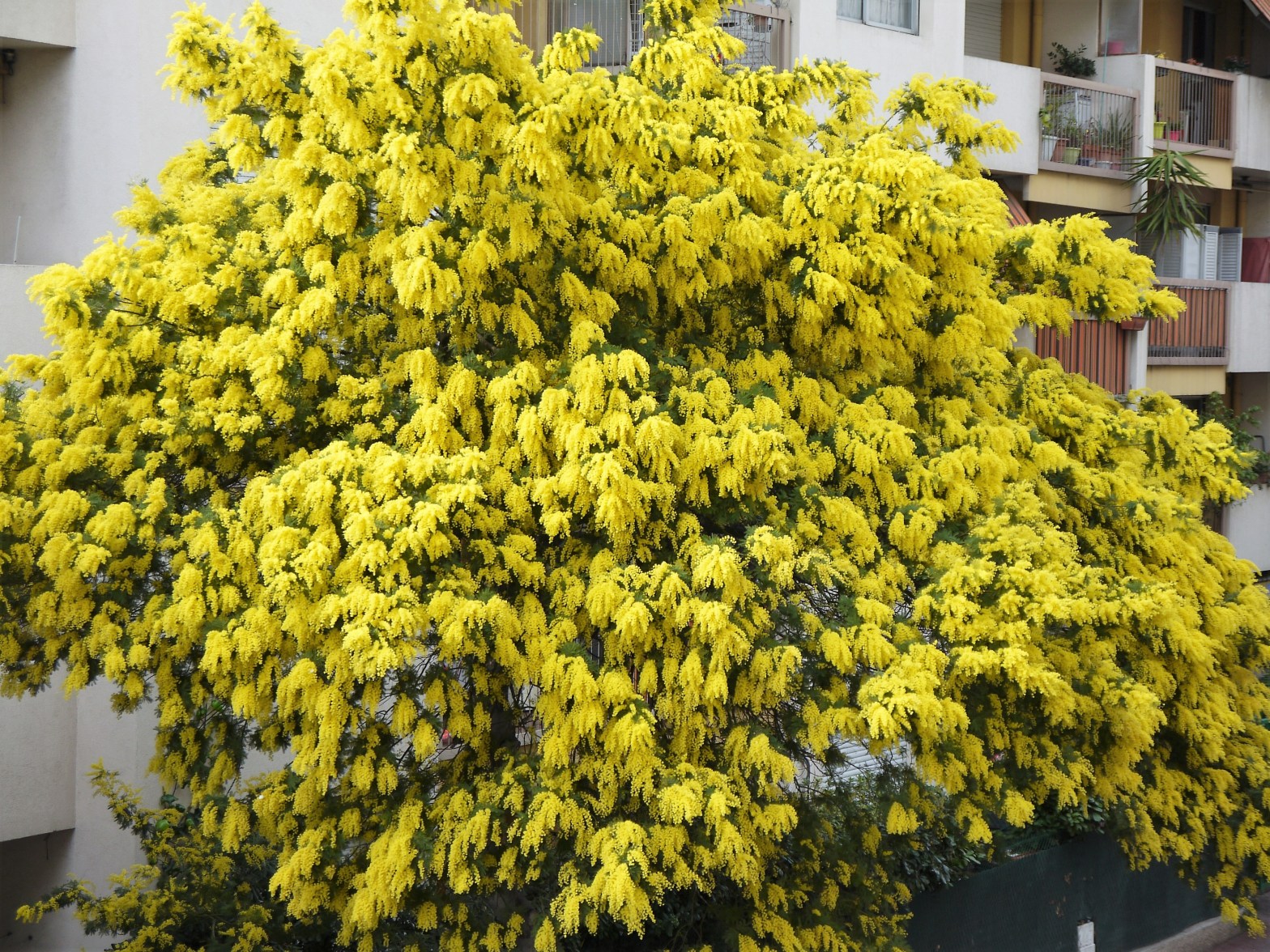
Even though spring has already arrived in Nice and some of the early blooms have died off, our return to England later this week marks the official end of winter for us – even if the weather in England doesn’t agree with that idea.
Naturally, I’m in a reflective mood, evaluating the past four months. The weather nicoise of nearly daily sunshine has dominated my assessment. I can say that it’s been a good winter break. This good feeling has been bolstered by meeting my writing targets for the time in France – most writers will tell you the importance of self-imposed deadlines and the arrogant self-satisfaction of meeting those deadlines. David and I also give the winter break full marks for being an opportunity to improve our French. It hasn’t bettered by leaps and bounds, but we both have noticed that following the news media, written and spoken, has become easier.
Above all else, it’s also been a good winter for reinforcing acquaintanceships and building new friendships. Being ex-pats, we naturally seek the company and wisdom of the more seasoned ex-pats on the Riviera. While this clearly has its benefits, it can be a tight compartment of overlapping Venn diagrams. People we know from the British Association might also be writers I know from the Nice branch of the Society of Authors or women from the International Women’s Club (which I only attended a few times). But this year’s Women’s March at least expanded my network, creating another Venn circle. I’m grateful for that.
With winter’s end I prepare mentally for a political spring with local elections in the UK and ongoing protests against Brexit and Trump. My writer self looks to the change in location and the start of a new season to view the quotidian differently and to be inspired to make connections between the mundane and the new and between my little existence and the bigger human landscape.
This reflective time with the changing of seasons also reminds me of the New England Transcendentalists, e.g. Emerson and Thoreau – the latter, especially. Thoreau was quite the diarist, logging the cycles and habits in his natural environment of the woods surrounding Walden Pond. I can’t think of a setting more different from the cityscape of Nice, with its seacoast and palm trees or the town of Ely, with its cafes and cathedral. But such is the power of the imagination. I close with a snippet of spring immortalised in words:
While the mood was jovial and the music loud, heightened security made the Carnaval de Nice a different kind of event to the one we’ve grown used it. After the terrorist attack of 14 July of last year, the procession route was changed to exclude any part of the Promenade des Anglais. This meant that on the final night when the king of the carnival is set alight and sent out to sea, tradition had been squashed. The king was still killed by flames in a bonfire, but quickly extinguished on the spot by firemen. Also breaking from tradition, the battaille de fleures, where crowds and the people on the floats throw flowers at each other – had been changed to flowers coming only from the floats and not the audience – not so much a battle as a handout.
Officially, these adjustments were out of respect for those who perished on the Promenade – some of very spots where the killings took place would have been included in the normal carnival procession route, including the king’s route to the beach. Flowers are part of official memorial sites to the attack victims and in the makeshift memorials still peppered along the Promenade. Unofficially, a second reason emerged. The smaller area given to the carnival and spectators not being allowed to enter with bags of flowers clearly made it easier for security forces to manage the crowds and any terrorist threat.
These changes to tradition shouldn’t be taken lightly. Purported to be one of the largest carnivals in the world, it is also the oldest in Europe. The earliest record of the carnival goes back to 1294, when Charles Anjou, the Count of Provence, made mention of visiting the celebrations in Nice. In recent weeks, I’ve heard local people talk about not following to tradition in ways that one speaks of the death of a close friend – nothing will ever be the same without them.
But those were the quiet faces under the carnival masks. The public faces, sparkling with glitter, paper-macheted, sexy, comical, upheld the traditions and essentially gave the finger to the terrorists of our age.
If I’ve learned one thing from the Brexit vote and the ascent of Trump, it’s that inside social media I live in my own echo chamber. Both events took me by surprise. While the mainstream media showed support from all sides in these contests, in Facebook and Twitter, I was seeing overwhelming support for remaining in the EU and strong arguments and jokes against Trump – though divided between supporting Saunders and Clinton.
Of course, in Facebook my ‘friends’ are mostly my former students and colleagues, fellow writers and a few friends who really are friends, in the sense of the word before Facebook. It is no surprise that educated and liberal would define this select group. On top of that, my Facebook interactions have been infiltrated by Mark Zuckerberg’s algorithms, sending me postings from people and organisations which are not my friends, but are clearly like-minded – but sadly, not always accurate – I’ve stopped waiting for the ‘child-rape’ charges to be pressed against Trump.
Twitter is another matter. I started my Twitter account when I was still working in academia fulltime and used it as a way of furthering my own research. As a writer, I also follow other writers, certain publishing houses and publications, etc. In other words, I’ve been following loads of people I don’t know personally. Yet, many of these strangers were touting the same views as I was when it came to the Brexit and Trump. We retweet and like each other’s tweets. It could be argued that these people were indirectly hand-picked because they were likely to share the same views – after all, they’re academics or in creative fields.
Since the Brexit vote, in order to keep sane and to participate in the fight against a hard Brexit, I have deliberately started following political organisations, e.g. the Lib-Dems and Open Britain, for the latest news and information on protest marches and petitions. Hence, reinforcing the walls of my online echo chamber.
Offline, while my choice of friends keeps me contently among the like-minded, I also find myself in situations with people who are my political polar-opposites. In Nice, for instance, the expat community sometimes has me face-to-face with regular readers of The Daily Telegraph, which openly backed Brexit. Such encounters challenge me to show up prepared with statistics and references. I do my best, though probably to little or no effect.
At least with Trump’s win my online and offline worlds are not so different. I have not had to come face-to-face with any Trump supporter – I don’t know what I would say to one if I did. It would be like confronting someone who has joined a cult – they have chosen to believe the unbelievable and they are clearly nurturing a need that places them beyond reason.
Yet, my offline world – and my online world outside of social media – with news programmes and newspapers, keep me informed about what others are thinking – the polemics of the debates. The walls of my echo chamber might be strong, but they do have windows.
My love affair with the writing of Elena Ferrante continues. This time with her third novel, The Lost Daughter, published in 2006. Leda is a divorced middle-aged professor with two adult daughters, who are away living in Canada with their father. On her summer break, Leda rents an apartment at a beach resort. Her observations and interactions with other holiday makers stirs up memories of her relationships with daughters and her now ex-husband. When a little girl loses her doll at the beach, a strangely twisted plot emerges.
Leda narrates the story with frankness and self-reflection which are as refreshing as they are brutal. This, along with the intrigue of the plot and subplots, kept this reader engaged to the very end.
Like millions of people who have watched the Netflix documentary series Making a Murderer, I was left bemused and angered by the cases of Steven Avery and his nephew Brendan Dassey.
The filming of this programme began back in 2003 when a Wisconsin man named Steven Avery had been exonerated as a result of DNA evidence after serving eighteen years in prison for rape. As the government offered him a paltry sum for his years served, he decided to sue the Manitowoc Country Police for their negligence – and by many people’s account, deliberate mishandling of evidence and witness statements. While this lawsuit was going on, Avery was accused of murdering Teresa Halbach, a 25-year old woman who had gone to Avery’s auto scrapyard to photograph a vehicle and had no other connection to Avery.
Steven Avery
The same officials who were being sued by Avery were involved in investigating this murder case against him. To avert any appearance of conflict of interest, the state Attorney General assigned another county to work on the case, alongside Manitowoc County. The incriminating evidence against Avery was discovered by the officers from Manitowoc County, mostly under suspicious circumstances. For instance, finding Halbach’s car keys in Avery’s trailer days after other investigators found nothing. There were also blood stains with Avery’s DNA found in Halbach’s car, said to have come from a cut on Avery’s finger though there were no fingerprints or other evidence to link Avery to the car. The vial containing Avery’s DNA from his case back in 2003 was still in police lockup and had been discovered to have been tampered with – a discovery filmed in the process of making the Netflix documentary.
I won’t go on about the trial as it was covered in some nine one-hour episodes of the series. In the end, Avery was convicted and sentenced to life in prison without parole. Attempts to reverse this decision using the Appellate Court and the Supreme Court systems have failed. From watching this series, this appears to be a terrible injustice driven by the need of authorities to protect their own from accusations of prejudice and framing innocent persons.
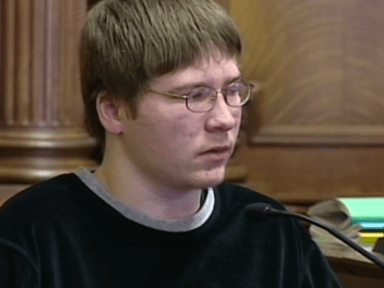
There’s more. Avery’s nephew, Brendan Dassey, was also arrested as an accomplice in this case. At the time of the murder, Dassey was sixteen, but with the reading ability of an eleven-year old. He was learning disabled and awkward and shy. He had been brought into this case as a possible witness by his fourteen-year-old cousin who claimed that Dassey had told her about seeing body parts on the Avery property. On the witness stand, the teary-eyed cousin admitted that she had lied about this. Manitowoc County police had managed to get a confession out of Dassey by telling this unintelligent boy that he could go home if he confessed. I only saw about 30 minutes of the four hours of the police interview with Dassey. Given that, two things struck me: one, young Dassey was there on his own, without parent or lawyer; and two, it was obvious that the police were feeding Dassey with their version of the story and getting him to agree. The first lawyer assigned to Dassey had already presumed his guilt and put Dassey through another bullying interview to get more details out of him. In time, this lawyer was fired from the case by the judge. Yet, this additional incriminating evidence was still used against Dassey during his trial.
Brendan Dassey
The so-called confession from Dassey was so weak that it wasn’t considered admissible in Steven Avery’s trial. Yet, despite that and the lack of physical evidence, Dassey was still convicted to life in prison and won’t be eligible for parole until 2048.
Since then, experts in false confessions and groups, such as Innocent Project, have taken up Dassey’s case. As this young man, now in his late twenties, remains incarcerated, I can’t help but to think of other cases where false confessions were extracted from innocent young men. The notorious Central Park Five involved teenaged boys convicted of raping and brutally beating a woman in 1989. They were exonerated on DNA evidence and the confession of the true rapist in 2002.
Both the Avery and Dassey cases point to weaknesses in a complex legal system which have led to these apparent injustices. At a deeper level, these cases highlight prejudices against certain types of people – working class, learning disabled, young males. It also underscores the desire to incarcerate people, as if that is going to deter similar crimes or make our communities safer – studies have shown otherwise. By all appearances, Avery and Dassey are victims not just of a handful of dishonest police, but of a much larger social malaise.
I grew up in Rogers Park, Chicago in the 60s and 70s. My childhood was post-civil-rights movement and pre-multiculturalism. My parents’ generation had labels for the neighbourhood. The west side of Rogers Park was still ‘predominately Jewish’ and therefore white. The east side, where we lived was ‘changing.’ In East Rogers Park, there still were many Jewish families, some Russian, others German. Other groupings to describe the east side weren’t based on religion, but on the countries their parents and grandparents came from. We had the Italians, the Irish, the Poles and the Puerto Ricans. Sprinkled among these were some Chinese and African-Americans (we used the word ‘blacks’).
If you had asked me when I was living there, how I would describe my neighbourhood, I wouldn’t have used any of these labels. I would have said that it was a ‘cool’ neighbourhood because it had a lot of movie theatres, public parks and shops and restaurants. I would have also mentioned that it was a mix of three-storey apartment buildings and red-brick houses and that it ran along the lake front. I would have located this neighbourhood in terms of its train stations, the elevated line that runs from Loyola to Howard Street.
This isn’t to say that I was unaware of religious and ethnic divides or the prejudices that come with it. The grandparents of a couple of my school friends still had numbers tattooed on their arms from the Nazi concentrations camps. And there were plenty of jokes – the Italian, the Irishman and the Pole go into a bar… At high school, students segregated themselves in the cafeteria with blacks and Puerto Ricans having their own tables, while the whites were mixed in together. In my memory, at the white tables we didn’t make disparaging or racist remarks about kids at the other tables – that would have been ‘uncool’ and ‘racist’ – words no one wanted to be called. And ‘immigration’ was never a topic. Back in our classes and more importantly on our sports teams and clubs, students from different backgrounds played, worked and joked together.
I don’t wish to turn back the clock to my childhood in the ‘changing’ neighbourhood as it came with its own problems – among them, the tensions between the generations on issues of race and ethnicity. I know America has changed since then. To what extent is hard to say, living in Europe as I do. The current wave of fascism in Trump’s America was introduced through democratically-held elections, while at the same time it’s being fought both in the media and on the streets by what appears to be a majority. Perhaps America is ever-changing and perhaps that comes with democracy. I am worried that it’s becoming, to use a word from my youth, uncool.
In truth, the march had been cancelled. Following the terrorist’s attack in Nice only some seven months ago, the city had decided not to give a permit to the women’s march yesterday. Some of us didn’t know about this. Others knew and were defiant. Unfortunately, others stayed at home or went to marches in Marseille or Montepelier. In the end we had about 100 protesters, mostly from America and Britain, but also from France, Holland, Turkey and South Africa. That was enough to gather around the statue of Apollo, take photos of each other and send them to Twitter and Facebook before heading out to march along the Promenade des Anglais up to the Negresco and then back on the other side of the street to return to Place Massena. This was naturally followed by political banter in nearby brasseries and cafes.
This march may have been on a small scale, but as it was linked in ideology and spirit to marches around the world, especially the one in Washington, it was a big deal. The women I spoke to felt it necessary to be there. When someone as devisive and aggressive to the world and insulting and hateful towards women as Donald Trump emerges, the only choice is to fight back. I hope I never lose my own sense of connectedness to the world and willingness to fight when confronted – even from miles away – by such a menace.
Let’s be honest. None of us knows exactly what’s going to happen once Donald Trump becomes president. As he’s never held public office, there’s nothing to go on. We don’t know if he can manage governmental institutions, though his management of his businesses and of his transistion team are far from exemplary. We also don’t know what underlies his thinking. His dealings with international relations even as a president-elect show his propensity to offend American allies while praising those who have been hostile toward the US. He chose to run on the Republican ticket, but on social issues, he’s not touting family values like a Republican, and his proposal to fund infrastructure comes straight out of the Democratic tradition of public spending. While some of his ideology may have surfaced with his cabinet picks of businessmen, climate-change deniers and army generals, if their confirmation hearings are anything to go by, their views are often at odds with Trump’s campaign proposals and promises.
The only thing that remains consistent and visible for all to see has been Trump’s character. He is bombastic, thin-skinned and untruthful. He has expressed opinions that are clearly racist, misogynistic and against freedom of the press. Whatever his policies may turn out to be, he has already embarrassed America by coming this far.
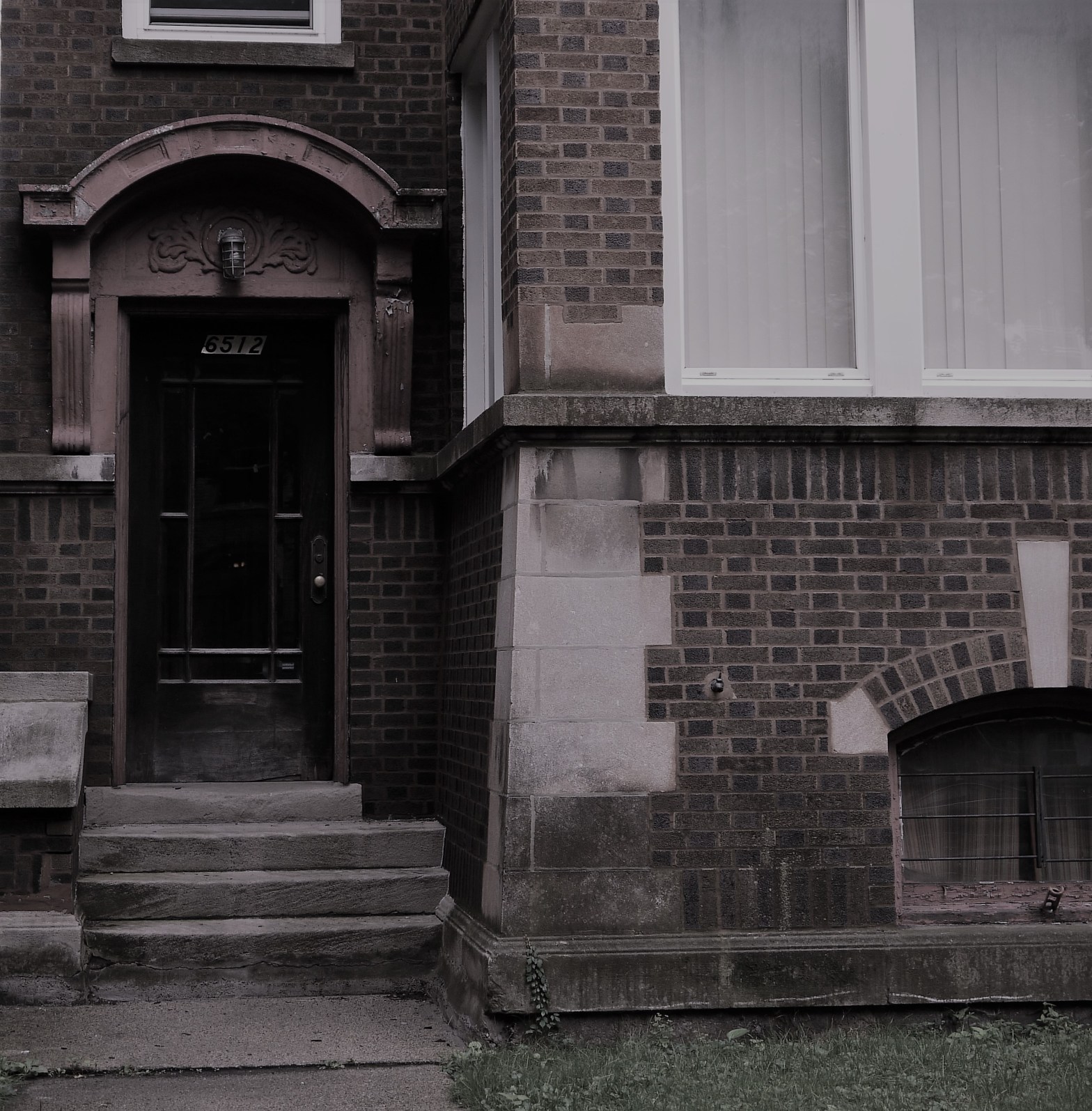
I’m writing this now perhaps as a place-marker, noting my own awareness of a time before the Trump era started. America has been far from perfect in my lifetime, and my decision many years ago to emigrate from her shores is one that I’ve never regretted. But now, I fear the country that is so internationally influencial is at the beginning of its own Dark Age and might take the rest of us along with her. While some of my Facebook friends are changing their profile pictures tomorrow to one of the departing president and his family, I have chosen a picture of darkness to represent the many things we don’t know about this new presidency and darkness for what we do know about this new president.




 parkling with glitter, paper-macheted, sexy, comical, upheld the traditions and essentially gave the finger to the terrorists of our age.

 Leda narrates the story with frankness and self-reflection which are as refreshing as they are brutal. This, along with the intrigue of the plot and subplots, kept this reader engaged to the very end.

 r classes and more importantly on our sports teams and clubs, students from different backgrounds played, worked and joked together.


 g this now perhaps as a place-marker, noting my own awareness of a time before the Trump era started. America has been far from perfect in my lifetime, and my decision many years ago to emigrate from her shores is one that I’ve never regretted. But now, I fear the country that is so internationally influencial is at the beginning of its own Dark Age and might take the rest of us along with her. While some of my Facebook friends are changing their profile pictures tomorrow to one of the departing president and his family, I have chosen a picture of darkness to represent the many things we don’t know about this new presidency and darkness for what we do know about this new president.
 Paola Trimarco