Let’s not forget Steven and Brendan

Like millions of people who have watched the Netflix documentary series Making a Murderer, I was left bemused and angered by the cases of Steven Avery and his nephew Brendan Dassey.

The filming of this programme began back in 2003 when a Wisconsin man named Steven Avery had been exonerated as a result of DNA evidence after serving eighteen years in prison for rape. As the government offered him a paltry sum for his years served, he decided to sue the Manitowoc Country Police for their negligence – and by many people’s account, deliberate mishandling of evidence and witness statements. While this lawsuit was going on, Avery was accused of murdering Teresa Halbach, a 25-year old woman who had gone to Avery’s auto scrapyard to photograph a vehicle and had no other connection to Avery.

steven-avery
Steven Avery

The same officials who were being sued by Avery were involved in investigating this murder case against him. To avert any appearance of conflict of interest, the state Attorney General assigned another county to work on the case, alongside Manitowoc County. The incriminating evidence against Avery was discovered by the officers from Manitowoc County, mostly under suspicious circumstances. For instance, finding Halbach’s car keys in Avery’s trailer days after other investigators found nothing. There were also blood stains with Avery’s DNA found in Halbach’s car, said to have come from a cut on Avery’s finger though there were no fingerprints or other evidence to link Avery to the car. The vial containing Avery’s DNA from his case back in 2003 was still in police lockup and had been discovered to have been tampered with – a discovery filmed in the process of making the Netflix documentary.

I won’t go on about the trial as it was covered in some nine one-hour episodes of the series. In the end, Avery was convicted and sentenced to life in prison without parole. Attempts to reverse this decision using the Appellate Court and the Supreme Court systems have failed. From watching this series, this appears to be a terrible injustice driven by the need of authorities to protect their own from accusations of prejudice and framing innocent persons.

There’s more. Avery’s nephew, Brendan Dassey, was also arrested as an accomplice in this case. At the time of the murder, Dassey was sixteen, but with the reading ability of an eleven-year old. He was learning disabled and awkward and shy. He had been brought into this case as a possible witness by his fourteen-year-old cousin who claimed that Dassey had told her about seeing body parts on the Avery property. On the witness stand, the teary-eyed cousin admitted that she had lied about this. Manitowoc County police had managed to get a confession out of Dassey by telling this unintelligent boy that he could go home if he confessed. I only saw about 30 minutes of the four hours of the police interview with Dassey. Given that, two things struck me: one, young Dassey was there on his own, without parent or lawyer; and two, it was obvious that the police were feeding Dassey with their version of the story and getting him to agree. The first lawyer assigned to Dassey had already presumed his guilt and put Dassey through another bullying interview to get more details out of him. In time, this lawyer was fired from the case by the judge. Yet, this additional incriminating evidence was still used against Dassey during his trial.

brendan-dassey
Brendan Dassey

The so-called confession from Dassey was so weak that it wasn’t considered admissible in Steven Avery’s trial. Yet, despite that and the lack of physical evidence, Dassey was still convicted to life in prison and won’t be eligible for parole until 2048.

Since then, experts in false confessions and groups, such as Innocent Project, have taken up Dassey’s case. As this young man, now in his late twenties, remains incarcerated, I can’t help but to think of other cases where false confessions were extracted from innocent young men. The notorious Central Park Five involved teenaged boys convicted of raping and brutally beating a woman in 1989. They were exonerated on DNA evidence and the confession of the true rapist in 2002.

Both the Avery and Dassey cases point to weaknesses in a complex legal system which have led to these apparent injustices. At a deeper level, these cases highlight prejudices against certain types of people – working class, learning disabled, young males. It also underscores the desire to incarcerate people, as if that is going to deter similar crimes or make our communities safer – studies have shown otherwise. By all appearances, Avery and Dassey are victims not just of a handful of dishonest police, but of a much larger social malaise.


Diversity- an American Childhood

I grew up in Rogers Park, Chicago in the 60s and 70s. My childhood was post-civil-rights movement and pre-multiculturalism. My parents’ generation had labels for the neighbourhood. The west side of Rogers Park was still ‘predominately Jewish’ and therefore white. The east side, where we lived was ‘changing.’ In East Rogers Park, there still were many Jewish families, some Russian, others German. Other groupings to describe the east side weren’t based on religion, but on the countries their parents and grandparents came from. We had the Italians, the Irish, the Poles and the Puerto Ricans. Sprinkled among these were some Chinese and African-Americans (we used the word ‘blacks’).

If you had asked me when I was living there, how I would describe my neighbourhood, I wouldn’t have used any of these labels. I would have said that it was a ‘cool’ neighbourhood because it had a lot of movie theatres, public parks and shops and restaurants. I would have also mentioned that it was a mix of three-storey apartment buildings and red-brick houses and that it ran along the lake front. I would have located this neighbourhood in terms of its train stations, the elevated line that runs from Loyola to Howard Street.

This isn’t to say that I was unaware of religious and ethnic divides or the prejudices that come with it. The grandparents of a couple of my school friends still had numbers tattooed on their arms from the Nazi concentrations camps. And there were plenty of jokes – the Italian, the Irishman and the Pole go into a bar… At high school, students segregated themselves in the cafeteria with blacks and Puerto Ricans having their own tables, while the whites were mixed in together. In my memory, at the white tables we didn’t make disparaging or racist remarks about kids at the other tables – that would have been ‘uncool’ and ‘racist’ – words no one wanted to be called. And ‘immigration’ was never a topic. Back in ouchicago-2011-001-2r classes and more importantly on our sports teams and clubs, students from different backgrounds played, worked and joked together.

I don’t wish to turn back the clock to my childhood in the ‘changing’ neighbourhood as it came with its own problems – among them, the tensions between the generations on issues of race and ethnicity. I know America has changed since then. To what extent is hard to say, living in Europe as I do. The current wave of fascism in Trump’s America was introduced through democratically-held elections, while at the same time it’s being fought both in the media and on the streets by what appears to be a majority. Perhaps America is ever-changing and perhaps that comes with democracy. I am worried that it’s becoming, to use a word from my youth, uncool.

Women’s March – Nice

In truth, the march had been cancelled. Following the terrorist’s attack in Nice only some seven months ago, the city had decided not to give a permit to the women’s march yesterday. Some of us didn’t know about this. Others knew and were defiant. Unfortunately, others stayed at home or went to marches in Marseille or Montepelier. In the end we had about 100 protesters, mostly from America and Britain, but also from France, Holland, Turkey and South Africa. That was enough to gather around the statue of Apollo, take photos of each other and send them to Twitter and Facebook before heading out to march along the Promenade des Anglais up to the Negresco and then back on the other side of the street to return to Place Massena. This was naturally followed by political banter in nearby brasseries and cafes.

This march may have been on a small scale, but as it was linked in ideology and spirit to marches around the world, especially the one in Washington, it was a big deal. The women I spoke to felt it necessary to be there. When someone as devisive and aggressive to the world and insulting and hateful towards women as Donald Trump emerges, the only choice is to fight back. I hope I never lose my own sense of connectedness to the world and willingness to fight when confronted – even from miles away – by such a menace.

On the eve of the Trump era

Let’s be honest. None of us knows exactly what’s going to happen once Donald Trump becomes president. As he’s never held public office, there’s nothing to go on. We don’t know if he can manage governmental institutions, though his management of his businesses and of his transistion team are far from exemplary. We also don’t know what underlies his thinking. His dealings with international relations even as a president-elect show his propensity to offend American allies while praising those who have been hostile toward the US. He chose to run on the Republican ticket, but on social issues, he’s not touting family values like a Republican, and his proposal to fund infrastructure comes straight out of the Democratic tradition of public spending. While some of his ideology may have surfaced with his cabinet picks of businessmen, climate-change deniers and army generals, if their confirmation hearings are anything to go by, their views are often at odds with Trump’s campaign proposals and promises.

The only thing that remains consistent and visible for all to see has been Trump’s character. He is bombastic, thin-skinned and untruthful. He has expressed opinions that are clearly racist, misogynistic and against freedom of the press. Whatever his policies may turn out to be, he has already embarrassed America by coming this far.

I’m writinblackg this now perhaps as a place-marker, noting my own awareness of a time before the Trump era started. America has been far from perfect in my lifetime, and my decision many years ago to emigrate from her shores is one that I’ve never regretted. But now, I fear the country that is so internationally influencial is at the beginning of its own Dark Age and might take the rest of us along with her. While some of my Facebook friends are changing their profile pictures tomorrow to one of the departing president and his family, I have chosen a picture of darkness to represent the many things we don’t know about this new presidency and darkness for what we do know about this new president.

Reading James Shapiro

Some years ago, I read James Shapiro’s 1599, which won the Samuel Johnson Prize for non-fiction. I’ll admit I’m not one to read non-fiction books very often – outside of linguistics, of course. I tend to reserve book reading for fiction and occasionally poetry. Reading a year in the life of Shakespeare, however, was a different matter. Shapiro’s 1599 brough1599t together history and social context with textual analysis of Henry V, Julius Caesar and As You Like It, along with some of the influences on Hamlet, which Shakespeare started in that same year.  While some critics felt this volume was too encyclopaedic and lacking in soul, it certainly whetted my appetite. Unfortunately, I had to wait some ten years.

I’ve just finished reading Shapiro’s next instalment, 1606, which covers the context around the writing of King Lear, Macbeth and Anthony and Cleopatra. I’ve never been a strong fan of Anthony and Cleopatra as a play and was glad that it didn’t take up much of the book. Most of this volume is about the Gunpowder Plot of 1605 and the ways it influenced the writing and performance of King Lear, and to a lesser extent, Macbeth. While the political climate of 1606 – and the reminder that Shakespeare was also a Jacobean – made for interesting reading, I found even more fascinating the textual analysis of Lear. Shapiro demonstrates how Shakespeare’s Lear drew from King Leir, the anonymously-authored Elizabethan play, and more importantly how it di1606verged from it, rendering a much more complex ending. Shapiro has also unearthed the influence and direct borrowings from Harsnett’s Declaration of Egregious Popish Impostures, which gave guidance on how to spot people faking demonic possession – a popular topic at the time.

I could say a great deal more about both 1599 and 1606, but I don’t wish to give away any more than I already have. Yes, it sounds as if I’m talking about a novel and not a literary history – this is a sign of good writing coupled with captivating interpretations.

Democracy at its best/worst

The editors of the Daily Telegraph ended the year with a commentary about Brexit – no surprise there. The UK’s vote to leave the EU was the big story for Britain in 2016. While it’s also no surprise that the Telegraph editors believe that this is a good thing, they did manage to surprise and irritate me with their closing remarks: “In 2016, we saw British democracy functioning at its best. It must be protected for future generations to enjoy.”

Really? Was that democracy at its best? In 2016, the British people saw what a mess democracy can be. Many asked, ‘If we have democratically-elected members of parliament, why do we have to have a referendum in the first place?’ The answer to this for many has been simply ‘democracy.’ Others of us with a working memory will point out how the referendum decision came about when PM David Cameron was trying to appease the hard right of his party and not lose votes to UKIP – in other words, it was a politically-motivated abuse of democracy.

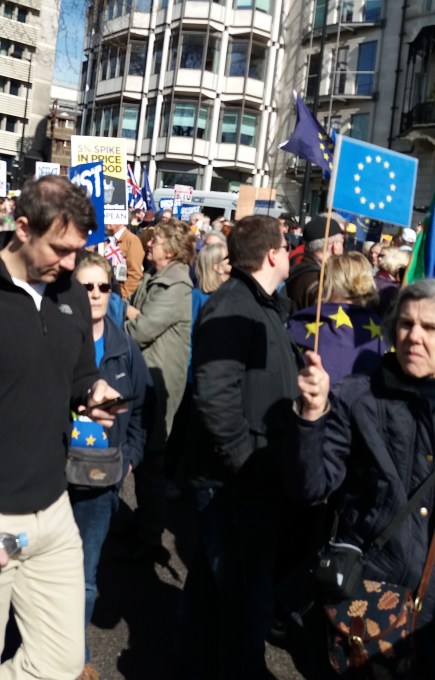
Putting that aside, let’s treat the referendum vote as an exercise in democracy. This exercise didn’t show ‘democracy functioning’ as much as it showed a dysfunctional democracy. Part of this dysfunction could be seen in the belief in lies and misinformation that democracy does not protect us from. Nor does democracy guarantee that people won’t vote from positions of racism or xenophobia. The referendum campaigns exploited this, along with the freedom of speech that democracy supports. Filling the air with vitriol, this exercise in democracy brought out the worst in many people, leaving families and whole communities divided. It also led to the murder of MP Jo Cox, an act that has come to epitomise the extreme views of the hate-fuelled debates.uk-eu-flag

I don’t understand how any thinking person, whether they voted to leave or remain in the EU, could possibly claim that this was democracy at its best.

Equally irksome is the Telegraph comment about democracy needing to be ‘protected.’ I think we all know that this is a reference to those who want to overturn Brexit or have a soft Brexit. These people have been accused of being ‘undemocratic’ by some of our politicians and by many in the gutter press. Wanting to correct the error that is Brexit, or wanting to have a partial departure from the EU is hardly undemocratic. On this latter point, given the simplistic in/out nature of the referendum, where issues such as EEA membership or soft Brexits were never an option, continuing the debate is a necessity.

For those of you who regularly follow my blog or my Twitter account, you’re probably wondering why someone who retweets from The New European, The Guardian and The New Yorker would even bother with a right-winged paper like The Daily Telegraph. Two reasons: one, their Saturday paper has an excellent puzzle section – two codewords, three crosswords and various number puzzles for my better half; reason two, I think it’s healthy to consider the views of others that are different from my own, especially if the writing is intelligent. Needless to say, the Telegraph editors have failed this time to demonstrate that intelligence. Instead, they have chosen to appeal to the same emotive fervour which replaced reason during the referendum campaign. So, my closing remarks come from the US journalist Bill Moyers, who once said, ‘The quality of democracy and the quality of journalism are deeply twined.’

2016: Looking for the Good in Good Riddance

Does any more need to be said about what an awful year 2016 has been? In brief – Syria, Bowie, Brexit, Trump, attacks on Nice, Orlando, Brussels… 2016-12-25 11.12.11.jpgFor Syria, Brexit and Trump, there are lists of hideous events and poisonous rhetoric that have helped to make 2016 notorious even before it’s ended. Finding the good in such a year is not only challenging, but necessary. The alternative would be to shut down and sulk, permitting the bad things to fester and grow worse in the mind’s eye.

As for the positive side, for a start there was the election of Sadiq Khan, London’s first Muslim mayor; women in Saudi Arabia finally got the right to vote; and a solar-powered plane circumnavigated the world. Other good things to happen in 2016 have come from the world of sport. Leicester City football club won the Premier League, having started the season with odds of 5000-1. There was Team GB’s fabulous performance in the Summer Olympics. And on the other side of the Atlantic, the Chicago Cubs won the World Series – a feat they hadn’t done since 1908.

Other good things have emerged out of the many horrible and sad events to happen in 2016. The attack on Nice, my second home, has brought about feelings of solidarity with my neighbours and acquaintances. The shock and sadness of David Bowie’s death similarly connected me with other fans and people whose younger selves had also been transformed and liberated by his creativity. Following the Brexit vote, I have joined several organisations to stay informed and to protest against the economically stupid and xenophobic trail left behind – I have never signed so many petitions and written to so many political representatives as I have in the past six months. Again, there is the sense of unity which is comforting, but to this I must add the satisfaction of doing something political and participating in the bigger debate.

While the political is personal, there is the smaller concentric circle of my personal life. In 2016, David and I went to America to visit friends and I was reunited with a friend I hadn’t seen in 34 years. I also visited my father’s grave for the first tim2016-12-25-11-16-33e – a sad, but fulfilling experience. Back in England and France, we have enjoyed good health and the company of friends and family, interspersed with reading, writing, playing golf and going to cinemas, concerts, galleries etc. Life has been full and satisfying, even under the cloud of this annus horribilis.

Let’s hope for a better 2017.

Facticide

I would have published this sooner if there hadn’t been for so many journalists beating me to the goalposts. I write this knowing I risk being just another voice waxing on angrily about the prevalence of lies that have produced the vote in Britain to leave the EU and Donald Trump’s presidential victory. Since most intelligent people are familiar with these lies, I won’t even start by listing the more outrageous or popular ones.

I’ll start with language. The word post-truth has gained currency in recent weeks. While it encapsulates the idea that we are beyond truths or are willing to ignore truths, I think it is far too gentle. Post-truth rings too much like postmodernism, poststructuralism or post-realism. I prefer facticide. This word more aptly suggests a killing of truths.

Of course, truth is a slippery concept. When we think of truths, we think of facts, those things that can be evidenced or scientifically tested. We all know how evidence and testing can be interpreted in different ways. And some truths can change over time. For instance, the BBC quiz programme QI, known for its thorough and accurate research, once acknowledged that many of its ‘correct answers’ of the not too distant past were no longer true or correct because new information and scientific research changed the so-called facts.

And then there’s factoids, untrue or unreliable ideas that have been reported trumpbsand repeated so often, they are taken as fact. The word itself, apparently first coined by writer Norman Mailer, takes its ‘oid’ suffix form the Greek word for appearance or form. This definition has been expanded and according to a few online dictionaries, a factoid is also a small or trivial fact. In this newer definition lies another danger – factoids are no longer half-baked truths, they’re just mini-truths.

These are some of the subtle ways that truths can be tampered with. In recent months, the world has witnessed the more blatant attacks on facts, expertise and truths. But what has been more worrying are the falsehoods that are standing in their place. I know this is nothing new. Back in the fifth century BCE, Sophocles said, “What people believe prevails over truth.” It the time between then and our present day, many philosophers, artists and writers have made similar comments. But I’m more aware and fearful of this tendency now. The believed falsehoods of the Brexit and Trump campaigns, and their ilk in other parts of the world, are full of isolationism, nationalism and hate. I cannot see what good could possibly come from this.

American Patriotism and Me

A few days after the terrorists’ attack on the World Trade Center, I received a chain email that read ‘All Americans wear RED, WHITE and BLUE today.’ The email told its readers to pass this message on to ‘ten other Americans.’ In other words, members of the same club. It concluded with ‘Let’s unite against terrorists. GOD BLESS AMERICA.’ I coiled up in my revulsion and wondered if there were any way I could take the ‘dual’ out of my dual citizenship, cut my elongated vowels and just be British. I then braced myself for a round of nauseating American patriotism.

Over the years, I’ve run into non-Americans who assume that if someone is American, they are by definition patriotic. Not true. There’s something about American patriotism that has always gotten under my skin. Having spent most of my adult life outside of the US, I’ve clung to only a portion of my youth – the  unpatriotic portion. I was growing up when the Vietnam war and television characters like Archie Bunker made patriotism look foolhardy and ‘uncool.’ Certainly, other Americans grew up at this time – this awkward border between baby boomers and x-ers – but many of them seemed to have shaken off this brief trend of embarrassment at being American, this blip in American history.

Of course, my contemporaries were helped back into patriotism by the usual culprits, the US media and public relations firms. I recall in 1979 when Americans were being held hostage in Iran, marketers had discovered that patriotism could sell. Then, it was through advertising that ideas and trends gained their currency in America. The Pepsi ads that ran during the Iran-hostage crisis had pop stars singing about Pepsi as being ‘the American way’ while dancing in a sea of red, white and blue. Now, of course, this fervour is drummed up largely on social media.

Most of this patriotism has been harmless, but it does have an ugly side. I first experienced this nearly 30 years ago. I found myself in the States in 1990 just as the first Gulf War was starting. I strongly opposed US involvement and felt that the escapade was a set up to use the stockpile of arms left by President Reagan and to help his successor G.H. Bush overcome his image as a wimp. One morning, I stopped by my local convenience store in Boston to pick up a newspaper. When I was handed my change, the cashier held out a little foot-high American flag and said, ‘Here, Ma’am.’ The last thing I wanted was an American flag. What was I going to do with it? Wave it around like a cheerleader, promoting a country I was embarrassed to be from at a time when it was policing the world to the resentment of millions? Being polite, I simply said, ‘No thank you.’ I saw her mouth hang open and her eyes roll in disgust as I turned away to walk towards the door. I heard the cashier spit out the word, ‘Bitch.’ I knew it was meant for me, but I pretended that it was for someone else or that I hadn’t heard it. This stranger’s hostility shook me to the core.

Since then when the topic of American patriotism came up and someone would comment about my lack of it, I would give them one of two responses. One – I would remind them of Samuel Johnson, who once called patriotism ‘the last refuge of a scoundrel.’ Or two – I would confess to experiencing patriotic moments, such as when the American hockey team beat the Canadians at the winter Olympics or when Obama give his acceptance speech in Chicago on the night of his first presidential election. Honestly, goosebumps.

Flash forward to 2016. Donald Trump is running for president and he is gaining support. And this is not a joke. The people who support him are mostly the flag-waving, intensely patriotic Americans who seem to be the stuff of satire. Supporters of Trump’s opponents will wave flags at rallies, but are otherwise more subdued in their patriotism.

Throughout this presidential campaign, Trump spewed out racist, intolerant and misogynistic attacks – and gained patriotic supporters. Now here’s the strange thing – given my history with American patriotism, you would expect me to roll my eyes, get angry at the television and computer screen and feel even more alienated from American patriotism than ever. But that didn’t happen. Trump has injected poison into America. He’s ruining it.  In doing so, he has reminded me of the many good things America stands for – even if it doesn’t always get it right. Things like liberalism and democracy. Like many Americans, I find myself feeling protective and perhaps even patriotic over the country of my birth. Perhaps I have finally fallen into the grips of patriotism – the kind of patriotism that happens at a time of war when you don’t want to see your country destroyed. But, frightfully, in this war, the enemy is within.