Toxic Tribalism

Dare I write about this subject at the risk of being trolled? Okay, I’m bursting to exorcise the feelings of revulsion I have been living with since Brett Kavanaugh was sworn into the Supreme Court.

Like millions of people, men as well as women, I believe Christine Blasey Ford’s testimony. More importantly, if I imagine that I did not believe her, I would still think that Judge Kavanaugh’s testimony was appalling. His display of petulance, self-pity and political partisanship is not befitting a member of America’s highest court.

With only one week allowed for the FBI to investigate and with a Republican majority in the Senate, Kavanaugh’s appointment came as no surprise. The appointment of Clarence Thomas in 1991 after the compelling testimony of workplace sexual harassment by Anita Hill yielded the same results. But here are the key differences that stirred my disgust these past weeks. Firstly, Anita Hill was alone in her allegations; two other women have come forward in the Kavanaugh case. The Hill vs Thomas standoff was over 30 years ago, before Harvey Weinstein and before #MeToo – this time, the nomination process could have ended differently. The greatest differences of all have been the reactions of the sitting presidents. In 1991, President George Bush (senior) accepted the Senate’s decision to place Clarence Thomas on the Supreme Court without accusing Anita Hill of giving ‘false testimony,’ as Trump did of Christine Blasey Ford. Nor did President Bush publicly mock Anita Hill or say anything to discredit her during the judge’s swearing in ceremony.

This country of polarised ideals has escalated into a cold civil war. And it didn’t start with Trump.  The conservative/liberal polemic has been deepening since the Clinton administration, when Speaker of the House Newt Gingrich went after all things liberal, especially the Clintons – a modern couple, where the lawyer wife earned more than her politician husband. This anti-liberal fervour took on another level with the Tea Party Movement, started during the Obama years.Tribalism 2

Unlike these other waves of intense opposition, this time the initial surge is not in reaction to the presidency, but is being instigated by it. Trump has fuelled old hatreds and fears, using rallies to drum home the message, touring the political polemic into tribalism.

Some members of the Republican tribe, mainly women, actually believed Ford’s testimony, but said that Ford was ‘mistaken’ about the identity of the perpetrator. They ignore (or think we won’t notice) the fact that Ford said she was ‘100%’ certain that it was Brett Kavanaugh. In other words, these Republicans know better, but pretend that they don’t in order to remain loyal to their tribe. I don’t meant to oversimplify this – of course, there’s also political motivation. Once the questions about Kavanaugh emerged, other conservative judges could have been nominated in Kavanaugh’s place, but given the realistic time constraints and the mid-term elections coming up, the Republicans couldn’t risk having an even harder time still if there were more Democrats in the Senate.

If, dear reader, you’ve been reading my blog for a while, you know that I too have strong political opinions. I’m a proud feminist and a liberal. I’d like to think that my feelings of being incensed over the Kavanaugh vs Ford spectacle have come from my intellect and not because I belong to a tribe that has been threatened. I fear that there could be a point in my future when my passionate views tip over into tribalism.

Greek Tragedies and Shamsie’s Home Fire

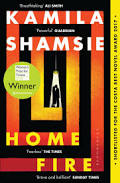
Occasionally, I plunge into a book without any foreknowledge – no reviews, no jacket blurbs (thanks to Kindle), no personal recommendations. I added Kamila Shamsie’s novel Home Fire to my Kindle collection solely on the basis that it had won the Women’s Prize for Fiction 2018.

In brief, the story is set in Britain’s Pakistani community at a time when Britain has its first Muslim Home Secretary (the book went to press before MP Sajid Javid became Home Secretary – a fortuitous coincidence). The Secretary’s son gets involved with a young woman whose twin brother, desperate to learn about their dead jihadi father, has left the UK to join ISIS. As the narration weaves its plot, it reflects on the nature of grieving and the power of loss alongside the machinations of our 24-hour media.

When one of the principle characters dies (no spoiler here) the reaction from one of the other characters is fierce and edges on melodrama. At that point in my reading I started to think about this as a Greek tragedy. Then the unburied corpse appeared. Lightbulb – this is a retelling of Antigone. For me, this realisation happened well into the novel. That, I think, is a good sign. The story reads as something very modern and gratefully without all of the self-righteous suicides of Sophocles’ original play – apologies to classicists.

This modern-day Antigone veers from the original in several other ways, which really would be a spoiler to talk about. But I will say this, unlike other versions (Brecht, Anouilh, etc.), this one has a cracking sense of humour that I wouldn’t have expected had I been told about the book and its themes beforehand. Clever banter between the characters, especially the adult twins who jibe each other in text messages, keeps the story pacey and the tragic elements more shocking and poignant.greek tragedies 2

Of course, by reading this blog, you won’t have the same lightbulb going on in your head somewhere in the middle of the story. But in our time of online reviews, book groups and reader talk, you probably would have heard it from someone anyhow.

Brexit:  The next steps for this activist

Working with grassroots organisations like Ely for Europe and the European Movement is one way of tackling a problem like Brexit. It’s helped me to become better informed on the issues and to participate in the protest against the inanity that is Brexit. While I’ve had the honour and pleasure of Co-Chairing Ely for Europe over the past two years, I’m now stepping down from my chairing post. I’ll still be involved with the group and on their committee. But if there’s one thing I’ve learned from years of volunteering it’s that the helm has to be passed around from time to time to keep others involved and to ensure the group doesn’t become a clique.

So, what now? In a matter of weeks, the big decisions concerning Brexit will be made, whether it’s how we’re going to leave the EU or if battle-weary politicians seek to save face by implementing a people’s vote. Much of this will be in parliament’s hands. This leaves me with the feeling that a lot of my work has been done on the Brexit front.

I’ve been getting more involved with local politics and the workings of the local councils – in Ely, we have city, district and county levels. I’ve been somewhat involved in the past, but stayed on the fringes. My willingness to plunge in – if I’m not mixing my metaphors – has come from a sense of hopelessness at the national level. In Britain, our politicians have let us down. They aggressively spout forth on the ‘will of the people’ but seem blind to the majority of polls and surveys over the past two years showing that most people in Britain do not wish to leave the European Union. Before that, there were austerity measures and the growing gap between rich and poor. Anyone who has been following British politics will tell you that these ills are entangled in party politics and not in the best interest of the country. That is, we’re not talking about competing ideologies – we’re talking power games.

Last night I was having drinks with friends from America and South Africa. International travellers, broadsheet readers – yes, I know, the chattering classes. Our consensus:  Britain was turning into another Italy. The political sway of Nigel Farage, the popularity of Jeremy Corbyn, the bumbling incompetence of Boris Johnson and Therese May are paralleled by Berlusconi, Matteo Salvini and so on. Britain, like Italy, has become a laughing stock. But what makes Italy work, and has kept it working since the war despite political chaos at the top, has been local governments and concerned citizens. With that thought in mind, I take my next steps.

Starry, Starry Night

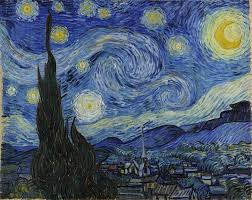
I’m hoping this blog will purge the song from my head. The original tune by Don Mclean was never a favourite. Like its topic, the life and paintings of Vincent Van Gogh, it’s riddled with clichés and imagery of the ubiquitous works of art. The song was released when I was nine and Van Gogh was already an industry. Like any self-respecting kid, I rebelled against things cross-generational and ultra-popular. I adopted the view that Van Gogh wasn’t such a great painter, but merely the first pop artist, creating his own celebrity as he suffered for his sanity, clipped off his own earlobe and took his own life as lovers often do.Starry starry night 1

It wasn’t until I visited the Van Gogh Museum in Amsterdam some 25 years later that I felt a genuine admiration for the artist’s work. Yes, of course, Vincent (I think we’re on first names here) is still an industry, arguably an even larger one than he was in my childhood. But he’s not just about starry nights after a day of daffodils that catch the breeze from the painter with a severed ear. There’s the earthiness of his potato eaters and the delicacy of his Japanese-style almond trees that speak volumes for his skill and renderings of life around him and in his imagination (he never went to Japan). I’ve since toured the museum a few more times, searching for the lesser known works and avoiding the gift shop.

The song wouldn’t have lodged in my head had it not been for a reinterpretation by Lianne La Havas which featured at the end of the film Loving Vincent. La Havas’s version is more soulful, slightly less melodic, than Mclean’s. In case you haven’t seen it or heard about it, Loving Vincent (directed by Dorota Kobiela and Hugh Welchman) is an animation using Van Gogh’s paintings for the scenes and characters, including the master himself. It’s the only film of its kind, using 125 artists to hand paint the 65,000 frames. Many of the scenes appear to move slightly as if being painted or repainted before our very eyes – it’s visually hypnotic. This entrancing state is helped by the soft, rhythmic soundtrack (by Clint Mansell) to lift the audience into another world. The only thing holding the film back, as many critics have noted, is the mediocre script that revolves around the artist’s sudden death, suggesting that it wasn’t intentional.

Nevertheless, this melange of paintings, film and music needed to come together for me to remember, Vincent, this world was never meant for one as beautiful as you. (Oh, I wish it would stop). Starry starry night 3

Paul Beatty’s The Sellout

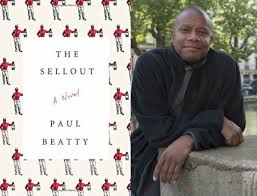
I’ve probably said too often that I prefer the Man Booker shortlist over the winner. But not for 2016. Thanks to Ely Public Library, I’ve finally caught up with the list, arriving at The Sellout by Paul Beatty. It’s brilliant social satire. The premise says it all – an African-American man becomes a slave-owner and brings back segregation in an effort to put his town back on the map.

There are many quotable passages, but I’ll just share a few: ‘They say, “pimpin’ ain’t easy.” Well, neither is slaveholdin’. Like children, dogs, dice, and overpromising politicians, and apparently prostitutes, slaves don’t do what you tell them to do.’ And ‘No one other than college hippies, Negro jubilee singers, Cubs fans and other assorted idealists knows verses two through six of “We Shall Overcome”…’ Growing up as a Chicago Cubs’ fan makes this one especially poignant. He – we never get the name of the narrator – explains the true reason why the Supreme Court doesn’t allow cameras. ‘It’s to protect the country from seeing what’s underneath Plymouth Rock. Because the Supreme Court takes out its dick and tits and decides who’s going to get fucked and who’s going to get a taste of mother’s milk.’

The novel manages references to contemporary pop culture, along side more scholarly descriptions involving, Piaget, Skinner, Goddard and Tennyson, to name a few. It’s a thoughtful read that masquerades as a page-turning comedy. One of my favourite comic novelists is Stephen Fry and, although Beatty has a more satirical edge, there are some overtones of Fry’s style and erudition in Beatty’s work.

While the comic asides fill the book, it still has solid plot and character development. It reminded me of the also marvellous BBC comedy-drama Fleabag, written by and starring Phoebe Waller-Bridge. We see a character warts and all as they stumble through life dealing with the rawness of their sexual encounters, their awkward familial relationships and close, yet ambiguous friendships while up against a world they are constantly at odds with. Like Fleabag, The Sellout, keeps its audience aware that the protagonist is a product of our present-day society.  And like coming to the end of Fleabag, The Sellout left me wanting more.

Beatty 2

Carl Jung and Writing ‘New Shoes’

‘New Shoes’ began as an early chapter in my second unpublished novel, introducing my protagonist at a low point in her life. She’d been fired from her job. Aside from the humiliation of being sacked, she had to deal with the culture of unemployment – anxiety about job interviews, rejection, the loss colleagues and the worst thing of all – daytime television.

This is a story about work-related identities, a term I would use now, after about a dozen rewrites over the course of two decades. No one said writing was easy. Back when the story was a novel chapter, I thought of it as being about Jungian archetypes. I was living in Washington DC and it was the mid-nineties. In academia and new age thinking, Jungian psychology was all the rage and it found its way into literary and cultural criticism, which I was teaching at the time. And if that weren’t enough, Joseph Campbell had taken Jung and turned him into an industry through the PBS television series The Power of Myth, which of course came with a best-selling book. An offshoot of this can be found in the fiction writers’ bible The Writer’s Journey by Christopher Vogler.

‘New Shoes’ looks at changing one’s role in life and identity in Jungian terms. The visually-impaired old lady fulfils the mentor archetype. As Karena goes down her hallway looking for the old women, she comes across other archetypes and rejects them – or they reject her. The characters on the television, presented as two-dimensional, are also archetypal, pandering to an audience of types of people (rather than individuals). The somewhat open-ended conclusion stresses the importance of the process over the outcome. In Jungian-based psychotherapy, the emphasis is on the process of self-discovery, which is often aided by the analysis of dreams. Neither Karena nor the reader knows if she’s dreaming in parts of the story.

Over the years, only a couple of people who have read the story and commented on it have picked up on the Jungian references. But that’s okay. I’m reminded of the scholar who spent years analysing and writing about Shoeless Joe and its screenplay adaptation Field of Dreams, as explorations of Jungian psychology. It makes loads of sense to me with a story so obviously full of symbolism. When the scholar met the author of Shoeless Joe, W.P. Kinsella, and asked about the Jungian influences, Kinsella had no idea what the scholar was talking about.

Summer Reading 2018

If you’re expecting light-weight, page-turners for the beach, you’ve come to the wrong blogger. For reasons unknown, I like thematic and/or challenging reading over the hot months when I don’t usually have writing deadlines and my colleagues and students are on extended breaks.

A couple of years ago I had an Isherwood summer, rereading Goodbye to Berlin and reading for the first time a couple of volumes of memoirs surrounding that time period in Isherwood’s life. I escaped into that world quite easily, making it one of my more memorable reading summers.

This summer hasn’t followed a theme, but has been a time to catch up with books people have passed on to me and those Kindle books that I picked up on sale and forget that I had them. The summer started with Jonathan Franzen’s hefty novel Purity. This dark comedy is like other Franzen novels, very much a mocking reflection of our times. It interweaves seven overlapping sections of narrative into one story of surveillance culture, social media paranoia and clumsy sex. While I did internally chuckle along the way, I was uneasy at times with his often psychologically weak and yet manipulative female characters.

summer reading 2018-1

After that 500+ pager, I needed a novella. Lionel Shriver’s The Standing Chandelier is an excellent study on the psychology of relationships. It stands off a plutonic friendship with a former lover against the relationship that will end up in marriage. While Shriver exercises precision in her word-choice and descriptions, I felt it was in places a bit overwritten, with too much telling analysis, rather than showing and allowing readers to draw the conclusions for themselves. But still a worthwhile and thankfully short read.

Catching-up with my booklist has meant that I’m finally reading Atwood’s The Blind Assassin. I’m not overtaken by the story-within-the-story, and since most of you have probably already read this, you’ll know what I mean. But the main story, set in the early part of summer reading 2018-3 the 20th century in Canada, is exquisitely written and fully engaging.

I confess that I read a book earlier this summer that for some might be deemed a beach read. Wendy Cope’s collection of prose, Life, Love and the Archers, can be read in bitesize segments, which I guess qualify it for the interrupted reading associated with beaches and sitting out in the garden. Like her poetry, her prose is accessible, thought-provoking and often humorous.

Another beach book of sorts on this season’s eclectic menu is Antoine Compagnon’s collection of vignettes from the 16th century philosopher Montaigne, couched in Compagnon’s historical and biographical commentary. Even the title suggests summertime beach reading – Un été avec Montaigne. That is, summer reading if you’re French. I’m having to look up the occasional modern French word and use context and basic Latin to guess some meanings of archaic terms. Language aside, it’s been interesting to learn that Montaigne was ahead of his time in being an anti-colonialist, drawing attention to the barbarism and oppression Europeans brought to Africa and the Americas. His comments on gender fluidity and hermaphroditism also read as if from a more 21st century liberal-minded time.

So, those are the highlights of the summer book reading, naturally sandwiched between newspapers, online magazines and short stories. Happy reading and stay cool (in every sense of the word).

Standing Up to Racism and Fascism

Is it a multi-circled Venn diagram or a spider-gram that will best illustrate the connections between Nigel Farage, Steve Bannon, Geert Wilders, Belgium’s racist-right politician Filip Dewinter, current UKIP leader Gerard Batten, Donald Trump and British Nazi Tommy Robinson? It would be too easy to draw circles and lines around the racist and fascist ideas these political figures have come to represent. What also connects these men is far more disturbing. They have all publically endorsed at least two of the names on this list and in doing so have helped to spread each other’s popularity and toxic beliefs. They’ve succeeded in making the hate-filled lone wolves across the West feel and act as members of an international pack.

This wider picture makes a lot of us feel out of control and helpless. Of course, we can always find like-minded people amongst our friends, co-workers and fellow liberal activists. We can choose to read the newspapers and follow on social media those who share our anger and disgust. These things might take the edge off, but it wasn’t until this past Saturday that I found a more satisfying way of confronting this barbarism – by yelling at it.

On a hot Saturday afternoon in Cambridge, a couple thousand protesters gathered to rally and march against another march planned by a group of Tommy Robinson supporters. For my international readers, Robinson is a former leader of the far-right English Defence League who is currently in prison for contempt of court. His supporters, including Steve Bannon, Nigel Farage, Geert Wilders and Gerard Batten, want him released from prison on grounds of freedom of speech. (See what I mean about Venn Diagrams.)

A small group (perhaps 200) of Robinson’s lesser known supporters appeared at the march in Cambridge. We easily out-numbered them – which is intensely empowering.  Unlike Trump’s visit to the UK earlier that week, these racists/fascists were within earshot and I felt justified in participating. Will our screamed chants of ‘Nazi scum off our streets’ change the minds of these fascists? Of course, not. Will they think twice before they return to Cambridge for another march? Maybe. Just maybe.  And that’s worth holding on to. Aside from the obvious therapeutic effects of yelling at these racist/fascists characters, I’d like to think these groups lose some of their influence and power to directly offend each time they’re pushed away.

National Democracy Week 2018

It was last week. Yes, I missed it too. If it weren’t for an email I received with a couple of suffragette posters, I wouldn’t have known about it at all.

This inaugural week to pay tribute to democracy in Britain ran from the 2nd to the 8th of July. The date was chosen to mark the 90th anniversary of the 1928 Equal Franchise Act, which gave women the same voting rights as men. Women had gained the right to vote here ten years earlier, but that right was limited to women over the age of 30 who had property – in case you were wondering why we’ve been celebrating in recent months the centenary of women getting the right to vote.

I received my posters to celebrate democracy a few days before the start of the week. Vaguely curious, I put them aside, expecting to hear more about it through the media. But I saw nothing on it when I watched BBC or Channel 4. In the UK newspapers I typically read – The Guardian, The Observer, The Independent, The Times, The New European – there were no reports or commentaries to do with National Democracy Week. Without some sort of reminder and with too many other things clambering for space in my head, I easily forgot about it.

I do wonder if the lack of fanfare or even interest in National Democracy Week had anything to do with what was going on last week. England winning a place in the World Cup semi-finals and the rescue operation for the Thai boys and their football coach trapped in a cave dominated our casual news talk – and they have nothing to do with democracy. In the middle of the week, democracy appeared in the form of freedom of speech when London Mayor Sadiq Khan gave permission to anti-Trump protesters to launch an angry baby Trump balloon during the US president’s visit. Whether such permission should be allowed is still being debated as I write. The week ended with our PM presenting her Brexit proposal to her cabinet ministers at a secluded day retreat at Chequers. This involved an elite group within a minority government agreeing to a proposal that they know will likely be rejected by the EU. To make this exercise in democracy even more futile, two days after agreeing to support the PM, two of the ministers resigned in disagreement.

Perhaps National Democracy Week decided it was best to keep a low profile.

National Democray Week 2
This and the featured image are the posters designed by Vicki Johnson.

Having realised that the celebrations had passed me by, I went to the government website to see what I missed. I clicked on ‘events’ and was sent to another webpage, where I could click on ‘events’ to find events in my area. That brought me back to the first page where I had clicked on ‘events.’ I was in a loop. What an appropriate analogy for our modern democracy. It appears I’ve participated after all.

To Protest or Not To Protest

To quote Albert Einstein, ‘If I remain silent, I am guilty of complicity.’

President Tr**p arrives in Britain on Friday the 13th of July. (Supposedly – he could cancel at any minute.) When I first heard about this visit some two months ago, my gut instinct was to appear outside Downing Street with a placard saying ‘Women of the World Against Trump.’ This sign would sum up a number of issues ranging from ‘grabbing pussy’ to cutting off overseas aid for women’s health.

But two months is a long time in the hate-filled-mud-slinging world of this US president. Since the announcement of Tr**p’s upcoming visit, the US has pulled out of the Iran nuclear deal, the US Embassy has moved to Jerusalem (unravelling decades of diplomacy), some 2000 migrant children have been separated from their parents and put into detention centres, without tougher gun laws another 25 mass shootings occurred in America (including one yesterday at a newspaper in Maryland – hard to separate this from the anti-media atmosphere of this president), and now his Muslim travel ban has been given the go ahead. While all of this is going on, a slew of environmental protection laws are being axed. There’s simply too much to protest against and not enough placards to go around.

On the other hand, I wonder if I should show up at all. POTUS seems to thrive on attention, positive and negative. Since most of what he does is deserving of a negative response, I fear that giving him attention is going to produce more of the same. That is, we need child psychology for dealing with this man-child.

I also wonder about the power of protests. That sounds like a contradiction coming from me. Yes, of course, I was in London Saturday among the 100,000 plus anti-Brexit protesters demanding a people’s vote of the final Brexit deal. And it was a success. Our protest was the lead story on most of the news programmes that night and on the front covers of most of the newspapers Sunday morning. The initial analysis from the political pundits is that this protest sent a message to the minority of hard Brexiters in government and possibly the inert Jeremy Corbyn, along with jump starting some of those remainers who have given up the fight. That’s all fine and good.

protests against trump 2.jpg
People’s Vote march 23 June 2018.

A protest against Tr**p is another matter. It’s likely to be on the news, but what kind of message is it going to send? There’s no single solid message or legalisation coming up (as in the case of Brexit) to be impacted or potential votes to be lost by protesting against him.  Tr**p has secured his Alt-Right base, held on to reluctant Republican support with tax cuts and corporate welfare and normalised his hateful and child-like rhetoric through saturation.

Returning to Einstein, I refuse to remain silent. But I think there are more effective ways than another street protest for confronting Tr**p and all his nastiness. From this side of the Atlantic, petitioning and writing to our own governments to stand up to this US president on particular issues is a start. So too is supporting the many NGOs, such as Amnesty International and NRDC (Natural Resources Defence Council), whose organised lobbies and legal teams have a fighting chance. With these ideas in mind, this time, I’m staying at home with my cardboard and placard stick.