Scraping sounds better than stealing

The topic was AI. Today, the topic is always AI. Let’s be honest, whether we see it as a sophisticated search engine, a gushing editor or techno teacher, most of us are using it.

At this online writers’ group, we started by regaling each other with our experiences of dabbling in AI – those silly hallucinations and unnatural conversations where very answer ends in question. Of course, what was said in that meeting ‘stayed in the room.’ With that rule, I braced myself for writers admitting they used AI to help them create and edit their work. But no, a few of us admitted trying it as an editor while others sought its help with research. In my case – I’ll step outside the room – I’ve used it for editing passages of a novel I wrote years ago and was undergoing a major editing/rewriting. I would give Co-Pilot a few pages of a chapter that I felt was sagging and asked it to tighten it up. The Co-Pilot version rearranged some sentences to make them more concise, but in many cases more adjective laden – I’m not a huge fan of adjectives in creative writing. Let the verbs and metaphors do the heavy lifting I say. For me, this teaching tool showed me what I needed to look for in my writing that could be effectively rewritten.

The conversation quickly turned from how we were using it to how it was using us. One author moaned at how Anthropic ‘scraped’ seven of his novels without his permission or financial compensation. He is currently involved in a class-action lawsuit being spearheaded by the Society of Authors. Using a link now available on the SoA website, another novelist discovered one of her books had also been scraped. Outrage mixed with fear – what about the other AI platforms? How do we find out about them? And what about those unscrupulous so-called writers who are using AI – our books – to write formulaic tripe that will sell like hotcakes?

I probably didn’t make myself popular by mentioning that a publisher of one of my academic textbooks contacted me to ask my permission to use my book for training an AI platform. If I opted in, whenever my work is used, it will be referenced with a link to the publisher’s website, and I would receive a small royalty. Of course, I opted in. Really, it wasn’t for the money. My reasoning, which I shared with my fellow writers, is that at least I know my book draws on and refers to peer-reviewed studies, and the final draft of my book was peer-reviewed by two scholars in the field. I was pleased to contribute a reliable source to an LLM. Better this than the grey literature and internet folk linguistics that is being scraped as I write this blog.

No one commented. I was likely to be seen as a traitor.

A few days after the meeting I stumbled across a counterbalance to all this by Wired magazine’s editor, Kevin Kelly. He feels honoured to have his books included in AI training. Kelly says that in the not-too-distant future, ‘authors will be paying AI companies to ensure that their books are included in the education and training of AIs.’ That is, authors will pay for the influence of AI responses that include their works – a type of indirect advertising. Hard to believe this in the current climate.

The one word that didn’t come up at this writers’ meeting, which in hindsight I wish had, is ‘creativity.’ For me, it’s not so much about my published books being so precious. It’s more about the process. The creation and recreation of texts. In the words of Henry Miller ‘Writing is its own reward.’ No bot can take that experience away from me (to paraphrase an old song).

What I’ve been reading

Ocean Vuong is a brilliant writer – an utterly unique voice. On Earth We’re Briefly Gorgeous was his first novel and is written as a letter from a Vietnamese American son to his illiterate mother, knowing she will never read it. Using poetic language and humour, the novel explores themes like identity, trauma and homosexuality. It also conveys a strong social message about the damage done to American families and communities by the opioid crisis. While so much of this novel is philosophically and poetically quotable, I’ll close with this gem:

‘Do you ever wonder if sadness and happiness can be combined, to make a deep purple feeling, not good, not bad, but remarkable simply because you didn’t have to live on one side or the other?’

I can’t imagine a bot producing that, let alone enjoying the act of creating it.

Sorting out, throwing away

This summer, I embarked on a major project – clearing out the paper clutter. I’ve disposed of two boxes crammed with over 30 old journals and once again triaged my bookcase into categories of sell, donate and keep.

Letting go of my once precious journals – some have travelled to three continents – has brought  two things into focus. 1) Half of these journals were about the craft of writing, developing plots and characters, turning loose ideas into tangible stories. Now that these works have been written and most published or performed – some more successfully than others – I don’t need these notes anymore. 2) The other half of the journals were a chronicle of angst and anxiety in the forms of travelogues and practice prose, observing changes to my lifestyle with each new country, each new job while untangling my neuroses. These pages detailed a younger me – or another me – who, while still present, exists at a distance now. Since my thinking and behaviours have evolved, these journals could be discarded.

Flipping through the pages one last time, I did find a few memories that sparked new ideas for fiction and nonfiction. I’ve already noted them in my current journal, which has been digital for the past five years. I suppose someday that, too, will be deleted. For now, at least they aren’t collecting dust and taking up space that could be used for more useful items.

As I was preparing myself to say goodbye to these now worthless volumes, I stumbled upon a quote from professional New Yorker Fran Lebowitz. When asked if she kept a diary or journal, she responded: ‘Guess what? I don’t need to live my life twice – once was enough.’

The books were a lot easier to purge. I grew up in an apartment full of books. The living room was flanked with two walls of bookcases – classics and encyclopaedias in hardcover and everything else in paperback. All these books were read at some point by my mother, my six siblings and me. Every Saturday, one of us drew the short straw and had to dust the living room – a feather duster along the tops and bindings and a cloth dampened with wood polish for the shelves. Over time, some books were passed on to my mother’s friends or donated to a library, and the empty spaces were quickly filled again.

I inherited this need to be surrounded by books, continuing the tradition of book purges with each move to a new country or city. But in recent years, the rise of e-readers and regular library visits have naturally reduced the content on my shelves. With this summer’s clearing out, I sold some 50 books online and gave another 20 to charity. What remains are a handful of language books that I’m still using and some poetry and French books that I still dip into.

The only books I have held on to for sentimental reasons are my own publications (that are not available in digital form), my high school yearbook and the complete works of Shakespeare. While I have the Bard’s entire canon on my Kindle, I saved this specific edition for the handwritten inscription from my mother. It was a birthday present from her, one of the few positive memories I have. The inscription reads, ‘May you taste of life as deeply as did the masters.’

What I’ve been reading

Samantha Harvey’s Orbital was well-deserving of the Booker Prize last year. It’s the first book set in space to win the prize, which says something about the typical prize judges. Science fiction, while no longer considered pulp, is still seen as too low brow or not literary enough to make the grade. Orbital escapes that by working with science fact. Set on the International Space Station, the lives of six astronauts and cosmonauts – two women and four men – are explored as the spacecraft orbits the Earth 16 times a day.

While the psychological aspects of life in a confined space are compelling, they are within our imagination’s grasp. We can relate to being in tight quarters, working on a team, or feeling unreachable from loved ones. What is far more challenging to comprehend, and therefore more fascinating, is what happens to the human body in space. Harvey’s research is impeccable and aligns with what I’ve discovered in my own reading, including a recent article in The New Yorker on the mysterious and often dangerous long-term effects of gravity on the human body.

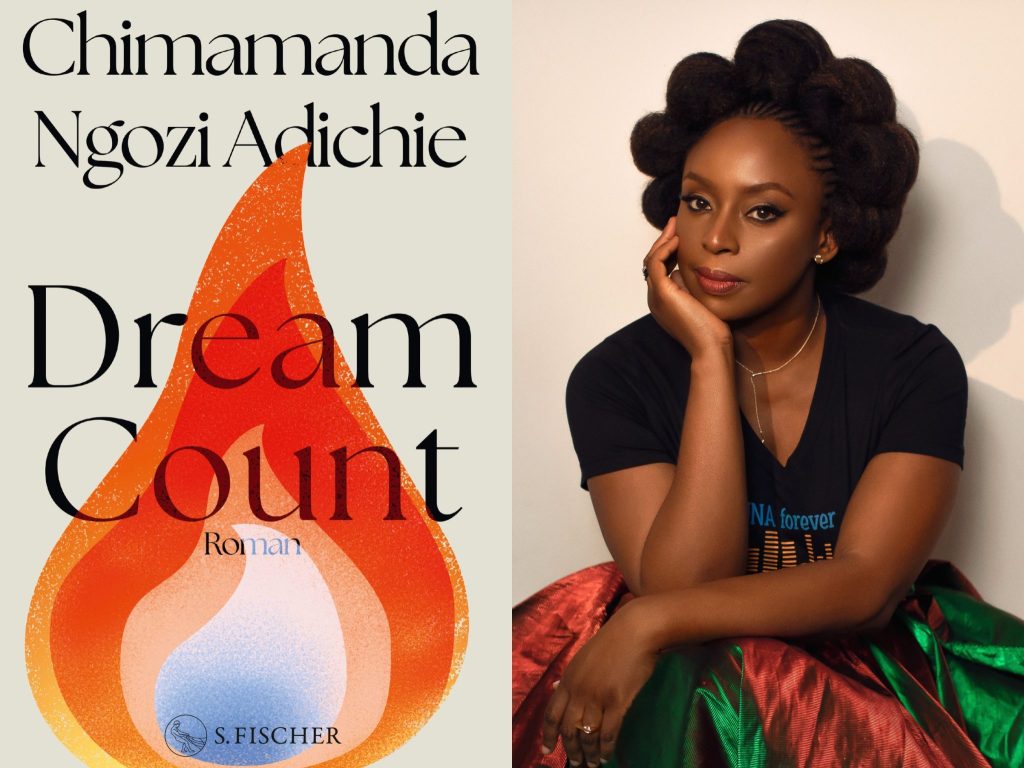
My summer days have concluded with Chiamanda Ngozie Adichie’s latest novel, Dream Counts. Reviews and the book’s jacket blurb emphasize that it is set against the backdrop of the Covid-19 pandemic, with four main characters of Nigerian descent grappling with the isolation and uncertainty of that time. In my reading, however, Covid is present for only a small part of the novel. The interconnected stories of these women cover flashbacks to Nigeria, Britain, and America long before the pandemic struck. The emotional journeys and experiences of the women – including motherhood, sexual violence, relationships, and ambitions – are far more central than the pandemic themes. It’s a story about the complex facets of womanhood, told from a feminist perspective and in Adichie’s signature crisp and fast-paced style.

My 2024 in review without lists

Regular readers know that I’m not a fan of the listacle – those articles that list the best of or worst of or top 10 etc. They’re click bait and often poor examples of writing. By copping out of the type of commentary or critical review that threads an argument,  they offer mere snapshots brimming with clichés. With this hanging over my head for what I shouldn’t do, I’m reviewing 2024 under a few categories.

My year as a verbivore

Yes, I used to refer to myself as a logophile, but I’ve decided to use verbivore instead despite Word underlining it in red. This word was coined by the writer Michael Chabon in 2007 when talking about his love of words.

I’m afraid 2024 hasn’t been good year for verbivores thanks largely to the many national elections taking place all over the world and where politicians have overused words, such as woke, to the point that it can mean the opposite of their original meaning – or simply have no meaning at all aside from being something to despise. I’m also somewhat miffed that words like demure and mindful have gained new meanings thanks to the verbal grasping of social media influencers. Both words are being used to mean low-key and subtle in fashion and style.

The OED ranked brain rot as the word of the year, one that I never used even once. Apparently, it has come out of the Instagram/TikTok generation’s feeling after scrolling through dozens of posts. It can also refer to the low-quality content found on the internet that I do my best to avoid – a challenge when trying to find vegetarian recipes on Pinterest and having to skirt around videos of cats stuck in jars.

While I don’t go around recording myself, I’ll bet that my most used word during this year was incredible. In part, I’ve picked this up from the French who frequently use incroyable. When the worst president in US history (according to historians) gets re-elected after doing and saying so many things that individually should have made him unelectable, that’s incredible. On a more positive note, given my first-hand experience dealing with builders, plumbers and electricians in the South of France, I  thought it incredible that Notre Dame Cathedral was renovated after the catastrophic fire in just over five years.

My year as a reader

This year has been dominated by two writers as in recent weeks I found myself reading yet  another Robert Harris novel, my third this year, and another Amelie Nothomb foray into autofiction, my second for 2024.

After hearing Harris speak about his latest book, Precipice, in Ely a couple of months ago, I delved into this thriller which begins at the onset of WWI. It’s an historical period I’m strangely fond of and the story recounts the true-life affair between Prime Minister Herbert Henry Asquith and the socialite Venetia Stanley. Asquith’s casualness towards national security is mind-boggling  as his teenage-boy infatuation led him to share with Venetia everything from Cabinet debates to classified documents coming from his wartime generals. Though not as complex or informative as Harris’s Pompeii or as intriguing as his Conclave, Precipice is still an entertaining and interesting book.

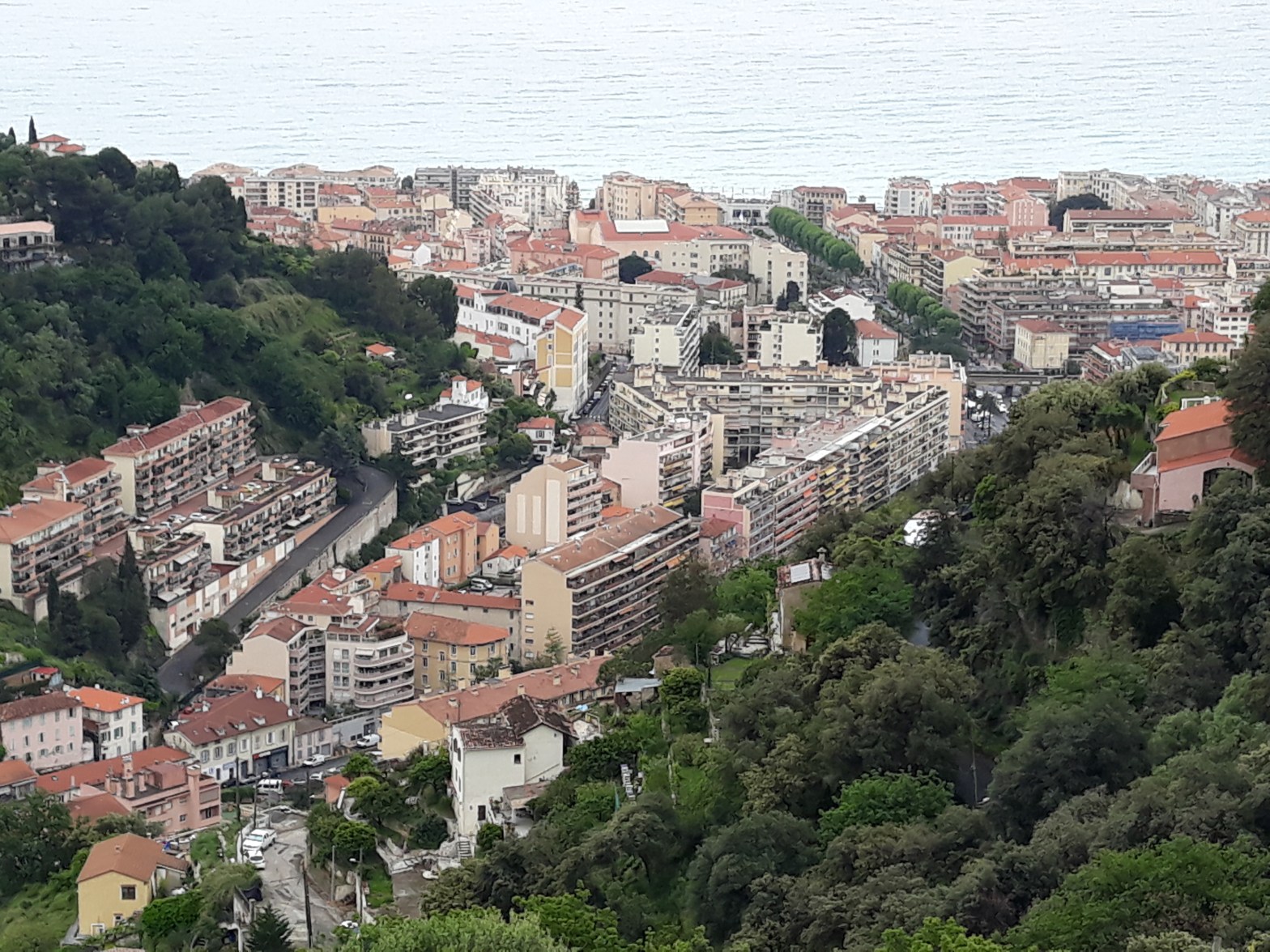
Taking advantage of the public library in Menton, I’ve just finished Amelie Nothomb’s La Nostalgie Heureuse (avail in English). The narrator’s view on the world is as quirky as ever and expressed with her usual dry wit. In this story, she’s already a well-known writer living in Paris, who returns to Japan to participate in a documentary about her early life. Key to this is an anxiety-provoking reunion with a man she nearly married some twenty years earlier. A noteworthy aside – she (fictional narrator and real-life author) had written about the relationship in one of her earlier books and when the ex-fiancé is asked by the documentary maker how he felt about that book, he said that he enjoyed it as a ‘work of fiction.’ This is when the narrator realises that her truth could be other people’s fiction – a wink to the reader of this autofiction.

Throughout the year, I have also made it a point to read writers that are highly praised in the literary press that I have never read. Earlier in the year it was Paul Auster and Antonio Scurati and in recent weeks Carson McCullers. I finally read The Heart is a Lonely Hunter, which most people know from the 1968 film. Set in a small town in Georgia during the Great Depression, the story recounts the lives of several characters who are connected by their work and family circumstances. Their sense of isolation is explored against a backdrop of poverty and racism, with a nuanced struggle with homosexuality. The weaving of the stories reminded me of a typical Robert Altman film – very enjoyable despite the grim subject matter.

On the non-fiction side, this year I’ve continued my nerdy interests in bees and trees, trying to find texts for non-specialists that aren’t too scientifically dry or too jokingly flippant. While I’ve also read some excellent biographies and memoirs, the most thought-provoking and impassioned nonfiction  I’ve experienced this year has been in the opinion pages of the New York Times, The Observer (UK) and Le Monde. They serve as reminders that despite populist voting trends, humanity still exists.

My year as a writer

I started out this year with two writing goals. One was to return to novel #4 and give it a thorough rewrite. While I didn’t produce a full rewrite, I have rewritten about half of it and have made notes for the other half. This task was interrupted by an avalanche of editing assignments that came my way in October and lasted until December. The other writing goal was to simply send out either one short story or one essay every month. I did manage to send out 12 stories/essays this year, but without the monthly regularity – there were a couple of inactive months and a couple bubbling with creativity. Five rejections have been taken on the chin (three were competitions after all) and I await 7 replies.

In the second half of the year, my writing took on a more therapeutic purpose – maybe my way of dealing with complex PTSD. For the first time I’m writing about unpleasant childhood memories and with the creative process taking over, I’m fictionalising certain characters and subplots. I’ve been experimenting with the ‘I-narrator’ by taking on the role of persons other than myself, trying to revisit these episodes from others’ points of view. I seemed to have tapped into something as the work I’ve shown readers so far has been extremely well-received in ways unusual for my early drafts.

My year as a human

Being a linguist, reader and writer are all a part of being a human, but I am aware too that there are other identities of my humanity, such as a friend, spouse, sibling, neighbour, citizen etc. For me, all these roles fill one stratum of physical living in all its sociocultural and psychological dimensions. In this stratum, 2024 has been about witnessing climate change, and then climate change denial by some and inaction by others, along with the public discourse of hate that substantial portions of the population engage with, making me feel like an outlier. I know I’m not alone in this, but I no longer inhabit a space in the norm range.

Another stratum of my humanity exists, but I grapple to explain even to myself. The word spiritual has been stretched and abused by religious and anti-religious alike to the point that I avoid using it. Perhaps this stratum covers all things incorporeal, including abstract thought. This year has made me more aware of this disembodied beingness, if awareness is all I have for now. And so, I continue to practice mindfulness (in the pre-2024 sense of the word – nothing to do with fashionable clothes).

Thank you, readers, for your comments and emoji reactions over the year. I wish you all peace and joy for 2025.

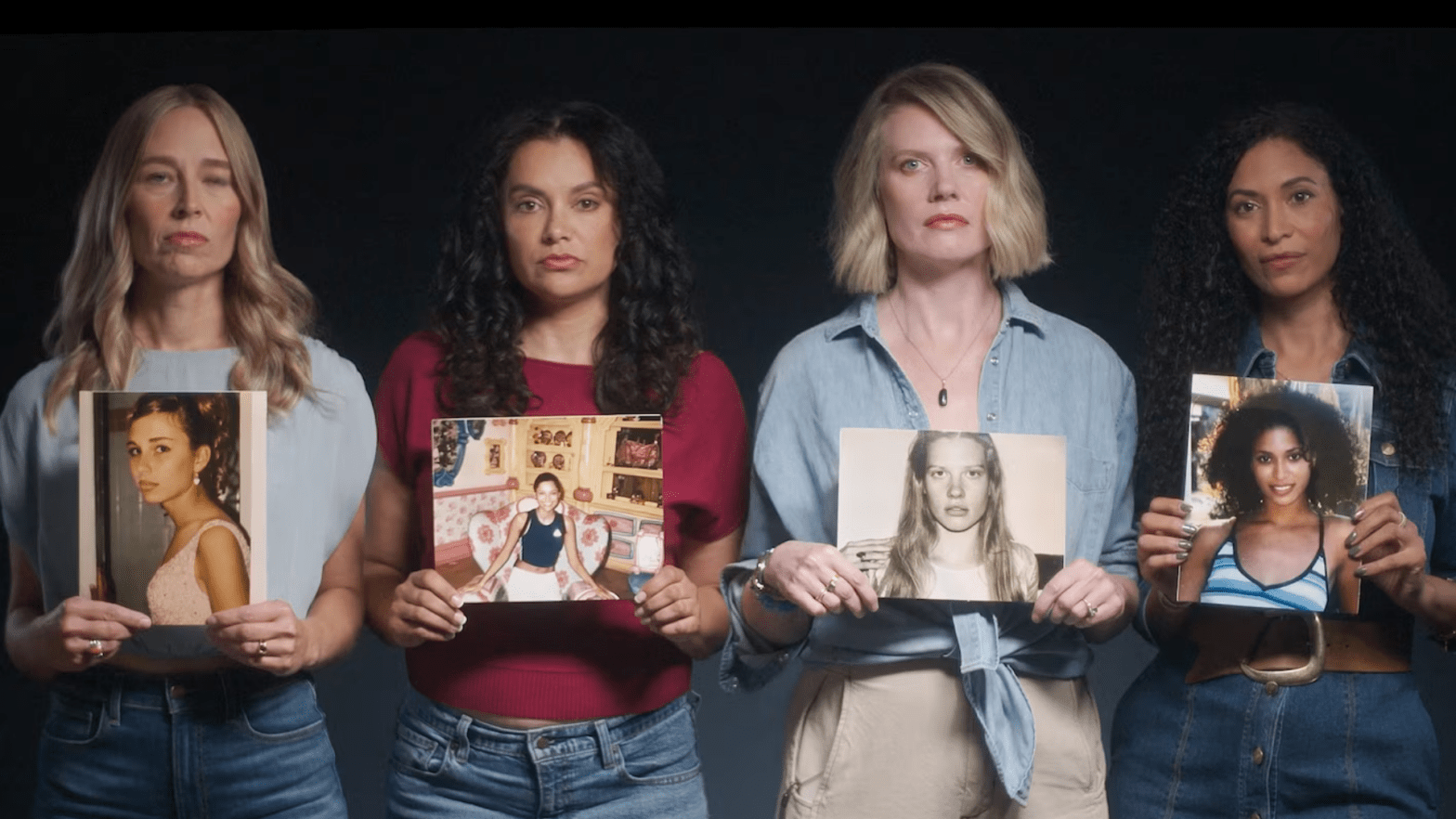
Gisele Pelicot, my choice for Person of the Year

Sensitive, Intelligent Trees – how not to popularize science writing

I warned you, one of my themes this year is trees. Having completed an online course on trees and sylviculture, I’ve turned to books on the subject.

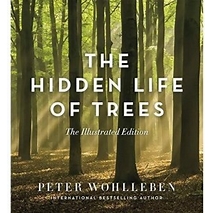
The Hidden Life of Trees by Peter Wohlleben was an international bestseller some five years ago that somehow past me by. On the back of this Wohlleben, a forester by training, has his own magazine, podcast and television show in his native Germany. Now he has a sequel volume that has been reviewed and piqued my interest. But given the rule for most film franchises – sequels are rarely as good as the original – I thought it right that I read the original first.

I’m afraid I struggled with the anthropomorphizing of trees throughout this popular book. Example: ‘The tough trees that grow on this slope are well versed in the practices of denial and can withstand far worse conditions than their colleagues who are spoiled for water.’ Denial is a complex human emotion, one that involves a great deal of reflection and conjuring of scenarios to discount one explanation over another more palpable idea. When I try to grow a new plant from a cutting and it doesn’t work, I don’t suspect the cutting of being in denial of its new situation or resisting the notion of creating new roots. It’s more likely the weather conditions weren’t ideal, the soil was too acidic, or my rooting powder was too cheap to work.

Discussing three oak trees that are next to each other, Wohlleben claims one is ‘behaving’ differently from the rest. ‘Clearly, each of the three trees decides differently. The tree on the right is a bit more anxious than the others, or to put it more positively, more sensible.’ My more prosaic explanation might involve exposure to wind or sunlight, or one of the trees being a favourite of the local canine population.

What got under my skin the most were the references to trees having the parental, often ‘motherly,’ sensibility to protect their young. This comes from an idealisation of parenthood and motherhood that doesn’t fit well with the reality of dysfunctional families or those families where love and nurturing exist, but the time and means to provide safety are lacking due to economic circumstances.

To the book’s credit, it includes fun facts about the ages of some trees – over 10,000 years old. And a few interesting factoids: Apparently, walnut trees emit a mosquito repellent; and ‘There are more life forms in a handful of forest soil than there are people on the planet.’

The book is also useful for its environment points. Bringing together the ideas of commercial forestry with industrial farming, Wohlleben notes that, ‘Thanks to selective breeding, our cultivated plants have, for the most part, lost their ability to communicate above or below ground. Isolated by their silence, they are easy prey for insect pests. That is one reason why modern agriculture uses so many pesticides.’

Reviews of the book show a divide between the professional reader-critics (e.g., The New Yorker and The Guardian) and the citizen-critics on the internet (e.g., Goodreads and Amazon). The latter praise the ‘accessibility’ and ‘delightful’ style and presentation of complex science. I’m with the professional readers who cringe to varying degrees over the simplifications, humanizing and questionable science being used to support the idea of trees having feelings and the capacity to learn. I prefer language about transmitting signals through electrons and the ways living organisms adapt to their environment. I’d like to think that with information and visual aids literally at our fingertips, science writing to generalist audiences no longer needs to rely upon fairytale scenarios or the registers of childhood language.

Paul Nash’s Cherry Orchard (1917)

The Older Writer

Older than who or what? I don’t know. I’m leaving this a dangling comparative for now, something I would tell my students and editing clients not to do.

I’ve realized of late that I have become an older writer,to use a phrase that gets bandied about these days in writers’ networks. Though I see myself as middle-aged, who happens to possess a Senior Railcard, I’m not eligible for some writing competitions and funding grants reserved for the under 35s. The flipside of this is that I can enter competitions for the over 40s and others for the over 50s. I’ve not convinced these age categories help the underrepresented. They just decrease the number of possible applicants, making these smaller and usually less-noteworthy awards.

There’s also an underlining assumption that older writers write for older, more mature, audiences. Children’s literature and young adult fiction blows that theory out of the water. In my thirties and forties, most of my protagonists were in their twenties. In my fifties, I wrote about a nonagenarian. Sure, my writing style has changed somewhat over the years, and I would like to think that I’m a better editor and rewriter of my own work than I was thirty years ago. But when it comes to published writing, I usually can’t tell the age of the writer from their works.

Martin Amis once said that ‘Talent dies before the body.’ He supported his point by claiming that Roth, Nabokov, Updike, Joyce and Tolstoy ‘disintegrate before your eyes as they move pass seventy.’ The generalization is obviously ageist, and in typical Amis fashion tinged with sexism – where are the great women writers in his list? I don’t think he was implying women writers didn’t disintegrate with age the way men apparently do. It’s more likely women writers weren’t worthy of study or mention. Examples abound of older writers having their first novels published or winning literary prizes in their 50s and 60s. Margaret Atwood, Annie Proulx, Hilary Mantel and Annie Ernaux come to mind. All females for sake of balance.

Edward Said famously examined ‘late style,’ as he called it, of artists, composers and writers towards the end of their lives. He didn’t make judgements on the quality as Amis did. Said was interested in the commonalities in these later outputs, only to suggest that such works are about dreams unfulfilled, understandings never reached – a sense of being out of touch with tradition and popular trends at the same time. Different and reflective, rather than disintegrating talent. Being older than I was when I wrote my first short stories and essays, I accept this view and put a knot in the dangling comparative.

Blogging the year

I’ve decided to make 2023 my year to focus on this blog. You might recall a few years ago I set myself the task of writing in my journal every day. That was an interesting exercise, not only as a writer, but for the self-administered psychotherapy that came with it. As this blog is more about the ideas I run into and less about me than my journals, I don’t know what to expect from a routine of regular weekly blogging. My current practice is a blog once every week or two, with larger gaps between blogs if I’m working on a writing project. During those gaps, I’ve made notes and journal entries on things I want to blog about but then didn’t get around to. There’s a stockpile of ideas and fragments of blogs in case I run dry some weeks. I don’t know if that will make me a breaker of the blogger’s code if I don’t always adlib.

I first took up an interest in blogs not as a writer of one myself but from the perspectives of sociolinguistics and psychology. In the early days of blogging, this written genre was a curio for researchers with a hint of condescension. Looking through my folders from a dozen years ago, among the pieces on ‘online language’ – I don’t know what that means anymore – I found an article saying this:

‘The results of two studies indicate that people who are high in openness to new experience and high in neuroticism are likely to be bloggers. Additionally, the neuroticism relationship was moderated by gender indicating that women who are high in neuroticism are more likely to be bloggers as compared to those low in neuroticism whereas there was no difference for men. These results indicate that personality factors impact the likelihood of being a blogger and have implications for understanding who blogs.’

You can read a lot into this, but I’ll stop myself from a feminist interpretation since this was written in 2008. Blogging has since become normalised and no more for the novelty-seeking neurotic than the ever so quotidian Facebook. Today blogging is used by writers of all sorts, a mainstay for citizen journalists, politicians, travel writers and activists. Let’s not forget the promotional blogs that pretend to be informative, masking their agenda to sell the likes of gardening tools, sports kit and (sorry publishing friends) books.

So, why am I blogging? I’m reminded of that worn quote, sometimes attributed to a character in the film Contagion: ‘Blogging is graffiti with punctuation.’ True, sometimes I blog to express myself on political and social issues with the attitude of a graffiti artist. Other times, I share ideas that I find give some meaning to life, sometimes making it clearer, sometimes more ambiguous. A lot of this is through the lens of what I read, fiction and non-fiction, or what I’ve observed in the visual arts and occasionally film and television. With all this in mind, I hope, dear reader, you will continue to read and enjoy my blogs. Here’s to the writing year ahead – clink.

My Year of Journaling

You might recall the start of 2021, I initiated an experiment in writing in a journal on a daily basis. No more sporadic journal writing in waves. This new regime was to give some rigour to my writing practice. I did stick with it, but a couple of times a month, I found myself too busy to write and just completing the daily exercise with a sentence or two, usually about how busy I was that day.

After 365 journal entries, I have 82 pages filled with a total of 41,225 words. That sounded impressive until I did the maths and realised I only wrote on average 110 words per day. When I was working on books, I kept my momentum by writing 5000 words per week (roughly 750 per day). I console myself with the thought that journaling wasn’t the only writing I did in 2021. There were these blogs, a couple of new essays, two articles for East Anglia Bylines and editorial work on a short story (published in September) and two academic articles (published in June and October).

What was this journal about? As a journal intime, it was about me, my feelings and my ideas for writing. Looking back at the year, the journal entries often referred to Covid and how I was feeling about it, or how the government restrictions, cancelled events and rescheduled flights interrupted my life. Interestingly, the words Covid, pandemic and test(s) didn’t even make the top 100 words on the frequency list – I uploaded the file into a concordancer as geeky linguists like me do. There were, however, a fair share of implicit references to it ‘things being as they are these days.’

Among the highest frequency words from the year of daily journaling had to do with writing itself – write, wrote, writing, blog and article all made regular appearances. Related to this was the word time – that showed up big and bold on a word cloud that I generated of the journal file (see below). These word clouds exclude pronouns and function words (such as determiners and conjunctions).

Word cloud of my 2021 journal

Back to the concordancer, which includes all words in a text, of those 41,000 plus words, the most frequent one was the pronoun I. No surprise there as journals are home of the Narrative I, which is also the Authorial I. As I was writing to me, and most certainly not to anyone else, I felt free to work through writing ideas, including the ridiculous and unpublishable – an exercise of creative muscle-stretching. Above all else, I was free to say what I thought, and the results often surprised me. These deeply private thoughts included affirmations, self-loathing, and the recording and interpreting of dreams. The act of writing such thoughts has been psychotherapeutic to say the least.

For these reasons, I’m continuing in 2022 with daily journaling, and I can highly recommend it – and not just for people who write.

My new nook

To call it an office or writing space or den doesn’t do justice to a space where I meditate, read, daydream, write and connect with the world through my laptop. I’ve also grown weary of the ‘room of her own’ cliché. Simply put, a writer needs a space to create and get on with the job of writing. Over the years, I’ve integrated my writing space with my meditation space, realising that I need mindfulness to think, thinking to write and writing to practice mindfulness.

When we moved house a few months ago we decided to use space in a creative and more utilitarian way. What was referred to as bedroom one, the second largest room next to the dining/living room, became my office. Bedroom three, also referred to by the estate agent as ‘dining room’ as it was connected to the conservatory, became our bedroom. Bedroom three may have been a tight fit for our bed, but since it was a room only used for sleeping and marital recreation, this made sense. I was blessed with the big room looking out over the front garden, our quiet street and in the distance the West Tower of Ely Cathedral. A writer’s dream.

But you can’t dream, or even daydream very well, if you can’t sleep. Our new bedroom may have been at the back of the house, but it was lit up at night by a streetlight from a private carpark. The conservatory glass doors, windows and ceiling made sure of that. On the other side of the equation was my new office, which needed to double as a dressing room with wardrobe and dresser, and it needed to ‘triple’ (new verb) as an exercise room for me with my yoga matt and hand-held weights (David uses the living room). To top it off, this dream office shared a wall with David’s African-themed office, which meant that he could hear me talking to colleagues in Zoom and waffling in French during online sessions of ‘Le Book Club.’ After a couple of months of light sleeping and working around each other, following other renovations that had to come first (functioning kitchen and bathroom), we did the big switch.

In the larger bedroom with the wardrobe, dresser and space for the yoga matt, we are both sleeping more easily, and we no longer need to squeeze around the bed. My new office is smaller than my last office but has the quiet and privacy I need to meditate to think to be mindful. Looking through the conservatory doors and windows into the garden, I’m writing this from my office nook.

Dalton Trumbo wrote in his bathroom.
Patricia Highsmith in her nook.

Writing in the New Year

I’ve kept journals for years but sporadically, going through stretches of daily journal writing when I lived overseas to once every couple of weeks when I was in the throes of a writing assignment, squeezing in the odd journal entry to capture an idea before it flew away. For this New Year, I thought I’d try something different by vowing to write in my journal every day for the whole of 2021.

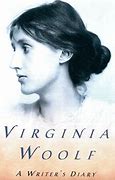
While I write nearly every day anyhow, this is a different type of writing. When I was in South Korea and Oman writing in a journal every day was easy as there was plenty to write about – different cultures, languages, new people and problems with being a foreigner. A daily journal at this stage in my life – when so many things seem pointless – is both a challenge and (my reason for doing this) a much-needed form of therapy, woven into a writing exercise. I’m following the advice of the master diarist Virginia Woolf, who once said, ‘the habit of writing thus for my own eye only is good practice. It loosens the ligaments.’

Ultimately, this is about writing. It brings to mind too the words of Joan Didion, writing some years ago for London Magazine on why she writes. She describes the moment when she realised that she was a writer:

‘By which I mean not a “good” writer or a “bad” writer but simply a writer, a person whose most absorbed and passionate hours are spent arranging words on pieces of paper…. I write entirely to find out what I’m thinking, what I’m looking at, what I see and what it means. What I want and what I fear.’

The challenge lies in the practice of doing this every single day. I do have other daily routines that require some discipline – I meditate, exercise and do something in French and/or Italian every day without thinking about it, and more importantly, I feel a sense of being out-of-sorts until I have done these things. I’ve been doing this typing version of scribbling in this daily journal for seven days now. So far, so good, but I am still at a point of having to remind myself to do it.

I don’t know what all of this journal writing will bring. It could lead me in the direction of Virginia Woolf, who like me was an erratic, undisciplined journal writer until she turned 33 (okay, younger than me now), when she took up journaling and continued until four days before her death.

I’ll close with a sample, proof that I’m really doing this. In future, I won’t be directly sharing these journal entries with you, dear reader, as that would take away their magic powers.

7 January 2021

Trump supporters have finally had the day that they have lived for – armed and angry, they’ve stormed the capitol and attempted a coup on the US government. They were talking this way long before Trump came on the scene. Now, they’re headlining the news and might even make it into the history books. As remarkable and unbelievable as this all seems, it was predictable, the stuff of dinnertime conversations with friends over the past four years. Shock and expectation entangled – the mind is more complicated than we give it credit for.

Best wishes for the New Year. Keep reading, keep writing.

Samson’s A Theatre for Dreamers

Set on the Greek island of Hydra in the 1960s when it was a writers and artists’ colony, Polly Samson’s A Theatre for Dreamers has been my lockdown escapist’s treat.  The writing is delicious, a full-sensory experience of seeing the purple bougainvillea, inhaling the fragrance of the sea air and tasting the icy liquorice of the raki.

Borrowing from the true life stories of Hydra’s bohemian inhabits, the main story revolves around the narrator Erica, a new arrival to the island. Following the death of her mother, Erica, who’s in her late teens, and her slightly older brother have escaped England and their brutal dictatorial father. While her brother pursues the artist’s life, along with plenty of sun, sex and sand, Erica dabbles in writing and in her boyfriend. But she’s really on the island to talk to Australian writer Charmian Clift, who knew Erica’s mother. Charmian becomes something of a reluctant mentor to young Erica, scolding her for supporting her boyfriend’s creative aspirations over her own. In time Charmian recognises herself in this as she plays muse and literary coach to her husband George Johnson. Their real-life turbulent literary partnership is well documented.

A titillating subplot weaves its way through the narrative, involving a young Leonard Cohen at a point when he falls in love with Marianne Ihlen, who was on again and off again, though eventually separated from the artist Axel Jensen. Cohen and Ihlen’s relationship lasted many years, unlike most on this island of free-love, and has been immortalised by some of Cohen’s own poems and more recently by the Netflix documentary Marianne and Leonard: Words of Love.

Sidebar: I’m not a Leonard Cohen fan. Can I say that without getting trolled? I like some of his songs and his poems even more, but I simply do not understand the cult-like adoration.

Back to Samson’s exhilarating and beautiful book. Ultimately, it is a meditation on creativity and relationships, showing how together they can take form, crack and break.

For writers interested in biography or fictions based on true lives, the acknowledgements at the end are worth reading. The author gathered materials from interviews, some on radio and TV, some of her own, pieced together with memoirs and other artefacts. Some of the characters’ dialogue comes from their actual words.

For you Cohen fans, I close on Cohen’s description of life in Hydra: ‘There is nowhere in the world where you can live like you can in Hydra, and that includes Hydra.’

Leonard Cohen with Marianne et al
Leonard Cohen, Marianne Ehlen (and her son), George Johnson and Charmian Clift. Photo by James Burke