Bunny’s Vignettes – 2

To read previous vignettes from this fictional series, visit Bunny’s Vignettes.

Obsessive Love – 1965/66

Childhood memories are slippery things. My earliest was being in my grandmother’s arms, waving goodbye to my mother as she left our apartment building one morning and walked down the street in the direction of the parish church and the train station.

I say our building because we owned the three-storey structure, with one seven-room apartment on each floor. Later, I would be told that my grandmother paid for the building. Later still, I’d hear that my father used the GI Bill to secure a mortgage and that Grandma had nothing to do with it.

How old was I? For Grandma to hold me in her arms, I must have been three or four at most. I wasn’t a baby – I didn’t stay in her arms for long – but I needed to be lifted to see out the windows in the sun parlour, to watch my mother’s chubby form walk away and turn briefly to wave. I’m sure she smiled, her even white teeth framed in coral-pink lipstick. She always wore lipstick when she went to church or downtown – for what would later become work. That and face cream were her only makeup.

Her mother, my grandmother, wore cherry red lipstick, beige foundation to hide her freckles, green or blue eyeshadow, and black mascara over brown lashes. She regularly powdered her nose, always carrying a compact. On that day – my earliest memory – Grandma must have been around fifty-seven and more blond than grey. Even though we were indoors, she was likely wearing stilettos. Unlike her daughter, grandma was bony and long-legged, and in stilettos she looked like a stick-insect. This was the 60s, and she only had them in four colours: red, green, yellow, and black. In the 70s, she added white and tan. I only ever caught her in house slippers once. Outside, she wore those stilettos most of the year – except during Chicago’s brutally cold, snow-packed winters, when she switched to high-heeled boots and somehow managed to walk at pace while the rest of us were plodding and sliding along behind her.

That day, her stilettos must have given her – and me in her arms – an extra three inches to look through the panes of glass onto our street. I could see across the way the near-identical three-storey red-brick building, nestled among other such buildings, all with front lawns, all with one tree – following Dutch Elm disease, only nascent maples and a few sturdy old oaks lined our street. From the sides, I could peer into the sun parlours of our neighbours’ apartments, separated by narrow gangways about two yards wide. On one side lived the Novaks, the Williamses and the Marino’s- on the other, the Steins, their in-laws, and children.

Many moments like this marked my childhood – waving off my mother, staying with my grandmother. But this one stood out. My younger sister must have been asleep in her crib. My older sister and brother were at school. My mother wasn’t going to work – she didn’t return to work until I was five. This moment mattered because Grandma was stressed and worried. I sensed it the way children – emotional sponges – do. A few years later, I realised that was either the day my mother went to see the priest to report that my father ‘was hitting her,’ or the day she caught the el (Chicagoese for ‘elevated train’) downtown to see a lawyer and begin the legal separation from my father. Later, my mother would tell me that when she went to the priest – speaking as if it had only happened once – he asked her what she had done to deserve it. So, a man could hit a woman if she deserved it? That was, according to mother, what set off the divorce process.

That morning, I played with my dolls and later coloured in a Disney colouring book, probably the Mary Poppins one, my favourite. My grandmother made Danish chocolate fudge – dark, thin, and melt-in-your-mouth fudge that left a grainy, sugary layer on your tongue. The kitchen air filled with bittersweetness as she sat across from me at the table and waited for the fudge to harden. She had a cigarette in one hand – from the two packs of Winstons she smoked each day – and a felt-tip pen in the other. In a stenographer’s notebook, she busied herself writing, smiling at her own loopy script. A couple of years later, I would understand what she was writing as this was one of her usual pastimes. My mother’s full name – first, middle, and maiden – never her married name. Grandma would write ‘Joyce Agnes Larsen’ over and over. One line per full name. About twenty lines per page. When one page was full, she’d take a protracted drag from her cigarette, sometimes light a new one, and flip to the next blank page and continue.
Scraping sounds better than stealing

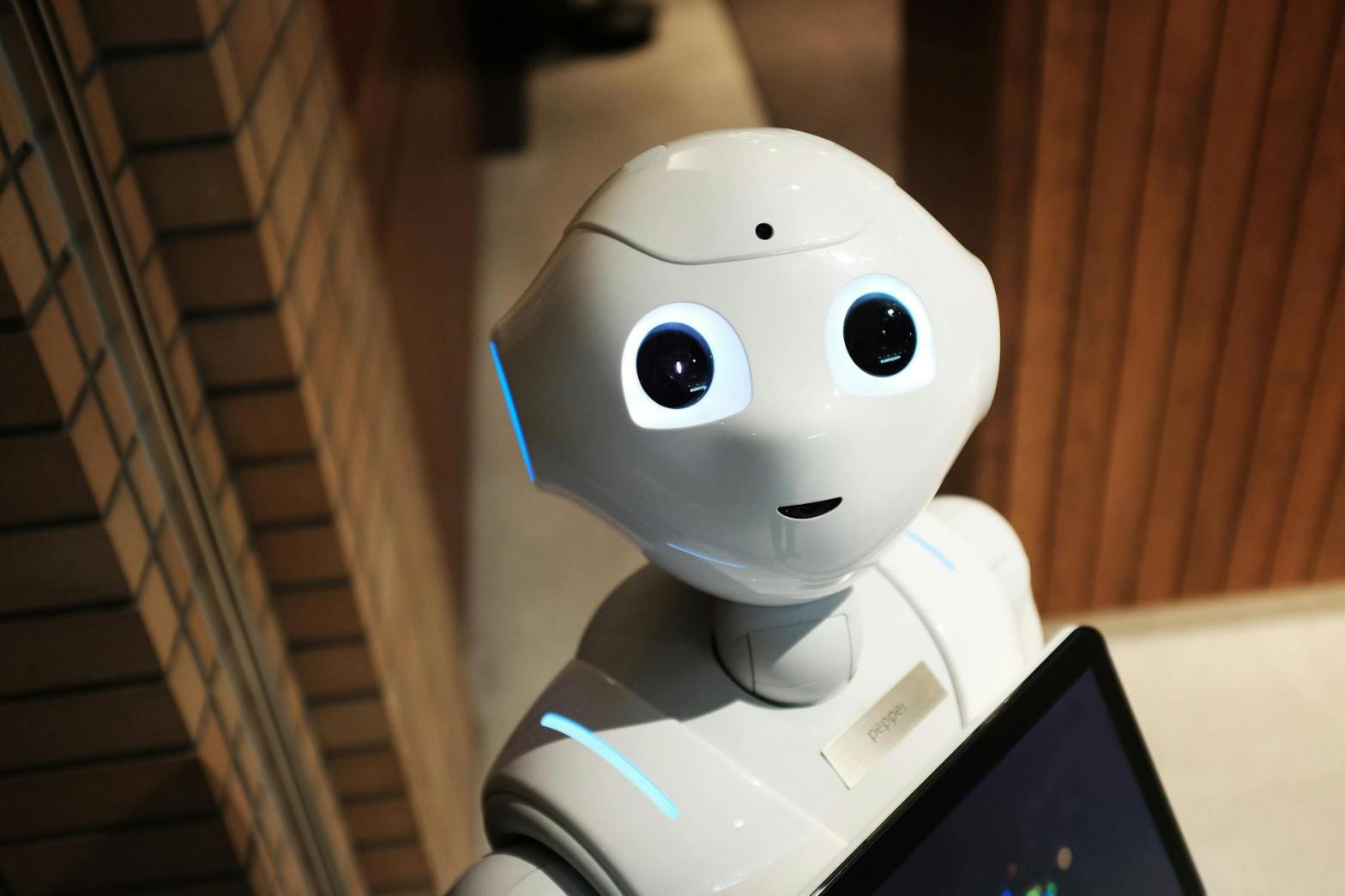
The topic was AI. Today, the topic is always AI. Let’s be honest, whether we see it as a sophisticated search engine, a gushing editor or techno teacher, most of us are using it.

At this online writers’ group, we started by regaling each other with our experiences of dabbling in AI – those silly hallucinations and unnatural conversations where very answer ends in question. Of course, what was said in that meeting ‘stayed in the room.’ With that rule, I braced myself for writers admitting they used AI to help them create and edit their work. But no, a few of us admitted trying it as an editor while others sought its help with research. In my case – I’ll step outside the room – I’ve used it for editing passages of a novel I wrote years ago and was undergoing a major editing/rewriting. I would give Co-Pilot a few pages of a chapter that I felt was sagging and asked it to tighten it up. The Co-Pilot version rearranged some sentences to make them more concise, but in many cases more adjective laden – I’m not a huge fan of adjectives in creative writing. Let the verbs and metaphors do the heavy lifting I say. For me, this teaching tool showed me what I needed to look for in my writing that could be effectively rewritten.

The conversation quickly turned from how we were using it to how it was using us. One author moaned at how Anthropic ‘scraped’ seven of his novels without his permission or financial compensation. He is currently involved in a class-action lawsuit being spearheaded by the Society of Authors. Using a link now available on the SoA website, another novelist discovered one of her books had also been scraped. Outrage mixed with fear – what about the other AI platforms? How do we find out about them? And what about those unscrupulous so-called writers who are using AI – our books – to write formulaic tripe that will sell like hotcakes?

I probably didn’t make myself popular by mentioning that a publisher of one of my academic textbooks contacted me to ask my permission to use my book for training an AI platform. If I opted in, whenever my work is used, it will be referenced with a link to the publisher’s website, and I would receive a small royalty. Of course, I opted in. Really, it wasn’t for the money. My reasoning, which I shared with my fellow writers, is that at least I know my book draws on and refers to peer-reviewed studies, and the final draft of my book was peer-reviewed by two scholars in the field. I was pleased to contribute a reliable source to an LLM. Better this than the grey literature and internet folk linguistics that is being scraped as I write this blog.

No one commented. I was likely to be seen as a traitor.

A few days after the meeting I stumbled across a counterbalance to all this by Wired magazine’s editor, Kevin Kelly. He feels honoured to have his books included in AI training. Kelly says that in the not-too-distant future, ‘authors will be paying AI companies to ensure that their books are included in the education and training of AIs.’ That is, authors will pay for the influence of AI responses that include their works – a type of indirect advertising. Hard to believe this in the current climate.

The one word that didn’t come up at this writers’ meeting, which in hindsight I wish had, is ‘creativity.’ For me, it’s not so much about my published books being so precious. It’s more about the process. The creation and recreation of texts. In the words of Henry Miller ‘Writing is its own reward.’ No bot can take that experience away from me (to paraphrase an old song).

What I’ve been reading

Ocean Vuong is a brilliant writer – an utterly unique voice. On Earth We’re Briefly Gorgeous was his first novel and is written as a letter from a Vietnamese American son to his illiterate mother, knowing she will never read it. Using poetic language and humour, the novel explores themes like identity, trauma and homosexuality. It also conveys a strong social message about the damage done to American families and communities by the opioid crisis. While so much of this novel is philosophically and poetically quotable, I’ll close with this gem:

‘Do you ever wonder if sadness and happiness can be combined, to make a deep purple feeling, not good, not bad, but remarkable simply because you didn’t have to live on one side or the other?’

I can’t imagine a bot producing that, let alone enjoying the act of creating it.

Sorting out, throwing away

This summer, I embarked on a major project – clearing out the paper clutter. I’ve disposed of two boxes crammed with over 30 old journals and once again triaged my bookcase into categories of sell, donate and keep.

Letting go of my once precious journals – some have travelled to three continents – has brought  two things into focus. 1) Half of these journals were about the craft of writing, developing plots and characters, turning loose ideas into tangible stories. Now that these works have been written and most published or performed – some more successfully than others – I don’t need these notes anymore. 2) The other half of the journals were a chronicle of angst and anxiety in the forms of travelogues and practice prose, observing changes to my lifestyle with each new country, each new job while untangling my neuroses. These pages detailed a younger me – or another me – who, while still present, exists at a distance now. Since my thinking and behaviours have evolved, these journals could be discarded.

Flipping through the pages one last time, I did find a few memories that sparked new ideas for fiction and nonfiction. I’ve already noted them in my current journal, which has been digital for the past five years. I suppose someday that, too, will be deleted. For now, at least they aren’t collecting dust and taking up space that could be used for more useful items.

As I was preparing myself to say goodbye to these now worthless volumes, I stumbled upon a quote from professional New Yorker Fran Lebowitz. When asked if she kept a diary or journal, she responded: ‘Guess what? I don’t need to live my life twice – once was enough.’

The books were a lot easier to purge. I grew up in an apartment full of books. The living room was flanked with two walls of bookcases – classics and encyclopaedias in hardcover and everything else in paperback. All these books were read at some point by my mother, my six siblings and me. Every Saturday, one of us drew the short straw and had to dust the living room – a feather duster along the tops and bindings and a cloth dampened with wood polish for the shelves. Over time, some books were passed on to my mother’s friends or donated to a library, and the empty spaces were quickly filled again.

I inherited this need to be surrounded by books, continuing the tradition of book purges with each move to a new country or city. But in recent years, the rise of e-readers and regular library visits have naturally reduced the content on my shelves. With this summer’s clearing out, I sold some 50 books online and gave another 20 to charity. What remains are a handful of language books that I’m still using and some poetry and French books that I still dip into.

The only books I have held on to for sentimental reasons are my own publications (that are not available in digital form), my high school yearbook and the complete works of Shakespeare. While I have the Bard’s entire canon on my Kindle, I saved this specific edition for the handwritten inscription from my mother. It was a birthday present from her, one of the few positive memories I have. The inscription reads, ‘May you taste of life as deeply as did the masters.’

What I’ve been reading

Samantha Harvey’s Orbital was well-deserving of the Booker Prize last year. It’s the first book set in space to win the prize, which says something about the typical prize judges. Science fiction, while no longer considered pulp, is still seen as too low brow or not literary enough to make the grade. Orbital escapes that by working with science fact. Set on the International Space Station, the lives of six astronauts and cosmonauts – two women and four men – are explored as the spacecraft orbits the Earth 16 times a day.

While the psychological aspects of life in a confined space are compelling, they are within our imagination’s grasp. We can relate to being in tight quarters, working on a team, or feeling unreachable from loved ones. What is far more challenging to comprehend, and therefore more fascinating, is what happens to the human body in space. Harvey’s research is impeccable and aligns with what I’ve discovered in my own reading, including a recent article in The New Yorker on the mysterious and often dangerous long-term effects of gravity on the human body.

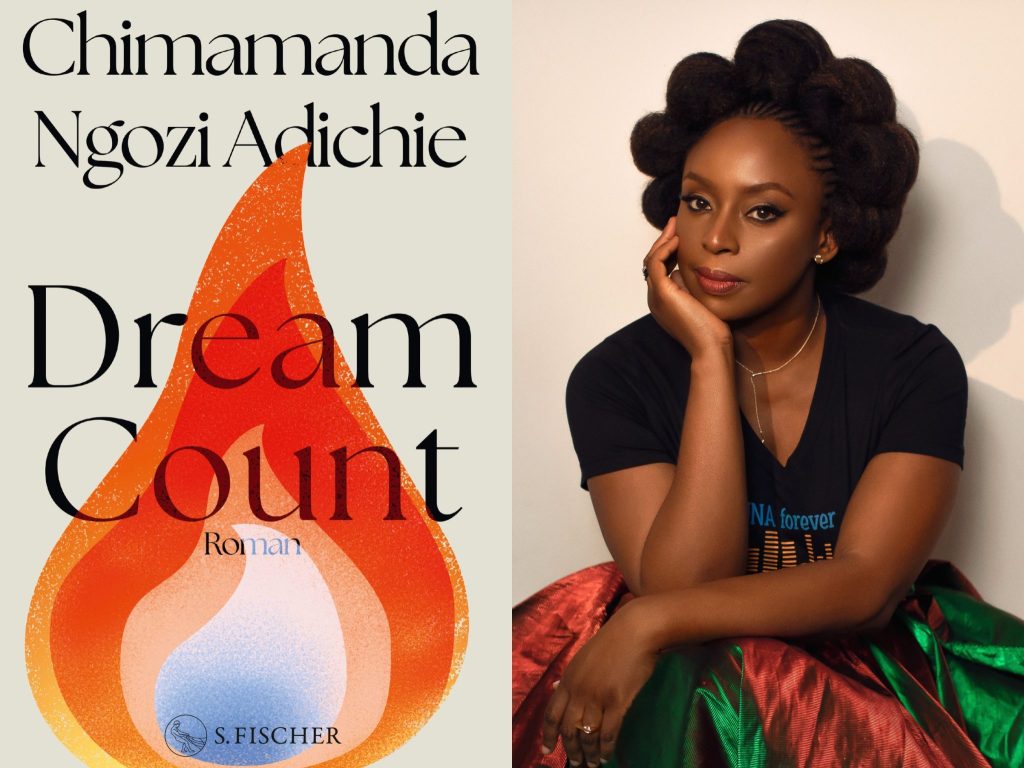
My summer days have concluded with Chiamanda Ngozie Adichie’s latest novel, Dream Counts. Reviews and the book’s jacket blurb emphasize that it is set against the backdrop of the Covid-19 pandemic, with four main characters of Nigerian descent grappling with the isolation and uncertainty of that time. In my reading, however, Covid is present for only a small part of the novel. The interconnected stories of these women cover flashbacks to Nigeria, Britain, and America long before the pandemic struck. The emotional journeys and experiences of the women – including motherhood, sexual violence, relationships, and ambitions – are far more central than the pandemic themes. It’s a story about the complex facets of womanhood, told from a feminist perspective and in Adichie’s signature crisp and fast-paced style.