Words of 2025

As the year winds down, lexicographers promote their dictionaries with their words of the year. The one that has gotten the most attention so far is the least interesting – vibe-coding. It’s a software development that uses AI to convert natural language into computer code. It doesn’t excite me either.

The Oxford English Dictionary has announced that rage bait is its word of the year. Oxford defines this as ‘online content deliberately designed to elicit anger or outrage by being frustrating, provocative or offensive, typically posted in order to increase traffic to or engagement with a particular web page or social media content.’ It’s click bait’s ugly cousin. The first example that came to my mind was the postings of the current US president, to which we need to add to the OED definition ‘usually to distract the public from certain issues…’

Cambridge’s dictionary has given its vote to parasocial, which it defines as ‘involving or relating to a connection that someone feels between themselves and a famous person they do not know, a character in a book, film, TV series, etc., or an artificial intelligence.’ The word has been around since the 1950s, when it was used in sociopsychology though the concept is even older. Figures like George Washington and Napoleon Bonaparte were idolized by people who imagined personal bonds with them as expressed in love letters. The fandom of the early days of Hollywood sparked a whole industry based on imagined intimate relationships with the stars. I confess now that my teenage self had a one-sided relationship with David Bowie. The fact that parasocial has come into popular use in 2025 says something about the times we live in. Are things so bad that our escapism leads us to a place where fictional characters, celebrities, influencers and AI bots become our friends and lovers?

My buddy, Mr Copilot, tells me that Dictionary.com has christened ‘67’ (pronounced 6-7) their word of the year. It’s a slang expression born in TikTok, and while it doesn’t have a fixed meaning, it could mean ‘so-so’ or ‘maybe.’ It’s usually accompanied by a hand gesture – palms up alternating up and down. Like so many slang expressions, its social meaning is more important than its lexical meaning – it’s part of a private language, popular with the young and used to annoy the old. It’s working on me.

Other words that were added this year aren’t new and didn’t make ‘word of the year,’ but are interesting, nonetheless. In 2024 Carol Cadwalladr introduced and popularized the term broligarch, which entered the Cambridge Dictionary in 2025. The fact that others are using this term gives me hope in a perverse way. Broligarch encapsulates the ultra-wealthy tech figures (often male) who wield influence over politics, media and culture. Its growing use and entrance into a dictionary marks public concern – this is where the hope comes in. The broligarchs do not use it to refer to themselves. It’s used despairingly by the rest of us.

Finally, there’s tradwife, which has been around for a few years and was also added in 2025. It refers to ‘a woman who embraces traditional gender roles, especially in marriage and homemaking.’ It’s one thing to be selectively nostalgic – most nostalgia is selective – but it’s something else to desire inequality and financial dependency. My prediction – in five years from now, a couple of neologisms will enter the English lexicon – the verb distradify and the noun liberwife.

What I’ve been reading

A history book that is just that – and not historical fiction, my normal means of learning history. The Burning Earth: An Environmental History of the Last 500 Years by Sunil Amrith starts with the Age of Exploration and Empire, when European colonial expansion began reshaping global environments through mining, agriculture, and trade. The book then traces environmental disasters of the Industrial Revolution and the 20th century’s fossil fuel boom and finishes with our climate crisis. I’ve been particularly struck by this book’s approach to the slave trade. Where a more traditional history would describe the brutality, human toll, financial gains, abolitionist movement and the US Civil War, this history adds the consequences to biodiversity. One of several examples is sugar, which became an industry due to slavery across North and South America. Amrith sums this up:

“Violence on human beings accompanied a violent assault on the rest of nature. Sugar plantations had a limitless appetite for timber to fire the vats. Furnaces swallowed forests. Woods fell for pasture to feed the domestic animals that were a vital source of muscle power. Denuded hillsides threatened human settlements with mudslides after every rainfall. Sugar ruined the soil.”

The New Yorker, celebrating its 100th anniversary, has reprinted some classics, including the poem ‘At the Fishhouses’ by Elizabeth Bishop. First published in 1947, this highly accessible poem describes a scene of an elderly fisherman untangling a net on the shore. The narrator, observing this, connects with nature and memories and reflects on the concept of knowledge. Like the comments made by Jorie Graham in the current New Yorker, I too found the ending particularly evocative in a literal and linguistic sense:

It is like what we imagine knowledge to be:

dark, salt, clear, moving, utterly free,

drawn from the cold hard mouth

of the world, derived from the rocky breasts

forever, flowing and drawn, and since

our knowledge is historical, flowing, and flown.
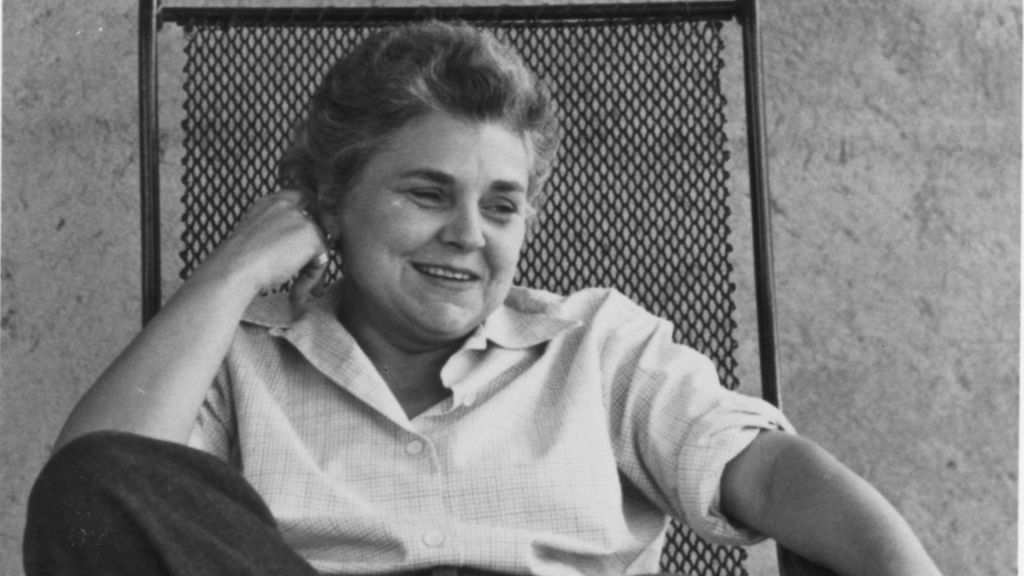
Elizabeth Bishop (1911-1979)

So too, are the words we create to communicate this knowledge.

Scraping sounds better than stealing

The topic was AI. Today, the topic is always AI. Let’s be honest, whether we see it as a sophisticated search engine, a gushing editor or techno teacher, most of us are using it.

At this online writers’ group, we started by regaling each other with our experiences of dabbling in AI – those silly hallucinations and unnatural conversations where very answer ends in question. Of course, what was said in that meeting ‘stayed in the room.’ With that rule, I braced myself for writers admitting they used AI to help them create and edit their work. But no, a few of us admitted trying it as an editor while others sought its help with research. In my case – I’ll step outside the room – I’ve used it for editing passages of a novel I wrote years ago and was undergoing a major editing/rewriting. I would give Co-Pilot a few pages of a chapter that I felt was sagging and asked it to tighten it up. The Co-Pilot version rearranged some sentences to make them more concise, but in many cases more adjective laden – I’m not a huge fan of adjectives in creative writing. Let the verbs and metaphors do the heavy lifting I say. For me, this teaching tool showed me what I needed to look for in my writing that could be effectively rewritten.

The conversation quickly turned from how we were using it to how it was using us. One author moaned at how Anthropic ‘scraped’ seven of his novels without his permission or financial compensation. He is currently involved in a class-action lawsuit being spearheaded by the Society of Authors. Using a link now available on the SoA website, another novelist discovered one of her books had also been scraped. Outrage mixed with fear – what about the other AI platforms? How do we find out about them? And what about those unscrupulous so-called writers who are using AI – our books – to write formulaic tripe that will sell like hotcakes?

I probably didn’t make myself popular by mentioning that a publisher of one of my academic textbooks contacted me to ask my permission to use my book for training an AI platform. If I opted in, whenever my work is used, it will be referenced with a link to the publisher’s website, and I would receive a small royalty. Of course, I opted in. Really, it wasn’t for the money. My reasoning, which I shared with my fellow writers, is that at least I know my book draws on and refers to peer-reviewed studies, and the final draft of my book was peer-reviewed by two scholars in the field. I was pleased to contribute a reliable source to an LLM. Better this than the grey literature and internet folk linguistics that is being scraped as I write this blog.

No one commented. I was likely to be seen as a traitor.

A few days after the meeting I stumbled across a counterbalance to all this by Wired magazine’s editor, Kevin Kelly. He feels honoured to have his books included in AI training. Kelly says that in the not-too-distant future, ‘authors will be paying AI companies to ensure that their books are included in the education and training of AIs.’ That is, authors will pay for the influence of AI responses that include their works – a type of indirect advertising. Hard to believe this in the current climate.

The one word that didn’t come up at this writers’ meeting, which in hindsight I wish had, is ‘creativity.’ For me, it’s not so much about my published books being so precious. It’s more about the process. The creation and recreation of texts. In the words of Henry Miller ‘Writing is its own reward.’ No bot can take that experience away from me (to paraphrase an old song).

What I’ve been reading

Ocean Vuong is a brilliant writer – an utterly unique voice. On Earth We’re Briefly Gorgeous was his first novel and is written as a letter from a Vietnamese American son to his illiterate mother, knowing she will never read it. Using poetic language and humour, the novel explores themes like identity, trauma and homosexuality. It also conveys a strong social message about the damage done to American families and communities by the opioid crisis. While so much of this novel is philosophically and poetically quotable, I’ll close with this gem:

‘Do you ever wonder if sadness and happiness can be combined, to make a deep purple feeling, not good, not bad, but remarkable simply because you didn’t have to live on one side or the other?’

I can’t imagine a bot producing that, let alone enjoying the act of creating it.

Sorting out, throwing away

This summer, I embarked on a major project – clearing out the paper clutter. I’ve disposed of two boxes crammed with over 30 old journals and once again triaged my bookcase into categories of sell, donate and keep.

Letting go of my once precious journals – some have travelled to three continents – has brought  two things into focus. 1) Half of these journals were about the craft of writing, developing plots and characters, turning loose ideas into tangible stories. Now that these works have been written and most published or performed – some more successfully than others – I don’t need these notes anymore. 2) The other half of the journals were a chronicle of angst and anxiety in the forms of travelogues and practice prose, observing changes to my lifestyle with each new country, each new job while untangling my neuroses. These pages detailed a younger me – or another me – who, while still present, exists at a distance now. Since my thinking and behaviours have evolved, these journals could be discarded.

Flipping through the pages one last time, I did find a few memories that sparked new ideas for fiction and nonfiction. I’ve already noted them in my current journal, which has been digital for the past five years. I suppose someday that, too, will be deleted. For now, at least they aren’t collecting dust and taking up space that could be used for more useful items.

As I was preparing myself to say goodbye to these now worthless volumes, I stumbled upon a quote from professional New Yorker Fran Lebowitz. When asked if she kept a diary or journal, she responded: ‘Guess what? I don’t need to live my life twice – once was enough.’

The books were a lot easier to purge. I grew up in an apartment full of books. The living room was flanked with two walls of bookcases – classics and encyclopaedias in hardcover and everything else in paperback. All these books were read at some point by my mother, my six siblings and me. Every Saturday, one of us drew the short straw and had to dust the living room – a feather duster along the tops and bindings and a cloth dampened with wood polish for the shelves. Over time, some books were passed on to my mother’s friends or donated to a library, and the empty spaces were quickly filled again.

I inherited this need to be surrounded by books, continuing the tradition of book purges with each move to a new country or city. But in recent years, the rise of e-readers and regular library visits have naturally reduced the content on my shelves. With this summer’s clearing out, I sold some 50 books online and gave another 20 to charity. What remains are a handful of language books that I’m still using and some poetry and French books that I still dip into.

The only books I have held on to for sentimental reasons are my own publications (that are not available in digital form), my high school yearbook and the complete works of Shakespeare. While I have the Bard’s entire canon on my Kindle, I saved this specific edition for the handwritten inscription from my mother. It was a birthday present from her, one of the few positive memories I have. The inscription reads, ‘May you taste of life as deeply as did the masters.’

What I’ve been reading

Samantha Harvey’s Orbital was well-deserving of the Booker Prize last year. It’s the first book set in space to win the prize, which says something about the typical prize judges. Science fiction, while no longer considered pulp, is still seen as too low brow or not literary enough to make the grade. Orbital escapes that by working with science fact. Set on the International Space Station, the lives of six astronauts and cosmonauts – two women and four men – are explored as the spacecraft orbits the Earth 16 times a day.

While the psychological aspects of life in a confined space are compelling, they are within our imagination’s grasp. We can relate to being in tight quarters, working on a team, or feeling unreachable from loved ones. What is far more challenging to comprehend, and therefore more fascinating, is what happens to the human body in space. Harvey’s research is impeccable and aligns with what I’ve discovered in my own reading, including a recent article in The New Yorker on the mysterious and often dangerous long-term effects of gravity on the human body.

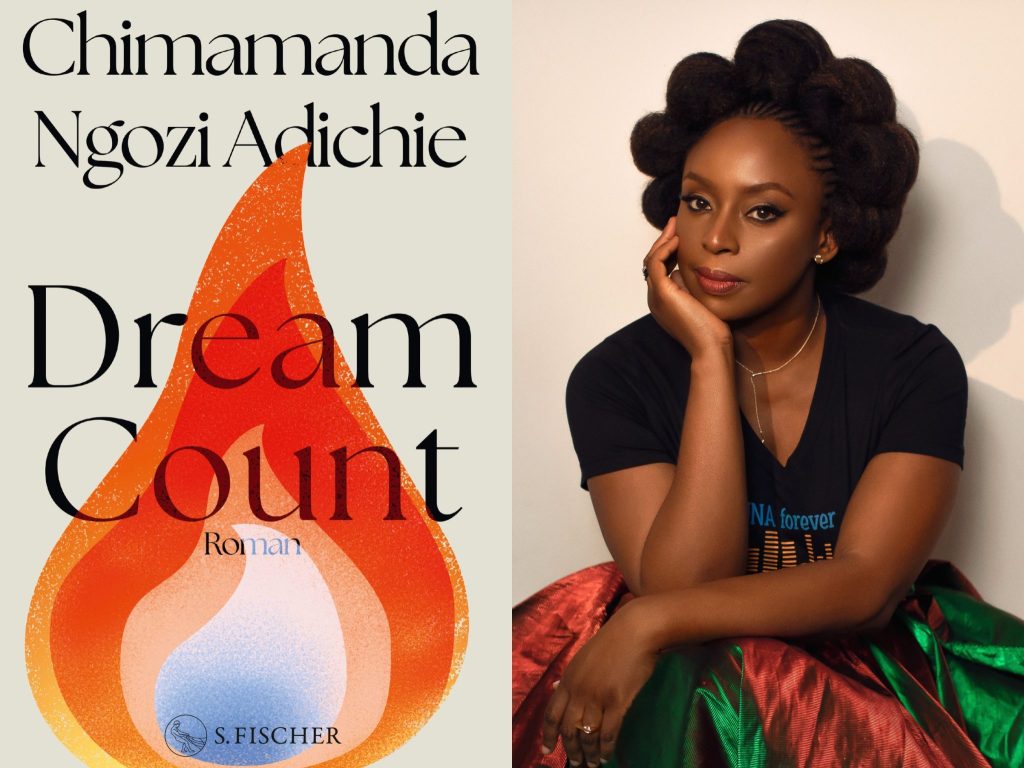
My summer days have concluded with Chiamanda Ngozie Adichie’s latest novel, Dream Counts. Reviews and the book’s jacket blurb emphasize that it is set against the backdrop of the Covid-19 pandemic, with four main characters of Nigerian descent grappling with the isolation and uncertainty of that time. In my reading, however, Covid is present for only a small part of the novel. The interconnected stories of these women cover flashbacks to Nigeria, Britain, and America long before the pandemic struck. The emotional journeys and experiences of the women – including motherhood, sexual violence, relationships, and ambitions – are far more central than the pandemic themes. It’s a story about the complex facets of womanhood, told from a feminist perspective and in Adichie’s signature crisp and fast-paced style.

Ten Days in a Woman’s Life

Ten days ago, the UK Supreme Court made a pronouncement clarifying that in Britian’s Equality Act, ‘woman’ referred only to those assigned female at birth. This in effect says that a transwoman is not legally a woman. Unsurprisingly, the trans community is furious about the decision. Women like me who have fought for women’s sex-based rights welcome the ruling and the fact that the Equality Act still protects transgender people from discrimination while it also protects people from sex-based discrimination. The difference now is that sex and gender are not being conflated. In most of our daily lives this distinction doesn’t matter, and transwomen could be referred to as women by friends and colleagues. But when legal issues or situations arise, such as safe spaces for women and competitive sports, the sex-based biological difference is acknowledged and legally acted upon. Will the debates around this continue? I wish they would, but too many people in the public eye are wary to engage in this topic, especially if they agree with any aspect of the Court’s ruling. It’s unfortunate that no ruling from the Courts or Britain’s Parliament have addressed the conflation of debate with hate speech.

Easter Weekend saw the death of a pope. The obits were lengthy and the discussion panels on his legacy tried to create a polemic over what type of pope Francis was – liberal or conservative, left-leaning, right-leaning. In every discussion and interview I heard across my three languages, this last pope lost only a small fragment of his liberal credentials when it came to the role of women in the church. The experts in religion shook off this topic as if to say, ‘What do you expect?’

Mid-week saw Trump’s team  announce government efforts to increase birth rates in America. This warped government is considering baby bonuses of $5000 to every American mother after her baby is born and classes for women in charting their menstrual cycles to increase their odds of conceiving. This pronatalist strategy is wrapped around conservative ideology about families based on marriage (as opposed to partnerships) between women and men and with the intent of having enough offspring to form a choir (okay, not their exact choice of words – it’s hard not to be sarcastic).

Speaking of controlling women’s bodies, Thursday morning, I found myself in conversation with a French language partner about the historical contradictions in Poland on the issue of legal abortions. In brief, abortions were legal during the days of the USSR when people had fewer individual freedoms. After the dissolution of the Soviet Union, in 1990 Poland’s new president Lech Walesa reestablished the country’s ties with the Catholic Church. By 1993, abortions were only legal in cases of severe abnormalities in the foetus – the woman’s mental and physical health were not taken into consideration. Today in Poland, abortions are only allowed in cases of rape, incest or if the mother’s life is in danger. Incidentally, the Soviets hadn’t been acting out of feminism or concern for women’s health. According to the Arte documentary my language partner and I watched, the Soviet government needed women in the workforce.

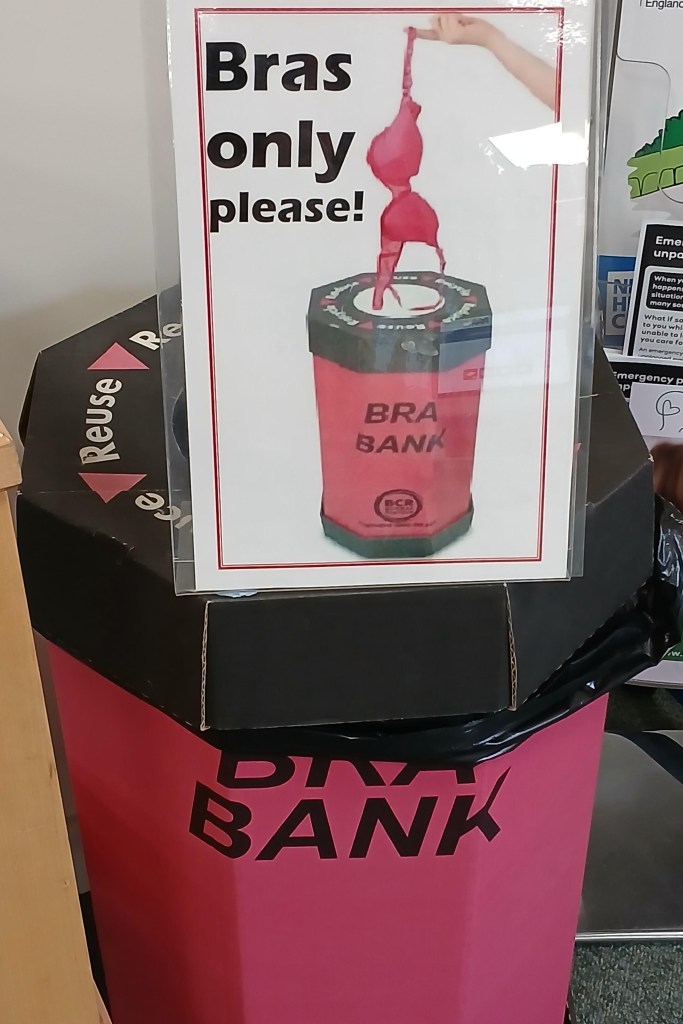
The new weekend started with a trip to the public library, where I notice a small recycle barrel partially tucked into a corner near the self-service checkout machines. Not for paper as one would expect in a library, but for bras (or brassieres as some insist on calling them). And of course, it was pink. Why in the library and why partly hidden? Several recycling bring banks, as we call them locally, are peppered across the tiny town of Ely with receptacles for used paper, glass, clothes, shoes and books. But none of them have a recycle barrel for the uniquely female undergarment. In the twenty-first century clothes associated with sexualised parts of the female body are requiring a gentle sort of censorship. At least this woman could end this 10-day cycle of womanhood with a laugh.

What I’ve been reading

I’m a huge fan of Joyce Carol Oates and have written about three of her books for The Literary Encyclopedia. Babysitter has been lauded as one of her bests, and I must agree. Be prepared – this is not a bedtime read. Like many of Oates’s work, some dark, unsettling topics are at the fore. In this case the abduction, rape and killing of children by a serial assailant make for the backdrop that disrupts the ‘pleasant valley’ white suburb of Detroit in the mid-70s. At the centre is Hannah, the wife of a wealthy businessman and mother to their two children. Bored with her passionless marriage, she is seduced by a strange man, not a part of her social circle, who engages in violent sex. One time, she ends up nearly dead. She is traumatised and cannot hide the injuries. Now clearly a victim of rape, her story exposes the sexism and racism of the time. Her story also develops in thriller style, linking to the serial child killer. Fortunately, breaks from the violence can be found in moments of poignant reflection. These lift the storytelling out of social commentary into something deeper and philosophical. When Hannah is forced to sell her grandmother’s pearls, she goes to a pawnshop and is told by the jeweller: ‘You have neglected these pearls, dear. You need to wear pearls often. You should know, pearls require human warmth, intimacy, to maintain their beauty. Their being. Spinoza said, “All things desire to persist in their being.” Pearls are not diamonds, dear. If left alone, they lose heart. They lose hope. Like all of us, they become brittle and begin to die.” At that point in the narrative, the analogy to Hannah’s life is evident.

It’s been a week and a half of sometimes frustrating but also intriguing and enriching women’s stories.

Surviving January

Nope, this is not a blog from a survivor of Dry January – the wine continued to flow as usual. Nor is this about winter depression – at times, a sad month but luckily without the winter blues (hard to experience in the sunny south of France). As February kicked off this weekend, I was determined to reboot and restart the year afresh. But not before a few reflections on the surreal month that just passed.

Imperia before the storm

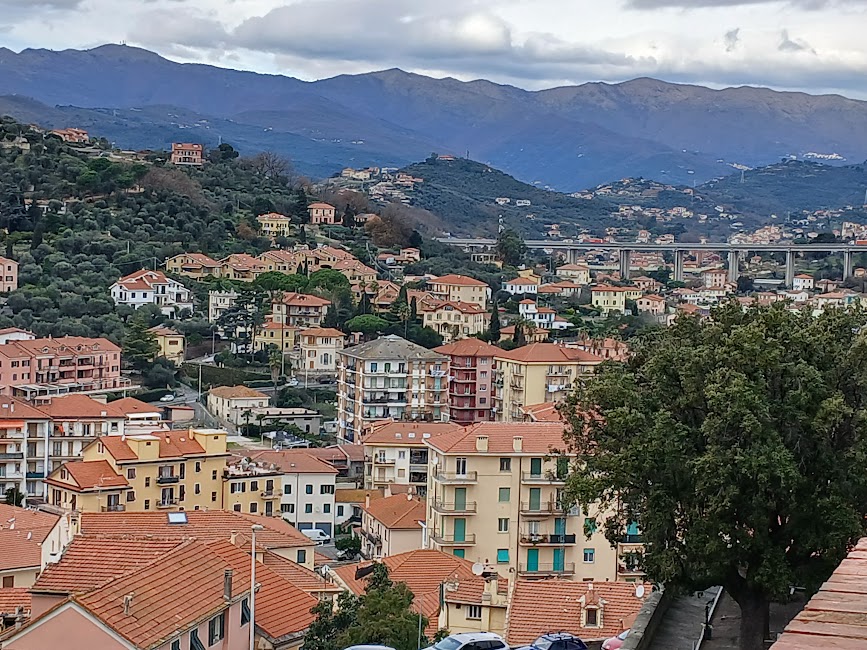
In the second week of January, we gave ourselves a three-day break in Imperia, Italy. I had told friends that this would be our reward for finishing the joyless task of painting the kitchen – including cabinets. True, but the underlying reason was to have a respite before the 47th president was inaugurated, a chance to be preoccupied with Italian language and history while enjoying coastal views and stoned-baked pizzas. I was living in these delightful moments while at the same time imagining myself looking back on them nostalgically – a time before America imploded and the world reacted. Or more immediately, a time before the barrage of news on the vitriolic, anti-environmental, anti-humanitarian, falsehood laden chaos.

Goodbye Facebook

January also marked my last month on Facebook after some fourteen years of posting holiday snaps, images of our protests marches and single-framed comics, while giving my share of thumbs and hearts. I did explain to my followers that this was a political decision against Zuckerberg, the latest technobro to become a Tr*mp enabler and his allowing for hate speech to grow and fester on the site. The reaction to this announcement was mixed. Some support, one serious critic (apparently, I should be happy to have more freedom of speech) and loads of people ignoring me. The latter grouping made me wonder how many closet Tr*mp supporters (including non-Americans) are out there.

Still Jacqueline

The third week of January marked the death of one of my oldest and closest friends. In truth, the sense of loss started a few years ago. The last time I spoke to Jacqueline was over the phone and she was in a care home in Edinburgh. A great raconteur, she told me a few stories that made me laugh, but I later realised that these stories did not involve any of our mutual friends and at no point in the conversation did she ask about my David. That is, she had forgotten who I was. Jacqueline had Alzheimer’s. Like the character in the film Still Alice, Jaqueline was an accomplished linguist and teacher. And like the character in Still Alice, played by Julianne Moore, the signs of this horrible condition had its onset in middle age – Jacqueline was barely sixty when her memory started failing her and her personality began to change. Unlike the film, the experience for Jacqueline and those who loved her could not be encapsulated in two hours. The years of slow deterioration of mental faculties, of speech, of sense of humour had laced a thread of sadness through our lives.

Due to problems scheduling planes and trains and severe weather conditions, I was unable to attend the funeral in person. Instead, on the last day of this surreal month, I watched live stream on my laptop old friends and colleagues at the crematorium reminiscing about Jacqueline and giving her a warm, heartfelt sendoff.

What I’ve been reading

I’ve been engrossed in two books that couldn’t be more different. Sam Freedman’s Failed State explains why Britian is in such a mess, going far beyond Brexit in examining the highly centralised system of government that cripples its ministers. On top of this, the powers of the judicial system, though often necessary but cumbersome, are more than ever challenging the government, making it more accountable, but even less effective. Freedman also points out that ‘the constant need to feed the media beast has led to a rapid proliferation of symbolic legislation designed not to achieve any real-world goal, but to give the impression of activity.’ Good nourishment for this news junkie.

The Overstory by Richard Powers is a book I wish I had discovered before dipping into a couple of soft-science tomes about trees. Yes, she’s harping on about trees again. The first part of this novel introduces nine characters in what I would consider to be interesting and entertaining short stories. The only connection between the stories is their characters’ experiences in one way or another with trees. In some cases, these experiences are accidental and peripheral. For other characters, a hobbyist and a researcher, trees are their raison d’etre. For the latter, I was glad that this book didn’t shy away from the science, and I could revisit words that were new to me just a couple of years ago – raceme, drupe, panicle, etc. Saving our forests brings these lives together in complex thriller-like fashion. While quotables abound in this book, I’ll just leave you with a couple. A geeky teenager concludes, ‘Humankind is deeply ill. The species won’t last long. It was an aberrant experiment. Soon the world will be returned to the healthy intelligences, the collective ones. Colonies and hives.’ Another character is struck by a ‘great truth’: ‘Trees fall with spectacular crashes. But planting is silent and growth is invisible.’

In Powers’ book, I’ve also discovered the phrase guerrilla forestry, where activists illegally plant new saplings. I recently wrote a short story that touched on this idea. Once I’ve learned more about sylviculture, don’t be surprised to find me among the forest warriors. There, I’ve rebooted my year ahead.

My 2024 in review without lists

Regular readers know that I’m not a fan of the listacle – those articles that list the best of or worst of or top 10 etc. They’re click bait and often poor examples of writing. By copping out of the type of commentary or critical review that threads an argument,  they offer mere snapshots brimming with clichés. With this hanging over my head for what I shouldn’t do, I’m reviewing 2024 under a few categories.

My year as a verbivore

Yes, I used to refer to myself as a logophile, but I’ve decided to use verbivore instead despite Word underlining it in red. This word was coined by the writer Michael Chabon in 2007 when talking about his love of words.

I’m afraid 2024 hasn’t been good year for verbivores thanks largely to the many national elections taking place all over the world and where politicians have overused words, such as woke, to the point that it can mean the opposite of their original meaning – or simply have no meaning at all aside from being something to despise. I’m also somewhat miffed that words like demure and mindful have gained new meanings thanks to the verbal grasping of social media influencers. Both words are being used to mean low-key and subtle in fashion and style.

The OED ranked brain rot as the word of the year, one that I never used even once. Apparently, it has come out of the Instagram/TikTok generation’s feeling after scrolling through dozens of posts. It can also refer to the low-quality content found on the internet that I do my best to avoid – a challenge when trying to find vegetarian recipes on Pinterest and having to skirt around videos of cats stuck in jars.

While I don’t go around recording myself, I’ll bet that my most used word during this year was incredible. In part, I’ve picked this up from the French who frequently use incroyable. When the worst president in US history (according to historians) gets re-elected after doing and saying so many things that individually should have made him unelectable, that’s incredible. On a more positive note, given my first-hand experience dealing with builders, plumbers and electricians in the South of France, I  thought it incredible that Notre Dame Cathedral was renovated after the catastrophic fire in just over five years.

My year as a reader

This year has been dominated by two writers as in recent weeks I found myself reading yet  another Robert Harris novel, my third this year, and another Amelie Nothomb foray into autofiction, my second for 2024.

After hearing Harris speak about his latest book, Precipice, in Ely a couple of months ago, I delved into this thriller which begins at the onset of WWI. It’s an historical period I’m strangely fond of and the story recounts the true-life affair between Prime Minister Herbert Henry Asquith and the socialite Venetia Stanley. Asquith’s casualness towards national security is mind-boggling  as his teenage-boy infatuation led him to share with Venetia everything from Cabinet debates to classified documents coming from his wartime generals. Though not as complex or informative as Harris’s Pompeii or as intriguing as his Conclave, Precipice is still an entertaining and interesting book.

Taking advantage of the public library in Menton, I’ve just finished Amelie Nothomb’s La Nostalgie Heureuse (avail in English). The narrator’s view on the world is as quirky as ever and expressed with her usual dry wit. In this story, she’s already a well-known writer living in Paris, who returns to Japan to participate in a documentary about her early life. Key to this is an anxiety-provoking reunion with a man she nearly married some twenty years earlier. A noteworthy aside – she (fictional narrator and real-life author) had written about the relationship in one of her earlier books and when the ex-fiancé is asked by the documentary maker how he felt about that book, he said that he enjoyed it as a ‘work of fiction.’ This is when the narrator realises that her truth could be other people’s fiction – a wink to the reader of this autofiction.

Throughout the year, I have also made it a point to read writers that are highly praised in the literary press that I have never read. Earlier in the year it was Paul Auster and Antonio Scurati and in recent weeks Carson McCullers. I finally read The Heart is a Lonely Hunter, which most people know from the 1968 film. Set in a small town in Georgia during the Great Depression, the story recounts the lives of several characters who are connected by their work and family circumstances. Their sense of isolation is explored against a backdrop of poverty and racism, with a nuanced struggle with homosexuality. The weaving of the stories reminded me of a typical Robert Altman film – very enjoyable despite the grim subject matter.

On the non-fiction side, this year I’ve continued my nerdy interests in bees and trees, trying to find texts for non-specialists that aren’t too scientifically dry or too jokingly flippant. While I’ve also read some excellent biographies and memoirs, the most thought-provoking and impassioned nonfiction  I’ve experienced this year has been in the opinion pages of the New York Times, The Observer (UK) and Le Monde. They serve as reminders that despite populist voting trends, humanity still exists.

My year as a writer

I started out this year with two writing goals. One was to return to novel #4 and give it a thorough rewrite. While I didn’t produce a full rewrite, I have rewritten about half of it and have made notes for the other half. This task was interrupted by an avalanche of editing assignments that came my way in October and lasted until December. The other writing goal was to simply send out either one short story or one essay every month. I did manage to send out 12 stories/essays this year, but without the monthly regularity – there were a couple of inactive months and a couple bubbling with creativity. Five rejections have been taken on the chin (three were competitions after all) and I await 7 replies.

In the second half of the year, my writing took on a more therapeutic purpose – maybe my way of dealing with complex PTSD. For the first time I’m writing about unpleasant childhood memories and with the creative process taking over, I’m fictionalising certain characters and subplots. I’ve been experimenting with the ‘I-narrator’ by taking on the role of persons other than myself, trying to revisit these episodes from others’ points of view. I seemed to have tapped into something as the work I’ve shown readers so far has been extremely well-received in ways unusual for my early drafts.

My year as a human

Being a linguist, reader and writer are all a part of being a human, but I am aware too that there are other identities of my humanity, such as a friend, spouse, sibling, neighbour, citizen etc. For me, all these roles fill one stratum of physical living in all its sociocultural and psychological dimensions. In this stratum, 2024 has been about witnessing climate change, and then climate change denial by some and inaction by others, along with the public discourse of hate that substantial portions of the population engage with, making me feel like an outlier. I know I’m not alone in this, but I no longer inhabit a space in the norm range.

Another stratum of my humanity exists, but I grapple to explain even to myself. The word spiritual has been stretched and abused by religious and anti-religious alike to the point that I avoid using it. Perhaps this stratum covers all things incorporeal, including abstract thought. This year has made me more aware of this disembodied beingness, if awareness is all I have for now. And so, I continue to practice mindfulness (in the pre-2024 sense of the word – nothing to do with fashionable clothes).

Thank you, readers, for your comments and emoji reactions over the year. I wish you all peace and joy for 2025.

Gisele Pelicot, my choice for Person of the Year