The Maaate Campaign and Sexist Language

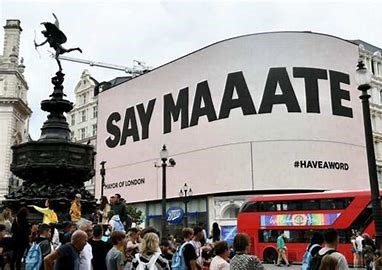
Barbara Ellen hijacked much of my blog this week with her excellent piece in The Sunday Observer about London Mayor Sadiq Khan’s campaign called Say Maaate to a Mate. The core idea is for men and boys to rebuke other male friends for using sexist language and talking about abusive behaviours that could lead to violence against women and girls. As the campaign website explains, ‘We know it’s not easy to be the one to challenge wrongdoing amongst your friends. That’s what say maaate to a mate is all about.’ 

This type of initiative is just ripe for satire, and I’m sure Ellen and I are not alone in rolling our eyes at it. As Ellen says, which I was going to say, ‘Well intentioned though it clearly is, it all comes across a tad woolly and over-idealised: this idea that, if some guy is making awful remarks, other blokes say “maaate” in a disappointed way and this magically banishes sexism and misogyny from the capital forever. Whaaat?’

Barbara (if I may), allow me to add a couple of points. Firstly, on the campaign website, there’s more guidance on how this airbrush approach to a serious problem works:

‘Mate is a word that needs no introduction. It’s familiar and universal. It can be used as a term of endearment and as a word of warning. This simple word, or a version of it, can be all you need to interrupt when a friend is going too far.’

This reminds me of Nancy Reagan’s anti-drug campaign in the 1980’s. ‘Just Say No’ to drugs was aimed at young people, who duly ignored it. The 1980s witnessed the highest rate of illegal drug use in America in the twentieth century. Like Regan’s ill-targeted campaign, the mayor’s approach to stopping violence against women doesn’t realise how feeble this language sounds in the context of a culture saturated with sexist behaviour and aggressive attitudes towards women. In 80s America, drugs were everywhere, not just on ghetto street corners, but also on public transport, in boardrooms and in bars and restaurants and a fixture of university campuses and high school playgrounds. The same can be said of demeaning and aggressive sexist language spoken to and about women and girls. It operates across class boundaries and can be heard in pubs and sporting events, in offices and classrooms, etc. Worst of all, language targeted against women and girls is pervasive in social media.

This leads me to my second point. Verbal hostility towards women and girls isn’t always so blatant as alcohol-fuelled pub banter or internet trolling. It can be indirect, insipid or give the appearance of even being a compliment. It can be cloaked in humour – and the person who doesn’t find it funny is accused of not understanding the joke. The maaate in these scenarios has plenty of wiggle room.

Barbara Ellen is also on mark when she points out that the funds for this lightweight campaign would have been better spent on policing and resources to help women fleeing domestic violence and for legal support to get convictions against the perpetrators. As that was going to be my closing, I’ll end this rant here and tip my hat to Barbara.

Writing with a Chatbot

‘I can see the value of AI as a useful tool for things like writing abstracts for scientific papers and the like.’ That was me on the topic of AI generated writing before I experimented with it myself.

As a total novice, I had no idea what I could ask of an AI bot or how I should ask it. I signed up for a free mini course offered by creativity guru Dave Birss on LinkedIn on how to get started with ChatGPT to ‘upskill as a researcher and a writer.’ Perfect.

I quickly learned that instructions had to be detailed and lengthy. It wasn’t just ‘write me an essay’ or ‘write me an article’ on a topic. Creating a prompt for the chatbot involved writing a meticulous paragraph about the style and scope of the output writing, along with the intended audience and purpose of the writing – for example, was it to sell a product, to persuade readers to act or to simply entertain.

This long-winded instruction had to cover some points that should not be included in the output. This sounded odd to me. Even though essays in literature tend to not have bullet points or numbering, if I wanted a literary essay, I had to specify no bullet points or numbering. In the prompt examples that Birss gave, he always used a phrase about the output piece being ‘jargon free.’ For that I’m assuming if you don’t point it out, the bot gives you jargon.

During the course, for practice, I asked ChatGPT to write an informative 500-word summary of an article that I referred to in last week’s blog. When I put in some of the things I did not want, I included that the summary should be ‘jargon free.’ Within seconds, I received a summary that adequately picked up the main points of the article. But it was flat. It lacked a sense of the critical tone, and there was mention of the provocative examples in the original text. The only comment it made on style noted that the article was ‘jargon free.’ I wonder where it picked up that idea. All these shortcomings made it hard to imagine where such a summary might be used.

To be fair, Birss does point out that AI cannot create ready-to-use copy. Some human editing would be involved.

My second outing with AI involved asking it to help me author an essay that I’m working on for The Journal of Open Learning, where I’m the Book Reviews Editor. We have a special issue coming up on capacity building in online and distance learning. I thought it would be useful to readers to have a short editorial piece on books in this specialised area of education. As I hadn’t had much joy finding specific books on this topic in the usual scholarly search engines, I thought I’d hand it over to ChatGPT. I wrote a long prompt, explaining to the bot that this essay was for an academic audience. I even specifically named the journal. I added that I wanted to advise academics and scholars about recent books in capacity building for online and distance learning. I forgot to mention no bullet points or numbering.

The bot spewed out 1000 words for a generalist audience – perhaps first year undergraduates – that was full of definitions of online and distance learning and of capacity building. It also contained a paragraph on the value of reading books (that part was for high school students). No actual books were mentioned. The style and formatting, complete with a numbered list of diverse ways to find valuable resources, was more suitable to a business report.

I responded to this by asking the bot for some examples of recent books to accompany the article and the books had to have capacity building and online learning in their chapter headings or indexes. There, bot, chew on that one. Within 30 seconds, I was given a list of six book titles with the names of their authors – no dates or publishers were mentioned. I checked each book to get a full reference and to make sure they addressed the topic. One of the books had different authors for the title than what I had been given, and it was generally about online learning – no capacity building. Another book was by a well-known author, and the title was similar to, but not the exact same as, a book written 25 years ago. Four of the six books were completely made up. They simply did not exist.

My second adventure with AI was like the first, missing the mark and not giving me anything I could work with. I take back what I said earlier this year about AI writing scientific abstracts. AI as a writer’s tool is in its infancy. In my experiments, it has misunderstood the nuances of writing and the rigour expected of academic research and prose. For the time being, AI appears to have a place in writing for generalist audiences and might produce working drafts for business reports, marketing content, articles for the popular press, blogs – hey, wait a minute…

Dave Birss, who offers a useful and entertaining beginner’s guide to AI for writers.

Indigenous in the Age of Identity Politics

Native Americans, Māori and Nahua, those are among the peoples I think of when I come across the word indigenous. What I don’t think of are the Mincéirs, one of several groups referred to as Irish Travellers. Their precise origins are unknown, but they broke away from Ireland to travel to other parts of Britain in the early 1600s. As a minority group that identifies themselves as indigenous, they have their spot on the UN’s List of Indigenous Peoples.

According to the UN, there are over 5000 groups of indigenous peoples, and nearly half a billion individuals qualify as indigenous. That’s larger than the population of the US. These large numbers have come about in part by removing the criteria of firstness. This appears odd given that our understanding of indigenous comes from colonialism, making a distinction between the people who were already occupying a land before the colonisers arrived.

Indigenous derives from the Latin indigena, meaning ‘native’ or ‘sprung from the land.’ Writing in The New Yorker, Manvir Singh observes that the word first appeared in English with reference to people in 1588. ‘Like “native,” “indigenous” was used not just for people but for flora and fauna as well, suffusing the term with an air of wildness and detaching it from history and civilization.’ Singh argues that the notion of indigenous peoples as ‘historical relics’ perpetuates their marginalization and hinders progress towards justice and equality. Indeed, according to the World Bank, although indigenous people make up just 6 percent of the global population, they account for about 19 percent of the extreme poor. 

Now, at least for the UN, indigenousness (try saying that after a few drinks) is determined by self-identification. Singh points out that ‘Many groups who identify as indigenous don’t claim to be first peoples’ like the Mincéirs, and that ‘many who did come first don’t claim to be indigenous.’ I understand the feelings of this latter group. This singular label oversimplifies the immense diversity among these communities, each with its own languages, cultures, and traditions, reflecting a rich tapestry of human history. Wearing my linguist’s hat, allow me to add that indigenous peoples account for over 4,000 languages.

Singh also confronts the harmful stereotypes and romanticized notions that persist about indigenous cultures – what I would call coloniality (I’ve waxed on about this before). The author aptly calls for a more nuanced and inclusive perspective on indigenous peoples, acknowledging their diversity and addressing the challenges they face as minority groups.

I agree with the need to reevaluate the concept of indigenous and to adopt a more comprehensive, empathetic, and respectful approach, understanding the intricacies and historical contexts of each community. Yet, I feel I’m being sucked into a wave of identity politics.

Like indigenousness, identity politics can be exploited by opposing sides. Claiming certain group identities or being sensitive to others’ identities makes one woke – in a negative sense – unless you flaunt or ‘protect’ your white identity or your male identity (for example). I know what side I lean towards in such debates, but the currency of these terms and their changing meanings can make it difficult to be understood. For those struggling against discrimination and poverty, the ambiguities surrounding indigenous and identity make it difficult to be heard.

Photo by Ganta Srinivas on Pexels.com

Parthenogenesis and Seahorse Dads

It’s not a word that rolls off my tongue, but I had to use parthenogenesis to avoid receiving an obscene sticker from the bots at WordPress for using the word virgin as in virgin birth. Pity the seedy surfer who was looking for a virgin and wound up here in my sociocultural blog.

Clare Chambers’ novel Small Pleasures sparked my interest in the topic of virgin births. The story begins with a journalist investigating a claim of a virgin birth to have taken place ten years before, with the proof being a ten-year girl without a biological father. As this is not a book of fantasy or SF, there’s no spoiler in saying that it turns out not to be a virgin birth after all. If it were set in the present, this would be a rather dull and short book with a DNA test revealing all. But this story is set in the late 1940s in Britain. The recreation of post-war austerity and medical practices of the day make this an interesting historical read. The 1940’s medical examinations of rudimentary blood tests and skin grafts fail to discount the possibility of a virgin birth. It’s the detective work of the journalist that uncovers the truth.

Gratefully, the parthenogenesis story soon becomes a subplot for the more interesting love story between the female journalist and the husband of the woman who professes her virginity when her child was conceived. At different points in the unfolding story, the journalist and the husband find it hard to not believe the woman. This is without religion coming into the story. Naivety, perhaps. Or yet another example of otherwise intelligent people believing the impossible. I recall as a child still believing in the tooth fairy long after accepting the Biblical virgin birth as a myth, a creation of faith and not science.

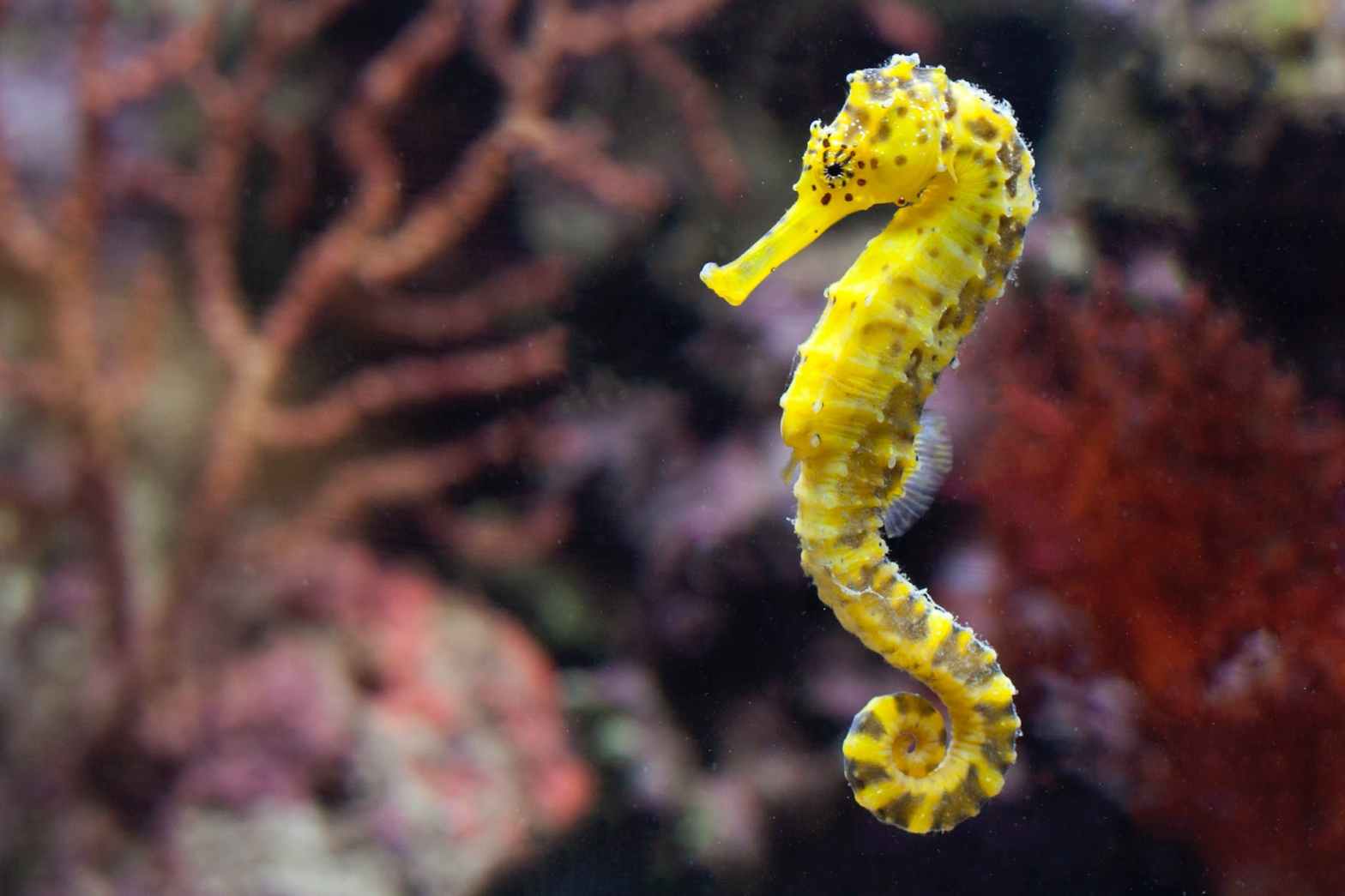
Virgin births do exist among some species of reptiles, fish and insects, but let’s try to stick to humans. Today, popular culture has us wrestling with the idea that men can become pregnant and give birth. Of course, I’m talking about transmen who were assigned female at birth and can become pregnant after transitioning. A term that has been floated around in recent years by the mother/father themselves is seahorse dad. The female seahorse lays her eggs in the male seahorse’s abdomen, and it is the male seahorse who carries the eggs to maturity and releases the offspring into the water, effectively giving birth.

The label of seahorse dad evokes a cute analogy, a metaphorical relationship between seahorses and transmen who give birth. After watching a few interviews with the seahorse dads, however, I’m left feeling a bit uneasy. I heard these mother/fathers speak of themselves as almost literally being seahorses. I’m not questioning their transitioning or living as a different gender from their birth sex, or even their suitability as parents. But humans are not seahorses, and when it comes to reproduction, these humans were able to get pregnant and give birth because they had female reproductive organs.

I wonder if I should have entitled this blog ‘The things we choose to believe’? Nah, better to build my vocabulary by using a new word, even if it’s one for a very old concept, and an even newer term – those seahorse dads – for a concept I accept, metaphorically speaking.

Art or Commerce? Orlinski in Nice

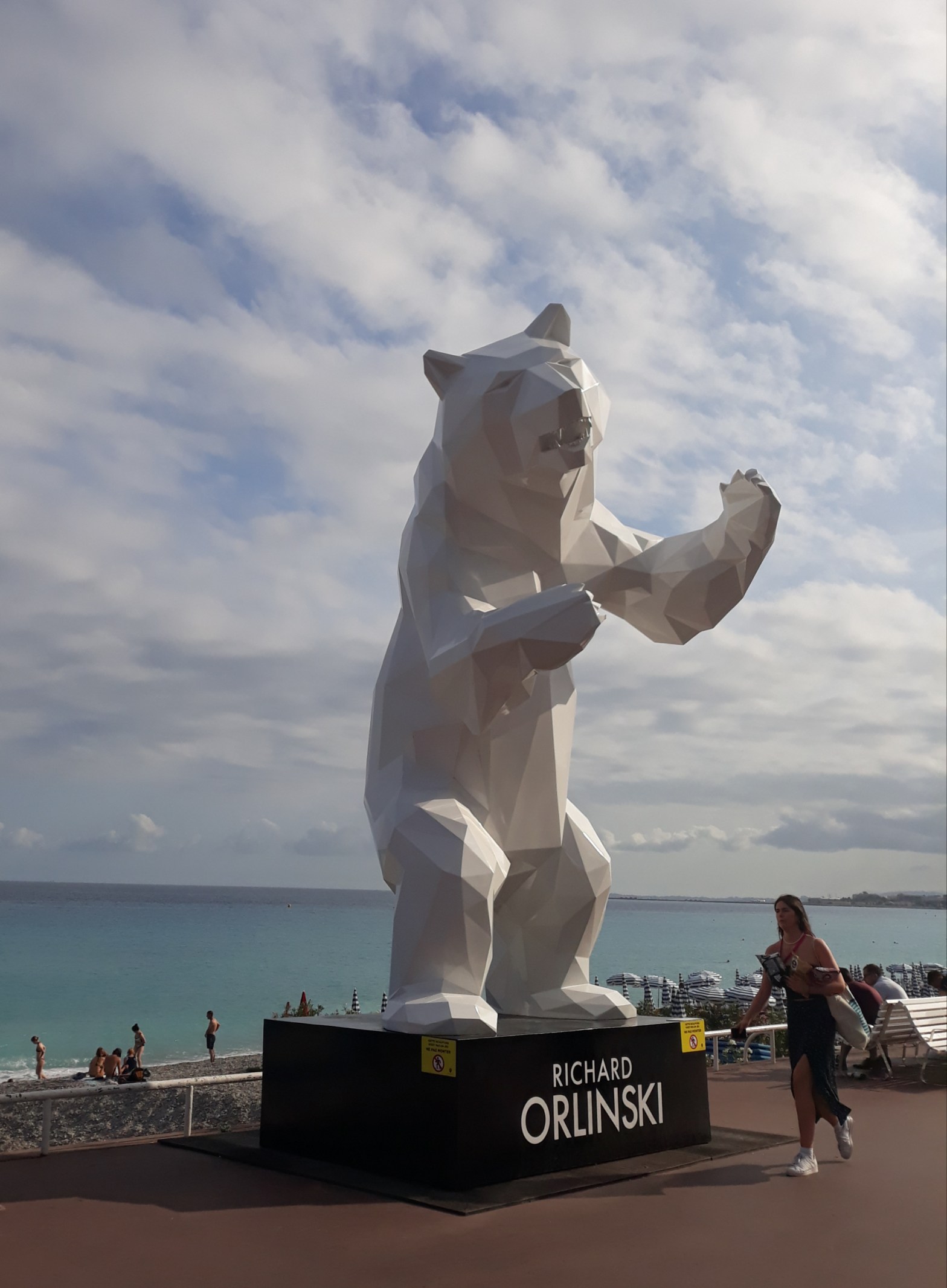
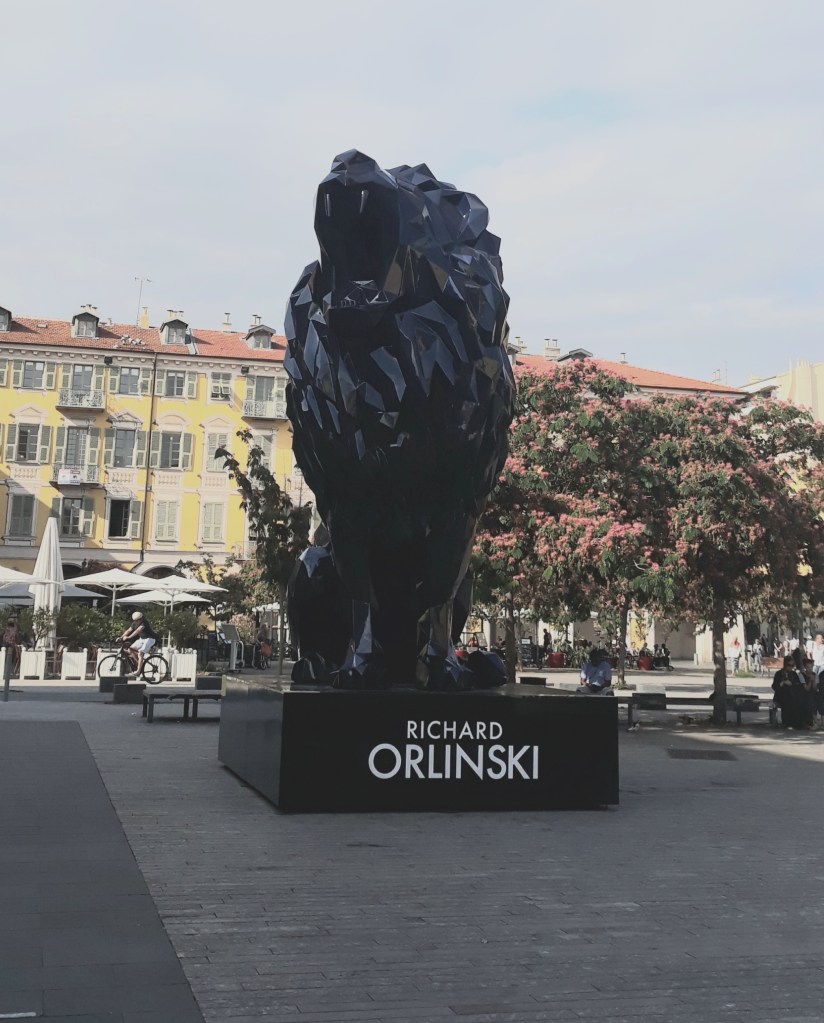
This trip to France has been decorated with some controversial street art. An installation by the French neo-pop artist Richard Orlinski of colossal animal sculptures has the French culturati polemicizing and passersby posing for selfies with the plasticine creatures. The monochrome structures use the bright colours of the original ten-pack of Crayola crayons and resemble children’s toys. These qualities and their placement in public squares, the famous promenade and even one at the airport give them a sense of fun.

Since the first sculpture I noticed in the installation was of a white polar bear, on its hind legs with a ferocious scowl, I thought there was an environment message or meaning. My other thoughts were to do with the bear as a symbol for Russia. As Nice has a sizable Russian community, I thought the creature was well placed and could have something to do with the war in Ukraine. All these ideas fell apart when I saw a huge black lion and a red tyrannosaurus rex in other parts of the city centre. Then there was Kong. A yellow King Kong wields a barrel over his head in Place Massena and a red version of Kong is amusing arrivals at the airport. I haven’t taken a picture of these Kongs as I feel some copyright issues should be taken into consideration. Kong might be iconic, but he was the creation of American filmmaker Merian C. Cooper, who deserves some credit and his estate some money for the use (or overuse) of the image.

Critics of Orlinski’s animal sculptures point out that they are simplistic and negate the complexities of art. I agree with that as I aimlessly search for meanings. Edgar Degas once said that ‘art is not what you see, but what you make others see.’ These sculptures, neither individually or as a collection, make me see or understand anything differently.

Orlinski is also unpopular with galleries as he draws costumers away from indoor installations and the more traditional paintings-on-walls exhibitions. The works have thus been reduced to ‘instagramable’ and ‘industrialised art.’ Orlinski’s own giant-sized replicas sell for 500,000€ and figurine versions for 2,000€. Being accessible to the public for me is a point in their favour. I can’t find fault in a sharing of creativity, even if their most creative feature lies in their enormity and placement in unlikely public spaces. They have at least been a source of gentle amusement during this working holiday.

Inside France Looking Out

From Nice the riots in France can only be seen on television. Other French cities about the same size as Nice and many smaller ones have been subjected to violent protests and riots in the wake of the killing of a 17-year-old by a French police officer. We don’t know much about the young man. His name was Nahel Merzouk, but he is being referred to as Nahel, no last name, and his family has not released a picture of him.

The talking heads on the many French television and radio news programmes analyse all this rioting down to a few levels. On one level, it’s about police brutality. On another level it’s about the presupposition that the police officer who fired at point-blank range will get a light sentence. At another level still, this is an angry young generation protesting against their elders in the government. I realise this last level sounds rather vague, but therein lies its power. To paraphrase Niccolò Machiavelli, the simpler the idea, the more will follow and zealously support it.

Some expert-driven talk has hissed about the Americanisation of French culture. Is Nahel the French George Floyd? As Nahel is reportedly of Algerian Moroccan heritage, is this all about race? Are the violent reactions symptomatic of the anti-colonialism that has shaped other protests and the knocking down of statues? Some British papers have picked up on this, with The Times reporting the rioting as coming from the ‘radical left.’ I suspect the radical right would like us to believe that’s the case. From inside France, it appears that all extremes are using the incident and the violent reactions to castigate Macron. One of the Italian papers, La Repubblica, has made much of this political infighting to conclude that the rioting is another sign of a weak president.

The French media is also focused on the extent of the rioting itself, how many cars and buildings have been set ablaze, how many shops have had their windows broken and how many rioters have been arrested for vandalism, looting and attacking police officers. From local radio, I learned that last night Nice experienced some isolated incidences – broken glass and rubbish bins set alight. This all makes for captivating news and gives me the uncomfortable feeling that the rioters have won by stealing the country’s attention.

The foreign media has been intoxicated by these images as well. I see online that American and British holidaymakers are concerned about their safety in France. From inside, I’ll tell you that the resort of Nice doesn’t feel more unsafe than it normally does. It’s a large city, and it has its share of pickpockets and neighbourhoods I personally wouldn’t go into at night. So far, the only change in my life brought on by the rioting is that public transport has been ordered to shut down at 21.00 – a real problem for socialising at night or going to the cinema.

I don’t mean to make light of this. I understand people’s anger. A young man, apparently unarmed, had an altercation with a police officer and was killed. The non-violent protests – better still, the silent marches – express this anger. The rioting and damage to public property, along with the hundreds of injuries inflicted on police officers, express stupidity.

The BBC informs me that tonight French cities are ‘bracing themselves’ for more unrest. I’ll just go back to bracing myself for further onslaughts of dubious reporting and opining.

Not the Van Gogh trail

I know I’ve criticized the Van Gogh industry before – the posters, tea towels, coasters and the astronomical price tags on his originals. Underlying this is the fact that this master is known as much for his self-mutilation as for his paintings. Despite all that, I am a fan of Vincent Van Gogh. While I’ve tired of the ubiquitous sunflowers, I still get mesmerized by The Potato Eaters, the Japanese orchards and best of all discovering those lesser-known gems, those paintings secreted away in museum corners waiting for me to find them. With this in mind, I brushed aside my misgivings about commercializing dead artists and headed off to Arles, France for a day trip.

Van Gogh only lived in Arles for fifteen months. He spent more time in Paris (2 years) and in Brixton, London (3 years). Yet Arles tourism has etched out a place for the master since after all in Arles, Van Gogh made over 300 paintings and drawings, some of his best-known works. That was enough to convince me it would be worth doing the Van Gogh trail with the hope of discovering something new, or as in the case of Paul Cezanne in Aix-en-Provence, get a feel for how the artist once lived.

The tourist office provided a map of walks in and around Arles, of which the footsteps of Van Gogh were included. There were six places of interest, with two of those places not existing as they once did – the famous yellow house where he lived with Paul Gaugin for a while was bombed out during WW2. The other ghost site was the view from the river, which Van Gogh famously painted. Today the view is mostly cluttered with 1980s apartment blocks. I saw the ‘night café’ in the daytime which is when it is now at its liveliest, full of tourists taking photos while locals try to have their espressos in peace. The public gardens and most of the stone bridge were still intact, evoking images vaguely reminiscent of Van Gogh’s landscapes. Perhaps that couldn’t be helped – what my eyes witnessed were closer to photographs than impressionist paintings.

What about the paintings and drawings? Two museums were on the Van Gogh trail. The one didn’t have any artworks but could boast having one letter written by Van Gogh to Gaugin. The other museum, the Foundation Vincent Van Gogh, not living up to its name housed five paintings by Van Gogh and bizarrely had them on display in an exhibition of female abstract artists. Yet, among those five I did find the gem – the painting I hadn’t seen before. Les Epis Verts is of shafts of green wheat in a field somewhere around Arles and was painted in 1888.

It is ironic that on the rare occasion I was prepared to not be cynical about commercializing art and overkill of the great masters, I was left underwhelmed and wanting more. C’est la vie.

Les épis verts (1888)

Sensitive, Intelligent Trees – how not to popularize science writing

I warned you, one of my themes this year is trees. Having completed an online course on trees and sylviculture, I’ve turned to books on the subject.

The Hidden Life of Trees by Peter Wohlleben was an international bestseller some five years ago that somehow past me by. On the back of this Wohlleben, a forester by training, has his own magazine, podcast and television show in his native Germany. Now he has a sequel volume that has been reviewed and piqued my interest. But given the rule for most film franchises – sequels are rarely as good as the original – I thought it right that I read the original first.

I’m afraid I struggled with the anthropomorphizing of trees throughout this popular book. Example: ‘The tough trees that grow on this slope are well versed in the practices of denial and can withstand far worse conditions than their colleagues who are spoiled for water.’ Denial is a complex human emotion, one that involves a great deal of reflection and conjuring of scenarios to discount one explanation over another more palpable idea. When I try to grow a new plant from a cutting and it doesn’t work, I don’t suspect the cutting of being in denial of its new situation or resisting the notion of creating new roots. It’s more likely the weather conditions weren’t ideal, the soil was too acidic, or my rooting powder was too cheap to work.

Discussing three oak trees that are next to each other, Wohlleben claims one is ‘behaving’ differently from the rest. ‘Clearly, each of the three trees decides differently. The tree on the right is a bit more anxious than the others, or to put it more positively, more sensible.’ My more prosaic explanation might involve exposure to wind or sunlight, or one of the trees being a favourite of the local canine population.

What got under my skin the most were the references to trees having the parental, often ‘motherly,’ sensibility to protect their young. This comes from an idealisation of parenthood and motherhood that doesn’t fit well with the reality of dysfunctional families or those families where love and nurturing exist, but the time and means to provide safety are lacking due to economic circumstances.

To the book’s credit, it includes fun facts about the ages of some trees – over 10,000 years old. And a few interesting factoids: Apparently, walnut trees emit a mosquito repellent; and ‘There are more life forms in a handful of forest soil than there are people on the planet.’

The book is also useful for its environment points. Bringing together the ideas of commercial forestry with industrial farming, Wohlleben notes that, ‘Thanks to selective breeding, our cultivated plants have, for the most part, lost their ability to communicate above or below ground. Isolated by their silence, they are easy prey for insect pests. That is one reason why modern agriculture uses so many pesticides.’

Reviews of the book show a divide between the professional reader-critics (e.g., The New Yorker and The Guardian) and the citizen-critics on the internet (e.g., Goodreads and Amazon). The latter praise the ‘accessibility’ and ‘delightful’ style and presentation of complex science. I’m with the professional readers who cringe to varying degrees over the simplifications, humanizing and questionable science being used to support the idea of trees having feelings and the capacity to learn. I prefer language about transmitting signals through electrons and the ways living organisms adapt to their environment. I’d like to think that with information and visual aids literally at our fingertips, science writing to generalist audiences no longer needs to rely upon fairytale scenarios or the registers of childhood language.

Paul Nash’s Cherry Orchard (1917)

The Older Writer

Older than who or what? I don’t know. I’m leaving this a dangling comparative for now, something I would tell my students and editing clients not to do.

I’ve realized of late that I have become an older writer,to use a phrase that gets bandied about these days in writers’ networks. Though I see myself as middle-aged, who happens to possess a Senior Railcard, I’m not eligible for some writing competitions and funding grants reserved for the under 35s. The flipside of this is that I can enter competitions for the over 40s and others for the over 50s. I’ve not convinced these age categories help the underrepresented. They just decrease the number of possible applicants, making these smaller and usually less-noteworthy awards.

There’s also an underlining assumption that older writers write for older, more mature, audiences. Children’s literature and young adult fiction blows that theory out of the water. In my thirties and forties, most of my protagonists were in their twenties. In my fifties, I wrote about a nonagenarian. Sure, my writing style has changed somewhat over the years, and I would like to think that I’m a better editor and rewriter of my own work than I was thirty years ago. But when it comes to published writing, I usually can’t tell the age of the writer from their works.

Martin Amis once said that ‘Talent dies before the body.’ He supported his point by claiming that Roth, Nabokov, Updike, Joyce and Tolstoy ‘disintegrate before your eyes as they move pass seventy.’ The generalization is obviously ageist, and in typical Amis fashion tinged with sexism – where are the great women writers in his list? I don’t think he was implying women writers didn’t disintegrate with age the way men apparently do. It’s more likely women writers weren’t worthy of study or mention. Examples abound of older writers having their first novels published or winning literary prizes in their 50s and 60s. Margaret Atwood, Annie Proulx, Hilary Mantel and Annie Ernaux come to mind. All females for sake of balance.

Edward Said famously examined ‘late style,’ as he called it, of artists, composers and writers towards the end of their lives. He didn’t make judgements on the quality as Amis did. Said was interested in the commonalities in these later outputs, only to suggest that such works are about dreams unfulfilled, understandings never reached – a sense of being out of touch with tradition and popular trends at the same time. Different and reflective, rather than disintegrating talent. Being older than I was when I wrote my first short stories and essays, I accept this view and put a knot in the dangling comparative.

Nick Cohen – #HimToo

For years one of the joys of reading The Sunday Observer was tucking into the work of columnist Nick Cohen. Typical of the newspaper, Cohen could be counted on to write insightful, witty and sometimes foul-mouthed pieces. I recall in particular, Cohen’s brilliant and well-researched writing on ‘fairyland’ Brexit. While firmly left of centre, Cohen was also critical of the left and certainly opened my eyes over the years.

Then, one day, he wasn’t there. I assumed he was ‘away’ as the paper often puts it, taking a holiday or on sick leave. But there was no mention of anything like this. Another week passed and then another. No sign of Cohen’s column. I looked online for a story about him, but there was nothing. His name still appeared as if he worked for The Observer.

Months later, I received an email from Good Law Project, an organisation I strongly support. Environmental journalist Lucy Siegle, being represented by Good Law Project, was one of several women who spoke out about her experiences of sexual harassment by Nick Cohen. She made a formal complaint to The Guardian/Observer back in 2018, and she was ‘stonewalled.’  As reported by Good Law Project, the paper ‘actively discouraged complaints and refused to take action on widespread reports of Cohen’s misconduct for years.’ As other women had come forward, the paper had no choice but to suspend Cohen. But they did choose to not publish any explanation for Cohen’s departure. I heard Jolyon Maugham of Good Law Project explain how he had approached The Guardian/Observer Media Group about this case and others, and he ‘could not get them to take it seriously.’ Maugham urged the paper to be the first to put this in the public domain.

The story has finally been reported by the New York Times this week and is well worth a read. This NYT story isn’t just about Nick Cohen’s behaviour, it’s about the coverup conducted by the British media. It mentions how Financial Times, Sunday Times and Private Eye refused to run the story about Cohen’s behaviour and departure. To this I add something learned from a Good Law Project interview with Lucy Seigle that The Telegraph ran a story claiming that Nick Cohen was suspended because he was gender critical and spoke up against transactivists. In other words, for The Telegraph, this was another of these ‘cancel culture’ stories, popular with its readership. But it wasn’t one of those stories. After all, why would Cohen be suspended when other Observer columnists, such as Sonia Sodha and Kenan Malik, have clearly taken a gender critical position and have supported women’s sex-based rights – neither of them has been suspended.

There is a whiff of irony here. Cohen often wrote about the coverup culture in the British media. Example, post-Brexit Britain, where the fairy tale continues in the pro-Brexit press:

‘For the life of me, I do not understand why Labour and those parts of the broadcast media outside the control of the political right play along with the deception and pretend that the world as it is does not exist. It’s as if Britain were a Victorian family keeping up appearances. As if not just a government with every reason to conceal, but the opposition and media are bound by a promise to never wash Britain’s dirty laundry in public – even as its stink becomes overwhelming.’

I guess it’s okay if the stinking ‘dirty laundry’ is his own. (Forgive my euphemism, I know it’s more serious than that for the victims.)

I find myself writing this blog not just to voice my disappointment in yet another man whose talents I admired turning out to be a sexual predator. Move over Kevin Spacey, James Levine and Ben Affleck. My deep disappointment lies in The Guardian and The Observer, two progressive papers I have trusted for years to support women’s rights and rise above the culture of male privilege.

Journalist Lucy Siegle