India and the Global Majority

Here we are at the end of April 2023. What makes this date significant? This week, India’s population is expected to have reached 1,425,775,850, overtaking China as the world’s most populous country. This brings a few thoughts to mind.

First, I’ve always had a soft spot for India and its peoples. This might have something to do with my ‘spiritual’ childhood and attending the Temple of Kriya Yoga in Chicago at the age of ten. For a while I even identified myself as Hindu though I wasn’t really. In grown-up life India came to represent some of my favourite authors – Salman Rushdie, Anita Desai – and the music of Ravi Shankar and A.R. Rahman. When I finally travelled to India, I revelled in the colours and fragrances, its architecture rich in a multi-ethnic and multi-religious history and the experiences of seeing a tiger in the wild and riding through the crowded chaos of New Delhi in the back of a rickshaw. I also saw poverty on a scale I had never seen before. An enlightening experience all around.

The other idea that has surfaced with this population milestone is that of a global majority. Since the middle of the twentieth century, together China and India have accounted for over a third of the world’s population. For the entirety of my lifetime, the world has been predominately Asian. Yet for much of my early life – and perhaps I speak for other Westerners – my world view did not match this Asian reality.

That started to change with globalization – I know this is a swear word for many, but globalization is not just about a McDonald’s/Coca Cola world invasion, but also includes a spreading of Asian cultures and languages to the West. I went through a Japanese phase in the 80s when Japan was an economic powerhouse and Akira Kurosawa films regularly featured at the Edinburgh Film Festival. Living in Korea in the late-90s and travelling widely to neighbouring countries made America feel for me even less central to world cultures – a bit player. Today, I reflect on the power of ‘K’ – K-pop, K-design, K-cinema – as everything adorably Korean.

The concept of a global majority can also be seen through another lens. Writing about leadership in education, Rosemary Campbell-Stephens defines the global majority to include ‘people who identify as Black, African, Asian, Brown, Arab and mixed heritage, are indigenous to the global south, and/or have been racialised as ethnic minorities.’ Combined, these groups currently represent roughly eighty-five per cent of the world’s population. Campbell-Stephens adds that the term global majority was ‘coined to reject the debilitating implications of being racialised as minorities.’ Recognising the largest populations isn’t just about numbers, it is a move ‘towards reclaiming the autonomy and efficacy that the process of racialised categorisation and minoritisation removes.’ I can see the value of this – a challenge to prejudicial thinking. But it also misses the mark by not acknowledging racializing religious groups as found in antisemitism and, to bring this back to India, in Modi’s government, which is openly discriminating against Muslims.

As India’s population and economic power grows, so too does its place in the world. I watch this global power shift with fascination and a bit of unease.

My week in the heat

I haven’t been on holiday near the Equator or sitting in a sauna at some upmarket health club that I don’t belong to. The heat comes from reading and listening to climate science. Hot temperatures and hot in the sense of stoking my anger. As tomorrow is Earth Day, yet another awareness campaign, I promise I won’t mention any numbers or statistics as you will have heard enough, and I don’t think they’re very helpful. What we need is a shift in thinking. Here are some highlights that have rattled my head this week and have brought me to this conclusion.

In David Wallace-Wells’ newsletter, the environmentalist describes how critiques of the ‘catastrophic thinking’ in recent climate activism have been ‘regularly and conspicuously levelled by complacent centrists and patronizing greybeards against the alarmist fringe of the climate movement — yes, warming was happening, they acknowledged, and yes, it represented a challenge to the world’s collective status quo, but still, all of this hyperbolic talk was, let’s be honest, a bit much.’ This does an excellent job of depicting the stance of many public figures who are not climate change deniers but are not fighting for the environment either. It is as if positioning oneself in the middle of the argument, avoiding extremes, is reasonable. In this case, it’s not.

I’ve been reading Simon Sharpe’s Five Times Faster: Rethinking the Science, Economics, and Diplomacy of Climate Change, where the issue of communicating the dangers of climate change is looked at from a slightly different angle. Sharpe argues that climate scientists have been pulling their punches when presenting their findings to the public and to policy makers because these scientists have tended to talk in terms of predictions, which they are naturally cautious in making. It would be better, according to Sharpe to address the effects of climate change in terms of risk assessment – that is, looking at the worst possible scenario. He compares risk assessment in other fields to make his case. ‘What would become of a national security adviser who stormed out of a briefing on a terrorist threat complaining that it was all too depressing? Or a chief medical officer who decided not to warn political leaders of an approaching pandemic in case the bad news caused them to ‘switch off’? Obviously, such negligence is unthinkable.’ Yet, scientists, economists and politicians have skirted around risk assessment in the context of climate change. My blood boils thinking about it.

I took a break from these commentaries on catastrophic thinking and parlance only to find this item in the New York Times: ‘India is among the most vulnerable countries to human-caused climate change. And its poorest people are at the greatest risk…. This week, many parts of India were under heat wave alerts. Schools and colleges were closed in most parts of West Bengal state.’ Over to EuroNews, where there were stories around the fact that 2022 had the warmest summer on record across Europe. There was no escaping it.

Finally, returning to Simon Sharpe as he has the right words to describe what’s been going on in my head this week. He writes, ‘Thinking about climate change risks can be emotionally draining. You might feel you’ve heard enough by this point. There are increasing reports of climate change scientists and activists needing psychological support to cope with the strains of constantly staring into the abyss, trying to tell people about it, and witnessing the utter inadequacy of our collective response.’ Am I an activist, or an ordinary news junkie, needing psychological support? Perhaps not yet, but I did find writing this blog therapeutic.

Happy Birthday, Scrabble

This week Scrabble celebrated its 75th anniversary, and in its honour, we dusted off our old classic set and played with Ravel and Liszt in the background. There was a time in the winter months when we scrabbled once a week, on one of our non-drinking nights. We altered that tradition over time to a non-competitive puzzle night – each of us immersed in our own world of words (me) and numbers (David).

Our old Scrabble set has a few faded letters, but all the tiles are there. According to France Info, across the world close to one million of the lettered tiles have been lost. And for some more weird statistics – if you were to stack these lost letters on top of each other, the pile would be twelve times higher than the Empire State Building.

Some more trivia – Scrabble was invented by Alfred Mosher Butts and was first called Lexiko, then Criss-crosswords before becoming Scrabble in 1948. This word derives from the Dutch schrabbelan, which means to scratch – perhaps what you do to your head while trying to compose words from those seven random letters, especially the servings of all consonants or all vowels.

The game we played wasn’t stellar. The highest scoring word was stinger, which used up all seven letters, giving me an extra 50 points for a total of 66. This pales when compared to the highest scoring word ever of oxyphenbutazone (1458 points). But I suspect this is theoretical. I’m not sure I believe it appeared in a real game as part of the word would have to be in place, and that would lower the score. According to Guinness World Records, the highest score in a tournament for a single word was 275 points for beauxite.

When I used to subscribe to The International Herald Tribune, I got hooked on the print version of Scrabble for one player. Realising its potential for addiction, I’ve stayed away from the digital versions and online groups. I would do little else with the sedentary part of my life if I went those directions.

The actual 75th anniversary was a couple of days ago. As I too often do with humans, I am issuing a belated ‘many happy returns’ to this wonderful boardgame for lexophiles (another good Scrabble word if your opponent leaves you with the ex and space around it).

The language of coloniality

This week Buckingham Palace announced that King Charles was supporting research into the royal family’s links to the transatlantic slave trade. This is along the lines of investigating any links between America and lunar exploration. It’s bleeding obvious and the stuff of history books, novels and films, and in the case of the latter -living memory for most of us. Of course, the moon landings don’t carry the shame of the colonisation and enslavement of peoples. It’s this shame that has allowed for this trick of the mind where people talk of the monarchy as both integral to the British Empire, and therefore colonialism and slavery, and yet, at the same time separate from the Empire when it comes to the well-documented atrocities and the financial gains that still exist today.

What’s going on here I think can be found in understanding the terms colonialism and coloniality. The withdrawal of European countries from their colonies represented the end of colonialism, the political and economic structures enforced by the colonisers to govern and exploit the colonised. But that wasn’t the true end of it. Sociologist Ramón Grosfoguel explained back in 2011 that ‘we have come out of a period of global colonialism to enter a period of global coloniality.’ In contrast to colonialism, coloniality refers to the hegemonic ways of thinking, doing and being that show power of one group over another even if the colonial governments are no longer in force. Coloniality has its roots in colonialism but is far more subtle and is disguised in the language of progress, modernization and development – I’m paraphrasing here from an insightful article I read recently by Pinky Makoe (2022), a sociolinguistic studying coloniality in education in South Africa.

Here’s an example of coloniality at work. A recent article in Nature pointed out how biological species have been traditionally named after persons, real and fictional. ‘Eponyms typically reflect benefactors, dignitaries, officials, the author’s family members and colleagues, or well-known cultural figure’ at the time of their so-called ‘discovery’ by westerners. This point is illustrated in the names given to animal and plant species in the continent of Africa, a strong majority were named after British men, followed by German men, followed by French men, followed by Belgium men – you get the idea. The fact that these names stayed in place for so long points to the coloniality that remained long after the colonisers were gone. The article was about the drive to replace these names, these relics of colonialism, by adopting the names used by local people where these species can be found.

At least we are talking about coloniality – in concept, where we are not using the word. This idea has finally come out of the shadows of academia and is making its way into the popular press. I guess I shouldn’t be too hard of King Charles. His ‘bold’ announcement is a step in the right direction and in its naivety is only trying to fit into popular thinking.

Children’s spoken language: politeness and impoliteness

I recently authored part of an online course, including a section on politeness and impoliteness in children’s spoken language. Here are some scraps from the cutting room floor.

When looking at spoken language whether adults or children, we talk about the use of politeness markers,such as ‘please’ and such conventional formulaic expressions as ‘thank you’ and the uber-annoying ‘have a nice day.’ In linguistics, politeness markers are seen as tools used in interaction to avoid giving offence, by showing friendliness or deference. Examples of polite language also include nicknames, jokes or in-group slang to show friendliness, or the use of formal terms of address, hedging or formal language to show deference. 

In languages, such as French and Italian, politeness can be marked by addressing someone using the formal form of you. In Japanese, Korean and Chinese politeness is writ large in the use of honorifics, those titles or words used to express respect. In Korean, for example, the word nim is added to names and titles to show respect and recognition of a higher social status than the speaker. When I was studying Korean while living in Korea, I soon discovered that as a foreigner I was being taught to use honorifics as if I were a child speaking to an adult. Even worse, I was encouraged to use a type of language that was extremely formal and made me sound as if I was making public emergency announcements.

Polite behaviours and language are taught to us from an early age and are associated to some degree with contexts. For example, a young child giving an order to a peer might use an imperative verb form, but that same child would express the same desire to an adult in the form of a question or request. Polite language is also culturally reinforced in written texts found in children’s literature and in other modes and media, such as films and musical stage plays. Typically, in children’s literature protagonists use politeness markers while the villains employ more verbal insults and sarcasm. In my study of politeness in Roald Dahl’s Matilda, a corpus analysis revealed that only the protagonists, Matilda and Miss Honey, used the word please. They were also the only characters to use thank you in a polite sense, as opposed to the sarcastic way this expression is used by the two villains, Mr Wormwood and Miss Trunchbull.

Of course, I found impoliteness more fun to analyse and write about. Like politeness, impoliteness in language is taught to us from an early age, but is more often taught through impoliteness metalanguage – that is, being told that you are being impolite, rude, discourteous, etc. The language of exchanging insults, taunting, making the witty reply and having the last word to ‘one-up’ another child may be creatively improvised by some children. But it seems most children borrow from a repertoire of name-calling and phrases which have been used by other children before them. Among children, impolite language appears to have a range of social functions, such as creating solidarity and being the centre of attention. Consider the use of expressions like cry-baby, spoilsport and mardy baby (an English dialect word for a spoilt child). Depending on the context, these expressions could be meant to anger, hurt or display affection towards the intended target.  Folklorists have also noted that childhood jeers and insults are often softened by using rhymes, as if to say the insult should not be taken too seriously. From my own childhood: ‘Roses are red. Violets are blue. Garlics stink and so do you.’

The pinnacle of impolite language in childhood occurs in the use of swear words. My research into this area of childhood language didn’t teach me anything I didn’t already know. Perhaps this is because what applies to children also applies to adults. Swearing is great for blowing off steam – especially at oneself – but when directed at someone, it’s often counterproductive and belittles the speaker more than the listener.

You’ve probably gathered that these extracts that didn’t end up in the final online units have had some of their academic language shaken out of them and some personal asides added in. There’s another type of language for you – bloggery.

Five Vignettes About Trees

1.

I attended Joyce Kilmer Elementary School in Chicago, where the first line of Kilmer’s best-known poem was painted in old-worldly script above the stage of the auditorium: ‘I think that I shall never see a poem as lovely as a tree.’ The metaphor still works for me, but the rhymed couplets throughout the poem (I will spare you) edge close to doggerel. Thankfully, loads of other poems about trees have been published. I’ve recently discovered the French-Canadian poet Hélène Dorion, whose collection ‘Mes forêts,’ as the title suggests, features trees. Here’s a sample:

Trees bite into the soil
their bodies parched
in the cold of their roots
gaunt shadows bodies
pressed together
we hear the song
of fracture and desire
body like the tide going out
pale boat
lost in its night

body of love and storm
given over to the earth
that it licks as if
it were a wall to pierce through

  • Hélène Dorion (Translated by Susanna Lang)

2.

With talk of today being the Spring Equinox in the marginalia of the news, I was reminded of St Joseph’s Day. It’s the day before the equinox, but nevertheless it was for me as a child the Italo-American version of St Patrick’s Day. It was customary to wear red. In Italy, it’s also celebrated by gorging on a zeppola, a custard-filled pastry with cherries on top – the cherries represent the buds on the trees in spring.

3.

At the start of the year, I enrolled in another MOOC intended for French undergraduates to help me expand my French vocabulary. The course, entitled ‘Les Arbes,’ was about the biology of trees and their contribution to the Earth’s biodiversity. Once again, learning scientific French highlighted the paucity of my scientific English. Many of the words I looked up in French were the same or close to it in English.

4.

In Cambridgeshire where I live, a furore has erupted over new plans led by the county council to build a busway (a bus-only road) from a new 6000-home development to the town of Cambridge. Building such a road will involve cutting down 1,000 trees. The majority of these arboreal victims are in the Coton Orchard, one of the UK’s largest and oldest orchards, with a unique ecosystem that cannot be mitigated with planting new trees elsewhere. This is part of a pattern in Britain, where the mass felling of trees has been carried out in the interest of road building. In 2018, despite two years of protests from residents in Sheffield, the city council allowed for the felling of some 17,500 trees. It later turned out that the justification for this was based on misunderstandings of an environmental survey coupled with misinforming the public.

I’m not just being sentimental about trees – all trees everywhere. Trees are also a crop that provide wood for furniture and pulp for toilet paper, among other things. Some trees also need to be cut down due to disease or public health reasons. The destruction of trees in our parks and towns is a different matter altogether. With the loss of these trees, the bird and insect populations, already in catastrophic decline, suffer greatly. To this, it’s necessary to add negative effects of such barbarous acts on the human population, both in terms of our physical health (such as the quality of the air that we breathe) and psychological health (where studies have shown improvements in emotional well-being with the introduction of sylvan spaces).

5.

Every year, I buy an artsy calendar to add some colour and visual creativity to my home office in Ely. It’s also a place to jot down writing deadlines, meetings and health club activities – things that are on my phone calendar as well but are sometimes forgotten when my head is in the comfort of clouds. My 2023 calendar has a tree theme. Every month displays a painting of trees by some famous, and some not so famous, European artists. Looking at these photos of paintings everyday – these meadows, these tree-lined shores, these shaded forests – gives my days a natural sense of calm and beauty. Since according to a French professor lecturing on the MOOC, there are over 60,000 species of trees, every year could have a tree theme, a different tree calendar, and in the remainder of my lifetime, I still will have only scratched the surface.

Above: Emmanuel Gondouin, La Forêt, 1912
Feature image: Henri Charles Manguin, Les oliviers à Cavalière,  1905

Native American Redux

Any kind of revival or revisiting of something from long ago is a set up for disappointment, a total deflation of the nostalgia bubble for sure.

Like so many things in my early life, my entrée into Native American literature came via my determination to be a spiritual person – connected to universal powers, trying to levitate in incense-filled rooms. During my teens, I believed Native Americans were more spiritual than the rest of us. In popular culture, thanks largely to second-rate westerns and new age marketing, these indigenes appeared to have a sixth sense allowing them to see through people and communicate with flora and fauna in mystifying ways. I saw traditional Native American stories with their supernatural elements of talking animals and powerful deities as spiritual as opposed to the mythology and morality tales of the Bible and classical literature.

By my late twenties with my feet more firmly on the ground of literary and linguistic criticism, I was able to straddle Native American fiction as replete with episodes of magical realism. Yet, I privately thought of it as still somehow spiritual. That is, such fiction could be used spiritually, where the magic is mystical, for people in those native cultures and for those of us on a spiritual path – though my path was already becoming marred with potholes of doubt. Indigenous people were still more naturally spiritual in my mind’s eye, but I wouldn’t dare say this to students on my Native American Literature course. I had learned at university some important social skills, including not sounding like a new age hippy in public – such talk is easily mistaken for gullibility. The novels on my course were taught devoid of spirituality and as fictional retellings of reservation life and the treatment of native peoples by the US government with magical realism woven into the stories to reflect the traditional teachings of these peoples.

It was around this time, in the early nineties, that I attended a Native American languages conference in New Mexico, thinking this might be a direction to take my linguistics career. I know this sounds nerdy, but I think I would have done well in language documentation research, recording and transcribing dying languages. This gathering was unlike any linguistics conference I had been to before or since. Talks were introduced with songs and prayers, the latter a strange mix of indigene spiritual teachings and Christianity. As much as I enjoyed the songs and the linguistic research on these heritage languages, I felt disconnected. Two things were at play here. I was one of a few non-Indians in attendance and soon realised that native peoples were also linguists and training others in their tribes in language documentation. I was an interloper. The other point of disconnect came from the very earthy – and I would argue, political – Catholicism out on display. At the time, I was quite uncomfortable around brandishing formal religions of any sort although I was tolerant of spiritual speak and its cousin psychobabble. Suddenly Native Americans were no more or less spiritual than anyone else.

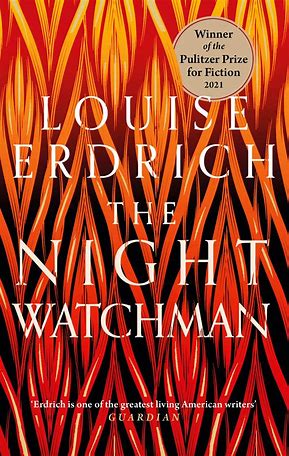
Fast forward 30+ years and several jobs in linguistics later, to where I found myself reading a work of Native American fiction for the first time in decades. Erdrich’s The Night Watchman caught my attention after it won the Pulitzer for literature. I approached this book with a sense of nostalgia, reminiscences of my younger, spirit-seeking, self, gobbling up Indian fictions. Set in America in the 1950s, it’s about an extended family of Chippewas living on a reservation and working under oppressive conditions at a jewel-bearing plant while their tribe’s leaders take on the US government. At the time a bill was going through Congress to end tribal recognition and Indian rights to their ancestors’ lands.

The story has magical realism elements in it – prophetic dreams, a talking dog and an owl that gives signals, but for me they are no longer aspects of spirituality. The story is more socio-political about the way American Indians were oppressed and subjugated to the reservations. I was struck by the language of this passage, referring to the bill proposed in Congress:

‘In the newspapers, the author of the proposal had constructed a cloud of lofty words around this bill—emancipation, freedom, equality, success—that disguised its truth: termination. Termination. Missing only the prefix. The ex.’

More importantly for my older self, this is a story about the treatment of women in 1950s America. The women play the roles of cook, doctor, nurse and maid while coming up against sexual assault and forced prostitution.

While reading The Night Watchman I was reminded of an academic collection of Native American essays and fragments of memoirs, for which I wrote a review in the Journal of Language and Literature. Key to all these writings is the idea of survivance, as opposed to survival. The collection’s editor, Ernest Stromberg explains that ‘While survival conjures up images of stark minimalist clinging to the edge of existence, survivance goes beyond mere survival to acknowledge the dynamic and creative nature of indigenous rhetoric.’ Erdrich’s narrator employs what I would call survivance rhetoric:

‘You cannot feel time grind against you. Time is nothing but everything, not the seconds, minutes, hours, days, years. Yet this substanceless substance, this bending and shaping, this warping, this is the way we understand our world.’

After all these years, I’ve come to realise that survivance is what unites works in the genre of Native American Literature, which includes poetry and memoirs, and this is what is shared between writers and readers. I guess, this realisation is my spiritual experience after all.

Daphne and Daphne

My nod to International Women’s Day 2023 comes in the form of noting two women named Daphne.

The first is the original Daphne, a figure from Greek mythology. Not important enough to be a goddess, she was a type of nymph associated with freshwater structures, such as wells, streams and brooks. Her story is certainly a woman’s story. Determined to be independent, Daphne wanted to stay single and untouched by a man for the entirety of her life. Unfortunately, she was beautiful, and even worse, Apollo wanted her. In one version of this tale, Eros, punishing Apollo for his hubris, speared Apollo with a golden arrow, making him desire Daphne. To protect her from Apollo’s clutches, the river god Paneus transformed Daphne into a tree. A linguistic aside: In English, the type of tree that Daphne becomes is called a laurel tree, and in Greek, the word for laurel is the same as Daphne.

Was Daphne happy and fulfilled being a tree? That, we don’t know as Daphne’s storyline ends there. From versions and adaptions written by men, this is Apollo’s tragic story. In Ovid’s Metamorphoses, the moral is the lesson Apollo learns about his haughtiness. Daphne is left in the dust, a conduit for the man’s (or god’s) story. Ovid’s version also has Daphne being pierced by Eros’s lead arrow to make her repel Apollo – that is, she loses her agency and her desire to be independent from men. I’m waiting for a feminist scholar to take up the perils of this Daphne.

The other Daphne is du Maurier. You probably guessed that. The author of modern classics Rebecca, Jamaica Inn and The Scapegoat was only on my radar as a novelist until I read Margaret Forster’s biography. Du Maurier was also a scriptwriter and film producer, eventually owning a production studio, none of which were easy feats for women in post-war Britain or America. She was also the breadwinner, earning a great deal more than her army general husband – who was portrayed by Dirk Bogarde in the film A Bridge Too Far.

Yet, du Maurier was not just another woman of extraordinary accomplishments bucking the social gender-defined trends. For me, she was also an everywoman of sorts. According to Forster, du Maurier battled with depression throughout her life and was at its worst towards the end when it was accompanied by anxiety. Women are more likely than men to experience depression and anxiety. Women are also more likely to speak about these conditions and to be prescribed medication. Between 1977-81, du Maurier suffered from such a severe bout of depression she couldn’t write. She was trapped in a cycle of being too depressed to write while believing that some inspiration to write would take her out of her depression. She was prescribed Halcion (a benzodiazepine). That medication heightened her anxiety, which du Maurier felt was caused by a lack of creativity. For the anxiety she was put on the sleeping pill Mogadon, which triggered a deeper depression, for which she was given Prothiaden (a tricyclic antidepressant). After a severe panic attack accompanied by spells of not eating, she was taken to hospital. She wrote about it in verse:

“They said it was not my body but my brain,

Had ceased to function in its normal way,

So back to hospital I went again, Doctors

Would find out what had gone astray.

A week of tests. Results? I am not told, but

Appetite has gone, has ceased to be. The sight

Of food appals me, hot or cold, the character sitting here

No longer me. I walk around the block, then

Come inside, no reason to exist or to reside upon

This planet here, myself has fled to unknown starts

Far lower than this earth.

Dear God, did you intend this from my birth?”

These Daphnes shared more than a name and an undaunted spirit. They both struggled in ways clearly indicative of their womanhood.

Marking the one-year anniversary

As a news junkie, I’ve been on a seven-day high. As Friday saw the one-year anniversary of the start of the war in Ukraine, reviewing the year and predicting what is to come has dominated the news cycle. There was also a spattering of this weeks’ events featuring Biden’s surprise visit to Ukraine, Putin’s speech about a parallel universe with Ukrainian nazis attacking Russians and scenes of support rallies and vigils starring the familiar blue and yellow flag.

What have I learned from this week of international newspapers, podcasts, radio, television and magazines? President Zelensky is still the master craftsperson of public relations. Despite that, he’s not likely to get the full military support he craves for reasons to do with geopolitics and the practicalities of transporting and using these machines of war. It’s also not likely this war will end anytime soon as both sides are far from the negotiating table. One pundit predicted that this could last a generation.

The most thought-provoking commentaries came from the weekend papers. The Observer editorial put a spotlight on the results of this week’s UN resolution to condemn Russian aggression in Ukraine and demand an unconditional withdrawal. The resolution was supported by 141 countries, voted against by 7 and had 32 abstentions:

‘Worrying, even dismaying, is the realisation that important regional powers such as India, South Africa, Ethiopia and Algeria continue to sit on the fence. Foremost among them is China. Beijing is becoming, or already is, a global economic and military superpower. But with power must come responsibility – and its refusal to condemn, sanction or publicly criticise Russia is inexcusably irresponsible.’

Patrick Cockburn in the I Paper offered a sobering thought for us news addicts:

‘Biased reporting is inevitable in any war, but in this case the partisan news coverage has tended to over-focus on the military conflict in Ukraine and under-report the risks stemming from a growing confrontation between a confident America and a weakened Russia.’

Maybe I binged a bit too much on this news cycle as another take away from the week has been a feeling of worried ambivalence – if that’s not a contradiction in terms. This came to me as I was walking down the streets of Cambridge as part of a march and rally for Ukraine. Noting that fewer than 500 people showed up in this thriving student town made me think that this war is starting to drift from the collective consciousness – that was the worrying part. At the same time, I was growing detached from the event as the message wasn’t clear and at times made me feel ill at ease. This march was devoid of peace signs and the main message seemed to be that we are ‘standing with Ukraine.’ Are we standing with them as they fight, as this war is escalating and as more countries become involved? I agree with this in principle but feel uncomfortably militaristic with their application. I also didn’t see any signs or hear any chants or even casual talk about the thousands of Ukrainian children being taken by Russian troops to Russia to be re-educated – Putin is playing the long game by creating the next generation of pro-Russian nationalists.

My head spins with these thoughts, and I’m not really one to shut down and become ambivalent. Like a typical addict, I deal with these doubts and confusions by taking more of the drug that started it. Back to a podcast…

Where’s the Sense in Sensitivity Reading

I was appalled at hearing about the linguistic butchery being performed on some of Roald Dahl’s most famous works. The publisher Puffin and the Dahl estate have announced that they’re making changes to the author’s language on weight, gender and race.

These guardians of children literature are not giving children or the adults who read to them much credit. Dahl’s writing has always been full of hyperbole and even his narrators can have the bluntness and insensitivity of schoolboys. Readers expect this from Dahl, alongside humour laced with cruelty and darkness. Love it or loath it, this is the author’s voice. People who do loathe these features of Dahl’s work have a plethora of other children’s book to choose from.

This reminds me of my own childhood. I was fortunate in having my formative reading years in the seventies when America was burgeoning on the liberal and tolerance fronts. Mark Twain’s Huckleberry Finn was on the reading list but has since been banned from most States’ school curricula. Finn was the first social satire I had read outside of the comic strips in the Chicago Tribune. But it is a book that uses the n-word. Hundreds of times. Long before we read Twain’s masterpiece, my little friends and I knew that the n-word was pejorative and using it was racist. Huck and his sidekick, Jim, a runaway slave, both use the word nonchalantly. That’s not to say it wasn’t pejorative or racist even among these two friends. I believe they were portrayed as following the hierarchy of the times, unconsciously for the young Huck, but deliberately used by Jim as if to say he knew his place. Coming to understand these nuances was important for me in developing a deeper understanding of individuals battling and reflecting society at the same time and in developing an appreciation literature that could draw this out.

What is going on with the censorship of Dahl’s work is part of a bigger and worrying trend. American and British publishers have in recent years hired sensitivity readers to screen books before publication. The aim of these readers is to provide feedback on language that could offend minority groups. This feedback then becomes an editorial decision. Of course, literary editing and input from commissioning editors is nothing new, but it’s the search for offence and readily acting on this advice that is a sign of our times. In Le Monde, Clementine Goldszal reasons that this new job title has emerged as a way of avoiding heated debates on social media, many of which have spun into threats of violence against the books’ authors and publishers.

While I’ve been putting this blog together, a glut of articles about sensitivity readers has stolen my thunder. Most are against them, regarding their work as a type of censorship and inevitably quoting Lionel Shriver, who describes the practice of sensitivity reading as ‘totally subjective’ and ‘a waste of energy.’ (Cliché alert) If you can’t beat them, join them. The only piece I have seen in favour of using sensitivity readers was in The Conversation.

That article raises interesting points about this new practice offsetting the predominantly white, male and educated class of writers and publishers. To some extent this is true, but there are also ethnic minority and women writers getting published by mainstream and independent presses. If people read or listen to a book review and decide that a book might offend them, they can protest with their wallets by not buying it and expressing their feelings on social media or face-to-face at the café or pub.

A closing thought – you may have noticed that earlier I used the n-word instead of spelling the word out in full. I didn’t do this to avoid offence, and I would have preferred to use the full word – it is an example of language, just like any other swear word. What I have done is self-censoring so that the bots at WordPress do not label this blog ‘Objectionable Material.’ I’ve been punished with this label before. Sigh.