It’s taken me a week, but I think I have recovered from the mini-depression left behind by the local elections here in South East Cambridgeshire. I credit my recovery largely to the power of satire – thank you, Have I Got News for You. And I must acknowledge the Trump administration, although they are not aiming to be satirical, they have certainly achieved it over the past week with the firing of FBI Director James Comey – a tin-pot dictator fires the man who is leading an incriminating investigation against him and claims that it’s because of the way the man treated the dictator’s rival which brought him to power in the first place. (But as I write this Trump has now contradicted his spokespeople by saying that it was the ‘Russian thing.’)
Our local elections this time around proved the stuff of satire by showing us once again how human beings do stupid things at the ballot box. Not so funny – and hence a week of the blues – has been the nastiness and spreading of false information that has marked this particular campaign. It reminds me of J.K. Rowlings’ The Casual Vacancy, where a parish council seat suddenly becomes vacant and the private wars and backstabbing begin.

Here in Ely, a group which calls itself ‘Progressives’ advertised itself as an alliance of progressive political parties, made up of Labour, Liberal Democrats and Greens. They even sent out social media postings showing a diagram of red, yellow and green stick people coming together to defeat the blue stick people, also known as Conservatives.
I clicked on their link expecting to see them supporting the Liberal Democrat in my ward for County Council. Much to my horror, they were telling people to vote Labour. Then I looked at other wards, and saw that the recommendations were either Labour or the Greens. No sign of the Liberal Democrats. This seemed odd to me as the Lib-Dems either won or came in second to the Conservatives in these local wards as long as I could remember.
I left a comment: What you are saying on your website doesn’t look anything like this diagram. Why can’t the LibDems have a win?
Response: We had been working with all 3 progressive parties for about 18 months but the local LibDem party decided [to] pull out last autumn. We’re hoping they will re-engage with us in the future.
Me: So you are only advising voters to vote Labour or Green? That doesn’t seem right. Especially in Ely where LibDems are more likely to beat Tories.
Other comments came flooding in with arguments and counterarguments. The most telling was when someone said ‘You’d rather attack the Lib Dems than genuinely try to defeat the Tories.’ The response was a ‘Yes.’
A few weeks later, the local elections were held. For Ely North, the Conservatives won with 49.3% of the votes, the Lib-Dems had 35.4% and Labour 15.3%. In Ely South, the Conservatives won with 46.1%, the Lib-Dems had 38.7% and Labour 15.2%. For both wards, these were high results for Labour compared with previous elections. If about 60% of their votes went to the Lib-Dems in the spirit of an alliance, the Conservatives would have lost. Clearly, divided we fall.


 mitations thrusted upon 19th century New England life, especially for women. Although mostly a contemplative and melancholic film, humour and wit are present in a way that I felt was realistic to the poet’s life (Dickinson scholars are free to differ on this point.)


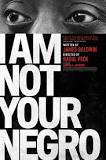 Baldwin’s life as a civil rights activist. Director Raoul Peck takes us on a journey through the civil rights protests and public discussions on race during the 60s and 70s, with some unspoken allusions to present-day hate crimes in America. Baldwin is positioned at the centre of this sometimes-loose narrative. We watch him on television talk shows, lecturing at all-white university campuses and demurely in the crowd of some of the most iconic marches of the twentieth century. The real treat and reason for seeing this film are the sonorous tones of actor Samuel L. Jackson reading passages from Baldwin’s much-quoted works while images recapture the horrors. Although some of these quotes have been exploited on posters, coffee mugs and Facebook postings, in the context of this film they have re-found their rightful home.


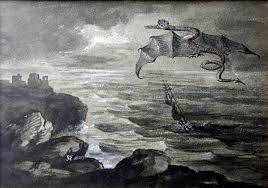

 tral about this – somewhere between joyful white and mournful black. I’m using grey in the sense of unclear and murky. The extent to which we can retain useful ties to the EU are unknown and untested. Likewise, Britain’s relationship to the rest of the world, especially in the age of Trump and Putin, are beyond speculation. Most important of all, grey represents the storm cloud over Britain, a country left divided and angry over this referendum.
 Paola Trimarco