Writing in the New Year

I’ve kept journals for years but sporadically, going through stretches of daily journal writing when I lived overseas to once every couple of weeks when I was in the throes of a writing assignment, squeezing in the odd journal entry to capture an idea before it flew away. For this New Year, I thought I’d try something different by vowing to write in my journal every day for the whole of 2021.

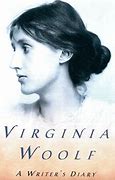
While I write nearly every day anyhow, this is a different type of writing. When I was in South Korea and Oman writing in a journal every day was easy as there was plenty to write about – different cultures, languages, new people and problems with being a foreigner. A daily journal at this stage in my life – when so many things seem pointless – is both a challenge and (my reason for doing this) a much-needed form of therapy, woven into a writing exercise. I’m following the advice of the master diarist Virginia Woolf, who once said, ‘the habit of writing thus for my own eye only is good practice. It loosens the ligaments.’

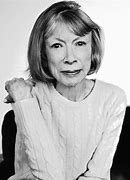
Ultimately, this is about writing. It brings to mind too the words of Joan Didion, writing some years ago for London Magazine on why she writes. She describes the moment when she realised that she was a writer:

‘By which I mean not a “good” writer or a “bad” writer but simply a writer, a person whose most absorbed and passionate hours are spent arranging words on pieces of paper…. I write entirely to find out what I’m thinking, what I’m looking at, what I see and what it means. What I want and what I fear.’

The challenge lies in the practice of doing this every single day. I do have other daily routines that require some discipline – I meditate, exercise and do something in French and/or Italian every day without thinking about it, and more importantly, I feel a sense of being out-of-sorts until I have done these things. I’ve been doing this typing version of scribbling in this daily journal for seven days now. So far, so good, but I am still at a point of having to remind myself to do it.

I don’t know what all of this journal writing will bring. It could lead me in the direction of Virginia Woolf, who like me was an erratic, undisciplined journal writer until she turned 33 (okay, younger than me now), when she took up journaling and continued until four days before her death.
I’ll close with a sample, proof that I’m really doing this. In future, I won’t be directly sharing these journal entries with you, dear reader, as that would take away their magic powers.

7 January 2021

Trump supporters have finally had the day that they have lived for – armed and angry, they’ve stormed the capitol and attempted a coup on the US government. They were talking this way long before Trump came on the scene. Now, they’re headlining the news and might even make it into the history books. As remarkable and unbelievable as this all seems, it was predictable, the stuff of dinnertime conversations with friends over the past four years. Shock and expectation entangled – the mind is more complicated than we give it credit for.

Best wishes for the New Year. Keep reading, keep writing.
Some Favourite Words of 2020

Not pandemic or woke or clickbait or any of the over-used words that made it to the top of lexicographers’ lists this year. My favourite words of 2020 are those words that have entered my consciousness and left a footprint. Here are just a few.

Princessation – This neologism describes the process of making a girl or young woman feel like a princess, encouraging femininity. I ran into it while reading about a recent study conducted by the Fawcett Society on the dangers in exposing children to gender stereotyping. While the act of princessation has been going on for centuries, the naming of this process is significant. It efficiently sums up behaviours and words and colours them with a negative tint. I think we are making progress.

Blursday – One of these pandemic-inspired words, it refers to the feeling of one day blurring into the next. Working without our usual timetables and having a paucity of choice, doing much of the same thing from the same rooms day in and day out, many of us have no idea what day of the week it is.

Dietrologia – It’s an Italian loanword that pops up now and again in English. I stumbled across it in a short story by Paul Theroux, published in The New Yorker. Dictionary definitions say it refers to hidden motivations behind some action or understood reality. In Italian it’s often used in political journalism and when talking about conspiracy theories. What I find interesting about this word is how it is used in Italian, sometimes on its own, other times with fare (to make). Along with denoting conspiracy theories, it also means ‘second-guessing,’ ‘raking up old history’ or for telling someone their logic is ‘backwards.’ These multiple uses pack conspiracy theories with the connotations they often deserve.

Murderable – I ran into this self-explanatory and nasty word this past month in an article in The Guardian about the reporting of fatal domestic abuse. The author of this piece claimed that some newspapers referred to victims of fatal domestic abuse as ‘murderable,’ which of course sounds horrible and is not surprising given the high prevalence of misogyny in our society. I was going to write about this word, making the point that it nearly always refers to women – an educated guess.  Yet, after I searched two corpora of written British English, I only found two places where this word was used.  In 1920 D.H. Lawrence (some credit him with coining the word) used it in Women in Love: ‘And a man who is murderable is a man who in a profound if hidden lust desires to be murdered.’  The other place this word appeared was in The Guardian article where I found it in the first place. I also searched a couple of websites of the UK’s most popular tabloid papers – nothing.  ‘Murderable’ could be one of those words that is usually spoken and rarely written. As a result of this little research activity, this word appears on my list not to make a feminist point but rather as an example of false expectations and assumptions – especially when it comes to language.

And finally – goldfinch – I’ve never seen one, nor could I identify one, until this year when they started to appear in our town and even in our garden. Thanks to Covid-induced lockdowns, fewer cars and less human activity have allowed fauna to thrive and explore places they might not usually go.  This word and the beautiful little creature that it denotes will always remind me ironically of this otherwise dismal year.

Thoughts and Translations on the French Laïcité

I love a good mistranslation as much as the next person, but some mistranslations are not funny. Worse, they can be dangerous.

After the barbarous death of history teacher Samuel Paty, French president Emanuel Macron supported the teacher’s right to teach students about freedom of speech using the infamous Charlie Hebdo cartoons of Mohammed. Among those to express their discontent with the French president were the international English-speaking press, including The New York Times, The Washington Post and the UK’s Financial Times. I’m not alone in thinking this has to do in part with the translation of French into English. In condemning terrorists, Macron spoke against ‘séparatisme islamiste’ in France which has been translated as an attack on ‘Islamists’, a negatively loaded word referring to extremist and violent supporters of Islam. What Macron meant would be more accurately translated as ‘Islamic separatism,’ which is seen as harmful to integration. To put this more into the French context, for decades debates about séparatismes religieux have been about the Catholic faith and the fact that Catholicism hasn’t been the country’s official religion since the laïcité was put into law in 1905. The laïcité is mainly about individual rights to freedom of speech and religion in a secular state, a government not run by any single religion.

As with many mistranslations, cultural differences are at play. In countries like America, discrimination of minority groups, such as Muslim people, puts the media and well-meaning left-wing thinkers on hyper-alert for anti-Muslim racism. I’m not saying racism against Muslims doesn’t exist in France – of course it does. However, according to a recent survey by the National Institute of Demographic Studies, most Muslims in France feel socially and culturally integrated. Other studies also support these findings. As someone with a second home in France, I don’t find this surprising.

Interesting too that it appears most of the Muslims who were angered by Macron’s speech linking terrorism and separatism, live outside of France in non-French speaking countries, where  the president’s words were translated into Arabic and Turkish. Since I don’t speak either Arabic or Turkish, I’ll step aside from this part of the debate. Plenty of polyglot scholars in the French media in recent weeks who have raised this issue of mistranslation are doing this work for me.

In fact, there has been so much published and podcasted about these misunderstandings of the laïcité and mistranslations in France, I wasn’t going to bother writing about it. That is, until a couple of nights ago when Channel 4 News (UK) ran a story about Muslims in France being discriminated against by new integration measures proposed as laws. A French speaker mentioned the laïcité, and it was translated into English as ‘secularism.’ While secularism is part of the principle of the laïcité, keeping church and state separate, the first definition of secularism is typically ‘indifference to or rejection or exclusion of religion and religious considerations’ (Merriam-Webster English Dictionary) – which is not laïcité.  As much as I am a devotee of Channel 4, I think on this occasion their liberal slant (which I usually lap up) may have played a role in both the reporting and translation.

Whether these translations involve English, Arabic or other languages, given social sensitivities and political tensions, I do wonder the extent to which these mistranslations are triggered by some sort of unconscious bias. Seeing this in the Channel 4 report has made me wonder about my own.

A Song of Heroic Deeds

Maylis de Kerangal’s Mend the Living (called The Heart in its US translation) turned out to be just the book to read during these weeks of lockdown and restricted movement. Set in France, it’s a story of a heart transplant. Before starting, I knew nothing about the book and thought that it might be either a spiritual story where the person with a new heart develops some of the personality of the organ donor, or that it would be an edgy story about a black market of organ harvesters.

Neither of these plotlines are the case. It’s a simple story taking the reader from the sudden death of Simon, aged 19, to the donation of his heart into a woman in her fifties who’s suffering from mitochondria. Taking place in 24 hours, the narrative goes through the lives of all of those involved with the heart transplant, from his traumatised parents to the doctors and nurses involved with Simon’s care to the organ specialist, who matches the organ to the recipient. De Kerangal takes us into the lives of both surgical teams and the transport team that has to get the heart on to a plane and across Paris in a traffic jam. We also encounter Clare, the transplant recipient, full of fear and hope, knowing the difficulty of the procedure and the promise it brings. With the story of most of the characters being driven by a greater good, the book has been called ‘un chanson de gestes,’ a song of heroic deeds, used to refer to heroic epics of the Middle Ages.

In this modern tale, the writing is rich in medical detail and interwoven with psychological, philosophical and metaphysical perspectives:

‘The moment of death is no longer to be considered as the moment the heart stops, but as the moment when cerebral function ceases. In other words: I no longer think, therefore I no longer am. The heart is dead, long live the brain—a symbolic coup d’état, a Revolution.’

The heart’s journey has the pacing of an adventure story and is paralleled by the emotional journey each character undertakes. Though brain dead, Simon’s heart and other organs live on medically speaking and metaphorically for his family. Their coming to terms with their son’s death is both comforted and complicated by the realisation that he could help others live.

‘How long does it take them before they accept death’s new regime? For now, there is no possible translation for what they are feeling; it strikes them down in a language that precedes language from before words, before grammar, an unsharable language that is perhaps another name for pain. Impossible to extricate themselves from it, impossible to substitute another description for it, impossible to reconstruct in another image.’

As you can see from these quoted passages, de Kerangal is a lover of language, a true stylist.  The novel is peppered with metaphors and analogies, along with the occasional pun – one character has the English name of Cordelia Owl, another, the head surgeon of the transplant team, is referred to simply by his surname, Harfang, which means owl in French.

There’s a lot more to say about the use of language in this story of heroes, but it’s better enjoyed when it’s discovered.

Trusting Science


‘Trust science, not the scientists’ advised journalist Sonia Sodha recently in The Observer rightly calling out scientists who have been ‘agents of disinformation’ during the pandemic. Sodha explains that we shouldn’t trust scientists because, ‘They are only human, subject to the same cognitive biases, the same whims of ego, as the rest of us.’ This is nothing new and doesn’t just apply to Covid-19. A handful of scientists support climate change deniers, other scientists have claimed ‘scientifically’ that the Holocaust was a hoax, and so on. In some cases, these scientists have revelled in being outliers, as Sodha notes, they nurture a ‘Galileo complex’ and see themselves as victims of ridicule along the scientific giants of history.

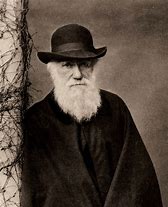
Sodha includes Darwin with these scientific giants. I appreciate that she was just throwing in another example of a scientist who was much derided by his contemporaries for thinking differently but who was ultimately right. Yet, Darwin also got it wrong sometimes. In Inferior: The True Power of Women and the Science That Shows It, Angela Saini quotes from Darwin’s The Descent of Man:

‘The chief distinction in the intellectual powers of the two sexes is shewn by man attaining to a higher eminence, in whatever he takes up, than woman can attain – whether requiring deep thought, reason, or imagination, or merely the use of the senses and hands.’

Darwin’s evidence for this was that ‘leading writers, artists and scientists were almost all men. He assumed that this inequality reflected a biological fact’ (from Saini) and not that society at that time restricted women from attending universities, let alone pursuing careers outside of the household. Darwin may have been an innovative thinker of life sciences, but his understanding of society was clearly Victorian.

Darwin isn’t the only acclaimed scientist to sometimes appear to get it wrong. The nature of science includes understanding that knowledge about something is ongoing. Consider what we have learned in recent months about the coronavirus and how it spreads. It’s a feeble mind that thinks these steps along the way to understanding means that scientists shouldn’t be trusted. But of course, sceptics and conspiracy theorists will do just that.

How do we know the science has developed enough to be reliable, or if it is authentic if we learn about it from scientists? There is no easy answer to these questions. Broadly, I agree with Sodha to believe the science and that will often mean looking for consensus among the scientists, but even that needs to be handled with care and objectivity. In recent weeks I’ve learned about the impact on climate of greenhouse gases aside from carbon, how to convert carbon to CO2e and the relationship between antigens and antibodies. In other words, in the age we live in, perhaps we all need to think like scientists.

Vignettes on Learning

From our present day tribulations – pandemic, climate change and the populism that has made both worse, along with creating a more unstable world – an underling theme emerges. In a word – education. Lack of education or deliberate blocks to education have played a role in creating these problems.

By education, I don’t mean only formal education, but also informal, those things that are systematically self-taught. At its most basic education is about the practice of learning in order to acquire knowledge and develop critical thinking skills. As conspiracy theories and bizarre twists of logic accumulate, knowledge and critical thinking appear to be in short supply.

*****

A friend asked me, ‘How was it going as a councillor?’ Like a lot of people, she was surprised that I even ran for the District Council. People see me as more of a political activist than a politician, more literature and language than government. I answered, ‘It’s okay. I’m learning things and I enjoy that.’

*****

Tara Westover’s brilliant autobiography Educated shows the power of learning and education. Growing up in a survivalist Mormon family in Idaho, Westover was home schooled in a limited way, a casual use of old textbooks and outside reading restricted to the Bible and the Book of Mormon.  She discovered that she had some musical talent and enjoyed performing in the local amateur drama group but knew that she wouldn’t be able to do anything with this talent without going to a college or university. One of her older brothers, a traitor to the family, had taught himself using SAT preparatory books and eventually ended up with a score sufficient enough for university. Tara followed suit, informally educating herself to pass the exam and start her formal education at Brigham Young University.

While this speaks to the power of informal education, it was formal education that proved to be life-changing. It not only exposed Westover to different ways of thinking outside of her family’s strict conservativism, oppression of women and paranoia about all government institutions, it also made her think differently at an emotional level. She realised that her dominating father was probably bipolar and that the physical and verbal abuse she had suffered at the hands of family members was wrong and reflected their sicknesses.  Being aware of her own learning, she describes reaching these insights: ‘I had begun to understand that we [she and her siblings] had lent our voices to a discourse whose sole purpose was to dehumanize and brutalize others—because nurturing that discourse was easier, because retaining power always feels like the way forward.’ 

*****

When I was in my twenties, I read Indries Shah’s Learning How to Learn. This primer of Sufism explores learning as a way of developing psychological well-being, an openness to the education of life.  He also flipped this idea on its head to show that there is a reciprocal relationship here – psychological well-being, to which I add emotional intelligence, enables us to learn.

*****

During the first Covid lockdown, I decided to enrol in a MOOC (massive open online course) in a field outside of the humanities disciplines that have shaped my professional life. The course was about bees and the environment. And if that wasn’t enough of a challenge, I did it in French. I soon discovered that the words I didn’t know in French were nearly the same in English, such as apidae and anemogame. My next MOOC was called Les Racines des Mots Scientifiques – in French, where I learned mostly Greek.

A Women’s Election

It was only a week ago when the world saw the first signs that we were all soon to be freed from the worst president in US history, and one whose rancorous presence has been ubiquitous in mainstream and social media over these past four years. The collective relief is still palatable, some of us describing a visceral experience of feeling lighter, the tensions in our bodies unravelling.

Post-election news coverage ranges far and wide in focus and bias. Stories on the pathetic behaviours of the current president to the speculation of what a Biden presidency will mean have been straddled alongside analyses of the voting tendency of each demographic. For all of that, I think not enough has been said about this election in terms of the role of women. As of 11 November (before all of the votes have been ratified) 53% of voters were women, the same as the 2016 presidential election. But the difference this time is that among these women voters 57% of them voted for Biden/Harris, or to phrase that another way – against Tr**p. In 2016, with a woman presidential candidate, the Democrats only managed 54% of the women’s vote. This difference is more significant still if one considers the higher voter turnout and that millions more women participated and voted against the misogynist-in-chief.

To emphasise this point, I quote from CNN’s Dean Obeidallah:

‘To me the biggest thanks go to the women of America. You gave us hope with the original Women’s March in 2017 the day after Trump’s inauguration. There’s clearly a straight line that runs from that march to the election of Kamala Harris as the first female vice president.’

Unfortunately, other members of the media have treated Harris’s win as a story for the fashion pages instead of the news analysis typically given to male politicians. The most notorious so far (and others will follow) came from the Daily Telegraph, who decided to give their Kamala Harris profile piece to the fashion editor.  Their Twitter headline of the resulting article says it all: “Why Kamala Harris is the modern beauty icon the world needs.”

Many have been outraged by this, rightly noting the sexist undertones. Yet, I don’t think it’s as straightforward as that. Those who criticise the fashion take on the new VP do so in part because they do not take fashion reporting, with a predominately female target audience, as seriously as they do other types of reporting. This point was drummed home this past week when I attended an online panel discussion hosted by the Society of Women Writers and Journalist. There, Helen Lewis, journalist and former deputy editor of The New Statesman, compared football journalism to fashion journalism. While both cover huge, profitable industries, football writing is regarded as ‘authentic’ and fashion writing as ‘frivolous.’

Helen Lewis

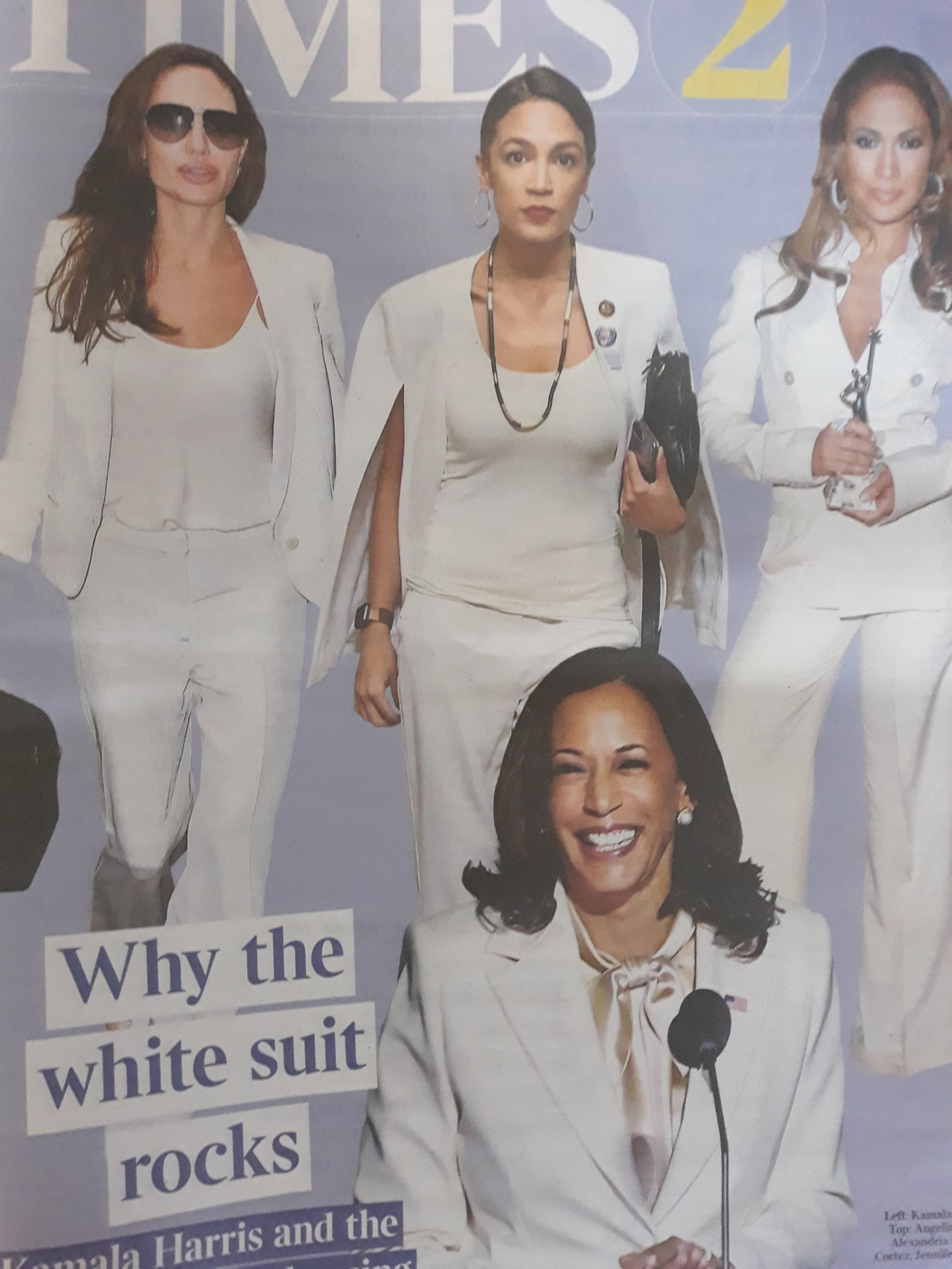
Even though the double standards in how women politicians are treated by the media are almost too obvious for discussion, most stories land into a fuzzy feminist zone. Example: The London Times had Kamala Harris in their Times2 section, which houses entertainment, health advice and my beloved puzzles. Their piece was about the white power suit being worn by powerful women. Fashion and politics collided and I found myself not being appalled as powerful women were being showcased. Perhaps such examples reflect the ambiguity liberal society has towards women in politics. That said, I’m still relishing the victory of last week.

Election Day 2020

With fears of election-day violence, America has joined corrupt and disreputable countries around the world. Thank you, Mr President – this is on your watch.

It’s not an exaggeration to say that this presidential election might be the most important one of our lifetimes. How so? I’ve narrowed this down to two reasons, both of which have been touted by political pundits, newspaper columnists and the like. This is my take in the context of the films and books that influence my thinking.

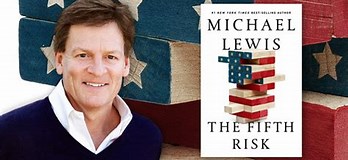
Reason 1 – democracy is at stake. Over the past four years, the world has watched a wannabe autocrat in the Whitehouse fight against the institutions of American governance and the freedom of the press. Among the many examples of this, what first comes to mind are Tr**p’s public criticisms of the FBI, the CIA and most recently and most alarmingly the Centers for Disease Control. Michael Lewis’s The Fifth Risk has been one of several books to expose of the Tr**p transition team and the way this president set up his antigovernmental administration, a  heady mix of inexperienced individuals and those with a grudge against certain branches of government.

And the media has had it worse. On top of frequent references to the media as ‘fake’ and ‘public enemies,’ let’s not forget the many instances of reporters being targeted and arrested while trying to report on demonstrations. I don’t think it’s a coincidence that Netflix has recently produced The Chicago Seven, about the kangaroo trial of seven anti-war protesters during the Democratic National Convention in 1968. From aggressive policing to an openly racist and bias judicial system, echoes of Tr**p’s treatment of the media resound.

Reason 2 – the planet is at stake. Not only has the 45th president of the US started the process of pulling America out of the Paris Climate Accord, he’s a supporter of the fossil fuel industry, a climate change denier and has reversed over one hundred acts of legislation by the EPA during Obama’s presidency. A couple of good books I’ve read recently that cover this president’s treatment of the environment include Naomi Klein’s The Shock Doctrine and David Wallace-Well’s The Uninhabitable Earth.

There is perhaps a third reason why this is such an important election. But I’ve changed my mind a few times about the real importance of this. Okay, here goes. America’s reputation is at stake. As I would like to see a more balanced world, with a more equitable distribution of wealth, the US doesn’t need to keep its position as an economic superpower. I would be even happier still if it were not a military superpower. Despite these misgivings, I’d like to see America retain some of its influence in the world as a source for good. (Hard to imagine at times, I know. Sorry if I sound like Jimmy Stewart in Mr Smith Goes to Washington.) Voting Tr**p back into office is at the very least condoning criminality at the highest level of government. With all of the noise and distractions to come from this Whitehouse, it’s easy to forget that Tr**p was impeached by The House of Representatives for trying to bribe a foreign government. Even Tr**p’s lawyers admitted that this is what he did, but argued to the Senate that this was not an impeachable offence. There is also the matter of Tr**p’s tax records, the cases of fraud against his businesses and the allegations of sexual harassment and abuse.  A Tr**p win tonight (or tomorrow, depending on your time zone) tells the rest of the world that America wants to be represented by a man clearly unfit for the job, in addition to of course his being a vulgarian, a defender of white supremacists, an habitual liar… I’ll stop myself there – you’ve heard it all before.

I’ve realised that I’ve only made reference to non-fiction books and a film based on true events. Let’s not forget the importance of fiction and poetry at times like this. I’ll close with a quote within a quote from Emily Nemens, the editor of the Paris Review, commenting yesterday on election eve: ‘As Manuel Puig put it, “I like to re-create reality in order to understand it better.” May we all understand the world a bit better once this week is through.’

Reflections on Senghor

This is not in honour of Black History Month, which, like Women’s History Month, we wouldn’t need if the rest of the year weren’t full of White Men’s History months.

I’ve recently discovered the Senegalese poet, scholar and statesman, Léopold Sédar Senghor, who was Senegal’s first president (1960-80) following French colonial rule.

It’s hard to sum up a poet’s style, but what draws me to Senghor’s oeuvre are the rhythms of this work and his metaphors with quirky comparisons. From his ‘Femme Noire’ (translated from French):

Black woman, obscure woman           

Oil that no breath ruffles, calm oil on the flanks of the athlete, on the flanks of the princes of Mali

Gazelle with celestial ties, the beads are stars on the night of your skin.

A more straightforward piece of his writing, which I’m told is learned by every French schoolchild, needs to be read in full (translated from French):

Poème à mon frère blanc

When I was born, I was black;

When I grew up, I was black;

When I’m in the sun, I’m black;

When I’m sick, I’m black;

When I die, I’ll be black…

While you white man,

When you were born, you were pink;

When you grew up, you were white;

When you’re in the sun, you’re red;

When you’re cold, you’re blue;

When you’re scared, you’re green;

When you’re sick, you’re yellow;

When you die, you will be grey…

So, of the two of us,

Who is the man of colour??

Feel free to consider this blog entry as a contributor to Black History Month if you must, but my original intention was to provide an antidote to the bombastic and inarticulate language of the current US president and the current UK prime minister. This is the point when I hark back on a time when some national leaders possessed intellectual curiosity and lyrical expression.

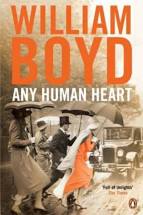
Boyd’s Any Human Heart

Again, I’m a bit late coming to a modern classic, which is odd as I’ve enjoyed so many of William Boyd’s novels (such as A Good Man in Africa and Armadillo)  and essays about literature, and I had the pleasure of hearing him give a talk about his writing. I should have been up on this years ago.

Forgive me if you’re already familiar with this story – it was, after all, made into a miniseries for Channel 4 in the UK and won a few Emmys when it appeared in the US in 2010. In the original book, the story is told through the journals of Logan Mountstuart, following his life as a chronicler of the twentieth century Anglo-European and American experience.  As an avid journal writer, I could identify with the use of journals to not only record one’s life, but to better understand oneself. Logan writes, ‘We keep a journal to entrap that collection of selves that forms us, the individual human being.’ Humorous in their raw honesty about sexuality and human weaknesses, these journal entries reflect the eclectic prose style of Logan, who is a reviewer of art and a war correspondent along with being an author of fiction and non-fiction.

With some degree of notoriety, Logan finds himself hobnobbing with Ian Fleming, Hemingway, Picasso, Evelyn Waugh and the Duke and Duchess of Windsor. This latter encounter grows into a friendship of sorts during the war when Logan finds himself working for the UK intelligence services. For those of you who enjoy unsolved murders, Boyd gives us another interpretation of the famous murder of Sir Harry Oakes in Nassau in 1943 when the Duke of Windsor was governor there. Boyd wrote for The Guardian about his fascination with this true-life mystery and the poetic license taken when embedding it into his novel.

This book also presents an acute self-awareness that lifts this story away from being merely about its espionage plotlines and celebrity characters. For this reader, the most poignant of Logan’s realisations occurs later in life, acknowledging what he brought on himself, such as failed relationships, mixed into a life of happenstance. From my teenage years well through to my twenties I believed that I was responsible for all that happened to me. Bad things that happened were my own fault as I had somehow ‘projected’ them. Realising the roles played by society (especially for women) and twists of fate (with no obvious cause or agent), I have expunged this warped new-age thinking from my life. My conclusions are now similar to Logan Mountstuart’s – life is a mélange of what we bring to it and what is thrown at us – good or bad.

Even though I came to Any Human Heart rather late, its ideas, in their universality, still apply. A sign of a worthwhile read.