Travels in the Time of Corona

We did consider whether we should go at all. Covid-19 had struck Italy hard, but at that time only the region of Lombardy was in lockdown. Still, northern Italy is just a 45-minute train journey from Nice, and how long would it be before France was in lockdown? Thanks to the European bus service of the sky, Ryan Air, we had rationalised that we could always come back sooner, only losing the money spent on cheap tickets. As we were going to our second home, we didn’t have to worry about the costs of cancelled hotel bookings. Everything would be fine.

We agreed before boarding our flight from Stansted that if anyone was sitting next to us and there were other seats available, we would move, spread ourselves out and play it safe. Sure enough, in our row of three, sitting next to me was a young man with the physical appearance of someone from the Wuhan. David and I moved, guiltily imagining the young man thinking we were paranoid, racists or both. Things were not off to a good start.

As we arrived in Nice, the final weekend of the centuries-old carnaval had been cancelled. Nice didn’t feel like Nice without coach loads of tourists or the buskers and pickpockets taking advantage of the increased trade. Concerts we had planned to attend were cancelled. The city didn’t have its usual buzz of people or vehicle traffic. Fortunately, cafes, restaurants, cinemas and clubs were still open with no talk of closures. Yet, we weren’t going to be foolhardy. We didn’t go to restaurants or our usual jazz clubs and mostly got our croissants at outdoor cafes – if you’re wondering, average daytime temperature was 16C.

corona2

While it was important to be cautious, we didn’t want to be sucked into the media hysteria. The information available from British and French health sources made the risks of contracting Corvid-19 appear small. Not wanting to be cooped up in our one-bedroom apartment every evening, we decided to go to the cinema – twice in one week. Before you think we were being foolish, English films with French subtitles (as opposed to dubbing) shown in the early evenings are not typically well-attended. At both films, the dozen or so in the audience spread themselves out while the fragrance of disinfectant hand gel hung in the air.

As the death toll in Italy was skyrocketing, the cases of Covid-19 and deaths were steadily going up in France. This was the unavoidable main topic at my French drop-in class, which I opted to attend because it was at the teacher’s home, usually with only a few students. Again, I was rationalising and trying not to be hypnotised by the wall-to-wall media coverage we were getting in two languages. As it turned out, there were only two students that day, and we both rubbed our hands with disinfectant hand gel at the start of class.

Living close to the Promenade, pleasant seaside strolls and jogs are de rigueur, but we also like our other walks. Problem – getting from our apartment to these picturesque walking paths in Villefranche-sur-mer and Cap Ferrat involves trams and/or buses. In that first week, we braved several tram journeys, keeping a safe distance from people when we could, and two bus trips with near-empty buses. Of course, we realised that others thought crowded buses would be too risky, especially the elderly, who were heeding the advice to stay chez vous.

The week ended with Italy entering total lockdown. We went from slightly concerned to PANIC. My main worry was getting out of France before it would no longer be possible. I had to get back to the UK for meetings and to chair a doctoral exam. My second worry was not being able to get out with David, who was going to stay in Nice for an extra week to paint doors and window frames.

Fear comes in waves. We went from ‘let’s leave Wednesday’ – three days away – to ‘let’s stay here as planned but leave together on my flight in 10 days’ – then back to Wednesday or Friday – or maybe Sunday. Realising that we couldn’t really make up our minds, and that the news about the spread of the virus and the actions of governments were even less predictable than our brains, we held off on booking any new plane tickets. We agreed that whatever we did, we would go back together.

I soon learned from two of my friends back in the UK that people were panicking there as well. Both messaged me to let me know that supermarket shelves had been emptied of toilet roll. I could only chuckle, wondering why food and medicine seemed less essential.

For those last days in Nice, however many they were going to be, we focused on just enjoying the sunshine by day with walks around the city and staying in at night watching Netflix, doing crossword puzzles or me working on a writing assignment. We limited our socialising. We didn’t see our elderly or recently ill friends, but reasoned that it wasn’t unsafe to go to the home of two of our friends who had just arrived from Colorado, which at that point had only recorded two cases of the virus. We greeted our friends with Namaste and at the end of the evening tipsily waved goodbye. Strange not hugging or kissing friends.

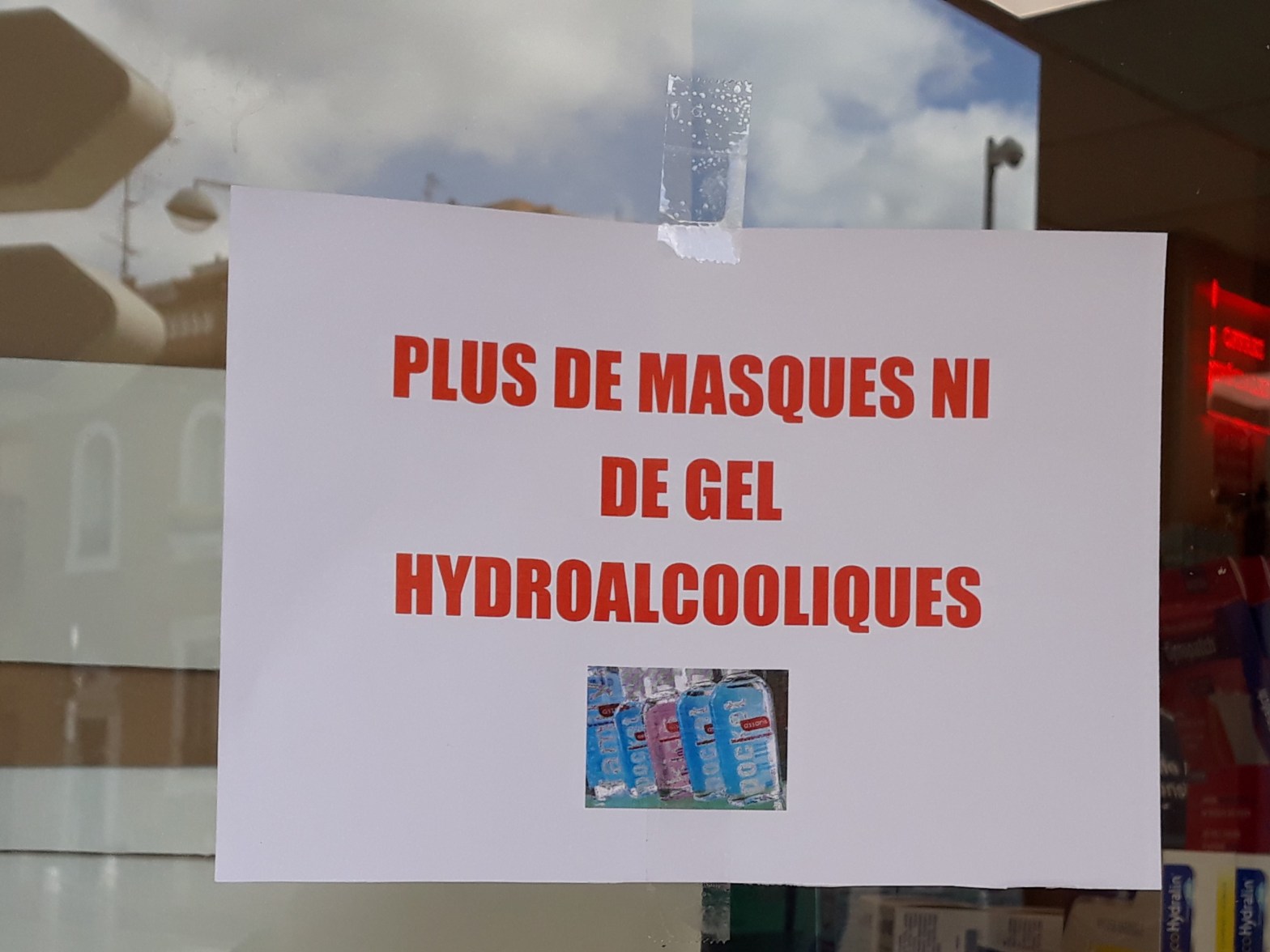
A couple of days later, the death toll in France rose sharply, but mostly to the north of us, while the number of cases in our region doubled overnight. Tr*mp stopped all flights from Europe to America, except for those carrying US citizens returning home. As fewer and fewer people were flying between European countries, airlines were cancelling more and more flights. Ryan Air had still not cancelled our flights, but we knew that we couldn’t stay much longer. Fear was in the air. Half-empty trams echoed with announcements to cover your mouth with a cloth when you sneeze or cough and to keep a social distance – at this point defined as a one-meter space. Disinfectant hand gel and surgical masks had sold out.

The time had come to book a new flight back for both of us. A few days were cut off my working-holiday and 10 days were taken away from David, along with his painting duties.

In the days remaining, I fought off the sense of panic by meeting with girlfriends for an apero in a hotel bar. No hugs, no kisses, but plenty of hand gel and a distance of roughly a meter between us. The following day, I attended my French class – the only student this time. Of course, all we talked about was the virus and people’s strange and sometimes silly behaviours, ranging from Tr*mp’s flippancy to people hoarding toilet paper. I’m one of these people who often uses humour to hide my anxieties – from others as well as myself.

I was indeed anxious. One of us could get ill before our flight, and even though we could manage healthcare in French, it would be easier in English and in a health system that we know. In all of the times I’ve gone to Nice over these past ten years, it was the first time I was looking forward to leaving.

On the day before we flew out schools, universities, restaurants, cafes, bars, non-essential shops and cinemas across France had been ordered to shut. I joked on Facebook about leaving now that the cafes were closed.

As I packed my carry-on bag, I realised I wasn’t taking much back. In fact there was loads of space. Full of embarrassment at myself, I packed two rolls of toilet paper.

At Nice Airport Departures all the shops were closed except for a newsagent. No restaurants or cafes, except for one take-away coffee shop. At the gate, people were keeping a social distance, some of us standing or sitting on the floor in order to have a meter between us. That is until the gate opened and an undignified queue formed – suddenly safe spaces seemed unnecessary. I did wonder if everyone else was as anxious as me to get home.

We’ve been back in the UK for nearly two weeks now, and I still feel as if I’m travelling. I’m a tourist in a country where people only go outside for exercise or to the supermarkets that only allow 25 people in at one time and where customers are ordered to stand 2 meters from each other at the checkout.

Afterward: David’s original flight was cancelled by the airline and he is awaiting his refund. My original flight was also cancelled, but it was later ‘reinstated.’ I was informed of this reinstatement by a text message sent out two hours after my flight landed in Stansted. Like me, Ryan Air makes jokes when they’re nervous.

Not ready to say goodbye

Since June 2016, I have marched down the streets of London four times, Cambridge twice and Ipswich once. I’ve attended countless rallies and delivered thousands of leaflets. All in the hope of bringing an end to this lunacy called Brexit. Over the past three and a half years I have shifted in my goals from fighting to overturn the freak election results of the referendum to accepting  defeat following the last general election to where I am today with a new goal – I’m trying to stifle the feeling of ungroundedness and the anxiety that eventually comes with it.

Leaving the EU is stripping me of my EU citizenship and that seems remarkably unfair. The rug that has been pulled out from under me was more like a magic carpet.  Now there is only air between me and the ground and I can’t seem to land.

I have to visualise and remind myself that a sense of groundedness exists with my David, his family, our friends and with some of the things I do – writing, jogging, walking and of course meditating. Not to underestimate these attachments and therapeutic activities, but these last few years make me aware that outside of these inner concentric circles, I’m no longer living in a place where I feel I belong. This isn’t the first time. I left the United States in 1984 to live in Scotland, among other practical reasons, as an act of self-imposed political exile against Ronald Reagan and the many – even Democrats – who were prepared to re-elect him. Instead of wondering if the world had gone mad, I turned it on myself and thought there was something wrong with me.

Older, more confident, this time, it’s not me. The cult of pro-Brexitism has brought hate and isolationism to the foreground. Brexit has never really been about leaving the EU, or to ‘gain back control’ as the slogan claimed. In order to justify those sentiments, people had to believe a lot of lies about what the EU does and Britain’s place in it. I’ve toyed with the idea that millions of people were lazy when it came to researching and discovering the truths (it’s in another blog). While laziness might be a factor, I also suspect that those who voted to leave to varying degrees pretended to believe the lies in order to find a cause of, or someone to blame for, their own unhappiness. For some this unhappiness has been economic, for others it festers in feelings that our more tolerant, liberal society has been foisted upon them.

Perhaps this is just a coping strategy – an attempt to get my dangling feet back on the ground – but I will only permit myself to say goodbye to the EU as a British citizen. In a year’s time, this will be enforced by laws and regulations. What the Brexit elite at the helm of this operation cannot take away from me is my Italian heritage, my second home in France, my abilities in romance languages or my spiritual connection to some European countries and their peoples. This time, I won’t flee into self-imposed political exile.


Memories of Sultan Qaboos

Nizwa, Oman, spring of 2015. I was circling the university car park looking for a space. The car park was packed. This wouldn’t have been unusual at 8 in the morning, but this was 4 in the afternoon. I wondered if there was some ceremony or conference going that I didn’t know about. The bewildered foreigner once again.

When I eventually stepped into my department’s offices, the Omani admin workers were all gathered in one room speaking excitedly in Arabic about something. One woman in the group appeared to be crying. I saw one of my Jordanian colleagues in the hall and asked what was going on. Full of ennui, she rolled her eyes and explained that on television the previous night Sultan Qaboos spoke to his nation from Germany to say that his cancer treatment went well and that he would be home soon. This broadcast created such a stir that people stayed at work the next day just to talk about it.

In the days that followed, Omani flags went up all over campus and throughout the small town on Nizwa. Large companies and banks hung posters and displays welcoming the Sultan back home. The great man’s image appearing gigantic showed him seated in full traditional clothes, an Omani boomerang-looking sword, the khanjar, his beard more white than grey.

It’s hard to imagine in our cynical times a country where its leader is genuinely adored and worshipped and where political satire is non-existent. Sultan Qaboos was rightly admired for taking his country from illiteracy and poor health to public education and modern hospitals, from dirt roads to highways. Above all else, while neighbouring countries have had to deal with wars and terrorist attacks, Oman has remained at peace.

These decades of peace have been in part circumstantial. Oman doesn’t have the abundance of gas and oil that its neighbours have and hasn’t been fought over or exploited by foreign interests. The country has also stayed out of the fray by the simple fact that it practices Ibadi Islam and is neither Sunni nor Shiite. In Western newspapers, Oman often appears on colourful maps as grey. Taking advantage of this neutral greyness, Sultan Qaboos often played the part of arbiter and intermediary in the region.

What Sultan Qaboos brought to his beloved country which cannot be denied him is the country’s reputation of holding to many of its traditions and at the same time being one of the most socially progressive societies in the Middle East. Oman has modernised, but even its capital Muscat does not have the commercial glitz found in Dubai, only a few hours’ drive away. Where I lived in the town of Nizwa, every Saturday morning the goat market is held and people from neighbouring villages come to barter and bid in ways their ancestors did centuries ago. But this is not a backward country by any means. Not only do the local women drive cars, they also hold public office and managerial positions. It still is a male-dominated culture and many of the laws and customs are discriminatory, but they’ve made huge advances under the paternal gaze of Sultan Qaboos.

Just over a week ago, this ‘father of the nation,’ who has been in charge for nearly 50 years, died peacefully at the age of 79.

When I departed Oman over four years ago now, I typed these thoughts into my journal:  ‘It’s good I’m leaving now. I don’t wish to be in Oman when the much-loved Sultan passes away, leaving behind a country not only in mourning, but more worryingly, a country vulnerable to radical conservative takeover and upheaval.’

The people of Oman are in my thoughts today.


Some things I learned in 2019

Please forgive this listacle – at least it’s not another top 10 of this or that. As I try to sum up 2019 in a way that doesn’t sound as bleak as the way it ended, I offer these thoughts of some of the year’s more enlightened  moments.

  • Are Alain de Botton and Slavoj Zizek really philosophers of our time? I’ve learned more this past year from Kenan Malik of the Guardian/Observer and Hasan Minhaj on Netflix.
  • I’ve learned a great expression in French – la poudre de perlimpinpin. Great, largely because of the way it sounds, ending /pɛʁ lɛ̃ pɛ̃ pɛ̃/. I’m told it’s onomatopoeic and meant to sound like abracadabra.   It’s the French equivalent of snake oil. I was talking to a French person about Trump and Johnson at the time.
  • Unconscious bias – it’s become a buzzword. Like many, I’ve had awareness training through my employer. It’s made me more aware of myself, especially the myopia of my younger self, and gives me a handy phrase that sounds less caustic when describing the ways of others. Yet, I’m still left flummoxed at the receiving end. That is, I can’t stop it from happening to me. But this year I’ve learned to expect it and acknowledge that I can’t change it.
  • With the help of YouTube, I’ve learned how to remove a car battery without getting electrocuted, how to take in trouser legs and the difference between Italian R’s and Spanish RRRR’s.
  • Before this year, when it came to politics, I would have said that some people are ignorant and latch on to any populist that comes along. As 2019 appears in the corner of my screen for the last time, I now believe that those people aren’t ignorant, but they are politically lazy, wanting someone else to think for them and not bothering to fact check. Unfortunately, for the rest of us, these people have just as much a right to vote as we do.
  • Selling a collection of short stories is more difficult than I had imagined. It might even be harder than the research, soul-searching and writing and rewriting that went into the stories in the first place. I’m reminded of Salman Rushdie’s words of advice to Milan Kundera when he said that 50% of writing is strategy. Saving Spike and other stories is available at Amazon.

During 2019, there were loads of other things that I learned – surely, I must have –given my daily consumption of newspapers, magazine articles and books and other things I’ve probably gleaned from television, radio and conversation. And then there’s writing – I’ve learned, as I always have from writing. Apart from my obsessive journaling, I couldn’t write without an audience in mind. Thank you, readers, for being that audience during 2019. Best wishes to you for 2020.


Black Friday

Black Friday didn’t start with Amazon, gift wrapping or 30% off this or that. It didn’t even start, as the story goes, with shopkeepers coming out of the red and into the black due to the hordes of Christmas shoppers on the day after Thanksgiving.

The first Black Friday was on 18 November 1910, and it was in England. This was the day that some 300 women marched on Parliament, furious that Prime Minister Asquith called an election, meaning that Parliament would soon be dissolved and that the Conciliation Bill, giving some women the right to vote, was going to be scuppered. The Conciliation Bill was far from ideal, allowing only women property owners to vote, but it had already passed its first and second readings and was likely to pass into law. This was going to be momentous, a start of things to come on the road to full suffrage for women.

The women who converged on Parliament were angry and loud, but not violent. The violence came from police officers and men in the crowd. Some 30 women were seriously injured and a few days later two women died from what some sources believe d were conditions brought on by the police beatings.

Equally disturbing was the level of sexual violence perpetrated on these women. One suffragette noted: ‘Several times constables and plain-clothes men who were in the crowds passed their arms round me from the back and clutched hold of my breasts in as public a manner as possible, and men in the crowd followed their example… My skirt was lifted up as high as possible, and the constable attempted to lift me off the ground by raising his knee. This he could not do, so he threw me into the crowd and incited the men to treat me as they wished.’ (Source: British Museum)

Black Friday has come to mean an orgy of consumerism, the start of the Christmas shopping season. On the internet it takes place all weekend and in France it’s a week of ‘Black Fridays’. (Obviously, something got misplaced in translation.) So far removed from its original use and so little known to the average English-speaking person, Black Friday serves as a reminder of what we have come to value and what we choose to forget.

black friday

Two kind men

Former French President Jacques Chirac and my husband’s Uncle Dennis died within a week of each other. Both had lived long, full lives, one in the spotlight, the other not.

Eulogies about Chirac have evoked images of a slick-haired politician who had his share of enemies, whom he also treated as friends, and of a man who was convicted (but never served time) for fraud. He wasn’t the leader of heroic war years, nor did he leave a name synonymous with some grand social movement. Politically, his greatest accomplishments were keeping France out of the second Gulf War and keeping his right-winged party closer to the centre. Bizarrely, within these commentaries and testimonials, the word kind often came up. He was a kind man. Not just ‘underneath it all’ as they say, but outwardly as well. When he met with friends or the public, he was tactile and engaged. Sympa, as they say in France.

Kind was one of the first words that came to mind after hearing of Uncle Dennis’s death. Of course, talk about him we did and continue to do. When someone is no longer there it’s only natural to want to bring them back to life through reminiscences, or to get used to talking about them in the past tense – a training of the mind, fighting against the loss. I didn’t know Dennis during his working life, and the life of a man who ran a fish and chip shop doesn’t fill the headlines in the way presidents of countries do. Dennis, without any higher degrees, was one of my teachers. Nearly everything I know about gardening I learned from Uncle Dennis. What is more important is that he shared this knowledge not to act the role of the expert, but out of genuine kindness, always in a helpful mode.

In Buddhism, kindness is embedded in the four immeasurables and has its place in the meditation practice of the DennisMetta Prayer. These are my ways of tapping into the practice of kindness and trying – with mixed results – to live it. As far as I know, neither President Chirac nor Uncle Dennis practiced Buddhism. Yet, these two starkly different men exemplified one of its leading principles and leave us touched by it.


Kang’s The Vegetarian and what it means to be different

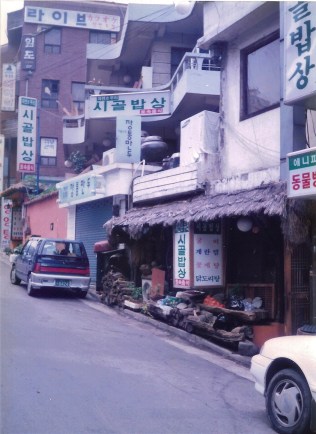
It’s not just that Koreans are big meat eaters – which, yes, includes dog stew – it’s the extreme reaction to someone who doesn’t eat meat. I was often greeted with a blank stare, followed by a twist of the head and then a steely-eyed glare. Sometimes I would be asked ‘why not?’ ‘do you have an illness?’ By illness, I suspect they meant allergy. Eventually, I would fib and say ‘yeah, it’s like an allergy’ just for peace of mind. As a vegetarian who lived in Seoul between 1995 and 1998, I can relate to Han Kang’s award-winning novel, The Vegetarian, set in Seoul in the early 2000s.Korea vege 2 001 (2)

That’s not to say there aren’t any vegetarian dishes in Korea – the national dish, Kimchi, which can be eaten at breakfast, lunch or dinner is basically pickled cabbage and peppers. But too often at restaurants in Seoul, I would order a vegetarian side dish like kimchi but as a main dish, only to have it served with meat. I lost count of the number of times I’d ask for a vegetable soup, which would be placed in front of me with strips of beef surfacing to the top like pieces of driftwood. It turned out that the chef, seeing the white woman, assumed that I hadn’t realised that I hadn’t ordered any meat and had decided to do me a great favour. On occasion, a colleague would go into Korean on my behalf to explain to the baffled locals that I simply didn’t eat meat. At the time, there was no word in Korean for ‘vegetarian.’

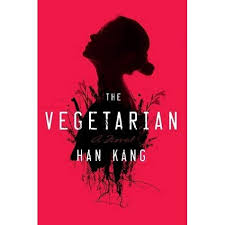
In Kang’s novel, a young Korean married woman is terrified by a dream that causes her to become a vegetarian. Yeong-Hye’s conversion to vegetarianism isn’t depicted in anecdotes about the life of a vegetarian in Korea. This is a much more serious and complex story, where becoming a vegetarian, scandalous to her family, triggers a string of events that are dark, violent, sexual and surreal. The writing beautifully describes these consequences in patterns that develop into motifs and metaphors.

But the problem with Yeong-Hye isn’t so much her vegetarianism as it is her mental illness, even though the two are linked by the other characters. Once she is put into a mental institution, her husband leaves her. The reader is put into a position of wondering if the family’s reactions to Yeong-Hye’s eccentricities are what created her madness. This suspicion is heightened when her brother-in-law, a conceptual artist, also pays for his individuality and a brief extra-marital encounter with an arrest and an attempt to have him institutionalised. The vegetarian

Though it was a couple of decades ago, I do recall (and probably wrote about) a conversation I had with one of my Korean colleagues who spent many years in America. He explained to me that unlike Americans, Koreans do not celebrate the individual, the person who is too different. He said, ‘Same is good for us. Maybe…’ Korean’s use maybe a lot…’Maybe it is safe that way.’ Safe from what exactly was never explained, and after nearly three years there, I never figured it out.

For me these challenges to the individual were intimated in Kang’s novel, though another reader could legitimately see it as a struggle between traditional beliefs and a modern-reaching society.

Reminiscing about my time in Korea and coping with being a vegetarian there, I’m reminded of the ironic fact that one of the best restaurants in Seoul was the vegetarian one – the only one in those days. Run by a group of Buddhist monks, it was technically speaking vegan. The food was served on wooden platters with bamboo utensils to customers seated cross-legged on floor cushions. Writing about it now, I can smell the gentle aromas.  If you find yourself in Seoul, the restaurant is Sanchon in Insa-dong.

Remembering  Normandy

At the 60th anniversary of the D-Day, I probably shrugged and didn’t think much of it. As far as I was concerned, I relived that day as much as I possibly could – or cared to – when watching the first half hour of Steven Spielberg’s brilliant Saving Private Ryan. Now at this 75th anniversary, the battles at Normandy mean a great deal more to me. They’re interwoven into my father’s life, threads that I hadn’t known existed ten years ago.

I’ve written before on how I had no idea about my father’s time in France during the war until he was near the end of his life, residing in a nursing home. You can read my essay on the Wasafiri site. As I mentioned in the essay, David and I went to Normandy to trace my father’s steps – well, as much as we could in a 3-day weekend. This trip was something of a sidebar to the emotional journey of putting together pieces of my father’s life and the realisation that my mother had created such a malicious fiction about her ex-husband. Watching the news coverage in recent days in the build-up to the anniversary, I’m transported back to those few days in Normandy.

Omaha Beach Museum
Indian Heads remembered on an outside wall at the Omaha Beach Museum.

It didn’t take long before we saw signs that my father’s troop had been there. His troop, the 2nd Infantry Division, also known as the Indian Heads because of their insignia, were not a part of the D-Day landings on the 6th of June 1944. Their story begins on D-Day plus one at Omaha Beach, where some 3000 dead bodies had to be removed, and in the days that followed as the division grew to face weeks of battles at St Lo and Brest.

Monument to Indian Heads
A proud daughter and son-in-law of an Indian Head soldier at a monument near Omaha Beach.

My father’s Bronze Stars are the only proof that he fought  in Normandy. In the absence of any ‘old man’s war stories’, I relied on museums and monuments. Knowing that my father never returned to France, I took snaps of the many places where the Indian Heads were remembered. More significantly, I took photos of what these towns and beaches are like today, evidencing the sense of peace and freedom.

Omaha Beach Today (2)
Omaha Beach today.

A Few Things I’ve Learned in 2017

I’m not a fan of listacles, so do forgive. As these are not in any particular order of importance, this might not even be a true list.

One thing I’ve learned is that giving someone the benefit of the doubt is not always wise. I had briefly entertained the notion in early 2017 that Trump’s minders would cool down his twitter tantrums and hate-spewed rhetoric. Boy, was I wrong.

Related to that, though perhaps more to the debacle called Brexit, I’ve learned more about being a political activist. Attending marches and rallies is the easy part. The hard part is staying informed in the age of the post-truth – I’m regularly checking sources. The other hard part is trying to use logic and reason in the face of stubborn, illogical adversity. I’ve learned to continue to advance my argument – there’s always the chance that my opponent will walk away and think about what I’ve said later on. Of course, there’s also the likelihood that nothing I say will make a difference if someone has been brainwashed by the Brexit cult – or some other political cult bent on vituperation.

I also discovered this year that I’m likely to be histamine intolerant – there’s no known test for it. As a result of this knowledge though, I made several small changes to my diet and I now no longer suffer daily with blocked sinus, headaches or bloodshot eyes. The lesson learned emerges from the fact that a few times over the years pharmacists and doctors have vaguely suggested allergies, but, with the exception of spring flowers that make most everyone sniffle and sneeze, I was reluctant to accept this possibility. Had I taken on board these ideas, I might have found out sooner about my intolerance for certain foods. Before 2017, I didn’t want to see myself as someone who had allergies or couldn’t eat this or that because of intolerances – someone who might be a hypochondriac or simply self-absorbed.  A strange sort of projection of the ego – but there you go – I’m over it. Lesson learned.

And finally, there are those things that I’ve re-learned. I know I’ve learned these things in the past, but awareness of them now feels new as if learning them for the first time. Perhaps this comes from the memory wiring in my brain. One of these re-learns is the lesson of learning languages. It doesn’t get any easier. The bar just gets raised higher. Another relearn comes from my life as a writer. I’m constantly learning about my craft which is necessary to being a writer. I’ve known this for years, but sometimes it just seems to hit me with awe.

So, as dreadful as the world has been with its Trump and Brexit supporters, its climate change deniers, its wars, its femicide and mass killings, the capacity to learn has helped to make it bearable. Another year is ending, another to look forward to.

#MeToo

I was a slightly chubby, acne-faced tomboy at 12 years old. I wore jeans or cut-off shorts in the summer and – having started to develop breasts – always shirts that were too big on me. Despite all of this, a part of me felt that I was at fault. I must have said something or acted in a way that made a 40 -year-old man want to grope me. An extended grope that lasted at least five long minutes – hard to say exactly as unpleasant memories play tricks on the mind. At times, over the years, I recall it being thirty minutes.

But one thing I do remember clearly – at 12, I believed that episodes like this only happened to girls who asked for it.

The only thing that stopped this man, who was one of my bosses, was a customer arriving at the front of the shop. At this tender age, I had a part-time job, working with a girlfriend in the studio space of a photography and silkscreen business. My friend and I stuffed cardboard into white t-shirts and glued backing on to posters. We were too young to legally work and were paid by piece and not by the hour. This wasn’t as bad as it sounds. It paid better than a paper route and wasn’t as girly as babysitting. Perfect for a kid like me, looking for money to pay for record albums and a new baseball glove.

Little did I know then that this was the start of years of workplace sexual advances, inappropriate touching and objectifying language that didn’t end until I left my last fulltime job in the UK in 2013. Interestingly, in Oman, a traditional Muslim society, I was never a victim of any such behaviour – though I wasn’t treated equally in the workplace given my status as a woman and as a foreigner. Today, working in distance education and freelance writing, I enjoy among the advantages the safety of working from home.

At 12, I didn’t tell anyone at the time about what had happened. Even my best friend and co-worker. I thought that the boss hadn’t tried anything on her even though she was the pretty one – slender with clear skin and beautiful long brown hair. But maybe she hadn’t said something or done something to encourage him. I was simply too ashamed to ask her. I can’t remember now what excuse I gave. Maybe it was school starting again or missing out on baseball. I must have found something and quit the job a week later.

A couple of years after that, I ran into the girl who replaced me at the studio. We talked about working there and she was quick to point out that one of the bosses was a ‘pervert.’ He had done the same thing to her. Finally, I could talk about it. Together, we connected the dots. This company only hired girls, too young to work there legally and unlikely to speak out. I wanted to talk to my best friend who had worked there with me about it. But she had moved away and was in the midst of a family tragedy. She and I never had that conversation. I can only hope now that she has spoken about it with someone.

The Weinstein case and other cases involving high-profile people have opened the flood gates. Not to diminish the importance of speaking out against such acts, but they are pointing the finger to the powerful and rich, people in the public eye. What about the young and vulnerable across the spectrum of the workplace? Victims whose predators are ‘ordinary people’? We can’t use public humiliation as leverage.