Black Friday

Black Friday didn’t start with Amazon, gift wrapping or 30% off this or that. It didn’t even start, as the story goes, with shopkeepers coming out of the red and into the black due to the hordes of Christmas shoppers on the day after Thanksgiving.

The first Black Friday was on 18 November 1910, and it was in England. This was the day that some 300 women marched on Parliament, furious that Prime Minister Asquith called an election, meaning that Parliament would soon be dissolved and that the Conciliation Bill, giving some women the right to vote, was going to be scuppered. The Conciliation Bill was far from ideal, allowing only women property owners to vote, but it had already passed its first and second readings and was likely to pass into law. This was going to be momentous, a start of things to come on the road to full suffrage for women.

The women who converged on Parliament were angry and loud, but not violent. The violence came from police officers and men in the crowd. Some 30 women were seriously injured and a few days later two women died from what some sources believe d were conditions brought on by the police beatings.

Equally disturbing was the level of sexual violence perpetrated on these women. One suffragette noted: ‘Several times constables and plain-clothes men who were in the crowds passed their arms round me from the back and clutched hold of my breasts in as public a manner as possible, and men in the crowd followed their example… My skirt was lifted up as high as possible, and the constable attempted to lift me off the ground by raising his knee. This he could not do, so he threw me into the crowd and incited the men to treat me as they wished.’ (Source: British Museum)

Black Friday has come to mean an orgy of consumerism, the start of the Christmas shopping season. On the internet it takes place all weekend and in France it’s a week of ‘Black Fridays’. (Obviously, something got misplaced in translation.) So far removed from its original use and so little known to the average English-speaking person, Black Friday serves as a reminder of what we have come to value and what we choose to forget.

black friday

Two kind men

Former French President Jacques Chirac and my husband’s Uncle Dennis died within a week of each other. Both had lived long, full lives, one in the spotlight, the other not.

Eulogies about Chirac have evoked images of a slick-haired politician who had his share of enemies, whom he also treated as friends, and of a man who was convicted (but never served time) for fraud. He wasn’t the leader of heroic war years, nor did he leave a name synonymous with some grand social movement. Politically, his greatest accomplishments were keeping France out of the second Gulf War and keeping his right-winged party closer to the centre. Bizarrely, within these commentaries and testimonials, the word kind often came up. He was a kind man. Not just ‘underneath it all’ as they say, but outwardly as well. When he met with friends or the public, he was tactile and engaged. Sympa, as they say in France.

Kind was one of the first words that came to mind after hearing of Uncle Dennis’s death. Of course, talk about him we did and continue to do. When someone is no longer there it’s only natural to want to bring them back to life through reminiscences, or to get used to talking about them in the past tense – a training of the mind, fighting against the loss. I didn’t know Dennis during his working life, and the life of a man who ran a fish and chip shop doesn’t fill the headlines in the way presidents of countries do. Dennis, without any higher degrees, was one of my teachers. Nearly everything I know about gardening I learned from Uncle Dennis. What is more important is that he shared this knowledge not to act the role of the expert, but out of genuine kindness, always in a helpful mode.

In Buddhism, kindness is embedded in the four immeasurables and has its place in the meditation practice of the DennisMetta Prayer. These are my ways of tapping into the practice of kindness and trying – with mixed results – to live it. As far as I know, neither President Chirac nor Uncle Dennis practiced Buddhism. Yet, these two starkly different men exemplified one of its leading principles and leave us touched by it.


Kang’s The Vegetarian and what it means to be different

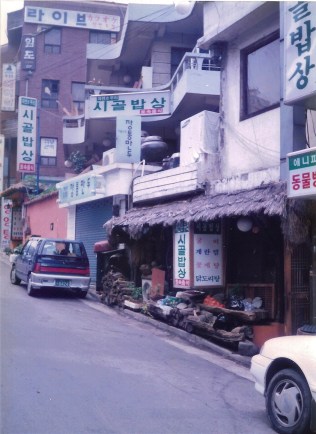
It’s not just that Koreans are big meat eaters – which, yes, includes dog stew – it’s the extreme reaction to someone who doesn’t eat meat. I was often greeted with a blank stare, followed by a twist of the head and then a steely-eyed glare. Sometimes I would be asked ‘why not?’ ‘do you have an illness?’ By illness, I suspect they meant allergy. Eventually, I would fib and say ‘yeah, it’s like an allergy’ just for peace of mind. As a vegetarian who lived in Seoul between 1995 and 1998, I can relate to Han Kang’s award-winning novel, The Vegetarian, set in Seoul in the early 2000s.Korea vege 2 001 (2)

That’s not to say there aren’t any vegetarian dishes in Korea – the national dish, Kimchi, which can be eaten at breakfast, lunch or dinner is basically pickled cabbage and peppers. But too often at restaurants in Seoul, I would order a vegetarian side dish like kimchi but as a main dish, only to have it served with meat. I lost count of the number of times I’d ask for a vegetable soup, which would be placed in front of me with strips of beef surfacing to the top like pieces of driftwood. It turned out that the chef, seeing the white woman, assumed that I hadn’t realised that I hadn’t ordered any meat and had decided to do me a great favour. On occasion, a colleague would go into Korean on my behalf to explain to the baffled locals that I simply didn’t eat meat. At the time, there was no word in Korean for ‘vegetarian.’

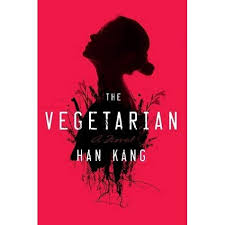
In Kang’s novel, a young Korean married woman is terrified by a dream that causes her to become a vegetarian. Yeong-Hye’s conversion to vegetarianism isn’t depicted in anecdotes about the life of a vegetarian in Korea. This is a much more serious and complex story, where becoming a vegetarian, scandalous to her family, triggers a string of events that are dark, violent, sexual and surreal. The writing beautifully describes these consequences in patterns that develop into motifs and metaphors.

But the problem with Yeong-Hye isn’t so much her vegetarianism as it is her mental illness, even though the two are linked by the other characters. Once she is put into a mental institution, her husband leaves her. The reader is put into a position of wondering if the family’s reactions to Yeong-Hye’s eccentricities are what created her madness. This suspicion is heightened when her brother-in-law, a conceptual artist, also pays for his individuality and a brief extra-marital encounter with an arrest and an attempt to have him institutionalised. The vegetarian

Though it was a couple of decades ago, I do recall (and probably wrote about) a conversation I had with one of my Korean colleagues who spent many years in America. He explained to me that unlike Americans, Koreans do not celebrate the individual, the person who is too different. He said, ‘Same is good for us. Maybe…’ Korean’s use maybe a lot…’Maybe it is safe that way.’ Safe from what exactly was never explained, and after nearly three years there, I never figured it out.

For me these challenges to the individual were intimated in Kang’s novel, though another reader could legitimately see it as a struggle between traditional beliefs and a modern-reaching society.

Reminiscing about my time in Korea and coping with being a vegetarian there, I’m reminded of the ironic fact that one of the best restaurants in Seoul was the vegetarian one – the only one in those days. Run by a group of Buddhist monks, it was technically speaking vegan. The food was served on wooden platters with bamboo utensils to customers seated cross-legged on floor cushions. Writing about it now, I can smell the gentle aromas.  If you find yourself in Seoul, the restaurant is Sanchon in Insa-dong.

Remembering  Normandy

At the 60th anniversary of the D-Day, I probably shrugged and didn’t think much of it. As far as I was concerned, I relived that day as much as I possibly could – or cared to – when watching the first half hour of Steven Spielberg’s brilliant Saving Private Ryan. Now at this 75th anniversary, the battles at Normandy mean a great deal more to me. They’re interwoven into my father’s life, threads that I hadn’t known existed ten years ago.

I’ve written before on how I had no idea about my father’s time in France during the war until he was near the end of his life, residing in a nursing home. You can read my essay on the Wasafiri site. As I mentioned in the essay, David and I went to Normandy to trace my father’s steps – well, as much as we could in a 3-day weekend. This trip was something of a sidebar to the emotional journey of putting together pieces of my father’s life and the realisation that my mother had created such a malicious fiction about her ex-husband. Watching the news coverage in recent days in the build-up to the anniversary, I’m transported back to those few days in Normandy.

Omaha Beach Museum
Indian Heads remembered on an outside wall at the Omaha Beach Museum.

It didn’t take long before we saw signs that my father’s troop had been there. His troop, the 2nd Infantry Division, also known as the Indian Heads because of their insignia, were not a part of the D-Day landings on the 6th of June 1944. Their story begins on D-Day plus one at Omaha Beach, where some 3000 dead bodies had to be removed, and in the days that followed as the division grew to face weeks of battles at St Lo and Brest.

Monument to Indian Heads
A proud daughter and son-in-law of an Indian Head soldier at a monument near Omaha Beach.

My father’s Bronze Stars are the only proof that he fought  in Normandy. In the absence of any ‘old man’s war stories’, I relied on museums and monuments. Knowing that my father never returned to France, I took snaps of the many places where the Indian Heads were remembered. More significantly, I took photos of what these towns and beaches are like today, evidencing the sense of peace and freedom.

Omaha Beach Today (2)
Omaha Beach today.

A Few Things I’ve Learned in 2017

I’m not a fan of listacles, so do forgive. As these are not in any particular order of importance, this might not even be a true list.

One thing I’ve learned is that giving someone the benefit of the doubt is not always wise. I had briefly entertained the notion in early 2017 that Trump’s minders would cool down his twitter tantrums and hate-spewed rhetoric. Boy, was I wrong.

Related to that, though perhaps more to the debacle called Brexit, I’ve learned more about being a political activist. Attending marches and rallies is the easy part. The hard part is staying informed in the age of the post-truth – I’m regularly checking sources. The other hard part is trying to use logic and reason in the face of stubborn, illogical adversity. I’ve learned to continue to advance my argument – there’s always the chance that my opponent will walk away and think about what I’ve said later on. Of course, there’s also the likelihood that nothing I say will make a difference if someone has been brainwashed by the Brexit cult – or some other political cult bent on vituperation.

I also discovered this year that I’m likely to be histamine intolerant – there’s no known test for it. As a result of this knowledge though, I made several small changes to my diet and I now no longer suffer daily with blocked sinus, headaches or bloodshot eyes. The lesson learned emerges from the fact that a few times over the years pharmacists and doctors have vaguely suggested allergies, but, with the exception of spring flowers that make most everyone sniffle and sneeze, I was reluctant to accept this possibility. Had I taken on board these ideas, I might have found out sooner about my intolerance for certain foods. Before 2017, I didn’t want to see myself as someone who had allergies or couldn’t eat this or that because of intolerances – someone who might be a hypochondriac or simply self-absorbed.  A strange sort of projection of the ego – but there you go – I’m over it. Lesson learned.

And finally, there are those things that I’ve re-learned. I know I’ve learned these things in the past, but awareness of them now feels new as if learning them for the first time. Perhaps this comes from the memory wiring in my brain. One of these re-learns is the lesson of learning languages. It doesn’t get any easier. The bar just gets raised higher. Another relearn comes from my life as a writer. I’m constantly learning about my craft which is necessary to being a writer. I’ve known this for years, but sometimes it just seems to hit me with awe.

So, as dreadful as the world has been with its Trump and Brexit supporters, its climate change deniers, its wars, its femicide and mass killings, the capacity to learn has helped to make it bearable. Another year is ending, another to look forward to.

#MeToo

I was a slightly chubby, acne-faced tomboy at 12 years old. I wore jeans or cut-off shorts in the summer and – having started to develop breasts – always shirts that were too big on me. Despite all of this, a part of me felt that I was at fault. I must have said something or acted in a way that made a 40 -year-old man want to grope me. An extended grope that lasted at least five long minutes – hard to say exactly as unpleasant memories play tricks on the mind. At times, over the years, I recall it being thirty minutes.

But one thing I do remember clearly – at 12, I believed that episodes like this only happened to girls who asked for it.

The only thing that stopped this man, who was one of my bosses, was a customer arriving at the front of the shop. At this tender age, I had a part-time job, working with a girlfriend in the studio space of a photography and silkscreen business. My friend and I stuffed cardboard into white t-shirts and glued backing on to posters. We were too young to legally work and were paid by piece and not by the hour. This wasn’t as bad as it sounds. It paid better than a paper route and wasn’t as girly as babysitting. Perfect for a kid like me, looking for money to pay for record albums and a new baseball glove.

Little did I know then that this was the start of years of workplace sexual advances, inappropriate touching and objectifying language that didn’t end until I left my last fulltime job in the UK in 2013. Interestingly, in Oman, a traditional Muslim society, I was never a victim of any such behaviour – though I wasn’t treated equally in the workplace given my status as a woman and as a foreigner. Today, working in distance education and freelance writing, I enjoy among the advantages the safety of working from home.

At 12, I didn’t tell anyone at the time about what had happened. Even my best friend and co-worker. I thought that the boss hadn’t tried anything on her even though she was the pretty one – slender with clear skin and beautiful long brown hair. But maybe she hadn’t said something or done something to encourage him. I was simply too ashamed to ask her. I can’t remember now what excuse I gave. Maybe it was school starting again or missing out on baseball. I must have found something and quit the job a week later.

A couple of years after that, I ran into the girl who replaced me at the studio. We talked about working there and she was quick to point out that one of the bosses was a ‘pervert.’ He had done the same thing to her. Finally, I could talk about it. Together, we connected the dots. This company only hired girls, too young to work there legally and unlikely to speak out. I wanted to talk to my best friend who had worked there with me about it. But she had moved away and was in the midst of a family tragedy. She and I never had that conversation. I can only hope now that she has spoken about it with someone.

The Weinstein case and other cases involving high-profile people have opened the flood gates. Not to diminish the importance of speaking out against such acts, but they are pointing the finger to the powerful and rich, people in the public eye. What about the young and vulnerable across the spectrum of the workplace? Victims whose predators are ‘ordinary people’? We can’t use public humiliation as leverage.


The Week in Feminism

With Saudi women finally getting the right to drive and the death of Playboy founder Hugh Hefner, I’m reminded of the continued sexism and misogyny of our day.

While I’m pleased that women in the Kingdom of Saudi Arabia are not only allowed to drive cars, but are able to do so unescorted by a male, I’m annoyed by the idea that this part of the new Saudi King’s programme of ‘modernisation.’ KSA is technologically one of the most advanced countries in the world. The King Abdulaziz City for Science and Technology was started in Riyadh back in 1977. According to Forbes, KSA is one of the world’s largest investors in technology today. And they have already launched several space satellites. A typical Saudi owns smart phones, tablets, laptops and an array of high-tech home entertainment systems. In terms of education – another indicator of modernisation – their primary and secondary schools were among the first in the Gulf States. Literacy rates in the Kingdom are now comfortably above the global average.

Yet for all of this, women were only given the right to vote in KSA in 2015 and now in 2017 the right to drive. Modernisation has been rather selective.

Of course, many countries, including some in the West, would also fail the fairness test when it comes to women’s rights relative to other developments.Saudi women 2

With this news about Saudi women, I’ve been reminiscing on my driving experiences in Oman, the country next door. While Oman is a country where women could drive, few did. Usually, I was driving with David in the passenger seat and I only had to deal with the dangerous habits of other drivers, typically young, male, on their mobile phones, speeding and cutting across lanes of traffic as if at the Monaco Grand Prix. When I was in the car driving by myself,  I also had to deal with male drivers pretending to drive me off the road, revving up their engines and blinking their lights behind me or driving closely alongside my car, looking at me and laughing.  I should point out that this was often on the highway between home and work with a posted speed limit of 120 kilometres per hour. I knew this harassment was because of my gender. I felt I had landed on a planet where the men – on the road at least – never stopped being teenagers.

This brings me to Hugh Hefner. I’ve been cringing these past few days as glowing tributes have been paid to this professional womaniser. It has been said, mostly by the man himself and now in his obituaries, that he was largely responsible for the sexual revolution of the sixties. If that’s true, such a revolution according to Playboy magazine was for men only.  In a complete and fair sexual revolution, men and women would have been featured in the magazine full frontal nude or engaging in sexual acts together. But we all know that Playboy and the persona that Hefner embodied were about the objectification and demeaning treatment of women. Where women weren’t treated like life-size dolls, they were reduced to bunny rabbits.

Having said this, I’ve also been comforted by the many writers and commentators – nearly all women – who have reminded the public of the man’s misogynistic remarks and his emotional abuse of women which continued until his death. Famous or infamous – the fact that there is a divide in opinion, like the views on women driving in the Gulf, illustrates that the struggle for equality has a long way to go.

Where I wasn’t when Diana died

Having just flown back to Seoul from a short break in Guam, we were enjoying a late breakfast and listening to BBC World Service. Breaking news – Diana, Princess of Wales, had been in a car accident. My first thoughts were something along the lines of it being a fender-bender. No big deal. Diana and her boyfriend Dodi Fayed had probably walked away from it. The media makes so much of her life. My second thoughts were that in Britain, it was about one in the morning, while in South Korea it was just after nine. There was a sense of satisfaction knowing that we had heard this nugget of news while most of Britain was sound asleep.

Within an hour, we learned that Dodi Fayed had died and that Princess Diana was in hospital. This was serious after all. Living at the foreign faculty apartments, the rest of the morning was spent in gossipy speculation. Any colleague I bumped into on my way to the laundry room or shops was quick to ask if I’d heard anything. They didn’t have to say what it was about. As the hours passed without any news from the BBC, we suspected that it was likely a life changing injury or that she was dead.

It was late afternoon, David was off playing cricket with some international ex-pats and I was by myself in our tiny apartment preparing my lessons. I turned on CNN for an update and heard for the first time that Princess Diana had died. Even though I expected it, the news still stung and caused my eyes to tear. I was aware too that with an eight-hour time difference, Britain was waking up to this surreal headline. I felt reconnected to Britain, to my friends there and oddly to people I didn’t know.

In the days that followed, I sensed a closer bond to my fellow British, American and other Western colleagues and acquaintances. We were all shocked and felt the sense of a void being created with the young princess’s death.002 (2)

Koreans, on the other hand, couldn’t understand all the fuss. One of my Korea students explained to me that Diana was no longer popular in Korea because she was a divorced woman. They couldn’t understand how people could still like, let alone admire her. Watching British people on the news leaving bouquets and blubbering in front of Buckingham Palace made my students shake their heads, some even smiled. At some point, a Korean student asked me if I was sad about Diana dying. Yes, I guess I was, but not deeply sad.

In truth, Diana didn’t mean much to me. She hadn’t said or written anything famous or thought provoking. But like millions of others around the world, I enjoyed watching her, envying her clothes and style, delighting in her expressions of joy, empathising with her looks of boredom. When she first came on the scene as Lady Diana, she was a breath of fresh air among the stiff, restrained royals. She soon filled her job description giving us the heir and the spare, but was otherwise not particularly interesting. I started to pay attention to her again when she supported AIDS research, holding the HIV babies in her arms and sending a message to the world. Around that time she had started to diminish, becoming thinner by the month. The stresses of her life were there for all of us to see before the advent of reality TV. Only after her divorce did Diana appeared to be a healthier and happier person, travelling the world to draw attention to various charities, entertaining us with her stylish appearance. There was little not to like, but not enough substance to dislike.

As ex-pats, David and I had become regulars at the British Embassy in Seoul. In those days, the Embassy had a pub in the basement, complete with British ales and a dartboard, that was open to UK citizens and their guests.  I can’t imagine, post 9/11, the pub still operating. As most of us didn’t have access to BBC television in Korea – and the internet was in its infancy – the Ambassador invited us pub regulars to his private home to watch the funeral. About thirty of us sat in a grand room silently viewing the service on a wide screen, the only movement, the occasional face dabbed with a handkerchief.

The images and the emotions of those days seem as clear in my mind as if they were yesterday, or the day before. I suppose it’s the effect of shocking news that’s shared with a wider public, along with the fact that I was in South Korea. Having been a toddler when JFK was killed, this is my moment of remembering exactly where I was and what I was doing when I heard the news. And that might be all it will ever amount to.

The Ms Thing

Last week saw the death of Sheila Michaels, the woman credited with ‘introducing the honorific Ms into common parlance,’ according to the NYT obit.

While it might be ‘common parlance’ in the United States, it still hasn’t completely caught on here in the United Kingdom.

Virtually any time I give my name to a stranger, whether it be a builder, a ticket office clerk, shop keeper, whatever, I am asked ‘Is that Miss or Mrs.?’ This question in itself divides the UK from the US, where people often don’t use title at all, just the person’s name. Here in England, when I respond with ‘Ms’ I’m typically looked at with a baffled expression. Sometimes the person tries again, as if my accent either made my response incomprehensible or my brain too small to understand that Ms was not one of the options. One time, a Cambridgeshire garage owner even asked me what it meant. I had to explain that Ms is for women whether they are married or not, like what Mr is for men.

But most of the time, the linguistically constipated stranger ignores what I’ve just said, looks at my hand, sees the wedding ring and writes down ‘Mrs.’ Problem – I’m not Mrs Trimarco – that was my mother, or some other woman who married a Mr. Trimarco in generations before mine. Like so many women, I chose not to change my name when I got married. Not only do I object to the symbolism that I become my husband’s goods and chattels upon marriage, but having been published under my birth name makes any name change professional suicide – not to mention downright messy. For those of you who say that it’s easier for the woman to change her name if she has children, I say wake up. With all the stepparents, foster parents and other guardians with different surnames to their little ones these days, people’s expectations have changed.MS-2

I haven’t yet run into an equivalent for Ms in other languages, but there are countries that either no longer or never have used titles to distinguish married women from unmarried ones. These include, surprisingly, Iran and South Korea, two countries with notorious track records for the oppression and ill-treatment of women. Moreover, in both Iran and South Korea a woman keeps her surname after marriage. Having said that, one Korean woman once told me that a woman kept her maiden name so as to not confuse the family tree in a country where ancestor worship is paramount. Her interpretation on all of this was that women didn’t count in the tracing of family trees, that they were mere conduits of babies, not important enough to have their names passed on.

In some South American countries, a woman becomes a signora, but her surname stays the same. When she has children, part of her surname, usually a double-barrelled one like Sanchez-Perez, goes to her children. The other half of the children’s double-barrelled names comes from their fathers.

So, what’s the problem with Britain? Maybe people here resist the title because they’re used to Miss or Mrs, or as one shopkeeper once told me ‘it’s only for feminists’ (as if that were a bad thing). Are things all that bad on this score here? Well, just a couple of years ago, I felt a glimmer of hope when I went to the opticians and was given a form to complete that gave me the options Miss, Mrs, Ms, Dr, Mr. I happily circled Ms. I turned in my completed form to the receptionist, who looked at it carefully and said, ‘Is that Miss or Mrs?’

Fast-forward to a few days ago. I was at Homebase getting a quote for our bathroom refurbishments when the bathroom designer, sitting at her computer, was filling in my contact details. A dropbox for titles came down with Mr, Miss, Mrs, Ms, Dr etc. as she asked me my title. Seeing the options, I said, ‘Well, Ms or Dr, either is fine.’ She looked at the ring on my hand and said, ‘But you are a Mrs, aren’t you?’ It was clear that that was her preferred option, a world she understood.

I replied, ‘But I’m not Mrs Trimarco. My husband isn’t Mr Trimarco. I didn’t change my name when I got married.’

Her expression was too plain for me to tell if she was an anti-feminist, repulsed by the title, or simply confused. Finally, she said, ‘Okay, let’s use Dr then.’

Local Elections

It’s taken me a week, but I think I have recovered from the mini-depression left behind by the local elections here in South East Cambridgeshire. I credit my recovery largely to the power of satire – thank you, Have I Got News for You. And I must acknowledge the Trump administration, although they are not aiming to be satirical, they have certainly achieved it over the past week with the firing of FBI Director James Comey – a tin-pot dictator fires the man who is leading an incriminating investigation against him and claims that it’s because of the way the man treated the dictator’s rival which brought him to power in the first place. (But as I write this Trump has now contradicted his spokespeople by saying that it was the ‘Russian thing.’)

Our local elections this time around proved the stuff of satire by showing us once again how human beings do stupid things at the ballot box. Not so funny – and hence a week of the blues – has been the nastiness and spreading of false information that has marked this particular campaign.  It reminds me of J.K. Rowlings’ The Casual Vacancy, where a parish council seat suddenly becomes vacant and the private wars and backstabbing begin.Labour window
Tory poster

Here in Ely, a group which calls itself ‘Progressives’ advertised itself as an alliance of progressive political parties, made up of Labour, Liberal Democrats and Greens. They even sent out social media postings showing a diagram of red, yellow and green stick people coming together to defeat the blue stick people, also known as Conservatives.

I clicked on their link expecting to see them supporting the Liberal Democrat in my ward for County Council. Much to my horror, they were telling people to vote Labour. Then I looked at other wards, and saw that the recommendations were either Labour or the Greens. No sign of the Liberal Democrats. This seemed odd to me as the Lib-Dems either won or came in second to the Conservatives in these local wards as long as I could remember.

I left a comment: What you are saying on your website doesn’t look anything like this diagram. Why can’t the LibDems have a win?

Response: We had been working with all 3 progressive parties for about 18 months but the local LibDem party decided [to] pull out last autumn. We’re hoping they will re-engage with us in the future.

Me: So you are only advising voters to vote Labour or Green? That doesn’t seem right. Especially in Ely where LibDems are more likely to beat Tories.

Other comments came flooding in with arguments and counterarguments. The most telling was when someone said ‘You’d rather attack the Lib Dems than genuinely try to defeat the Tories.’ The response was a ‘Yes.’

A few weeks later, the local elections were held. For Ely North, the Conservatives won with 49.3% of the votes, the Lib-Dems had 35.4% and Labour 15.3%. In Ely South, the Conservatives won with 46.1%, the Lib-Dems had 38.7% and Labour 15.2%. For both wards, these were high results for Labour compared with previous elections. If about 60% of their votes went to the Lib-Dems in the spirit of an alliance, the Conservatives would have lost. Clearly, divided we fall.