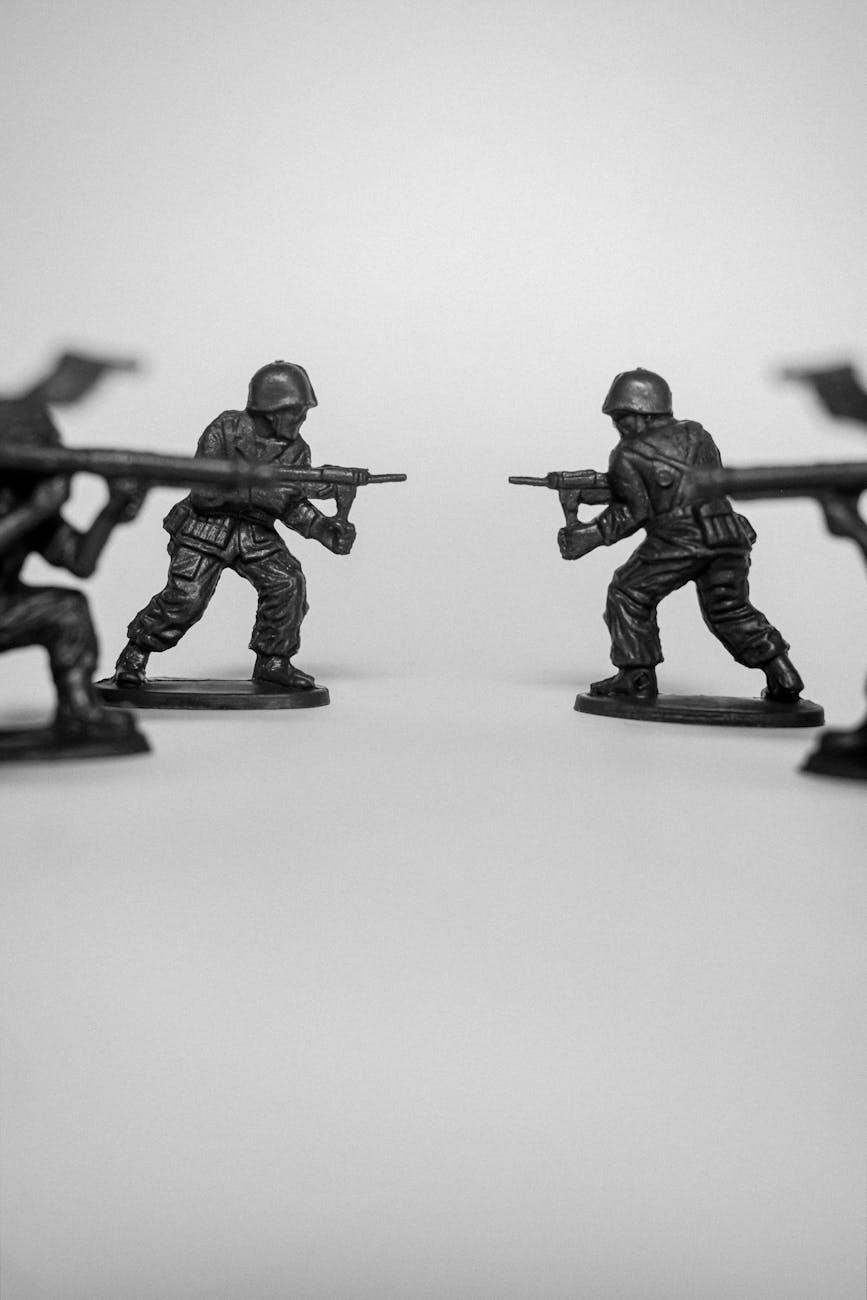
In linguistics we have the concept of framing to help explain how our brains move from word to meaning. The word war, for instance – one that has been on my mind and probably yours these days – instantly activates a frame of images and emotions – buildings blowing up, casualties, refugees, skies filled with grey planes, alongside feelings of fear and outrage. The word in isolation conjures up all of these things.
Frames are a convenient way for linguists to illustrate how encyclopaedic meanings work and how we create typical contexts when we see or hear certain words. The reality is that modern warfare and the reporting of it in Ukraine and the Middle East challenge the simplification effects of narrative frames. As drones and AI-generated war strategies reduce the number of boots on the ground, the familiar war narratives could give the false impression that these are ‘war-lite’ events.
Another example – The blocking of the Strait of Hormuz is being treated by the current US Administration as breaking the rules of war – that is, not fitting into the established war frame. Yet blocking shipping lanes as a war strategy is nothing new. Consider the British naval blockade during World War I, where maritime access was deliberately cut off to starve the Germans and weaken their economy.
This leads me to another point: the war frame also needs to include the lies of war. This too, is nothing new. In the 5th century BC, the Greek playwright Aeschylus is reported to have said, ‘In war, truth is the first casualty.’ The lies surrounding today’s wars are further complicated by an unlikely and prolific source – the President of the United States – and by the 24-hour news cycle – a melange of mainstream sources, podcasts and social media, pumping out falsehoods, verified reports and bias commentary simultaneously.
Given the war-induced tragedies unfolding before us, the best that I can offer for now is linguistic awareness. Naming and framing shapes not only how we understand – and misunderstand – events, but how we imagine their end.
What I’ve been reading
Nastassja Martin
I found Nastassja Martin’s Croire aux fauves (called In the Eye of the Wild in its English edition) in the fiction section of the Menton library. While this book reads as literary fiction, rich in descriptive detail and figurative language, it turns out to be a memoire. In fact, The English publisher categorises the book as ‘Anthropological memoir/nature writing.’ However you label it, it’s a story well worth reading. Martin is a Russian French anthropologist who, while conducting research in the volcanos of Kamtchatka (the far east region of Russia), was brutally attacked by a bear and left seriously disfigured. The story starts with her admission to a Russian hospital and carries the reader through multiple operations, a transfer to a hospital in Paris, visits from horrified family and friends, more surgeries and eventually her return to the place where it all happened. While these events are taking place, Nastassja relives the attack, acutely aware of how it has altered her relationship with bears and seeing herself as a bear-woman – an idea drawn from Russian mythology. Upon returning to Russian, she discovers that her story had been reported in the news as a woman being attacked by a bear. But she understands it as ‘a bear and a woman meet and the boundaries between them implodes.’
Staying with the themes of hospitals and life-changing events, Rachel Clarke’s The Story of a Heart tells the real-life story of a heart transplant given to a 9-year-old boy. The book chronicles the medical and emotional events for the young recipient, the tragically young donor and their families. I wasn’t certain at first if I would like this nonfictional account having read Maylis de Kerangal’s masterfully written novel Réparer les Vivants on the same subject – which I blogged about. But I was pleasantly surprised. Running alongside the present-day drama, Clarke delves into the history of heart transplant medicine and the treatment of ill children, revealing some astonishing – and disturbing – facts. While her writing might lack the narrative complexity and metaphors of de Kerangal’s work, Clarke has flare and moments of panache: ‘No other part of the human body comes close to matching the metaphorical richness of the human heart. Hearts sing, soar, race, burn, break, bleed, swell, hammer and melt. They can be won or lost, cut or trampled, and hewn from oak or stone or gold.’
Away from wars and hospitals, I’ve been finding moments of introspection in a linguistically ludic poem by Mark Tardi, Eventual Horizon. Two points to make here: 1) I know Mark personally as we worked together at the University of Nizwa in Oman – yet another way of getting introduced to new poetry and a talented poet. And 2) Notice my phrasing above, ‘I’ve been finding…’, is in the present tense. Reading poetry – this poem in particular – involves rereading, thinking, experiencing and rereading again. With each reading, I suspect I am constructing new frames, only to dismantle them once more.
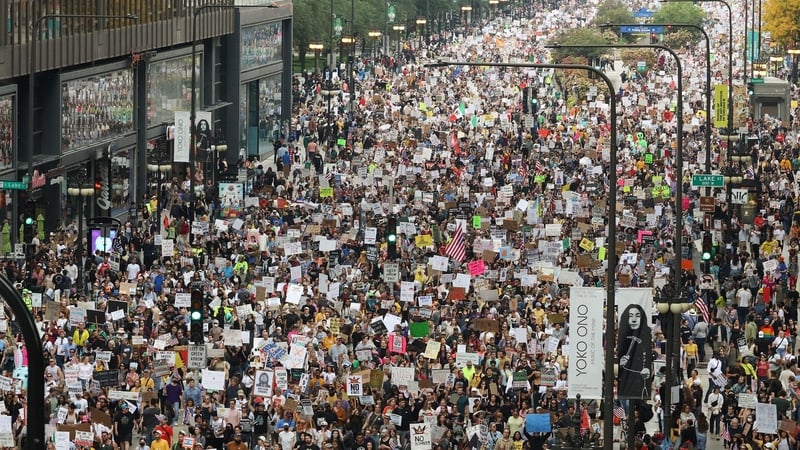
‘As we resist Trump and his regime, we weaken it. As we weaken Trump and his regime, we have less to fear and more reason for hope. As we have less to fear and more reason for hope, we are able to vanquish tyranny and build a better future.’ This is according to Robert Reich, commenting on the No Kings demonstrations in America. I get what he’s saying, and I agree in theory—but honestly, sometimes these ideas just end up as pub talk or dinner table debates, never really going anywhere.
Part of the problem lies in the word resistance and its verb form to resist. The word resistance first appeared in English in the 1300s meaning “moral or political opposition” and referred to violent uprisings against European feudalism. Later in the same century resistance denoted “armed opposition by force” (Online Etymology Dictionary).
Fast forward a few centuries, and scientists started using it in the 18th century to talk about opposing the flow of energy. No weapons needed. The phrase path of least resistance came along in 1825, taking on an even softer figurative meaning – it’s an expression I’ve heard myself use to describe dealing with colleagues and difficult family. In the present day, we resist temptation to eat another cheese-encrusted tortilla chip or purchase something we really don’t need but want badly.
So, resistance can feel empowering and even rewarding. But there’s a flip side. I heard it in a ‘Morning Calm’ meditation on the Samsung Health app—the soothing voice talked about resisting change and trying to control things you just can’t. Sometimes, resistance just makes you miserable.
While I was writing this, I received another newsletter from Robert Reich, insisting ‘The resistance is becoming an uprising. Last Saturday, more than 7 million of us poured into the streets to reject Trump’s dictatorship. That’s more than 2 percent of the adult population of the United States. Historical studies suggest that 3.5 percent of a population engaged in sustained nonviolent resistance can topple even the most brutal dictatorships — such as Chile under Pinochet and Serbia under Milosevic.’
That’s all well and good, Robert, but Pinochet hung on to power for 17 years and only left because a new Chilean constitution stopped him from running again. Milosevic was taken down by international courts for war crimes. I don’t see America getting a new constitution anytime soon—and even if it did, Trump would probably just ignore it or twist it to suit himself. The international community seems to either flatter him or go their own way without America and without attacking the president’s tender ego. There’s no big global push to hold him accountable for human rights abuses (like what ICE is doing in the US or military attacks on civilians off Venezuela and Colombia).
Nonviolent resistance is great. It brings like-minded people together, pushes the media to question the government’s narrative, and most importantly, it gives us hope. But resistance alone isn’t enough. If all we do is resist – especially when change feels like an endless uphill climb – we risk burning out, disillusioned and miserable.
I’m reminded of the opening to a poem by Maria Melendez Kelson:
Jennie Godfrey’s The List of Suspicious Things served its purpose as a non-gory and non-violent bedtime read – I’ve learned not to read Joyce Carol Oates if I’m horizontal with pillows under my head. Though not predictable, Godfrey’s novel wasn’t challenging or as engaging as I had hoped it would be. The premise is intriguing. Set in 1979 in Yorkshire at the time of the Yorkshire Ripper murders, a young girl sets out to find the notorious murderer by observing the people in her neighbourhood, assuming it must be one of them. Her suspects are only suspicious because of the ways adults treat them, exposing the racism and prejudice of the society at the time. The story follows the coming-of-age genre with her realising these ways of the world and the limited tolerance of adults.
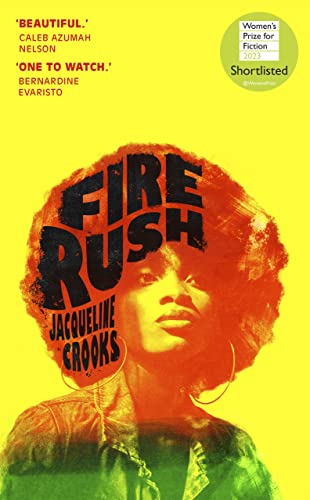
I found a meatier and more interesting read in Jacqueline Crooks’s Fire Rush. Also set in the 1970s, but in the vibrant Afro-Caribbean community in London. It’s earthy and real, where the language lifts off the page and the characters smoke weed and spend their evenings dancing at an underground club. The story turns into one of resistance against racism and police brutality. Despite the injustices and the violence, I was left with a satisfying sense of community, reminding me of Zadie Smith’s White Teeth and Chimamanda Ngozi Adichie’s Americanah.
Finally, going back into the archives of my mind, I reread The Stranger by Albert Camus. I had only recalled from my undergraduate days that this was a story of a French Algerian loner. Forgive my younger self. Of course, the novel is much more than that. With a new film adaptation out in France, the book’s getting fresh attention. In a recent interview, novelist Lilia Hassaine said The Stranger could be called Soleil amer—bitter sun. The main character, Meursault, doesn’t deny his guilt or resist his fate. He finds comfort in the sun, even in his cell. Hassaine rightly describes the sun in the novel as both beautiful and bitter.
When we arrived at Muscat Airport my visa was not waiting for me. An immigration officer searched through a few metal filing cabinets and squinted at his computer screen a couple of times.
Before leaving my home in England, I received an email with a ten-page attachment entitled Cultural Advice and Rules for Foreign Lecturers. My new employer was a little-known university in a little-known town in the middle of Oman. Muscat, the nearest city, was an hour and a half by highway through dusty valleys and stretches of uninhabited scrublands. I was winding down my academic career and saw this overseas stint as a final job – a spell of desert calm.
I had read in Cultural Advice and Rules for Foreign Lecturers that foreign women must cover their shoulders, elbows and knees. A separate sentence was devoted to the covering of cleavage, euphemistically referred to as a plunging neckline. This served as a reminder that I would be living in a traditional country, a euphemism for patriarchal and overtly sexist.
At the same time, the Sultanate of Oman is often regarded as one of the more progressive countries in the Middle East. Women work in senior positions, own property and have had the right to vote since 2002. Such points rattled in my head as justifications for working there in case anyone accused me of compromising my feminist principles.
At least I was not told to dress in clothes that I would not otherwise wear. No one was forcing me to don a headscarf or veil. I have nothing against the wearing of veils if men cover their heads as well. This is the case in Oman, where women wear hijabs, which leave their faces exposed, but keep their necks and hair well hidden. Omani men cover their heads either with turbans, called massahs, or with caps that look like truncated fezzes, called kumas.
I received another email about work visas. It said that after I received my work visa, my husband, who was already retired, would need to apply for a family visa so that he could stay with me, and he could buy a tourist visa in the meantime. In another part of the same email, it said that I would have to arrive alone, and my husband could join me only when his family visa was ready and that could take two to three months. My heart sank at the thought of living in a new country – this mysterious desert – by myself for three months while my husband remained in the UK, no doubt worrying about my welfare.
Given these contradictions, I searched online for an explanation – could my husband come with me or not? I soon learned that under new Omani laws women workers were not allowed to bring their husbands into the country – at all. Foreign husbands could sponsor wives, but not the other way around. So much for Oman being a progressive country.
This prompted me to contact the Head of Department, my new boss, who was British. He spoke in a straightforward way as if not surprised by the confusing email and told me to “not worry about it.” Workers’ laws in Oman are not set in stone like they are in Britain. There were ways of working around them, especially since I am a Westerner and “in Oman not all people are equal.”
On the surface, these new laws appeared sexist, but deep in their interior also lay a heady mix of nationalism and racism. Foreigners made up some forty percent of the workforce, mostly as low-paid manual labourers from the Indian subcontinent. Women from that part of the world often end up working as housekeepers or nannies, with tales of being victims of physical abuse not uncommon. The new visa laws targeted these female workers because their husbands could enter on family visas and later take jobs away from Omani men from the poorer classes.
After another round of emails, it was agreed that my husband could travel with me, entering the country on a tourist visa and that his family visa would take another month. Only a month. I was told that my work visa would be waiting at the airport upon arrival. This was doable. We packed our bags, me with my clothes covering my shoulders, elbows and knees.
At Muscat Airport, after an hour of waiting, a passport officer advised me to buy a tourist visa along with my husband. If not, it would have meant a seven-hour flight home and losing the job.
In the days to follow, I discovered the phrase inshallah, which literally means God willing, but in practice also means who knows, who cares and stop bothering me. My work visa should be processed soon – inshallah – whether it takes a few days, a few weeks, or possibly up to a month.
In my frustration, I took the bold move of visiting the head of HR, who introduced herself as Miss Aisha. That was her first name. My Arabic speaking colleagues did the same. There was Mr Ali, Miss Fatima and several Mr Muhammeds. Aisha was a petite Omani woman, who appeared quite thin and delicate under her abaya (a long, nun-like dress). Her name, which has several meanings, including “small one” suited her. With a gentle smile, Aisha offered me watery coffee and dates, a tradition of their hospitality.
Before I could say anything, she pushed up her wired-rim glasses and complimented me on my career, referring specifically to my work history as if she had memorised my CV. I was being buttered up. By the end of her introductory remarks, I was so greasy I could not very well come off as harsh or unhappy with my visa situation. I turned the question around and I finally managed to mention that I was concerned about working illegally while waiting for my visa. This was not fully true. I was concerned about my visa because I needed it to get a residence permit that would entitle me to health insurance, an Omani driver’s license (required after three months), home broadband and the coveted alcohol license issued only to non-Muslim foreigners. She explained between sips of coffee that the immigration services were suffering a backlog, and everyone knew this. I could work in the country under a tourist visa and “do many things” while waiting for a work visa. “It should come soon.” She smiled again and stared into my eyes for a few moments. I wondered if she was sending me a signal. If she was, I could not read it. She appeared suddenly busy with some documents and stood, indicating that I should leave.
In some ways, Miss Aisha was right. I could manage some things without a work visa, even those things I was told I could not get legally. With the help of my British bank, which had branches in Oman, I was able to open a local bank account. With that account and an employment contract, I was able to negotiate home broadband. Equally important, thanks to my Western colleagues, I was soon on the receiving end of contraband South African Cabernet Sauvignon. Had my colleagues been discovered passing me the box of wine, we all would have faced deportation.
During these early weeks of waiting for our visas, we set up home in an apartment provided by the university. As with most ex-pat lifestyles, television and internet serve as daily reminders of our lives left behind in the West. When I was not looking at a boxy television, reminiscent of the 70s, or my computer screen, I stared at our picture window that looked out onto a desert field of sand, rocks and shrubs. In the distance was a two-road village which looked like a cluster of palm streets. Some days wild camels were eating at the shrubs and chewing on plastic bags from our rubbish. Other days the shalal windstorms swept across our tiny town stirring up the sand into a canvass of beige. Observing life in the desert provided the sense of calm and reflection I was seeking.
I had also started teaching. Every time I entered an Omani classroom, I was acutely aware of being the only Westerner in the room, the only woman not wearing a hijab or an abaya. Despite censoring my shoulders, elbows and knees, I felt underdressed with my forearms, neckline and hair exposed for all to see.
Without exception, every abaya was black. The occasional colours slipped in with their hijabs, though most female students stayed with black for their head coverings as well. The serious display of colour came from the handbags – all large, bright and boldly decorated in stripes, plaids, polka dots, flowers and paisleys. Trying to make small talk, I complimented a group of these young women on the colourful bags, and one explained that it is one of the only items they can display with colour in it. Another student added with her eyes narrowing in their accusation, “A devout Muslim shouldn’t even wear a non-black hijab.” Arabic – incomprehensible to me – went flying back and forth across the lecture hall. Words were spat out and glottal sounds elongated for emphasis before I could make a joke about our “English-only” classroom.
A student started speaking in English. An animated debate followed on whether it was the influence of the Saudis or the Iranians that in the past decade or so insisted that women only wear black. As with some other countries in the Middle East, in reaction to the Arab Spring, conservativism was on the rise. One student lamented over memories of growing up with her mother and aunts wearing multi-coloured abayas and headscarves.
The men in my classes wore white dishdashas, appearing starched, bleached and, having been dried over a rack with frankincense burning underneath, there was often a sweet, musky fragrance when one passed by me. The kumas on their heads were also white with a few threads of colour articulating an embroidered pattern. My older male students in the post-graduate program wore patterned turbans, signs of their status and daytime employment. Turbans were akin to a man wearing a tie.
In these basically black and white classrooms, I must have appeared like a circus clown, a polychromatic foreigner. Fortunately, I didn’t have to worry about being too warmly dressed in the heat, since classrooms and offices always kept their air-conditioners running at full blast.
With each teaching session came a growing awareness of the inequities in this society. For the undergraduates lecture halls, seats at the front were always reserved for the males, the few that attended this university in the desert. My postgraduates were in small rooms and as men and women were equal in number, they stage-managed themselves into two gender-defined groups, divided by a makeshift aisle. It may have paled next to the adventures of T.E. Lawrence or Gertrude Bell, but these customs made me feel that I was truly immersed in a foreign country.
Perhaps, too, my willingness to go along was because there were no overt signs of sexism in the students’ language or demeanours. I had heard more sexist remarks among students in America and Britain than I had in Oman.
Classroom inequalities also surfaced with ethnicity. Omanis are a tribal people and amongst their tribes is one of East African origin. This has its roots in the era when Oman was an empire that spread as far as modern-day Mozambique. Students with darker skin and more African facial features always sat together at the back of the classroom. When I naively tried to join these different students into small discussion groups, I was met with shaking heads and embarrassed expressions. I had breached some unwritten rule.
A complex web of hierarchy and inequalities not only to do with tribal and regional backgrounds, but also family relations were understood and greased the wheels of Omani life. Having a male relative in a position of power was always useful. This applied to several students in my department who regularly missed assignments and failed exams and miraculously passed all their courses – something to do with an important uncle. At the bottom of the hierarchy and subject to all sorts of inequities was the foreigner.
The needs of the foreigner, such as my need for a work visa, appeared low on the priorities of the Omanis. I went to the university visa office about twice a week to see if there was any progress on my application. Most days they would say that they did not know anything. Other times it was that my visa would be ready by the end of the week inshallah or early the following week inshallah. Each promise evaporated as the days and weeks followed without a work visa. For the first month, my husband and I could renew our tourists’ visas at the police station in our town. After that, we had to leave the country, usually spending a day aimlessly in Dubai shopping malls, and re-enter, purchasing new tourist visas at Muscat airport. My employer paid for all of this – a sign that they still wanted me there but were perhaps suffering from a common developing country malaise – administrative dysfunction.
Another couple of months passed, and my husband and I were still on tourists’ visas. Frustrated with going to the university’s visa office, I went back to Miss Aisha. Unlike my first visit with her where she talked of backlogs, she took on a completely different position. This time, Miss Aisha told me that the government’s immigration department had it in for the university – something to do with someone who worked for the university upsetting someone else who had an important uncle. Because of this animosity – real or imagined – the new laws pertaining to foreign female workers applied to me after all. I would not be allowed to sponsor my husband’s stay in the country.
Perhaps it was the change in her tone of voice, but something in my gut told me that this new explanation was the truer one. I suspected she knew all along and had tried to signal to me that first time. I was being punished for being a female with a professional qualification who was the breadwinner and needed to sponsor her husband. In this traditional country, which was growing more conservative, I was setting a bad example. I had exposed my shoulders, elbows and knees.
With a pleading woman-to-woman look on my face, I said that I was sorry and explained that I really needed this job, my last fulltime job before retirement. Once more, we ate sticky dates and drank diluted coffee in silence as she thought about it. When she spoke, Miss Aisha told me that her name means “living” and “woman living.”
A few days later, a quick trip to Dubai culminated with smiles and a work visa stamped on my passport. All was dream-like and fine until I received my final batch of forms to sign. That was when I discovered that Miss Aisha had only submitted my paperwork a couple of days before my visa was ready. The stories I had been given about immigration backlogs were, as I suspected, totally fictitious. The laws about foreign women working in Oman, however, were real. The visa application form that I had signed months earlier in England had been altered to say that I had no dependents – no husband was with me. Falsifying a visa document was most certainly illegal. I said nothing and signed the agreement confirming that these were my documents.
In the days that followed, I acquired an Omani driver’s license, health insurance and an alcohol license. As for my husband, who still existed for me, Miss Aisha bestowed upon him a very dubious student visa. With some unease, I grew to tolerate this society of contradictions and inequalities, keeping my objections as well as my shoulders, elbows and knees under wraps. ##
This summer, I embarked on a major project – clearing out the paper clutter. I’ve disposed of two boxes crammed with over 30 old journals and once again triaged my bookcase into categories of sell, donate and keep.
Letting go of my once precious journals – some have travelled to three continents – has brought two things into focus. 1) Half of these journals were about the craft of writing, developing plots and characters, turning loose ideas into tangible stories. Now that these works have been written and most published or performed – some more successfully than others – I don’t need these notes anymore. 2) The other half of the journals were a chronicle of angst and anxiety in the forms of travelogues and practice prose, observing changes to my lifestyle with each new country, each new job while untangling my neuroses. These pages detailed a younger me – or another me – who, while still present, exists at a distance now. Since my thinking and behaviours have evolved, these journals could be discarded.
Flipping through the pages one last time, I did find a few memories that sparked new ideas for fiction and nonfiction. I’ve already noted them in my current journal, which has been digital for the past five years. I suppose someday that, too, will be deleted. For now, at least they aren’t collecting dust and taking up space that could be used for more useful items.
As I was preparing myself to say goodbye to these now worthless volumes, I stumbled upon a quote from professional New Yorker Fran Lebowitz. When asked if she kept a diary or journal, she responded: ‘Guess what? I don’t need to live my life twice – once was enough.’
The books were a lot easier to purge. I grew up in an apartment full of books. The living room was flanked with two walls of bookcases – classics and encyclopaedias in hardcover and everything else in paperback. All these books were read at some point by my mother, my six siblings and me. Every Saturday, one of us drew the short straw and had to dust the living room – a feather duster along the tops and bindings and a cloth dampened with wood polish for the shelves. Over time, some books were passed on to my mother’s friends or donated to a library, and the empty spaces were quickly filled again.
I inherited this need to be surrounded by books, continuing the tradition of book purges with each move to a new country or city. But in recent years, the rise of e-readers and regular library visits have naturally reduced the content on my shelves. With this summer’s clearing out, I sold some 50 books online and gave another 20 to charity. What remains are a handful of language books that I’m still using and some poetry and French books that I still dip into.
The only books I have held on to for sentimental reasons are my own publications (that are not available in digital form), my high school yearbook and the complete works of Shakespeare. While I have the Bard’s entire canon on my Kindle, I saved this specific edition for the handwritten inscription from my mother. It was a birthday present from her, one of the few positive memories I have. The inscription reads, ‘May you taste of life as deeply as did the masters.’
What I’ve been reading
Samantha Harvey’s Orbital was well-deserving of the Booker Prize last year. It’s the first book set in space to win the prize, which says something about the typical prize judges. Science fiction, while no longer considered pulp, is still seen as too low brow or not literary enough to make the grade. Orbital escapes that by working with science fact. Set on the International Space Station, the lives of six astronauts and cosmonauts – two women and four men – are explored as the spacecraft orbits the Earth 16 times a day.
While the psychological aspects of life in a confined space are compelling, they are within our imagination’s grasp. We can relate to being in tight quarters, working on a team, or feeling unreachable from loved ones. What is far more challenging to comprehend, and therefore more fascinating, is what happens to the human body in space. Harvey’s research is impeccable and aligns with what I’ve discovered in my own reading, including a recent article in The New Yorker on the mysterious and often dangerous long-term effects of gravity on the human body.
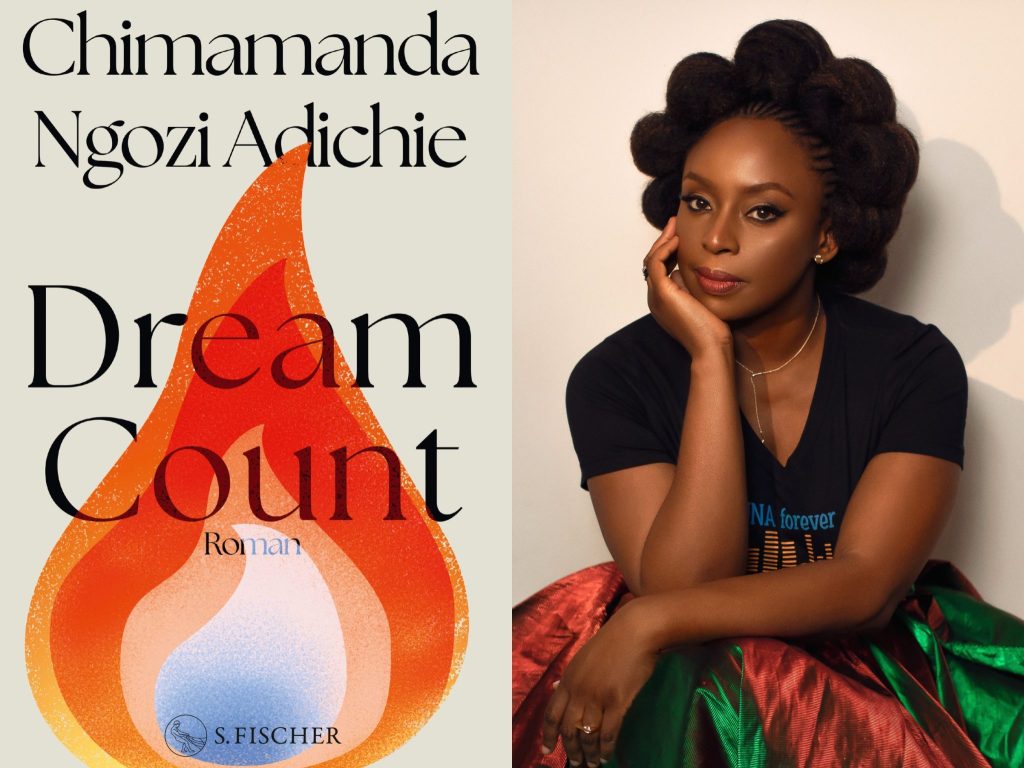
My summer days have concluded with Chiamanda Ngozie Adichie’s latest novel, Dream Counts. Reviews and the book’s jacket blurb emphasize that it is set against the backdrop of the Covid-19 pandemic, with four main characters of Nigerian descent grappling with the isolation and uncertainty of that time. In my reading, however, Covid is present for only a small part of the novel. The interconnected stories of these women cover flashbacks to Nigeria, Britain, and America long before the pandemic struck. The emotional journeys and experiences of the women – including motherhood, sexual violence, relationships, and ambitions – are far more central than the pandemic themes. It’s a story about the complex facets of womanhood, told from a feminist perspective and in Adichie’s signature crisp and fast-paced style.
Ten days ago, the UK Supreme Court made a pronouncement clarifying that in Britian’s Equality Act, ‘woman’ referred only to those assigned female at birth. This in effect says that a transwoman is not legally a woman. Unsurprisingly, the trans community is furious about the decision. Women like me who have fought for women’s sex-based rights welcome the ruling and the fact that the Equality Act still protects transgender people from discrimination while it also protects people from sex-based discrimination. The difference now is that sex and gender are not being conflated. In most of our daily lives this distinction doesn’t matter, and transwomen could be referred to as women by friends and colleagues. But when legal issues or situations arise, such as safe spaces for women and competitive sports, the sex-based biological difference is acknowledged and legally acted upon. Will the debates around this continue? I wish they would, but too many people in the public eye are wary to engage in this topic, especially if they agree with any aspect of the Court’s ruling. It’s unfortunate that no ruling from the Courts or Britain’s Parliament have addressed the conflation of debate with hate speech.
Easter Weekend saw the death of a pope. The obits were lengthy and the discussion panels on his legacy tried to create a polemic over what type of pope Francis was – liberal or conservative, left-leaning, right-leaning. In every discussion and interview I heard across my three languages, this last pope lost only a small fragment of his liberal credentials when it came to the role of women in the church. The experts in religion shook off this topic as if to say, ‘What do you expect?’
Mid-week saw Trump’s team announce government efforts to increase birth rates in America. This warped government is considering baby bonuses of $5000 to every American mother after her baby is born and classes for women in charting their menstrual cycles to increase their odds of conceiving. This pronatalist strategy is wrapped around conservative ideology about families based on marriage (as opposed to partnerships) between women and men and with the intent of having enough offspring to form a choir (okay, not their exact choice of words – it’s hard not to be sarcastic).
Speaking of controlling women’s bodies, Thursday morning, I found myself in conversation with a French language partner about the historical contradictions in Poland on the issue of legal abortions. In brief, abortions were legal during the days of the USSR when people had fewer individual freedoms. After the dissolution of the Soviet Union, in 1990 Poland’s new president Lech Walesa reestablished the country’s ties with the Catholic Church. By 1993, abortions were only legal in cases of severe abnormalities in the foetus – the woman’s mental and physical health were not taken into consideration. Today in Poland, abortions are only allowed in cases of rape, incest or if the mother’s life is in danger. Incidentally, the Soviets hadn’t been acting out of feminism or concern for women’s health. According to the Arte documentary my language partner and I watched, the Soviet government needed women in the workforce.
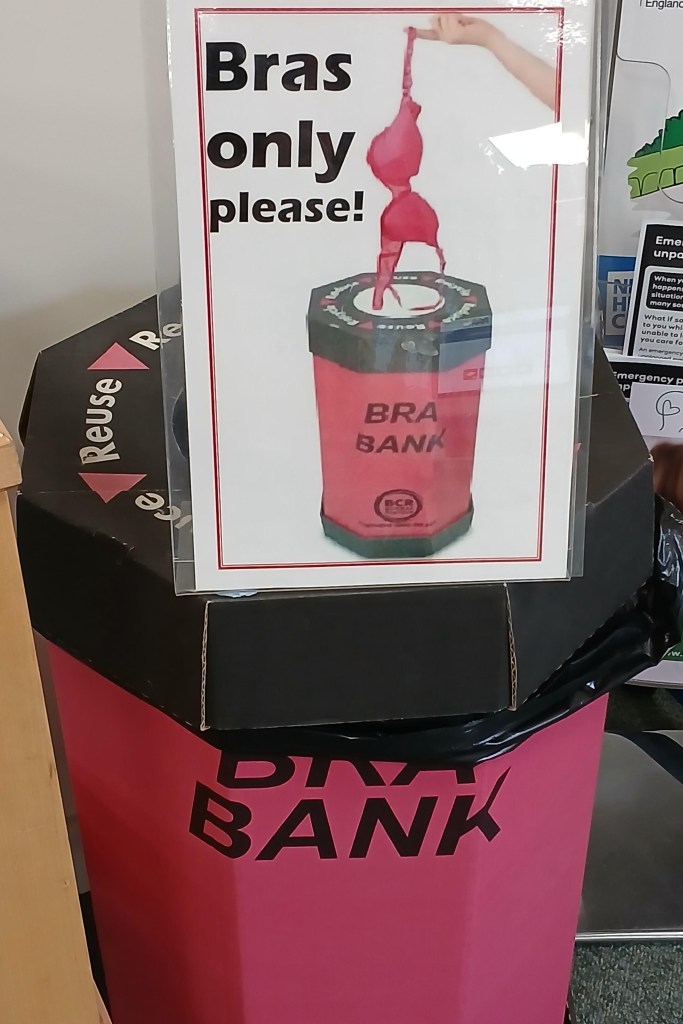
The new weekend started with a trip to the public library, where I notice a small recycle barrel partially tucked into a corner near the self-service checkout machines. Not for paper as one would expect in a library, but for bras (or brassieres as some insist on calling them). And of course, it was pink. Why in the library and why partly hidden? Several recycling bring banks, as we call them locally, are peppered across the tiny town of Ely with receptacles for used paper, glass, clothes, shoes and books. But none of them have a recycle barrel for the uniquely female undergarment. In the twenty-first century clothes associated with sexualised parts of the female body are requiring a gentle sort of censorship. At least this woman could end this 10-day cycle of womanhood with a laugh.
What I’ve been reading
I’m a huge fan of Joyce Carol Oates and have written about three of her books for The Literary Encyclopedia. Babysitter has been lauded as one of her bests, and I must agree. Be prepared – this is not a bedtime read. Like many of Oates’s work, some dark, unsettling topics are at the fore. In this case the abduction, rape and killing of children by a serial assailant make for the backdrop that disrupts the ‘pleasant valley’ white suburb of Detroit in the mid-70s. At the centre is Hannah, the wife of a wealthy businessman and mother to their two children. Bored with her passionless marriage, she is seduced by a strange man, not a part of her social circle, who engages in violent sex. One time, she ends up nearly dead. She is traumatised and cannot hide the injuries. Now clearly a victim of rape, her story exposes the sexism and racism of the time. Her story also develops in thriller style, linking to the serial child killer. Fortunately, breaks from the violence can be found in moments of poignant reflection. These lift the storytelling out of social commentary into something deeper and philosophical. When Hannah is forced to sell her grandmother’s pearls, she goes to a pawnshop and is told by the jeweller: ‘You have neglected these pearls, dear. You need to wear pearls often. You should know, pearls require human warmth, intimacy, to maintain their beauty. Their being. Spinoza said, “All things desire to persist in their being.” Pearls are not diamonds, dear. If left alone, they lose heart. They lose hope. Like all of us, they become brittle and begin to die.” At that point in the narrative, the analogy to Hannah’s life is evident.
It’s been a week and a half of sometimes frustrating but also intriguing and enriching women’s stories.
As a child in Chicago, I knew elderly neighbours and the grandparents of my classmates who escaped the snow and ice by living in Florida for the winter months. I used to think of these snowbirds, as they were called, with just a hint of envy and sometimes contempt – what made them so special that they didn’t have to trudge through snow or chip ice off their cars?
Now I’ve become one of those snowbirds – well, sort of. In addition to the harsh winter months, I do spend a month of the autumn and another in late spring in the south of France. Summers, and the remaining weeks of autumn and spring are in Cambridgeshire, Britain. Perhaps I’m more of a blackbird than a snowbird. Blackbirds can withstand the British winters, with most staying through the early winter months before migrating, if they bother to migrate.
But this isn’t just about the weather. My migratory habits also have to do with wanting to experience diverse cultures, practice different languages and break the routines of living in one place for a stretch of time. It’s all part of my self-psychotherapy (I’ll revisit this later.)
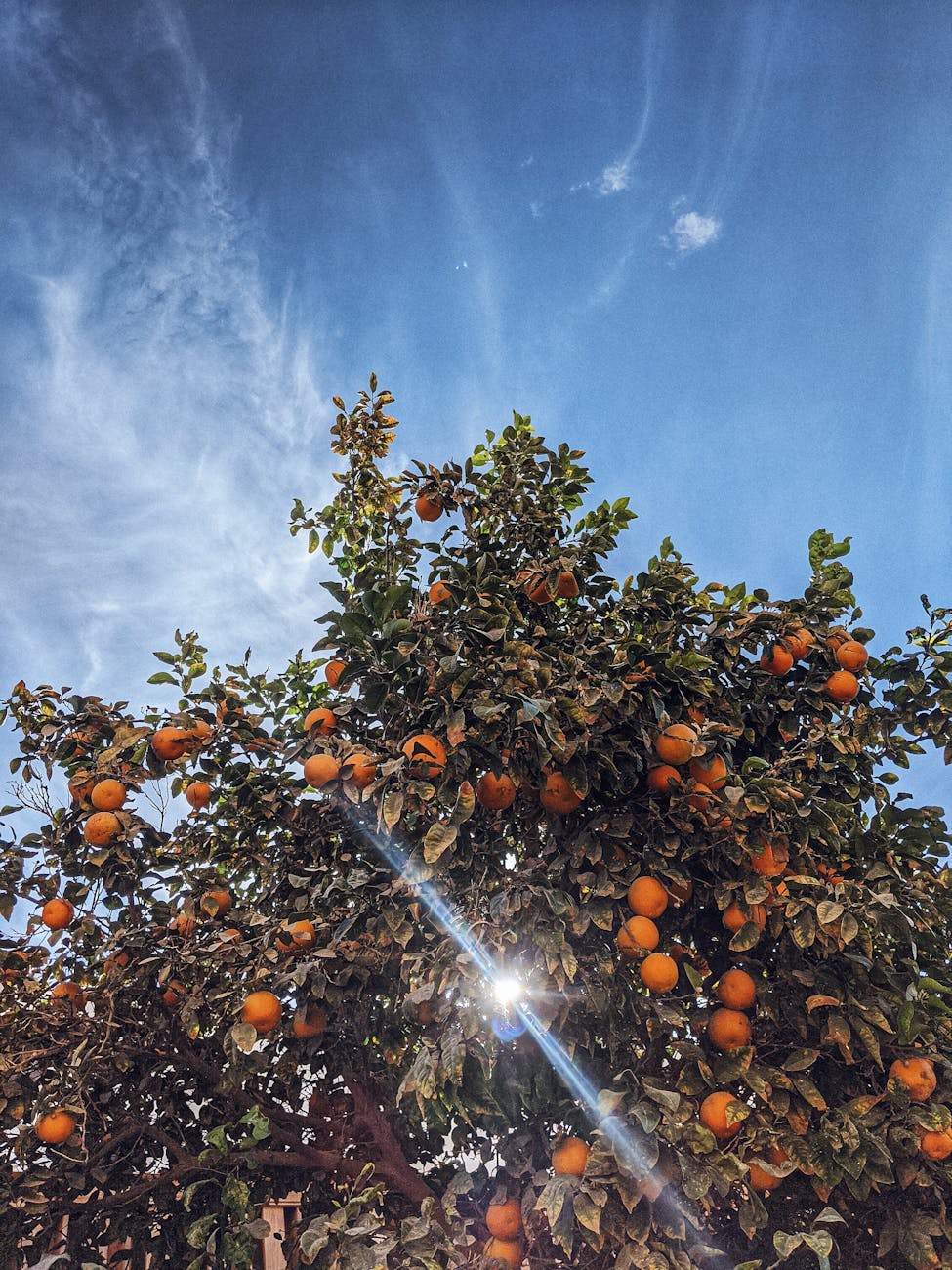
With this coming and going, I mark the seasons differently now. I don’t know if I should even call them seasons anymore. As I experience nature at its peaks – the winter harvesting of oranges and lemons in the south of France, the spring tulips and summer marigolds in England – the natural year is without a sense of death and renewal. It’s nearly always in bloom and constantly changing – or undergoing shorter lifespans, with no time for mourning. Time has folded on me, the years without stark seasons appear to pass more quickly, and the transience of life is more evident.
What I’ve been reading…
Noreen Masud’s A Flat Place is a memoir about the author’s love for flat places, like the fens in England (where I live for half the year) and Scotland’s Orkney Island, while coming to terms with complex PTSD. This form of PTSD does not emerge from a warzone or a traumatic incident. It forms slowly over years. In Masuud’s case from her childhood in Pakistan under a controlling father, a medical doctor, who could not relate to having only girls and who treated them medically and psychologically like ‘lab rats’ as Masud realises with hindsight.
When I read her description of complex PTSD, I recognised elements of my own life. Back to self-psychotherapy. It has taken me decades to not see the world through the filter of my dysfunctional and at times verbally abusive family:
‘…complex PTSD is a condition that only gains meaning beyond the situation that caused it. You adapt to the world you find yourself in….If you stay in that environment [your] instincts can help to keep you alive. It’s when you leave that environment that they become maladaptive. Then – and only then – are you a damaged person. You have to laboriously unlearn all those habits, and invent new ones, in a world whose very calmness feels frightening and unreliable to you.’
Masud ties together the solace she finds in the flat countryside with the need to escape childhood memories and learn to live in her new non-traumatising environments as a student, a colleague and as a friend. She turns the tormented memories of Pakistan into the stable sense of self found in the wonder and openness of the British flatlands.
I’ve also been dipping into the poetry of Giovanni Pascoli. This late 19th century poet is one of the most read in Italy. In brief, Pascoli led a tragic life, losing his father, who was murdered by an assassin, at the age of 12 and later witnessing the early deaths of his mother, two brothers and a sister. Despite his poverty, he was able to attend university, becoming a scholar and a political activist in the emerging socialist movement. His writing reflects both the conversational vernacular of his humble upbringing with the elevated expression of a Latin scholar. Reading Pascoli in Italian makes this not only a slow pleasurable read, but also a formidable linguistic exercise. Having said that, in any language, Pascoli’s writing is accessible while giving the reader a little symbolism to deconstruct. In what I suspect was Pascoli’s journey into self-psychotherapy, this poem uses natural images to reflect on the ideas of family, memories and the brevity of life:
And the night-blooming flowers open, open in the same hour I remember those I love. In the middle of the viburnums the twilight butterflies have appeared.
After a while all noise will quiet. There, only a house is whispering. Nests sleep under wings, like eyes under eyelashes.
Open goblets exhale the perfume of strawberries. A light shines there in the room, grass sprouts over the graves.
A late bee buzzes at the hive finding all the cells taken. The Hen runs through the sky’s blue yard to the chirping of stars.
The whole night exhales a scent that disappears in the wind. A light ascends the stairs; it shines on the second floor: goes out.
And then dawn: the petals close a little crumpled. Something soft and secret is brooding in an urn, some new happiness I can’t understand yet.
According to Wikipedia, dharma is ‘untranslatable into English.’ Maybe so, as a single word, but the idea of it certainly could be understood across languages, and it’s a useful one for the times we live in.
The term dharma has different meanings across religions. In Hinduism it’s ‘behaviours that are considered to be in accord with the order and custom that makes life and the universal possible. It is the moral law combined with spiritual discipline that guides one’s life. (more Wikipedia – do forgive me). This fits in with its use in the novel La Tress, which I wrote about this summer. In La Tress, a poor woman in India who is an untouchable and works in the public cesspool describes her situation as her dharma. She accepts her job as her place in the world, this ‘order and custom’ that makes everything possible. Of course, there are plenty of social constraints and customs that rule our lives – love them or loathe them – but I struggle to give them moral and spiritual importance. That is, I can see societies using concepts like dharma to keep the poor and women in ‘their place.’
I’m less uncomfortable with the Buddhist’s understanding of dharma. Even though Buddha did not write any doctrines, there are loads of books and websites devoted to the Buddhist understanding of dharma, packed with deconstructions and taxonomies. The most concise workable definition I have found comes from scholar Rupert Gethin, who defines dharma as ‘the basis of things, the underlying nature of things, the way things are; in short it is the truth about things, the truth about the world’ (not Wikipedia, but Tricycle.org). While this might be a bit esoteric, it’s not muddied by debatable concepts such as morality of spirituality.
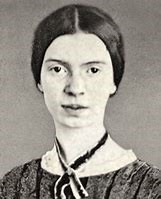
To put this another way still, and although she wasn’t writing about dharma, Emily Dickinson depicted truth as ‘stirless.’
The Truth—is stirless— Other force—may be presumed to move— This—then—is best for confidence— When oldest Cedars swerve—
And Oaks untwist their fists— And Mountains—feeble—lean— How excellent a Body, that Stands without a Bone—
How vigorous a Force That holds without a Prop— Truth stays Herself—and every man That trusts Her—boldly up—
Why am I waxing on about dharma and truth? With the viciously false and conspiracy-riddled election campaigns going on across the world this year, I’m seeking some solace. For now, I’m finding it by embracing the concepts of dharma and truth, allowing me to assume that there are underlying truths in the basis and nature of things. Even if people chose not to believe them, they exist.
What I’ve been reading
Continuing my geeky interest in bees, I picked up Lev Parikian’s Taking Flight: How Animals Learned to Fly and Transformed Life on Earth. As an aside, the secondary title in the US version is: The Evolutionary Story of Life on the Wing. Written for a generalist audience, it’s filled with fun facts about creatures with wings. For example, humming birds (the smallest of all birds), bats (the only mammals that fly) and mayflies that in fact live longer than just a day – most of their lives are spent in the nymph stage, which could last up to two years, and it is the adults that live one or two days. Other flying things get fair coverage, such as pterosaurs, dragonflies and my adorable bees. Unfortunately, the latter is subjected to a lightweight approach full of awe, but a little too low on science for my taste. That aside, highly readable, this book has its place on the grown-up’s shelf as an introduction to one corner of evolutionary zoology.
Robert Harris’s An Officer and a Spy is typical of Harris’s books – historical fiction told in the style of a page-turning spy thriller. The subject this time, the Dreyfus Affair, was already a spy story before it got the Harris treatment. In Harris’s version, the focus is on the French officer Georges Picquart, who worked in military intelligence at the time that Alfred Dreyfus was wrongly convicted for spying and sent to the notorious Devil’s Island. Picquart realises that the case against Dreyfus is flimsy at best. During his investigation, he uncovers the true spy, but when he tries to bring this to light, he too is punished in military fashion. Spoiler alert for readers not familiar with the Dreyfus Affair – eventually the truth wins out. As always, the details and use of real materials and quotes are admirable and what I’ve come to expect from Harris. This brings me back to truths and dharma and at one level what the story is really about. What we think is the truth can change with knowledge and the courage to change the opinions of others and ourselves.
I’ve been going through my inbox unsubscribing to any newsletter or advertising that I’ve tended to ignore or delete. This e-version of clearing out the closet has me wondering about a couple of things.
For a start, there’s language. The word unsubscribe first appeared in print in the 1570s and its antonym subscribe a century earlier. But in those days, subscribing referred to signing documents. These words didn’t gain their sense of joining something or paying for something until the early 1700s with magazine subscriptions. According to the Corpus of Contemporary American English, the most frequent collocates for unsubscribe are you can… and …at any time. I suspect similar findings in other varieties of English. My any time has come, and I’ve unsubscribed to over twenty newsletters and marketing lists.
Have I been unsubscribing or disengaging? Some of the marketing emails I’ve blocked came from IKEA and other middle-class home stores that I no longer need now that the apartment in France and the house in England are furnished and functioning fine thank you very much. I don’t want clutter in my homes or my inbox. I’ve also closed the door on sports clothing – how many wetsuits does a person need?
Reducing consumerism is easy compared to unsubscribing to newsletters. Among those to get my e-axe have been six literary magazines, one British centre-left political magazine, one leftist French newspaper and one centre-right Italian rag. I wonder if I’m disengaging from elements of public discourse out of saturation and/or utter despair. Thanks to writing courses and degrees, literary magazines are ten a penny. Wading through this glut, I occasionally find a publication of a high standard that I might want to send my own work to. I duly subscribe to their newsletter to get free samples of stories and essays. As months pass, I find myself dipping into and quickly out of worn tropes and plot devices that smack of writers’ workshops.
As a political junkie I should be basking in this mega-election year, especially when the recent UK and French elections saw victories for the left. Yet – and here is where despair comes in – the extreme right had significant gains and showed that they shouldn’t be taken lightly. And while I’m pleased that Uncle Joe has stepped aside to give the Democrats a better chance, the Republicans – who have tilted towards authoritarian far-right – are well-funded and could continue their menacing presence for years to come. These vituperative forces are currently exhausting us with their infantile and distorted racist and misogynistic attacks on VP Harris. Media outlets of all political stripes are reporting – posting in those e-newsletters – more on these click-bait comments than they are on the issues at stake in this election. I recall a remark from Kafka: ‘In the struggle that pits the individual against the world, always bet on the world.’ Disengaging, unsubscribing, call it what you will, might not be empowering, but it is therapeutic.
What I’ve been reading
Two exceptional novels of the past couple of years have been inspired by the writings and life of Charles Dickens and have kept me entertained for half of this summer. Zadie Smith’s The Fraud is an historical novel about the writer William Ainsworth, a contemporary of Dickens, who is also a minor character in the book. It explores the roles of Victorian women, attitudes about slavery in the post-abolitionist era and the famous Tichborne trial, involving a working-class man claiming to be the only surviving inheritor of an aristocratic estate. Like Dickens, Smith is a keen observer of human frailty and pretences. Barbara Kingsolver’s Demon Copperhead is a more obvious nod to Dickens. Following in the footsteps of David Copperfield, this eponymous narrator recounts the story of his life from childhood to early adulthood. But this is set in modern times in the poverty-stricken hills of Tennessee amidst the opioid crisis and is a story told with caustic wit, edging at times on satire. At one point the author winks to the reader by having Demon discover Dickens and comment about how it reflected poverty and the life of orphans in a way that could have been written today.
I obviously have not disengaged from these social issues, but it helps to interact with them through the lens of creative prose.
We have a splendid view from our Menton balconies. Not the sea view on the postcards, ours is a view of some trees immediately opposite us and the homes across the road, apartment buildings on the main street and above them villas nestled in an arboreous hill, though I call them the mountains – we are after all at the foot of the Alpes. At the top of the hill, I can see a rounded wall, reminiscent of medieval fortifications, and alongside it some other small pale-yellow building mostly blocked from view by trees. I can just discern a bell tower.
Thanks to Google Maps and Wikipedia, I learned that I was looking at a former monastery with a pale-yellow chapel. The Monastere de l’Annonciade goes back to the times of the city of Podium Pini in the eleventh century, though only used as a monastery between 1866-1999. In 2000, it was bought by an order of nuns who renovated it and opened the chapel to the public.
Taking the path with fewer steps up (only 434 steep thigh stretchers), I used a seventeenth century short cut called le chemin du Rosaire. Walking, I thought about the past lives that once went up the wide stairs clearly intended for horses and mules. Just before reaching the monastery grounds, I stopped to catch my breath and could look down through the budding trees and see the city streets below – one that I thought was my street, with its row of yellow and cream buildings, its parked cars and trees. But I wonder if it was the same street as it looked so different from what I thought it was. Had I gotten turned around along the twisted path?
At the top, the tight world of winding steps enclosed by villas and patches of forest had ended and a wide sky with feathery clouds and mountain tops in the distance lay open before me. The hill was a hill after all and not mountainous in the neighbourhood of real mountains. The chapel was sweet in its simple boxy exterior and austere interior, nothing like the ornate, heavily baroque churches and basilica in the town below.
The stone wall that looked like a fortress when viewed from our balcony, at eye level wasn’t not so tall, a metre at the most. I could easily lean over the stone wall and see the streets below. Our street was immediately recognisable as was our apartment building. Staring a little longer our one-bedroom apartment came into view thanks to recognising our dark blue sheets hanging on a drying rack. Our art works and soft furnishings hidden inside – the apartment was a utilitarian unit of a rabbit warren. From the hilltop the building was a tiny part of a large Lego village with a partial terracotta rooftop I hadn’t realised existed.
With a change in perspective, the monastery up close was different from what I had imagined it from below, and the apartment had altered its appearance when looked at from above. Both monastery and apartment building had transformed in character. One became less foreboding, the other diminished in its importance.
For writers, perspective has two meanings. On the one hand, it’s about tone and the author’s relationship to the subject and characters. On the other hand, perspective is about point of view, the narrative voice of first, second or third person, with variations on third person (an all-knowing narrator, a limited one, etc). The day that I took this little jaunt to the top of the hill, I had been for a few weeks working on a short story, in which an elderly woman has dementia. Her world view is often situated in the past as a young woman. It’s only when someone tells her that she is ‘confused’ that the spell is broken, and she quickly changes her thoughts to something else, unaware of her muddled state. I was writing the story from her perspective using a third person narration, and even though it wasn’t her voice, the focalisation was on her and at times as if a voice in her head speaking back at her. I love writing in this style as it always reminds me of my first encounter with it in James Joyce’s The Dubliners.
During the walks up and back down, I must have had the main character somewhere in my mind. Walking is a writer’s tool next to none, and Wordsworth was known to walk some ten miles a day on average. When I returned from the hill and was on flat land, I suddenly decided to write another version of the story from the perspective of the person who tells her she’s confused. This other character deals with the old woman’s state of mind as if speaking to a child. His inner voice is comic and sarcastic. And so, I persevere.
What I’ve been reading
For nonfiction, The Bells of Old Tokyo: Meditations on Time and a City by Anna Sherman has made for good bedtime reading because it can be read in small segments. I like the premise of the book – to examine Japanese culture and history through its famous bells and the stories surrounding them. The writing is fine and absorbing at times, but when it comes to travelogues and other travel-based nonfiction, I’ve been spoiled by Bruce Chatwin.
I nearly gave up on Wandering Souls by Cecile Pin as I found myself reading yet another story about refugees and their harrowing experiences of escape from terror followed by their arduous attempts at assimilation in unwelcoming countries. This is a story of Vietnamese boat people fleeing soon after US troops pulled out. What kept me going was the texture of the writing. One of the narrators is a child ghost while other narrators come from the family that has survived. In some sections, the story is continued by a newspaper report as a narrator with a more detached tone. These different perspectives enriched the story, making it something else, something outside of this subgenre of fiction.
To close, I’ve been reading brilliant tributes to short story virtuoso Alice Munro. RIP.
County Highway is a new American newspaper with a retro-19th century look that is only available in paper copy and is determined to never go online. Like papers of times gone by, it’s a broadsheet with six tightly packed small-print columns across a page. Just the thought of it makes my eyes ache.
The editors describe their ethos:
‘Some of us fear the spectre of an incipient totalitarianism emerging from our laptops and iPhones. Some of us are simply allergic to conformity and brand-names. What we share in common is a revulsion at the smugness, sterility, and shitty aesthetics of the culture being forced upon us by monopoly tech platforms and corporate media, and a desire to make something better. We encourage you to think of our publication as a kind of hand-made alternative to the undifferentiated blob of electronic “content” that you scroll through every morning, most of which is produced by robots.’
This quote comes from their website, the same website where I found links to their Instagram and X/Twitter accounts.
Contradictions aside, I appreciate the spirit of this. It’s true that a lot of online content follows trends, is highly commercialised and is controlled by a handful of tech giants. But this is not a new phenomenon brought on by the internet or digital technology. Not too long ago, television was run by a few large companies and the government. These channels were and many still are beholden to advertisers or to the government of the day. Words like ‘smugness, sterility, and shitty aesthetics’ could easily apply to the box. Online news and social media are just another version of this with the added advantages of interactivity and citizens’ journalism – though some would say these are the worst features on online news. Discuss.
Most of my news comes from reading my phone or laptop. I tend to go directly to news outlets, and I particularly like the moving images from embedded video clips. I also listen to news on radio, podcasts and television. While I don’t have any hankering for thin inky pages, in the UK my Sunday mornings wouldn’t be right without the paper version of The Observer. In France, it’s the Saturday edition of Le Monde. These traditions today involve having the phone on at the same time – checking sources, looking up the odd word and adding reviewed books to my Amazon Wishlist. I accept that we live in a time where paper and screen co-exist.
Furthermore, County Highway, do you really think most digital news content is produced by robots? AI might be able to produce passable news copy, but only from texts written by humans through the conduits of human experience.
My final criticism – why harken back to the style of news from two centuries ago? Aside from being difficult on the eyes, it was colourless and rarely had photos. I suspect nostalgia is at work here. To quote Milan Kundera ‘The Greek word for “return” is nostos. Algos means “suffering.” So, nostalgia is the suffering caused by an unappeased yearning to return.’








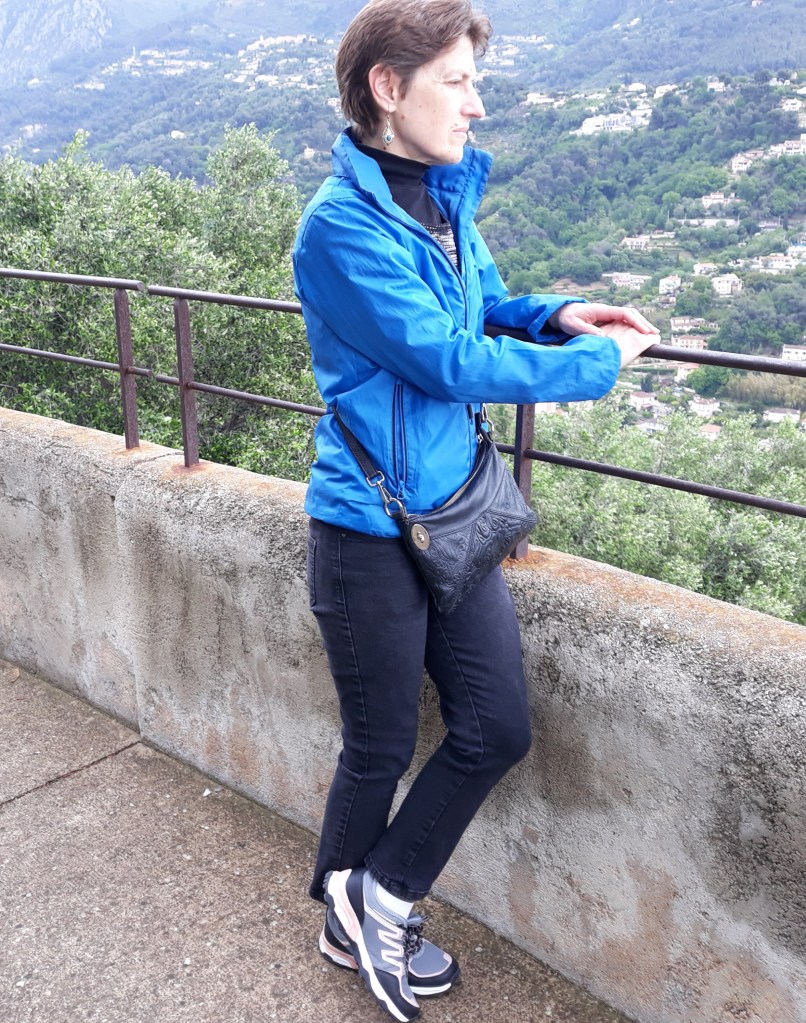

 Paola Trimarco