Train Journeys are always non-linear

I’ve taken the train between Peterborough and Edinburgh countless times over the past 40 years. The hilly landscape, the rugged coastline and the familiar stations – York, Darlington, Newcastle – have become comfortably familiar. The world has hardly changed when viewed from picture windows, often at speed creating glimpses and filmic montages. Yet, of course, the world and I have changed. Forty years ago, I was a bewildered student punching above my weight in theoretical and then applied linguistics, finding solace in Scottish poetry and working on my first unpublished novel – my first stab at untangling my dysfunctional childhood by reimagining the early life of my maternal grandmother.

I shook off those memories by filling the four-hour journey with some fiction (a The New Yorker short story) and some nonfiction (Le Monde) and listening to a few podcasts (Lincoln Project, and The News Agents). Between these entertainments my mind wandered back to a time when Thatcher was Prime Minister and Reagan was President and how they were perceived as deviously competent and dangerously bumbling, respectively. Pulling into Waverly Station, I thought that while I still disagree with their views, both world leaders would appear dignified and professional today.
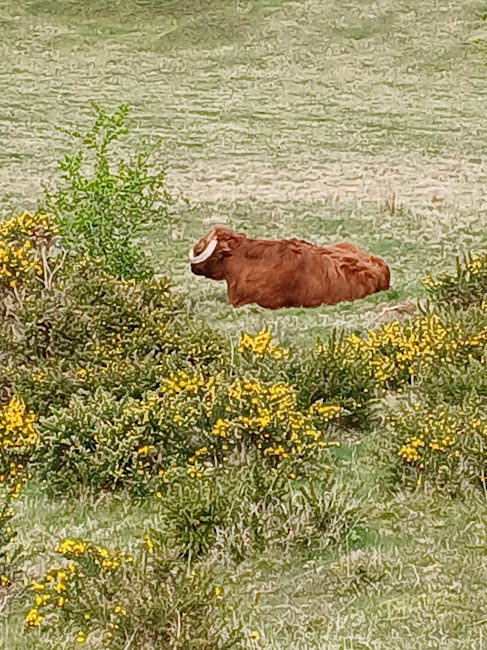
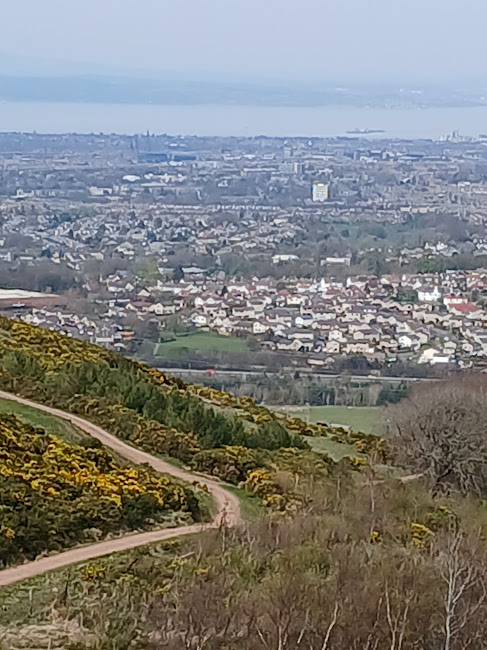
The train journey back reflected on the immediate past. My weekend in Edinburgh had focused on seeing an old friend, whom I hadn’t seen in five years thanks to the Covid lockdowns and mental health issues keeping her indoors, alone and unsociable. We talked through the weekend, confirming we were both in the bubble of centre-left opinion and trying to cope with the barrage of news coming from fascist America – a term that is becoming normalised – without being depressed and despondent. We also talked about our psychological well-being and what we do to take care of ourselves – meditation, exercise and variations of CBT. Between reading articles in The Sunday Observer, my return journey reflected on all of these conversations, along with images from our walk through a corner of the Pentlands, where I used a pair of walking sticks to navigate the grassy and gravelly terrain of inclines and where we saw Highland Cows in the wild, grazing just a few yards away appearing bored. The conductor reminds passengers that the buffet car is in ‘Coach G – G as in golf.’ So Scottish.

As the train pulled into Ely Station, having a sense of satisfaction for reconnecting with my old friend, I jumped into future thoughts – my friend’s recommended books and Italian television to explore and the banality of what I was going to eat for dinner.

What I’ve been reading

The Dalai Lama’s Cat by David Michie is an amusing tale from the perspective of the eponymous cat. This feline narrator is given the human qualities of communication and some abstract understanding for the reader’s benefit but is otherwise catlike. The cat, who goes by several names, describes what it is like being with the Dalai Lama, a life of celebrity and diplomacy sandwiched between hours of daily meditation and practices of compassion. When the Dalai Lama is away, the cat interacts with members of the household and a want-to-be American Buddhist who runs a local café for spiritual tourists. With each of these encounters, lessons in Buddhism emerge. While a bit episodic, there are still some gems to be found. Example, Buddha is quoted (I know, quotes like this are always dodgy as Buddha put nothing to writing that has survived): ‘The thought manifests as the word; the word manifests as the deed; the deed develops into habit; and the habit hardens into character. So, watch the thought and its ways with care.’ Whatever its true source, it’s a reminder of the power of the mind to create good or ill.

For something more literary and profound in its own way is Michael Cunningham’s Day. I loved The Hours, Cunningham’s modern-day retelling of Virginia Woolf’s Mrs Dalloway that wove Woolf’s life into the storytelling. I’m embarrassed that it has taken me so long to read another Cunningham book. Day came out last year to rave reviews and quickly found its way to my wish list and eventually my public library account. The story takes place on single and separate days spaced a year apart. In the intervening months, a couple separates, Covid upends everyone’s lives, and the wife’s brother has a midlife reassessment, changing careers and winding up stuck during the pandemic in Iceland. Although these events keep the pages turning, the real joy of the story lies in its sociopsychological intrigue. The brother, who is openly gay, has been ‘in love’ with his brother-in-law for years. Note the quotation marks – there’s nothing sexual or even romantic about the relationship. It’s a deep sense of love, for which our culture and therefore language doesn’t have a word. Beyond familial love, to call it a ‘bromance’ – a term more used sarcastically these days – would be an insult to the genuine depth of emotion. Another sociopsychological concept in this novel involves creating a fake identity online presumably for fun. But in time, it is clear to the reader that this alter-ego serves a personal psychological purpose.

Preparing for Winter

This weekend, we turn the clocks back. Ten days later, the US has its presidential election. These two events are bumping into each other in my brain’s anxiety lobe.

My David anticipates the clocks going back with a sense of dread. He pulls faces – the emoji with his eyes squinted, a tongue half out. David suffers from SAD (seasonal affective disorder), which is at its worse when we find ourselves in England in the winter months. I’m not so affected by the onset of winter. This is because I grew up in Chicago, where winter meant snowmen, ice skating, mittens drying on the radiator while our hands cradled cups of hot chocolate. That’s not to say I haven’t experienced that greyscale world of depression, but my occasional bouts of it have not been linked to the seasons of shorter days. They’re simply not linked to anything. Nevertheless, sharing a life together, David’s clouds of SAD cover my head as well.

Psychologist Kari Leibowitz has observed that contrary to popular belief, people who live in Scandinavian countries do not have high rates of SAD. Their prevalence of the winter blues is among the lowest in Western countries. This is because Scandinavians embrace the winter months with outdoor festivals, activities and sports and indoor candlelight gatherings with friends and family. That is, our moods and feelings towards winter have a lot to do with our mindsets (as this former Chicagoan knows). Leibowitz explains:

‘…we might have a mindset that winter is limiting or that it is full of opportunity, dreadful or delightful. We conflate the objective circumstances – that winter is cold, dark and wet – with subjective things, like it being gloomy, boring and depressing, when you could just as easily make the case that it is cosy, magical and restorative.’ (from an interview in The Observer )

Leibowitz makes a good point, not only for the onset of winter, but for anything. Our mindsets can predispose us to how we experience situations and events. In this vein, while David is dreading the 26th of October, I’m fearing the 6th of November. Yes, the US election is on the 5th, but given the time difference, the results won’t trickle in until the following day here in Europe. I’m not looking forward to learning that either America will soon have the MAGA version of fascism or that Harris has won, and the Tr*mp/Musk ticket reacts with inciting riots and cyber-pandemonium. Both could ripple  disastrously across the States (another civil war is no longer the stuff of dystopic fiction) and across the world in ways ranging from the environmental to the geopolitical. Of course, logic tells me that other scenarios might occur – American politics is never short on surprises. But that’s not found in the anxiety lobe.

Taking Leibowitz’s advice, I’ve suggested to David that he ‘resets his mindset’ for the weeks we’re in the UK after the clocks go back and before we migrate to France for the winter, starting with evenings of candlelight to soften the mood. We are also planning nights at the cinema, concerts and book talks, along with socialising at our local pubs.

As for resetting my own mindset, my version of candlelight is found in meditation and practicing mindfulness as each new disturbing situation emerges from America. In seeking the ‘delightful,’ to use Leibowitz’s word, I can look forward to the social and political satire in the months and years ahead.

What I’ve been reading

The last two novels I’ve read do not use quotation marks when characters are speaking. This meant careful reading at times to distinguish thoughts from dialogue, but in both cases this style of writing was effective. The first was Sandrine Collette’s On Était des Loups (avail. in English), a dark novel about a hunter who lives in the wilderness with his wife and child until the wife is brutally killed by a bear. He reacts by setting  out on a journey through the mountains and forests with his son in order to find a more appropriate home for the boy, the five-year-old he barely knows and didn’t want in the first place. Both live in the haze of trauma and grief left from the bear attack and deal with it in their own contrasting ways. Like the winter months, light moments can be found flickering in the gloom through character study interwoven with nature writing. A strangely life-affirming novel.

By sheer coincidence on my part, Paul Auster’s Baumgartner is also about a man whose wife had a premature death. When the story starts, he’s nearing retirement, and his wife has been dead for a decade. Set in the town of Princeton, Baumgartner is a professor of phenomenology who encounters falling in love again and incidences, such as falling down the stairs, against the backdrop of the loss of his wife. Without quotation marks getting in the way, the descriptive narrative, blends in beautifully with Baumgartner’s philosophical and mundane thoughts.

Edmund de Waal’s The Hare with the Amber Eyes is an absorbing account of the British ceramicist’s family history, traced through the ownership of Japanese figurines, called netsuke. These objects were brought to Europe by art collector Charles Ephrussi of the well-known banking family. Years later, he gave the 200 plus netsuke as a wedding gift to his cousin in Vienna, who later had her money and possessions confiscated by the Nazis. De Waal’s descriptions of the acts of antisemitism are chilling. Luckily, while Nazi soldiers occupied the family home, a housekeeper saved the tiny figurines by hiding them in her mattress. Eventually, they’re returned to the Ephrussi’s and inherited by de Waal. This work has inspired me to read more biographies about artists. De Waal mentions the works and lives of Impressionists and Post-Impressionists linked to his family, including Berthe Morisot, whose paintings and drawings I saw  recently at an exhibition in Nice. I’m now reading a biography of her by Dominique Bona. There’s something about the connected world of artists and writers in France at the end of the 19th century and into the early twentieth that makes me wish I lived at that time (though not as a woman).

Retiring, doing, being

Not doing anything important or worthy of a salary left me feeling a bit lost at first. For all my years of freelancing and part-time employment, I still had the attitude of a career professional. Even if I was no longer career-minded and shimming up the greasy pole, I had made a connection between earning and doing something purposeful and meaningful to someone aside from myself. Being aware that I felt uncomfortable in my retirement skin and deconstructing the reasons for it has weakened the intensity of these negative thoughts. Awareness is always a first step. I no longer think about not earning and its social link to what is important.

I’m still deconstructing the concept of doing – doing something rather than nothing – doing something purposeful or meaningful (words laden with subjectivity). An article by the science writer Ed Young in the New York Times has put perspective on this. He was writing about his fascination with birds and all his bird-watching activities. He writes, interestingly with bird as a verb:

‘Of course, having the time to bird is an immense privilege. As a freelancer, I have total control over my hours and my ability to get out in the field. “Are you a retiree?” a fellow birder recently asked me. “You’re birding like a retiree.” I laughed, but the comment spoke to the idea that things like birding are what you do when you’re not working, not being productive. I reject that. These recent years have taught me that I’m less when I’m not actively looking after myself, that I have value to my world and my community beyond ceaseless production and that pursuits like birding that foster joy, wonder and connection to place are not sidebars to a fulfilled life but their essence.’

Indeed, some of the things I’ve been doing in my retirement have fostered ‘joy, wonder and connection to place,’ or in my case places – Ely, England and Menton, France. Perhaps doing in retirement connects one more to being.

What I’ve been reading

La Decision by Karin Tuille (available in English) is a novel set in the world of the French judiciary soon after the Charlie Hebdo terrorist attack. It’s a glimpse into the world of terrorism and the law that other books and certainly films rarely jump into with such depth and introspection. Told in two narrative strands it has a first-person narrator, Alma, an examining magistrate, recounting her forensic examination of the life and motivations of a young terrorist suspect at a time when her marriage is falling apart – it too, receives an intense examination. The second strand has the terror suspect being interrogated by a judge, presented in the style of a courtroom transcript. Both strands carry personal and social weight, encouraging the reader to experience a range of emotions along the way.

Pompeii by Mary Beard is a book I heard the author speak about several years ago on the back of her TV series of the same name. This historical account updates what we know about the life in the famous town at the time of the volcanic eruption. Savouring the details of daily life, the coverage might be too precise for some readers, and I confess, at times it made for a good bedtime read. I’ve had the pleasure of hearing Beard speak live about Pompeii and again more recently about Roman emperors. What I like about her work is that she spends considerable time looking at the assumptions held by other historians and archaeologists, punching holes in their views and admitting that there still is a lot that we simply do not know. Incidentally, Mary Beard is 69 and is clearly busy doing.

The falling centre

I’ve been absorbed in Jon Ronson’s BBC podcast, Things Fell Apart, about the origins of the culture wars going on in the West, especially in the US. It uncovers misunderstandings, misrepresentations and conflations that have morphed into the polemics of our times.

Ronson was recently interviewed in the New Yorker where it was noted that the title of the podcast comes from the W.B. Yeats poem ‘The Second Coming.’ When questioned about the centre crumbling and if he was trying to achieve a centre, his answer included: ‘For me, “things fall apart, the centre cannot hold”—it’s a sort of human centre of being curious and trying to understand people’s perspective and look for the nuances. It’s not the centre that, to be honest, the centrists talk about.’

This resonated with me as in recent years I’ve struggled to call myself a left-of-centre person. Politically, as the right becomes the far-right, the centre is tilting towards the right. Socially, what was once left-leaning liberalism has edged towards the acceptable centre. I don’t know what left or centre are anymore. Ronson’s humanist and less political take on this is a far more comfortable space for me to inhabit. It can also be found in Buddhism and in the self-therapy promoted by Judson Brewer (who helps people overcome anxiety and addiction). Both are integral to my daily life – my ‘practices’ as I call them. Yet, until I read Ronson’s comments, I wouldn’t have seen them as a kind of centrism – but now I do.

What I’ve been reading

Mostly, things Italian, though not intended to be a thematic spell of reading. Filling a gap in my George Elliot education, I thought I’d give Romola a go. It’s not her best work, written when she was steeped in philosophy and translating Spinoza, the novel comes off as a vehicle for ideas and debates rather than the evolving narrative and character study I would expect. It’s set in 15th century Florence and has been praised for its historical detail. Readers might also find it enjoyable in a nerdy way for its use of Latin and Italian.

A much better read was Elena Ferrante’s The Lying Life of Adults (translated into English by Ann Goldstein). Set in Naples and its environs like most of Ferrante’s work, the protagonist is a teenage girl dealing with her parents’ divorce, interfamilial feuds and the onset of womanhood. It’s full of memorable and gently humorous characters and renders deception into a truly creative act.

This Italian journey ended with Robert Harris’s Conclave, set in the Vatican during the election of a new pope. It has the intrigue that one would expect from Harris, along with his attention to liturgical detail and in this case a seasoning of Latin, culminating in a cracking good ending (I’ll stop myself there as this is a non-spoiler zone).

To close, and having nothing to do with Italy, the death of N. Scott Momaday last week has had me reading his poems again. Masterful.

Parthenogenesis and Seahorse Dads

It’s not a word that rolls off my tongue, but I had to use parthenogenesis to avoid receiving an obscene sticker from the bots at WordPress for using the word virgin as in virgin birth. Pity the seedy surfer who was looking for a virgin and wound up here in my sociocultural blog.

Clare Chambers’ novel Small Pleasures sparked my interest in the topic of virgin births. The story begins with a journalist investigating a claim of a virgin birth to have taken place ten years before, with the proof being a ten-year girl without a biological father. As this is not a book of fantasy or SF, there’s no spoiler in saying that it turns out not to be a virgin birth after all. If it were set in the present, this would be a rather dull and short book with a DNA test revealing all. But this story is set in the late 1940s in Britain. The recreation of post-war austerity and medical practices of the day make this an interesting historical read. The 1940’s medical examinations of rudimentary blood tests and skin grafts fail to discount the possibility of a virgin birth. It’s the detective work of the journalist that uncovers the truth.

Gratefully, the parthenogenesis story soon becomes a subplot for the more interesting love story between the female journalist and the husband of the woman who professes her virginity when her child was conceived. At different points in the unfolding story, the journalist and the husband find it hard to not believe the woman. This is without religion coming into the story. Naivety, perhaps. Or yet another example of otherwise intelligent people believing the impossible. I recall as a child still believing in the tooth fairy long after accepting the Biblical virgin birth as a myth, a creation of faith and not science.

Virgin births do exist among some species of reptiles, fish and insects, but let’s try to stick to humans. Today, popular culture has us wrestling with the idea that men can become pregnant and give birth. Of course, I’m talking about transmen who were assigned female at birth and can become pregnant after transitioning. A term that has been floated around in recent years by the mother/father themselves is seahorse dad. The female seahorse lays her eggs in the male seahorse’s abdomen, and it is the male seahorse who carries the eggs to maturity and releases the offspring into the water, effectively giving birth.

The label of seahorse dad evokes a cute analogy, a metaphorical relationship between seahorses and transmen who give birth. After watching a few interviews with the seahorse dads, however, I’m left feeling a bit uneasy. I heard these mother/fathers speak of themselves as almost literally being seahorses. I’m not questioning their transitioning or living as a different gender from their birth sex, or even their suitability as parents. But humans are not seahorses, and when it comes to reproduction, these humans were able to get pregnant and give birth because they had female reproductive organs.

I wonder if I should have entitled this blog ‘The things we choose to believe’? Nah, better to build my vocabulary by using a new word, even if it’s one for a very old concept, and an even newer term – those seahorse dads – for a concept I accept, metaphorically speaking.

Reading Russia

I’ve long held a fascination for things Russian even though I’ve never been there and have only visited a few former Soviet and Iron Curtain countries (Czech Republic, Azerbaijan, East Germany). While I grew up in the fearful times of Cold War America, Russia occupied a high place on the cultural scene. Its Bolshoi dancers were next to none. Its painters, like Chagall and Kandinsky and writers, Dostoyevsky, Turgenev and Tolstoy were closer to spiritual leaders than artists during my teens. One of the first pieces of classical music that I fell obsessively in love with was Tchaikovsky’s violin concerto.

How does this square with Putin’s Russia? Well, it doesn’t. No more than the great twentieth century American novelists and musical giants of jazz can be put in the same box as Tr*mp. Trying to understand any country by its rulers and political leaders is an exercise in futility.

In recent months I’ve been dipping into things Russian again by rereading some Ivan Turgenev, followed by Mark Galeotti’s A Short History of Russia. This reading exercise might sound heavy-going, but really it wasn’t. Turgenev is probably the most accessible of the classic Russian writers, having been well ahead of his time by embracing a more modern, and less ponderous, style than his contemporaries. A Short History of Russia, though written by an academic, is intended for a generalist audience.

An article in The New Yorker about Turgenev’s Fathers and Sons inspired me to give this book another read. In The New Yorker piece, Keith Gessen mentions almost in passing that this classic was not a reflection of Turgenev’s relationship with his own father nor with a son as the writer never had any, but that it made some connection to Turgenev’s relationship with his illegitimate daughter. I thought rereading the novel would be a less blokey affair and might take on something of a feminist reading. Not quite. Published in 1862, it still revolves around the lives of men, but it’s more about the bromance between the two main characters and their ideals – the one, Bazarov, being an arrogant, often rude nihilist, the other, Arkady, trying to be a nihilist while respecting his elders and society’s norms. Yet, I was pleased to rediscover the women characters, who are far from frivolous. Example, Anna Odinstov captures the attention of both men through her intellect and skills in debate, chipping away at the nihilists’ disregard for love.

The action of Fathers and Sons takes place in 1859, just before the emancipation of the serfs (1861) and during a time of heated debates over the future of Russia. According to Galeotti’s history of Russia, Alexander II’s freeing of the serfs was ‘the most ambitious social-engineering project Russia had yet seen.’ While the serfs wanted their land, the country operated on a system of landed gentry. There were those in the country who favoured the modernisation along the lines of Western Europe. Others, the conservative Slavophiles, saw Western influence as decadent and wanted Russia to carve out its own place in the world, neither East nor West. Basically, everyone wanted change, but no one knew what to do. Much of this debate continued well into the next century, being reshaped by the first World War and the Revolution. What Galeotti is particularly adept at doing is showing how the country defined and redefined itself through its own sense of history and patriotism, one that has been rewritten and skewed over the centuries. We see the latest version with Putin.

Of course, this isn’t unique to Russia. Consider what Britain is experiencing in the re-evaluation of the monarchy and its connection to colonialism and the slave trade. I’m not a huge fan of the self-absorbed Harry and Meghan, but I was glad to see their Netflix documentary putting the spotlight on such issues and having the sense to bring on board the Black British historian David Olusoga. Ah, I wasn’t going to be yet another writer voicing their opinion about H and M. Sorry, readers. Back to Russia – both books are worth a read and reading history alongside fiction is highly recommended by this blogger.

Environmentalists hating science?

With the death of James Lovelock last week at the ripe age of 103, the obits have been full of his quotable remarks. He once said, ‘Too many greens are not just ignorant of science, they hate science.’ Lovelock wrote this in 1964 in his seminal book Homage to Gaia, reflecting on his hypothesis that the earth was like a self-regulating organism. It seems unimaginable now, but this idea that greens hate science held through the 70s and into the 80s. That was when the shift started to take hold and green politics was shedding off its hippy-come-new age origins. I recall being on the crust of that wave and how it changed my life.

My early childhood in the 60s was peppered with tie-dyed t-shirts, peace signs, Joan Baez and psychedelia. Although I was only superficially aware of it, the 60s saw the birth of the ecology movement and green politics. Although Lovelock was publishing his Gaia hypothesis before this time, the science behind his ideas hadn’t yet taken hold in the popular mindset. Unlike environmentalism today, the hippies and new agers lead this eco-awareness by pointing the figure not only at governments, but also at scientists that gave us the technologies that polluted our air and water. The emphasis was on returning to the sanctity of nature. This would have a huge influence on my thinking for years to come, aided and abetted by my post-divorce mother, who was a compulsive shopper for spirituality.

My late childhood and teen years were marked by a parade of Hindu swamis, mediation groups, psychic readings, Course in Miracles meetings and creative consciousness workshops, dabbling along the way in the Kabala, Zen Buddhism, Sufism and the writings of Carlos Castaneda. All of this was laced with pop psychology, and all of this was seen as cool. The highlights were the spiritual retreats led by the spiritual group du jour out into nature – forest preserves near Chicago or a jaunt up to the Wisconsin countryside. Since my family didn’t own a car, any trip that was devoid of public transport and that meant getting away from city neighbourhoods and skyscrapers was itself an otherworldly experience. Meditation and chanting were not required.

At these retreats that, alongside tree-hugging – I mean this literally – I was exposed to a dangerous dichotomy. Spirituality seemed anti-science because it accepted phenomena (e.g., psychic healing) that could not be explained by science. Scientists, especially medical scientists, didn’t know what they were doing. Like the materialists, they were seen as corporate and were pushing us away from higher consciousness, formerly known as God. I was aware of some of the ironies even then. The new age movement was in its own way commercial and corporate and had its share of charlatans, looking to separate people from their money. The biggest irony of them all was that scientists were the ones informing us about the long-term consequences of pollution – the greenhouse effect and climate change.

I was also troubled by this polemic as a teenager as my interests in biology and astronomy was growing in parallel to my interests in literature and language. Such is the mind of a teenager, where everything and nothing seem possible. I suspected a non-spiritual career move into the sciences would have had a detrimental effect on my relationship with my mother, self-righteous and judgmental in her quest for spirit.

As my world opened through education and travel, the spiritual movement was losing its grip on me. But something in it, perhaps its comforting familiarity or the idea that these spiritual paths went against convention, still held an attraction for me. It was there like an old song from childhood, a welcomed earworm.

In the mid-80s, when I was a postgrad at Edinburgh studying linguistics, my mother would write to me hinting that I take advantage of being in Scotland to visit Findhorn, a spiritual community in Inverness. It was known at the time for its organic farming and less charitably as a place that Americas visited to become hippies. I was intrigued enough to take the four-hour train journey – but on my own terms. I attended an environmental conference held at the community. It was a heady mix, intended to bring together spirituality and environmentalism. Interestingly, despite the distinctive styles and ways of speaking, the two domains did not clash. I realised that these worlds were no longer divided as they were in my childhood. As an aside, in the years since then, Findhorn has renamed itself as an ‘ecovillage.’

While my mother thought I was at Findhorn discovering spirit, I was meeting with Green Party members and representatives from environmental NGOs. And it was there that I encountered Lovelock’s Gaia Hypothesis, in all its beauty, its science and metaphor rolled into one.

I satisfied my mother’s spiritual needs in my letter to her with a new age spin on Gaia – that is, the Native American’s has been saying this all along – and I mentioned to her the Druids and self-proclaimed psychics and healers that I had met. I left out the geology, chemistry and biology supporting Lovelock’s work.

That was the last ‘spiritual retreat’ I went on. Gaia was the footbridge that took me into the sciences, leaving behind on the other side a dubious spiritual land. The river in between flows with psychology that I dip into and accept and the mindfulness in my daily meditation practice that can be seen as spiritual and/or physiological.

Findhorn Community

Problems and Praises for The Trauma Plot

In a recent New Yorker article, Parul Sehgal makes the case that the trauma plot can leave us with characters who are ‘flattened into a set of symptoms.’ The first example that came to my mind, and not included by Sehgal, was The Hurt Locker, the Oscar-winning film directed by Kathryn Bigelow. The main character without his combat encounters of deactivating bombs wasn’t much of a character. Yet, it is nevertheless a great film because for the most part it’s plot-driven, but in a good way, with precision editing giving the audience an intense visual experience.

Sehgal offers examples from television (including Clare Underwood and Ted Lasso) and modern fiction (Edward St. Aubyn’s Patrick Melrose novels and Jonathan Safran Foer’s Extremely Loud & Incredibly Close) that have been reliant on the trauma narrative creating a character’s past and personality. For me, the most salient point comes from counter examples:

‘Trauma has become synonymous with backstory, but the tyranny of backstory is itself a relatively recent phenomenon—one that, like any successful convention, has a way of skirting our notice. Personality was not always rendered as the pencil-rubbing of personal history. Jane Austen’s characters are not pierced by sudden memories; they do not work to fill in the gaps of partial, haunting recollections.’

Sehgal is not a total polemicist, pointing out times when the traumatic backstory is only partly revealed and how it has contributed to some of our best works of fiction – Morrison’s Sula, Faulkner’s Absalom, Absalom and Spark’s The Prime of Miss Jean Brody.

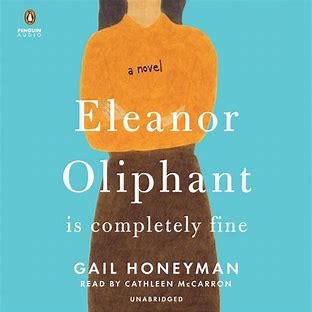
I can think of several novels that use the trauma plot to great effect without diminishing their characters. Eleanor Oliphant is Completely Fine by Gail Honeyman and Muriel Barbery’s The Elegance of the Hedgehog (originally in French) have female protagonists whose traumatic pasts help to explain the defensive sharp wit and quirkiness of these rounded characters. Kazuo Ishiguro effectively deals with trauma in a few of his novels, and in An Artist of the Floating World, the denial of one character’s traumatic memories is used to symbolise the collective amnesia of post-war Japan.

Sehgal’s piece is also worth a read for what she has to say about the ubiquity of trauma in our present-day cultural scripts, offering studies and views counter to popular thought. Like Sehgal, I find it intriguing that our society seems to have a fascination with trauma. Is this part of a victim-centric wave of thought and policy (those much-debated ‘safe spaces’) or have we become more sympathetic and able to discuss traumatic experiences that our ancestors preferred to conceal?

My Year of Journaling

You might recall the start of 2021, I initiated an experiment in writing in a journal on a daily basis. No more sporadic journal writing in waves. This new regime was to give some rigour to my writing practice. I did stick with it, but a couple of times a month, I found myself too busy to write and just completing the daily exercise with a sentence or two, usually about how busy I was that day.

After 365 journal entries, I have 82 pages filled with a total of 41,225 words. That sounded impressive until I did the maths and realised I only wrote on average 110 words per day. When I was working on books, I kept my momentum by writing 5000 words per week (roughly 750 per day). I console myself with the thought that journaling wasn’t the only writing I did in 2021. There were these blogs, a couple of new essays, two articles for East Anglia Bylines and editorial work on a short story (published in September) and two academic articles (published in June and October).

What was this journal about? As a journal intime, it was about me, my feelings and my ideas for writing. Looking back at the year, the journal entries often referred to Covid and how I was feeling about it, or how the government restrictions, cancelled events and rescheduled flights interrupted my life. Interestingly, the words Covid, pandemic and test(s) didn’t even make the top 100 words on the frequency list – I uploaded the file into a concordancer as geeky linguists like me do. There were, however, a fair share of implicit references to it ‘things being as they are these days.’

Among the highest frequency words from the year of daily journaling had to do with writing itself – write, wrote, writing, blog and article all made regular appearances. Related to this was the word time – that showed up big and bold on a word cloud that I generated of the journal file (see below). These word clouds exclude pronouns and function words (such as determiners and conjunctions).

Word cloud of my 2021 journal

Back to the concordancer, which includes all words in a text, of those 41,000 plus words, the most frequent one was the pronoun I. No surprise there as journals are home of the Narrative I, which is also the Authorial I. As I was writing to me, and most certainly not to anyone else, I felt free to work through writing ideas, including the ridiculous and unpublishable – an exercise of creative muscle-stretching. Above all else, I was free to say what I thought, and the results often surprised me. These deeply private thoughts included affirmations, self-loathing, and the recording and interpreting of dreams. The act of writing such thoughts has been psychotherapeutic to say the least.

For these reasons, I’m continuing in 2022 with daily journaling, and I can highly recommend it – and not just for people who write.

Meritocracy: the self and the social

While I’ve read some fine books in 2021, my favourite this year has to be Michael Sandel’s The Tyranny of Merit. Central to this book is the idea that thinking we live in a meritocracy – an idea much-used by politicians – has created a false sense of deserving and has alienated the unsuccessful. Sandel points out that many who have not received the rewards of their hard work, in particular those who have been most effected by the economic crises of recent decades, blame their governments and/or immigrants, giving rise to populists’ movements in democracies such as the UK and America. Reading this book made me re-examine my own thinking on meritocracy and how it has changed over the years.

When I was a child, I believed that if I tried really hard at something I would reach my goals. Watching Jimmy Stewart films and being told by teachers and parents that anything was possible if you worked for it, I was a product of my culture. Yet, I knew even then that there were limits. I was never going to be Miss America (because I didn’t have the looks), nor was I going to be a professional baseball player (because I was a girl). By the time I was a teenager in the 70s, the women’s lib movement made me all too aware that adult life was not played on a level field and that if I succeeded at anything, I would be paid less than my male counterparts.  

While the bubble was deflating, there was still enough air in it for me to believe that hard work and ambition would have their rewards. Living in predominately white, working and lower-middle class America, believing in meritocracy was a default position. On top of that, I was caught up in the wave of aspirational coaching and new age spirituality espousing the notion that positive thinking yielded positive results. My reading list in those days featured self-help gurus Wayne Dyer and Louise Hay. It was all about self-improvement – it was all about me, me, me…

Although I found such thoughts empowering, there was a flipside to all of this: that failure was something I projected on to the situation. I would never blame a government or social structures – that seemed a sign of weakness, blaming others as a child would. By my mid-twenties, I easily blamed myself for the jobs I didn’t get, the publications not realized and for times of being negatively targeted by family members or colleagues. Likewise, when I did achieve and accomplish something I owed it to myself (and sometimes luck). I was being rewarded for my labours and for jumping over obstacles. It was still all about me, me, me…

Over the years, the more I talked to friends, the more books I read in politics and sociolinguistics, the more films and stage plays I saw, the more my thinking included how the power of social structures, the media, advertising and popular culture, along with money of course, dictates who achieves and who does not. Sandel’s book deconstructs our so-called meritocracy in a similar way. I was particularly pleased to see how he uses corpus linguistics to illustrate points on language used by politicians and advertisers to sell the idea that we live in or could live in a meritocracy if we vote a certain way or do certain things.

But Sandel has done more than just validate my own thinking. He has made me aware of the judgements I have made in recent years about the less educated, noting how they tended to vote more for Brexit and Trump. Sandel points out that a university degree is on the one hand not always given to the smartest or most deserving and is on the other hand an entrée to the jobs our society places more value on. He also looks at education in the climate change debate, again making me think differently. Politicians on America’s far right who are climate change deniers are just as educated as those who believe that climate change is real and human made. Both sides of the argument have used their schooling and analytical skills to justify beliefs they already had.

As 2021 winds down, my thanks to Michael Sandel.

Michael Sandel