Meritocracy: the self and the social

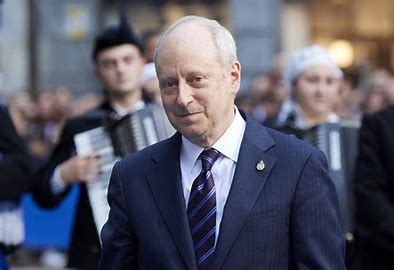
While I’ve read some fine books in 2021, my favourite this year has to be Michael Sandel’s The Tyranny of Merit. Central to this book is the idea that thinking we live in a meritocracy – an idea much-used by politicians – has created a false sense of deserving and has alienated the unsuccessful. Sandel points out that many who have not received the rewards of their hard work, in particular those who have been most effected by the economic crises of recent decades, blame their governments and/or immigrants, giving rise to populists’ movements in democracies such as the UK and America. Reading this book made me re-examine my own thinking on meritocracy and how it has changed over the years.

When I was a child, I believed that if I tried really hard at something I would reach my goals. Watching Jimmy Stewart films and being told by teachers and parents that anything was possible if you worked for it, I was a product of my culture. Yet, I knew even then that there were limits. I was never going to be Miss America (because I didn’t have the looks), nor was I going to be a professional baseball player (because I was a girl). By the time I was a teenager in the 70s, the women’s lib movement made me all too aware that adult life was not played on a level field and that if I succeeded at anything, I would be paid less than my male counterparts.  

While the bubble was deflating, there was still enough air in it for me to believe that hard work and ambition would have their rewards. Living in predominately white, working and lower-middle class America, believing in meritocracy was a default position. On top of that, I was caught up in the wave of aspirational coaching and new age spirituality espousing the notion that positive thinking yielded positive results. My reading list in those days featured self-help gurus Wayne Dyer and Louise Hay. It was all about self-improvement – it was all about me, me, me…

Although I found such thoughts empowering, there was a flipside to all of this: that failure was something I projected on to the situation. I would never blame a government or social structures – that seemed a sign of weakness, blaming others as a child would. By my mid-twenties, I easily blamed myself for the jobs I didn’t get, the publications not realized and for times of being negatively targeted by family members or colleagues. Likewise, when I did achieve and accomplish something I owed it to myself (and sometimes luck). I was being rewarded for my labours and for jumping over obstacles. It was still all about me, me, me…

Over the years, the more I talked to friends, the more books I read in politics and sociolinguistics, the more films and stage plays I saw, the more my thinking included how the power of social structures, the media, advertising and popular culture, along with money of course, dictates who achieves and who does not. Sandel’s book deconstructs our so-called meritocracy in a similar way. I was particularly pleased to see how he uses corpus linguistics to illustrate points on language used by politicians and advertisers to sell the idea that we live in or could live in a meritocracy if we vote a certain way or do certain things.

But Sandel has done more than just validate my own thinking. He has made me aware of the judgements I have made in recent years about the less educated, noting how they tended to vote more for Brexit and Trump. Sandel points out that a university degree is on the one hand not always given to the smartest or most deserving and is on the other hand an entrée to the jobs our society places more value on. He also looks at education in the climate change debate, again making me think differently. Politicians on America’s far right who are climate change deniers are just as educated as those who believe that climate change is real and human made. Both sides of the argument have used their schooling and analytical skills to justify beliefs they already had.

As 2021 winds down, my thanks to Michael Sandel.

Michael Sandel

Notes on Trauma

I keep on bumping into the topic of trauma. Our society, literature and art, at least in the West, are dealing with this topic more openly and more creatively than they did in the not too distant past. So far, I just have some disconnected notes.

  • In the novel American Dirt by Jeanine Cummins, a woman and her eight-year-old child escape from the brutal massacre carried out by a Mexican cartel of sixteen members of her family– that’s the opening chapter, no spoilers here. As mother and son flee this tragedy, they carry their trauma with them. The narrator, at this point focalized on the mother notes: ‘Trauma waits for stillness. Lydia feels like a cracked egg, and she doesn’t know if she’s the shell or the yolk or the white. She is scrambled.’ 
  • A CfP (that’s ‘call for papers’ in academic speak) came up for an article collection on the theme of extremities, not to be confused with extremism, following on from the work of Catherine Malabou on neuro-literature and the recent wave of ‘extreme’ texts in literature. In brief neuro-literature is something of a template for literary and art criticism that is post-deconstructive (sorry Derrida) and post-sociocultural interpretations, drawing from the sciences, including neurobiology. ‘Extreme’ texts seem to have many definitions, but I divide them simply into structurally experimental and/or radical in theme. On the CfP’s list of potential topics within the idea of extremities is ‘post-trauma, witnessing, silencing and reorientation in literature.’ This makes me wonder if trauma reaches an extreme, an outer edge, of human experience.
  • Some excellent novels in recent years have dealt with the topic of rape, how it traumatises as it shames and alienates the victim and the victim’s family. A melange of emotions with an undercurrent of misogyny and patriarchy. I mentioned in a recent blog, Girl by Edna O’Brien, which is about the abducted girls in Burkina Faso. To this I add, We Were the Mulvaneys by Joyce Carol Oates, which is set in the US and shows how the rape of one family member can over time change the lives of the entire family.
  • The Body Keeps the Score by Bessel van der Kolk has been referred to as the ‘trauma bible.’ Van der Kolk, a trauma specialist, recounts his decades of work with trauma survivors, showing how this is not only a psychological condition and phenomenon, but also a physical one that can alter the body’s health. It was on the New York Times bestseller list. I think says something about the time we are living in.
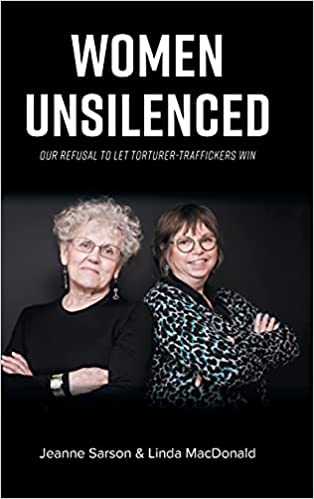
  • A zoom talk by Women’s Human Rights Council featured Jeanne Sarson and Linda Macdonald, who were promoting their book Women Unsilenced. The book is about the male torture of women in domestic violence and in slave trafficking. The authors mentioned how they are not referring to PTSD (post-traumatic stress disorder) in the usual way, for them it is PTSR. The R is for response – we respond, we naturally react to stress and trauma. To call it a ‘disorder’ further victimizes the victim. I agree with that.

It’s a humourless topic, which makes it hard to write about. It might take some journal entries and blogs to get to grips with this. But the topic is also ubiquitous, and writing about it is crucial.