Il Duce and the Donald

It’s easy to see how much these two men are alike, down to their speeches made through puckered lips and puffed-up chests. But I’m going to stick my neck out and say how much these two are different. After recently reading Antonio Scuratti’s M: Man of the Century, I look at Mussolini in a different way and as less of a cardboard cutout. This first history-come-novel  of a trilogy depicts Mussolini’s early political life from the time of post First World War Italy until he gained power in 1924.

Unlike Tr*mp, Mussolini was not born gagging on a silver spoon. His father was a blacksmith and his mother a schoolteacher. Mussolini trained to be a teacher but worked for a living as the editor of Il Popolo d’Italia, a newspaper for the fasci movement. Mussolini also served in his country’s armed forces during WWI and was wounded. Not so with the former US president, who avoided the draft with student deferments and finally, when those ran out, a medical exemption. Tr*mp’s CV consists of basically one thing – businessperson, a position obtained with properties inherited from his father.

Unlike Tr*mp, Mussolini knew politics and the ways of government. He was active in the Socialist Party before defecting with others to create their own movement over the issue of pacifism during WWI. Mussolini supported workers’ rights while supporting the industrialists, who were trying to reshape and capitalise off the country left bloodied and poor after the war, with little help from their allies America, France and Britain. Tr*mp’s political career was a spin-off from his media personality and self-publicity as a ‘successful’ businessperson.

While both men, once they achieved political power, encouraged and denounced violence in the same breath, Mussolini’s hands were dripping in blood. Metaphorically, of course, since he sent out others to do his dirty work. He specifically ordered the killing of his enemies, including the leader of the socialist party. Some would argue that the orange one is responsible for the deaths on 6 January 2021 at the Capitol, the deaths of anti-racists activists during his term in office and even the deaths of thousands of Americas due to his reckless response as president to the Covid pandemic. But all these examples are about responsibility through verbal coercion and propagandizing.

When it comes to public speaking, while the two men may have presented themselves in similar fashions and to my bewilderment been able to stir up a crowd, the prose of their speeches are starkly different. A skilled writer, Mussolini could craft his language and make logical arguments. And unlike Tr*mp, he never attacked his opponents with schoolchild slurs and name calling, which I’m not going to reprint here as I have reached my saturation point. Mussolini’s discourse would typically pick apart his rivals’ arguments and then tip the rhetorical balance by making threats of  violence: “The Socialists ask what is our program? Our program is to smash the heads of the Socialists.”

While both men attacked democracy, it’s worth considering the nuanced differences. Mussolini called democracy a ‘fallacy’ because people do not know what they want and because  ‘democracy is talking itself to death.’ Tr*mp said that if he lost the 2020 election, it proved that democracy was an ‘illusion’ because ‘the system is rigged’ and ‘everyone knows it.’

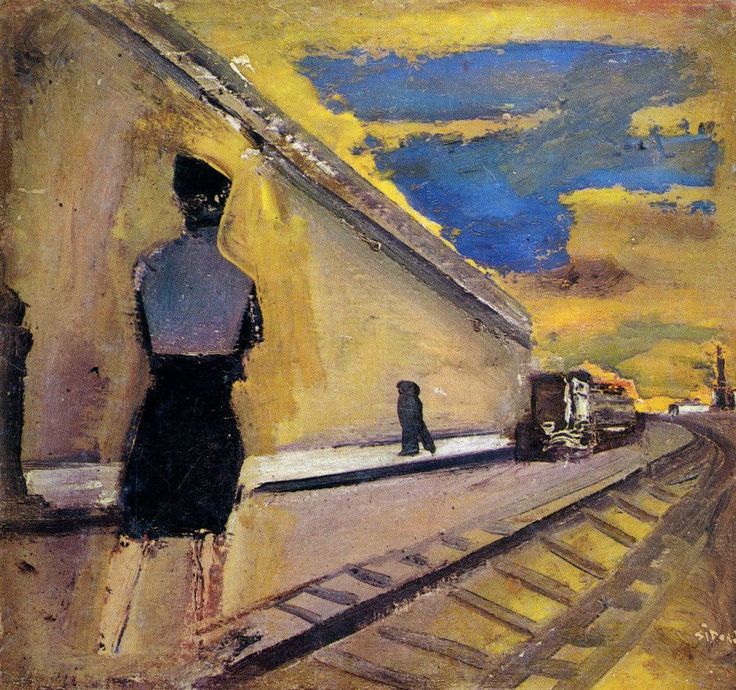
One final noteworthy difference, Mussolini’s fascism, unlike the MAGA campaign, spawned an art movement. Il Novecento rejected the avant garde of the early 20th century in favour of more traditional large landscapes and cityscapes, reflecting the fascists’ ideology. From Scuratti’s book, I’ve learned that this movement was founded in part by one of Mussolini’s many mistresses. Whatever the motivations and manipulations of Il Novecento, Tr*mp and his MAGA movement are in a word artless.

Painting by Mario Sironi of Il Novecento

Pointing out the differences between these two leaders not only highlights the unfitness of the former US president for any position of governmental leadership, but it makes me think that fascism is an overused term that like so many political and ideological words, changes its meaning over time. Yet, the essence of it remains as noted in a recent interview with writer Naomi Klein. On the topic of fascism, she said ‘I’m scared whenever we get whipped up in a mob and don’t think for ourselves. That’s how the updated far-right is drawing people in. It’s extremely dangerous.’

What else I’ve been reading

This has turned out to be a summer of big fat reads, with the Antonio Scuratti book weighing it at 750+ small print pages. To counter this, two excellent novellas have capped off the summer. I’ve finally gotten around to reading something by the Belgium writer Amélie Nothomb. Stupeur et Tremblement (avail. in English) is a drole, at times laugh-aloud funny, story of a young Belgium woman’s experience working for a Japanese company. The expected East meets West clashes are there, but so too is a humorous take on workplace bullying (I know, it can be serious and soul-destroying).

The other lightweight but not intellectually so was Thomas Mann’s classic Death in Venice. I first read it decades ago at university. Having since seen the film with Dirk Bogarde, I could only envisage his twinkling brown eyes  as those of Aschenbach. The older me also appreciated the references to the paintings of Caspar David Friedrich (who wasn’t on my radar until 5 years ago), adding more meaning to the book’s meditation on aestheticism.

UK Elections 2024 – My Winners and Losers

I had no intention on writing about the results of the election, but I find it hard not to after waking up this morning only to discover my David in front of the tele in his robe, coffee cup in hand. Having been awake since 2 am and finding his brain buzzing with exit poll results, he decided to exorcise the cerebral demons by watching the true results unfurl. Since 6 am my earworms have been repeating results and analyses. To shake these strings of words out of my head, I’m writing.

You, dear reader, know by now that this was a landslide victory for the Labour party with excellent results for some of the smaller, less funded parties, like the Liberal Democrats, the Greens and dare I admit it Reform UK (Nigel Farage’s party). Rather than revisit these themes, I’ll share with you what I am left thinking about, the real winners and losers.

Winners:

The Remainers, those of us who wanted to stay in the EU. Our new PM is a Remainer, and I recall having the pleasure of hearing him speak at one of the many anti-Brexit rallies I attended. Of course, he won’t put us back in the EU as that would involve another referendum, and the country is still dabbing the wounds from participating in the last one. But Starmer has already spoken about closer trade ties to the EU, and that is a key first step, economically and spiritually.

Women are also winners. The number of women MPs has gone up from 226 to 263, which is 40%. Ideally, it ought to be 50%, but I’ll take it. It’s also likely that Rachel Reeves will become Britain’s first ever female Chancellor of the Exchequer. For my US readers, this is the senior government minister in charge of all things economic and financial.

Losers:

As always, the people who didn’t vote. Voter turnout was only 60%, the lowest since 1885.

I would love to say that the far-right populists were the big losers, but they’re still kicking in the guise of Reform UK. They did take a beating though, with many high-profile far-right Conservatives losing their seats.

Finally, the media coverage of the election campaign deserves a wooden spoon. Sound bites and click-bait culture reduced candidates to automatons repeating well-chosen scripted phrases with little substance. The media’s attempt at ‘balanced coverage’ translated into one party’s negative story having to be offset by the other party’s negative story, even if the later had to be created through exaggeration of loose facts.

Whew. I hope this has killed the earworms. Time to check up on David to see if he’s still awake.

What I’ve been reading

After hearing Irish writer Anne Enright being interviewed on This Cultural Life (BBC Sounds podcast), I ordered from the library her latest book, The Wren, The Wren. At one level this is a story about three generations of resilient women, exploring the complexities of their relationships to each other along with the themes of love and abandonment. The underlying catalyst that shapes these relationships is a renowned poet, Phil McDaragh. He was married to the first generation of these women. When Phil leaves his family for a new life, and in time for a new wife, in America, his daughter Carmel tries to reconcile the beautiful love poetry he wrote to her mother with his betrayal. Carmel’s daughter, Nell, who was born after her grandfather’s death, is also under the magical spell of Phil’s poetry and uses it discover her own direction in life and the terms of her relationship with her mother. All of this is told in prose and poetry rich in wit and Irish vernacular. It’s worth mentioning that while working on this novel, Enright had some of Phil McDaragh’s poems accepted for publication using his name as her pseudonym.

Elections, elections, everywhere

Thanks to President Macron calling a snap election of the French National Assembly, this year, the country of my birth and my two adopted countries, where I hold citizenship in one and residency in the other, are all going to the polls in national elections. In the case of France, Macron will stay president, but his Prime Minister and most ministers in the National Assembly could be from another party. With a power share arrangement like this, we can expect legislative gridlock, more political farce (if nothing else, this election has been entertaining) and what the French do best – protesting in the streets.

The British are less likely to be protesting after this coming election, where it is highly likely Labour will win with a crushing majority. After 14 years of Conservative governments, which drained our social services and gave us the Brexit debacle and four bungling jingoistic Prime Ministers in five years, many citizens of all political colours are going to breathe better knowing that this era of populism is winding down. Whatever the Labour Leader Keir Starmer can achieve or whatever he fails at, his competence and lack of bluster will make him a welcomed change.

I still hold voting rights in the US, where I have not lived in over thirty years. Yet, given America’s place in the world, I believe it’s important to participate in preventing a criminal felon, indicted sexual assailant and fraudster from returning to the White House. I fear that if he keeps to his campaign promises, he will close branches of government which serve to protect democratic processes, repeal environmental legislation (as he did in his first term) and turn America into an international joke – the joke that isn’t funny when it joins other pariah states bent on hatred and war.

A few points of note: 1) France, the place where I spend most of my time, is the place where I cannot vote. 2) I would be able to vote in French local elections if Britain had not left the EU, and it was the travel rights lost to Brexit that made me seek French residency in the first place. In other words, due to Brexit, I have French residency, but due to Brexit, my rights as a resident are restricted. 3) This morning, I dropped into the post box my UK Postal Ballot at the same time as my bowel cancer screening sample.

What I’ve been reading

By sheer coincidence, that is, the lottery of the public library’s reservation system, the last two novels I’ve read were both set in marshes. The international best-seller Where the Crawdads Sing by Delia Owens tells the story of a marsh girl, living in America’s south from the 50s to the 70s. Here the marsh is pivotal to the storyline and the development of themes around the environment and what Edward Said would call ‘othering.’ In Rachel Cusk’s Second Place, the marsh serves as a gentle backdrop for a family story suffused in art, psychology and philosophy. While both novels were engaging with well-crafted plots and characters, reading Cusk’s prose was a deeper, more edifying experience.

Online, I’ve been reading poems by the post-war avant-garde poet Amelia Rosselli, who was trilingual Italian, French and English. Her father and uncle were assassinated by the fascists when she was a child, and her poetry often reflects on the personal impact of fascism and social injustice. This brings me back to this election year and a poem by Rosselli from her collection War Variations with its references to Mussolini and Hitler:

‘The night-wind departed and dreamt grandiose things: I rhymed within my powers and took part in the void. The spinal column of your sins harangued the crowd: the train ground to a halt and it was within its talk that truth paused. In the encounter with the fairytale resided outlaws.’

I’m struck in particular by the line ‘it was within its talk that truth paused.’ Both Mussolini and Hitler were elected to power.

Amelia Rosselli (1930-1996)

Journalists in the firing line

You would be forgiven if you assumed that this blog is about intrepid war reporters donning padded vests and helmets. Instead, I’m looking at another type of journalist. The marking of World Press Freedom Day last month brought to my attention the targeting and suppression of environmental journalists.

UNESCO reports that since 2010 at least 44 journalists investigating environmental issues were killed, with only five resulting in convictions. UNESCO also observed the growing number of journalists and news outlets reporting on environmental issues that have been the victims of targeted violence, online harassment, detention and legal attacks. Just looking at Afghanistan, according to the Committee to Protect Journalists, since 2004 more environmental journalists have been killed there than those who died covering the country’s military conflicts.

To no surprise the top issue that makes journalists targets is climate change. The power of the fossil fuel industries and their links to governments are certainly one of the driving forces behind these attacks. So too – and equally worrying – is the growing polemic around this issue that makes ordinary people, often hiding behind the anonymity of online platforms, hostile to environmental activists and journalists.

I dabbled in environmental journalism but felt a bit of a fraud because I don’t hold a degree in life sciences or environmental studies. Even though my articles were more political than scientific, I never thought I was doing anything courageous or risky by writing them. Yet, I wouldn’t want to be caught out underestimating the power of those who disagree with my views or prefer the public to be ignorant of the evidence, scientific or experienced. These days I’ve taken up the safer option of nature writing with its indirect pleas to polluters.

The importance of protecting environmental journalism is summed up on the UNESCO website:

‘The climate and biodiversity crisis are not only affecting the environment and ecosystems but also the lives of billions of people around the world. Their stories of upheaval and loss deserve to be known and shared. They are not always pretty to watch. They can even be disturbing. But it’s only by knowing that action is possible. Exposing the crisis is the first step to solving it.’

What I’ve been reading

John Boyne’s The House of Special Purpose is an enjoyable read, though lacking the depth and irony of his The Boy in the Stripe Pyjamas. The story is set in Russia at the time of the revolution and in London over the years that follow until the late twentieth century. It is I’m afraid another fictional account of the massacre of the Romanov’s and the fate of Princess Anatasia, who many believe escaped unharmed and lived under an alias for the rest of her live. Given the horrible deaths of the Romanovs, the colourful character of Rasputin and the intrigue over Anatasia, this is a story that keeps on giving. In Boyne’s version, the human story is in the foreground and makes this a worthy read even if the Romanov saga is starting to wear.

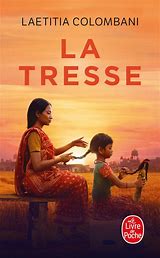
La Tresse (The Braid) by Laetitia Colombani was recommended to me by one of my French language partners. It’s a thin middlebrow book that has been enormously popular in France and now all over the world in translation. It recounts the lives of three women who, as you can guess, like the strands of a braid overlap into a single unit. How this narrative braid is formed is what keeps the pages turning. Each of the three women struggles against the hand they’ve been dealt. Smita is an untouchable in India, where she cleans the village latrines and endeavours at all costs for a different life for her daughter. Giulia lives in Italy and works at her father’s wig factory. Her troubles arise when her father falls into a coma, leaving young Giulia to discover that the family is on the verge of bankruptcy and could lose their home and factory. The third woman, Sarah, is a high-profile lawyer and single mother in Canada who is struck down by illness and the ruthlessness of her colleagues too eager to capitalise from it. These weighty topics are recounted in prose interspersed with poetry, language brimming with metaphors and motifs that gently creep up on the reader.

My non-fiction reading these days has been monopolised by newspaper and magazine commentaries on the verdict against a former US president, now a felon, who is prohibited from entering the UK to play golf on his own Scottish golf course. Reminding readers of the horrors of the Tr*mp years – including his attacks on the press – and what this verdict might yield in the not-too-distant future, worth reading are David Remnick in the New Yorker and Simon Tisdall in The Observer. Of course, both are expressing views I share.

The falling centre

I’ve been absorbed in Jon Ronson’s BBC podcast, Things Fell Apart, about the origins of the culture wars going on in the West, especially in the US. It uncovers misunderstandings, misrepresentations and conflations that have morphed into the polemics of our times.

Ronson was recently interviewed in the New Yorker where it was noted that the title of the podcast comes from the W.B. Yeats poem ‘The Second Coming.’ When questioned about the centre crumbling and if he was trying to achieve a centre, his answer included: ‘For me, “things fall apart, the centre cannot hold”—it’s a sort of human centre of being curious and trying to understand people’s perspective and look for the nuances. It’s not the centre that, to be honest, the centrists talk about.’

This resonated with me as in recent years I’ve struggled to call myself a left-of-centre person. Politically, as the right becomes the far-right, the centre is tilting towards the right. Socially, what was once left-leaning liberalism has edged towards the acceptable centre. I don’t know what left or centre are anymore. Ronson’s humanist and less political take on this is a far more comfortable space for me to inhabit. It can also be found in Buddhism and in the self-therapy promoted by Judson Brewer (who helps people overcome anxiety and addiction). Both are integral to my daily life – my ‘practices’ as I call them. Yet, until I read Ronson’s comments, I wouldn’t have seen them as a kind of centrism – but now I do.

What I’ve been reading

Mostly, things Italian, though not intended to be a thematic spell of reading. Filling a gap in my George Elliot education, I thought I’d give Romola a go. It’s not her best work, written when she was steeped in philosophy and translating Spinoza, the novel comes off as a vehicle for ideas and debates rather than the evolving narrative and character study I would expect. It’s set in 15th century Florence and has been praised for its historical detail. Readers might also find it enjoyable in a nerdy way for its use of Latin and Italian.

A much better read was Elena Ferrante’s The Lying Life of Adults (translated into English by Ann Goldstein). Set in Naples and its environs like most of Ferrante’s work, the protagonist is a teenage girl dealing with her parents’ divorce, interfamilial feuds and the onset of womanhood. It’s full of memorable and gently humorous characters and renders deception into a truly creative act.

This Italian journey ended with Robert Harris’s Conclave, set in the Vatican during the election of a new pope. It has the intrigue that one would expect from Harris, along with his attention to liturgical detail and in this case a seasoning of Latin, culminating in a cracking good ending (I’ll stop myself there as this is a non-spoiler zone).

To close, and having nothing to do with Italy, the death of N. Scott Momaday last week has had me reading his poems again. Masterful.

Reading around the war in Gaza

With all the news coverage of the situation in Israel, I hadn’t planned to read any books on the topic any time soon. When taking in such horrible and complex news, I tend to mix reportage with commentary, newsprint with television and podcasts, trying to make sense of it and to distinguish between factoids and misinformation. All the while, I’m too aware that the unfolding humanitarian crisis is being presented in ways intended to tug on heartstrings and stir up anger. I thought I was getting close to my news saturation point with this war.

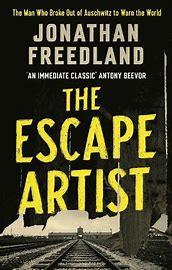
But then, I realised that two books I happen to be reading these days are related to this conflict. Both books draw from personal accounts of well-known and documented events of the twentieth century. One is The Escape Artist: The Man Who Broke Out of Auschwitz to Warn the World by Jonathan Freedland, a non-fiction book I mentioned earlier this year, having first heard the author talk about it in an interview. The other book, Le Pays des Autres (The Country of Others), is Leila Slimani’s reimagining of the lives of her French grandmother, Mathilde, and Moroccan grandfather, Amine, who settled in his native Morocco post-WWII during the fight for independence from France.

These stories overlap during the Second World War, presented in Slimani’s book in flashbacks of Amine fighting for the French colonisers when he met and fell in love with Mathilde. The Middle East as we know it today was geopolitically constructed by western powers of the past two centuries through force and exploitation. In the aftermath of WWII, Muslim cultures revolting against the West and their allies reverberated across North African to the eastern Mediterranean. As Slimani taps into this resentment and deep-seated hatred of the French in post-war Morocco, it’s hard to not make parallels with the contemporaneous creation of the state of Israel and the consequences of years of deadly conflicts.

The first half of The Escape Artist is set in Auschwitz during the war while the mass murder of Jews was taking place and follows the story of Walter, a Slovakian Jew, who was deported to a labour camp at the age of 18 and miraculously escaped two years later with a fellow Slovakian prisoner. These escapees kept mental records and described what they witnessed in forensic detail to Jewish leaders in Slovakia. The second half of the book recounts the difficulties in getting governments across the world to act on this Auschwitz Report before thousands more were killed, and the story continues with Walter’s troubled personal and political life after the war. Such events related to the war have been referred to throughout this most recent war in Israel.

Both books present the complexities of ethic bias and hatred, highlighting the sense of otherness with an awareness of inexplicable contradictions. Even though Amine has married a French woman and appears to harbour a secret esteem for the French, he becomes violent with rage when he learns that his sister is having a relationship with a Frenchman. By taking the narrative to the years following Walter’s escape, Freedland’s book covers the stories of Jewish leaders who collaborated with the Nazis to save their own families and who after the war – with nothing to personally gain – became character witnesses for Nazis that were put on trial. When the current Israeli conflict is looked back on, I suspect we’ll find similar sentiments and anomalies.

While I hadn’t intended on reading any more about the Gaza conflict beyond the daily news reports and their commentaries, it seems I have. This makes me even more aware of colonialism and the Second World War being as much about the present as they are about the past.

My Week in Anger

‘She’s gone,’ David said to me this morning as I was unpacking the groceries. I knew who he meant. Several days ago the British Home Secretary Suella Braverman had made more of her notorious offensive, divisive and ill-informed comments. This time, her targets were the pro-Palestinian, also known as pro-ceasefire,  protesters who were planning a march in London on the same day as the Remembrance Day ceremonial at the Cenotaph (for USians – this is Veterans Day and every year, there’s a marching band and a minute of silence at 11.00 around the memorial). Braverman referred to the protest as a ‘hate march,’ strangely comparing it to ‘terrorists’ marches’ once seen in Northern Ireland. The Metropolitan Police had already authorised the march to take place, to which Braverman added that the police were playing favourites. Clearly, she’s borrowing from the Tr*mp handbook.  First of all, logistics – the Armistice minute of silence was to be held far from the peace march, which was heading towards the US Embassy clear on the other side of London.  Braverman was using populist-style misinformation to create an enemy. Secondly, as Home Secretary, Braverman should not be criticising an institution (the MET) which is part of the government. That too is what populists do – make the state an enemy of the people.

Some five days have passed since her comments were published in an article she authored for The Times. While Braverman’s words received a lot of condemnation, they also sparked far-right counter protesters to show up at the march.  The few arrests made were mostly of the far-right counter protesters who were spewing out hate and acting violently. Finally, this morning the Prime Minister has sacked his Home Secretary. ‘Yessss,’ I said to David with a fist pump. Braverman’s gone. A reason to rejoice? Not really. I recall Boris Johnson having to resign as a disastrous Foreign Secretary only to come back as an even worse Prime Minister.

Is anger a wasted emotion? I grew up thinking that it was pointless, and as a female I was criticised any time I displayed so much as an ounce of it. These days I think that some anger is useful. It ignites people into action against the many wrongs in our societies, such as protesting against the military-led humanitarian crisis in Gaza.

Another source of anger in recent days has come from the latest polling in America. We’ve all known for a while that Tr*mp is the likely Republican nominee, but now it looks like he stands a fair chance of being president again. I don’t have to spell out what this could mean. I’m angry at Americans who have fallen for this cult figure and at the media for giving him excessive airtime and column inches. I’m angry too at Americans who despise the orange man, know that he is unfit for public office, but vote for him because they’ve always voted Republican.

Underneath anger one often finds fear. Some of the anger I feel towards the likes of Braverman, Tr*mp and their ilk is because I see them as dangerous. The right wing of the Conservative party seems hell bent on destroying some of our democratic institutions – our membership in the EU, the courts, the police and the civil service. Tr*mp and co have attacked the FBI,CIA, Justice Department and other offices of government that, though flawed, keep democracies functioning.

I’ve just learned that Suella Braverman’s replacement is James Cleverly, who was Foreign Secretary. The new Foreign Secretary is the former PM David Cameron, the same PM who engineered the European Referendum that gave us Brexit and who departed in disgrace. Since Cameron is no longer an elected member of the House of Commons, he has obtained this position through being a member of the House of Lords. That is, King Charles has just made him a Baron. Last week’s tragedy has become this week’s farce.

Talking Terrorism

Are Hamas terrorists? The BBC and its presenters have taken a lot of flack this week for not saying so. The BBC does report, however, that the US and Britain have classified Hamas as a ‘terrorist organisation.’ But nearly everyone reporting in the media, including the BBC, agrees that the acts of the weekend of 7 October that were committed by Hamas were terrorist acts. This begs the question: Can you commit terrorist acts and not be a terrorist?

Of course, you can if you are a government at war. We have seen this most recently with the Russian invasion of Ukraine. Just this week, the United Nations published the findings of its investigation into Russian aggression in Ukraine showing that ‘Russian authorities have committed the war crimes of wilful killing, torture, rape and other sexual violence and the deportation of children to the Russian Federation.’ The same atrocities committed by a non-governmental body would be referred to as terrorism.

Writing in Prospect this week, Conor Gearty, an expert in human rights law, takes the position that Hamas is ‘too governmental’ to be called a terrorist group. Gearty explains:

‘Hamas are not, however, a straightforward terrorist group, senselessly violent though these attacks may have been. They won the most recent election held across Palestine, in 2006, and have been in control of Gaza since 2007. Hamas may be called a terrorist group but if so, they are a very governmental sort of terrorist. This authority in Gaza gives them more options than mere violence, and though Israel and its supporters may wish it to be so, their violence does not appear (in the past at least) to have destroyed their wider support in the community. Here they more resemble Hezbollah, Haganah (from Israel’s own “terrorist” past), the South African ANC and the IRA than they do al-Qaeda or the Red Army Faction from 1970s Germany.’

Others agree that Hamas should not be called terrorists, but for a different reason altogether. Referring to Hamas as terrorists can be viewed as anti-muslim (my spell check has this as anti-muslimism). In so many contexts, the word terrorist has been weaponised.

Plenty of people would object to these opinions, saying to not call Hamas a terrorist organisation is antisemitic. I found examples of this in the comments to Gearty’s article. Taking a different stance outside of religion, I’ve heard politicians and pundits in recent days arguing that calling Hamas terrorists is a way of distinguishing Hamas from the innocent Palestinians caught in the crossfire or deliberately being used as human shields.

Pointing out differences in the uses of words and their connotations isn’t just an academic exercise. Words matter. I appreciate that the BBC is trying to show its objectivity in reporting these events, but this is near impossible given the long history of wars and talk of genocide and hate coming from all corners.

I’m afraid that in the weeks and months ahead, atrocities are going to be committed on both sides of this conflict whether they are called terrorism or war crimes.

The controversial and horrific air attack on a hospital in Gaza.

Spider Women

Why is Spiderman a cool superhero when spider women are calculating villains or seductresses?

I’ve been reading Lady Brenda Hale’s memoir Spider Woman: A Life – by the former President of the Supreme Court. The reference to spider woman is a marketing ploy to remind the public that Lady Hale, wearing a spider brooch, was the president of the supreme court who ruled that PM Boris Johnson’s Prorogation of Parliament, effectively seizing debate on the Brexit Withdrawal Agreement, was unlawful. That is, the Supreme Court caught Johnson out, saying that his political manoeuvrings were illegal and that he had misinformed (or lied) to the Queen when he told her it was legal. The metaphor was obvious. Lady Hale was the spider woman whose legal web ensnared Johnson, who was the fly or other small annoying insect. 

Hale’s memoir doesn’t portray her as a perfect human being, but nor is she a villainous or calculating character. Seduction never enters the narrative. Quite the opposite – like so many women in the professions, she worked hard and under the haze of imposture syndrome. Being fascinated with history and the role of constitutional law in forming of the British government, she knew she wanted to study law. Hale gained a place at Cambridge when male students outnumbered females six to one.

Noticing the lack of women attorneys and barristers in the Family Court, this spider woman went into family law early in her career. She makes this observation:

“… it seemed to me that I had spent most of my time oppressing women, specifically mothers: sending them back around the world to the country from which they had escaped, bringing their children with them without permission; or taking their children away from them and into the care of the local authority, often to be adopted later; or making them encourage and facilitate their reluctant children’s visits to their fathers. Justified oppression, maybe, but oppression certainly.”

Some spider qualities perhaps, but too cerebral and reflexive to be a superhero.

Other spider women have emerged from performance art (often of the cabaret variety), fantasy erotica and literature. ‘The Tale of the Spiderwoman’ comes to mind. This poem by Merlie M. Alunan anthropomorphises the spider and seems to turn her into a woman:

…I myself daily grow smaller and smaller until

almost invisible. Fuzz on my skin, my eyes

multiply a hundredfold in this darkness

and split the light in thousand prisms—

and now I can see what’s before and after.

I become light as air, my sweetness distils

to fatal potency. I practice a patience

vaster than ten worlds. I wait…

When your shadow crosses my door,

please enter without fear.

But remember not to ask where I’d been

or what had fed me in this empty room

curtained with fine webs of silk.

Ignore the seethe of all my memories.

Come, take my hand.

I am human at your touch.

 (Full poem at http://poieinkaiprattein.org/poetry/merlie-m-alunan/tale-of-the-spiderwoman—poems-by-merlie-m-alunan/)

Of course, I cannot think about spider women without mentioning one of my favourite novels of all time, Manuel Puig’s The Kiss of the Spider Woman. Molina, in prison for corrupting a minor, asks Valentin, the political prisoner, for a kiss before he is paroled. Valentin in turn asks Molina if he’s afraid that he’ll turn into a panther woman – we know that the panther woman kills when she is kissed. But Valentin explains he isn’t the panther woman, but he is the spider woman. The meaning of the spider woman is left metaphorical, ambiguous and multi-layered.

So too is the answer to the question I started with.

The Maaate Campaign and Sexist Language

Barbara Ellen hijacked much of my blog this week with her excellent piece in The Sunday Observer about London Mayor Sadiq Khan’s campaign called Say Maaate to a Mate. The core idea is for men and boys to rebuke other male friends for using sexist language and talking about abusive behaviours that could lead to violence against women and girls. As the campaign website explains, ‘We know it’s not easy to be the one to challenge wrongdoing amongst your friends. That’s what say maaate to a mate is all about.’ 

This type of initiative is just ripe for satire, and I’m sure Ellen and I are not alone in rolling our eyes at it. As Ellen says, which I was going to say, ‘Well intentioned though it clearly is, it all comes across a tad woolly and over-idealised: this idea that, if some guy is making awful remarks, other blokes say “maaate” in a disappointed way and this magically banishes sexism and misogyny from the capital forever. Whaaat?’

Barbara (if I may), allow me to add a couple of points. Firstly, on the campaign website, there’s more guidance on how this airbrush approach to a serious problem works:

‘Mate is a word that needs no introduction. It’s familiar and universal. It can be used as a term of endearment and as a word of warning. This simple word, or a version of it, can be all you need to interrupt when a friend is going too far.’

This reminds me of Nancy Reagan’s anti-drug campaign in the 1980’s. ‘Just Say No’ to drugs was aimed at young people, who duly ignored it. The 1980s witnessed the highest rate of illegal drug use in America in the twentieth century. Like Regan’s ill-targeted campaign, the mayor’s approach to stopping violence against women doesn’t realise how feeble this language sounds in the context of a culture saturated with sexist behaviour and aggressive attitudes towards women. In 80s America, drugs were everywhere, not just on ghetto street corners, but also on public transport, in boardrooms and in bars and restaurants and a fixture of university campuses and high school playgrounds. The same can be said of demeaning and aggressive sexist language spoken to and about women and girls. It operates across class boundaries and can be heard in pubs and sporting events, in offices and classrooms, etc. Worst of all, language targeted against women and girls is pervasive in social media.

This leads me to my second point. Verbal hostility towards women and girls isn’t always so blatant as alcohol-fuelled pub banter or internet trolling. It can be indirect, insipid or give the appearance of even being a compliment. It can be cloaked in humour – and the person who doesn’t find it funny is accused of not understanding the joke. The maaate in these scenarios has plenty of wiggle room.

Barbara Ellen is also on mark when she points out that the funds for this lightweight campaign would have been better spent on policing and resources to help women fleeing domestic violence and for legal support to get convictions against the perpetrators. As that was going to be my closing, I’ll end this rant here and tip my hat to Barbara.