Surviving Political Conventions

While it would be a stretch to say I found the US Democratic convention inspiring,  what is more important is that I – and millions of others – found the Republican convention laughable and ludicrous in its touting of flagrant falsehoods and scientifically improbable promises.

It’s easy to assume that this divide in style between these two political conventions has been brought on by the character of Tr**p, but there has long been some of this distinction between the two parties. Robert Reich, recently wrote in The Guardian: ‘The Democratic party is basically a governing party, organized around developing and implementing public policies. The Republican party has become an attack party, organized around developing and implementing political vitriol. Democrats legislate. Republicans fulminate.’

While I agree with this, the Democrats’ convention replaced a lot of their typical policy speak with some battle talk. This time the Democrats appeared to have followed the advice of Churchill who once said, ‘Never let a good crisis go to waste.’ While I hesitate to call the coronavirus pandemic a ‘good’ crisis, it’s a crisis, which has laid bare the failures of populist-led governments across the world. Many of the speakers at the Democrats’ convention highlighted Tr**p’s disastrous handling of the Covid-19 pandemic. Other crises where brought into the mix, reminding people that this president pulled America out of the Paris Climate agreement and continues to create division through racist immigration policies and support of institutional racism in America’s police forces. True, these points against the Tr**p Party (formerly the Republican Party) have been said countless times before but often embedded in the jokey monologues of Steven Colbert, Seth Meyers and the like or in the sarcasm of news columnists both sides of the Atlantic. It was refreshing to hear these criticisms in measured tones without the laughs (these are serious issues after all) from Democratic politicians and dignitaries, one after the other, showing signs of unity. I was also pleased – and like many breathed a sigh of relief – when it was all over and Joe Biden had not committed any lapsus linguae.

Speaking of language, the Tr**p Party convention produced more than its share of linguistic wonders. Here are just a couple of my favourites. Senator Tim Scott warned that Biden and Harris will turn America into a ‘socialist utopia.’ Clearly the senator doesn’t understand that utopias are good things. Coming from the Greek ou, meaning not, and topos, meaning place, utopia literally means ‘no place’ and by extension, thanks to Sir Thomas More who might be spinning in his sepulchre, means ‘an ideal place.’

In the final speech of the convention, the tweeter in chief accepted his party’s nomination by saying, ‘I profoundly accept this nomination.’ His speech writers must have known that Tr**p, the self-described ‘stable genius,’ could not humbly accept anything. Other high collocates for the word accept, include graciously and gladly, neither of which suits the fiery tongue of this presidential vulgarian. Having thrown out these other words, I imagine the speech writers going for a presidentially serious tone and following a thesaurus thread from serious to deep, ending up at profound. At least they had the grammatical wherewithal to add an –ly to make profound an adverb even if the resulting phrase – like this president – makes little sense.

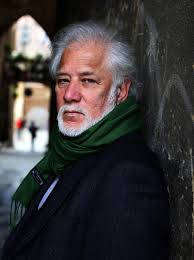
Michael Ondaatje’s Warlight

Having read The English Patient many years ago, I approached Ondaatje’s Warlight with an expectation of escapism, but not in the sense of escaping to mysterious places or futuristic backdrops. Quite the opposite. Warlight is set during the second world war and in the decade or so following it, periods of time much exploited by writers. Living in England, I’ve seen so many war films, series and documentaries on British television, it seems to be one of my remembered past lives. With this familiarity, I was gripped in the world of home front secret services and their accomplices drawn from some of the seedier elements of society.

This comfortable escapism also came about as it is set mostly in Suffolk, a county which shares part of its border with Cambridgeshire, where I live, and extends on to the North Sea coast. The villages and the coastline even today hold a feeling of remoteness embedded in the past. During the war, this coastal area was under constant fear of attack by the Germans, and while they were being secretly patrol by residents, the road signs had been removed in order to confuse any invading forces. I cannot imagine the sense of solidarity it must have brought to the local population, a shared purpose which the UK, even in the time of Covid-19 is lacking. While neighbours and friends are helping each other, the constant controversy over the easing and re-establishing of lockdown and the inconsistent messaging have stripped away any national unity. Perhaps Britain in the time of Warlight has filled a void for this reader.

The narrator in this story, Nathaniel, was 14-years old at the time his parents left him and his sister so that they could continue their work for the British government in Singapore. It is through his perspective that we experience these years and the emotions of being left in the care of their domestic servant and his group of criminal associates. Their activities appear to be in one line of work, but Nathaniel discovers later they were something else altogether, involving the defence of the home front. When his mother reappears, he is on the verge of becoming a young man and she is unwilling to reveal what she was doing for the government or the circumstances surrounding her now estranged husband. With some difficulty and amateur detective work, Nathaniel puts together some of the pieces of his mother’s life with what he has learned about the other characters.

Ondaatje gives his narrator the means to reflect on his ability to create these stories. He explains to the reader, ‘I know how to fill in a story from a grain of sand or a fragment of discovered truth. In retrospect the grains of sand had always been there.’

A great deal has been written in linguistics about how we create and present stories, both fictional and real. Reading this book, I was reminded of these constructs and the power of stories in our personal lives. They are not just about communicating ideas or entertaining a listener or reader. As Nathaniel explains, ‘We order our lives with barely held stories. As if we have been lost in a confusing landscape, gathering what was invisible and unspoken.’ For a casual summer read, this was escapism, but for this linguist, Warlight proved to be much more.

Time for UBI and re-examining humanity

In some ways, it’s already happening. Governments struggling with mounting unemployment and near economic collapse are giving money out – no strings attached. This is one of the underlying principles of Universal Basic Income (UBI). Thanks to Covid-19, with needs on such a large scale, governments have realised that it is more cost efficient to give money to companies and individuals rather than means testing or trying to facilitate how the money is spent.

Yes, dear follower, I have written about this before. That was an introduction to UBI (for me as much as anyone). A lot has happened since that blog. In America, UBI has been gaining ground thanks to Bernie Sanders’ presidential bid. In the UK, the coronavirus lockdown has Britain’s Conservative government acting like socialists by doling out public aid. But in Britain, few people (George Monbiot among them, on Twitter) are seeing this massive government assistance programme as being akin to UBI. Is it that a pandemic has happened to people by no fault of their own, whereas unemployment and poverty is somehow deserved and a different – and unacceptable – form of government aid?

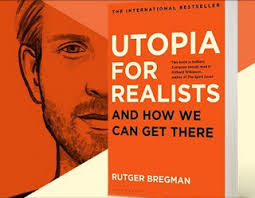
I’ve been reading Rutger Bregman’s Utopia for Realists: And How We Can Get There, which is loaded with examples of UBI principles being applied successfully in communities going back to the 1970s as a way to eradicate poverty. These examples support Bregman’s attacks on common presumptions about poverty and individuals in need. Time and time again, these case studies show that giving poor people (including the homeless) money to do with as they please results in their using the money to feed, clothe and shelter themselves. And this is accomplished at a fraction of the cost of government welfare and unemployment programmes.

These points are as much social as they are economic and typical of writing on UBI. What I particularly enjoyed about Bregman’s book is that he looks at the bigger picture and asks why we humans place such importance on work. To state the obvious for a second, work is important because it’s linked to money – which is why women’s unpaid work, such as raising children and caring for the elderly, is not valued as work. This is a worn argument. Bregman goes a step further, pointing out that certain types of work are valued because they are ‘productive.’ Anyone who has taken up art, music or creative writing has had to fend off hints of being lazy and accusations of not doing anything really productive. I wish now that when I was in my teens and early 20s I had Bregman’s ideas at hand. He explains, “Productivity is for robots. Humans excel at wasting time, experimenting, playing, creating, and exploring.” If the pandemic lockdown has shown us anything, it is the human capacity to experiment and create when given the time.

Bregman’s book came out a few years ago. Since then we have seen more worrying signs of the damage brought on by climate change at the same time that the world is confronted with a deadly virus that has pushed millions into unemployment. This might be the opportunity to not only implement UBI, but to also create jobs in green energies and readjust our thinking about what it means to be human.

Unfriending in the time of Tr**p

For the first time in my Facebook life, I’ve unfriended someone because of their politics. I didn’t do this easily. I tolerated this old school friend’s comments about Democrat Congresswomen Maxine Waters and Nancy Pelosi as being ‘unhinged’ after they rightly (in my opinion) attacked Tr**p on several counts. Of course, the current US president is far from ‘unhinged’ – a ‘stable genius,’ to use his own words. In this case, my tolerance was enabled by my enjoyment of irony.

I also overlooked this now former friend’s lambasting ‘crazy liberals’ for wanting to knock down a statue of Abraham Lincoln. I agreed – that does sound crazy, and it would have been if it were true. In that case, I forgave my old classmate for being misinformed and posting this falsehood on Facebook in error. Mistakes happen.

What finally tipped me over the polite Facebook friendship line was my friend’s commentary on Tr**p’s 4th of July ceremony at Mt Rushmore. During his speech, Tr**p announced, ‘I am here as your President to proclaim, before the country and before the world, this monument will never be desecrated,’ even though there is no movement intent on desecrating the mountain sculpture. America’s most infamous president slid his way down more slippery slope arguments with, ‘Our nation is witnessing a merciless campaign to wipe out our history, defame our heroes, erase our values, and indoctrinate our children.’ But that wasn’t enough. This orange president added, ‘In our schools, our newsrooms, even our corporate boardrooms, there is a new far left fascism that demands absolute allegiance.’ (These are just some highlights – the full speech can be found at the US government website)

On Facebook, my high school friend posted a photo Tr**p at Rushmore with the caption that it was a ‘great speech,’ the president’s ‘best speech ever’ and advised his friends to ignore what they’ve been hearing in the ‘lying left media.’ Saying that this was a great speech, if I’m generous, is a matter of opinion. Advising people that reports on this speech are lies because most of them questioned the veracity and reasoning behind the president’s bizarre comments is simply wrong. In democracies, reporters scrutinise the comments and proclamations of their leaders. I welcome the media outlets that are constantly fact-checking the current US president.

Back to Facebook. After a Tr**p supporter agreed with my friend about the Mt Rushmore speech, the friend replied, ‘Yeah, Trump loves America. Obama hated America.’ Even though it is hard to imagine that Tr**p loves anyone or anything aside from himself, I don’t doubt that in his own way this US president – or any president, including Obama – loves his country.

It was clear that this ‘friend’ was actively engaging in propaganda. I kick myself as I should have seen this with his posting about the Lincoln statue. That was no mistake. I was being taken for a fool. I went to my list of friends, found this old school friend and I clicked on ‘unfriend.’

I can only hope that others reacted the way that I did or at the very least have seen these postings for what they are. I’m reminded of a famous Mark Twain comment: ‘It’s easier to fool people than convince them that they have been fooled.’

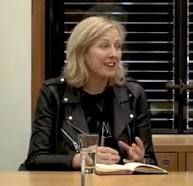
Of course, the person I should really unfriend is Mark Zuckerberg. While I don’t literally follow him on Facebook, using his platform does make me a friend of sorts. As plenty of pundits have pointed out, Facebook’s practices could help Tr**p to get re-elected. After all, Facebook sold its algorithms to political campaigns helping to get Trump elected the first time and played a part in the outcome of the UK referendum on the EU. In a recent article on Facebook, investigative journalist supremo Carole Cadwalladr explains how Facebook is dangerous for democracy. After suggesting that if Facebook were a country, it would be like North Korea, Cadwalladr clarifies, ‘Zuckerberg is not Kim Jong-un. He’s much, much more powerful.’

Facebook 2
Carole Cadwalladr

Another Guardian writer, Rashad Robinson notes that not only did Facebook contribute to Tr**p’s election victory in 2016, ‘in 2020, Facebook’s indulgent and laissez-faire policies have already enabled hateful harassment, rampant misinformation and disinformation, and the suppression of Black organizers.’ After investigating Facebook’s content policies, Robinson concludes that ‘the rules are often so vague as to even allow for someone as clumsy as Trump to weave right through them.’

Having said of all this, I don’t see myself leaving Facebook. Not yet. This powerful form of communication is the only way I can participate in certain writers’ groups and in groups dedicated to political and social activism and (ironically) understanding. During this Covid-19 lockdown, Facebook has provided a forum for people in my town of Ely to share vital information and to help out their neighbours. It also enables me to keep in touch with friends, relatives, former colleagues and students across the world – people who don’t use email or write letters. Quitting Facebook would be akin to saying that I’m no longer going to allow any post to come through my letterbox. Even though the internet has reduced the amount of post I get, it still comes in and I still need to deal with at least some of it. Like the post I receive, a lot of what is on Facebook can be ignored.

By unfriending my Tr**p supporting old school friend, I’ve taken it a step further. I’m not only ignoring what is being sent, I’m telling the postal courier to not bother delivering anything from this person to my door. This act of defiance might seem small against the colossus that is Mark Zuckerberg’s empire, but it is satisfying. Moreover, it reduces my traffic on Facebook. I know that I’m not the only one doing this when confronted by these right-wing propagandists. And that too, I find gratifying.


Reading Southern Gothic in the time of Black Lives Matter

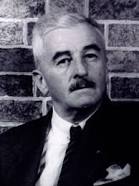
While taking the knee is becoming a political statement de rigueur, I’ve been reading William Faulkner’s Light in August, set in America’s south in the early part of the last century.

It was impossible to read this novel without thinking about the stark differences in race relations between then and now. Along with the liberal use of the n-word, discrimination and violence against blacks was the unquestioned norm. Yet, at no point is the reader led to accept or even be dismissive of this world. It could have been written today with a liberal implied reader in mind.

One of the main characters, Joe Christmas, orphaned as a toddler, believes that he is of African heritage – his appearance is ‘white,’ but some characters say he ‘looks foreign.’ When background stories come into the fold, the reader learns that Joe’s biological father was of a mixed African-Mexican lineage. But given some unreliable narration, even this is uncertain. Nevertheless, Joe’s tragic life is shaped by his belief in his ‘tainted’ identity, along with the violence and cruelty of his childhood home, ruled by a staunch Calvinist. As a teenager, Joe runs away and becomes a drifter, unable to fit in with either black or white communities.

In a parallel storyline, another sympathetic character, Lena Grove, has also uprooted herself from her family home, where she was castigated for ‘being a whore.’ In contrast to Joe, she is not drifting but very much aiming for a target – the father of her unborn child with the naïve expectation that they will marry. Lena and Joe’s lives overlap without touching through the character of Joe Brown who works with Christmas (as he is often called) at a planing mill and later shares a house and moonshine business with him. Brown is also the drifter and shady character who made Lena pregnant.

With its interior monologues and experiments with narration, using multiple narrators, broken chronologies and some convoluted subplots, Light in August is categorised as modernist. It is a challenging read. But I found it worthwhile for its depth of characters and the ways it places extremes of human behaviour – racism and fanatical religiosity – side-by-side, exposing the irrationality and ability to destroy lives with hate that they have in common. Light in August 2

Although this story was written in 1932, it only has vague references to that time period and the decades leading up to it, and no precise year is ever mentioned. This helps to make the book feel timeless. Sadly, so too do the explorations of themes like racism.

A dose of climate reality

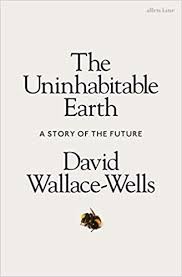
The day I concluded reading The Uninhabitable Earth coincided with the news that Verkhoyansk, Russia, north of the Arctic Circle, had recorded its highest temperature ever – 38C (100.4F).  Another stark sign that climate change warnings have been surpassed by climate reality.

Not only is Wallace-Wells’s book timely, it’s replete with climate science written in a friendly journalistic style, expanding upon and updating what we have all been hearing about for years now. What will make this book stand out from the rest in the popular science subgenre of environmental disaster tomes is its self-awareness. A key moment follows some 100-plus pages, describing where the earth is now and the likely catastrophes ahead, with these brilliant lines:

‘IF YOU HAVE MADE IT THIS FAR, YOU ARE A BRAVE READER. Any one of these [past] twelve chapters contains, by rights, enough horror to induce a panic attack in even the most optimistic of those considering it.’

From there on out, the book addresses why humans have done so little. Wallace-Wells is good at summing up the political explanations with the added narrative here and there, charting corporate and government collusion and how the economic arguments against green technologies are no longer debateable as the economic cost of climate change is being realised.

Another reason why we humans have done so little given the size and gravity of the climate crisis can be found in those hidden areas of infrastructure projects being untaken across the world. Wallace-Wells gives the example of the production of concrete. At first appearance it’s benign, part of the building of much needed homes or part of the urbanising and creating in areas where farming is no longer feasible. Concrete manufacturing is ‘the second most carbon-intensive industry in the world.’ This point is followed by the mind-numbing statistic that China has poured more concrete in the past year than the US used in the entire twentieth century.

The flipside of this – knowledge of the damage being done and how much worse life on earth is going to get – also freezes us into inaction. Bleak scenarios are hard to process. I have written in this blog before about solution aversion and how it has contributed to climate change denial, but Wallace-Wells goes beyond this by stepping into the psyche of the average person. Put simply, most of us don’t want to appear pessimistic. I know – I have been offended in the past by being called a pessimist, when I felt I was firmly in the realist camp. And then there are those who acknowledge climate change and relish the idea of the end of the earth is approaching fast. Luckily for us realists, Wallace-Wells battles with these ‘doomsters’, pointing to their inaccurate predictions and use of folk science. With that, Wallace-Wells does give the reader some hope for the future, but clearly if and only if we do something about it.

The psychological turn and look at human nature reminds me of Robert Frost’s famous poem, which speculated on how the earth would end – by fire or by ice. While it is easy to see the literal parallels with the climate crisis, the emotional interpretation of Frost’s poem – destruction by hate or obsession – holds here as well, and The Uninhabitable Earth is a worthy reminder.

Wallace Wells 2
Verkhoyansk, Russian, the coldest inhabited place on the planet, earlier this week.

Metaphors Matter

Following the horrific death of George Floyd, we have witnessed yet another wave of anger and protest. With this some have said that racism is ‘a disease, like Covid 19’. Linguist Elena Semino rightly commented on Twitter: ‘This metaphor may have useful rhetorical functions in context (e.g. to highlight that both kill and are very hard to eliminate), but it backgrounds a central aspect of racism: power.’ Indeed, put simply, racism is about one group of people using race to justify having power over another group. Unlike diseases, there is intention behind acts of racism, whether these thoughts rest in unconscious bias, follow the insidiousness norms of institutions or worse, fester in the venom of white supremacists.

Reading and listening to the anti-racism protesters and news commentators, worthy metaphors have been a bit lacking. The slogan Black Lives Matter, is merely elliptical, short for ‘Black lives matter too.’ The calling out ‘I can’t breathe’ is powerful, a direct reminder of Floyd’s dying words, but it’s not a metaphor. This paucity of metaphors bothers me because firstly because metaphors are powerful tools of communication. Good metaphors, original and sometimes a bit weird, stick with us. Secondly, I’m annoyed that so much of the language of racists is hinged on metaphors – describing the other as ‘vermin,’ ‘invaders,’ ‘pests,’ ‘animals’ etc. Why hasn’t the language of anti-racism these days shown more figurative flare?

In the last century, we had ‘strange fruit hanging from the poplar trees,’ Langston Hughes’s dream deferred that stunk ‘like rotten meat’ and sagged ‘like a heavy load’ and the plethora of extended analogies in the oration of Martin Luther King Jr.

Why do we need metaphors to capture the anti-racist experience today?

metaphrs matter 2
Langston Hughes

It is no longer enough to call someone a fascist, a white supremacist or even a racist. These labels are threadbare from their overuse and in some circles worn as badges of honour. No longer are people hiding behind the phrase ‘I’m not a racist, but…’ Even our world leaders are getting away with this. Prime Minister Johnson opposes taking down statues symbolic of Britain’s colonial past and its role in the slave trade. This should be no surprise coming from the man who in 2002 wrote in The Spectator about Africa, ‘The continent may be a blot, but it is not a blot upon our conscience,’ he wrote. ‘The problem is not that we were once in charge, but that we are not in charge anymore’ (cited from The Independent, 13/06/20). Johnson has in more recent years been quoted as referring to black people as ‘piccaninnies.’ Sadly, I don’t believe Johnson won the last election despite his racist rhetoric – I believe it helped to get him elected.

And then there’s Tr*mp. No, I’m not going there. No need to really.

Metaphors are a way of thinking about our world and expressing the way that we think at the same time. I do wonder if the anti-racist movement has not truly internalised into our thinking enough to give us the metaphors we need. Of course, as a linguist, I could take the counter argument for a moment and tell you that metaphors are ubiquitous in our language, in our lives. But many of these metaphors are used so often they have lost that ability to inspire. Others, like ‘racism is a disease’ miss the mark, and others still lack that stickability to bring about action. Speaking non-metaphorically, I’m weary and worn from viewing scenes of black men dying at the hands of white police followed by angry protests only to see the same scenes again with different people.

Samson’s A Theatre for Dreamers

Set on the Greek island of Hydra in the 1960s when it was a writers and artists’ colony, Polly Samson’s A Theatre for Dreamers has been my lockdown escapist’s treat.  The writing is delicious, a full-sensory experience of seeing the purple bougainvillea, inhaling the fragrance of the sea air and tasting the icy liquorice of the raki.

Borrowing from the true life stories of Hydra’s bohemian inhabits, the main story revolves around the narrator Erica, a new arrival to the island. Following the death of her mother, Erica, who’s in her late teens, and her slightly older brother have escaped England and their brutal dictatorial father. While her brother pursues the artist’s life, along with plenty of sun, sex and sand, Erica dabbles in writing and in her boyfriend. But she’s really on the island to talk to Australian writer Charmian Clift, who knew Erica’s mother. Charmian becomes something of a reluctant mentor to young Erica, scolding her for supporting her boyfriend’s creative aspirations over her own. In time Charmian recognises herself in this as she plays muse and literary coach to her husband George Johnson. Their real-life turbulent literary partnership is well documented.

A titillating subplot weaves its way through the narrative, involving a young Leonard Cohen at a point when he falls in love with Marianne Ihlen, who was on again and off again, though eventually separated from the artist Axel Jensen. Cohen and Ihlen’s relationship lasted many years, unlike most on this island of free-love, and has been immortalised by some of Cohen’s own poems and more recently by the Netflix documentary Marianne and Leonard: Words of Love.

Sidebar: I’m not a Leonard Cohen fan. Can I say that without getting trolled? I like some of his songs and his poems even more, but I simply do not understand the cult-like adoration.

Back to Samson’s exhilarating and beautiful book. Ultimately, it is a meditation on creativity and relationships, showing how together they can take form, crack and break.

For writers interested in biography or fictions based on true lives, the acknowledgements at the end are worth reading. The author gathered materials from interviews, some on radio and TV, some of her own, pieced together with memoirs and other artefacts. Some of the characters’ dialogue comes from their actual words.

For you Cohen fans, I close on Cohen’s description of life in Hydra: ‘There is nowhere in the world where you can live like you can in Hydra, and that includes Hydra.’

Leonard Cohen with Marianne et al
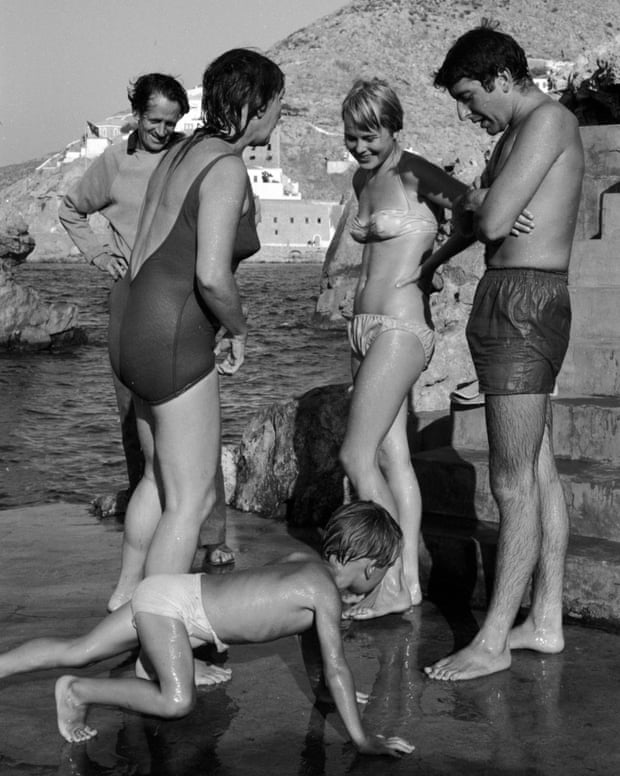
Leonard Cohen, Marianne Ehlen (and her son), George Johnson and Charmian Clift. Photo by James Burke


Rethinking Nature

With the lockdown, many us of have had the pleasure of observing more creatures, breathing in palatably cleaner air and hearing birdsong on a scale never heard before. In some online circles, this has produced a ‘back to nature’ movement that goes far beyond the obvious need to reduce greenhouse gases to save our planet from becoming an over-heated death trap. Sorry to be so grim.

The Observer columnist Kenan Malik rightly criticised this wave of naïveté, its meme ‘The Earth is healing, we are the virus’ and much of the pro-nature public discourse around it (10 May 2020). It’s not that climate change or the toxic environment we live in are desirable. Far from it. But should we let nature take complete control?

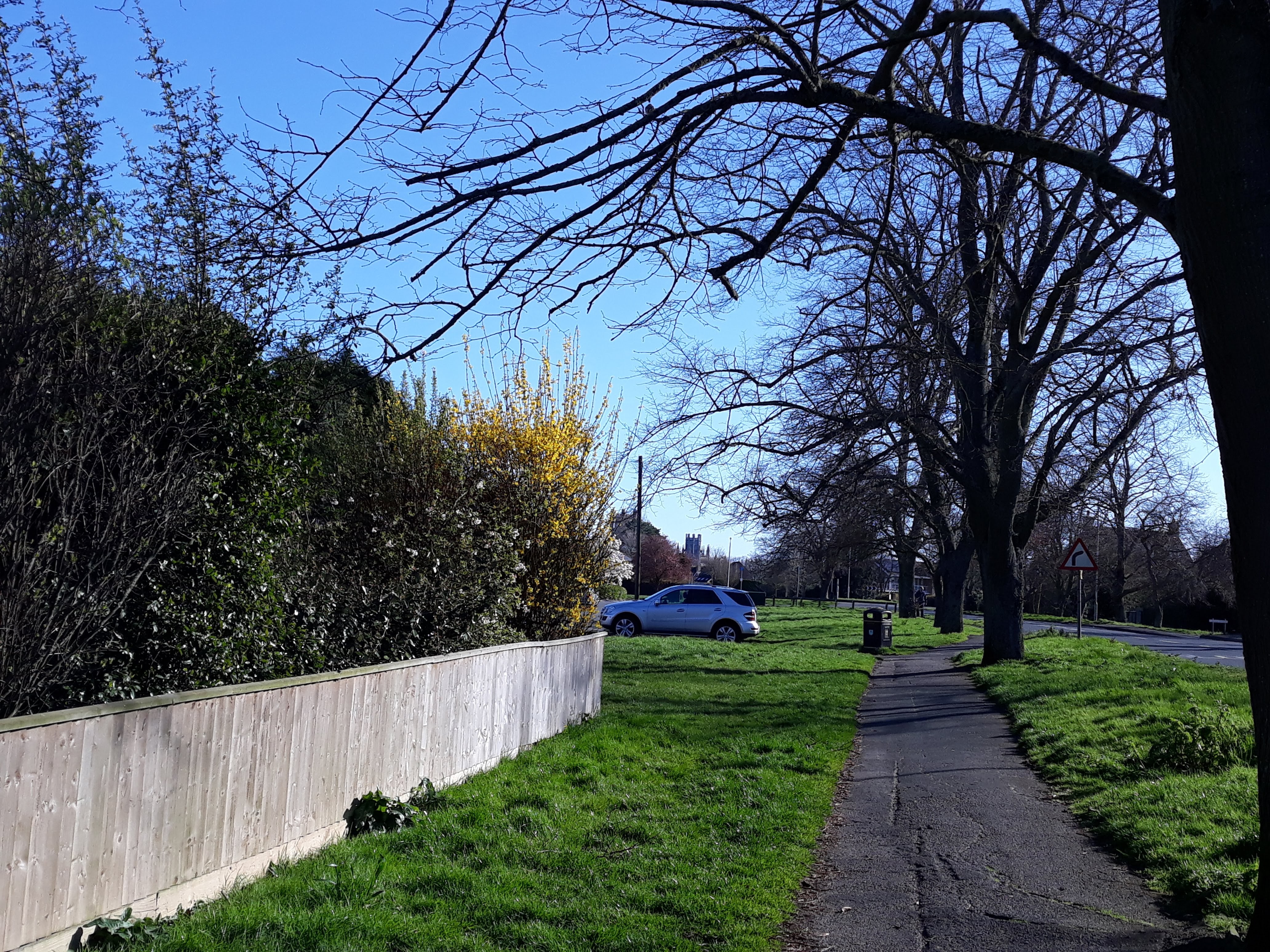
For the first time ever I have seen goldfinches in a park and a private front garden in our town of Ely.

Nature is not entirely benign. I’m reminded of Tennyson’s image of nature as ‘red in tooth and claw.’ There is a litany of natural disasters that have destroyed homes and livelihoods and have brought about disease and taken lives for centuries. Humans have reduced some of the impact of these disasters by engaging in some nature-defying sciences and technologies for which any sentient being is grateful.

I inhale the cleaner air and notice the quieter streets as I jog through town.

Malik argues that romanticising nature is the preserve of those who live in rich countries with electricity, transport systems and access to medicine. I see the truth in this and saw this idea crop up a few days later when I was watching a lockdown YouTube video from the Royal Academy of Arts (Painting the Modern Garden: from Monet to Matisse). One of the expert horticulturalists pointed out that with modernity came the growth of the middle classes and the idea of creating gardens for pleasure.  That is, gardening was no longer just about growing the potatoes and other veg to sustain lives. At least not in richer countries and this is still true today.

I have never seen an orange-tip butterfly until two weeks ago.

I’m left both enlightened and uneasy with Malik’s conclusion: ‘It is the poor, whether in rich countries or the global south, who must suffer from industrial pollution, are most imperilled by climate change and most threatened by the consequences of coronavirus. This is not because humans are violating nature, but because societies are structured in ways that ensure that innovation and development remain the privilege of the few, while deprivation and ill health are the lot of the many.’

This could be misread as a denial of humans violating nature. I trust that Malik knows that humans have violated nature, but they have also fought it in order to save lives, as Malik notes in his examples. It is also true that social inequalities have played a huge role in the climate crisis we are now confronted with. I think we can acknowledge these points, stay clear of romanticising nature, while still appreciating the ways nature has been showing off while much of the industrial world is in lockdown.

ely jog

A Dip into Biographies

Like many of you during lockdown, I’ve invaded my bookshelves to reread or finish reading books that have accumulated dust. Among these I uncovered a couple biographies. I had started reading Deidre Bair’s highly acclaimed biography of Simone de Beauvoir some twenty-five years ago when it first came out, but for some reason, I had abandoned it before the part where Simone meets Jean Paul Sartre. I’m past that part now and realise that this is a worthwhile read, especially since the author interviewed her subject on several occasions, something historical biographers can only dream of. Some of the best books I’ve read on the life of Shakespeare have been more about the socio-cultural and political context of the time than on the bard himself (such as works by  Anthony Holden and James Shapiro).

For me, the gems of these lockdown biographies can be found in biographical essays. I’ve recently read, from one of the musty half-read books on my shelves, an essay by Clive James on Mark Twain’s life as a journalist. Here you have the highly quotable James writing about the highly quotable Twain. Example:

‘Every subsequent American humour writer writes in the range of tones established by Twain. When Thurber says of his fellow economics student the football player Bolenciecwcz that ‘while he was not dumber than an ox he was not any smarter,’ he is in touch with Twain.’Biographies 2

Another biographical essay that’s come my way during the lockdown is from the New Yorker. Vinson Cunningham’s essay on playwright Lorraine Hansberry, best-known for writing ‘A Raisin in the Sun,’ reflects on Hansberry’s life as a writer and political thinker, mixing biographical details with her writing output. Cunningham explains that when Hansberry discovered playwriting, ‘The theatre, with its urge to make the interior visible, and to force contradictions through the refiner’s fire of confrontation, was a perfect vehicle for her to develop both her politics and her art.’

Perhaps in their brevity, these essays have benefitted from needing to focus on one aspect or a certain time period of a person’s life. An issue I have with book-length biography and many a bio-pic is that they can suffer on trying to cover the full life, even the dull patches of childhood, in desperate attempts to explain how the notable person became notable. Clunky writing ensues.

When it comes to biographies, I’ve only dabbled in the essay form myself, including ‘Virginia Wolfe’s Teeth’ and an essay-type piece on C.S. Peirce for the Literary Encyclopedia. Even if the end product was small, writing such pieces was enlightening and gratifying. Despite having garnered no inspiration whatsoever from the lockdown itself, at least the circumstances have led to these stimulating pieces that make me want to pursue the biographical essay again.

Dear Reader, keep reading and stay safe.

Biographies 3
Lorraine Hansberry