UK Elections 2024 – My Winners and Losers

I had no intention on writing about the results of the election, but I find it hard not to after waking up this morning only to discover my David in front of the tele in his robe, coffee cup in hand. Having been awake since 2 am and finding his brain buzzing with exit poll results, he decided to exorcise the cerebral demons by watching the true results unfurl. Since 6 am my earworms have been repeating results and analyses. To shake these strings of words out of my head, I’m writing.

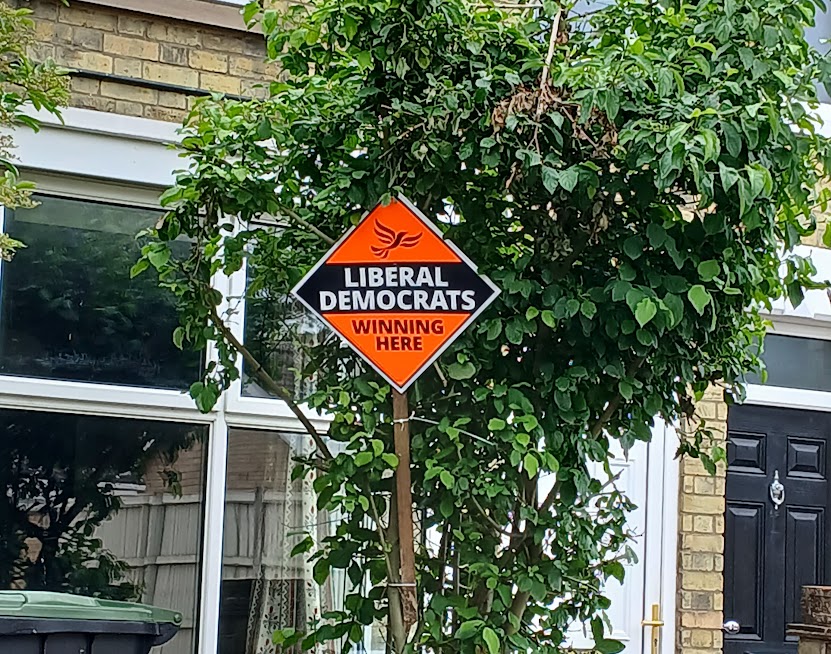
You, dear reader, know by now that this was a landslide victory for the Labour party with excellent results for some of the smaller, less funded parties, like the Liberal Democrats, the Greens and dare I admit it Reform UK (Nigel Farage’s party). Rather than revisit these themes, I’ll share with you what I am left thinking about, the real winners and losers.

Winners:

The Remainers, those of us who wanted to stay in the EU. Our new PM is a Remainer, and I recall having the pleasure of hearing him speak at one of the many anti-Brexit rallies I attended. Of course, he won’t put us back in the EU as that would involve another referendum, and the country is still dabbing the wounds from participating in the last one. But Starmer has already spoken about closer trade ties to the EU, and that is a key first step, economically and spiritually.
Women are also winners. The number of women MPs has gone up from 226 to 263, which is 40%. Ideally, it ought to be 50%, but I’ll take it. It’s also likely that Rachel Reeves will become Britain’s first ever female Chancellor of the Exchequer. For my US readers, this is the senior government minister in charge of all things economic and financial.

Losers:

As always, the people who didn’t vote. Voter turnout was only 60%, the lowest since 1885.

I would love to say that the far-right populists were the big losers, but they’re still kicking in the guise of Reform UK. They did take a beating though, with many high-profile far-right Conservatives losing their seats.

Finally, the media coverage of the election campaign deserves a wooden spoon. Sound bites and click-bait culture reduced candidates to automatons repeating well-chosen scripted phrases with little substance. The media’s attempt at ‘balanced coverage’ translated into one party’s negative story having to be offset by the other party’s negative story, even if the later had to be created through exaggeration of loose facts.

Whew. I hope this has killed the earworms. Time to check up on David to see if he’s still awake.

What I’ve been reading

After hearing Irish writer Anne Enright being interviewed on This Cultural Life (BBC Sounds podcast), I ordered from the library her latest book, The Wren, The Wren. At one level this is a story about three generations of resilient women, exploring the complexities of their relationships to each other along with the themes of love and abandonment. The underlying catalyst that shapes these relationships is a renowned poet, Phil McDaragh. He was married to the first generation of these women. When Phil leaves his family for a new life, and in time for a new wife, in America, his daughter Carmel tries to reconcile the beautiful love poetry he wrote to her mother with his betrayal. Carmel’s daughter, Nell, who was born after her grandfather’s death, is also under the magical spell of Phil’s poetry and uses it discover her own direction in life and the terms of her relationship with her mother. All of this is told in prose and poetry rich in wit and Irish vernacular. It’s worth mentioning that while working on this novel, Enright had some of Phil McDaragh’s poems accepted for publication using his name as her pseudonym.

Defeated

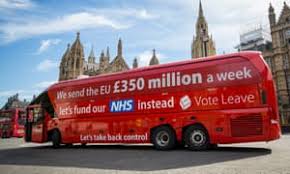
It’s been a week since the UK General Election. I’m not going to blame Corbyn, the People’s Vote, the electoral system or the LibDems for what happened. Instead of seeing this as their loss or folly, I have been struck down by the realisation of the Brexit movement’s victory. I must acknowledge it. The falsehoods and misinformation are immaterial. They out-campaigned us and out-manoeuvred us.

As I try to untangle this, I take little solace in the knowledge that my side may have lost the vote, but we still have won the argument. That kind of thinking helped me through the aftermath of the referendum, but it’s not working now. I say this in all sincerity. I’m not looking to be right. I’m too busy wallowing in my own defeat for that.

Defeat is a monstrous burden to bear. Maybe it’s because the three and a half years of my life engaged in Brexit conversations, delivering leaflets, attending rallies and marches and above all else, wishing it away. I turn once again to Buddhism, the Zen variety this time. In this tradition, and I paraphrase Thomas Merton, when a person feels kicked, crushed and defeated , a spiritual path is the best place to be. I meditate and breath.

But that’s only part of it, since the GE, I live in a world that feels alien to me and this is not an exaggeration. I recall the Reagan/Thatcher years, where I strongly disagreed with the policies of both and had to live with them as a US resident and then a British one. But I could understand then, and especially now, why people voted for them. Both politicians benefitted from the economic boom at the time while the left on both sides of the Atlantic experienced a paucity of leadership. I feel on safe ground saying that if Reagan or Thatcher had behaved in the ways of Trump and Johnson – the bare-faced lies, the racist and sexist remarks, the stirring up of hatred – they would not have been re-elected. This is where it hurts, I’m having to acknowledge that I live in a new world order, where cult-like charlatans rule the most powerful countries on our planet. Historians will be quick to point out that this is not a new world. This is an old world that was around before my lifetime, the interwar years in Germany comes to mind.

So I take inspiration from Michael Tippett, who composed A Child of Our Time in response to the disunity in Europe just before WWII. ‘The world turns on its dark side — it is winter,’ the chorus sings. But we know that after winter the flowers will start to bloom again.m tippett

Apophenia and Zombie Statistics

It’s polling day in the UK. If you’ve come to this blog seeking my election predictions, think again dear reader. My political crystal ball shattered into a million pieces in 2016 – first the Brexit Referendum, then Trump.

This election day is certainly the most important in my lifetime as a British citizen up against losing my rights as an EU citizen and as a citizen of a world that is facing a climate emergency. With all of this, what am I thinking about today – the spurious nature of truths.

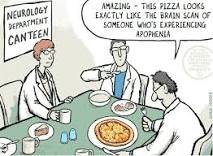
There’s apophenia. That’s the tendency to mistakenly see connections between unrelated things. The term was first used back in the 50s to describe types of mental disorders like schizophrenia. Examples include gamblers who think they see meaning patterns in numbers or people who see images of the Virgin Mary in their cappuccino froth.

Zombie statistics are numbers that are bogus but are repeated so often they are assumed to be true. There are loads of these out there. My personal favourite is that only 10% of Americans hold passports. Interesting, given that some 20% of Americans were not born in the US – how did they get there? The actual figure, according to the US State Department, is that 42% of Americans have passports. (Okay, I know, it’s 66% for Canadians and 76% for Brits). Zombie statistics are believable because they feed into popular myths or make for good headlines.

In both apophenia and zombie statistics, the mind plays tricks with people, even otherwise intelligent people. As this election campaign comes to an ignominious end – it’s been plagued by concocted ‘news’ stories against rivals and blatant, easily disprovable  lies from a sitting Prime Minister – I can’t help but to think about the way our minds play with us and how we convince ourselves and create our own truths.

apophenia