My 2024 in review without lists

Regular readers know that I’m not a fan of the listacle – those articles that list the best of or worst of or top 10 etc. They’re click bait and often poor examples of writing. By copping out of the type of commentary or critical review that threads an argument,  they offer mere snapshots brimming with clichés. With this hanging over my head for what I shouldn’t do, I’m reviewing 2024 under a few categories.

My year as a verbivore

Yes, I used to refer to myself as a logophile, but I’ve decided to use verbivore instead despite Word underlining it in red. This word was coined by the writer Michael Chabon in 2007 when talking about his love of words.

I’m afraid 2024 hasn’t been good year for verbivores thanks largely to the many national elections taking place all over the world and where politicians have overused words, such as woke, to the point that it can mean the opposite of their original meaning – or simply have no meaning at all aside from being something to despise. I’m also somewhat miffed that words like demure and mindful have gained new meanings thanks to the verbal grasping of social media influencers. Both words are being used to mean low-key and subtle in fashion and style.

The OED ranked brain rot as the word of the year, one that I never used even once. Apparently, it has come out of the Instagram/TikTok generation’s feeling after scrolling through dozens of posts. It can also refer to the low-quality content found on the internet that I do my best to avoid – a challenge when trying to find vegetarian recipes on Pinterest and having to skirt around videos of cats stuck in jars.

While I don’t go around recording myself, I’ll bet that my most used word during this year was incredible. In part, I’ve picked this up from the French who frequently use incroyable. When the worst president in US history (according to historians) gets re-elected after doing and saying so many things that individually should have made him unelectable, that’s incredible. On a more positive note, given my first-hand experience dealing with builders, plumbers and electricians in the South of France, I  thought it incredible that Notre Dame Cathedral was renovated after the catastrophic fire in just over five years.

My year as a reader

This year has been dominated by two writers as in recent weeks I found myself reading yet  another Robert Harris novel, my third this year, and another Amelie Nothomb foray into autofiction, my second for 2024.

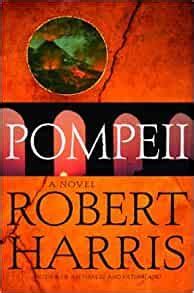
After hearing Harris speak about his latest book, Precipice, in Ely a couple of months ago, I delved into this thriller which begins at the onset of WWI. It’s an historical period I’m strangely fond of and the story recounts the true-life affair between Prime Minister Herbert Henry Asquith and the socialite Venetia Stanley. Asquith’s casualness towards national security is mind-boggling  as his teenage-boy infatuation led him to share with Venetia everything from Cabinet debates to classified documents coming from his wartime generals. Though not as complex or informative as Harris’s Pompeii or as intriguing as his Conclave, Precipice is still an entertaining and interesting book.

Taking advantage of the public library in Menton, I’ve just finished Amelie Nothomb’s La Nostalgie Heureuse (avail in English). The narrator’s view on the world is as quirky as ever and expressed with her usual dry wit. In this story, she’s already a well-known writer living in Paris, who returns to Japan to participate in a documentary about her early life. Key to this is an anxiety-provoking reunion with a man she nearly married some twenty years earlier. A noteworthy aside – she (fictional narrator and real-life author) had written about the relationship in one of her earlier books and when the ex-fiancé is asked by the documentary maker how he felt about that book, he said that he enjoyed it as a ‘work of fiction.’ This is when the narrator realises that her truth could be other people’s fiction – a wink to the reader of this autofiction.

Throughout the year, I have also made it a point to read writers that are highly praised in the literary press that I have never read. Earlier in the year it was Paul Auster and Antonio Scurati and in recent weeks Carson McCullers. I finally read The Heart is a Lonely Hunter, which most people know from the 1968 film. Set in a small town in Georgia during the Great Depression, the story recounts the lives of several characters who are connected by their work and family circumstances. Their sense of isolation is explored against a backdrop of poverty and racism, with a nuanced struggle with homosexuality. The weaving of the stories reminded me of a typical Robert Altman film – very enjoyable despite the grim subject matter.

On the non-fiction side, this year I’ve continued my nerdy interests in bees and trees, trying to find texts for non-specialists that aren’t too scientifically dry or too jokingly flippant. While I’ve also read some excellent biographies and memoirs, the most thought-provoking and impassioned nonfiction  I’ve experienced this year has been in the opinion pages of the New York Times, The Observer (UK) and Le Monde. They serve as reminders that despite populist voting trends, humanity still exists.

My year as a writer

I started out this year with two writing goals. One was to return to novel #4 and give it a thorough rewrite. While I didn’t produce a full rewrite, I have rewritten about half of it and have made notes for the other half. This task was interrupted by an avalanche of editing assignments that came my way in October and lasted until December. The other writing goal was to simply send out either one short story or one essay every month. I did manage to send out 12 stories/essays this year, but without the monthly regularity – there were a couple of inactive months and a couple bubbling with creativity. Five rejections have been taken on the chin (three were competitions after all) and I await 7 replies.

In the second half of the year, my writing took on a more therapeutic purpose – maybe my way of dealing with complex PTSD. For the first time I’m writing about unpleasant childhood memories and with the creative process taking over, I’m fictionalising certain characters and subplots. I’ve been experimenting with the ‘I-narrator’ by taking on the role of persons other than myself, trying to revisit these episodes from others’ points of view. I seemed to have tapped into something as the work I’ve shown readers so far has been extremely well-received in ways unusual for my early drafts.

My year as a human

Being a linguist, reader and writer are all a part of being a human, but I am aware too that there are other identities of my humanity, such as a friend, spouse, sibling, neighbour, citizen etc. For me, all these roles fill one stratum of physical living in all its sociocultural and psychological dimensions. In this stratum, 2024 has been about witnessing climate change, and then climate change denial by some and inaction by others, along with the public discourse of hate that substantial portions of the population engage with, making me feel like an outlier. I know I’m not alone in this, but I no longer inhabit a space in the norm range.

Another stratum of my humanity exists, but I grapple to explain even to myself. The word spiritual has been stretched and abused by religious and anti-religious alike to the point that I avoid using it. Perhaps this stratum covers all things incorporeal, including abstract thought. This year has made me more aware of this disembodied beingness, if awareness is all I have for now. And so, I continue to practice mindfulness (in the pre-2024 sense of the word – nothing to do with fashionable clothes).

Thank you, readers, for your comments and emoji reactions over the year. I wish you all peace and joy for 2025.


Gisele Pelicot, my choice for Person of the Year

Digging for Dharma and Finding Dickinson

According to Wikipedia, dharma is ‘untranslatable into English.’ Maybe so, as a single word, but the idea of it certainly could be understood across languages, and it’s a useful one for the times we live in.

The term dharma has different meanings across religions. In Hinduism it’s ‘behaviours that are considered to be in accord with the order and custom that makes life and the universal possible. It is the moral law combined with spiritual discipline that guides one’s life. (more Wikipedia – do forgive me). This fits in with its use in the novel La Tress, which I wrote about this summer. In La Tress, a poor woman in India who is an untouchable and works in the public cesspool describes her situation as her dharma. She accepts her job as her place in the world, this ‘order and custom’ that makes everything possible. Of course, there are plenty of social constraints and customs that rule our lives – love them or loathe them – but I struggle to give them moral and spiritual importance. That is, I can see societies using concepts like dharma to keep the poor and women in ‘their place.’

I’m less uncomfortable with the Buddhist’s understanding of dharma. Even though Buddha did not write any doctrines, there are loads of books and websites devoted to the Buddhist understanding of dharma, packed with deconstructions and taxonomies. The most concise workable definition I have found comes from scholar Rupert Gethin, who defines dharma as ‘the basis of things, the underlying nature of things, the way things are; in short it is the truth about things, the truth about the world’  (not Wikipedia, but Tricycle.org). While this might be a bit esoteric, it’s not muddied by debatable concepts such as morality of spirituality.

To put this another way still, and although she wasn’t writing about dharma, Emily Dickinson depicted truth as ‘stirless.’

The Truth—is stirless—
Other force—may be presumed to move—
This—then—is best for confidence—
When oldest Cedars swerve—

And Oaks untwist their fists—
And Mountains—feeble—lean—
How excellent a Body, that
Stands without a Bone—

How vigorous a Force
That holds without a Prop—
Truth stays Herself—and every man
That trusts Her—boldly up—

Why am I waxing on about dharma and truth? With the viciously false and conspiracy-riddled election campaigns going on across the world this year, I’m seeking some solace. For now, I’m finding it by embracing the concepts of dharma and truth, allowing me to assume that there are underlying truths in the basis and nature of things. Even if people chose not to believe them, they exist.

What I’ve been reading

Continuing my geeky interest in bees, I picked up Lev Parikian’s Taking Flight: How Animals Learned to Fly and Transformed Life on Earth. As an aside, the secondary title in the US version is: The Evolutionary Story of Life on the Wing. Written for a generalist audience, it’s filled with fun facts about creatures with wings. For example, humming birds (the smallest of all birds), bats (the only mammals that fly) and mayflies that in fact live longer than just a day – most of their lives are spent in the nymph stage, which could last up to two years, and it is the adults that live one or two days. Other flying things get fair coverage, such as pterosaurs, dragonflies and my adorable bees. Unfortunately, the latter is subjected to a lightweight approach full of awe, but a little too low on science for my taste. That aside, highly readable, this book has its place on the grown-up’s shelf as an introduction to one corner of evolutionary zoology.

Robert Harris’s An Officer and a Spy is typical of Harris’s books – historical fiction told in the style of a page-turning spy thriller. The subject this time, the Dreyfus Affair, was already a spy story before it got the Harris treatment. In Harris’s version, the focus is on the French officer Georges Picquart, who worked in military intelligence at the time that Alfred Dreyfus was wrongly convicted for spying and sent to the notorious Devil’s Island. Picquart realises that the case against Dreyfus is flimsy at best. During his investigation, he uncovers the true spy, but when he tries to bring this to light, he too is punished in military fashion. Spoiler alert for readers not familiar with the Dreyfus Affair – eventually the truth wins out. As always, the details and use of real materials and quotes are admirable and what I’ve come to expect from Harris. This brings me back to truths and dharma and at one level what the story is really about. What we think is the truth can change with knowledge and the courage to change the opinions of others and ourselves.

The falling centre

I’ve been absorbed in Jon Ronson’s BBC podcast, Things Fell Apart, about the origins of the culture wars going on in the West, especially in the US. It uncovers misunderstandings, misrepresentations and conflations that have morphed into the polemics of our times.

Ronson was recently interviewed in the New Yorker where it was noted that the title of the podcast comes from the W.B. Yeats poem ‘The Second Coming.’ When questioned about the centre crumbling and if he was trying to achieve a centre, his answer included: ‘For me, “things fall apart, the centre cannot hold”—it’s a sort of human centre of being curious and trying to understand people’s perspective and look for the nuances. It’s not the centre that, to be honest, the centrists talk about.’

This resonated with me as in recent years I’ve struggled to call myself a left-of-centre person. Politically, as the right becomes the far-right, the centre is tilting towards the right. Socially, what was once left-leaning liberalism has edged towards the acceptable centre. I don’t know what left or centre are anymore. Ronson’s humanist and less political take on this is a far more comfortable space for me to inhabit. It can also be found in Buddhism and in the self-therapy promoted by Judson Brewer (who helps people overcome anxiety and addiction). Both are integral to my daily life – my ‘practices’ as I call them. Yet, until I read Ronson’s comments, I wouldn’t have seen them as a kind of centrism – but now I do.

What I’ve been reading

Mostly, things Italian, though not intended to be a thematic spell of reading. Filling a gap in my George Elliot education, I thought I’d give Romola a go. It’s not her best work, written when she was steeped in philosophy and translating Spinoza, the novel comes off as a vehicle for ideas and debates rather than the evolving narrative and character study I would expect. It’s set in 15th century Florence and has been praised for its historical detail. Readers might also find it enjoyable in a nerdy way for its use of Latin and Italian.

A much better read was Elena Ferrante’s The Lying Life of Adults (translated into English by Ann Goldstein). Set in Naples and its environs like most of Ferrante’s work, the protagonist is a teenage girl dealing with her parents’ divorce, interfamilial feuds and the onset of womanhood. It’s full of memorable and gently humorous characters and renders deception into a truly creative act.

This Italian journey ended with Robert Harris’s Conclave, set in the Vatican during the election of a new pope. It has the intrigue that one would expect from Harris, along with his attention to liturgical detail and in this case a seasoning of Latin, culminating in a cracking good ending (I’ll stop myself there as this is a non-spoiler zone).

To close, and having nothing to do with Italy, the death of N. Scott Momaday last week has had me reading his poems again. Masterful.

Dark Tourism

Disasters fascinate. The Titanic still garners interest after 100-plus years. Though I suspect some of that has to do with the lost ship and its treasures. The other side of Titanic fetish comes from the high number of casualties, that mass grave in the North Atlantic, arguably an example of what’s been called ‘dark tourism.’

My disaster fascination is with Pompeii, where some 2,000 people died when Vesuvius erupted in 79 AD. I first caught Pompeii fever as a child when an exhibit about Pompeii toured America and came to the Art Institute of Chicago. I was mesmerized by the plaster casts made from the ashen moulds of bodies frozen in time at the moment of horrific death. My recollection of this includes seeing people screaming. But that’s an unfaithful childhood memory. The reality wasn’t so detailed or morbidly vivid. Most of the figures are covering their heads, crouched or lying down. My adult self looks at these casts and imagines people being in a state of meditative acceptance of their mortality I visited the remains of Pompeii on two occasions, once in the 80s and sometime around 2005-06. The disaster is still fascinating, but more so for what it has left behind – the artifacts and structures that reveal how the inhabitants of the ancient town lived.

More recently, I had the pleasure of hearing the historian and classicist Mary Beard talk about her book and television series on Pompeii. Beard has changed my way of thinking about these people, for instance, pointing out that it would be wrong to call them Romans. The graffiti and inscribed objects indicate a diverse population, with speakers of Latin, Oscan, Greek and Hebrew.

Mary Beard among the human remains of Pompeii

This point is also picked up in Robert Harris’s brilliant novel Pompeii, a true page-turner set in the days before and during the eruption, with well-drawn characters and an attention to detail praised by historians. Harris digs into the minds of the people of that time who regarded such disasters as vengeance from the gods and the warnings that they had that went unceded. His protagonist, the region’s aquarius responsible for the aqueducts feeding into the towns, makes this observation: ‘Perhaps Mother Nature is punishing us, he thought, for our greed and selfishness. We torture her at all hours by iron and wood, fire and stone. We dig her up and dump her in the sea. We sink mineshafts into her and drag out her entrails – and all for a jewel to wear on a pretty finger. Who can blame her if she occasionally quivers with anger?’ This underlying environmental message also makes this worth a read.

There’s another type of dark tourism that I’ve been thinking about lately. The phrase is also used for visiting places like the concentration camp at Auschwitz, the Rwandan genocide towns (Kigali, Nyamata and Ntarma) and the Atomic Bomb Dome in Hiroshima, where apparently the rubble and twisted metal from the immediate aftermath of the bomb remain in situ. I’d argue that these sites, though they might hold a morbid fascination for some, are more about education, pointing the finger at human destruction and the mistakes of those who turned a blind eye. Watching, reading and hearing the news day in and day out, I wonder if Bucha and Mariupol will become sites for dark tourism.