Patriotism wasn’t cool when I was growing up in Chicago in the 60s and 70s. Even though America’s bicentennial was everywhere – flags, parades, commemorative everything – the mood was hardly celebratory. Vietnam and Watergate hung over us, and the glossy Disneyfied version of American history was already being questioned in ways that would be labelled woke today.
Half a century later, I’ve spent more of my life outside the United States than in it. Thirty‑five years of adulthood in Britain, with working stints in South Korea and Oman, and more recently a residency in France. My American identity has been chipped away, leaving a childhood core shaped by those unpatriotic decades.
But am I British? In citizenship and in my sense of identity – one of many identities – yes. But the British – on the whole (there are exceptions) will have none of that. Too often, I’m seen as American and nothing else. Even people who have known me for a while feel that need to explain to me that football means soccer and that aubergine means eggplant. Really? And then there are the verbal gymnastics that people engage in so they can bring my American background into the conversation.
Beneath this sits a familiar assumption: Americans are naïve, unsophisticated, a bit dim. It’s not just British – it’s international, reinforced by the elections of the 45th and 47th President of the United States. Despite my degrees, publications, and decades in Higher Education, people still assume I don’t know Rimbaud from Rambo or that I’d sign a financial agreement without a contract. My dry humour is often misread simply because people don’t expect it from an American. I’ll stop myself there.
So where does that leave me? Sometimes alienated in places I call home. Yet held together by a small circle of friends who understand that I don’t fit neatly into the American box.
Despite all this, I’d like to think, I’ve stumbled into the best of both worlds. Growing up in 1970s America meant I wasn’t held back by being working class and the youngest of seven. Had I been raised in Britain then, university would have been unimaginable. I’ve also had the benefit of life in Britain, which has been less polarised than America, and where I have enjoyed a better quality of life (public healthcare being at the centre of this) than I would have had in the US.
Recently I’ve been watching coverage of the 250th anniversary of the Declaration of Independence. It’s unfortunate that this milestone arrives during such troubled – often ugly – times in American history. But historians remind us that the nation has always cycled through turmoil, and the Declaration itself emerged from one such period – full of compromises, unresolved tensions, and an awareness that the experiment could fail, returning America to monarchy. In my uncomfortable American identity, I can’t help seeing the country circling back to a king in all but name, surrounded by a court of powerful billionaires.
What I’ve been reading
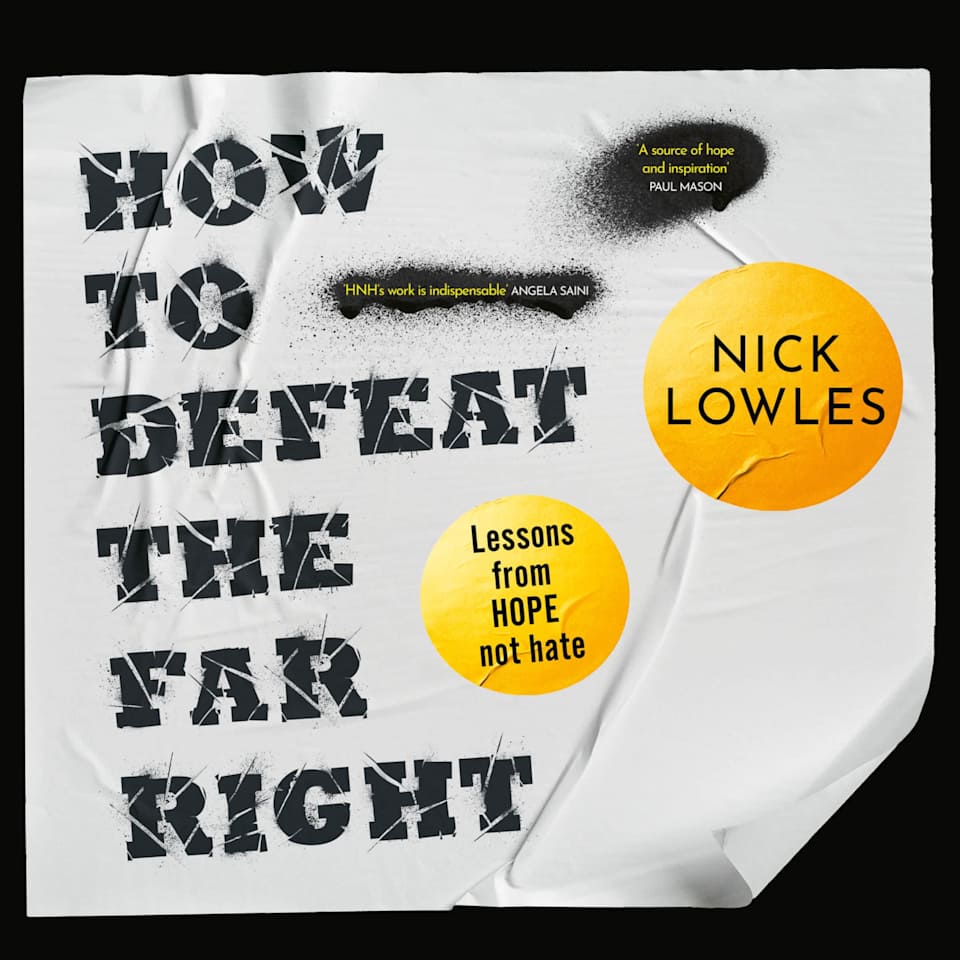
Britain is hardly immune to its own turmoil. The fears and violence stirred up by the far right echo America’s problems. While there’s plenty of analysis on the rise of hate crimes – especially since Brexit emboldened racists and social media amplified their vitriol – Nick Lowles’s How to Defeat the Far Right: Lessons from Hope Not Hate takes a different tack. Lowles recognises the link between economic deprivation and anti‑immigrant sentiment, arguing for a holistic approach – building communities, strengthening local economies, and moving beyond mere disapproval or fact‑checking the misinformation pushed by the Reform Party, the English Defence League, Elon Musk, and MAGA supporters. Activism is essential, though not for the faint‑hearted. As Lowles writes, ‘However difficult it may appear, speaking out on politically and culturally sensitive issues only increases our credibility over time.’ He also widens the frame to include climate change, noting research from the Institute for Economics and Peace predicting that up to 1.2 billion people could be displaced by 2050 due to extreme weather and natural disasters – a shift that will inevitably fuel further hate crimes. Yet the book isn’t just statistics and headlines. It’s part memoir, tracing how the son of a British social worker and a Mauritius‑born charity worker became the CEO of Hope Not Hate. Inspiring.