
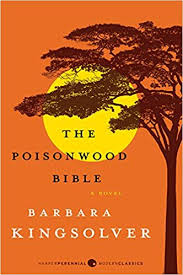
Douglas Stuart’s Shuggie Bain and Barbara Kingsolver’s The Bean Trees have been among my summer reads. The two novels are studies of poverty and familial relationships. Shuggie Bain is a coming-of-age story set in the council estates of Glasgow spanning ten years of the 80s to early 90s, while in The Bean Trees, a quasi-road story, a young woman in a beat-up car drives from Kentucky to Arizona over several months creating a new life for herself.
While I found both stories engaging and interesting in the worlds they inhabited, their handling of dialogue made Shuggie Bain the better read. This is despite losing its pace about three-quarters in. The Bean Trees, Kingsolver’s first novel, is tightly constructed and held its pace, but occasionally the dialogue fell flat as it appeared to try too hard to sound like the way people speak. Let’s be honest – in everyday speech, people wear out idioms and exhaust popular expressions. It’s part of the interpersonal function of language (for you M.A.K. Halliday fans). That is, we speak in familiar, tried and tested, language to connect with people.
In Shuggie Bain, the dialogue worked – which I wouldn’t have expected from a novel containing the Glaswegian dialect. Despite having lived in Edinburgh for five years and regularly visiting Scotland ever since, I still stretch my ears to understand Glaswegian. Perhaps Stuart knows this. He’s allowed the narrative prose to do much of the work, leaving the dialogue gently sprinkled throughout the text.
A writer’s confession – my true love is scriptwriting. While I’m not writing scripts these days and might not ever return to it (a topic for another blog), I have learned some useful lessons from writing in a medium where dialogue does the heavy lifting. Allow me to enter the imperative mode. First, don’t bother trying to replicate everyday speech all the time. As mentioned, it can be dull on the page and duller still when coming out of the mouth actors, unconvinced themselves. Aim for dialogue that sounds natural, but devoid of the mundane parlance of everyday life. Second, use subtext. Characters don’t need to explain their thoughts. In fact, their dialogue is strongest when they say one thing to mean something else or to do something that is not obvious from the literal meanings of their words.
Okay, I’ve left the classroom and the imperatives behind.
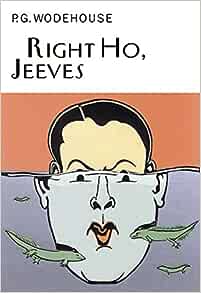
P. G. Wodehouse was masterful at dialogue. Nothing sagged in his characters’ speeches, using language more colourful than quotidian conversation. Where a character from The Bean Trees would say something like ‘he thinks he’s the cat’s pyjamas,’ Wodehouse’s Aunt Dahlia huffs out ‘Your uncle Tom thinks he’s the cat’s nightwear.’ As for Jeeves, everyone’s favourite butler provides understated commentary and suggestions to his master that are loaded with subtext. In this example from Right Ho, Jeeves, the text leading up to this tells us that Bertie is confused about a woman’s intentions, and Jeeves offers, ‘Feminine psychology is admittedly odd, sir. The poet Pope…’
‘Never mind about the poet Pope, Jeeves.’
‘No, sir.’
‘There are times when one wants to hear all about the poet Pope and times when one doesn’t.’
‘Very true, sir.’
From this snippet, the reader knows that Bertie is irritable and won’t listen to considered advice, and that Jeeves, due to his station, is going to play along.
There are loads of other great prose writers who command the dialogue in their works, but on a Saturday afternoon in August, Wodehouse was the first to come to mind.

 Paola Trimarco