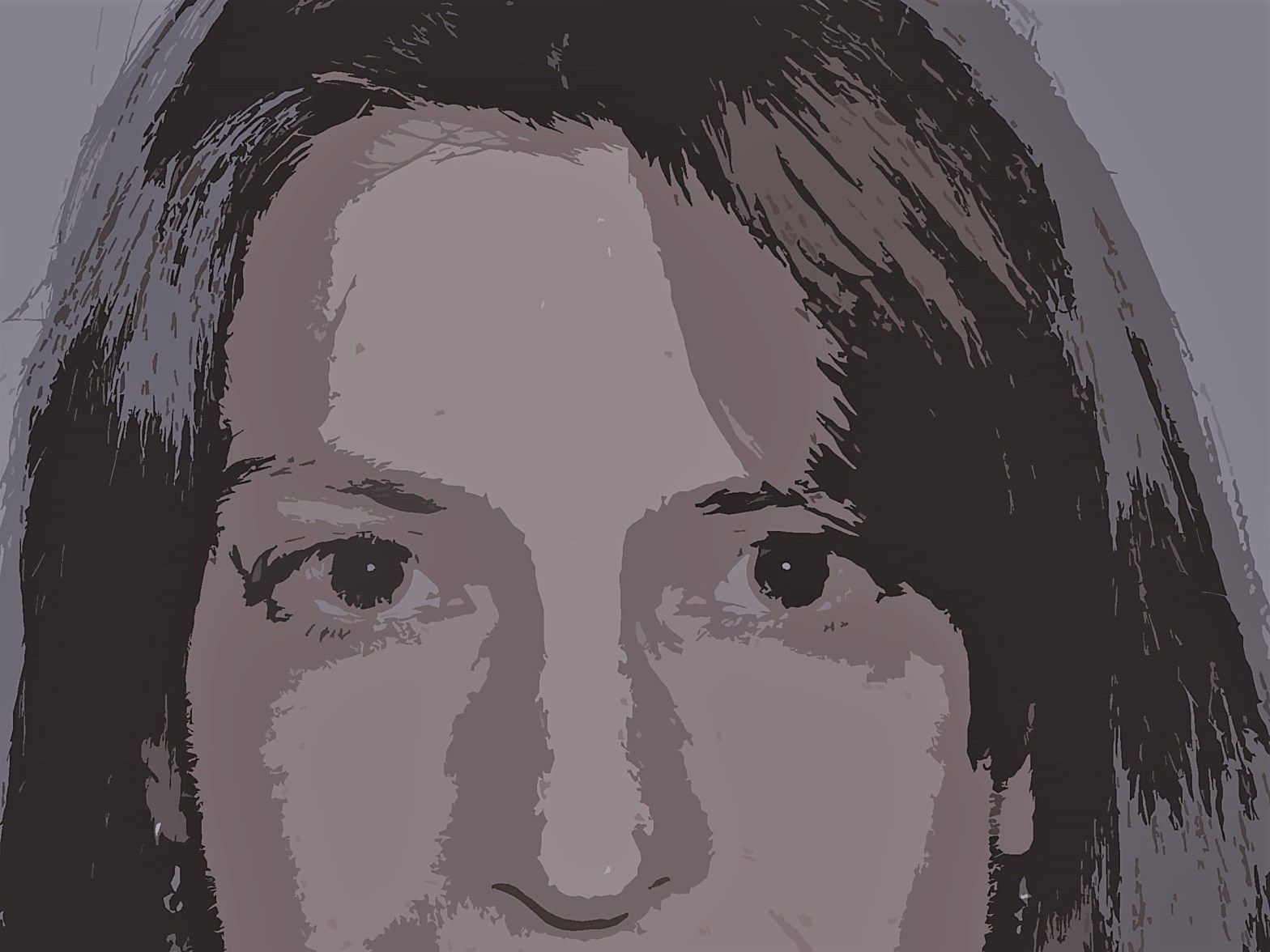
I was a slightly chubby, acne-faced tomboy at 12 years old. I wore jeans or cut-off shorts in the summer and – having started to develop breasts – always shirts that were too big on me. Despite all of this, a part of me felt that I was at fault. I must have said something or acted in a way that made a 40 -year-old man want to grope me. An extended grope that lasted at least five long minutes – hard to say exactly as unpleasant memories play tricks on the mind. At times, over the years, I recall it being thirty minutes.
But one thing I do remember clearly – at 12, I believed that episodes like this only happened to girls who asked for it.
The only thing that stopped this man, who was one of my bosses, was a customer arriving at the front of the shop. At this tender age, I had a part-time job, working with a girlfriend in the studio space of a photography and silkscreen business. My friend and I stuffed cardboard into white t-shirts and glued backing on to posters. We were too young to legally work and were paid by piece and not by the hour. This wasn’t as bad as it sounds. It paid better than a paper route and wasn’t as girly as babysitting. Perfect for a kid like me, looking for money to pay for record albums and a new baseball glove.
Little did I know then that this was the start of years of workplace sexual advances, inappropriate touching and objectifying language that didn’t end until I left my last fulltime job in the UK in 2013. Interestingly, in Oman, a traditional Muslim society, I was never a victim of any such behaviour – though I wasn’t treated equally in the workplace given my status as a woman and as a foreigner. Today, working in distance education and freelance writing, I enjoy among the advantages the safety of working from home.
At 12, I didn’t tell anyone at the time about what had happened. Even my best friend and co-worker. I thought that the boss hadn’t tried anything on her even though she was the pretty one – slender with clear skin and beautiful long brown hair. But maybe she hadn’t said something or done something to encourage him. I was simply too ashamed to ask her. I can’t remember now what excuse I gave. Maybe it was school starting again or missing out on baseball. I must have found something and quit the job a week later.
A couple of years after that, I ran into the girl who replaced me at the studio. We talked about working there and she was quick to point out that one of the bosses was a ‘pervert.’ He had done the same thing to her. Finally, I could talk about it. Together, we connected the dots. This company only hired girls, too young to work there legally and unlikely to speak out. I wanted to talk to my best friend who had worked there with me about it. But she had moved away and was in the midst of a family tragedy. She and I never had that conversation. I can only hope now that she has spoken about it with someone.
The Weinstein case and other cases involving high-profile people have opened the flood gates. Not to diminish the importance of speaking out against such acts, but they are pointing the finger to the powerful and rich, people in the public eye. What about the young and vulnerable across the spectrum of the workplace? Victims whose predators are ‘ordinary people’? We can’t use public humiliation as leverage.








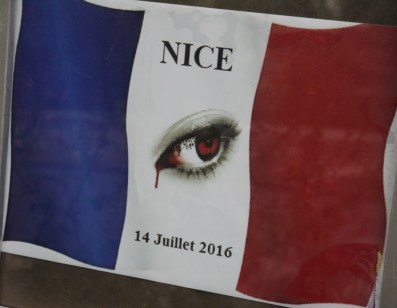 For Syria, Brexit and Trump, there are lists of hideous events and poisonous rhetoric that have helped to make 2016 notorious even before it’s ended. Finding the good in such a year is not only challenging, but necessary. The alternative would be to shut down and sulk, permitting the bad things to fester and grow worse in the mind’s eye.
 e – a sad, but fulfilling experience. Back in England and France, we have enjoyed good health and the company of friends and family, interspersed with reading, writing, playing golf and going to cinemas, concerts, galleries etc. Life has been full and satisfying, even under the cloud of this annus horribilis.
 and repeated so often, they are taken as fact. The word itself, apparently first coined by writer Norman Mailer, takes its ‘oid’ suffix form the Greek word for appearance or form. This definition has been expanded and according to a few online dictionaries, a factoid is also a small or trivial fact. In this newer definition lies another danger – factoids are no longer half-baked truths, they’re just mini-truths.
 Paola Trimarco