Meritocracy: the self and the social

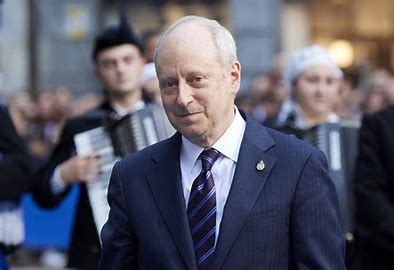
While I’ve read some fine books in 2021, my favourite this year has to be Michael Sandel’s The Tyranny of Merit. Central to this book is the idea that thinking we live in a meritocracy – an idea much-used by politicians – has created a false sense of deserving and has alienated the unsuccessful. Sandel points out that many who have not received the rewards of their hard work, in particular those who have been most effected by the economic crises of recent decades, blame their governments and/or immigrants, giving rise to populists’ movements in democracies such as the UK and America. Reading this book made me re-examine my own thinking on meritocracy and how it has changed over the years.

When I was a child, I believed that if I tried really hard at something I would reach my goals. Watching Jimmy Stewart films and being told by teachers and parents that anything was possible if you worked for it, I was a product of my culture. Yet, I knew even then that there were limits. I was never going to be Miss America (because I didn’t have the looks), nor was I going to be a professional baseball player (because I was a girl). By the time I was a teenager in the 70s, the women’s lib movement made me all too aware that adult life was not played on a level field and that if I succeeded at anything, I would be paid less than my male counterparts.  

While the bubble was deflating, there was still enough air in it for me to believe that hard work and ambition would have their rewards. Living in predominately white, working and lower-middle class America, believing in meritocracy was a default position. On top of that, I was caught up in the wave of aspirational coaching and new age spirituality espousing the notion that positive thinking yielded positive results. My reading list in those days featured self-help gurus Wayne Dyer and Louise Hay. It was all about self-improvement – it was all about me, me, me…

Although I found such thoughts empowering, there was a flipside to all of this: that failure was something I projected on to the situation. I would never blame a government or social structures – that seemed a sign of weakness, blaming others as a child would. By my mid-twenties, I easily blamed myself for the jobs I didn’t get, the publications not realized and for times of being negatively targeted by family members or colleagues. Likewise, when I did achieve and accomplish something I owed it to myself (and sometimes luck). I was being rewarded for my labours and for jumping over obstacles. It was still all about me, me, me…

Over the years, the more I talked to friends, the more books I read in politics and sociolinguistics, the more films and stage plays I saw, the more my thinking included how the power of social structures, the media, advertising and popular culture, along with money of course, dictates who achieves and who does not. Sandel’s book deconstructs our so-called meritocracy in a similar way. I was particularly pleased to see how he uses corpus linguistics to illustrate points on language used by politicians and advertisers to sell the idea that we live in or could live in a meritocracy if we vote a certain way or do certain things.

But Sandel has done more than just validate my own thinking. He has made me aware of the judgements I have made in recent years about the less educated, noting how they tended to vote more for Brexit and Trump. Sandel points out that a university degree is on the one hand not always given to the smartest or most deserving and is on the other hand an entrée to the jobs our society places more value on. He also looks at education in the climate change debate, again making me think differently. Politicians on America’s far right who are climate change deniers are just as educated as those who believe that climate change is real and human made. Both sides of the argument have used their schooling and analytical skills to justify beliefs they already had.

As 2021 winds down, my thanks to Michael Sandel.

Michael Sandel

Allyship – Word of the year 2021

Dictionary.com has announced that allyship is its word of the year. A word I have never seen before, let alone this year. I was expecting vaccine, variant, renewables or some neologism, like antivaxxer.

According to Dicitonary.com, allyship is a noun referring to ‘the status or role of a person who advocates and actively works for the inclusion of a marginalized or politicized group in all areas of society, not as a member of that group but in solidarity with its struggle and point of view and under its leadership.’ It’s a straightforward blended word, combining the word ‘ally’ with the morpheme ‘ship.’

Although allyship is new to Dictionary.com, its origins go back to the mid-1800s, but that was in a broader sense, a group of allied organisations. The modern sense used by Dictionary.com can be traced to the 1940s but didn’t come into more regular use (apparently, even though I missed it) until some 15 years ago.

These lexicographers go on to say, ‘Allyship acts as a powerful prism through which to view the defining events and experiences of 2021 – and crucially, how the public processed them.’ For me, recent examples of this include white protesters at the Black Lives Matter marches and heterosexuals across the world actively supporting gay rights in Ghana, Uganda, Russia and Poland. Though some in these pools of partisans have been accused of virtue-signalling (another good word), I’d like to think that the vast majority are genuine.

But I was put in my place when I did my own corpus search on allyship and found an article from The Guardian. Questioning the allyship of whites who support black causes, Kelsey Smoot had this to say:

‘The truth is, genuine allyship is not kindness, it is not a charitable act, nor is it even a personal commitment to hold anti-racist ideals – it is a fall from grace. Real allyship enacted by White Americans, with a clear objective to make equitable the lived experiences of individuals across racial lines, means a willingness to lose things. Not just the extra $50 in one’s monthly budget by way of donating to an organization working towards racial justice. I mean palpable, incalculable loss.’

Smoot raises some good points about empathy and activism. Nevertheless, I like the social justice flavour of allyship and might start using it myself for actions I think are genuinely deserving. This might be a tall order.

Fence Painting in Durrell’s Cyprus and Our Afghanistan

As I don’t understand and can only feel rage over the crisis in Afghanistan – Biden’s long game, the shambolic withdrawal of troops and civilians, NATO’s apathy – I’ve escaped this past week to Cyprus. That is, Lawrence Durrell’s Bitter Lemons of Cyprus, written in 1957. To achieve total escape, I decided to experience this not as a written book, risking my thoughts drifting to Afghanistan, but as an audiobook – my first audiobook ever. This neatly coincided with the task of 18 meters of rickety old fence to paint.

A friend recommended Durrell’s autobiographical account of his three years in Cyprus. Strangely devoid of sex for a L. Durrell book, the narration is straightforward and the descriptions are rich with Mediterranean flora and the spirited people of the island. As I listened to amusing encounters between Durrell and the locals as he tries to buy a home, my paint brush slopped over old twigs stuck between panels of rotten wood. To dislodge the twigs would have caused the panels to pop out.

The book gradually introduces the political context through how it manifested itself in the daily lives of locals and expats. Cyprus was trying to gain independence from the British, who still controlled it as a Crown Colony.

A couple of days of rain meant I had to leave the fence about one-third painted. I watched Afghanis crowding into Kabul Airport, a few men jumping onto the underbelly of a US military plane as it taxis towards a runway. Feminist Current’s blog relayed a story about Taliban troops going door to door in search of ‘wives’ (translation – slaves). I followed the links to find that the story originated with Bloomberg, but I haven’t heard anything since.

The weather improved, and I returned to the garden with my bucket of cedar red. Durrell started his journey as a writer looking for a change of scenery, but ended up working as a press officer for the British foreign office.  One of Durrell’s neighbours talks about the need to fight for independence if independence is supposed to have any meaning at all. Does the Taliban feel the need to fight even though they’re being handed their independence on a platter? Durrell observes the British officials’ sense of entitlement to have a British Empire. One officer bemoans Britain leaving as ‘Cyprus is the backbone of the Empire.’  I’m living through the crumbling of the American Empire. Given the US government’s failures at nation-building through military means, this isn’t a bad thing. Perhaps it’s time for America to exercise more soft power through its technology and medical science in parts of the world in need (for me, this includes America itself). By the time Durrell left the island, he had witnessed death and destruction, his lyrical travelogue turned into a treatise on human failings.

Unfortunately, Bitter Lemons of Cyprus, beautifully read by actor Andrew Sachs, is only three hours long. My escape from the news in Afghanistan and my painting job had to be supplemented by a radio podcast about Nina Simone and the start of my second audiobook, Michael J. Sandel’s The Tyranny of Merit (more on that another time).

With my work completed, the old wobbly fence is still an old wobbly fence, but now at least it’s of one colour. I have performed a cedar-red wash over chipped paint, rusty nails, decaying wood, empires, soldiers and refugees.

from Woody to Cuomo

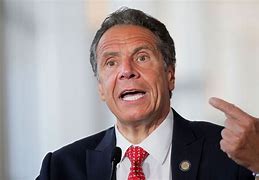
With the news of Governor Cuomo resigning after nearly a dozen women accused him of sexual harassment, I’ve been thinking about my Woody Allen boycott.  For just a few moments this week I felt that same ache I felt back in the 90s when Allen fell off the pedestal I had made for him. 

By the 90s, Woody Allen movies had long since become one of my annual traditions as Allen makes a film every year. I know what you’re thinking – they have not all been great works – some have been real stinkers. But in my childhood and early teens films like Everything You Wanted to Know About Sex but Were Afraid to Ask, Sleepers and Love and Death were formative in teaching me about life – the societal hypocrisies and the need for psychotherapy.

As Allen films became more sophisticated with Annie Hall, Manhattan, and Zelig, I began to appreciate a well-written script, and that lead to my discovering Woody Allen the writer of short stories and essays (mostly in The New Yorker). Allen’s world was funny and cerebral, self-effacing and philosophical. I don’t know what this says about my younger self, but I relished in his misanthropic humour. Among my favourite Allen quotables are: ‘Life is full of misery, loneliness, and suffering – and it’s all over much too soon.’ And ‘If my films make one more person miserable, I have done my job.’

Then there was the downfall. Soon-Yi Previn, Allen’s adopted daughter became his romantic partner in 1991 when she was 22. At first it was just weird. For the love of Woody, I shrugged it off, convincing myself that it was okay since Soon-Yi was an adult and of the legal age of consent. Moreover, Woody Allen was more like a step-adoptive father to Soon-Yi (the first adoptive father being Andre Previn). Downfall part two – in 1992, Allen was accused of sexually abusing his other adopted daughter, Dylan, when she was seven-years old. It was easy at the time to place this accusation in the category ‘ex-partner gets her revenge,’ the ex-partner being actress Mia Farrow. While Allen falling in love with his other adopted daughter gave him an air of guilt, he was never convicted. To this day, I’m still on the fence about his culpability.

When Woody and Soon-Yi married some five years later, I felt more justified in my acceptance of this relationship. Between the announcement of their being in love and the marriage, Bullets Over Broadway and Mighty Aphrodite came out – two of the best films of the 90s.  But as the years passed, I came to realise that issues of consent are not so straight forward. With Woody Allen, the complication arises from his changing roles from father to lover to husband, where the first role was one of familial power followed by roles that by definition involve sexual relationships. For me, the age of consent laws and marriage certificate no longer legitimise this creepy coupledom.

On top of that, I was growing uneasy with his films – he might give actresses some strong parts, but Allen has also made otherwise intelligent women characters weak in the face of compliments about their looks. I mean weak to the point of falling for the bespectacled, maladroit played by Allen himself. It’s in several Allen films, including Annie Hall.

My boycott of Allen films started in 2011 and has continued to this day, with an exception made in 2014 for Colin Firth in Magic in the Moonlight – Firth and the French Riviera was too much to pass up. The boycott is my way of saying that I object Allen’s use of power, and I am not going to continue to support it by contributing to the offender’s income, however small my contribution may be.

In the case of Cuomo, again I’m looking at a man in a position of power changing that role to one of sexual intimate, regardless of the other person wanting that relationship. But in this case, there’s nothing to boycott. The Democratic party, to their credit, have done that for voters by pushing him to resign. Of course, they’re doing this for political reasons, but I’m glad that our post #metoo society has helped to create that political environment. That just leaves me being miffed that someone I had admired for his support for women’s issues – calling himself a ‘feminist’ – and his anti-Trump handling of the pandemic could plunge so disgracefully.

More travels in the time of Covid

Unlike the 2020 Covid travel stories of people escaping before lockdowns, the talk now is about vaccinations and tests, the lifting of restrictions and scientific advice versus political will. 

Getting to Nice was easier, if not more surreal, than we thought it would be. Armed with our lateral-flow tests certificates (at £50 each), we arrived at a half-closed Gatwick with the ambiance of an airport in the off-season. On our way to the gate we were stopped by an official asking to see our vaccination certificates. When he saw mine, he said ‘Sorry, we can’t let you through. You have to have had your second dose at least four weeks ago.’ For a few seconds I was in panic mode, imagining David going to France without me. I caught my breath and in near unison David and I said, ‘No, it’s two weeks, not four.’ I offered him my lateral-flow test certificate, but he wasn’t interested. This person whose job it was to check documents did not know the rules that he was supposed to ensure we were following. Luckily another Gatwick worker came to our rescue, agreeing that my second vaccination needed to be only two-weeks old. With that we were off to the Cote d’Azur, where we waved our vaccination certificates in the air as we whizzed through passport control.  

When we saw French neighbours for the first time in ten months, they asked straight away if we had been vaccinated. One asked which vaccines we had, followed by raised eyebrows when we mentioned AstraZeneca – apparently, not the right answer. Whatever we did, Covid was not far away. It was the backdrop of all social interaction, screening who’s hugging, who’s elbowing, who’s pecking each cheek, for which I have mastered the air kiss. In France, masks are still obligatory in public transport and indoor public spaces like shops, museums and cinemas. Some people don’t know how to wear masks and use them to cover their chin, or if you’re young, male and really cool you wear them on your wrists. As we needed to take trams everyday, we soon realised that we were testing the efficacy of our unpopular AstraZeneca jabs.

By the end of the second week, we heard the good news that we had expected – people coming from France, which is on the UK’s amber list, will not have to self-isolate for ten days and will only need to take one PCR test on their return to the UK. Relief all around. We continued to fill our days with  the Nicoise sunshine, morning walks, coffees and croissants at terraced cafes often followed by a swim. 

This joy was broken a week before our departure when Johnson’s government announced that a new traffic light had been created – the amber-plus. The country on this list-of-one was France. This meant that upon returning to the UK from France, even though we are double-vaccinated, we would have to self-isolate for ten days and have to take PCR tests on days 2 and 8. The first government explanation was that France had a worrying rate of Beta variants of the virus and that these cases might not be protected by vaccines. It was soon pointed out in the press that France’s higher Beta rate is in the French islands of Reunion and Mayotte, thousands of miles away. Mainland France has a lower Beta variant rate than Sweden, Germany and Spain – all of those countries are on the normal amber list of this Alice-in-Wonderland trafficlight, and people returning from those countries would not have to quarantine.

Just before we left France, Johnson responded to the criticism by saying that actually it is the Delta variant that is the problem. What? The UK had at that point about 6 times the number of cases of people with the Delta variant than France. Some 97% of those cases were of people who were not vaccinated. So, why quarantine vaccinated people coming back from a country with a lower rate of cases than the UK? The French authorities were quick to point out the lack of logic and scientific evidence behind these new rules. Former PM Tony Blair also put the case forward in favour of double vaccinated people not needing to quarantine. But still, nothing changed.

Why France? Has it got to do with Brexit renegotiations? A bit of jealousy over France catching up with the UK on its vaccination rollout? Or is it a personality clash between Boris the buffoon and the humourless but statesmanlike Macron?

All of this seems so ridiculous. I knew that I wasn’t likely to be a medical threat to anyone, especially after the negative results of my lateral-flow test in France a couple of days before our departure. This test incidentally cost half of what it did in the UK and this time, I had to show the certificate at the EasyJet gate, along with proof that I had arranged for two PRC tests in the UK – the cheapest option we could find was the do-it-yourself at home variety for £82 per person for the set of two.

During my first quarantine in 2020, before vaccines, I understood the importance of staying in for two weeks and tracked the days on Facebook with pictures of my garden jogging path, my various projects, etc. This time, bitter and feeling every bit the political pawn… well, here’s my summary journal:

Day 1: We receive our first of many phone calls from the NHS checking up on us, asking that we understand the rules and that we understand if we break the rules we get fined. I resist using sarcasm.

Day 2: We take our PRC tests at home and put them in the pre-labelled packages. David leaves the house, breaking the law, in order to post the tests. We both receive NHS phone calls with the same texts read to us as in the previous day.

Day 3: I find myself reading a short story by Tessa Hadley in The New Yorker set during a Covid lockdown. Another set of NHS phone calls comes in. 

Day 4: David misses his NHS call. I take mine, noticing that all of the callers sound young – twenties, maybe thirties. I hear about a colleague who has returned from France and is receiving three phone calls per day.

Day 5: David receives his daily phone call, but I don’t. The UK government announces that from 2 August, people who are double vaccinated coming from the US, amber countries in the EU (that is, not France) and cruise ships – those petri dishes of disease – can enter the UK without having to self-isolate. I consider rereading Kafka.

Day 6: David receives a call, but again, I don’t. I start to hope that I’m off the radar. I read in The Times that anyone associated with London Fashion Week can fly to London without having to self-isolate. I feel I’m living in a joke that isn’t funny.

Day 7: UK Foreign Secretary Dominique Rabb explains that the issue over the island of Reunion having a high rate of Beta and not mainland France where people are travelling from  is immaterial. It’s not the distance between the little island and the mainland, it’s the accessibility the island has to mainland France. Clearly, Rabb hasn’t noticed all the times that Reunion has had lockdowns with no one travelling anywhere. Nor has Rabb considered the fact that rules for going to the Canary islands, which are owned by Spain, are different from the rules applied to mainland Spain. When I get my NHS call – I’m back on the radar – I request the short version of the script, explaining that the long version will just make me angry. The caller replies to my bitterness with a perky ‘Okay’ and jumps to the part about being fined.

Day 8: We take PCR test 2, David breaks the law again to post them, and we both receive phone calls from our young friends at the NHS. Simon Calder of The Independent confirms a rumour we have heard that turns out to be true – the island of Reunion with its high Beta rate is on the amber list, while mainland France with its miniscule Beta rate remains on the amber-plus list.

Day 9: David receives his daily call, but I don’t. The papers are full of stories about vaccine passes. In France, these passes are proving a success, before they even become law, millions more are queuing up for their vaccines. Those who refuse could still get into venues with a negative covid test, or they could simply take to the streets and protest – it’s what the French do. I’m missing France already.

Day 10: I start looking into a winter holiday in Reunion, and I finish this blog.

Biden to the rescue – in a manner of speaking

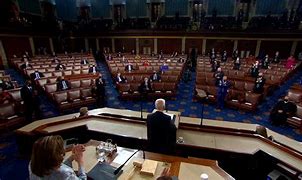
More progressive and radical than anticipated, Biden’s address to the nation to mark his first 100 days in office last week may have been dull in delivery, but its impact cannot be understated. While political pundits are still sizing up what can actually be achieved from the president’s proposals, I’ve been thinking about what all of this means in more existential terms.

Despite not being legally or constitutionally meaningful, the first 100 days of a US presidency has become a symbolic marker. FDR was the first to attach significance to the 100-day anniversary as he was out to prove his worth for getting America out of the Great Depression. Unlike many of his predecessors, Biden finds himself in a similar position to FDR as the world deals with waves of a pandemic and its economic aftermath, along with the kaleidoscope of damage left in the wake of the Trump years.

Biden’s first 100 days have been busy with government taking a more active role, and due to the pandemic, which has killed over half a million in the US and left one out of five Americans out of a job, people obviously need that. In his address to the nation, he spoke about continuing in this vein, along with green energy and healthcare being controlled and financed to a greater extent by government. Going against the ethos of the past forty years from Republic and Democratic presidents alike, Biden noted that ‘trickle-down economics has never worked.’ He has proposed growing ‘the economy from the bottom up and the middle out’ by reforming corporate tax, which has long favoured the rich, and raising the minimum wage.

Reading the analyses these past few days and now the reports of Biden trying to sell his ideas to Republicans and their supporters, I’m left with a couple of thoughts. First, Biden is no longer the anyone-but-Trump president. He is starting to become a leader characterised by his own agenda.  With this I’ve already notice the change in public discourse. It’s not likely that Biden will be able to fulfil all of these promises, and there will be compromises and lost battles along the way. But by setting these humanitarian goals in a boring presidential language, Biden is changing what people are talking about and how they are talking about it. Trump promised that a wall would be built between the US and Mexico. That promise was not fulfilled, the wall never built, but for four years people talked about immigration and white supremacy – often aggressively, either following Trump’s rhetoric or vehemently ridiculing and mocking him.

This leads me to the second thought: I’m enjoying for the first time in some years the feeling of hope. I’m not alone in this – only last night I heard socio-political author Michael Lewis answering the question of what he thought of Biden’s presidency so far, and without hesitation he said ‘It gives me hope.’  Hope holds incredible powers. Emily Dickinson once said, ‘Hope is a thing with feathers,’ and like birds, hope can survive the harshest of conditions, navigate through the unknown and inspire us to keep living. As her words are better than mine, I close with the full poem:

Hope is the thing with feathers
That perches in the soul,
And sings the tune without the words,
And never stops at all,

And sweetest in the gale is heard;
And sore must be the storm
That could abash the little bird
That kept so many warm.

I’ve heard it in the chillest land,
And on the strangest sea;
Yet, never, in extremity,
It asked a crumb of me.

-Emily Dickinson

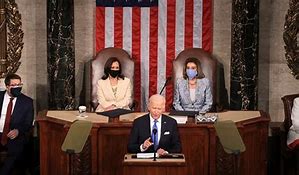
The US President flanked by two women congressional leaders.

Brexit Stories

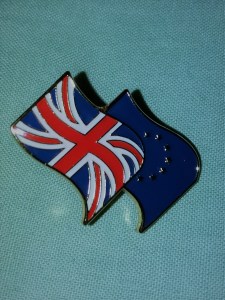
When it comes to spy stories, I usually prefer films over novels, and when I occasionally make an exception, I dip into the worlds of John Le Carré. This time not because it was a spy story, but because it was a Brexit story. Le Carré’s last novel, Agent Running in the Field, was published in 2019, capturing that heady time period after the European Referendum of 2016 but before the withdrawal agreement was signed and enacted upon at the end of 2020.

In this spy caper, one of the main British characters declares, ‘It is my considered opinion, that for Britain and Europe, and for liberal democracy across the entire world as a whole, Britain’s departure from the European Union in the time of Donald Trump, and Britain’s consequent unqualified dependence on the United States in an era when the US is heading straight down the road to institutional racism and neo-fascism, is an unmitigated clusterfuck bar none.’ Familiar? Yes, it sounds as if paraphrased from the actual comments of many remainers, famous and not-so-famous, the banter in local pubs and in the many rallies and marches at the time. 

So, too are these gems from the mouths of British characters in Le Carré’s novel: ‘The British public is being marched over a cliff by a bunch of rich elitist carpetbaggers posing as men of the people.’ And, ‘I think Brexit is totally irrational, that it’s evidence of dismal statesmanship on our part, and lousy diplomatic performances. Things that were wrong with Europe could be changed from inside Europe.’

One of the Russian-born characters embodies the view from outside the UK when he says, ‘You walk out of Europe with your British noses stuck in the air. “We’re special. We’re British. We don’t need Europe. We won all our wars alone. No Americans, no Russians, no anyone. We’re supermen.” The great freedom-loving President Donald Trump is going to save your economic arses, I hear. You know what Trump is?’ ‘Tell me.’ ‘He’s Putin’s shithouse cleaner.” 

For me, this spy story was more interesting for its background than for its foreground. It presented a nostalgia of sorts. Not a rose-tinted view of the recent past, which was stressful in its 24/7 argumentative mode while trying to stop the march off the cliff. This nostalgia rests in a time when like-minded people were talking about how this referendum happened and the immediate impact of the results. These were stories told and opinions laid bare that are now well cemented into the past.

What are the stories we are living in now? Some one hundred days ago the transition period ended and Britain officially left the EU. The European Movement has produced a report organised around the personal narratives of ten people whose lives have been affected by Brexit. To no surprise, the mini stories come from a farmer, a small business owner, a fisherman, a professional musician, a teacher, a refugee and an EU citizen trying to gain their ‘settled status’ in the UK, along with a few stories that are less personal, but still poignant – a professor speaking about the recent violence in Northern Ireland and a climate activist and a human rights campaigner both mapping out the current struggles Britain faces going it alone.

I’ve been reading and watching similar stories in the British media, but not as leading stories – these are sometimes stuffed in the middle, reduced to a ‘human interest’ or regional status. Since the beginning of the year – the start of the official Brexit – the pandemic, the riots at the US Capitol, the start of the Biden years and other stories have butted the Brexit fallout from public discourse. This moratorium on Brexit talk has been helped in the UK by politicians of all stripes not willing to enter into this contentious topic again. 

I don’t know if I have the patience to wait for another popular writer of fiction, spy novelist or other, to write the truths of this time. 

Impeachment and theatre of the absurd

Referring to the US president’s second impeachment, a Republican congressman snapped at a reporter, ‘This is political theatre.’ He was walking away while speaking, ending the interview before it began. What he said was pithy and about all a defensive Republican in America can say these days.

But he might have a point. This impeachment can be seen as a type of theatre, an entertaining performance, since the Senate vote won’t take place until after the disgraced president leaves office in a week’s time – even if he has to be forced out kicking and screaming like a toddler. In this way, the actions of the Democrats in the House of Representatives might be seen as symbolic. That is fitting, after all, as the actions of the rioters who stormed the Capitol last week were largely symbolic. Did they really think they were going to stop the process of bringing in a new president? A playoff of symbols is a common feature of good theatre.  The congressman’s remark could have been a back-handed compliment.

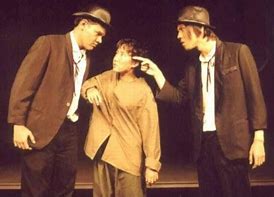
The irony is that the Republican congressman is playing a part in the same theatrical performance that he himself scoffed at. His is the character that operates in a narrative resting comfortably in theatre of the absurd – an abstract world that rubs up against the real world and makes us question the purpose of human existence – the meaning of life. This congressman’s character is a minor one, akin to Boy in Samuel Beckett’s Waiting for Godot. Boy is a messenger, a character questioned by the two tramps, revealing more about their characters and their delusions. The ending of this impeachment play might not leave us with grand philosophical questions, but it is making many of us question the strength of our democracies.

Putting aside symbolism, another way still of looking at this act of impeachment is through the lens of criminal justice. Clear to anyone who has been following post-election news from America, the president has been inciting protests by claiming, despite the lack of any evidence, that the election was fraudulent. Moreover, the act of inciting violence can be found in the president’s tweets and in his comments outside the White House, from where he encouraged a ‘fight’ and spoke about bravery, while repeating the slogans of the election being ‘rigged’ and ‘stolen.’ If Tr**p were an ordinary citizen, he’d already be arrested and awaiting his trial on charges of terrorism and citing violence against the government. This impeachment is a theatrical performance that mirrors the judicial process that is not taking place, a cathartic type of theatre on par with the great works of classical Greek drama.

A final note – I deliberately haven’t referred to this congressman by name since other Republican politicians have been saying the exact same thing, reading the same lines from the same script.

Thoughts and Translations on the French Laïcité

I love a good mistranslation as much as the next person, but some mistranslations are not funny. Worse, they can be dangerous.

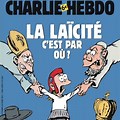
After the barbarous death of history teacher Samuel Paty, French president Emanuel Macron supported the teacher’s right to teach students about freedom of speech using the infamous Charlie Hebdo cartoons of Mohammed. Among those to express their discontent with the French president were the international English-speaking press, including The New York Times, The Washington Post and the UK’s Financial Times. I’m not alone in thinking this has to do in part with the translation of French into English. In condemning terrorists, Macron spoke against ‘séparatisme islamiste’ in France which has been translated as an attack on ‘Islamists’, a negatively loaded word referring to extremist and violent supporters of Islam. What Macron meant would be more accurately translated as ‘Islamic separatism,’ which is seen as harmful to integration. To put this more into the French context, for decades debates about séparatismes religieux have been about the Catholic faith and the fact that Catholicism hasn’t been the country’s official religion since the laïcité was put into law in 1905. The laïcité is mainly about individual rights to freedom of speech and religion in a secular state, a government not run by any single religion.

As with many mistranslations, cultural differences are at play. In countries like America, discrimination of minority groups, such as Muslim people, puts the media and well-meaning left-wing thinkers on hyper-alert for anti-Muslim racism. I’m not saying racism against Muslims doesn’t exist in France – of course it does. However, according to a recent survey by the National Institute of Demographic Studies, most Muslims in France feel socially and culturally integrated. Other studies also support these findings. As someone with a second home in France, I don’t find this surprising.

Interesting too that it appears most of the Muslims who were angered by Macron’s speech linking terrorism and separatism, live outside of France in non-French speaking countries, where  the president’s words were translated into Arabic and Turkish. Since I don’t speak either Arabic or Turkish, I’ll step aside from this part of the debate. Plenty of polyglot scholars in the French media in recent weeks who have raised this issue of mistranslation are doing this work for me.

In fact, there has been so much published and podcasted about these misunderstandings of the laïcité and mistranslations in France, I wasn’t going to bother writing about it. That is, until a couple of nights ago when Channel 4 News (UK) ran a story about Muslims in France being discriminated against by new integration measures proposed as laws. A French speaker mentioned the laïcité, and it was translated into English as ‘secularism.’ While secularism is part of the principle of the laïcité, keeping church and state separate, the first definition of secularism is typically ‘indifference to or rejection or exclusion of religion and religious considerations’ (Merriam-Webster English Dictionary) – which is not laïcité.  As much as I am a devotee of Channel 4, I think on this occasion their liberal slant (which I usually lap up) may have played a role in both the reporting and translation.

Whether these translations involve English, Arabic or other languages, given social sensitivities and political tensions, I do wonder the extent to which these mistranslations are triggered by some sort of unconscious bias. Seeing this in the Channel 4 report has made me wonder about my own.