Adieu Carras, Nice

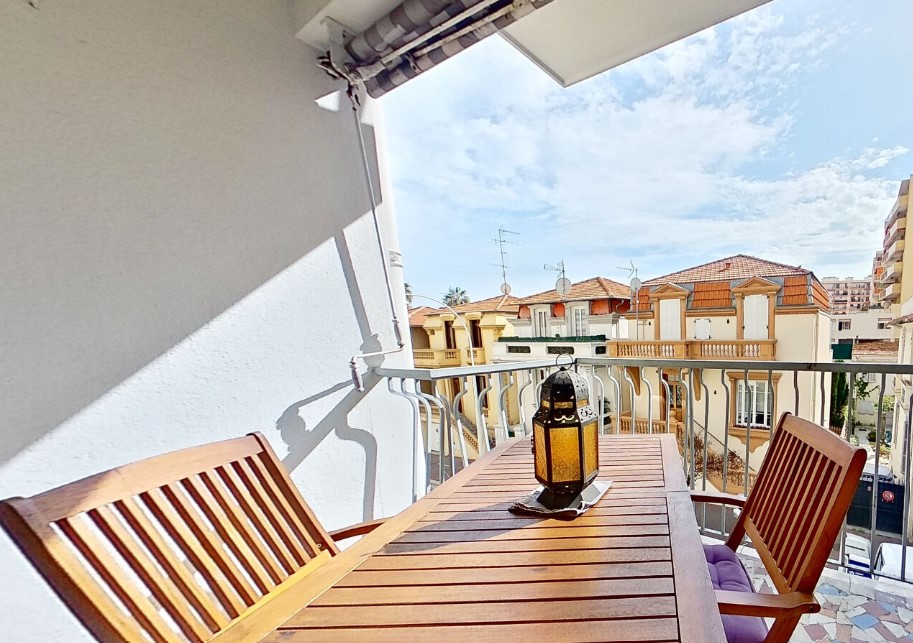
Aside from the odd immoveable rawlplug, the walls are bare. The cardboard boxes, stacked unevenly like a toddler’s set of blocks, wait for the movers to take them away. After nearly 14 years, I’m saying goodbye to our Nice apartment in the neighbourhood of Carras. But I’m not saying goodbye to all of Nice as we’ll be just up the coast in Menton. I’m imagining regular trips, about 35 minutes by train, to visit friends, go to museums and have boozy lunches with the Nice chapter of the Society of Authors.

So long, Carras. What will I remember of you? The busy streets bustle with cars, motorbikes and a menagerie of people, walking and talking, children skipping. The sea breeze shifts the exhaust smells, blending them with fragrances from the bakery, the pizza bar and the patisseries.

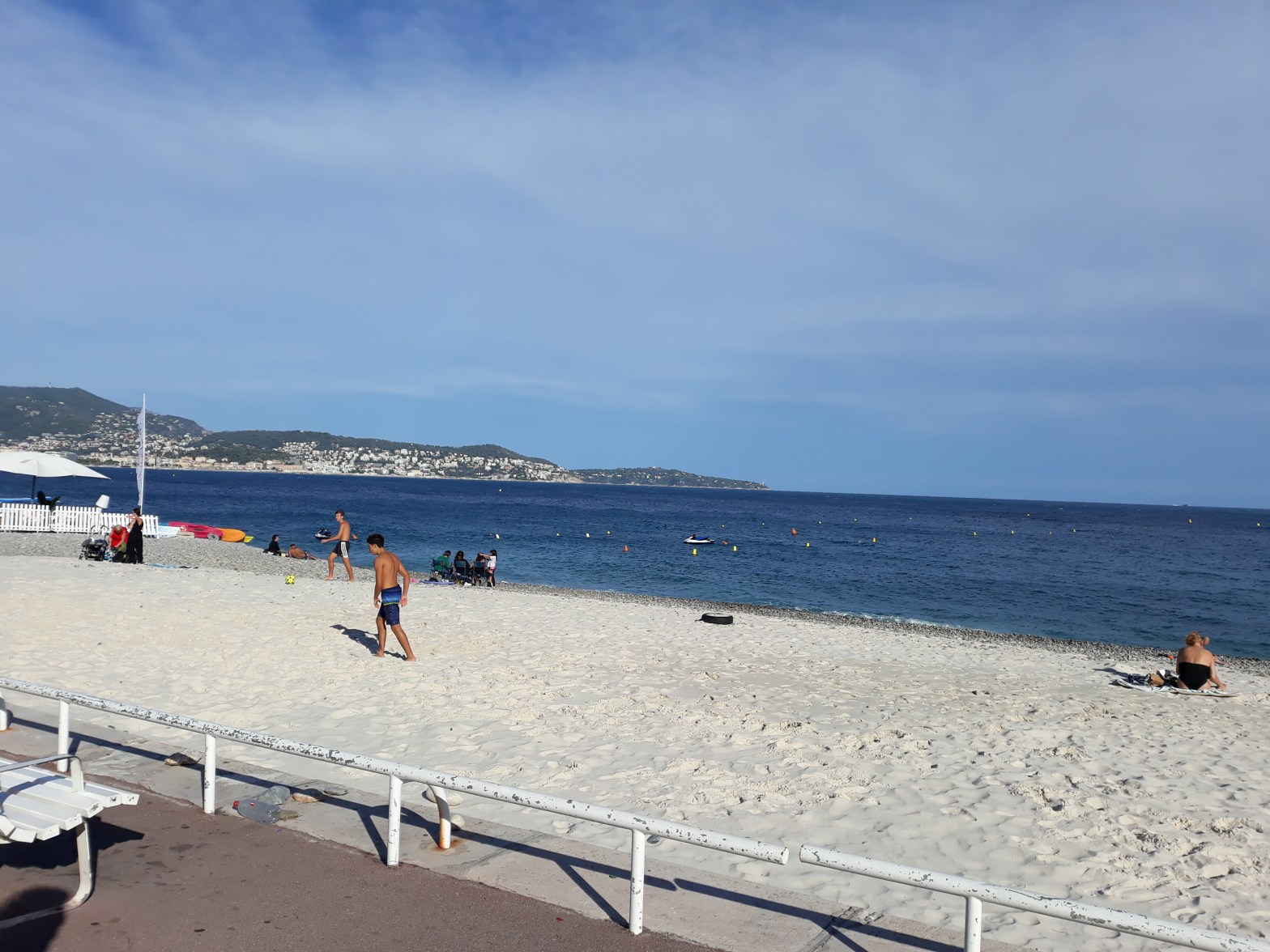
This part of the Promenade des Anglais will stay with me too. Unlike central Nice, replete with tourists and often supporters of football teams (as the city hosts international matches and championships), Carras beach is about local people. Women in abayas and burkinis can be found meters away from the topless French and Italian sunworshippers.

While I won’t miss this little apartment, I will miss the idea that for so long it was a place friends and family could stay. As I’m not a name dropper, I’ll just say that the apartment has been a creative getaway for writers and artists. I suspect I’ll feel this sense of connection with those who stayed here for years to come even if we have lost contact.

I wrote last week about a sense of place in literature. Now I’m thinking about a sense of place in one’s life. Carras has been a place in the background perhaps because it’s been a second home and the scenery to my learning about living in France. Carras has been there but hasn’t defined me or shaped my identity – an acquaintance as opposed to a friend to which I whisper a simple adieu.

A Sense of Place

I submitted my story only a day before the deadline. I don’t like running so close to the edge, but I’ve been busy with moving house in France. The story is for a literary magazine with an upcoming issue on the theme of place. Of course, place is everywhere, and every story takes place somewhere. Bringing place into the foreground is, I assume, what the editors meant by calling it a theme.

My story is set in India and is about a young woman who is somewhere on the spectrum (as we say these days). The treatment of animals (a contrary mix of despise and adoration) and of the poor (a mix of tolerance and alienation) makes this Western woman realise something about herself. I don’t know if I have succeeded in keeping place in the foreground. My main character has stolen the scene, and I suspect the editors will put my story into the neuro-diversity box either for another issue or for the overflowing rejection bin.

All of this has me thinking about place in fiction writing. I recall a playwright once explaining to fellow writers that he treated place as if it were a character. Place shouldn’t just be wallpaper. Whether it’s developing characters or causing certain actions to occur, place needs to play a meaningful role in the story.

In a book I just finished reading, The Paper Palace by Miranda Cowley Heller, the author does a particularly good job of using place as if it were a character. A New York family’s summer home is referred to as the paper palace. It is a tranquil, beautiful place that draws the family together and is where two key events occur. One event is a traumatic childhood experience, which triggers a tragic death and more painful memories. The other is a secret romantic relationship, which creates the main conflict of the story and a decision for the protagonist to grapple with until the very end. The summer home is feared and desired, and most importantly is unavoidable for the main characters.

While working on my short story and reading the Heller book, I’ve been reflecting on my sense of place in Nice, where David and I have had a second home for nearly 14 years. At one time, Nice was our escape from British winters. Now, it has become an escape from British life post-Brexit. As it has also become a place to spend more of my retirement (if writers every really retire), we’re looking for a larger apartment, a quieter city and a location closer to Italy for weekend jaunts. And thus, we’re apartment shopping in Menton. I trust that once we have left Nice, it, like India, will be a place I can write about from the vantage point of memories. Having said that, I’m reminded of a quote attributed to Benjamin Disraeli: ‘Like all great travellers, I have seen more than I remember and remember more than I have seen.’

Art or Commerce? Orlinski in Nice

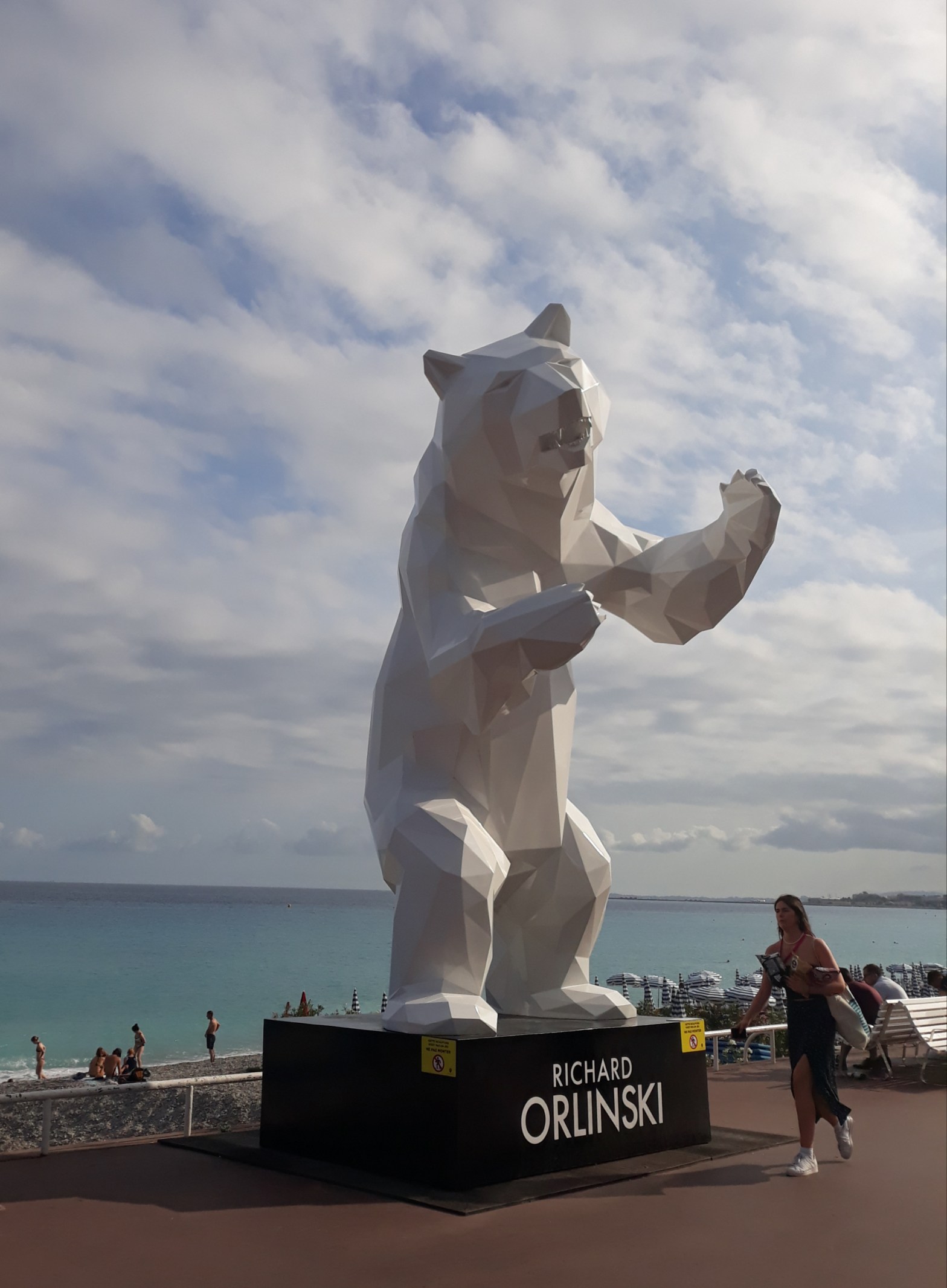
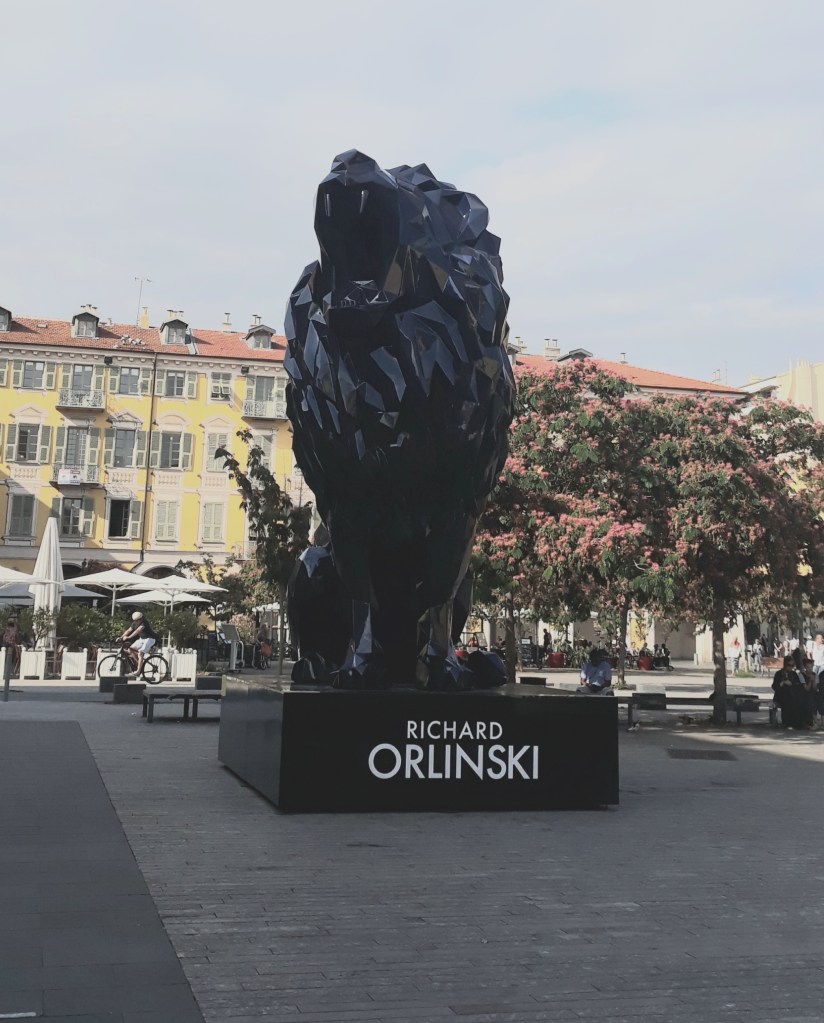
This trip to France has been decorated with some controversial street art. An installation by the French neo-pop artist Richard Orlinski of colossal animal sculptures has the French culturati polemicizing and passersby posing for selfies with the plasticine creatures. The monochrome structures use the bright colours of the original ten-pack of Crayola crayons and resemble children’s toys. These qualities and their placement in public squares, the famous promenade and even one at the airport give them a sense of fun.

Since the first sculpture I noticed in the installation was of a white polar bear, on its hind legs with a ferocious scowl, I thought there was an environment message or meaning. My other thoughts were to do with the bear as a symbol for Russia. As Nice has a sizable Russian community, I thought the creature was well placed and could have something to do with the war in Ukraine. All these ideas fell apart when I saw a huge black lion and a red tyrannosaurus rex in other parts of the city centre. Then there was Kong. A yellow King Kong wields a barrel over his head in Place Massena and a red version of Kong is amusing arrivals at the airport. I haven’t taken a picture of these Kongs as I feel some copyright issues should be taken into consideration. Kong might be iconic, but he was the creation of American filmmaker Merian C. Cooper, who deserves some credit and his estate some money for the use (or overuse) of the image.

Critics of Orlinski’s animal sculptures point out that they are simplistic and negate the complexities of art. I agree with that as I aimlessly search for meanings. Edgar Degas once said that ‘art is not what you see, but what you make others see.’ These sculptures, neither individually or as a collection, make me see or understand anything differently.

Orlinski is also unpopular with galleries as he draws costumers away from indoor installations and the more traditional paintings-on-walls exhibitions. The works have thus been reduced to ‘instagramable’ and ‘industrialised art.’ Orlinski’s own giant-sized replicas sell for 500,000€ and figurine versions for 2,000€. Being accessible to the public for me is a point in their favour. I can’t find fault in a sharing of creativity, even if their most creative feature lies in their enormity and placement in unlikely public spaces. They have at least been a source of gentle amusement during this working holiday.

Inside France Looking Out

From Nice the riots in France can only be seen on television. Other French cities about the same size as Nice and many smaller ones have been subjected to violent protests and riots in the wake of the killing of a 17-year-old by a French police officer. We don’t know much about the young man. His name was Nahel Merzouk, but he is being referred to as Nahel, no last name, and his family has not released a picture of him.

The talking heads on the many French television and radio news programmes analyse all this rioting down to a few levels. On one level, it’s about police brutality. On another level it’s about the presupposition that the police officer who fired at point-blank range will get a light sentence. At another level still, this is an angry young generation protesting against their elders in the government. I realise this last level sounds rather vague, but therein lies its power. To paraphrase Niccolò Machiavelli, the simpler the idea, the more will follow and zealously support it.

Some expert-driven talk has hissed about the Americanisation of French culture. Is Nahel the French George Floyd? As Nahel is reportedly of Algerian Moroccan heritage, is this all about race? Are the violent reactions symptomatic of the anti-colonialism that has shaped other protests and the knocking down of statues? Some British papers have picked up on this, with The Times reporting the rioting as coming from the ‘radical left.’ I suspect the radical right would like us to believe that’s the case. From inside France, it appears that all extremes are using the incident and the violent reactions to castigate Macron. One of the Italian papers, La Repubblica, has made much of this political infighting to conclude that the rioting is another sign of a weak president.

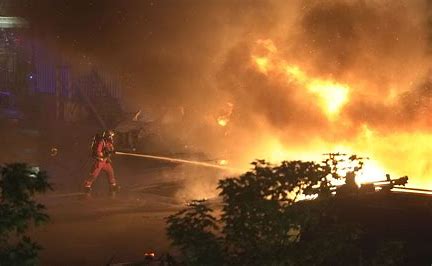
The French media is also focused on the extent of the rioting itself, how many cars and buildings have been set ablaze, how many shops have had their windows broken and how many rioters have been arrested for vandalism, looting and attacking police officers. From local radio, I learned that last night Nice experienced some isolated incidences – broken glass and rubbish bins set alight. This all makes for captivating news and gives me the uncomfortable feeling that the rioters have won by stealing the country’s attention.

The foreign media has been intoxicated by these images as well. I see online that American and British holidaymakers are concerned about their safety in France. From inside, I’ll tell you that the resort of Nice doesn’t feel more unsafe than it normally does. It’s a large city, and it has its share of pickpockets and neighbourhoods I personally wouldn’t go into at night. So far, the only change in my life brought on by the rioting is that public transport has been ordered to shut down at 21.00 – a real problem for socialising at night or going to the cinema.

I don’t mean to make light of this. I understand people’s anger. A young man, apparently unarmed, had an altercation with a police officer and was killed. The non-violent protests – better still, the silent marches – express this anger. The rioting and damage to public property, along with the hundreds of injuries inflicted on police officers, express stupidity.

The BBC informs me that tonight French cities are ‘bracing themselves’ for more unrest. I’ll just go back to bracing myself for further onslaughts of dubious reporting and opining.

Photos by Yann Arthus-Bertrand

I’ve been a fan of photography as far back as I can remember, and it could have been my metier had I been born later, into the age of digital and affordable photography. As an admirer of others’ works, among my favourite photographers are Annie Leibovitz, Henri Cartier-Bresson and Georgia O’Keeffe (yes, she was a photographer too).

I can now add to this list Yann Arthus-Bertrand, having recently discovered his work in Nice. This French-born photographer and film director is known for his environmental and socially conscious works, including the films Human (2015), Woman (2019) and Legacy (2021).

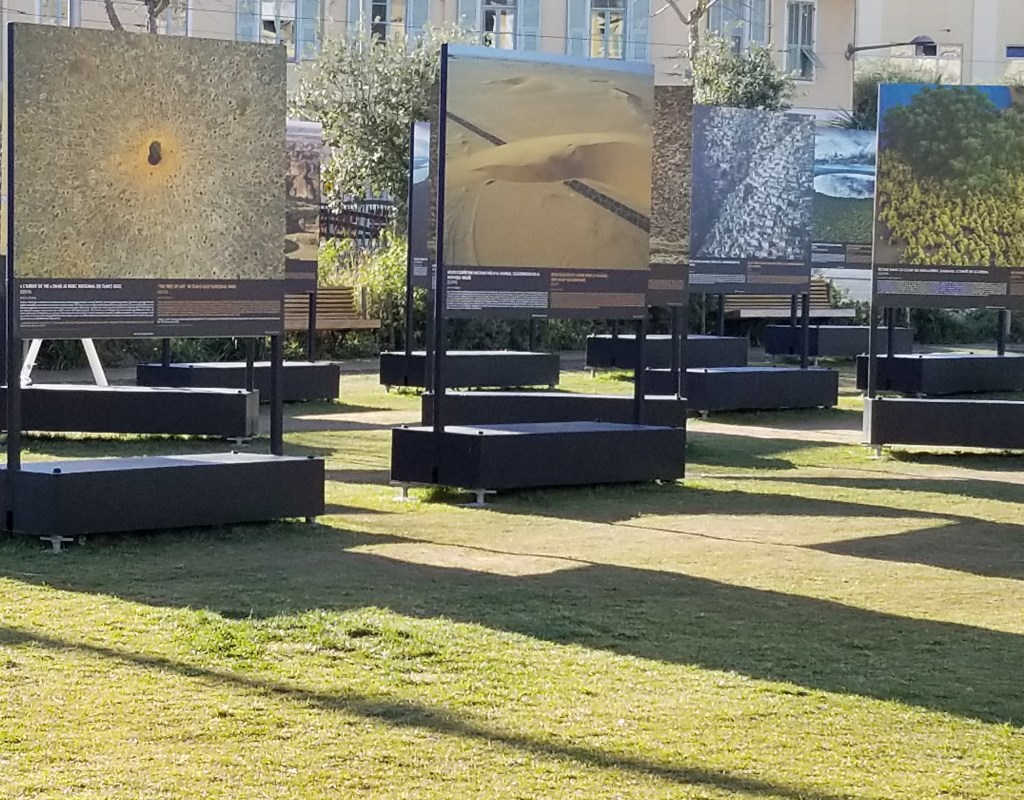
The exhibit I saw was indoors at the Musée de la Photographie and outdoors in a public square and the popular Promenade du Paillon – a public park in the city centre. As art in public spaces has long been the preserve of sculptors and architects, I was delighted to see visual art’s poor cousin photography in these open spaces for all to experience.

I was most struck by Arthus-Bertrand’s aerial photos taken all over the world. It’s hard to summarise them as they depict scenes as eclectic as life itself. Some of these aerial shots verged on optical illusions, appearing at first to be one thing, but revealed to be something else upon close inspection. Whether capturing the wonders of the natural world or freezing in time the spectrum of poverty and human labour, the images hold an aesthetic as haunting as they are enjoyable. I did feel a slight discomfort in marvelling at the beautiful colours and boxy shapes of a favela in Sao Paulo as seen from the air.

When talking about art, images support the words. I recommend visiting Arthus-Bertrand’s website or doing a search for him on Pinterest, where his fans have pinned hundreds of his photos. On this note, I close on the words of Arthus-Bertrand, who like many of us wanted one career, but ended up doing something else:

I wanted to be a scientist. I did a thesis on lions. But I realised photography can show things writing can’t. Lions were my professors of photography.

More travels in the time of Covid

Unlike the 2020 Covid travel stories of people escaping before lockdowns, the talk now is about vaccinations and tests, the lifting of restrictions and scientific advice versus political will. 

Getting to Nice was easier, if not more surreal, than we thought it would be. Armed with our lateral-flow tests certificates (at £50 each), we arrived at a half-closed Gatwick with the ambiance of an airport in the off-season. On our way to the gate we were stopped by an official asking to see our vaccination certificates. When he saw mine, he said ‘Sorry, we can’t let you through. You have to have had your second dose at least four weeks ago.’ For a few seconds I was in panic mode, imagining David going to France without me. I caught my breath and in near unison David and I said, ‘No, it’s two weeks, not four.’ I offered him my lateral-flow test certificate, but he wasn’t interested. This person whose job it was to check documents did not know the rules that he was supposed to ensure we were following. Luckily another Gatwick worker came to our rescue, agreeing that my second vaccination needed to be only two-weeks old. With that we were off to the Cote d’Azur, where we waved our vaccination certificates in the air as we whizzed through passport control.  

When we saw French neighbours for the first time in ten months, they asked straight away if we had been vaccinated. One asked which vaccines we had, followed by raised eyebrows when we mentioned AstraZeneca – apparently, not the right answer. Whatever we did, Covid was not far away. It was the backdrop of all social interaction, screening who’s hugging, who’s elbowing, who’s pecking each cheek, for which I have mastered the air kiss. In France, masks are still obligatory in public transport and indoor public spaces like shops, museums and cinemas. Some people don’t know how to wear masks and use them to cover their chin, or if you’re young, male and really cool you wear them on your wrists. As we needed to take trams everyday, we soon realised that we were testing the efficacy of our unpopular AstraZeneca jabs.

By the end of the second week, we heard the good news that we had expected – people coming from France, which is on the UK’s amber list, will not have to self-isolate for ten days and will only need to take one PCR test on their return to the UK. Relief all around. We continued to fill our days with  the Nicoise sunshine, morning walks, coffees and croissants at terraced cafes often followed by a swim. 

This joy was broken a week before our departure when Johnson’s government announced that a new traffic light had been created – the amber-plus. The country on this list-of-one was France. This meant that upon returning to the UK from France, even though we are double-vaccinated, we would have to self-isolate for ten days and have to take PCR tests on days 2 and 8. The first government explanation was that France had a worrying rate of Beta variants of the virus and that these cases might not be protected by vaccines. It was soon pointed out in the press that France’s higher Beta rate is in the French islands of Reunion and Mayotte, thousands of miles away. Mainland France has a lower Beta variant rate than Sweden, Germany and Spain – all of those countries are on the normal amber list of this Alice-in-Wonderland trafficlight, and people returning from those countries would not have to quarantine.

Just before we left France, Johnson responded to the criticism by saying that actually it is the Delta variant that is the problem. What? The UK had at that point about 6 times the number of cases of people with the Delta variant than France. Some 97% of those cases were of people who were not vaccinated. So, why quarantine vaccinated people coming back from a country with a lower rate of cases than the UK? The French authorities were quick to point out the lack of logic and scientific evidence behind these new rules. Former PM Tony Blair also put the case forward in favour of double vaccinated people not needing to quarantine. But still, nothing changed.

Why France? Has it got to do with Brexit renegotiations? A bit of jealousy over France catching up with the UK on its vaccination rollout? Or is it a personality clash between Boris the buffoon and the humourless but statesmanlike Macron?

All of this seems so ridiculous. I knew that I wasn’t likely to be a medical threat to anyone, especially after the negative results of my lateral-flow test in France a couple of days before our departure. This test incidentally cost half of what it did in the UK and this time, I had to show the certificate at the EasyJet gate, along with proof that I had arranged for two PRC tests in the UK – the cheapest option we could find was the do-it-yourself at home variety for £82 per person for the set of two.

During my first quarantine in 2020, before vaccines, I understood the importance of staying in for two weeks and tracked the days on Facebook with pictures of my garden jogging path, my various projects, etc. This time, bitter and feeling every bit the political pawn… well, here’s my summary journal:

Day 1: We receive our first of many phone calls from the NHS checking up on us, asking that we understand the rules and that we understand if we break the rules we get fined. I resist using sarcasm.

Day 2: We take our PRC tests at home and put them in the pre-labelled packages. David leaves the house, breaking the law, in order to post the tests. We both receive NHS phone calls with the same texts read to us as in the previous day.

Day 3: I find myself reading a short story by Tessa Hadley in The New Yorker set during a Covid lockdown. Another set of NHS phone calls comes in. 

Day 4: David misses his NHS call. I take mine, noticing that all of the callers sound young – twenties, maybe thirties. I hear about a colleague who has returned from France and is receiving three phone calls per day.

Day 5: David receives his daily phone call, but I don’t. The UK government announces that from 2 August, people who are double vaccinated coming from the US, amber countries in the EU (that is, not France) and cruise ships – those petri dishes of disease – can enter the UK without having to self-isolate. I consider rereading Kafka.

Day 6: David receives a call, but again, I don’t. I start to hope that I’m off the radar. I read in The Times that anyone associated with London Fashion Week can fly to London without having to self-isolate. I feel I’m living in a joke that isn’t funny.

Day 7: UK Foreign Secretary Dominique Rabb explains that the issue over the island of Reunion having a high rate of Beta and not mainland France where people are travelling from  is immaterial. It’s not the distance between the little island and the mainland, it’s the accessibility the island has to mainland France. Clearly, Rabb hasn’t noticed all the times that Reunion has had lockdowns with no one travelling anywhere. Nor has Rabb considered the fact that rules for going to the Canary islands, which are owned by Spain, are different from the rules applied to mainland Spain. When I get my NHS call – I’m back on the radar – I request the short version of the script, explaining that the long version will just make me angry. The caller replies to my bitterness with a perky ‘Okay’ and jumps to the part about being fined.

Day 8: We take PCR test 2, David breaks the law again to post them, and we both receive phone calls from our young friends at the NHS. Simon Calder of The Independent confirms a rumour we have heard that turns out to be true – the island of Reunion with its high Beta rate is on the amber list, while mainland France with its miniscule Beta rate remains on the amber-plus list.

Day 9: David receives his daily call, but I don’t. The papers are full of stories about vaccine passes. In France, these passes are proving a success, before they even become law, millions more are queuing up for their vaccines. Those who refuse could still get into venues with a negative covid test, or they could simply take to the streets and protest – it’s what the French do. I’m missing France already.

Day 10: I start looking into a winter holiday in Reunion, and I finish this blog.
Yellow Vests and Black Days

As I write this, hundreds of protesters are being arrested in Paris. In my years of living in France part-time, I’ve witnessed dozens of protests – participated in a couple myself – and have been inconvenienced by countless strikes. But I’ve never seen anything as violent and inexplicable as the current wave led by the gilets jaunes, so named for the yellow safety vests, required by drivers, that they wear as they pace down the streets, stopping traffic and causing chaos.

What started as a demonstration against a rise in vehicle-fuel taxes has snow-balled into a general protest against President Macron. While some protesters on the news complain about a litany of changes to taxes and pensions that help the rich more than the poor, others speak in vague mantras about Macron’s arrogance and that he should resign.

While my natural inclination is to support the underdog, I have mixed feelings. I can understand people protesting against a rise on taxes, but the fuel tax is to help fight climate change – there are other taxes and issues to fight. Incidentally, the climate change protesters were also out in force this week in France. I’m also uneasy with the claims that these protesters are supporting those who are ‘starving’ and ‘becoming poorer.’ I don’t doubt that a growing number are struggling to make ends meet or are experiencing real poverty. Yet, these demonstrations have coincided with the Black Days of shopping, where what started in America as Black Friday has morphed into Black Days, a long weekend of discounted shopping for clothes and electronics. The shops and boutiques of France have been packed. The irony – or perhaps it’s juxtaposition – makes me question people’s sincerity.

Perhaps I’m not as sympathetic as I ought to be because I’ve been appalled by the breaking of windows, looting of shops and setting cars ablaze. Such actions merely hurt people and the cause. What’s happened to peaceful protest (which could include non-violent civil disobedience) and voting in another government when the time comes?

Black days also come in the form of something larger, more sinister. In France, the extreme right and extreme left have hitched on to these protests, twisting them into justifications for their own forms of government. And the political opportunism doesn’t stop there. The sad excuse of a US president first claimed these protests supported climate-change deniers – like himself. Later he claimed that the protesters were screaming out ‘We want Trump.’ Of course, that’s already been disproved by several reputable sources. I mention it only because it allows me to end on a laugh.

Postscript – if I weren’t laughing, I’d be crying.

The Two Faces of the Carnaval de Nice

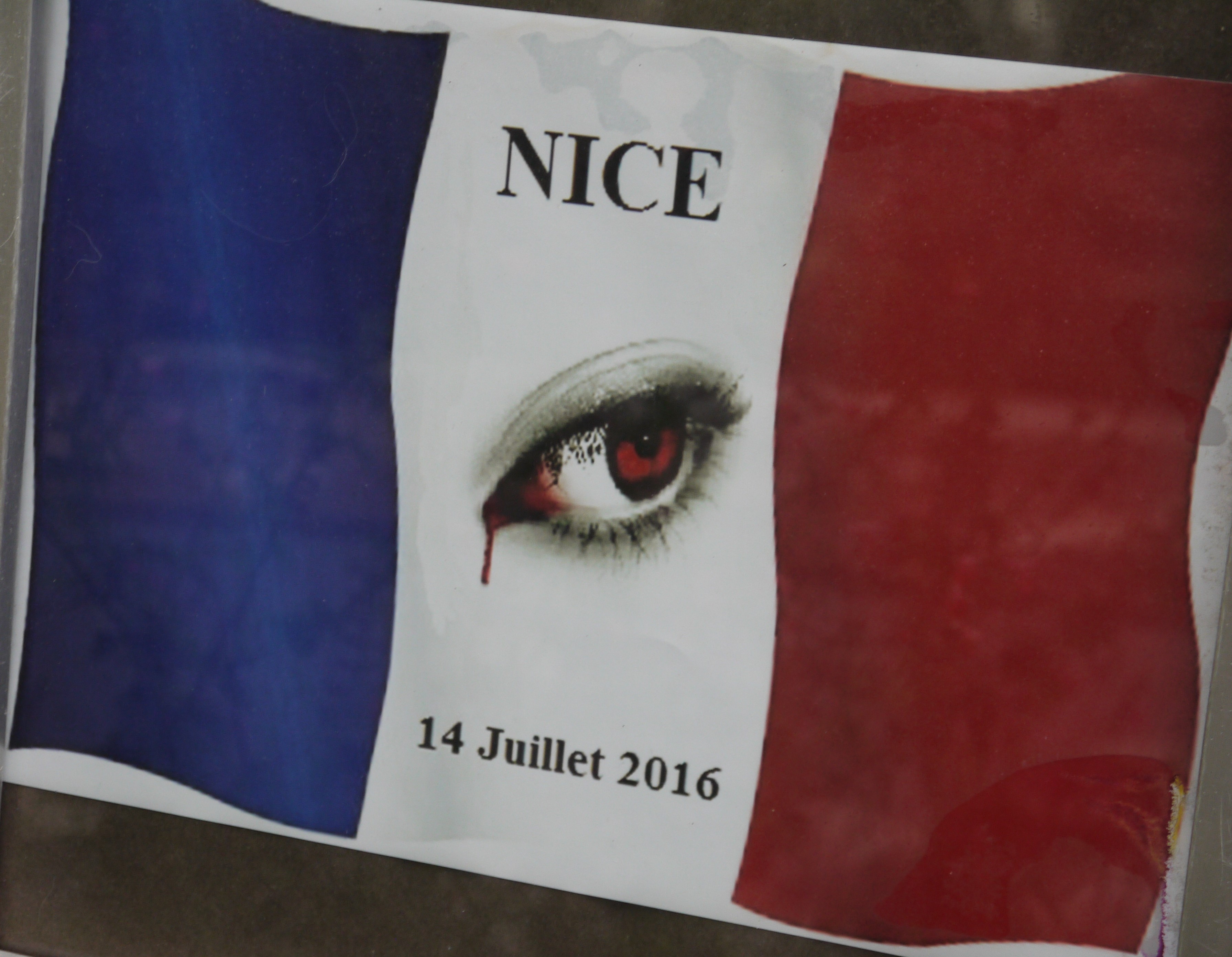
While the mood was jovial and the music loud, heightened security made the Carnaval de Nice a different kind of event to the one we’ve grown used it. After the terrorist attack of 14 July of last year, the procession route was changed to exclude any part of the Promenade des Anglais. This meant that on the final night when the king of the carnival is set alight and sent out to sea, tradition had been squashed. The king was still killed by flames in a bonfire, but quickly extinguished on the spot by firemen. Also breaking from tradition, the battaille de fleures, where crowds and the people on the floats throw flowers at each other – had been changed to flowers coming only from the floats and not the audience – not so much a battle as a handout.2017-02-11 00.01.28.jpg

Officially, these adjustments were out of respect for those who perished on the Promenade – some of very spots where the killings took place would have been included in the normal carnival procession route, including the king’s route to the beach. Flowers are part of official memorial sites to the attack victims and in the makeshift memorials still peppered along the Promenade. Unofficially, a second reason emerged. The smaller area given to the carnival and spectators not being allowed to enter with bags of flowers clearly made it easier for security forces to manage the crowds and any terrorist threat.

These changes to tradition shouldn’t be taken lightly. Purported to be one of the largest carnivals in the world, it is also the oldest in Europe. The earliest record of the carnival goes back to 1294, when Charles Anjou, the Count of Provence, made mention of visiting the celebrations in Nice. In recent weeks, I’ve heard local people talk about not following to tradition in ways that one speaks of the death of a close friend – nothing will ever be the same without them.

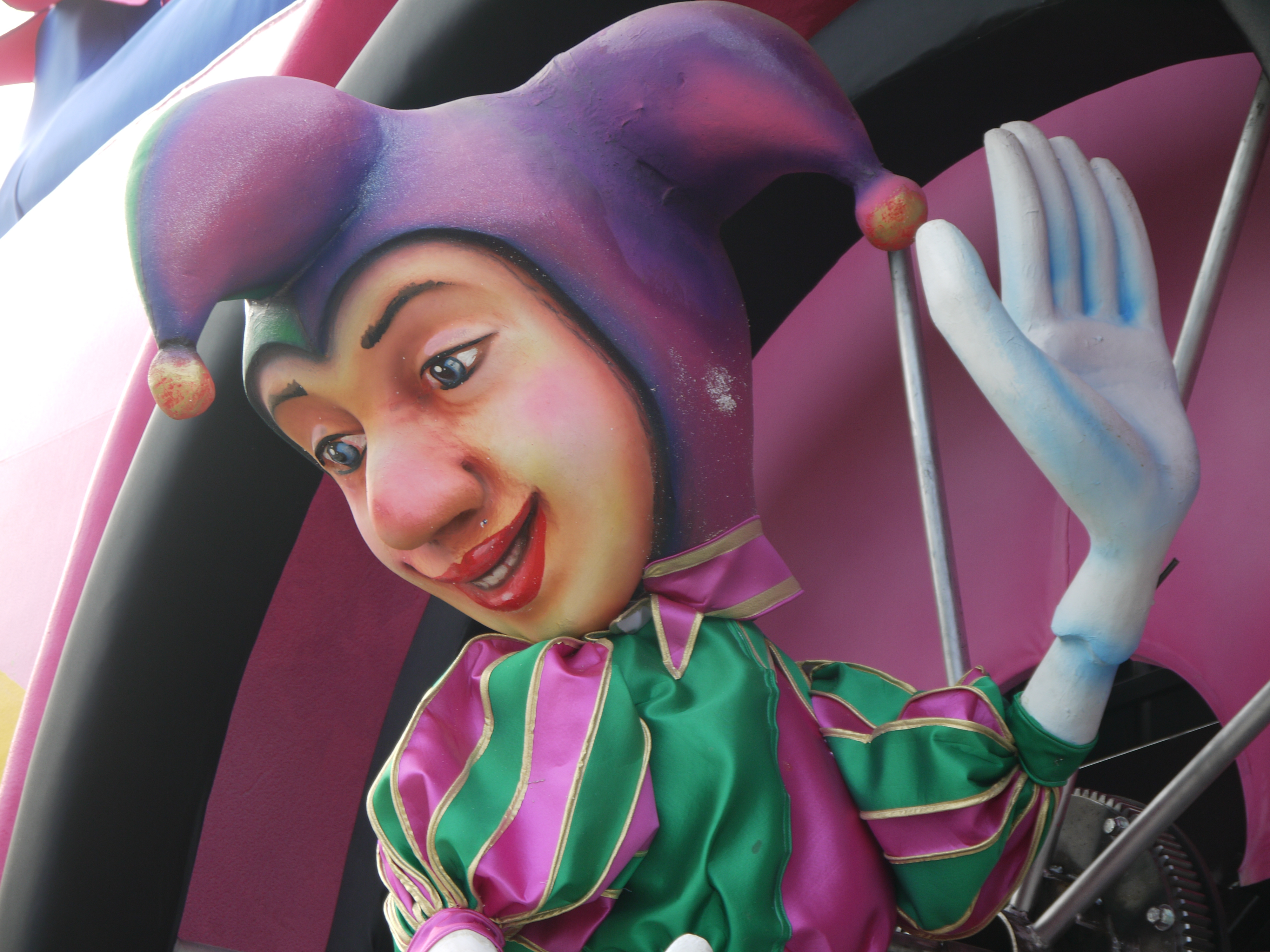
But those were the quiet faces under the carnival masks. The public faces, scarnaval-at-nightparkling with glitter, paper-macheted, sexy, comical, upheld the traditions and essentially gave the finger to the terrorists of our age.

Women’s March – Nice

In truth, the march had been cancelled. Following the terrorist’s attack in Nice only some seven months ago, the city had decided not to give a permit to the women’s march yesterday. Some of us didn’t know about this. Others knew and were defiant. Unfortunately, others stayed at home or went to marches in Marseille or Montepelier. In the end we had about 100 protesters, mostly from America and Britain, but also from France, Holland, Turkey and South Africa. That was enough to gather around the statue of Apollo, take photos of each other and send them to Twitter and Facebook before heading out to march along the Promenade des Anglais up to the Negresco and then back on the other side of the street to return to Place Massena. This was naturally followed by political banter in nearby brasseries and cafes.

This march may have been on a small scale, but as it was linked in ideology and spirit to marches around the world, especially the one in Washington, it was a big deal. The women I spoke to felt it necessary to be there. When someone as devisive and aggressive to the world and insulting and hateful towards women as Donald Trump emerges, the only choice is to fight back. I hope I never lose my own sense of connectedness to the world and willingness to fight when confronted – even from miles away – by such a menace.

2016: Looking for the Good in Good Riddance

Does any more need to be said about what an awful year 2016 has been? In brief – Syria, Bowie, Brexit, Trump, attacks on Nice, Orlando, Brussels… 2016-12-25 11.12.11.jpgFor Syria, Brexit and Trump, there are lists of hideous events and poisonous rhetoric that have helped to make 2016 notorious even before it’s ended. Finding the good in such a year is not only challenging, but necessary. The alternative would be to shut down and sulk, permitting the bad things to fester and grow worse in the mind’s eye.

As for the positive side, for a start there was the election of Sadiq Khan, London’s first Muslim mayor; women in Saudi Arabia finally got the right to vote; and a solar-powered plane circumnavigated the world. Other good things to happen in 2016 have come from the world of sport. Leicester City football club won the Premier League, having started the season with odds of 5000-1. There was Team GB’s fabulous performance in the Summer Olympics. And on the other side of the Atlantic, the Chicago Cubs won the World Series – a feat they hadn’t done since 1908.

Other good things have emerged out of the many horrible and sad events to happen in 2016. The attack on Nice, my second home, has brought about feelings of solidarity with my neighbours and acquaintances. The shock and sadness of David Bowie’s death similarly connected me with other fans and people whose younger selves had also been transformed and liberated by his creativity. Following the Brexit vote, I have joined several organisations to stay informed and to protest against the economically stupid and xenophobic trail left behind – I have never signed so many petitions and written to so many political representatives as I have in the past six months. Again, there is the sense of unity which is comforting, but to this I must add the satisfaction of doing something political and participating in the bigger debate.

While the political is personal, there is the smaller concentric circle of my personal life. In 2016, David and I went to America to visit friends and I was reunited with a friend I hadn’t seen in 34 years. I also visited my father’s grave for the first tim2016-12-25-11-16-33e – a sad, but fulfilling experience. Back in England and France, we have enjoyed good health and the company of friends and family, interspersed with reading, writing, playing golf and going to cinemas, concerts, galleries etc. Life has been full and satisfying, even under the cloud of this annus horribilis.

Let’s hope for a better 2017.