Where’s the Sense in Sensitivity Reading

I was appalled at hearing about the linguistic butchery being performed on some of Roald Dahl’s most famous works. The publisher Puffin and the Dahl estate have announced that they’re making changes to the author’s language on weight, gender and race.

These guardians of children literature are not giving children or the adults who read to them much credit. Dahl’s writing has always been full of hyperbole and even his narrators can have the bluntness and insensitivity of schoolboys. Readers expect this from Dahl, alongside humour laced with cruelty and darkness. Love it or loath it, this is the author’s voice. People who do loathe these features of Dahl’s work have a plethora of other children’s book to choose from.

This reminds me of my own childhood. I was fortunate in having my formative reading years in the seventies when America was burgeoning on the liberal and tolerance fronts. Mark Twain’s Huckleberry Finn was on the reading list but has since been banned from most States’ school curricula. Finn was the first social satire I had read outside of the comic strips in the Chicago Tribune. But it is a book that uses the n-word. Hundreds of times. Long before we read Twain’s masterpiece, my little friends and I knew that the n-word was pejorative and using it was racist. Huck and his sidekick, Jim, a runaway slave, both use the word nonchalantly. That’s not to say it wasn’t pejorative or racist even among these two friends. I believe they were portrayed as following the hierarchy of the times, unconsciously for the young Huck, but deliberately used by Jim as if to say he knew his place. Coming to understand these nuances was important for me in developing a deeper understanding of individuals battling and reflecting society at the same time and in developing an appreciation literature that could draw this out.

What is going on with the censorship of Dahl’s work is part of a bigger and worrying trend. American and British publishers have in recent years hired sensitivity readers to screen books before publication. The aim of these readers is to provide feedback on language that could offend minority groups. This feedback then becomes an editorial decision. Of course, literary editing and input from commissioning editors is nothing new, but it’s the search for offence and readily acting on this advice that is a sign of our times. In Le Monde, Clementine Goldszal reasons that this new job title has emerged as a way of avoiding heated debates on social media, many of which have spun into threats of violence against the books’ authors and publishers.

While I’ve been putting this blog together, a glut of articles about sensitivity readers has stolen my thunder. Most are against them, regarding their work as a type of censorship and inevitably quoting Lionel Shriver, who describes the practice of sensitivity reading as ‘totally subjective’ and ‘a waste of energy.’ (Cliché alert) If you can’t beat them, join them. The only piece I have seen in favour of using sensitivity readers was in The Conversation.

That article raises interesting points about this new practice offsetting the predominantly white, male and educated class of writers and publishers. To some extent this is true, but there are also ethnic minority and women writers getting published by mainstream and independent presses. If people read or listen to a book review and decide that a book might offend them, they can protest with their wallets by not buying it and expressing their feelings on social media or face-to-face at the café or pub.

A closing thought – you may have noticed that earlier I used the n-word instead of spelling the word out in full. I didn’t do this to avoid offence, and I would have preferred to use the full word – it is an example of language, just like any other swear word. What I have done is self-censoring so that the bots at WordPress do not label this blog ‘Objectionable Material.’ I’ve been punished with this label before. Sigh.

An Alternative Valentine’s Day

No cards. No flowers. No chocolates. No boozy dinner at an upmarket restaurant. Today, we celebrated Valentine’s in a different way.

Since Christmas my David and I have been doing the green thing of not giving each other cards. Over the years, we have exchanged cards for birthdays, anniversaries and all the big holidays. We saved these in our personal filing cabinets, most of David’s to me have been transferred to a plastic storage box with other paper-based memorabilia and my writings that pre-dated internet clouds. We both know full well that in our senile dotage, these overpriced cardboard confectioneries are going to the recycle bin, which then goes to the overflowing waste management centre, where currently less than 60% of recyclables are recycled.

Recent years have also seen us both clean up the clutter around us, and 2022, after my milestone birthday, became the year to cease card-giving and consequently, card storage. No jokey Christmas greetings or 25th wedding anniversary of rhyming sentiments written by strangers. Instead, we wished each other happy Christmas and anniversary and washed down special meals with good wine. Chink.

As with Christmas cards, there is also an historical case against exchanging Valentine’s Day cards and gifts. A little internet research (okay, not peer-reviewed) reveals that St Valentine of Rome was added to the calendar of saints by Pope Galesius in 496 even though he was martyred in 296 for performing weddings for soldiers who were not permitted to marry. This lovers’ day did not see the exchange of cards and gifts until the 19th century with the industrial revolution. Like so many customs, the festive day had become commercialised, a chance to sell mass-produced cards, sweets and flowers. We’re not so much breaking with tradition as we are fighting consumerism.

Within this Hallmark-free zone we celebrated Valentine’s Day by going to a pub in our town of Ely, partaking in the two meals for £25 lunchtime special. Yet, stingy doesn’t mean we are devoid of sentimentality. While waiting for our meals, we talked about this blog and my wish to end it on a love poem that isn’t soppy. Without hesitation, David said, ‘”An Arundel Tomb” by Philip Larkin.’

Side by side, their faces blurred,   

The earl and countess lie in stone,   

Their proper habits vaguely shown   

As jointed armour, stiffened pleat,   

And that faint hint of the absurd—   

The little dogs under their feet.

Such plainness of the pre-baroque    

Hardly involves the eye, until

It meets his left-hand gauntlet, still   

Clasped empty in the other; and   

One sees, with a sharp tender shock,   

His hand withdrawn, holding her hand.

They would not think to lie so long.   

Such faithfulness in effigy

Was just a detail friends would see:

A sculptor’s sweet commissioned grace   

Thrown off in helping to prolong   

The Latin names around the base.

They would not guess how early in

Their supine stationary voyage

The air would change to soundless damage,   

Turn the old tenantry away;

How soon succeeding eyes begin

To look, not read. Rigidly they

Persisted, linked, through lengths and breadths   

Of time. Snow fell, undated. Light

Each summer thronged the glass. A bright   

Litter of birdcalls strewed the same

Bone-riddled ground. And up the paths   

The endless altered people came,

Washing at their identity.   

Now, helpless in the hollow of   

An unarmorial age, a trough

Of smoke in slow suspended skeins   

Above their scrap of history,   

Only an attitude remains:

Time has transfigured them into   

Untruth. The stone fidelity

They hardly meant has come to be   

Their final blazon, and to prove   

Our almost-instinct almost true:   

What will survive of us is love.

  • Philip Larkin (from The Poetry Foundation.org)

Have a happy eco-friendly anti-consumerist Valentine’s Day.

The Arundel tomb that Larkin was referring to. You can just see the couple handing hands.

It’s time to evict English Departments from universities

About a dozen of my 35+ years of teaching were in undergraduate English departments in America and Britain. I now believe it’s time to get rid of these fixtures of universities once and for all.

Let’s start with the teaching of writing. Why do universities need English departments when other departments could easily include courses on written and spoken communication for their fields? American universities have been coming close to this practice for years, where English departments provide their services to other departments in the form of Composition classes. In Britain, English departments don’t include modules on composition or academic writing. Young people are taught (though do not necessarily learn) how to write in secondary schools and for those who don’t finish secondary school and later decide to attend universities, there are Foundation modules – and these are not always operated by English departments.

Furthermore, apart from modules on creative writing, most undergraduate writing is formulaic, following one of several genres of academic writing. The memories are flooding back from my stint of teaching Composition in the US, where I was encouraged to teach the five-paragraph essay and correct students’ fragment sentences no matter how effective they were. These essays came in several varieties – alternating argument, block-form argument, compare and contrast, process explanation etc. Fine for teaching some aspects of communication and critical thinking, but the end results hold little resemblance to writing in the real world, where essays take on creative forms, wiggling their arguments around anecdotes, and reports that could be journalistic, scientific, technical or legal, are punctuated with videos and follow in-house styles for speedy reading. The five-paragraph essay is the product of our assessment culture. Adhering to a formulaic genre of less than 1000 words is efficient for the grading machine, otherwise known as the English teacher.

Having learned the basics of prose writing in secondary school or a subject-specific Foundation classes, students could develop their writing with essays and reports in their fields of study. If they have the ideas and understand the content, but struggle to communicate, they can always go to a bot, such as ChatGPT, to help them. Not an original thought – a recent article in Nature considered whether ChatGPT could replace editors and teachers of writing. While academic publishers might take issue with this, such AI tools have a place in formulaic writing as an aide to written communication. Yes, they make mistakes and lack the creative nuances humans can bring to their writing, even if those humans are undergraduate students. Perhaps in the future student writing will become, with the help of bots, student editing. But I’m singing the praises of AI in soft tones until we learn more of the real costs – I’m waiting for news of the carbon footprint of ChatGPT and other sophisticated bots, considering the shameful carbon footprint of digital currencies like Bitcoin.

What about literature? English departments without writing courses would be left with literature, criticism and a spattering of linguistics. I’m not convinced that we need undergraduate English departments to teach us about literature. A lover and producer of literature myself, I see that the most influential works of fiction, poetry and theatre in my life came mostly from what I was taught in primary and secondary school. Other key works in my reading life came to me after finishing my student-serfdom as most of these books and plays were only written within the past 30 years. Outside of the academy, people enjoy literature the world over through book clubs, reading groups and as individuals. This is being helped with literary festivals, online forums and seminars, blogs, social media and sites such as Good Reads.

Literature in foreign languages, in my utopic university, would be retained in foreign language departments with hefty doses of literature and other cultural input. English literature would also still be studied at university as a component of other departments, most obviously sociology and psychology. Historical fiction could be part and parcel of history modules. STEM subjects could also draw from literary texts – last week’s blog discussed a novel that featured maths. All disciplines could benefit from more creative input.

As for Literary Criticism, in the age of mass printing, the internet and MOOCs, self-study materials and literary theory discussions are available for the motivated. Better still, let’s leave Critical Studies, Literary Criticism and Literary Stylistics for post-graduate departments, where students can appreciate these subjects more having had some undergraduate education that gets them thinking critically, whatever the field. Having said that, writing in The New Yorker, Merve Emre argues that Literary Criticism has become professionalised and part of the cultural capital (in the Bourdieu sense) that excludes the under-educated and is wrapped up in ideologies at the expense of studying and enjoying literature. That is, maybe criticism needs to reinvent itself into something more accessible.

What started as a blog has turned into something of an essay. But note – more than five paragraphs, a few fragment sentences and a meandering set of arguments without a conclusion.

Some Quirky Memory Plots

Two books among my recent reads employ unusual premises around the concept of memory to develop plotlines and consequently some fascinating characters.

Claire North’s The Sudden Appearance of Hope is a psychological science fiction, though some might consider it magical realism, with elements of social satire woven in. The main character, Hope, is forgotten within minutes by anyone she’s in physical contact with as if that person had never met her before. No, she’s not a middle-aged woman. In fact, she is an attractive twentysomething and uses her condition, a person who can be filmed on CCTV but not remembered or identified by anyone, to become a master jewel thief. She is helped by contact with an underworld of thieves in the deep web, where her avatar and handles are remembered – that is, she has a digital footprint.

While it’s fun to read how Hope can get away with theft and escape police stations and other scrapes as soon as someone leaves the room for a few minutes, a serious side lurks. Forming relationships is nearly impossible and only happen when the other person is aware of this memory cloud and can write notes to themselves, a complicated and difficult process. Hope reminds us how life without relationships can be lonely and agonising.

The Housekeeper and the Professor is a novel by Japanese writer Yoko Ogawa that uses memory in a more conventional and believable way but with a twist. Following a car accident, a maths professor suffers from some sort of anterograde amnesia, an inability to form new memories. In the professor’s case, he can only remember what has transpired within the last 80 minutes and his long-term memory only contains his life before his accident of some twenty years ago from when the story begins with the arrival of a new housekeeper. Of course, every day is experienced as if the ‘new’ housekeeper has arrived. Aided by notes pinned to his clothes, he pretends he knows her, and they cultivate a friendship of sorts. With the appearance of housekeeper’s young son afterschool, this threesome manages to communicate and grow around their passions for mathematics and baseball.

In both books the heroines make use of these quirks of memory. As she is easily forgotten, Hope can attend taster sessions time and time again, becoming an expert in martial arts and having an enviable command of several languages. The housekeeper, who had limited schooling, learns maths without embarrassment by repetition from the professor who teaches her each time as if the first time.

Neither book employs the worn tropes of traumatic memories, childhood memories that come back to haunt, or even memories of the future caused by time travelling. Playing with the concept of memory in these peculiar ways, North and Ogawa flex their readers’ imaginations and remind us that there are other ways of thinking about the faculty of memory and what it means to be human.

Hamnet and Harry

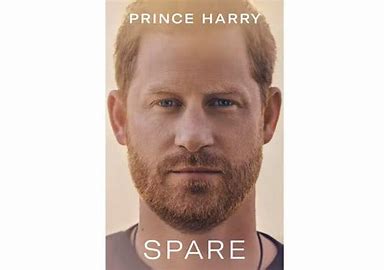
While journalists have been speedreading Prince Harry’s memoir, I’ve been reading at a leisurely pace Maggie O’Farrell’s critically acclaimed novel Hamnet. I have no intension of reading Harry’s book and anything I have to say about it comes from reading extracts and summaries in the press.

O’Farrell’s Hamnet is a work of fiction, a point the author makes at the end of the book. It’s based on the lives of real people, William Shakespeare and his family, though more about his long-suffering wife and their children. Hamnet was the bard’s only son, and he died as a child. While the reason for his short life is not truly known, O’Farrell takes the position that the boy died from the plague. We know that the plague, or ‘pestilence’ as it was called then, was in England at that time and that Shakespeare’s own playhouses in London were closed periodically because of the highly contagious scourge. The book is filled with intriguing details of how people in 16th century England lived, with Shakespeare’s wife being something of an herbalist, running her own business of plant-based tinctures and ointments while the medical doctor advises his patients to wear a dead toad around their stomachs. That is, there is a great deal of historical fact in this work of fiction, making it entirely plausible.

Ultimately, Hamnet is about grieving parents and how both deal with their loss. For Shakespeare, Hamnet is honoured with the tragic play Hamlet (incidentally, my favourite of Shakespeare’s plays). O’Farrell makes the case that Hamnet died of the plague even more plausible by noting that despite the intrusion of the disease in people’s lives, none of his plays mentions it. This suggests that Shakespeare was grieving and perhaps too emotionally pain-stricken by the subject of the plague to include it in his works, needing another outlet, the simple renaming of a character. The connections between the Hamlet story and the loss of Hamnet are made in the beautiful and deeply moving final scene of O’Farrell’s book. (No spoilers here.)

Prince Harry’s book is the inverse of this. It seems Harry is trying to dispel the fictions about him spread by the media by writing his ‘true’ account of his life. This is why I’m not going to read his book – I really do not care that much about his life. I watched all six episodes of the Netflix documentary by and about the Sussexes to be a participant in popular culture (and to appreciate the jokes when people made fun of it), and I felt I had enough of the couple’s self-absorbed cooing at each other through soft-focus lenses. Having said that, I am sympathetic with Megan’s experience of the racist and misogynistic press, made worse by uncensored social media postings. Of course, the reader of Harry’s book doesn’t know what is fiction or truth, or Harry’s truth, coloured by selected memories and emotions. This tell-all memoir brings back memories of his mother’s complicity in her biography by Andrew Morton and her interview with the BBC’s Martin Bashir.

This unlikely comparison between a brilliant work of literary fiction and a ghost-written celebrity memoir does have one more link worth considering. Hamnet became Hamlet, a revenge tragedy, where the grieving son avenges the death of his father. It could be said that Prince Harry is avenging the death of his mother. I’ll leave that to the psychologists.

Reading Russia

I’ve long held a fascination for things Russian even though I’ve never been there and have only visited a few former Soviet and Iron Curtain countries (Czech Republic, Azerbaijan, East Germany). While I grew up in the fearful times of Cold War America, Russia occupied a high place on the cultural scene. Its Bolshoi dancers were next to none. Its painters, like Chagall and Kandinsky and writers, Dostoyevsky, Turgenev and Tolstoy were closer to spiritual leaders than artists during my teens. One of the first pieces of classical music that I fell obsessively in love with was Tchaikovsky’s violin concerto.

How does this square with Putin’s Russia? Well, it doesn’t. No more than the great twentieth century American novelists and musical giants of jazz can be put in the same box as Tr*mp. Trying to understand any country by its rulers and political leaders is an exercise in futility.

In recent months I’ve been dipping into things Russian again by rereading some Ivan Turgenev, followed by Mark Galeotti’s A Short History of Russia. This reading exercise might sound heavy-going, but really it wasn’t. Turgenev is probably the most accessible of the classic Russian writers, having been well ahead of his time by embracing a more modern, and less ponderous, style than his contemporaries. A Short History of Russia, though written by an academic, is intended for a generalist audience.

An article in The New Yorker about Turgenev’s Fathers and Sons inspired me to give this book another read. In The New Yorker piece, Keith Gessen mentions almost in passing that this classic was not a reflection of Turgenev’s relationship with his own father nor with a son as the writer never had any, but that it made some connection to Turgenev’s relationship with his illegitimate daughter. I thought rereading the novel would be a less blokey affair and might take on something of a feminist reading. Not quite. Published in 1862, it still revolves around the lives of men, but it’s more about the bromance between the two main characters and their ideals – the one, Bazarov, being an arrogant, often rude nihilist, the other, Arkady, trying to be a nihilist while respecting his elders and society’s norms. Yet, I was pleased to rediscover the women characters, who are far from frivolous. Example, Anna Odinstov captures the attention of both men through her intellect and skills in debate, chipping away at the nihilists’ disregard for love.

The action of Fathers and Sons takes place in 1859, just before the emancipation of the serfs (1861) and during a time of heated debates over the future of Russia. According to Galeotti’s history of Russia, Alexander II’s freeing of the serfs was ‘the most ambitious social-engineering project Russia had yet seen.’ While the serfs wanted their land, the country operated on a system of landed gentry. There were those in the country who favoured the modernisation along the lines of Western Europe. Others, the conservative Slavophiles, saw Western influence as decadent and wanted Russia to carve out its own place in the world, neither East nor West. Basically, everyone wanted change, but no one knew what to do. Much of this debate continued well into the next century, being reshaped by the first World War and the Revolution. What Galeotti is particularly adept at doing is showing how the country defined and redefined itself through its own sense of history and patriotism, one that has been rewritten and skewed over the centuries. We see the latest version with Putin.

Of course, this isn’t unique to Russia. Consider what Britain is experiencing in the re-evaluation of the monarchy and its connection to colonialism and the slave trade. I’m not a huge fan of the self-absorbed Harry and Meghan, but I was glad to see their Netflix documentary putting the spotlight on such issues and having the sense to bring on board the Black British historian David Olusoga. Ah, I wasn’t going to be yet another writer voicing their opinion about H and M. Sorry, readers. Back to Russia – both books are worth a read and reading history alongside fiction is highly recommended by this blogger.

A Proust Dipper

It’s been a big couple of years for Marcel Proust fans. Today marks 100 years since his death, which comes on the heels of the 150th anniversary of his birth, celebrated last year. It’s been an even better year or two for people who like to criticise Proust fans for being ‘snobs’ and ‘masochists.’ Guilty on both counts. That is, if you accept that reading literary classics is a sign of snobbery. As for masochism, I don’t know why I tackle some of the tomes that I do, especially in French, or even worse for me in Italian.

So, what is it like to read Proust? According to the Proust Society of America, Proust’s longest sentence was 958 words. Why not break this sentence up into other sentences? I ask, wearing my editor’s hat. I’m sure Proust had his reasons. I suspect it had to do with the many thoughts that operate in our minds at the same time, a sense of time collapsing on itself. That is one of the things I enjoy about reading his fiction – it often challenges our sense of space and time in the context of day-to-day life without entering fantasy, sci-fi or magical realism (not that there’s anything wrong with this genres).

Remembrance of Things Past (La Recherche, as the French call it), Proust’s highly autobiographical masterpiece, has a dream-like quality of a broken narrative that reconnects at the will of its narrator trying to figure out his life. I’m re-reading the first book of this 7-volume, 3,000 + page magnum opus– this time in French – snob, masochist.

Proust’s writing and life are intertwined, and I suspect that is a part of the fascination and cult-like following that Proust has garnered. He lived during the scintillating times of the Belle Epoch and hobnobbed with artists, writers and socialites of the day, including Andre Gide, James Joyce and Sarah Bernhardt. Nobel laureate Annie Ernaux, who is also a masterful practitioner of autofiction, says of Proust:

‘He is the total writer. One has the impression that Proust, as a person, does not exist. He is entirely in La Recherche. That’s what I admire so deeply. He is the total work- he cannot be compared with another.’

Although he never publicly admitted to being gay, his relationships with men are well known and included in nearly every biography. According to William Carter, one of Proust’s many biographers, “Proust was the first novelist to explore the entire spectrum of human sexuality.” Carter adds, “Characters could be homosexual in the first part of their lives and heterosexual later, or the reverse.” Proust was ahead of his time as a philosopher and sociologist of sorts on matters of sexuality and gender. While I’m reading La Recherche in order – that is, beginning to end – I dip into it to read a few pages at a time, and sometimes before bed, a few long paragraphs before nodding off. I find myself leaving it for a couple of weeks to read some other novel by a completely different type of writer and then returning to Proust, not always remembering all the details of characters or events. But strangely, that doesn’t matter as the language and sentiments soon draw me back in. According to Alice Jacquelin, literature lecturer at Nanterre University and Proust specialist, “There’s no sacrilege in dipping into it.” The book lends itself to that. The reader can experience snippets of a life and still feel immersed in Proust’s world, a world cherished by us literary snobs and masochists.

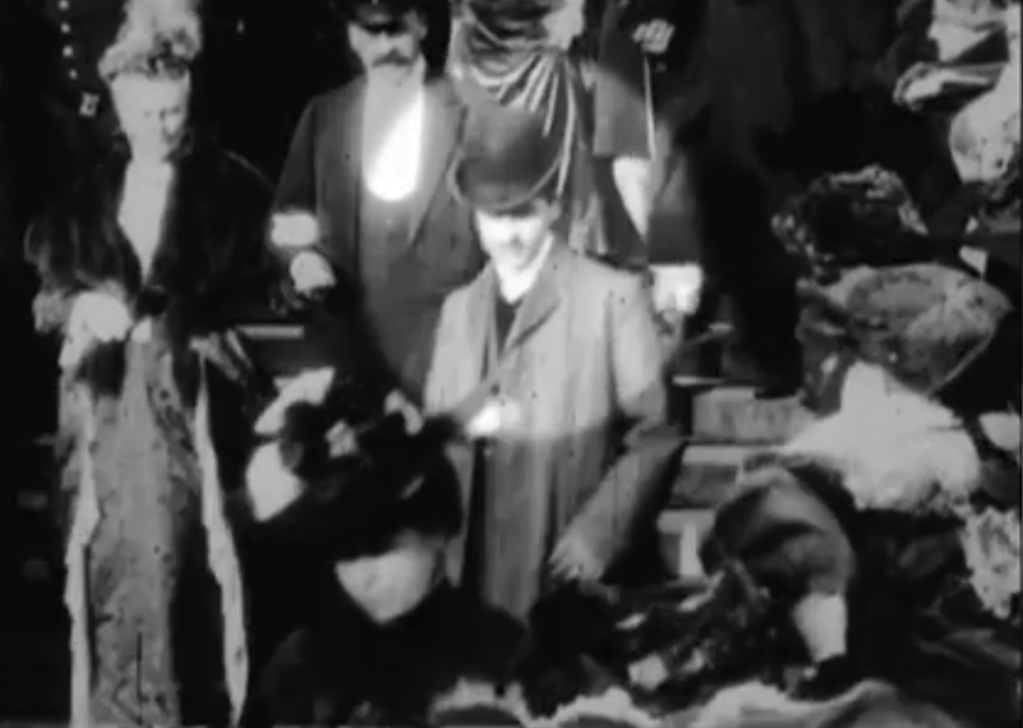
The only known film image of Proust from a home movie of a wedding.

Thrutopia

Move aside dystopian literature and make way for thrutopian tales that give hope without the silliness of sugar-coated utopias. In recent years, I’ve been reading about this call to arms to establish a new genre of literature. The word has its origins in the idea of going ‘thru’ from one place to another.

In 2017, writing for the Huffington Post, environmental campaigner Rupert Read made the case that a thrutopia could get us through the climate crisis. In sum, his argument was that we need ‘artistic or philosophical vision’ for the future that dealt with the harsh realities without being dystopic and without the blind optimism of utopia. He explains:

‘Thrutopias would be about how to get from here to there, where ‘there’ is far far away in time. How to live and love and vision and carve out a future, through pressed times that will endure. The climate crisis is going to be a long emergency, probably lasting hundreds of years. It is useless to fantasise a shining sheer escape from it to utopia. But it’s similarly useless, dangerously defeatist, to wallow around in dystopias. We need ways of seeing, understanding, inhabiting, creating what will be needed for the very long haul.’

While I agree with the general idea, I don’t think I’d call dystopic literature ‘dangerously defeatist.’ I’m thinking Atwood’s The Handmaid’s Tale, which was first in the 80s and more recently thanks to the TV series, a warning of a world controlled by religious extremists. Ishiguro’s Never Let Me Go and Cormac McCarthy’s The Road are likewise more realistic than defeatist, but with the reader knowing that they have elements of make-believe. The real sense of defeatism emerges when reading commentaries in the media about the irreversible damage brought on by the climate crisis at a time when a world leader of dubious sanity is threatening to use nuclear arms.

This new thrutopic-like genre was also proposed by novelist Ben Okri, writing in The Guardian around the time of Cop26. Like Read, Okri calls exclaims, ‘We have to find a new art and a new psychology to penetrate the apathy and the denial that are preventing us making the changes that are inevitable if our world is to survive.’ Like Read, he criticises dystopias and utopias, opting for a realism that gives us hope.

Taking thrutopic literature a step further, this summer Mslexia, in an article penned by novelist Manda Scott, offered a primer on the topic, giving advice and workshop ideas for writers wishing to try their hand at this new genre. Years ago, I dabbled in psychological science fiction, and the idea of creating a thrutopic story had me wondering. Yes, I could give it a try. Why not?

Then I read ‘The Secret Source,’ a short story by Ben Orki in The New Yorker. It’s set in the not-too-distant future where the world is trapped in the water crisis and cruel, cynical governments conserve drinking water by poisoning its minions. Dark reading from the writer who espoused ‘hope.’ I confess, I enjoyed this deliciously dystopic tale, perhaps for the same reason that I find villains are often more interesting than heroes. That is, I’m hedging towards thrutopia in philosophy if I can sink my teeth into the occasional dystopic story.

According to Read, the philosophy of thrutopia can be simply stated: ‘Don’t defer your dreams. We need those dreams now. Experience the present as paradisiacal, and change it where it isn’t, and then we might just get through.’ That sounds fine to me.

Illustration by Holly Warburton, purloined from The New Yorker.

Gringas, Latinas and Selective Nostalgia

I wasn’t looking for a theme, but in the last few weeks I just happened to read two books set in the US and Central America during the 1960s. I was a baby when Kennedy was assassinated and only half experienced this decade as a young child. Yet it keeps a grip on my consciousness – a combination of selective nostalgia for the music and the changing attitudes and a fascination with that era’s dubious social politics and reshaping of world order. These two books, Joan Didion’s A Book of Common Prayer and Angie Cruz’s Dominicana, delivered on both fronts.

A Book of Common Prayer was written in 1977 and has enjoyed a resurgence since the author’s death last year. (I don’t know why it’s taken me so long to get around to it given that I’ve been an admirer of Didion’s non-fiction for decades.) Set mostly in the fictitious country of Boca Grande, somewhere in Central America, it dips in and out of the US, where the main characters are from, with flashbacks and flashforwards. A personal and political story, the novel gently satires the privileged lives of Americans in the corrupt country, war-torn and exploited by American involvement. The narrator, the widowed Grace, owns most of the country’s land and knows its political secrets when she meets Charlotte, a wealthy and naïve norteamericana, as she is called. Charlotte, married to a lawyer who traffics weapons, is eluding the FBI, who are searching for Charlotte’s fugitive daughter, an architype of the 60s rebellious generation. Keenly observing Charlotte’s behaviours that range from flippantly self-centred to darkly mysterious, Grace’s narration exudes a controlled voice that delivers wry comments with aplomb. It’s writing that leaps out at you while never neglecting the character-driven story or the slippery ruthlessness of the US presence in Central America at that time.

Angie Cruz’s Dominicana came out in 2019 and is mainly set in New York in the 60s, when immigrants were arriving from the Dominican Republic to escape poverty, civil war and ultimately an American invasion. In the Dominican Republic, Ana, aged 15, is chosen to marry Juan, who has negotiated a deal to purchase her family’s land and take Ana to America, where he and his brothers are working. With falsified documents, Ana becomes 19 and soon finds herself in a starkly different culture where she doesn’t speak the language, spending her days alone cooking and cleaning for her abusive two-timing husband. The stranger in a strange land is a worn trope, but here it works because it doesn’t drive the plot. The need to send money home to her family and contend with her own personhood while pregnant move this story into a page-tuner. Along with delving into the hardships of immigration and oppression of women, the reader is treated to glimpses of 60s America, where vintage episodes of I Love Lucy bemuse and influence Ana’s views of Americans. Though stylistically not in the class of Didion’s writing, it has its literary moments, including a delightful sex scene featuring a pregnant woman.

Both novels fed into my 60s selective nostalgia, while reminding me of the difficulties of the time. If I could time travel, I wouldn’t go back to that decade, especially as an adult, especially as a woman. Some time periods are best viewed from the vantage point of hindsight with a helping of fictional escapism.

Summer reading that’s not

It’s that time of year when we’re bombarded with recommendations of what to read while on the beach or in the garden or, if your British and it’s raining, in the camper or beach hut. The New Yorker’s recommendations start with ‘For your summer reading, it might be nice to go with something relatively light.’ As I’ve been reading these listacles and adding a couple of titles to my Amazon Wishlist (though eventually I’ll get some from the library), I’ve noticed what’s missing – the books I’ve been reading so far this summer. Explainer: with an apartment in Nice and no school calendar to follow, my summer began in mid-May. I’m not complaining.

The three fiction books I’ve read for my first half of summer, and summer does seem to be more about fiction, are all authored by Ukrainian writers. While a couple have had favourable reviews in the popular press, with one on the New York Times best-seller list, none of them appear to be worthy of ‘summer reads.’ Is summer reading all about light subject matters for our holiday-mode brains? Or is there an unwritten rule among media outlets that summer reading should be detached from the harsh realities of current events?

Ignoring the summer hit list, my reading choices came from my friends and book reviews from earlier in the year.

Late May was consumed by Sweet Darusya: A Tale of Two Villages by Maria Matios. A deceptively simple read with a hint of magical realism, it could have been on any summer list. Perhaps it didn’t make the cut because it deals with some of the cruelty of life in Ukraine. Not the Ukraine that has been in our news since late February. This novel is set in a rural Carpathian village from the 1940s to the 60s, telling the story in three parts in reverse chronological order. The dysfunctional and often brutal lives of the two families at the centre of these interlocked tales have their moments of dry humour and weirdness. Ultimately it takes the reader back to the Second World War when the village was seized by the Romanians, followed by the Soviets, the Germans and back to the Soviets again. Though not a story about war, the fighting holds a shadowy presence. ‘Life and war continued simultaneously, at the same time dependent on and independent from one another.’

A few weeks in June went to Grey Bees by Andrey Kurkov. Set soon after the Russian annexation of Crimea when Russian-backed separatists were fighting Ukrainians in Donetsk and Luhansk, this story is all about war but from the view of civilians caught up in it. During this conflict, Donbas became a grey zone, which included a village where only a beekeeper and a ‘sort of friend’- that is, a friend of convenience – remain with limited resources. More of a page turner than Sweet Darusya, Grey Bees has characters I cared about and could chuckle with. The novel is sprinkled with light touches of humour and socio-political satire, and yet at the same time manages to convey the gravity of the circumstances for these lost souls.

I’ve ended this Ukrainian trio last week with a collection of stories by Oksana Zabuzhko called Your Ad Could Go Here. Indeed, the stories are as diverse as advertisements, a potpourri of subjects, written with the sophistication and bizarre juxtaposition of Zabuzhko’s celebrated poetry. I’ll let her prose speak for itself in this passage of a woman trying to go about her routine the morning after a casual sex encounter:

“Later she takes a long, thorough bath, and brushes her teeth three times because the odour seems permanent, and when she steps out of the bath, it’s starting to turn grey outside. Vovka Lasota lies in her bed with his head wrapped in the sheets like a Bedouin corpse ready for burial, and just like the dead Bedouin, he has nowhere to go (sure, divorce isn’t easy on anyone, especially on men, who soon seem like abandoned dogs who’ll lick anyone, seeking a master).”

I’m glad I didn’t let the heat wave (39C in Ely last week) stop me from taking in these books that might not be beach reading but seem as important as they were enjoyable. Forget the summer reading listacles, I’m keeping some of my thoughts with people trapped in this ruthless war.

Oksana Zabuzhko