Who/What is Woke?

Now that Ron DeSantis is officially in the running for US President, I suspect we’ll be hearing a lot more about woke culture, wokeness and ‘the woke mind virus,’ which according to DeSantis ‘is basically a form of cultural Marxism.’ I think he may have offended Marxists with that one while simultaneously whistling to antisemitic conspiracy theories of the World War 1 era.

The way ‘woke’ is getting bandied about these days, I’m starting to wonder if I know what it means. I’m not the only one, a survey conducted at King’s College London found that 25% of people think that ‘woke’ is a compliment, another 25% think it’s an insult and the rest either don’t know or have never even heard of the term.

According to the Oxford Online Dictionary, it’s an adjective meaning ‘alert to injustice and discrimination in society, especially racism.’ The dictionary cites these examples: “We need to stay angry, and stay woke” · “Does being woke mean I have to agree with what all other woke folks say should be done about issues in the black community?” · “The West Coast has the wokest dudes.”

The consensus is that ‘woke’ derived African American Vernacular English (also called Ebonics) and was originally about someone being alert to racial discrimination and prejudice. Some sources claim the word in this sense was coined by the novelist William Melvin Kelley, who in 1962 authored an essay for the New York Times entitled ‘If You’re Woke, You Dig It.’ The word didn’t catch on or acquire a more political or broader meaning to include discrimination other than racial until the earlier 2000’s. The singer Erykah Badu used the phrase ‘Stay woke’ in her song Master Teacher in 2008. Badu was singing about all types of injustices all over the world.

These definitions and uses make wokeness sound much more passive than it appears to be by those who attack it. More than just being alert, people who are labelled as woke want to change school curricula and laws that affect our jobs and ways of life. In a recent Wall Street Journal survey, 55 percent of US Republicans said, ‘Fighting woke ideology in our schools and businesses’ was more important than ‘protecting Social Security and Medicare.’

This so-called woke ideology that has entered American schools and universities has many progressive forms, such as Critical Race Theory. This approach to studying history is nothing more than understanding past events in their social and political contexts, acknowledging the roles of women and ethnic minorities. This makes people on the right uncomfortable as it destroys some of the myths of US history that have fed public discourse and patriotism for decades. This is nothing new. Throughout the twentieth century, plenty of scholars have posited revisionists histories, some leaking their way into popular writing – Gore Vidal’s brilliant Burr comes to mind.

‘Woke’ as something to spit at the left has also crept into British culture. The current Home Secretary Suella Braverman referred to Labour and Liberal Democrat supporters as ‘Guardian-reading, tofu-eating wokerati.’ For me this makes the label ‘woke’ a badge of honour.

But it’s not so straight forward. Popular media has linked wokeness to debates around cancel culture. Those who want to cancel scholars and public figures who are gender critical and want women’s sex-based rights protected. On this point, I feel very unwoke as I support freedom of speech and freedom of research (along with gender criticality). This makes me uncomfortably aligned with the American right and in search of a sick bucket.

I’m suspecting this is a generational issue as well with the young left wing taking progressive positions a step too far for some of us older progressives. Putting generational differences into the mix was mentioned in a recent BBC article. Ash Sarkar, contributing editor for Novara Media group, explained that differences on issues such as climate change and race are making the use of woke a pejorative term, and that it has become a ‘convenient vehicle for lots of right-wing anxieties about a generational divide in political outlook.’

Ultimately, woke has become multi-faceted and slippery and as complex as what it means to be liberal these days.

Some Thoughts on Six-Word Short Stories

I was recently invited to write a response piece to a scholarly article about six-word short stories for Connotations. The original author, David Fishelov, and I agreed that while all six-word stories in his study were narratives, they weren’t all truly stories. Fishelov defines narrative as ‘a represented action that involves “a change of fortune” … or a change or evolvement from one situation to a significantly different situation.’

Here’s an example of a six-word story that I would classify as a narrative but not story:

I invented a new word: plagiarism. (https://www.reddit.com/r/sixwordstories/top/?t=all)

This first appeared in a section of Reddit with the label of “Jokes.” Then it reappeared in a section on six-word stories. This mini-narrative reads as if it were a one-line joke. The only action in this narrative is the invention of a new word, with the punchline being that the word is about the wrongful borrowing of other people’s words. The action would be meaningless to the narrative if the invention were not of the word plagiarism. This example has a narrative element but would not be categorised as a story by most readers.

Since writing this piece, I’ve stumbled across a few other stories that I think are good examples of six-word stories:

Poked hole in condom. Divorce final. (From generatorfun.com/6-word-story-generator)

Alexa, where did my parents go? (By Lucy-Jo Dalby Six Word Story 2020 shortlist and winners announced | First Story)

It’s still you. Always will be. (From a Buzzfeed reader: messinab on BuzzFeed)

These little stories give us not only events or suggest a change in a situation, but also imply other events and narrative elements, such as background, resolution and character.

But my favourite six-word story is still the famous one attributed to Ernest Hemingway – he never published it, so I imagine it written on the back of a cocktail napkin at a bar in Havana:

For sale: Baby shoes, never worn.

Happy Birthday, Scrabble

This week Scrabble celebrated its 75th anniversary, and in its honour, we dusted off our old classic set and played with Ravel and Liszt in the background. There was a time in the winter months when we scrabbled once a week, on one of our non-drinking nights. We altered that tradition over time to a non-competitive puzzle night – each of us immersed in our own world of words (me) and numbers (David).

Our old Scrabble set has a few faded letters, but all the tiles are there. According to France Info, across the world close to one million of the lettered tiles have been lost. And for some more weird statistics – if you were to stack these lost letters on top of each other, the pile would be twelve times higher than the Empire State Building.

Some more trivia – Scrabble was invented by Alfred Mosher Butts and was first called Lexiko, then Criss-crosswords before becoming Scrabble in 1948. This word derives from the Dutch schrabbelan, which means to scratch – perhaps what you do to your head while trying to compose words from those seven random letters, especially the servings of all consonants or all vowels.

The game we played wasn’t stellar. The highest scoring word was stinger, which used up all seven letters, giving me an extra 50 points for a total of 66. This pales when compared to the highest scoring word ever of oxyphenbutazone (1458 points). But I suspect this is theoretical. I’m not sure I believe it appeared in a real game as part of the word would have to be in place, and that would lower the score. According to Guinness World Records, the highest score in a tournament for a single word was 275 points for beauxite.

When I used to subscribe to The International Herald Tribune, I got hooked on the print version of Scrabble for one player. Realising its potential for addiction, I’ve stayed away from the digital versions and online groups. I would do little else with the sedentary part of my life if I went those directions.

The actual 75th anniversary was a couple of days ago. As I too often do with humans, I am issuing a belated ‘many happy returns’ to this wonderful boardgame for lexophiles (another good Scrabble word if your opponent leaves you with the ex and space around it).

Children’s spoken language: politeness and impoliteness

I recently authored part of an online course, including a section on politeness and impoliteness in children’s spoken language. Here are some scraps from the cutting room floor.

When looking at spoken language whether adults or children, we talk about the use of politeness markers,such as ‘please’ and such conventional formulaic expressions as ‘thank you’ and the uber-annoying ‘have a nice day.’ In linguistics, politeness markers are seen as tools used in interaction to avoid giving offence, by showing friendliness or deference. Examples of polite language also include nicknames, jokes or in-group slang to show friendliness, or the use of formal terms of address, hedging or formal language to show deference. 

In languages, such as French and Italian, politeness can be marked by addressing someone using the formal form of you. In Japanese, Korean and Chinese politeness is writ large in the use of honorifics, those titles or words used to express respect. In Korean, for example, the word nim is added to names and titles to show respect and recognition of a higher social status than the speaker. When I was studying Korean while living in Korea, I soon discovered that as a foreigner I was being taught to use honorifics as if I were a child speaking to an adult. Even worse, I was encouraged to use a type of language that was extremely formal and made me sound as if I was making public emergency announcements.

Polite behaviours and language are taught to us from an early age and are associated to some degree with contexts. For example, a young child giving an order to a peer might use an imperative verb form, but that same child would express the same desire to an adult in the form of a question or request. Polite language is also culturally reinforced in written texts found in children’s literature and in other modes and media, such as films and musical stage plays. Typically, in children’s literature protagonists use politeness markers while the villains employ more verbal insults and sarcasm. In my study of politeness in Roald Dahl’s Matilda, a corpus analysis revealed that only the protagonists, Matilda and Miss Honey, used the word please. They were also the only characters to use thank you in a polite sense, as opposed to the sarcastic way this expression is used by the two villains, Mr Wormwood and Miss Trunchbull.

Of course, I found impoliteness more fun to analyse and write about. Like politeness, impoliteness in language is taught to us from an early age, but is more often taught through impoliteness metalanguage – that is, being told that you are being impolite, rude, discourteous, etc. The language of exchanging insults, taunting, making the witty reply and having the last word to ‘one-up’ another child may be creatively improvised by some children. But it seems most children borrow from a repertoire of name-calling and phrases which have been used by other children before them. Among children, impolite language appears to have a range of social functions, such as creating solidarity and being the centre of attention. Consider the use of expressions like cry-baby, spoilsport and mardy baby (an English dialect word for a spoilt child). Depending on the context, these expressions could be meant to anger, hurt or display affection towards the intended target.  Folklorists have also noted that childhood jeers and insults are often softened by using rhymes, as if to say the insult should not be taken too seriously. From my own childhood: ‘Roses are red. Violets are blue. Garlics stink and so do you.’

The pinnacle of impolite language in childhood occurs in the use of swear words. My research into this area of childhood language didn’t teach me anything I didn’t already know. Perhaps this is because what applies to children also applies to adults. Swearing is great for blowing off steam – especially at oneself – but when directed at someone, it’s often counterproductive and belittles the speaker more than the listener.

You’ve probably gathered that these extracts that didn’t end up in the final online units have had some of their academic language shaken out of them and some personal asides added in. There’s another type of language for you – bloggery.

Native American Redux

Any kind of revival or revisiting of something from long ago is a set up for disappointment, a total deflation of the nostalgia bubble for sure.

Like so many things in my early life, my entrée into Native American literature came via my determination to be a spiritual person – connected to universal powers, trying to levitate in incense-filled rooms. During my teens, I believed Native Americans were more spiritual than the rest of us. In popular culture, thanks largely to second-rate westerns and new age marketing, these indigenes appeared to have a sixth sense allowing them to see through people and communicate with flora and fauna in mystifying ways. I saw traditional Native American stories with their supernatural elements of talking animals and powerful deities as spiritual as opposed to the mythology and morality tales of the Bible and classical literature.

By my late twenties with my feet more firmly on the ground of literary and linguistic criticism, I was able to straddle Native American fiction as replete with episodes of magical realism. Yet, I privately thought of it as still somehow spiritual. That is, such fiction could be used spiritually, where the magic is mystical, for people in those native cultures and for those of us on a spiritual path – though my path was already becoming marred with potholes of doubt. Indigenous people were still more naturally spiritual in my mind’s eye, but I wouldn’t dare say this to students on my Native American Literature course. I had learned at university some important social skills, including not sounding like a new age hippy in public – such talk is easily mistaken for gullibility. The novels on my course were taught devoid of spirituality and as fictional retellings of reservation life and the treatment of native peoples by the US government with magical realism woven into the stories to reflect the traditional teachings of these peoples.

It was around this time, in the early nineties, that I attended a Native American languages conference in New Mexico, thinking this might be a direction to take my linguistics career. I know this sounds nerdy, but I think I would have done well in language documentation research, recording and transcribing dying languages. This gathering was unlike any linguistics conference I had been to before or since. Talks were introduced with songs and prayers, the latter a strange mix of indigene spiritual teachings and Christianity. As much as I enjoyed the songs and the linguistic research on these heritage languages, I felt disconnected. Two things were at play here. I was one of a few non-Indians in attendance and soon realised that native peoples were also linguists and training others in their tribes in language documentation. I was an interloper. The other point of disconnect came from the very earthy – and I would argue, political – Catholicism out on display. At the time, I was quite uncomfortable around brandishing formal religions of any sort although I was tolerant of spiritual speak and its cousin psychobabble. Suddenly Native Americans were no more or less spiritual than anyone else.

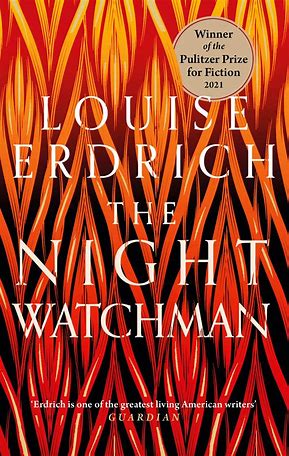
Fast forward 30+ years and several jobs in linguistics later, to where I found myself reading a work of Native American fiction for the first time in decades. Erdrich’s The Night Watchman caught my attention after it won the Pulitzer for literature. I approached this book with a sense of nostalgia, reminiscences of my younger, spirit-seeking, self, gobbling up Indian fictions. Set in America in the 1950s, it’s about an extended family of Chippewas living on a reservation and working under oppressive conditions at a jewel-bearing plant while their tribe’s leaders take on the US government. At the time a bill was going through Congress to end tribal recognition and Indian rights to their ancestors’ lands.

The story has magical realism elements in it – prophetic dreams, a talking dog and an owl that gives signals, but for me they are no longer aspects of spirituality. The story is more socio-political about the way American Indians were oppressed and subjugated to the reservations. I was struck by the language of this passage, referring to the bill proposed in Congress:

‘In the newspapers, the author of the proposal had constructed a cloud of lofty words around this bill—emancipation, freedom, equality, success—that disguised its truth: termination. Termination. Missing only the prefix. The ex.’

More importantly for my older self, this is a story about the treatment of women in 1950s America. The women play the roles of cook, doctor, nurse and maid while coming up against sexual assault and forced prostitution.

While reading The Night Watchman I was reminded of an academic collection of Native American essays and fragments of memoirs, for which I wrote a review in the Journal of Language and Literature. Key to all these writings is the idea of survivance, as opposed to survival. The collection’s editor, Ernest Stromberg explains that ‘While survival conjures up images of stark minimalist clinging to the edge of existence, survivance goes beyond mere survival to acknowledge the dynamic and creative nature of indigenous rhetoric.’ Erdrich’s narrator employs what I would call survivance rhetoric:

‘You cannot feel time grind against you. Time is nothing but everything, not the seconds, minutes, hours, days, years. Yet this substanceless substance, this bending and shaping, this warping, this is the way we understand our world.’

After all these years, I’ve come to realise that survivance is what unites works in the genre of Native American Literature, which includes poetry and memoirs, and this is what is shared between writers and readers. I guess, this realisation is my spiritual experience after all.

Where’s the Sense in Sensitivity Reading

I was appalled at hearing about the linguistic butchery being performed on some of Roald Dahl’s most famous works. The publisher Puffin and the Dahl estate have announced that they’re making changes to the author’s language on weight, gender and race.

These guardians of children literature are not giving children or the adults who read to them much credit. Dahl’s writing has always been full of hyperbole and even his narrators can have the bluntness and insensitivity of schoolboys. Readers expect this from Dahl, alongside humour laced with cruelty and darkness. Love it or loath it, this is the author’s voice. People who do loathe these features of Dahl’s work have a plethora of other children’s book to choose from.

This reminds me of my own childhood. I was fortunate in having my formative reading years in the seventies when America was burgeoning on the liberal and tolerance fronts. Mark Twain’s Huckleberry Finn was on the reading list but has since been banned from most States’ school curricula. Finn was the first social satire I had read outside of the comic strips in the Chicago Tribune. But it is a book that uses the n-word. Hundreds of times. Long before we read Twain’s masterpiece, my little friends and I knew that the n-word was pejorative and using it was racist. Huck and his sidekick, Jim, a runaway slave, both use the word nonchalantly. That’s not to say it wasn’t pejorative or racist even among these two friends. I believe they were portrayed as following the hierarchy of the times, unconsciously for the young Huck, but deliberately used by Jim as if to say he knew his place. Coming to understand these nuances was important for me in developing a deeper understanding of individuals battling and reflecting society at the same time and in developing an appreciation literature that could draw this out.

What is going on with the censorship of Dahl’s work is part of a bigger and worrying trend. American and British publishers have in recent years hired sensitivity readers to screen books before publication. The aim of these readers is to provide feedback on language that could offend minority groups. This feedback then becomes an editorial decision. Of course, literary editing and input from commissioning editors is nothing new, but it’s the search for offence and readily acting on this advice that is a sign of our times. In Le Monde, Clementine Goldszal reasons that this new job title has emerged as a way of avoiding heated debates on social media, many of which have spun into threats of violence against the books’ authors and publishers.

While I’ve been putting this blog together, a glut of articles about sensitivity readers has stolen my thunder. Most are against them, regarding their work as a type of censorship and inevitably quoting Lionel Shriver, who describes the practice of sensitivity reading as ‘totally subjective’ and ‘a waste of energy.’ (Cliché alert) If you can’t beat them, join them. The only piece I have seen in favour of using sensitivity readers was in The Conversation.

That article raises interesting points about this new practice offsetting the predominantly white, male and educated class of writers and publishers. To some extent this is true, but there are also ethnic minority and women writers getting published by mainstream and independent presses. If people read or listen to a book review and decide that a book might offend them, they can protest with their wallets by not buying it and expressing their feelings on social media or face-to-face at the café or pub.

A closing thought – you may have noticed that earlier I used the n-word instead of spelling the word out in full. I didn’t do this to avoid offence, and I would have preferred to use the full word – it is an example of language, just like any other swear word. What I have done is self-censoring so that the bots at WordPress do not label this blog ‘Objectionable Material.’ I’ve been punished with this label before. Sigh.

Learning Foreign Languages

Some 30 years ago I was asked to author an article for a little-known inspirational magazine in the US on the topic of teaching yourself a foreign language. I’m reminded of this every year around this time when language learning websites are in promotion overdrive, targeting people who resolve to take up a foreign language.

The popular press also plays into this, and the London Times recently ran a piece about a language learning guru who spoke seven languages and claimed to go from nothing to ‘fluency’ in three months. This polyglot, Benny Lewis, defines fluent as ‘up to a conversational level.’ By this definition, I’m fluent in French and Italian – which I am not. I can manage certain types of conversations in both languages, but still stumble speaking to my French neighbours in Nice about problems with our building’s finances or with an Italian about politics (I know there is a joke in there somewhere about a country with 70 governments in 50 years). I simply don’t have the years of exposure to these languages and their cultures to be fully ‘conversational.’ Anyway, fluency is a slippery word that linguists avoid using. David Crystal, the popular linguist, once noted that while he is a native speaker and fluent in English, in a room full of physicists talking physics he would struggle to communicate.

Lewis does speak sense when he talks about ways of learning languages. On the topic of Duolingo for fluency he says that it’s ‘just never going to happen. Simple as that. It will get you started, you’ll get your little trophies, and you’ll feel that sense of achievement. It’s better than doing nothing.’ I agree completely. Duo is fun, but it relies too much on translations and that doesn’t help a person to think in the language. It also uses mostly language out of context – sentences and little paragraphs – and that makes it difficult to retain new vocabulary. Having said that, I’ve been using Duolingo everyday for the past 670 days – not to boast, but I’ve got a streak going and am into the Diamond League (whooo hooo). But I use it for languages, like French and Italian, for which I already have some proficiency. It helps me to practice the grammar through repetition, but I’m not learning new vocabulary or interacting in a meaningful way.

Since I wrote my article 30 years ago, self-taught language learning has come a long way thanks to the internet. Through YouTube, I watch news in Italian and documentaries in French, and I have language partners who chat (and correct me ad nauseum) via Skype and Teams. As for that article, as it was never digitalised, it’s in the dustbin for lightweight features – and just as well. When the editors discovered that I was female (they had assumed a Dr of linguistics was male), they denied me my by-line for the reason that their predominately ‘businessmen readership’ wouldn’t ‘respond well.’ Unforgettable words.

A piece of advice on learning languages from this female linguist is to simply experiment and discover how you learn languages best. I’m an auditory learner, so I learn more from listening than reading and more from speaking than writing. How ironic you might think given that this blog in my native English language is all about my life as a reader and writer.

Not advertising- just mentioning.

2022 – the year of language myopia

Recent years have witnessed some bizarre verbal gymnastics with the English language. Remember ‘alternative truths,’ meaning lies, and ‘fake news’ for truthful reporting. What has struck me in recent months is the wave of dictating vocabulary choice under the guise of not offending people. Sure, political correctness did a lot of this going back to the 90s. With PC, people started using new terms to describe groups of people as these groups wanted to be described themselves. Example: ‘handicapped’ became ‘disabled.’ This was about avoiding offence. What I’m seeing these days is different, and I have to say as a linguist, rather annoying.

Stanford University, following in the footsteps of other US institutions, launched ‘The Elimination of Harmful Language Initiative.’ These are guidelines for their IT department and page creators of the university’s website. Among the gems that have been thoroughly ridiculed in the press are instructions to not talk about ‘flogging a dead horse,’ or ‘killing two birds with one stone’ since these expressions ‘normalise violence against animals.’

These list makers clearly do not know that these are idiomatic expressions, or dead metaphors. With use and overuse, the literal meanings and underlying comparisons have been lost. Flogging dead horses is merely a more colourful and colloquial way of saying that some effort or continued action is a waste of time. Training or working with horses is for most of us urban dwellers an old-worldly idea from storybooks and films. Any literalness is far removed from our lives. And does anyone really think that when someone kills two birds with one stone that any feathered creature could be in harm’s way?

I’m even more perplexed and again annoyed by this Stanford group advising its IT staff to refrain from calling themselves ‘webmasters’ because ‘historically, masters enslaved people, didn’t consider them human and didn’t allow them to express free will, so this term should generally be avoided.’ These language dictators are not acknowledging that words change their meanings over time. A ‘master,’ whether they are master chefs or master craftspeople are experts who have worked hard or mastered (to use the verb form) their disciplines. Incidentally, if people want to prescribe language used based on etymology or historical use, the word master comes from the Latin magester, which meant not only a master, but also a teacher or leader. Speaking of etymology, the word picnic is apparently offensive because of its supposed origins. Some people believe that the word ‘picnic’ came from ‘pick a N-word’ (if I were to type the N-word, even to refer to it as a lexeme, WordPress would put an offence warning on this blog). The word’s origins actually come from the French and had nothing to do with lynching or slavery, just the custom of eating together outside. Reuters did a noteworthy factcheck on this. This is not to say that picnics weren’t associated with racist lynchings in America. At their height in the early 20th century, these horrible events were community celebrations, and most were done with the full knowledge of local law enforcement.

Brandeis University has included picnic on its offensive word list to staff communicating with the public. This has rightly been mocked by among others, writer Joyce Carol Oates, who pointed out: ‘while the word “picnic” is suggested for censorship, because it evokes, in some persons, lynchings of Black persons in the US, the word “lynching” is not itself censored.’

I do wonder if these prescriptive language dictums are the result of workshops with PowerPoint slides and groups huddled around flipcharts imagining scenarios of possible offence. The results make word lists into language offences themselves.

Words of the year – 2022

Gaslighting? Really? This word that was cool in my childhood appears to have been resurrected by the current generation of internet and social medias users. Thus, Merriam-Webster has recently crowned gaslighting their word of the year. Just when I was about to slam this choice as a tired word merely enjoying a modern audience, I stumbled across this use by Hadley Freeman in The London Times:

‘…to tell women that not accepting biological males in their spaces puts trans people at risk is outrageous gaslighting: women are far more likely than trans women to be killed by male violence in this country, but such facts have suddenly become very unfashionable in progressive circles.’

Perhaps gaslighting isn’t so bad after all.

The Oxford English Dictionary has taken a different approach for their word of the year, having invited the public to vote from a shortlist of three, presumably arrived at via a scholarly analysis of corpora of written and spoken language produced over the past year. A far cry from the subjective, though amusing, lexicography of Samuel Johnson. The OED’s three runners-up were: metaverse, the hashtag #IStandWith and the phrase goblin mode. Since metaverse conjures up images of a self-obsessed Mark Zuckerberg, it didn’t get my vote. The hashtag #IStandWith certainly is a testament of our time of activism, movements shared online and individuals making their mark. Cute and less important is goblin mode, which denotes ‘a type of behaviour which is unapologetically self-indulgent, lazy, slovenly, or greedy, typically in a way that rejects social norms or expectations’ – a phrase apparently popularised by post-pandemic attitudes to work and socialising. The voting closed on Friday 2 December, and the winner was announced yesterday as goblin mode. It could have been worse, but I’m left feeling outside of popular vernaculars – again.

Collins English Dictionary chose permacrisis as its word of the year. Apparently, this word has been used a great deal this year by the British media and economists to describe Liz Truss’s short reign as PM, along with the state of the UK government and the Brexit-whipped economy. I can’t argue with that even though I did have a problem at first using ‘perma’ with ‘crisis.’ But Collins’ lexicographers have explained that away: ‘While ‘perma-’ could not logically be applied to the original sense of ‘the turning point of a disease,’ it can be applied to this secondary meaning without being a contradiction.’ Yep, life in Britain these days can be described as a permacrisis.

Ah, the joy of neologisms.

Apparently, a goblin.

The UK Government – In other words

It’s been a good week for adjectives. The abrupt end of Liz Truss’s premiership, positioning the country for its third Prime Minister in two months and worryingly fifth Chancellor (finance minister) in four months, has given political writers and pundits plenty to say. But what do you say when a country and its leading political party are in meltdown that doesn’t sound cliched or as inarticulate as pub-speak on a Saturday night? I was hoping for some colourful metaphors but have mostly encountered adjectives.

I’m not a great fan of adjectives. Their overuse plagues student writing, genre fiction and celebrity memoires. But today I make an exception, noting that the weekend papers have resurrected the adjective in good form – at least for now. Among those used to describe the actions of Liz Truss and her cabinet include ill-fated, calamitous, demented, brexity, Gonzo, eye-popping, chaos-churning and career-serving (though obviously careers at the top of government have crashed to an ignominious end, these clown ministers will likely have high-paying jobs in the private sector for years to come). The best stacked-modifier award goes to Patrick Cockburn of The Independent who described Boris Johnson, who is bizarrely a contender for PM again, as having a career with ‘a comic opera Gilbert and Sullivan feel to it.’

But it hasn’t all been about adjectives. The -ism nouns haven’t done too badly either. Several pundits have stepped back from the immediate circus that is the British government to ask what this means for the ideologies that have gained prominence in the West in recent decades. Could the fall of Britain in such a way trigger the end of neoliberalism, of libertarianism, of populism, of nationalism? As these ideas have been put into practice and have disastrously failed, one does wonder. Writing in The Independent, Adam Boulton, remarked that the Conservative party, which is likely to reign for another two years, will continue with its factionalism and the instability it creates. That is, some of the aforementioned isms aren’t likely to go away overnight, or quietly for that matter.

Oh, yes, I did stumble across one metaphor from Andrew Rawnsley in The Observer that brought a smile to my face for its sentiment as well as its creativity: ‘… the polls suggest the Tories will be disembowelled by the voters when they get their hands on them at the polling stations.’ Nothing beats a good metaphor.

Larry the cat, who lives at 10 Downing Street has outlasted six Prime Ministers.