Words of 2025

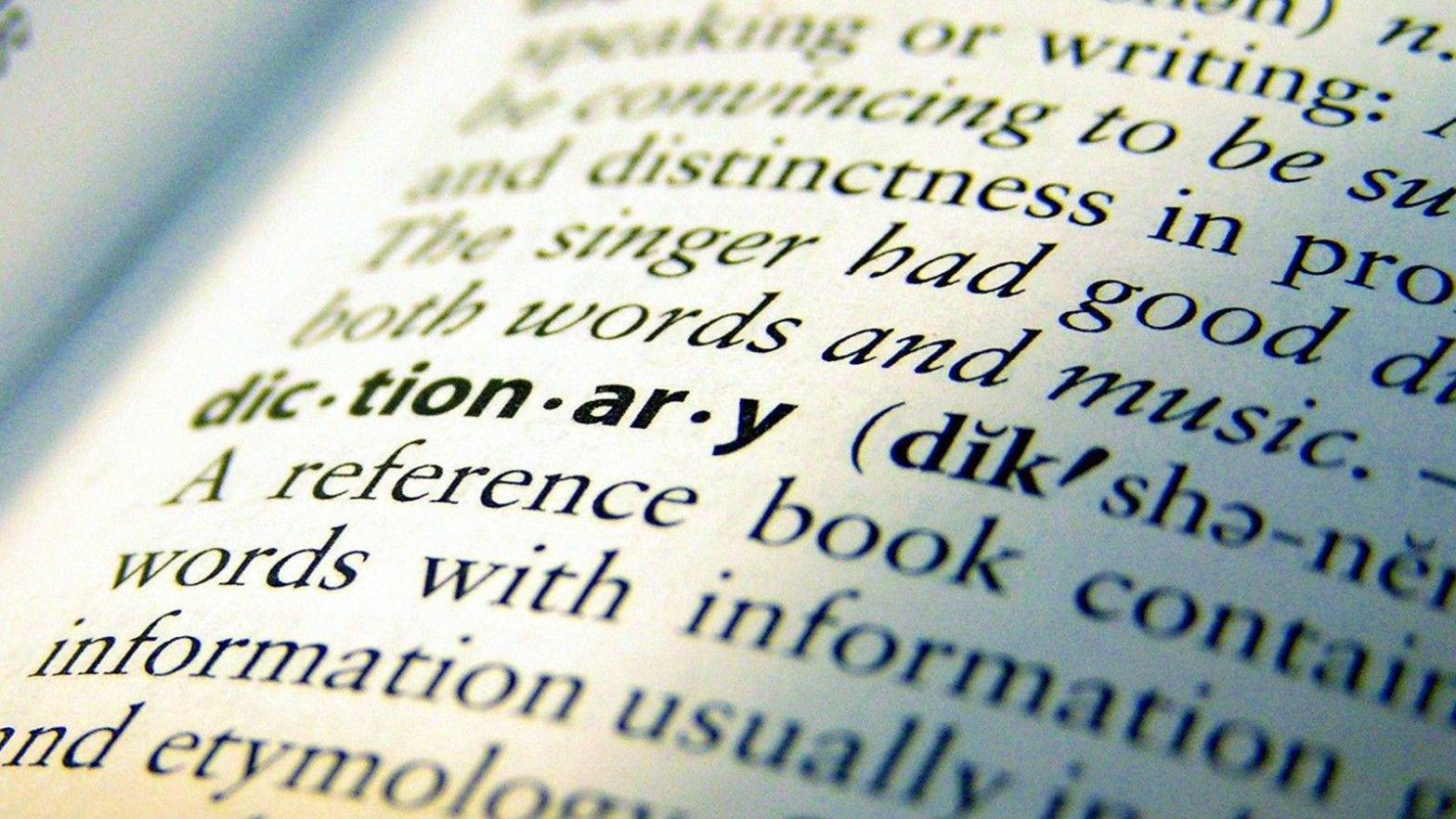
As the year winds down, lexicographers promote their dictionaries with their words of the year. The one that has gotten the most attention so far is the least interesting – vibe-coding. It’s a software development that uses AI to convert natural language into computer code. It doesn’t excite me either.

The Oxford English Dictionary has announced that rage bait is its word of the year. Oxford defines this as ‘online content deliberately designed to elicit anger or outrage by being frustrating, provocative or offensive, typically posted in order to increase traffic to or engagement with a particular web page or social media content.’ It’s click bait’s ugly cousin. The first example that came to my mind was the postings of the current US president, to which we need to add to the OED definition ‘usually to distract the public from certain issues…’

Cambridge’s dictionary has given its vote to parasocial, which it defines as ‘involving or relating to a connection that someone feels between themselves and a famous person they do not know, a character in a book, film, TV series, etc., or an artificial intelligence.’ The word has been around since the 1950s, when it was used in sociopsychology though the concept is even older. Figures like George Washington and Napoleon Bonaparte were idolized by people who imagined personal bonds with them as expressed in love letters. The fandom of the early days of Hollywood sparked a whole industry based on imagined intimate relationships with the stars. I confess now that my teenage self had a one-sided relationship with David Bowie. The fact that parasocial has come into popular use in 2025 says something about the times we live in. Are things so bad that our escapism leads us to a place where fictional characters, celebrities, influencers and AI bots become our friends and lovers?

My buddy, Mr Copilot, tells me that Dictionary.com has christened ‘67’ (pronounced 6-7) their word of the year. It’s a slang expression born in TikTok, and while it doesn’t have a fixed meaning, it could mean ‘so-so’ or ‘maybe.’ It’s usually accompanied by a hand gesture – palms up alternating up and down. Like so many slang expressions, its social meaning is more important than its lexical meaning – it’s part of a private language, popular with the young and used to annoy the old. It’s working on me.

Other words that were added this year aren’t new and didn’t make ‘word of the year,’ but are interesting, nonetheless. In 2024 Carol Cadwalladr introduced and popularized the term broligarch, which entered the Cambridge Dictionary in 2025. The fact that others are using this term gives me hope in a perverse way. Broligarch encapsulates the ultra-wealthy tech figures (often male) who wield influence over politics, media and culture. Its growing use and entrance into a dictionary marks public concern – this is where the hope comes in. The broligarchs do not use it to refer to themselves. It’s used despairingly by the rest of us.

Finally, there’s tradwife, which has been around for a few years and was also added in 2025. It refers to ‘a woman who embraces traditional gender roles, especially in marriage and homemaking.’ It’s one thing to be selectively nostalgic – most nostalgia is selective – but it’s something else to desire inequality and financial dependency. My prediction – in five years from now, a couple of neologisms will enter the English lexicon – the verb distradify and the noun liberwife.

What I’ve been reading

A history book that is just that – and not historical fiction, my normal means of learning history. The Burning Earth: An Environmental History of the Last 500 Years by Sunil Amrith starts with the Age of Exploration and Empire, when European colonial expansion began reshaping global environments through mining, agriculture, and trade. The book then traces environmental disasters of the Industrial Revolution and the 20th century’s fossil fuel boom and finishes with our climate crisis. I’ve been particularly struck by this book’s approach to the slave trade. Where a more traditional history would describe the brutality, human toll, financial gains, abolitionist movement and the US Civil War, this history adds the consequences to biodiversity. One of several examples is sugar, which became an industry due to slavery across North and South America. Amrith sums this up:

“Violence on human beings accompanied a violent assault on the rest of nature. Sugar plantations had a limitless appetite for timber to fire the vats. Furnaces swallowed forests. Woods fell for pasture to feed the domestic animals that were a vital source of muscle power. Denuded hillsides threatened human settlements with mudslides after every rainfall. Sugar ruined the soil.”

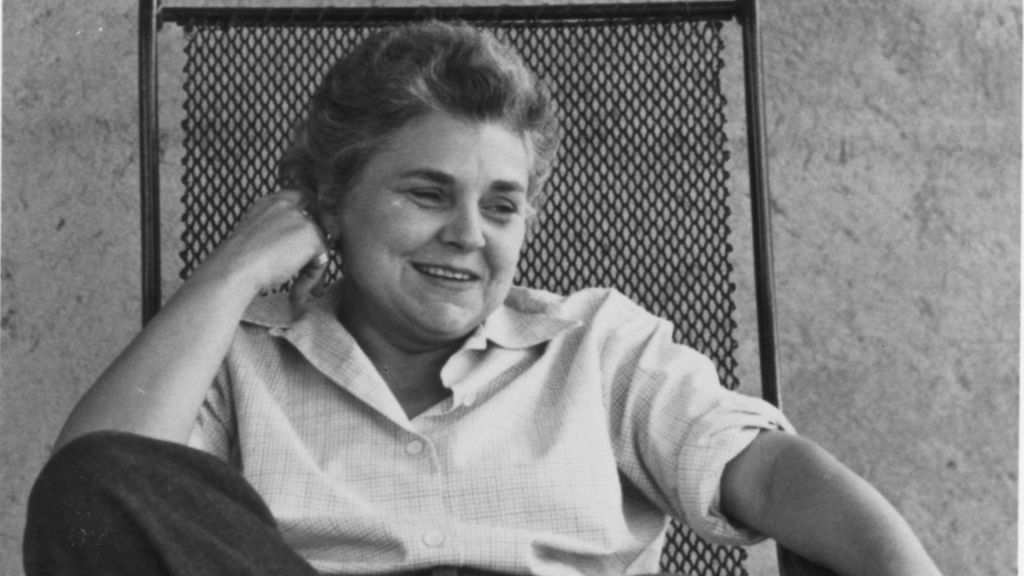
The New Yorker, celebrating its 100th anniversary, has reprinted some classics, including the poem ‘At the Fishhouses’ by Elizabeth Bishop. First published in 1947, this highly accessible poem describes a scene of an elderly fisherman untangling a net on the shore. The narrator, observing this, connects with nature and memories and reflects on the concept of knowledge. Like the comments made by Jorie Graham in the current New Yorker, I too found the ending particularly evocative in a literal and linguistic sense:

It is like what we imagine knowledge to be:

dark, salt, clear, moving, utterly free,

drawn from the cold hard mouth

of the world, derived from the rocky breasts

forever, flowing and drawn, and since

our knowledge is historical, flowing, and flown.

Elizabeth Bishop (1911-1979)

So too, are the words we create to communicate this knowledge.

Titanic Languages

This is not another linguistic term, nor is it figurative. I literally mean the big cruise ship whose sinking continues to intrigue and entertain over a century later. I’ve been listening to the BBC Sounds podcast Ship of Dreams, which puts the tragic voyage under a microscope, examining everything from the workings and perils of the engine room to what was on the menu for the upper deck passengers. Following an introduction covering the sociocultural and economic background that led to the construction of such a ship and the weeks leading up to Titanic setting sail, the podcast re-enacts the disaster with the help of historians, nautical experts and survivors’ accounts.

Among the fascinating factoids to emerge is information about the languages spoken on the Titanic. After English, the most spoken language was Swedish. Of the 1,300 passengers on board, 123 were Swedish (with 327 British and 306 Americans). Of the 994 crew members, some 34 were Swedish nationals. While these crew members were mostly dining staff who worked the luxury liners with the full expectation of returning to Sweden, all the Swedish passengers were travelling third class  and immigrating to America for a better life. The Italians and French, by the way, ran the kitchen.

In this potpourri of languages, Arabic could also be heard on the Titanic, though the exact number of speakers is hard to ascertain, especially given the bilinguals on board and the poor record keeping of the day. Among these Arabic speakers were some 150 Lebanese immigrants who came from rural villages and were fleeing poverty. Sadly, only 29 made it to America. When these survivors arrived in New York, they were given temporary lodgings, food and clothing by the Hebrew Immigrant Aid Society. According to the podcast and other accounts (Encyclopedia Titanica), anyone from that part of the Middle East was categorised and treated as the same by Euro-Americans. It has also been noted that the Hebrew Aid Society was a non-discriminatory humanitarian organisation.

It’s hard not to think about these Swedish and Lebanese immigrants without reflecting on the plight and treatment of immigrants to America today, or the hostilities between Arab nations and Israel. The adage about history repeating misses the mark.

What I’ve been reading

Annie Ernaux may have won the Noble Prize for Literature, but I’m not convinced of the literary merit of her work. By literary I mean work that makes the reader aware of its language and style of presentation. I’ll admit that I grumbled when Bob Dylan – a lyricist, not a poet – won the prize, but now I have to say that his lyrics are far more literary than Ernaux’s prose. To be fair to the French writer, she has often said that she is an author of autofiction and not a novelist. I’ve just finished reading her ‘autofiction,’ Une Femme, about the life and death of her mother. While the story holds some interesting reflections on the lives of women and family dynamics in France from the early twentieth century to the 1980s, the writing was so matter-of-fact that I didn’t come away from it with any satisfaction of having read a work of literature.

The flipside of this was reading Bill Browder’s Red Notice, which doesn’t aim at fiction or literariness. Yet, it read like a thriller with feelings of frustration and pathos that gave it emotional force worthy of any literary writer. Browder, a US citizen, recounts his experience of setting up an investment company in Russia following the end of the Soviet Union when the country was a wild west for investors. His run-ins with corruption and dubious politicians reached its peak with the torture and murder in a Russian prison of Sergei Magnitsky, Browder’s lawyer. Holding people responsible couldn’t happen within Russia, so Browder involved the US government, international human rights organisations and the media. And none of that was easy. Today, Browder is recognised as a human rights activist.

Finally, noting the death of writer Edmund White, I reread his brilliant essay published in Granta in 2008 about his view of Europeans when he was a child in America and his first experience of travelling in Europe years later. So much of what he said then resonated with me (an American who has immigrated to Europe) that I still remembered much of the essay 17 years later. I owe that not only to the content, but to the magic of his prose. RIP.

My 2024 in review without lists

Regular readers know that I’m not a fan of the listacle – those articles that list the best of or worst of or top 10 etc. They’re click bait and often poor examples of writing. By copping out of the type of commentary or critical review that threads an argument,  they offer mere snapshots brimming with clichés. With this hanging over my head for what I shouldn’t do, I’m reviewing 2024 under a few categories.

My year as a verbivore

Yes, I used to refer to myself as a logophile, but I’ve decided to use verbivore instead despite Word underlining it in red. This word was coined by the writer Michael Chabon in 2007 when talking about his love of words.

I’m afraid 2024 hasn’t been good year for verbivores thanks largely to the many national elections taking place all over the world and where politicians have overused words, such as woke, to the point that it can mean the opposite of their original meaning – or simply have no meaning at all aside from being something to despise. I’m also somewhat miffed that words like demure and mindful have gained new meanings thanks to the verbal grasping of social media influencers. Both words are being used to mean low-key and subtle in fashion and style.

The OED ranked brain rot as the word of the year, one that I never used even once. Apparently, it has come out of the Instagram/TikTok generation’s feeling after scrolling through dozens of posts. It can also refer to the low-quality content found on the internet that I do my best to avoid – a challenge when trying to find vegetarian recipes on Pinterest and having to skirt around videos of cats stuck in jars.

While I don’t go around recording myself, I’ll bet that my most used word during this year was incredible. In part, I’ve picked this up from the French who frequently use incroyable. When the worst president in US history (according to historians) gets re-elected after doing and saying so many things that individually should have made him unelectable, that’s incredible. On a more positive note, given my first-hand experience dealing with builders, plumbers and electricians in the South of France, I  thought it incredible that Notre Dame Cathedral was renovated after the catastrophic fire in just over five years.

My year as a reader

This year has been dominated by two writers as in recent weeks I found myself reading yet  another Robert Harris novel, my third this year, and another Amelie Nothomb foray into autofiction, my second for 2024.

After hearing Harris speak about his latest book, Precipice, in Ely a couple of months ago, I delved into this thriller which begins at the onset of WWI. It’s an historical period I’m strangely fond of and the story recounts the true-life affair between Prime Minister Herbert Henry Asquith and the socialite Venetia Stanley. Asquith’s casualness towards national security is mind-boggling  as his teenage-boy infatuation led him to share with Venetia everything from Cabinet debates to classified documents coming from his wartime generals. Though not as complex or informative as Harris’s Pompeii or as intriguing as his Conclave, Precipice is still an entertaining and interesting book.

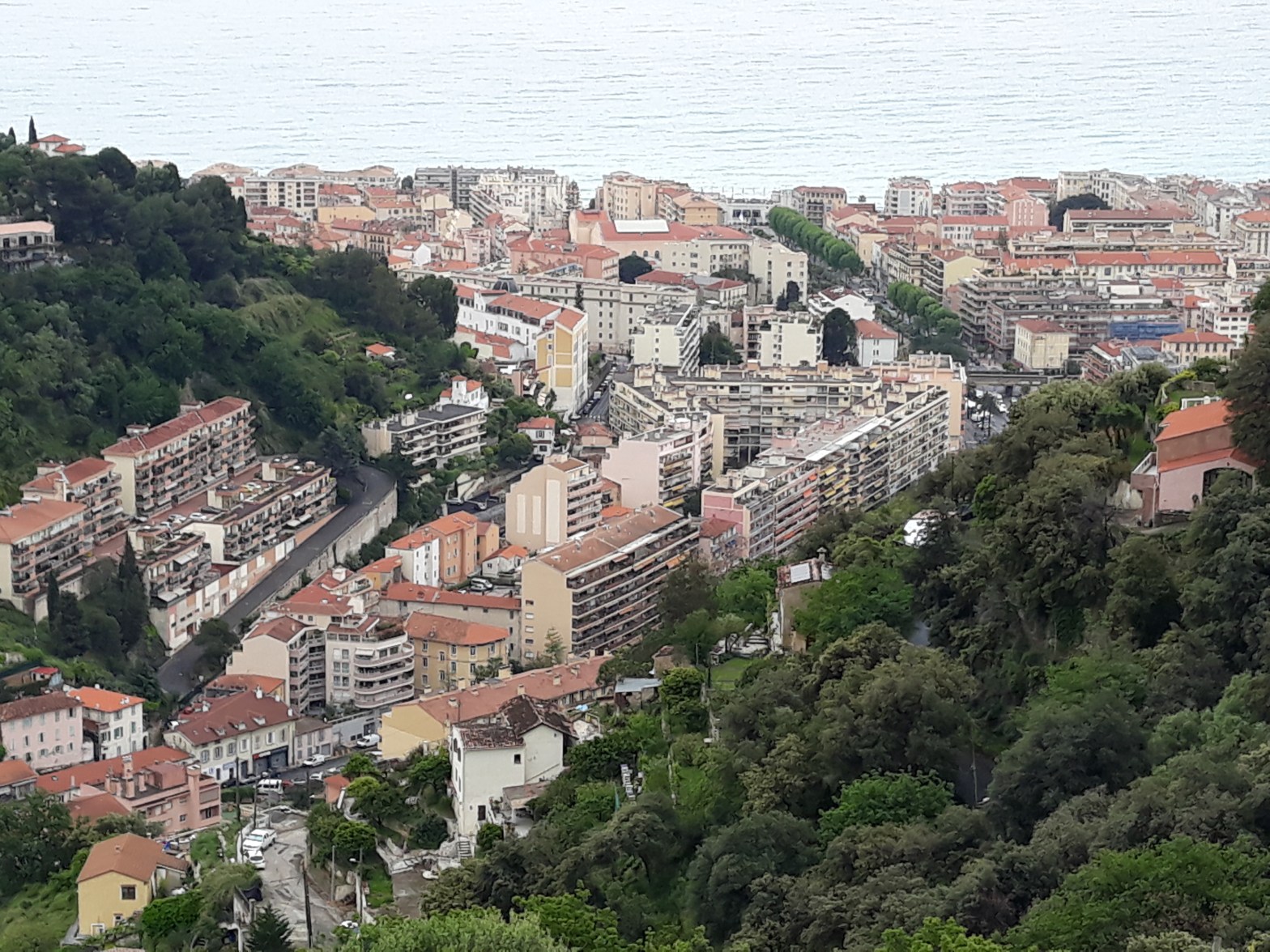
Taking advantage of the public library in Menton, I’ve just finished Amelie Nothomb’s La Nostalgie Heureuse (avail in English). The narrator’s view on the world is as quirky as ever and expressed with her usual dry wit. In this story, she’s already a well-known writer living in Paris, who returns to Japan to participate in a documentary about her early life. Key to this is an anxiety-provoking reunion with a man she nearly married some twenty years earlier. A noteworthy aside – she (fictional narrator and real-life author) had written about the relationship in one of her earlier books and when the ex-fiancé is asked by the documentary maker how he felt about that book, he said that he enjoyed it as a ‘work of fiction.’ This is when the narrator realises that her truth could be other people’s fiction – a wink to the reader of this autofiction.

Throughout the year, I have also made it a point to read writers that are highly praised in the literary press that I have never read. Earlier in the year it was Paul Auster and Antonio Scurati and in recent weeks Carson McCullers. I finally read The Heart is a Lonely Hunter, which most people know from the 1968 film. Set in a small town in Georgia during the Great Depression, the story recounts the lives of several characters who are connected by their work and family circumstances. Their sense of isolation is explored against a backdrop of poverty and racism, with a nuanced struggle with homosexuality. The weaving of the stories reminded me of a typical Robert Altman film – very enjoyable despite the grim subject matter.

On the non-fiction side, this year I’ve continued my nerdy interests in bees and trees, trying to find texts for non-specialists that aren’t too scientifically dry or too jokingly flippant. While I’ve also read some excellent biographies and memoirs, the most thought-provoking and impassioned nonfiction  I’ve experienced this year has been in the opinion pages of the New York Times, The Observer (UK) and Le Monde. They serve as reminders that despite populist voting trends, humanity still exists.

My year as a writer

I started out this year with two writing goals. One was to return to novel #4 and give it a thorough rewrite. While I didn’t produce a full rewrite, I have rewritten about half of it and have made notes for the other half. This task was interrupted by an avalanche of editing assignments that came my way in October and lasted until December. The other writing goal was to simply send out either one short story or one essay every month. I did manage to send out 12 stories/essays this year, but without the monthly regularity – there were a couple of inactive months and a couple bubbling with creativity. Five rejections have been taken on the chin (three were competitions after all) and I await 7 replies.

In the second half of the year, my writing took on a more therapeutic purpose – maybe my way of dealing with complex PTSD. For the first time I’m writing about unpleasant childhood memories and with the creative process taking over, I’m fictionalising certain characters and subplots. I’ve been experimenting with the ‘I-narrator’ by taking on the role of persons other than myself, trying to revisit these episodes from others’ points of view. I seemed to have tapped into something as the work I’ve shown readers so far has been extremely well-received in ways unusual for my early drafts.

My year as a human

Being a linguist, reader and writer are all a part of being a human, but I am aware too that there are other identities of my humanity, such as a friend, spouse, sibling, neighbour, citizen etc. For me, all these roles fill one stratum of physical living in all its sociocultural and psychological dimensions. In this stratum, 2024 has been about witnessing climate change, and then climate change denial by some and inaction by others, along with the public discourse of hate that substantial portions of the population engage with, making me feel like an outlier. I know I’m not alone in this, but I no longer inhabit a space in the norm range.

Another stratum of my humanity exists, but I grapple to explain even to myself. The word spiritual has been stretched and abused by religious and anti-religious alike to the point that I avoid using it. Perhaps this stratum covers all things incorporeal, including abstract thought. This year has made me more aware of this disembodied beingness, if awareness is all I have for now. And so, I continue to practice mindfulness (in the pre-2024 sense of the word – nothing to do with fashionable clothes).

Thank you, readers, for your comments and emoji reactions over the year. I wish you all peace and joy for 2025.

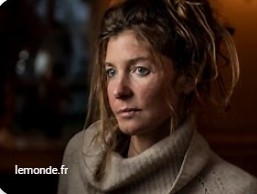
Gisele Pelicot, my choice for Person of the Year

How Grammar Might Influence the World We See

Have you ever wondered if speaking a different language could change the way you perceive the world? It’s a fascinating question that has captivated linguists and researchers for decades. While many have assumed that our thoughts and feelings are by and large universal, emerging research suggests that the language we speak can significantly influence the way we see the world, creating differences for speakers of different languages.

The idea that language can shape our perception of the world is not a new one. It’s often associated with the Sapir-Whorf hypothesis, which claims that the structure and vocabulary of a language can determine or at least influence the way its speakers think and perceive reality. The Sapir-Whorf examples using Native American languages have been discredited over the years. Yet, growing evidence supports the idea that language can indeed mould our thoughts and experiences.

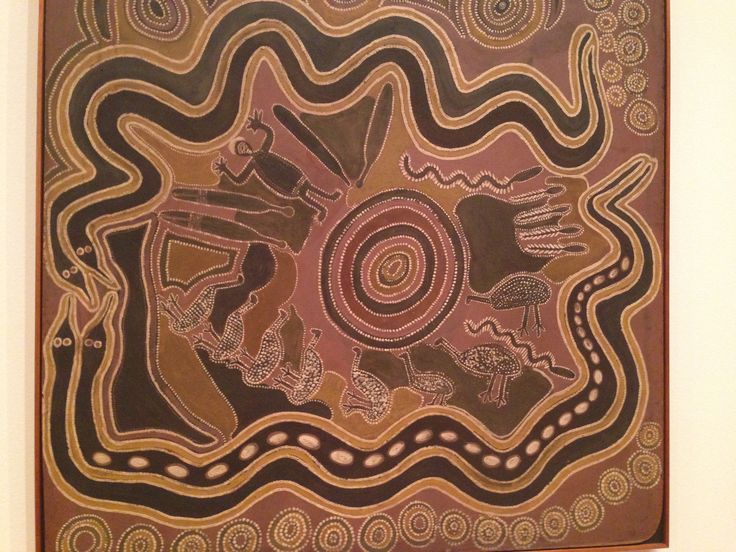
One of the most intriguing studies exploring the relationship between language and perception comes from research conducted on the Aboriginal language of Murrinhpatha in Australia, reported in the current issue of Scientific American. Murrinhpatha has free word order, where subjects, verbs and objects can occur in any position in a sentence. In the study, Murrinhpatha and English speakers were shown the same image of a woman. Monitoring the eye movements of the participants revealed that English speakers focused first on the woman, then on what she was doing (perhaps looking at her hands) and finally on other features in the background. This reflects the tendency in English to have the subject first in the sentence followed by the verb and then adverbial phrases that describe the circumstance or background. Murrinhpatha speakers had faster eye movements that darted around the images, often taking in the background features first and then the foreground and back and forth again. The linguists involved suggest this could be the result of free word order.

While it doesn’t prove that language completely determines thought, it suggests that different languages can indeed shape the way their speakers experience the world around them.

This article also mentions something that has been troubling me for a while. So much of linguistics research and the resulting textbooks have come from scholars of the English language and to a lesser extend from similar Romance and Germanic languages. Most of the work that has followed in Chomsky’s footsteps in their obsession for universal properties of language and language processing has been based on a group that represents less than 5 percent of the total number of world languages. As the psycholinguist Evan Kidd put it, ‘The search for universals took place in only one corner of the language universe.’

As I write this, I’m working on an editing job for a Chinese post-graduate student who is trying to apply Chomskian principles and their descendants to Chinese grammar. While the student (and I as an editor) struggle with this assignment, I often wonder how different this would be if Chinese scholars developed generative grammars first before Chomsky.

Back to the beautiful diversity of language, Scientific American has this to say about the work conducted by the recent study: ‘…each language represents a unique expression of the human experience and contains irreplaceable knowledge about the planet and people, holding within it the traces of thousands of speakers past. Each language also presents an opportunity to explore the dynamic interplay between a speaker’s mind and the structures of language.’

To listen to Murrinhpatha, check this out.

Talking Terrorism

Are Hamas terrorists? The BBC and its presenters have taken a lot of flack this week for not saying so. The BBC does report, however, that the US and Britain have classified Hamas as a ‘terrorist organisation.’ But nearly everyone reporting in the media, including the BBC, agrees that the acts of the weekend of 7 October that were committed by Hamas were terrorist acts. This begs the question: Can you commit terrorist acts and not be a terrorist?

Of course, you can if you are a government at war. We have seen this most recently with the Russian invasion of Ukraine. Just this week, the United Nations published the findings of its investigation into Russian aggression in Ukraine showing that ‘Russian authorities have committed the war crimes of wilful killing, torture, rape and other sexual violence and the deportation of children to the Russian Federation.’ The same atrocities committed by a non-governmental body would be referred to as terrorism.

Writing in Prospect this week, Conor Gearty, an expert in human rights law, takes the position that Hamas is ‘too governmental’ to be called a terrorist group. Gearty explains:

‘Hamas are not, however, a straightforward terrorist group, senselessly violent though these attacks may have been. They won the most recent election held across Palestine, in 2006, and have been in control of Gaza since 2007. Hamas may be called a terrorist group but if so, they are a very governmental sort of terrorist. This authority in Gaza gives them more options than mere violence, and though Israel and its supporters may wish it to be so, their violence does not appear (in the past at least) to have destroyed their wider support in the community. Here they more resemble Hezbollah, Haganah (from Israel’s own “terrorist” past), the South African ANC and the IRA than they do al-Qaeda or the Red Army Faction from 1970s Germany.’

Others agree that Hamas should not be called terrorists, but for a different reason altogether. Referring to Hamas as terrorists can be viewed as anti-muslim (my spell check has this as anti-muslimism). In so many contexts, the word terrorist has been weaponised.

Plenty of people would object to these opinions, saying to not call Hamas a terrorist organisation is antisemitic. I found examples of this in the comments to Gearty’s article. Taking a different stance outside of religion, I’ve heard politicians and pundits in recent days arguing that calling Hamas terrorists is a way of distinguishing Hamas from the innocent Palestinians caught in the crossfire or deliberately being used as human shields.

Pointing out differences in the uses of words and their connotations isn’t just an academic exercise. Words matter. I appreciate that the BBC is trying to show its objectivity in reporting these events, but this is near impossible given the long history of wars and talk of genocide and hate coming from all corners.

I’m afraid that in the weeks and months ahead, atrocities are going to be committed on both sides of this conflict whether they are called terrorism or war crimes.

The controversial and horrific air attack on a hospital in Gaza.

Indian Summers

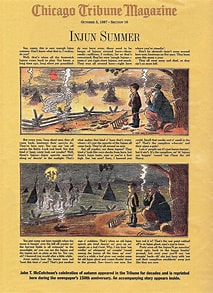
As a child, I always looked forward to the Indian Summer edition of the Chicago Tribune. I don’t know what there was to look forward to as the pictures and the accompanying story was the same every year. This was cartoonist John T. McCutcheon’s ‘Injun Summer.’ Due to the use of the politically incorrect words Injun and redskin for Indian, this autumnal delight has disappeared from papers across America. Which is a shame – even as a child I knew Injun was an old dialect word or mispronunciation of Indian and that redskin was a despicable word of its time. Neither term was meant in a derogatory or malicious way in the story.

Before I get to the main point of this week’s blog, allow me a short walk down memory lane. McCutcheon’s story was first written in 1907 and harkened back to the author’s childhood in the 1870s. It features a grandfather, who speaks in a folksy Mark Twain style, with his grandson looking across an autumnal field of corn stacks. The grandfather explains the meaning of Indian Summer by playing into the child’s imagination, envisioning the corn stacks as tepees and calling up the spirits of the Indians that once lived there.

Some etymological truth underlies McCutcheon’s story. The spell of warm temperatures interrupting the autumn cooling towards winter have loose links to Native American lands. The first recorded use of Indian Summer goes back to an essay written in French in 1788, indicating that it was already used in spoken language in North America. Some speculate that the origins of the term came from the unseasonably warm conditions in autumn that were noted by Europeans in regions inhabited by Native Americans (even though it occurs throughout the Western Hemisphere). Another idea is that the term referred to a time of year when American Indians hunted.

Back to the present. This year we have experienced two Indian Summers with a heatwave – hotter than the average summer – in mid-September and a more traditional warming up of autumnal temperatures in early October. This time, I’m not feeling sentimental about these experiences or nostalgic for the Chicago Tribune of my childhood. A confused lone red damselfly has been hovering around our back garden for days. The front of the house has marigolds blooming and budding as they would in August. Two Indian Summers, with the extreme heat of first, are unsettling.

During our second Indian Summer, I was reading the latest New York Times Climate Newsletter. David Gelles reported on the increase in fossil fuel production with hundreds of new gas and oil projects having been approved in the past year. Gelles relates this to what we have all been hearing but needs to be said yet again:

‘There will be grave implications for the planet, which has already warmed by about 1.2 degrees Celsius above preindustrial levels. This year is shaping up to be the hottest on record, with record heat on land and the ocean fuelling extreme weather around the world.’

Writing about the dangers of pollution, Rachel Carson famously described a Silent Spring. I wonder if Indian Summers with their unseasonal insects and flowers are becoming Autumnal Augury.

SNA – Some New Abbreviations?

Abbreviations are nothing new. They’re found in Ancient Greek, Latin and medieval writings. According to the New York Times, the earliest known abbreviation in printed English is from an 1844 article: SPQR, for the Latin Senatus Populusque Romanus (The Senate and the People of Rome). This quasi-initialism appeared in The Christian’s Monthly Magazine and Universal Review that could have called itself the CMMUR.

What got me thinking about abbreviations was the announcement this week from The Merriam-Webster English Dictionary that they have added 690 new words since the start of the year. I haven’t read through the full list – I do have a life. From those I have seen, a large number are initialisms and acronyms, which MWED (sorry, couldn’t resist) lump together under the label ‘abbreviations.’ Okay, I’ll play along.

Quite a few of these abbreviations have their likely origins in text messaging (SMS- it’s inescapable) and social media, where speed is of the essence and character numbers are sometimes restricted. A few examples with MWED’s definitions:

ngl abbreviation, informal not gonna lie; not going to lie.

TFW abbreviation, informal that feeling when – used especially on social media or in text messages to introduce a relatable scenario or an image that evokes a specific feeling.

TTYL abbreviation, informal talk to you later.

I’m assuming some of these are lower case while others are uppercase because that’s how they’re being used. Seeing the MWED using gonna is novel and destroys my writing teacher’s mantra about not writing exactly how you speak.

Then there’s GOATED – apparently all caps. It started its slang life as GOAT – the greatest of all time. I’ve seen this pop up on social media, which tells me it’s not just a young person’s expression given the grown-ups I follow online. The word has now acquired an adjective form to denote ‘something or someone who is considered to be the greatest of all time.’ Though linguistically interesting, I find this rather cringeworthy, reminding me of the hyperbolic language spouted by populists.

Other abbreviations on the new word list come from official channels, such as the US government, who have replaced UFOs with UAPs. Here’s MWED’s wordy definition:

unidentified aerial phenomenon (a mysterious flying object in the sky that is sometimes assumed to be a spaceship from another planet); also: unidentified anomalous phenomenon (a mysterious phenomenon, especially an unidentified aerial phenomenon, that is sometimes assumed to be a spaceship from another planet).

I suspect this is an exercise in rebranding, intended to give an air of legitimacy to government-led investigations into what I still call UFOs.

Once again, the addition of words to our dictionaries reflects the age we live in. More on this topic later, I’m sure.

Learning Languages in the Digiverse

Whether it’s a Duolingo lesson or an encounter with Google Translate, there’s no doubt technology has changed the way we learn languages. John McWhorter, resident linguist at the New York Times, recognizing this trend, praises the serviceable way that AI is offering translations across hundreds of language combinations.

McWhorter rightly asks the question – what about spoken language?

The rise of instant speech translator apps has been a big boost to learning languages. I’ve been using foreign language dictionaries on my phone for the past decade, and all of these have a speech component. This is great for the pronunciation of words and phrases, but it’s a far cry from a conversational tool. Language learners have to seek out situations to use these expressions in the appropriate contexts. This language learner has sometimes landed on her face trying it. I remind myself that we learn from our mistakes, especially those of the embarrassing variety.

Having said that, speech translator and dictionary apps have come a long way in recent years thanks to corpus linguistics digitally collecting and tagging words and their collocates from natural language. AI adds a layer to this, predicting text strings based on usage. But as I found in my experiments with AI for writing, where academia and eloquence take a back seat, algorithms generate a strange spoken language clearly influenced by social media content. For example, to help me with colloquialism in spoken Italian and French, I’ve started using DuoCards, a flashcard app that also gives sample sentences. Apparently butin in French is slang for buttocks, roughly translated by the AI driven app as booty. Remember Shake Your Booty from the 70s? It’s had a resurgence as a popular meme. I’m left wondering if butin is dated slang in French. I think I’ll stick with the anatomically correct fesses if someone’s backside gets into a conversation.

McWhorter gives his verdict on using AI translators for spoken language: ‘I don’t think these tools will ever render learning foreign languages completely obsolete. Real conversation in the flowing nuances of casual speech cannot be rendered by a program, at least not in a way that would convey full humanity.’

As someone with four language partners on the go, I agree wholeheartedly. To this I add that blogs with their informal registers are also full of these nuances of speech, and that includes made up language. I’ve used the word digiverse in my title. You won’t find it in dictionaries, and Word has annoyingly underlined it in red. But it is a completely usable portmanteau word. I know you know what I mean. Will a bot ever communicate like this?

John McWhorter. A far better linguist than William Safire, who had the language column in the NYT for decades.

Some thoughts on dialogue in prose

Douglas Stuart’s Shuggie Bain and Barbara Kingsolver’s The Bean Trees have been among my summer reads. The two novels are studies of poverty and familial relationships.  Shuggie Bain is a coming-of-age story set in the council estates of Glasgow spanning ten years of the 80s to early 90s, while in The Bean Trees, a quasi-road story, a young woman in a beat-up car drives from Kentucky to Arizona over several months creating a new life for herself.

While I found both stories engaging and interesting in the worlds they inhabited, their handling of dialogue made Shuggie Bain the better read. This is despite losing its pace about three-quarters in. The Bean Trees, Kingsolver’s first novel, is tightly constructed and held its pace, but occasionally the dialogue fell flat as it appeared to try too hard to sound like the way people speak. Let’s be honest – in everyday speech, people wear out idioms and exhaust popular expressions. It’s part of the interpersonal function of language (for you M.A.K. Halliday fans). That is, we speak in familiar, tried and tested, language to connect with people.

In Shuggie Bain, the dialogue worked – which I wouldn’t have expected from a novel containing the Glaswegian dialect. Despite having lived in Edinburgh for five years and regularly visiting Scotland ever since, I still stretch my ears to understand Glaswegian. Perhaps Stuart knows this.  He’s allowed the narrative prose to do much of the work, leaving the dialogue gently sprinkled throughout the text.

A writer’s confession – my true love is scriptwriting. While I’m not writing scripts these days and might not ever return to it (a topic for another blog), I have learned some useful lessons from writing in a medium where dialogue does the heavy lifting. Allow me to enter the imperative mode. First, don’t bother trying to replicate everyday speech all the time. As mentioned, it can be dull on the page and duller still when coming out of the mouth actors, unconvinced themselves. Aim for dialogue that sounds natural, but devoid of the mundane parlance of everyday life. Second, use subtext. Characters don’t need to explain their thoughts. In fact, their dialogue is strongest when they say one thing to mean something else or to do something that is not obvious from the literal meanings of their words.

Okay, I’ve left the classroom and the imperatives behind.

P. G. Wodehouse was masterful at dialogue.  Nothing sagged in his characters’ speeches, using language more colourful than quotidian conversation. Where a character from The Bean Trees would say something like ‘he thinks he’s the cat’s pyjamas,’ Wodehouse’s Aunt Dahlia huffs out ‘Your uncle Tom thinks he’s the cat’s nightwear.’ As for Jeeves, everyone’s favourite butler provides understated commentary and suggestions to his master that are loaded with subtext. In this example from Right Ho, Jeeves, the text leading up to this tells us that Bertie is confused about a woman’s intentions, and Jeeves offers, ‘Feminine psychology is admittedly odd, sir. The poet Pope…’

‘Never mind about the poet Pope, Jeeves.’

‘No, sir.’

‘There are times when one wants to hear all about the poet Pope and times when one doesn’t.’

‘Very true, sir.’

From this snippet, the reader knows that Bertie is irritable and won’t listen to considered advice, and that Jeeves, due to his station, is going to play along.

There are loads of other great prose writers who command the dialogue in their works, but on a Saturday afternoon in August, Wodehouse was the first to come to mind.

The Maaate Campaign and Sexist Language

Barbara Ellen hijacked much of my blog this week with her excellent piece in The Sunday Observer about London Mayor Sadiq Khan’s campaign called Say Maaate to a Mate. The core idea is for men and boys to rebuke other male friends for using sexist language and talking about abusive behaviours that could lead to violence against women and girls. As the campaign website explains, ‘We know it’s not easy to be the one to challenge wrongdoing amongst your friends. That’s what say maaate to a mate is all about.’ 

This type of initiative is just ripe for satire, and I’m sure Ellen and I are not alone in rolling our eyes at it. As Ellen says, which I was going to say, ‘Well intentioned though it clearly is, it all comes across a tad woolly and over-idealised: this idea that, if some guy is making awful remarks, other blokes say “maaate” in a disappointed way and this magically banishes sexism and misogyny from the capital forever. Whaaat?’

Barbara (if I may), allow me to add a couple of points. Firstly, on the campaign website, there’s more guidance on how this airbrush approach to a serious problem works:

‘Mate is a word that needs no introduction. It’s familiar and universal. It can be used as a term of endearment and as a word of warning. This simple word, or a version of it, can be all you need to interrupt when a friend is going too far.’

This reminds me of Nancy Reagan’s anti-drug campaign in the 1980’s. ‘Just Say No’ to drugs was aimed at young people, who duly ignored it. The 1980s witnessed the highest rate of illegal drug use in America in the twentieth century. Like Regan’s ill-targeted campaign, the mayor’s approach to stopping violence against women doesn’t realise how feeble this language sounds in the context of a culture saturated with sexist behaviour and aggressive attitudes towards women. In 80s America, drugs were everywhere, not just on ghetto street corners, but also on public transport, in boardrooms and in bars and restaurants and a fixture of university campuses and high school playgrounds. The same can be said of demeaning and aggressive sexist language spoken to and about women and girls. It operates across class boundaries and can be heard in pubs and sporting events, in offices and classrooms, etc. Worst of all, language targeted against women and girls is pervasive in social media.

This leads me to my second point. Verbal hostility towards women and girls isn’t always so blatant as alcohol-fuelled pub banter or internet trolling. It can be indirect, insipid or give the appearance of even being a compliment. It can be cloaked in humour – and the person who doesn’t find it funny is accused of not understanding the joke. The maaate in these scenarios has plenty of wiggle room.

Barbara Ellen is also on mark when she points out that the funds for this lightweight campaign would have been better spent on policing and resources to help women fleeing domestic violence and for legal support to get convictions against the perpetrators. As that was going to be my closing, I’ll end this rant here and tip my hat to Barbara.