World Population Day

You missed it. It was 11 July and is every year on the same day. This year, I thought I’d write about it here in my blog, but then thought twice as the day approached – I didn’t want to write on a topic that the newspapers were covering ad nauseam. Or not, as it turned out. On the morning of 11 July, I started with my Guardian app, and found nothing, not even an editorial about our growing world population. Nothing about how the mere presence of humans is endangering our environment from a paper that runs climate change and ‘our toxic lifestyles’ stories on a near-daily basis. The only article of note was about a Sicilian town which is heading to extinction due to depopulation. The irony of publishing this piece on this particular day seems to have escaped the editors.

BBC Online – same thing. So, I did a quick search. While I didn’t find anything about World Population Day, I did find a news story from earlier this year about the shrinking population in Japan. I started to wonder if I was living in an inverse parallel universe.

I also checked a couple of the French papers, where I learned about the growing wolf population. And a couple of Italian papers – niente – before I ran out of languages.

I guess it’s up to me then. It’s quite obvious that this day isn’t a holiday as such. It’s not something to be celebrated joyously, and there’s no day off work for it. It’s one of those ‘awareness days’ marked on the calendar mostly by charitable organisations, NGOs and governmental bodies to bring population issues into the public discourse.

What are these issues? First of all, the date of the 11th of July isn’t just a random date chosen because there was a gap in the awareness day calendar somewhere between Clean Air Day and World Hepatitis Day. The 11th of July marked the day the world population reached 5 billion – in 1987. Today, world population is estimated to be 7.7 billion. In other words, it may have taken thousands of years to reach the first 5 billion, but at the current rate, we will reach the next 5 billion by 2050 – that’s less than 100 years between the 5 billion markers. You can watch the world grow in numbers at World Population Clock.

In some parts of the world overpopulation is creating poverty and contributing to global warming, pollution, overcrowding and the spread of diseases. Even if we live in a country that is experiencing a decline in its population, such as Italy and Japan, with world population growth, food sources are being drained from our planet while expanding urbanisation and industrialisation are heating it up.

Maybe this day of apocalyptic warnings hasn’t received the attention it deserves because the ways of tackling the problem seem beyond people’s control. It’s not as easy as recycling our bottles and newspapers or choosing public transport over driving our cars (though this isn’t so easy if you live in East Anglia, UK). The solutions involve healthcare and education systems across the globe, and we all know how difficult it is to get these systems working just within our own countries and communities. From an international perspective, it’s also a messy topic to broach. It clashes up against religions, cultural heritage and the rights of women over their own bodies.

My contribution to this cause – supporting NGOs, such as Planned Parenthood and Human Population Growth, along with not having children myself. Not to sound holier-than-thou, but the oversized world population was one of my reasons for choosing to not have children. (Of course, there were other reasons, e.g. dysfunctional families, student-loan debt and gay boyfriends.) And my minor contribution is today’s blog, albeit late.

The Exonerated Five

Like millions across the world, I’ve recently seen the Netflix programme When They See Us, a dramatization of the ‘Central Park Five’ story.

The four-part series has not been easy to watch. Even though I knew the five – teenaged boys at the time – were eventually exonerated, it was still painful viewing. This is more than just a story of African-American and Latino teenagers being interrogated by white police to the point of signing false confessions. The story follows the five convicted men and their families during the periods of incarceration (6-12 years) and their lives after prison before their verdicts were changed.

While the programme is being applauded for its accuracy, its verisimilitude, it’s important not to forget that this is drama. I don’t say that as a criticism – in fact, just the opposite.  As a work of dramatic art, it sometimes plays with the timeline, jumping back and forth to isolate each man’s story as a mixture of conviction and so-called ‘freedom’ once they were released with criminal records. And like any good dramatic script, the worst case was saved for last – one of the men, Cory Wise, was 16 at the time and was sent to Richter’s Prison for adult men, where the treatment by his fellow inmates was so excruciating he opted for years of solitary confinement. These renderings that truncate the years and reorder and select their most emotive moments for maximum effect are clearly features of art. In my eyes, the director/co-writer, Ava DuVerney is an artist of the highest calibre in creating these effects.

I also know that this is art because I enjoyed it so much and bring it to the attention of anyone I know who watches Netflix. True, it’s painful and sad and evokes a sense of fear. It’s what Aristotle called the paradox of negative emotions. We enjoy pity and fear in tragic drama even though we would not in real life. The fact that this drama was based on real life didn’t take away from that. If anything, the work blurred the lines of emotional responses as it blurred the lines of dramatization and reality.

And yet another emotion emerged from watching When They See Us – a palpable sense of shame. I remember when the story first broke. It was April of 1989 and I was still living in Edinburgh. The news story came to me as one of a woman jogger in Central Park in the wrong place at the wrong time – out on an evening when gangs of youth were ‘wilding’ – just acting wild, scaring passers-by, vandalising property and raping and beating a woman and leaving her for dead. That’s how it was reported at the time, consistently across Channel 4, BBC and any newspaper I happen to be reading. I later learned that this is how it was reported in the US as well. The story seemed so straight forward – a horrible, sickening crime. When the five teenagers were arrested, I remember thinking that it was a good thing someone was caught. But I also felt uneasy that they were all black and one Latino – ‘black and brown boys’ a phrase I have heard since – and that the victim was white. Such happenings feed into the racist’s view of the world, leaving us liberals appearing naïve and soft on crime.  I allowed myself to fall for the media interpretation – the story wasn’t about race, but about women being victims of rape, and this was one rare time when the guilty were caught. And if that wasn’t bad enough, shameful moment number 2 – the idea of confessing to crime a person didn’t commit wasn’t even in my world of possibilities.

Sometimes it takes a case like this to shake people out of their comfortable thoughts. This true-life story was obviously about race – the discrimination against African-Americans – and the DNA evidence confirmed that people – especially teen boys under interrogation – can confess to crimes they did not commit.

Exonerated five 2

Postscript – I’ve entitled this ‘the exonerated five’ to help the language and labelling to catch up with the truths.

Remembering  Normandy

At the 60th anniversary of the D-Day, I probably shrugged and didn’t think much of it. As far as I was concerned, I relived that day as much as I possibly could – or cared to – when watching the first half hour of Steven Spielberg’s brilliant Saving Private Ryan. Now at this 75th anniversary, the battles at Normandy mean a great deal more to me. They’re interwoven into my father’s life, threads that I hadn’t known existed ten years ago.

I’ve written before on how I had no idea about my father’s time in France during the war until he was near the end of his life, residing in a nursing home. You can read my essay on the Wasafiri site. As I mentioned in the essay, David and I went to Normandy to trace my father’s steps – well, as much as we could in a 3-day weekend. This trip was something of a sidebar to the emotional journey of putting together pieces of my father’s life and the realisation that my mother had created such a malicious fiction about her ex-husband. Watching the news coverage in recent days in the build-up to the anniversary, I’m transported back to those few days in Normandy.

Omaha Beach Museum
Indian Heads remembered on an outside wall at the Omaha Beach Museum.

It didn’t take long before we saw signs that my father’s troop had been there. His troop, the 2nd Infantry Division, also known as the Indian Heads because of their insignia, were not a part of the D-Day landings on the 6th of June 1944. Their story begins on D-Day plus one at Omaha Beach, where some 3000 dead bodies had to be removed, and in the days that followed as the division grew to face weeks of battles at St Lo and Brest.

Monument to Indian Heads
A proud daughter and son-in-law of an Indian Head soldier at a monument near Omaha Beach.

My father’s Bronze Stars are the only proof that he fought  in Normandy. In the absence of any ‘old man’s war stories’, I relied on museums and monuments. Knowing that my father never returned to France, I took snaps of the many places where the Indian Heads were remembered. More significantly, I took photos of what these towns and beaches are like today, evidencing the sense of peace and freedom.

Omaha Beach Today (2)
Omaha Beach today.

Thinking about Wolves

One of the most enjoyable reading experiences I’ve had of late comes from a short book with a ridiculously long title – One Clear, Ice-Cold January Morning at the Beginning of the Twenty-first Century by Roland Schimmelpfennig.

The premise is a simple one – during a snow storm on the Polish-German border, a wolf is spotted heading towards Berlin. A motorist stranded in traffic takes a photo that soon goes viral. Written in a clear precise prose, reminiscent of Raymond Carver, the narrative is a patchwork of interlocking stories, the lives of characters who have seen or hear about the wolf.  This excerpt from a scene with a minor character shows the power of the narrative:

It was three o’clock in the morning when the woman on the balcony in Lychener Strasse stopped burning her mother’s diaries. She was standing in her coat and scarf on the balcony of her apartment. The two children hadn’t come back.

Then, down below, where Lychener Strasse ended abruptly with a fence, she saw a large dog, or as it seemed to her, a wolf.

Wolves in literature have had a mixed-treatment. In children’s tales, they represent evilness, consume children and grandmothers and where they are anthropomorphised, they are cunning. In other literary forms, such as Native American stories, wolves are seen as guardians, known for their loyalty to the humans, but who are ultimately savage and best kept at a distance. These characteristics have given wolves a cult status, emerging in kitsch posters and tattoos.Wolf 2

In Schimmelpfennig’s novel, which is more about people than wolves, the wolf is a solitary figure who comes into scenes of people’s lives, often at turning-points, touches them briefly and moves on. Is he a guardian? Or something that makes these characters think outside of themselves? At times, he is a camera lens of sorts, a narrator without a voice, taking the reader into the part of the story we need to discover next.

While the filmic structure of the storytelling and the appearance of the wolf lend themselves to parables, and indeed make this an enjoyable read, there is something deeper going on. That rests in the honesty of the narrator and the nature of the stories themselves – immigrants, runaways, characters broken by relationships and alcohol. To say more risks being a spoiler. I honour this short gem of a book with a short review.

At the End of the Campaign Trail

It’s taken me a few days to clear up the physical and emotional remnants of this political campaign. I’ve worked on campaigns before – both in the US and UK. But none like this. It was the first time where I’ve been one of the candidates.  Why now? I think I explained part of this in a previous blog, the one where I compare British national politics and government to that of Italy. It’s time to tackle some world and national problems locally. I hate clichés, but it’s true ‘think globally, act locally.’

I told myself at the start that I was going to abide by three rules. Rule One – I wouldn’t let the campaign stress me out. I think I managed to achieve that. That’s not to say there weren’t times, especially in the final days, that I didn’t feel exhausted. Tiredness is one thing; stress is something else. What helped was the fact that I had other work to do – my academic slog – and I continued with my normal meditation and exercise routines. That brings me to Rule Two – I wouldn’t let my health suffer during the campaign. Many of you might cringe when reading this, but for the most part, I continued to eat heathy foods over these past six weeks, nibbling on fresh fruit and wholefood snack bars while my fellow candidates devoured biscuits and cakes (a Liberal Democrat staple). I only twice relinquished with a sliver of banana bread at an envelope-stuffing party and an oatmeal raisin biscuit at a team meeting. Rule Three – so that I wouldn’t be devastated if I lost, I focused on the campaign itself as the experience. It wasn’t going to be about winning or losing. This was about being a candidate and expanding knowledge of local issues in the event that I won. I managed to follow these rules with the support of my David and by keeping a campaign journal and a presence on Facebook as a candidate. David delivered leaflets, helped with canvassing, delivered leaflets, addressed over a thousand envelopes and delivered leaflets. Since my Facebook page speaks for itself, I’ll share with you one of the highlights from my journal:

Hello Neighbour – Knocking on people’s doors or ringing their doorbells is the easy part. The difficulty begins when they answer. I’ve seen friendly local residents in their bathrobes, pyjamas and curlers, and one woman who was only wearing a long t-shirt (when she stretched her arm, I could see Texas). A few people have spared me the domestic awkwardness by not coming to the door, opting instead to hang their heads out of a window. There should be a word for such conversations – fenesations?

MrAllen-Crime.jpg
I so do not like profile shots of me, but doesn’t Mr Allen look great?

There are those who say ‘not interested’ and slam the door before I could utter ‘hello.’ Where I do get a more welcoming response, as soon as the topic of elections comes up, I hear people grumble about Brexit and the mess that it has caused – and rightly that certain politicians are to blame. If I detect a fellow pro-European, we exchange facts and stats and commiserate together. If it’s a suspected Brexiter, I quickly deflect back to local issues. When I ask what we (the party) could do if elected, the answers soon become predictable – improve parking, reduce petty crime, plug up the potholes, create more cycle paths, increase services for our growing town (I resist calling Ely a ‘city’ when the only skyscraper is the cathedral).

With that the real work starts. Yeah, I did win. And so did many other Liberal Democrats, and that means change is possible. A new chapter in life begins.


Light reading

I don’t do light reading very well. I’ve preferred challenging reads with engaging characters and creative (though not purple) prose for years.  As a teenager, I once picked up an Agatha Christie novel – I still recall the cover with an old-fashioned typewriter on it – hoping that it would be as good as some of the film adaptions I had already grown to love (I was a teen after all). About five pages in, I was bored rigid. It was simply too simple – the characters two-dimensional, the language too straight forward.

That incident was followed by decades of John Updike, A.S. Byatt, William Faulkner and the occasional dip into James Joyce. Added to this were some hefty works in translation from Dostoyevsky, Fuentes and Eco, to name a few.

A glutton for punishment? Quite the opposite. There’s an intense feeling of satisfaction that comes from working to understand a text – learning new words, decrypting the symbolism – while being entertained and moved by the story.

I’ve tried to lighten up over the years. When I was in the grips of insomnia, the doctor advised some light reading before bedtime. After I explained about Agatha Christie, John Updike etc., the good doctor offered a compromise with Jane Austen – reading that for modern audiences isn’t particularly light, and with well-developed characters, but which is more-or-less predictable, especially given the umpteen screen adaptations of each novel. It did help send me off to sleep. These days, I often have a non-fiction book by my bedside, such as travel writing or memoirs, that I can read in small bits without getting hooked into a red-eyed readathon.

To add to my light-reading credentials, I’ve read a lot of Marc Levy, described by many as a light read. The French call his books ‘romans des gares,’ train station novels, or ‘airport books’ for anglophiles. Levy’s works are light, but not simplistic. There are twists and turns and interesting sympathetic characters, but his books do read like rom-coms or thrillers, often with a dose of magical realism. Fine by me. But I probably wouldn’t be reading them in their English translations. Yes, dear reader, I tackle these light reads in French, which make them not such light reads after all, especially with the profuse colloquialism in the dialogues. I guess I can’t escape a challenge after all.

Of course, what’s ‘light’ for some might be ‘serious’ reading for others. There’s an element of subjectivity to consider. Or not – why even discuss the lightness or seriousness of books? This blog is usually about politics, literature, feminism, art and society. As I’m in the middle of several academic marking assignments and writing projects, perhaps I needed to convince myself that I could still engage in light writing.

Pronoun Problems

Schools in Brighton have begun issuing gender pronoun badges in an attempt to support trans students. The badges read: ‘My pronouns are she/her/hers,’ ‘My pronouns are he/him/his,’ ‘My pronouns are they/them/theirs.’  Hang on a minute. How can ‘my’ a singular pronoun match up with plural pronouns ‘they/them/theirs’? I have seen this number-agreement abomination a couple of times recently but only in publications of the sort that still want to spell ‘woman’ as ‘womyn.’  It was easy to ignore ‘I interviewed them’ instead of ‘I interviewed her’ thinking this trend would fade. But putting ‘My…they…’ on a badge – that’s another matter.

Sidebar – really, when it comes to language, like any self-respecting linguist, I’m a descriptivist and not a prescriptivist. Language is not about correct versus incorrect. I describe language – warts and all, changes and fashions – language is constantly growing and developing. And I love it for those reasons.

At the risk of sounding like a prescriptivist, referring to a single individual as ‘they’ rubs me the wrong way. I don’t see it as being inclusive as much as I see it as annoying and potentially confusing. I appreciate the sentiment of not wanting to be identified by ones birth gender if you are transitioning, but messing with number agreement seems a linguistic step too far.

Ideally, one could follow the principles of number agreement and refer to oneself gender-neutrally as ‘it.’ No, of course not. In English, ‘it’ is the table, the chair, the concept and a multitude of other things. People are offended if they are referred to as ‘it’ – they don’t even refer to their pets as ‘it.’

Is it just number agreement or do I have a subconscious dislike of ‘they’? It is something of a weasel word, used without specific meaning for all of those people out there, used by armchair commentators, used by racists.

Language aside for a moment, this badging business has another problem built into it, or should I say ‘them’? When I was a child if someone had offered me a badge, I would have gone for the ‘My pronouns are he/him/his,’ not because I wanted to change my sex (such options weren’t on the table in those days), but simply because I didn’t want to be treated like a girl. I loved baseball, science fiction and chess. I preferred go-carts and photography over dolls and make-up. My badge would have been making a point about equality. Given the ubiquity of sexism these days, I could imagine young women feeling the same way today.

These days, I find myself more disposed to the ideas of gender hybridity, fluidity and neutrality.  This might not suit everyone, but I think in a liberal society, we have to respect our differences. As for language, I’d be quite happy to get rid of ‘he’ and ‘she’ altogether. That would leave us with ‘I,’ ‘you,’ ‘we,’ ‘it’ and – oh, dear – ‘they.’

Paola 1972 001
Me, aged 10, on my go-cart.

Leadership – Part 2

In Leadership – Part 1, I addressed what makes a good leader with, admittedly, a lack of strong real-life examples. But I did offer plenty of examples of people who have been poor leaders, drawing from the political party leaders in the UK at the time of the last general election. It pleases me to finally find an example of good leadership in our present day. I know I’m not the first to say this. All over the world, people have been marvelling at Jacinda Ardern. In the immediate aftermath of the terrorist attack on a mosque in Christchurch, the New Zealand Prime Minister condemned the racist attack for what it was, acted quickly to change gun laws and showed empathy and compassion towards the victims’ families and the Muslim community as a whole.

Above all else, for me at least, she has dealt with these attacks using imagination (another criterion for a good leader) by not following the script written by other presidents and prime ministers in similar situations. She has made it a point to not utter the name of the perpetrator, thereby not giving him his celebrity, not helping to create another hero for the alt-right. Going off script, she has also used the Arabic language, albeit in small ways, at talks about the attack and at funeral services. I know from my own experiences with speaking foreign languages, even a small bit can be taken to heart and warmly received.

I’ve also been struck this past weekend by another example of good leadership, one that I haven’t seen mentioned in the press. Attending the latest march against Brexit – or in support of another referendum, depending on how you look at it – I started to think about how we managed to get here. The ‘here’ isn’t the political mess that is currently dominating British life, already making it culturally and economically poorer (sorry, I digress). The ‘here’ was the physical place, walking down the cordoned-off streets of London, along St James, Whitehall, Trafalgar, winding up at the buildings of Parliament. This ‘here’ was non-violent, at times joyful and funny. Considering the behaviours of the opposition – the hate speech and death threats, the stabbing of an MP during the referendum campaign – matching like with like would have been easy and for many justifiable. But thanks to the leadership of organisations, such as European Movement, Best for Britain and Open Britain, and a handful of politicians, some of whom have broken ranks within their own parties, over a million people in London marched peacefully.March London 23-03-19 b

I say all of this with some reservation. Acting peacefully might give us the moral high ground. Unfortunately, as we’ve seen from the referendum result and the goings on between Downing Street and Parliament, that doesn’t preclude gaining the support of voters or altering the behaviours of politicians. There might not be a Leadership – Part 3, but keep your eyes peeled for Morality – Part 1.


Magical Realism, Women Writers and Brexit

I was not not not going to write about Brexit this week. I started out a few days ago writing on Jesmyn Ward’s moving novel Sing Unburied Sing. This was going to be about women writers of magical realism in honour of International Women’s Day – okay, a few days late as that was 8 March, but I was in Italy, where everything runs late.

Ward’s novel is set in post-Hurricane-Katrina Mississippi and is about a culture trapped in poverty that spirals into drug abuse, violence, imprisonment and broken families brought together by older generations raising their grandchildren. This grim narrative is lifted by tender moments between the children and between the grandfather and his grandson and by the writing itself. Often poetic in its descriptions, the story abounds with metaphors that run throughout its telling. I was also carried along in what was otherwise bleak by imaginative scenes that would place this work in the category of magical realism. At least for me. I haven’t seen this novel treated as magical realism in any review.

What is magical realism then? In literature (it’s also found in other art forms) it refers to fiction that is set in the real world, but has some magical or fable-like elements to it. It differs from Sci-Fi and Fantasy by being in a highly plausible world and one that the reader recognises, such as modern-day America. The magical elements in such fiction are understood by the characters to be real – that is not in dreams or hallucinations. Some well-known examples are the novels and short stories of Gabriel Garcia Marquez and Franz Kafka and Salmon Rushdie’s’ Midnight’s Children.

Any online list on authors of magical realism tends to be a rather Y-chromosome affair. The exceptions are the odd book written by women writers, such as Allende’s House of the Spirits and Toni Morrison’s Beloved. There are plenty of women writers missing from these lists, including Ursula K Le Guin, who tends to be seen only for Fantasy, and Louise Erdrich, who gets lumped into Native American Literature.

Maybe these are just categories of interest to publishers and literary scholars, and ultimately they have nothing to do with enjoying such books. I accept that view. Yet, I wonder if magical realism has become a less-used category of writing because of the way modern readers are viewing the world around them. This is where Brexit reared its head. We live in an age of alternative truths and facticide, where magical thinking has become normalised.

Perhaps there is a danger in writing about magical realism while Parliament was once again voting against the government’s proposed Brexit deal. It appears as if a recurring dream, full of fanciful ideas and characters openly contradicting themselves with speeches of the sort found in Kafka’s The Castle. But we all know that these scenes are not from dreams or hallucinations.Brexit - next steps

Antisemitism Here and There

I know I’ve written in this blog about hate before, and I find myself thinking about it again as my two home countries experience waves of antisemitism. Some are saying that antisemitism has long been pervasive in Britain and France, but now people are being more forthright, aided by social media, in these contentious times. Perhaps that’s so.

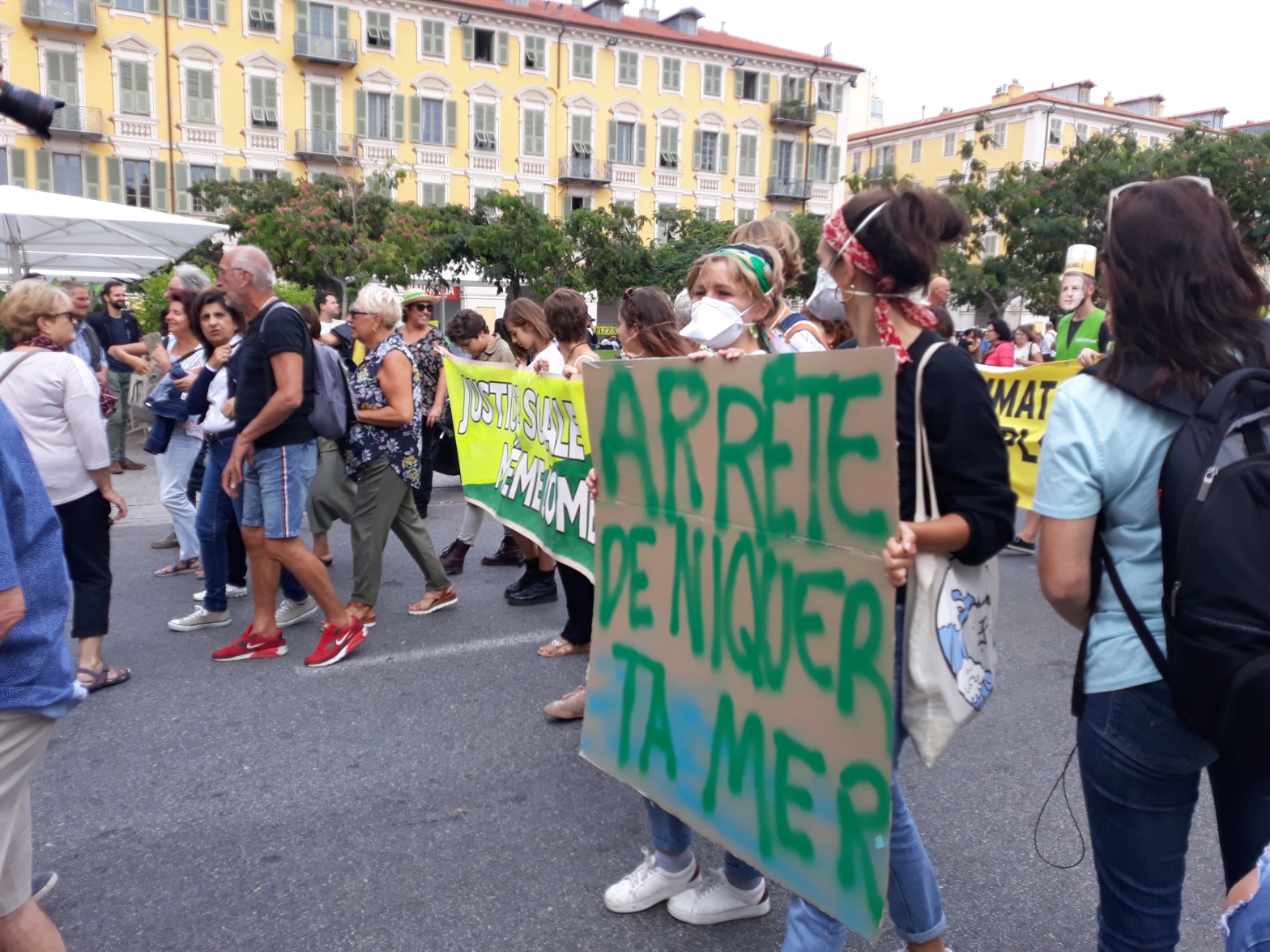
In the UK, the Labour party has been dealing – clumsily and insufficiently – with antisemitism among its ranks and last week saw nine of its MPs leave the party, citing antisemitism (along with Brexit positions) as one of their main reasons. On the other side of the channel, the French are dealing with antisemitic attacks, which have risen from 311 to 541 in the past year. Whereas the British conduct their antisemitism in a subtle, office bullying sort of way, with the occasional MP making insensitive comments, the French have engaged in violent acts with the desecration of Jewish graves and images of Simone Veil, a holocaust survivor who later become a national heroine. The response has also been characteristically French, with tens of thousands marching against antisemitism in the streets of major cities, including my home of Nice (also, incidentally, the birthplace of Simone Veil).

SimoneViel 1
One of many images of Simone Veil in France.


When it comes to this form of hate I have only observations to offer. My own sense of this being wrong I know is shared by most, if not all, of my readers and perhaps that’s why I haven’t bothered writing about it until now. I don’t know if I have anything else to add to an argument that for me doesn’t seem real. The hatred of Jews feels like a throwback to WW2, acted out by a testosterone-fuelled fringe group. Or I could look further back still to the Middle Ages when Louis IX of France banished the Jews because they were money lenders. With these references, are a couple of reasons why being anti-Jewish became fodder for the bigotry of the far right and the anti-capitalism of the far left.

I admit with some embarrassment that I’ve also been slow to act on this issue. It was only last year that I attended my first ever anti-fascist/anti-racist rally, where antisemitism was part of a larger mix of hate. I wonder now, if that rally were only about antisemitism, would I have attended? Probably not. And probably, without articulating it even to myself, it would have been because I’m not Jewish. But that was then. They say a week is a long time in politics – therefore, a year must be akin to a decade. Having passed through a political decade, well, I’ll see you at the next antisemitism march.