I'm a writer and linguist. My short stories have been published in several literary magazines and some of my stage plays have been professionally performed with the support of Arts Council England. One of my essays was shortlisted by Wasafiri Magazine for their Life Writing Competition 2014. As a linguist, I've authored four textbooks, including Digital Textuality (2015, Palgrave Macmillan), and I've had my research published in several books and journals. I am also a regular contributor to the Literary Encyclopedia.
The weirdness of 2025 has left me with no choice but to take a different approach from the usual end-of-year review and farewell. To begin with, I’m not even sure what year it really was.
When it came to US foreign policy, 2025 felt like a replay of 2003. That year saw the US and UK invade Iraq under the fabricated premise of ‘weapons of mass destruction.’ This phrase has now resurfaced in American media (mainly Fox News) and far-right podcasts to justify US military strikes against Venezuela. The false justifications followed public outcry over the unlawful and deadly targeting of Venezuelan fishing boats, on suspicion – without evidence – of drug trafficking into the US. For a clever montage highlighting how the government in 2003 used the exact same rhetoric for false pretexts for war as today’s US government and media mouthpieces, I recommend this recent episode of The Daily Show.
Or have we simply repeated 1992? That was the year US president George H. W. Bush, at the Rio Earth Summit, announced that ‘growth is the engine of change,’ making it clear that the US would not sign any biodiversity treaty. Bush reportedly said at Rio: ‘the American way of life is not up for negotiation.’ Sound familiar? Quotes from the current White House occupant during 2025 include: ‘Climate change is a con job – the greatest con job’ and ‘Our country is on the verge of a comeback, the likes of which the world has never witnessed.’
Stepping further back in time, 2025 could easily be mistaken for 1942, when President Roosevelt bypassed Congress and used his executive powers to incarcerate 120,000 people of Japanese heritage – two-thirds of them US citizens. In 2025, ICE deported an estimated 340,000 immigrants, with some 65,000 still being held in detention centres.
I don’t wish to fall onto the adage about history repeating itself. The assumption there has been of centuries passing and people not learning from the mistakes of history. These 2025 throwbacks are within the twentieth century, some in my living memory. The awful craziness of the past year is the result of wilful ignorance.
Of course, these examples come from the US, which brings me to the other side of this peculiar year: the ways in which the US government is leaving its mark on the rest of the world. I hesitate to revisit the endless list of presidential lies, acts of corruption, hate-fuelled attacks on individuals and countries and the somersaulting of international markets, food security and military alliances. Worse still, even though I live outside the US – in England and France – 2025 was saturated with reports of these events starring you know who. Hardly a day went by without his raspy voice and orange face – and the mute button only works with television. His childish intonation would even be in my head when I read him quoted in the newspapers. In France, the Ouest-France/Tagaday barometer declared the US president the most ‘médiatisée’ person of 2025.
This is why 2025 was such a difficult year to live through – a year so strange and unpleasant that I cannot find the right words for goodbye – ‘Good riddance’ seems too simple and direct. I know I’m not alone in this sentiment. In this week’s New Yorker, Susan Glasser notes ‘In the future, historians will struggle to describe that feeling, particular to this Trump era, of being prepared for the bad, crazy, and disruptive things that he would do, and yet also totally, utterly shocked by them.’
Instead, I offer: ‘Hello and welcome, 2026. I do hope you’re a better year than your cousin 2025, who’s spinning and raging out the door like the Tasmanian Devil cartoon.’
Living in this mindful moment, I sit back and embrace the transition into the new year without judgement or expectation, appreciating the emptiness of this quiet pause in time.
As the year winds down, lexicographers promote their dictionaries with their words of the year. The one that has gotten the most attention so far is the least interesting – vibe-coding. It’s a software development that uses AI to convert natural language into computer code. It doesn’t excite me either.
The Oxford English Dictionary has announced that rage bait is its word of the year. Oxford defines this as ‘online content deliberately designed to elicit anger or outrage by being frustrating, provocative or offensive, typically posted in order to increase traffic to or engagement with a particular web page or social media content.’ It’s click bait’s ugly cousin. The first example that came to my mind was the postings of the current US president, to which we need to add to the OED definition ‘usually to distract the public from certain issues…’
Cambridge’s dictionary has given its vote to parasocial, which it defines as ‘involving or relating to a connection that someone feels between themselves and a famous person they do not know, a character in a book, film, TV series, etc., or an artificial intelligence.’ The word has been around since the 1950s, when it was used in sociopsychology though the concept is even older. Figures like George Washington and Napoleon Bonaparte were idolized by people who imagined personal bonds with them as expressed in love letters. The fandom of the early days of Hollywood sparked a whole industry based on imagined intimate relationships with the stars. I confess now that my teenage self had a one-sided relationship with David Bowie. The fact that parasocial has come into popular use in 2025 says something about the times we live in. Are things so bad that our escapism leads us to a place where fictional characters, celebrities, influencers and AI bots become our friends and lovers?
My buddy, Mr Copilot, tells me that Dictionary.com has christened ‘67’ (pronounced 6-7) their word of the year. It’s a slang expression born in TikTok, and while it doesn’t have a fixed meaning, it could mean ‘so-so’ or ‘maybe.’ It’s usually accompanied by a hand gesture – palms up alternating up and down. Like so many slang expressions, its social meaning is more important than its lexical meaning – it’s part of a private language, popular with the young and used to annoy the old. It’s working on me.
Other words that were added this year aren’t new and didn’t make ‘word of the year,’ but are interesting, nonetheless. In 2024 Carol Cadwalladr introduced and popularized the term broligarch, which entered the Cambridge Dictionary in 2025. The fact that others are using this term gives me hope in a perverse way. Broligarch encapsulates the ultra-wealthy tech figures (often male) who wield influence over politics, media and culture. Its growing use and entrance into a dictionary marks public concern – this is where the hope comes in. The broligarchs do not use it to refer to themselves. It’s used despairingly by the rest of us.
Finally, there’s tradwife, which has been around for a few years and was also added in 2025. It refers to ‘a woman who embraces traditional gender roles, especially in marriage and homemaking.’ It’s one thing to be selectively nostalgic – most nostalgia is selective – but it’s something else to desire inequality and financial dependency. My prediction – in five years from now, a couple of neologisms will enter the English lexicon – the verb distradify and the noun liberwife.
What I’ve been reading
A history book that is just that – and not historical fiction, my normal means of learning history. The Burning Earth: An Environmental History of the Last 500 Years by Sunil Amrith starts with the Age of Exploration and Empire, when European colonial expansion began reshaping global environments through mining, agriculture, and trade. The book then traces environmental disasters of the Industrial Revolution and the 20th century’s fossil fuel boom and finishes with our climate crisis. I’ve been particularly struck by this book’s approach to the slave trade. Where a more traditional history would describe the brutality, human toll, financial gains, abolitionist movement and the US Civil War, this history adds the consequences to biodiversity. One of several examples is sugar, which became an industry due to slavery across North and South America. Amrith sums this up:
“Violence on human beings accompanied a violent assault on the rest of nature. Sugar plantations had a limitless appetite for timber to fire the vats. Furnaces swallowed forests. Woods fell for pasture to feed the domestic animals that were a vital source of muscle power. Denuded hillsides threatened human settlements with mudslides after every rainfall. Sugar ruined the soil.”
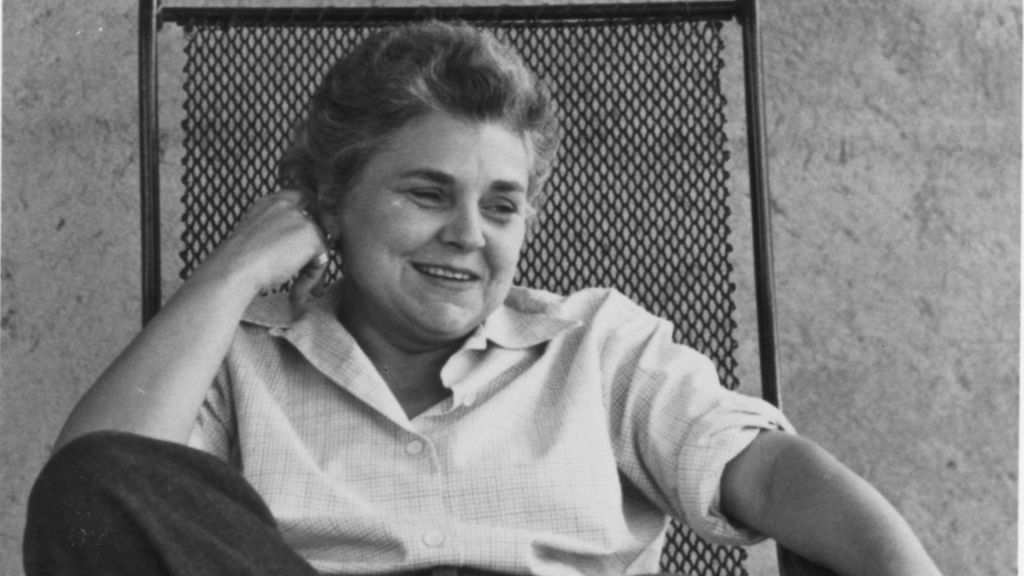
The New Yorker, celebrating its 100th anniversary, has reprinted some classics, including the poem ‘At the Fishhouses’ by Elizabeth Bishop. First published in 1947, this highly accessible poem describes a scene of an elderly fisherman untangling a net on the shore. The narrator, observing this, connects with nature and memories and reflects on the concept of knowledge. Like the comments made by Jorie Graham in the current New Yorker, I too found the ending particularly evocative in a literal and linguistic sense:
It is like what we imagine knowledge to be:
dark, salt, clear, moving, utterly free,
drawn from the cold hard mouth
of the world, derived from the rocky breasts
forever, flowing and drawn, and since
our knowledge is historical, flowing, and flown.
Elizabeth Bishop (1911-1979)
So too, are the words we create to communicate this knowledge.
The topic was AI. Today, the topic is always AI. Let’s be honest, whether we see it as a sophisticated search engine, a gushing editor or techno teacher, most of us are using it.
At this online writers’ group, we started by regaling each other with our experiences of dabbling in AI – those silly hallucinations and unnatural conversations where very answer ends in question. Of course, what was said in that meeting ‘stayed in the room.’ With that rule, I braced myself for writers admitting they used AI to help them create and edit their work. But no, a few of us admitted trying it as an editor while others sought its help with research. In my case – I’ll step outside the room – I’ve used it for editing passages of a novel I wrote years ago and was undergoing a major editing/rewriting. I would give Co-Pilot a few pages of a chapter that I felt was sagging and asked it to tighten it up. The Co-Pilot version rearranged some sentences to make them more concise, but in many cases more adjective laden – I’m not a huge fan of adjectives in creative writing. Let the verbs and metaphors do the heavy lifting I say. For me, this teaching tool showed me what I needed to look for in my writing that could be effectively rewritten.
The conversation quickly turned from how we were using it to how it was using us. One author moaned at how Anthropic ‘scraped’ seven of his novels without his permission or financial compensation. He is currently involved in a class-action lawsuit being spearheaded by the Society of Authors. Using a link now available on the SoA website, another novelist discovered one of her books had also been scraped. Outrage mixed with fear – what about the other AI platforms? How do we find out about them? And what about those unscrupulous so-called writers who are using AI – our books – to write formulaic tripe that will sell like hotcakes?
I probably didn’t make myself popular by mentioning that a publisher of one of my academic textbooks contacted me to ask my permission to use my book for training an AI platform. If I opted in, whenever my work is used, it will be referenced with a link to the publisher’s website, and I would receive a small royalty. Of course, I opted in. Really, it wasn’t for the money. My reasoning, which I shared with my fellow writers, is that at least I know my book draws on and refers to peer-reviewed studies, and the final draft of my book was peer-reviewed by two scholars in the field. I was pleased to contribute a reliable source to an LLM. Better this than the grey literature and internet folk linguistics that is being scraped as I write this blog.
No one commented. I was likely to be seen as a traitor.
A few days after the meeting I stumbled across a counterbalance to all this by Wired magazine’s editor, Kevin Kelly. He feels honoured to have his books included in AI training. Kelly says that in the not-too-distant future, ‘authors will be paying AI companies to ensure that their books are included in the education and training of AIs.’ That is, authors will pay for the influence of AI responses that include their works – a type of indirect advertising. Hard to believe this in the current climate.
The one word that didn’t come up at this writers’ meeting, which in hindsight I wish had, is ‘creativity.’ For me, it’s not so much about my published books being so precious. It’s more about the process. The creation and recreation of texts. In the words of Henry Miller ‘Writing is its own reward.’ No bot can take that experience away from me (to paraphrase an old song).
What I’ve been reading
Ocean Vuong is a brilliant writer – an utterly unique voice. On Earth We’re Briefly Gorgeous was his first novel and is written as a letter from a Vietnamese American son to his illiterate mother, knowing she will never read it. Using poetic language and humour, the novel explores themes like identity, trauma and homosexuality. It also conveys a strong social message about the damage done to American families and communities by the opioid crisis. While so much of this novel is philosophically and poetically quotable, I’ll close with this gem:
‘Do you ever wonder if sadness and happiness can be combined, to make a deep purple feeling, not good, not bad, but remarkable simply because you didn’t have to live on one side or the other?’
I can’t imagine a bot producing that, let alone enjoying the act of creating it.
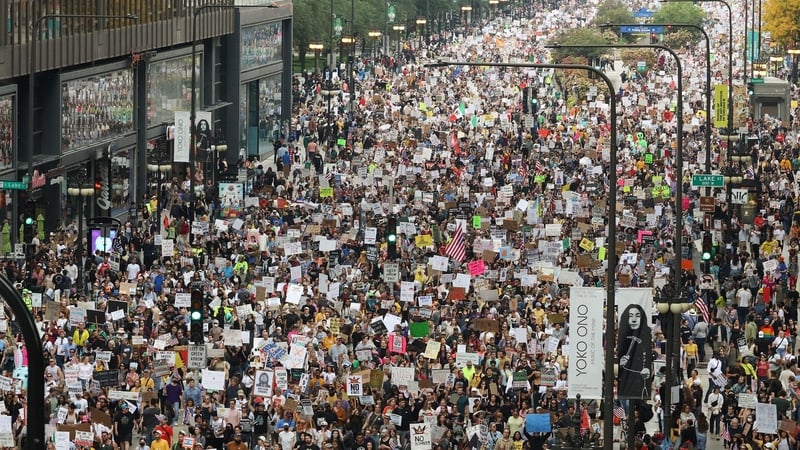
‘As we resist Trump and his regime, we weaken it. As we weaken Trump and his regime, we have less to fear and more reason for hope. As we have less to fear and more reason for hope, we are able to vanquish tyranny and build a better future.’ This is according to Robert Reich, commenting on the No Kings demonstrations in America. I get what he’s saying, and I agree in theory—but honestly, sometimes these ideas just end up as pub talk or dinner table debates, never really going anywhere.
Part of the problem lies in the word resistance and its verb form to resist. The word resistance first appeared in English in the 1300s meaning “moral or political opposition” and referred to violent uprisings against European feudalism. Later in the same century resistance denoted “armed opposition by force” (Online Etymology Dictionary).
Fast forward a few centuries, and scientists started using it in the 18th century to talk about opposing the flow of energy. No weapons needed. The phrase path of least resistance came along in 1825, taking on an even softer figurative meaning – it’s an expression I’ve heard myself use to describe dealing with colleagues and difficult family. In the present day, we resist temptation to eat another cheese-encrusted tortilla chip or purchase something we really don’t need but want badly.
So, resistance can feel empowering and even rewarding. But there’s a flip side. I heard it in a ‘Morning Calm’ meditation on the Samsung Health app—the soothing voice talked about resisting change and trying to control things you just can’t. Sometimes, resistance just makes you miserable.
While I was writing this, I received another newsletter from Robert Reich, insisting ‘The resistance is becoming an uprising. Last Saturday, more than 7 million of us poured into the streets to reject Trump’s dictatorship. That’s more than 2 percent of the adult population of the United States. Historical studies suggest that 3.5 percent of a population engaged in sustained nonviolent resistance can topple even the most brutal dictatorships — such as Chile under Pinochet and Serbia under Milosevic.’
That’s all well and good, Robert, but Pinochet hung on to power for 17 years and only left because a new Chilean constitution stopped him from running again. Milosevic was taken down by international courts for war crimes. I don’t see America getting a new constitution anytime soon—and even if it did, Trump would probably just ignore it or twist it to suit himself. The international community seems to either flatter him or go their own way without America and without attacking the president’s tender ego. There’s no big global push to hold him accountable for human rights abuses (like what ICE is doing in the US or military attacks on civilians off Venezuela and Colombia).
Nonviolent resistance is great. It brings like-minded people together, pushes the media to question the government’s narrative, and most importantly, it gives us hope. But resistance alone isn’t enough. If all we do is resist – especially when change feels like an endless uphill climb – we risk burning out, disillusioned and miserable.
I’m reminded of the opening to a poem by Maria Melendez Kelson:
Jennie Godfrey’s The List of Suspicious Things served its purpose as a non-gory and non-violent bedtime read – I’ve learned not to read Joyce Carol Oates if I’m horizontal with pillows under my head. Though not predictable, Godfrey’s novel wasn’t challenging or as engaging as I had hoped it would be. The premise is intriguing. Set in 1979 in Yorkshire at the time of the Yorkshire Ripper murders, a young girl sets out to find the notorious murderer by observing the people in her neighbourhood, assuming it must be one of them. Her suspects are only suspicious because of the ways adults treat them, exposing the racism and prejudice of the society at the time. The story follows the coming-of-age genre with her realising these ways of the world and the limited tolerance of adults.
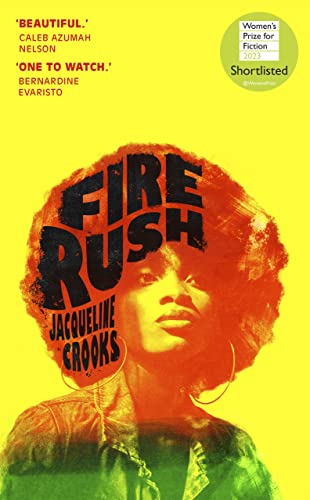
I found a meatier and more interesting read in Jacqueline Crooks’s Fire Rush. Also set in the 1970s, but in the vibrant Afro-Caribbean community in London. It’s earthy and real, where the language lifts off the page and the characters smoke weed and spend their evenings dancing at an underground club. The story turns into one of resistance against racism and police brutality. Despite the injustices and the violence, I was left with a satisfying sense of community, reminding me of Zadie Smith’s White Teeth and Chimamanda Ngozi Adichie’s Americanah.
Finally, going back into the archives of my mind, I reread The Stranger by Albert Camus. I had only recalled from my undergraduate days that this was a story of a French Algerian loner. Forgive my younger self. Of course, the novel is much more than that. With a new film adaptation out in France, the book’s getting fresh attention. In a recent interview, novelist Lilia Hassaine said The Stranger could be called Soleil amer—bitter sun. The main character, Meursault, doesn’t deny his guilt or resist his fate. He finds comfort in the sun, even in his cell. Hassaine rightly describes the sun in the novel as both beautiful and bitter.
When we arrived at Muscat Airport my visa was not waiting for me. An immigration officer searched through a few metal filing cabinets and squinted at his computer screen a couple of times.
Before leaving my home in England, I received an email with a ten-page attachment entitled Cultural Advice and Rules for Foreign Lecturers. My new employer was a little-known university in a little-known town in the middle of Oman. Muscat, the nearest city, was an hour and a half by highway through dusty valleys and stretches of uninhabited scrublands. I was winding down my academic career and saw this overseas stint as a final job – a spell of desert calm.
I had read in Cultural Advice and Rules for Foreign Lecturers that foreign women must cover their shoulders, elbows and knees. A separate sentence was devoted to the covering of cleavage, euphemistically referred to as a plunging neckline. This served as a reminder that I would be living in a traditional country, a euphemism for patriarchal and overtly sexist.
At the same time, the Sultanate of Oman is often regarded as one of the more progressive countries in the Middle East. Women work in senior positions, own property and have had the right to vote since 2002. Such points rattled in my head as justifications for working there in case anyone accused me of compromising my feminist principles.
At least I was not told to dress in clothes that I would not otherwise wear. No one was forcing me to don a headscarf or veil. I have nothing against the wearing of veils if men cover their heads as well. This is the case in Oman, where women wear hijabs, which leave their faces exposed, but keep their necks and hair well hidden. Omani men cover their heads either with turbans, called massahs, or with caps that look like truncated fezzes, called kumas.
I received another email about work visas. It said that after I received my work visa, my husband, who was already retired, would need to apply for a family visa so that he could stay with me, and he could buy a tourist visa in the meantime. In another part of the same email, it said that I would have to arrive alone, and my husband could join me only when his family visa was ready and that could take two to three months. My heart sank at the thought of living in a new country – this mysterious desert – by myself for three months while my husband remained in the UK, no doubt worrying about my welfare.
Given these contradictions, I searched online for an explanation – could my husband come with me or not? I soon learned that under new Omani laws women workers were not allowed to bring their husbands into the country – at all. Foreign husbands could sponsor wives, but not the other way around. So much for Oman being a progressive country.
This prompted me to contact the Head of Department, my new boss, who was British. He spoke in a straightforward way as if not surprised by the confusing email and told me to “not worry about it.” Workers’ laws in Oman are not set in stone like they are in Britain. There were ways of working around them, especially since I am a Westerner and “in Oman not all people are equal.”
On the surface, these new laws appeared sexist, but deep in their interior also lay a heady mix of nationalism and racism. Foreigners made up some forty percent of the workforce, mostly as low-paid manual labourers from the Indian subcontinent. Women from that part of the world often end up working as housekeepers or nannies, with tales of being victims of physical abuse not uncommon. The new visa laws targeted these female workers because their husbands could enter on family visas and later take jobs away from Omani men from the poorer classes.
After another round of emails, it was agreed that my husband could travel with me, entering the country on a tourist visa and that his family visa would take another month. Only a month. I was told that my work visa would be waiting at the airport upon arrival. This was doable. We packed our bags, me with my clothes covering my shoulders, elbows and knees.
At Muscat Airport, after an hour of waiting, a passport officer advised me to buy a tourist visa along with my husband. If not, it would have meant a seven-hour flight home and losing the job.
In the days to follow, I discovered the phrase inshallah, which literally means God willing, but in practice also means who knows, who cares and stop bothering me. My work visa should be processed soon – inshallah – whether it takes a few days, a few weeks, or possibly up to a month.
In my frustration, I took the bold move of visiting the head of HR, who introduced herself as Miss Aisha. That was her first name. My Arabic speaking colleagues did the same. There was Mr Ali, Miss Fatima and several Mr Muhammeds. Aisha was a petite Omani woman, who appeared quite thin and delicate under her abaya (a long, nun-like dress). Her name, which has several meanings, including “small one” suited her. With a gentle smile, Aisha offered me watery coffee and dates, a tradition of their hospitality.
Before I could say anything, she pushed up her wired-rim glasses and complimented me on my career, referring specifically to my work history as if she had memorised my CV. I was being buttered up. By the end of her introductory remarks, I was so greasy I could not very well come off as harsh or unhappy with my visa situation. I turned the question around and I finally managed to mention that I was concerned about working illegally while waiting for my visa. This was not fully true. I was concerned about my visa because I needed it to get a residence permit that would entitle me to health insurance, an Omani driver’s license (required after three months), home broadband and the coveted alcohol license issued only to non-Muslim foreigners. She explained between sips of coffee that the immigration services were suffering a backlog, and everyone knew this. I could work in the country under a tourist visa and “do many things” while waiting for a work visa. “It should come soon.” She smiled again and stared into my eyes for a few moments. I wondered if she was sending me a signal. If she was, I could not read it. She appeared suddenly busy with some documents and stood, indicating that I should leave.
In some ways, Miss Aisha was right. I could manage some things without a work visa, even those things I was told I could not get legally. With the help of my British bank, which had branches in Oman, I was able to open a local bank account. With that account and an employment contract, I was able to negotiate home broadband. Equally important, thanks to my Western colleagues, I was soon on the receiving end of contraband South African Cabernet Sauvignon. Had my colleagues been discovered passing me the box of wine, we all would have faced deportation.
During these early weeks of waiting for our visas, we set up home in an apartment provided by the university. As with most ex-pat lifestyles, television and internet serve as daily reminders of our lives left behind in the West. When I was not looking at a boxy television, reminiscent of the 70s, or my computer screen, I stared at our picture window that looked out onto a desert field of sand, rocks and shrubs. In the distance was a two-road village which looked like a cluster of palm streets. Some days wild camels were eating at the shrubs and chewing on plastic bags from our rubbish. Other days the shalal windstorms swept across our tiny town stirring up the sand into a canvass of beige. Observing life in the desert provided the sense of calm and reflection I was seeking.
I had also started teaching. Every time I entered an Omani classroom, I was acutely aware of being the only Westerner in the room, the only woman not wearing a hijab or an abaya. Despite censoring my shoulders, elbows and knees, I felt underdressed with my forearms, neckline and hair exposed for all to see.
Without exception, every abaya was black. The occasional colours slipped in with their hijabs, though most female students stayed with black for their head coverings as well. The serious display of colour came from the handbags – all large, bright and boldly decorated in stripes, plaids, polka dots, flowers and paisleys. Trying to make small talk, I complimented a group of these young women on the colourful bags, and one explained that it is one of the only items they can display with colour in it. Another student added with her eyes narrowing in their accusation, “A devout Muslim shouldn’t even wear a non-black hijab.” Arabic – incomprehensible to me – went flying back and forth across the lecture hall. Words were spat out and glottal sounds elongated for emphasis before I could make a joke about our “English-only” classroom.
A student started speaking in English. An animated debate followed on whether it was the influence of the Saudis or the Iranians that in the past decade or so insisted that women only wear black. As with some other countries in the Middle East, in reaction to the Arab Spring, conservativism was on the rise. One student lamented over memories of growing up with her mother and aunts wearing multi-coloured abayas and headscarves.
The men in my classes wore white dishdashas, appearing starched, bleached and, having been dried over a rack with frankincense burning underneath, there was often a sweet, musky fragrance when one passed by me. The kumas on their heads were also white with a few threads of colour articulating an embroidered pattern. My older male students in the post-graduate program wore patterned turbans, signs of their status and daytime employment. Turbans were akin to a man wearing a tie.
In these basically black and white classrooms, I must have appeared like a circus clown, a polychromatic foreigner. Fortunately, I didn’t have to worry about being too warmly dressed in the heat, since classrooms and offices always kept their air-conditioners running at full blast.
With each teaching session came a growing awareness of the inequities in this society. For the undergraduates lecture halls, seats at the front were always reserved for the males, the few that attended this university in the desert. My postgraduates were in small rooms and as men and women were equal in number, they stage-managed themselves into two gender-defined groups, divided by a makeshift aisle. It may have paled next to the adventures of T.E. Lawrence or Gertrude Bell, but these customs made me feel that I was truly immersed in a foreign country.
Perhaps, too, my willingness to go along was because there were no overt signs of sexism in the students’ language or demeanours. I had heard more sexist remarks among students in America and Britain than I had in Oman.
Classroom inequalities also surfaced with ethnicity. Omanis are a tribal people and amongst their tribes is one of East African origin. This has its roots in the era when Oman was an empire that spread as far as modern-day Mozambique. Students with darker skin and more African facial features always sat together at the back of the classroom. When I naively tried to join these different students into small discussion groups, I was met with shaking heads and embarrassed expressions. I had breached some unwritten rule.
A complex web of hierarchy and inequalities not only to do with tribal and regional backgrounds, but also family relations were understood and greased the wheels of Omani life. Having a male relative in a position of power was always useful. This applied to several students in my department who regularly missed assignments and failed exams and miraculously passed all their courses – something to do with an important uncle. At the bottom of the hierarchy and subject to all sorts of inequities was the foreigner.
The needs of the foreigner, such as my need for a work visa, appeared low on the priorities of the Omanis. I went to the university visa office about twice a week to see if there was any progress on my application. Most days they would say that they did not know anything. Other times it was that my visa would be ready by the end of the week inshallah or early the following week inshallah. Each promise evaporated as the days and weeks followed without a work visa. For the first month, my husband and I could renew our tourists’ visas at the police station in our town. After that, we had to leave the country, usually spending a day aimlessly in Dubai shopping malls, and re-enter, purchasing new tourist visas at Muscat airport. My employer paid for all of this – a sign that they still wanted me there but were perhaps suffering from a common developing country malaise – administrative dysfunction.
Another couple of months passed, and my husband and I were still on tourists’ visas. Frustrated with going to the university’s visa office, I went back to Miss Aisha. Unlike my first visit with her where she talked of backlogs, she took on a completely different position. This time, Miss Aisha told me that the government’s immigration department had it in for the university – something to do with someone who worked for the university upsetting someone else who had an important uncle. Because of this animosity – real or imagined – the new laws pertaining to foreign female workers applied to me after all. I would not be allowed to sponsor my husband’s stay in the country.
Perhaps it was the change in her tone of voice, but something in my gut told me that this new explanation was the truer one. I suspected she knew all along and had tried to signal to me that first time. I was being punished for being a female with a professional qualification who was the breadwinner and needed to sponsor her husband. In this traditional country, which was growing more conservative, I was setting a bad example. I had exposed my shoulders, elbows and knees.
With a pleading woman-to-woman look on my face, I said that I was sorry and explained that I really needed this job, my last fulltime job before retirement. Once more, we ate sticky dates and drank diluted coffee in silence as she thought about it. When she spoke, Miss Aisha told me that her name means “living” and “woman living.”
A few days later, a quick trip to Dubai culminated with smiles and a work visa stamped on my passport. All was dream-like and fine until I received my final batch of forms to sign. That was when I discovered that Miss Aisha had only submitted my paperwork a couple of days before my visa was ready. The stories I had been given about immigration backlogs were, as I suspected, totally fictitious. The laws about foreign women working in Oman, however, were real. The visa application form that I had signed months earlier in England had been altered to say that I had no dependents – no husband was with me. Falsifying a visa document was most certainly illegal. I said nothing and signed the agreement confirming that these were my documents.
In the days that followed, I acquired an Omani driver’s license, health insurance and an alcohol license. As for my husband, who still existed for me, Miss Aisha bestowed upon him a very dubious student visa. With some unease, I grew to tolerate this society of contradictions and inequalities, keeping my objections as well as my shoulders, elbows and knees under wraps. ##
I first learned and instantaneously joined in singing the chorus of Ciao Bella Ciao Ciao Ciao a couple of years ago at a fundraiser for Ukrainian refugees. Despite the lyrics resembling the passé Italian ‘cat call’ once hurled at women, I quickly realised its true nature: a protest song. It’s about a country under invasion, with a narrator who would rather die than surrender, asking the supporters (the partigiani) to take him or her away. At least, that’s the gist of the early verses. The dead body is to be buried in the beautiful mountains of the beloved country, where flowers will grow above the grave. The song ends with a rambunctious cry for freedom.
This is the 1940s version, widely interpreted as being anti-fascist even though there is no mention of fascists or Mussolini. I see the goodbye my beautiful, goodbye, bye bye as a farewell to the country and the days of freedom. Putin’s sending troops into Ukraine is an invasion of a sovereign nation. Those were my thoughts – nothing to do with fascism – as I sang the chorus in the gardens of a church in Cambridge decked in the now familiar blue and yellow flags. We were calling for freedom and showing support for the people of Ukraine.
Since the 1960s the song has become a generic protest anthem across the world. It’s been used to defend workers’ rights, object to taxes, protest oppression, and rally against war. It’s another form of We Shall Overcome. In this way, the song has returned to its 19th-century origins in the rice fields of northern Italy. In that version, the lyrics describe insufferable working conditions and a boss who beats the workers with a stick. They, too, would rather be dead, and the song also ends with a wish for freedom.
The song has recently been dragged into the headlines with the assassination of the far-right influencer Charlie Kirk. Bullet casings from the assassin’s gun were reported to have the words Ciao Bella Ciao Ciao Ciao engraved on them. If my language is hedged and my tone a bit sceptical, it’s because the US president and others of that ilk started blaming the ‘radical left’ and ‘antifa’ before a suspect had even been identified, returning the song to being anti-fascist. That narrative sounded a bit too convenient – and out of touch. Now that a suspect is in custody, we have learned that he was raised in a conservative Mormon household. His parents are registered Republican voters, and he registered as an Independent. So far, nothing has suggested he belonged to a left-wing organization – or to any political organisation.
The accused is an individual with mental health issues who was also in a gay relationship with a partner who was transitioning. This individual may have been offended by the well-documented attacks from Mr Kirk against gays and transpeople . Living in America, this mentally ill individual had easy access to a gun – an issue that is not being debated this time around.
Seeing the shooter as an individual and not necessarily influenced by the left, it’s worth noting that the 22-year-old alleged assassin was an avid gamer. In the world of video games ‘ciao bella, ciao ciao ciao’ holds several meanings, including ‘see you,’ ‘I got you – bye bye’ and ‘I’m tired of this.’ The casings also had a few abbreviations used by gamers that middle-aged journalists are still trying to decipher.
I doubt we’ll ever know the true motivations of the assassin. His actions were unquestionably wrong and sadly are likely to be replicated by others given the heated and polarized times we live in.
Crime fiction that’s not really of the genre. These two novels were intended to be late summer escapism from the horrors of the world news, but neither Colson Whitehead’s Crook Manifesto or Olivier Norek’s Entre Deux Mondes (Between Two Worlds) could keep my mind from the bigger social problems of racism and anti-immigration positions.
Crook Manifesto is set in 1970s New York, with its notorious crime problems and seediness and follows on from Whitehead’s Harlem Shuffle – which I hadn’t read. For me, this book worked fine on its own as it uses dark humour and elements of crime drama to weave a story about a criminal who had gone straight but was then dragged back into the underworld. It’s full of social commentary on race, poverty and crime and made me strangely nostalgic for 70s America, with societal divisions that seem innocuous by today’s MAGA and social media-fuelled standards.
The Norek novel doesn’t have the laughs or the comfort of reader hindsight that Whitehead’s book has. It’s a crime thriller set in the Jungle, the notorious refugee camp in Calais, France. It follows two police officers – Adam, a refugee fleeing Syria and his job in Assad’s military police, and Bastion, a French lieutenant newly assigned to the Jungle. This gripping tale is complex and heart wrenching, with a high body count – definitely not a light read for the nightstand.
This summer, I embarked on a major project – clearing out the paper clutter. I’ve disposed of two boxes crammed with over 30 old journals and once again triaged my bookcase into categories of sell, donate and keep.
Letting go of my once precious journals – some have travelled to three continents – has brought two things into focus. 1) Half of these journals were about the craft of writing, developing plots and characters, turning loose ideas into tangible stories. Now that these works have been written and most published or performed – some more successfully than others – I don’t need these notes anymore. 2) The other half of the journals were a chronicle of angst and anxiety in the forms of travelogues and practice prose, observing changes to my lifestyle with each new country, each new job while untangling my neuroses. These pages detailed a younger me – or another me – who, while still present, exists at a distance now. Since my thinking and behaviours have evolved, these journals could be discarded.
Flipping through the pages one last time, I did find a few memories that sparked new ideas for fiction and nonfiction. I’ve already noted them in my current journal, which has been digital for the past five years. I suppose someday that, too, will be deleted. For now, at least they aren’t collecting dust and taking up space that could be used for more useful items.
As I was preparing myself to say goodbye to these now worthless volumes, I stumbled upon a quote from professional New Yorker Fran Lebowitz. When asked if she kept a diary or journal, she responded: ‘Guess what? I don’t need to live my life twice – once was enough.’
The books were a lot easier to purge. I grew up in an apartment full of books. The living room was flanked with two walls of bookcases – classics and encyclopaedias in hardcover and everything else in paperback. All these books were read at some point by my mother, my six siblings and me. Every Saturday, one of us drew the short straw and had to dust the living room – a feather duster along the tops and bindings and a cloth dampened with wood polish for the shelves. Over time, some books were passed on to my mother’s friends or donated to a library, and the empty spaces were quickly filled again.
I inherited this need to be surrounded by books, continuing the tradition of book purges with each move to a new country or city. But in recent years, the rise of e-readers and regular library visits have naturally reduced the content on my shelves. With this summer’s clearing out, I sold some 50 books online and gave another 20 to charity. What remains are a handful of language books that I’m still using and some poetry and French books that I still dip into.
The only books I have held on to for sentimental reasons are my own publications (that are not available in digital form), my high school yearbook and the complete works of Shakespeare. While I have the Bard’s entire canon on my Kindle, I saved this specific edition for the handwritten inscription from my mother. It was a birthday present from her, one of the few positive memories I have. The inscription reads, ‘May you taste of life as deeply as did the masters.’
What I’ve been reading
Samantha Harvey’s Orbital was well-deserving of the Booker Prize last year. It’s the first book set in space to win the prize, which says something about the typical prize judges. Science fiction, while no longer considered pulp, is still seen as too low brow or not literary enough to make the grade. Orbital escapes that by working with science fact. Set on the International Space Station, the lives of six astronauts and cosmonauts – two women and four men – are explored as the spacecraft orbits the Earth 16 times a day.
While the psychological aspects of life in a confined space are compelling, they are within our imagination’s grasp. We can relate to being in tight quarters, working on a team, or feeling unreachable from loved ones. What is far more challenging to comprehend, and therefore more fascinating, is what happens to the human body in space. Harvey’s research is impeccable and aligns with what I’ve discovered in my own reading, including a recent article in The New Yorker on the mysterious and often dangerous long-term effects of gravity on the human body.
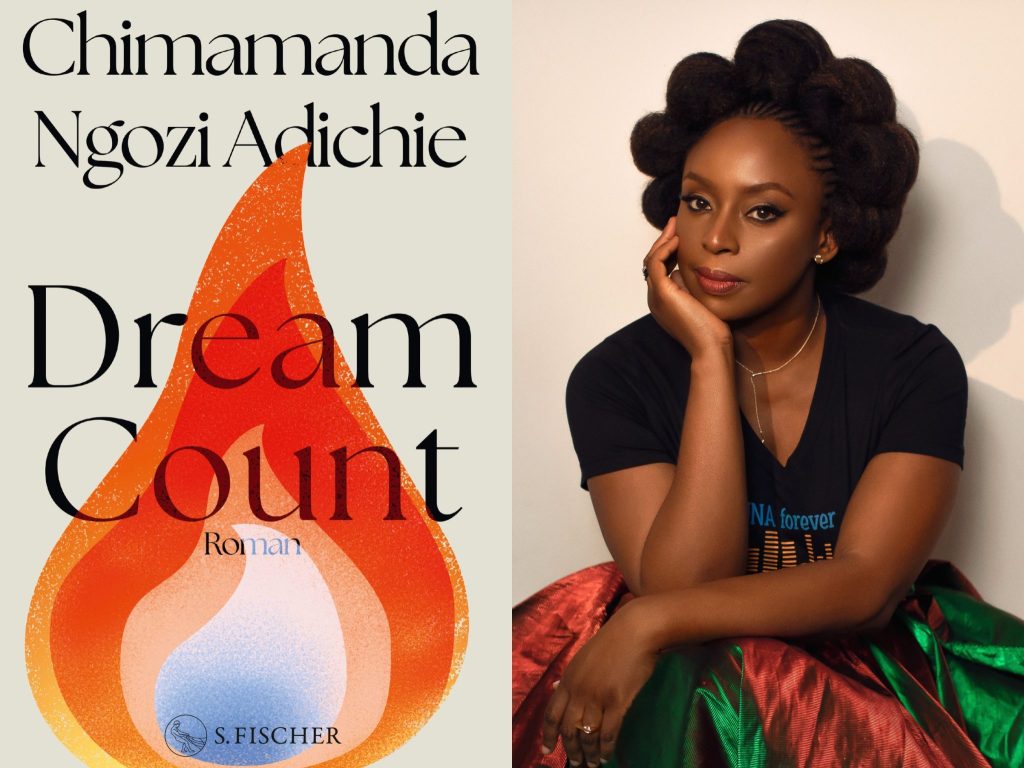
My summer days have concluded with Chiamanda Ngozie Adichie’s latest novel, Dream Counts. Reviews and the book’s jacket blurb emphasize that it is set against the backdrop of the Covid-19 pandemic, with four main characters of Nigerian descent grappling with the isolation and uncertainty of that time. In my reading, however, Covid is present for only a small part of the novel. The interconnected stories of these women cover flashbacks to Nigeria, Britain, and America long before the pandemic struck. The emotional journeys and experiences of the women – including motherhood, sexual violence, relationships, and ambitions – are far more central than the pandemic themes. It’s a story about the complex facets of womanhood, told from a feminist perspective and in Adichie’s signature crisp and fast-paced style.
Still surfacing from a deep night’s sleep, I checked my inbox to find an email from the US Social Security Administration. The subject header read: ‘Social Security Applauds Passage of Legislation Providing Historic Tax Relief for Seniors.’ That woke me up quickly.
This is an agency of the US government that used to communicate, like other government agencies, in dry non-partisan language. It gets worse in the body of the email:
‘The bill ensures that nearly 90% of Social Security beneficiaries will no longer pay federal income taxes on their benefits, providing meaningful and immediate relief to seniors who have spent a lifetime contributing to our nation’s economy. “This is a historic step forward for America’s seniors,” said Social Security Commissioner Frank Bisignano. “For nearly 90 years, Social Security has been a cornerstone of economic security for older Americans. By significantly reducing the tax burden on benefits, this legislation reaffirms President Trump’s promise to protect Social Security and helps ensure that seniors can better enjoy the retirement they’ve earned.”’
Since when do civil servants (as we call them in the UK) publicly praise the policies of any president or prime minister? Worse still – to allude to political campaign promises? Short answer – when that civil servant is Frank Bisignano, former CEO of Fiserv (a payment processing enterprise), a staunch Republican and one of the richest people in America. Tr*mp appointed him Commissioner of the SSA soon after retaking office in January of this year (yes, it’s not even 6 months yet).
This being from the SSA, the email got away with not mentioning how America’s most vulnerable would have their financial support lacerated. Medicaid in under another government agency: the Centers for Medicare and Medicaid Services (CMS). I’m waiting for their email to all US citizens and suspect I’m going to have a long wait.
The next email I opened also had a thing or two to say about the One Big Beautiful Bill – I hate even writing in this hyperbolic language. But it’s clever to use the propagandist parlance in legislation so that, like it or not, we all start sounding like MAGA morons.
From Robert Reich:
‘It is a disgrace. It takes more than $1 trillion out of Medicaid — leaving about 12 million Americans without insurance by 2034 — and slashes Food Stamps, to give a giant tax cut to wealthy Americans. It establishes an anti-immigrant police state in America, replete with a standing army of ICE agents and a gulag of detention facilities that transform ICE into the most heavily funded law enforcement agency in the government.’
Reich continues by recounting how moderate Republicans were bullied by the president’s threats and insults, mostly via X and Truth Social.
I retreated from my emails and opened the Le Monde app. One of their top stories covered OBBB – they’ve avoided both the English language and the embarrassing phrase by abbreviating it. They’ve also taken a more objective tone and have expressed all the above – it’s a bill that reduces taxes on the better-off, funds anti-immigration policing and leaves America’s most needy worse off, and that the US president attacked members of his own party to get it passed. Even the purring beauty of the French language doesn’t help to make this more palatable.
What I’ve been reading
Helen Dunmore’s award-winning novel A Spell of Winter has provided the perfect escape from the horrors of American politics. Firstly, the story starts far away from modern America in England soon before the first World War and continues to a few years after the war. Cathy and Rob are siblings living with their grandfather and a servant in an old manor house. The children had been abandoned by their mother and witnessed their father’s declining health in a mental sanitorium. The children grow into teenagers, and their co-dependent relationship becomes incestual and later deadly. The story explores the power of class, of loss and of family. Secondly, the articulateness and sensitivity of the writing made this often disturbing and sad tale – some call it gothic – a delight to read. A snippet from Dunmore’s book: “The past was not something we could live in, because it had nothing to do with life. It was something we lugged about, as heavy as a sack of rotting apples.”
Quite different from the vulgar vernacular and semantic satiation coming out of Washington these days.
This is not another linguistic term, nor is it figurative. I literally mean the big cruise ship whose sinking continues to intrigue and entertain over a century later. I’ve been listening to the BBC Sounds podcast Ship of Dreams, which puts the tragic voyage under a microscope, examining everything from the workings and perils of the engine room to what was on the menu for the upper deck passengers. Following an introduction covering the sociocultural and economic background that led to the construction of such a ship and the weeks leading up to Titanic setting sail, the podcast re-enacts the disaster with the help of historians, nautical experts and survivors’ accounts.
Among the fascinating factoids to emerge is information about the languages spoken on the Titanic. After English, the most spoken language was Swedish. Of the 1,300 passengers on board, 123 were Swedish (with 327 British and 306 Americans). Of the 994 crew members, some 34 were Swedish nationals. While these crew members were mostly dining staff who worked the luxury liners with the full expectation of returning to Sweden, all the Swedish passengers were travelling third class and immigrating to America for a better life. The Italians and French, by the way, ran the kitchen.
In this potpourri of languages, Arabic could also be heard on the Titanic, though the exact number of speakers is hard to ascertain, especially given the bilinguals on board and the poor record keeping of the day. Among these Arabic speakers were some 150 Lebanese immigrants who came from rural villages and were fleeing poverty. Sadly, only 29 made it to America. When these survivors arrived in New York, they were given temporary lodgings, food and clothing by the Hebrew Immigrant Aid Society. According to the podcast and other accounts (Encyclopedia Titanica), anyone from that part of the Middle East was categorised and treated as the same by Euro-Americans. It has also been noted that the Hebrew Aid Society was a non-discriminatory humanitarian organisation.
It’s hard not to think about these Swedish and Lebanese immigrants without reflecting on the plight and treatment of immigrants to America today, or the hostilities between Arab nations and Israel. The adage about history repeating misses the mark.
What I’ve been reading
Annie Ernaux may have won the Noble Prize for Literature, but I’m not convinced of the literary merit of her work. By literary I mean work that makes the reader aware of its language and style of presentation. I’ll admit that I grumbled when Bob Dylan – a lyricist, not a poet – won the prize, but now I have to say that his lyrics are far more literary than Ernaux’s prose. To be fair to the French writer, she has often said that she is an author of autofiction and not a novelist. I’ve just finished reading her ‘autofiction,’ Une Femme, about the life and death of her mother. While the story holds some interesting reflections on the lives of women and family dynamics in France from the early twentieth century to the 1980s, the writing was so matter-of-fact that I didn’t come away from it with any satisfaction of having read a work of literature.
The flipside of this was reading Bill Browder’s Red Notice, which doesn’t aim at fiction or literariness. Yet, it read like a thriller with feelings of frustration and pathos that gave it emotional force worthy of any literary writer. Browder, a US citizen, recounts his experience of setting up an investment company in Russia following the end of the Soviet Union when the country was a wild west for investors. His run-ins with corruption and dubious politicians reached its peak with the torture and murder in a Russian prison of Sergei Magnitsky, Browder’s lawyer. Holding people responsible couldn’t happen within Russia, so Browder involved the US government, international human rights organisations and the media. And none of that was easy. Today, Browder is recognised as a human rights activist.
Finally, noting the death of writer Edmund White, I reread his brilliant essay published in Granta in 2008 about his view of Europeans when he was a child in America and his first experience of travelling in Europe years later. So much of what he said then resonated with me (an American who has immigrated to Europe) that I still remembered much of the essay 17 years later. I owe that not only to the content, but to the magic of his prose. RIP.
Yesterday was World Oceans Day 2025, and today is the start of the 2025 UN Ocean Conference in Nice (I’m writing from Menton, further along the coast). While I cannot add to the tranche of news stories and statistics about our endangered oceans, I can offer this short essay intended to meld the personal with the spiritual and the environmental.
AMONG THE FISHES
I was not always a swimmer, and I have not always lived on the French Riviera. Being raised by a single mother, who did not want any of her children to swim, I grew up in Chicago as a non-swimmer. Over the decades, I have realized that mother operated on an axis of fear. Reprogramming my brain away from this phobia of water took years of swimming lessons, mindfulness, a patient partner and above all else the welcoming sea. Public swimming pools are not so hospitable. They are cacophonic with children, hard with brick and steel, harshly lit by fluorescent squares and taste and smell of chlorine. The sea has far more convivial sounds, textures, luminosity and chemosensory experiences.
From late spring to early autumn, the beaches of the Cote d’Azur are abuzz with talking and laughing, children playing and cafes clanking plates and hissing out espressos. Yet, as soon as I plunge into the sea, the beach sounds become muffled and dispersed. Better still, with my head underwater, a meditative silence imbues my being. Mindful, I adjust my hearing to the gentle hum, a sense of motion. I do not know if it is from the waves or inside my head when my ears are filled with water.
From late autumn to early spring, the shoreline is less populated. The sea is temperamental, with only the odd quiet day. Mostly, it is a symphony of waves, caused by a local rainy season and the movement of currents far beyond my sight somewhere between Europe and North Africa. These waves rumble as they hit the sandy shores and splash on to the shale beaches.
The sea water is soft, embryonic. The fluidity cleanses and changes shape as it undulates and foams and slaps my face when I come up for air. It feels icy but there is no ice in February and March, and I must wear a wetsuit. The rest of the year, it is refreshingly cooler than the air temperatures.
The seafloor can be grainy with fine pebbles or soft, pillowy with sand. Yet, in some areas, it is hard with rounded slippery rocks and boulders sharp with brittle edges. This textured tapestry of supple and coarse surfaces shifts with the movement of waves, sea creatures and interlopers like me.
After a storm, the feeling of the sea is disrupted by sand floating up but never reaching the top. It must have been under the mini pebbles. Pieces of flotsam – torn shards of palm – bob on the surface. The murkiness means I cannot see any fish. I want to run it all through a filter.
A strand of pearl-like lamps along the promenade lights up the beach at night. But the sea has its own jeweled magic as stars and the moon illuminate the surface, reflecting sparkles of frothy waves. The longer I stare at the sea and the night sky, the harder it is to distinguish them. They are with their own cornucopia of living organisms symbiotically connected. At that moment, I am meditating with my eyes open and feel that I too am part of this symbiosis. I dare not swim at night in the wavy darkness, not out of fear but of not wishing to disturb the sleep of diurnal fish. Like me, they have their circadian rhythms.
I can taste the salt of the water in the corners of my lips as I am one of those swimmers who breathes out of their mouth. Taste and smell go together, a kind of synesthesia, where multiple senses are experienced at once. I taste with my nose a saltiness that is not granular like table salt but smooth. Sometimes there is a smell of fish that is in the air, but which I know comes from above the surface, far from the shore. In the distance, I see the culprit. A fishing boat with its rods and rigs crisscrossing in the air has filled its deck with sea bass and hake.
There are fish to watch, even swimming close to the shore. Three types of sea bass wiggle below me, darting away from time to time as if I, someone else or something has startled them. The most common are small white sea bass, which in certain light look silvery. That is when I get confused with anchovies, also common in the Mediterranean. In summer months I have seen black sea bass with their broad white stripes and their negative cousins, a sea bass that’s mostly white with a couple of vertical black stripes and one horizontal one along its spine-like top.
Further away from the shore, the braver swimmers are treated to swordfish and tuna, that is if the anglers are not too close. Tourists’ boats edge out further still for the dolphins arcing above the waves. But this is a double-sided coin. Overfishing, tourism and resort expansion along the coast have done their damage. The French Mediterranean is one of the most developed coastlines in the world.
Worst still is the frequency of heatwaves brought on by climate change. While the heatwaves on land understandably make for dramatic and worrying news, the marine heatwaves get less attention despite sea temperatures breaking records. Last summer, the sea temperature off the coast of Nice climbed to an unprecedented 30C. With this, underwater forests, such as the gorgonian, are starting to perish.
I have gone from being a child fearful of the sea to one who is fearing for the sea. Yet, the vastness of the coastline and my ability to swim in it throughout the year make me forgetful of these dangers, blinded by the beauty and the repetitive motions and sounds which blend me into their rhythms.