
This summer, I embarked on a major project – clearing out the paper clutter. I’ve disposed of two boxes crammed with over 30 old journals and once again triaged my bookcase into categories of sell, donate and keep.
Letting go of my once precious journals – some have travelled to three continents – has brought two things into focus. 1) Half of these journals were about the craft of writing, developing plots and characters, turning loose ideas into tangible stories. Now that these works have been written and most published or performed – some more successfully than others – I don’t need these notes anymore. 2) The other half of the journals were a chronicle of angst and anxiety in the forms of travelogues and practice prose, observing changes to my lifestyle with each new country, each new job while untangling my neuroses. These pages detailed a younger me – or another me – who, while still present, exists at a distance now. Since my thinking and behaviours have evolved, these journals could be discarded.
Flipping through the pages one last time, I did find a few memories that sparked new ideas for fiction and nonfiction. I’ve already noted them in my current journal, which has been digital for the past five years. I suppose someday that, too, will be deleted. For now, at least they aren’t collecting dust and taking up space that could be used for more useful items.
As I was preparing myself to say goodbye to these now worthless volumes, I stumbled upon a quote from professional New Yorker Fran Lebowitz. When asked if she kept a diary or journal, she responded: ‘Guess what? I don’t need to live my life twice – once was enough.’
The books were a lot easier to purge. I grew up in an apartment full of books. The living room was flanked with two walls of bookcases – classics and encyclopaedias in hardcover and everything else in paperback. All these books were read at some point by my mother, my six siblings and me. Every Saturday, one of us drew the short straw and had to dust the living room – a feather duster along the tops and bindings and a cloth dampened with wood polish for the shelves. Over time, some books were passed on to my mother’s friends or donated to a library, and the empty spaces were quickly filled again.
I inherited this need to be surrounded by books, continuing the tradition of book purges with each move to a new country or city. But in recent years, the rise of e-readers and regular library visits have naturally reduced the content on my shelves. With this summer’s clearing out, I sold some 50 books online and gave another 20 to charity. What remains are a handful of language books that I’m still using and some poetry and French books that I still dip into.
The only books I have held on to for sentimental reasons are my own publications (that are not available in digital form), my high school yearbook and the complete works of Shakespeare. While I have the Bard’s entire canon on my Kindle, I saved this specific edition for the handwritten inscription from my mother. It was a birthday present from her, one of the few positive memories I have. The inscription reads, ‘May you taste of life as deeply as did the masters.’
What I’ve been reading
Samantha Harvey’s Orbital was well-deserving of the Booker Prize last year. It’s the first book set in space to win the prize, which says something about the typical prize judges. Science fiction, while no longer considered pulp, is still seen as too low brow or not literary enough to make the grade. Orbital escapes that by working with science fact. Set on the International Space Station, the lives of six astronauts and cosmonauts – two women and four men – are explored as the spacecraft orbits the Earth 16 times a day.
While the psychological aspects of life in a confined space are compelling, they are within our imagination’s grasp. We can relate to being in tight quarters, working on a team, or feeling unreachable from loved ones. What is far more challenging to comprehend, and therefore more fascinating, is what happens to the human body in space. Harvey’s research is impeccable and aligns with what I’ve discovered in my own reading, including a recent article in The New Yorker on the mysterious and often dangerous long-term effects of gravity on the human body.
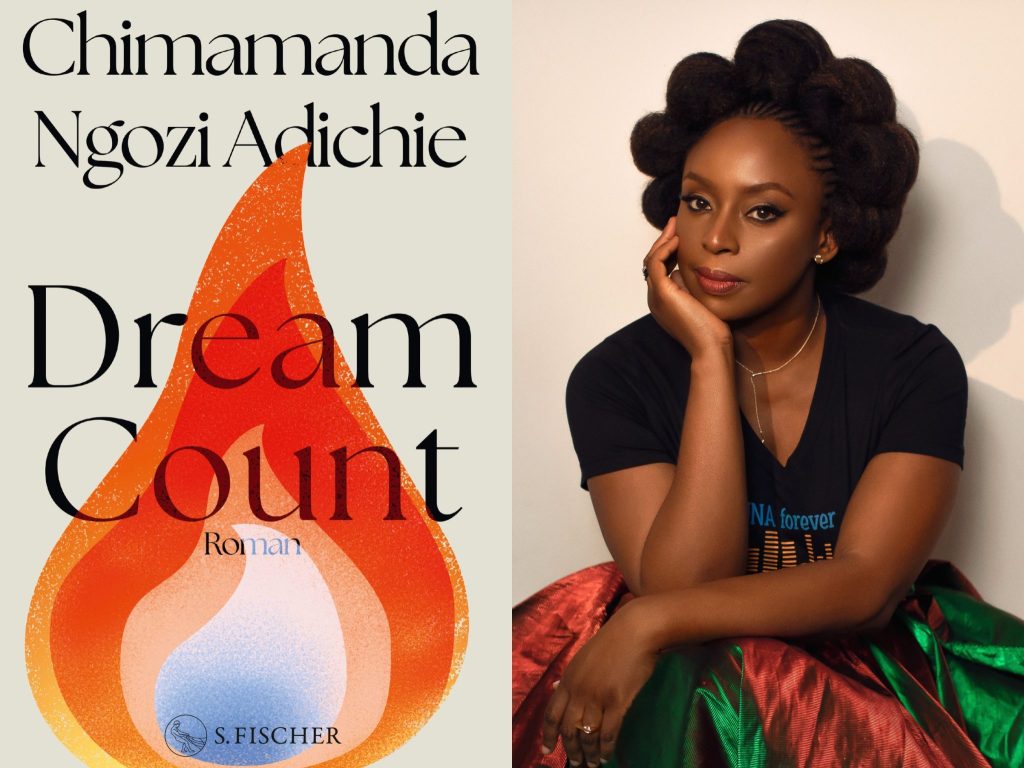
My summer days have concluded with Chiamanda Ngozie Adichie’s latest novel, Dream Counts. Reviews and the book’s jacket blurb emphasize that it is set against the backdrop of the Covid-19 pandemic, with four main characters of Nigerian descent grappling with the isolation and uncertainty of that time. In my reading, however, Covid is present for only a small part of the novel. The interconnected stories of these women cover flashbacks to Nigeria, Britain, and America long before the pandemic struck. The emotional journeys and experiences of the women – including motherhood, sexual violence, relationships, and ambitions – are far more central than the pandemic themes. It’s a story about the complex facets of womanhood, told from a feminist perspective and in Adichie’s signature crisp and fast-paced style.

 Paola Trimarco