Deconstructing Ciao Bella Ciao Ciao Ciao

I first learned and instantaneously joined in singing the chorus of Ciao Bella Ciao Ciao Ciao a couple of years ago at a fundraiser for Ukrainian refugees. Despite the lyrics resembling the passé Italian ‘cat call’ once hurled at women, I quickly realised its true nature: a protest song. It’s about a country under invasion, with a narrator who would rather die than surrender, asking the supporters (the partigiani) to take him or her away. At least, that’s the gist of the early verses. The dead body is to be buried in the beautiful mountains of the beloved country, where flowers will grow above the grave. The song ends with a rambunctious cry for freedom.

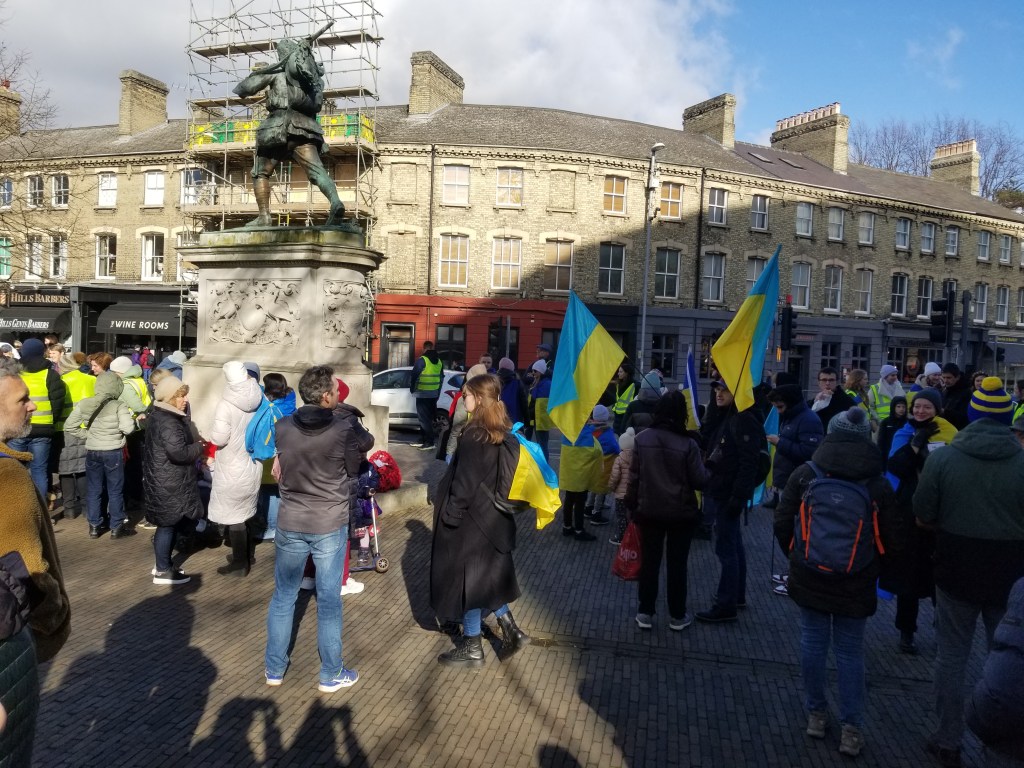
This is the 1940s version, widely interpreted as being anti-fascist even though there is no mention of fascists or Mussolini. I see the goodbye my beautiful, goodbye, bye bye as a farewell to the country and the days of freedom. Putin’s sending troops into Ukraine is an invasion of a sovereign nation. Those were my thoughts – nothing to do with fascism – as I sang the chorus in the gardens of a church in Cambridge decked in the now familiar blue and yellow flags. We were calling for freedom and showing support for the people of Ukraine.

Since the 1960s the song has become a generic protest anthem across the world. It’s been used to defend workers’ rights, object to taxes, protest oppression, and rally against war. It’s another form of We Shall Overcome. In this way, the song has returned to its 19th-century origins in the rice fields of northern Italy. In that version, the lyrics describe insufferable working conditions and a boss who beats the workers with a stick. They, too, would rather be dead, and the song also ends with a wish for freedom.

The song has recently been dragged into the headlines with the assassination of the far-right influencer Charlie Kirk. Bullet casings from the assassin’s gun were reported to have the words Ciao Bella Ciao Ciao Ciao engraved on them. If my language is hedged and my tone a bit sceptical, it’s because the US president and others of that ilk started blaming the ‘radical left’ and ‘antifa’ before a suspect had even been identified, returning the song to being anti-fascist. That narrative sounded a bit too convenient – and out of touch. Now that a suspect is in custody, we have learned that he was raised in a conservative Mormon household. His parents are registered Republican voters, and he registered as an Independent. So far, nothing has suggested he belonged to a left-wing organization – or to any political organisation.

The accused is an individual with mental health issues who was also in a gay relationship with a partner who was transitioning. This individual may have been offended by the well-documented attacks from Mr Kirk against gays and transpeople . Living in America, this mentally ill individual had easy access to a gun – an issue that is not being debated this time around.

Seeing the shooter as an individual and not necessarily influenced by the left, it’s worth noting that the 22-year-old alleged assassin was an avid gamer. In the world of video games ‘ciao bella, ciao ciao ciao’ holds several meanings, including ‘see you,’ ‘I got you – bye bye’ and ‘I’m tired of this.’ The casings also had a few abbreviations used by gamers that middle-aged journalists are still trying to decipher.

I doubt we’ll ever know the true motivations of the assassin. His actions were unquestionably wrong and sadly are likely to be replicated by others given the heated and polarized times we live in.

On the less violent and more measured side of protest, we still have the right to sing Ciao Bella Ciao Ciao Ciao. If you want this infectious song in your head, complete with lyrics, I recommend BELLA CIAO: VERSIONE PARTIGIANA E DELLE MONDINE (Canzone Originale + Testo).

What I’ve been reading

Crime fiction that’s not really of the genre. These two novels were intended to be late summer escapism from the horrors of the world news, but neither Colson Whitehead’s Crook Manifesto or Olivier Norek’s Entre Deux Mondes (Between Two Worlds) could keep my mind from the bigger social problems of racism and anti-immigration positions.

Crook Manifesto is set in 1970s New York, with its notorious crime problems and seediness and follows on from Whitehead’s Harlem Shuffle – which I hadn’t read. For me, this book worked fine on its own as it uses dark humour and elements of crime drama to weave a story about a criminal who had gone straight but was then dragged back into the underworld. It’s full of social commentary on race, poverty and crime and made me strangely nostalgic for 70s America, with societal divisions that seem innocuous by today’s MAGA and social media-fuelled standards.

The Norek novel doesn’t have the laughs or the comfort of reader hindsight that Whitehead’s book has. It’s a crime thriller set in the Jungle, the notorious refugee camp in Calais, France. It follows two police officers – Adam, a  refugee fleeing Syria and his job in Assad’s military police, and Bastion, a French lieutenant newly assigned to the Jungle. This gripping tale is complex and heart wrenching, with a high body count – definitely not a light read for the nightstand.

Marking the one-year anniversary

As a news junkie, I’ve been on a seven-day high. As Friday saw the one-year anniversary of the start of the war in Ukraine, reviewing the year and predicting what is to come has dominated the news cycle. There was also a spattering of this weeks’ events featuring Biden’s surprise visit to Ukraine, Putin’s speech about a parallel universe with Ukrainian nazis attacking Russians and scenes of support rallies and vigils starring the familiar blue and yellow flag.

What have I learned from this week of international newspapers, podcasts, radio, television and magazines? President Zelensky is still the master craftsperson of public relations. Despite that, he’s not likely to get the full military support he craves for reasons to do with geopolitics and the practicalities of transporting and using these machines of war. It’s also not likely this war will end anytime soon as both sides are far from the negotiating table. One pundit predicted that this could last a generation.

The most thought-provoking commentaries came from the weekend papers. The Observer editorial put a spotlight on the results of this week’s UN resolution to condemn Russian aggression in Ukraine and demand an unconditional withdrawal. The resolution was supported by 141 countries, voted against by 7 and had 32 abstentions:

‘Worrying, even dismaying, is the realisation that important regional powers such as India, South Africa, Ethiopia and Algeria continue to sit on the fence. Foremost among them is China. Beijing is becoming, or already is, a global economic and military superpower. But with power must come responsibility – and its refusal to condemn, sanction or publicly criticise Russia is inexcusably irresponsible.’

Patrick Cockburn in the I Paper offered a sobering thought for us news addicts:

‘Biased reporting is inevitable in any war, but in this case the partisan news coverage has tended to over-focus on the military conflict in Ukraine and under-report the risks stemming from a growing confrontation between a confident America and a weakened Russia.’

Maybe I binged a bit too much on this news cycle as another take away from the week has been a feeling of worried ambivalence – if that’s not a contradiction in terms. This came to me as I was walking down the streets of Cambridge as part of a march and rally for Ukraine. Noting that fewer than 500 people showed up in this thriving student town made me think that this war is starting to drift from the collective consciousness – that was the worrying part. At the same time, I was growing detached from the event as the message wasn’t clear and at times made me feel ill at ease. This march was devoid of peace signs and the main message seemed to be that we are ‘standing with Ukraine.’ Are we standing with them as they fight, as this war is escalating and as more countries become involved? I agree with this in principle but feel uncomfortably militaristic with their application. I also didn’t see any signs or hear any chants or even casual talk about the thousands of Ukrainian children being taken by Russian troops to Russia to be re-educated – Putin is playing the long game by creating the next generation of pro-Russian nationalists.

My head spins with these thoughts, and I’m not really one to shut down and become ambivalent. Like a typical addict, I deal with these doubts and confusions by taking more of the drug that started it. Back to a podcast…

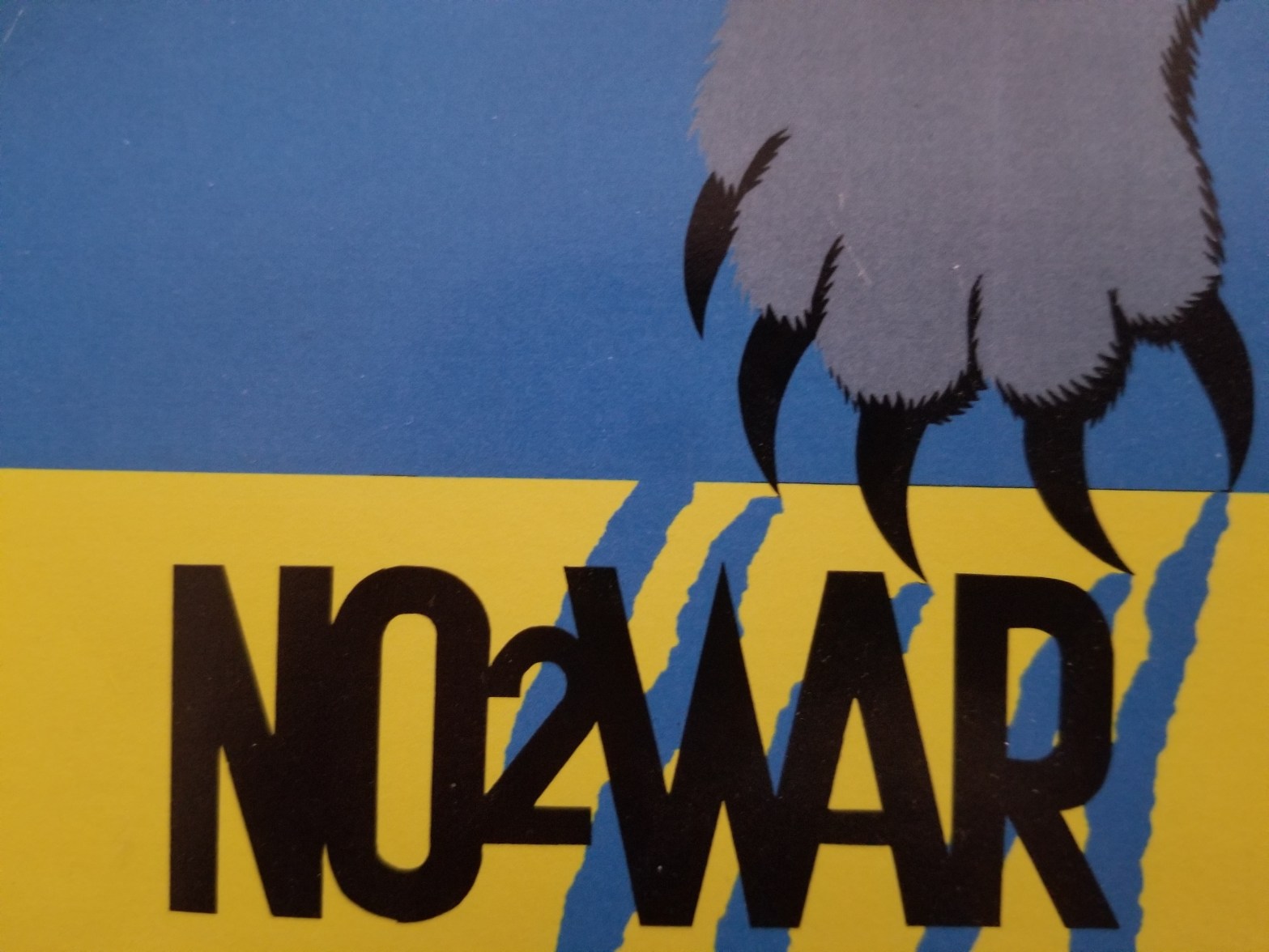
Watching the Bear

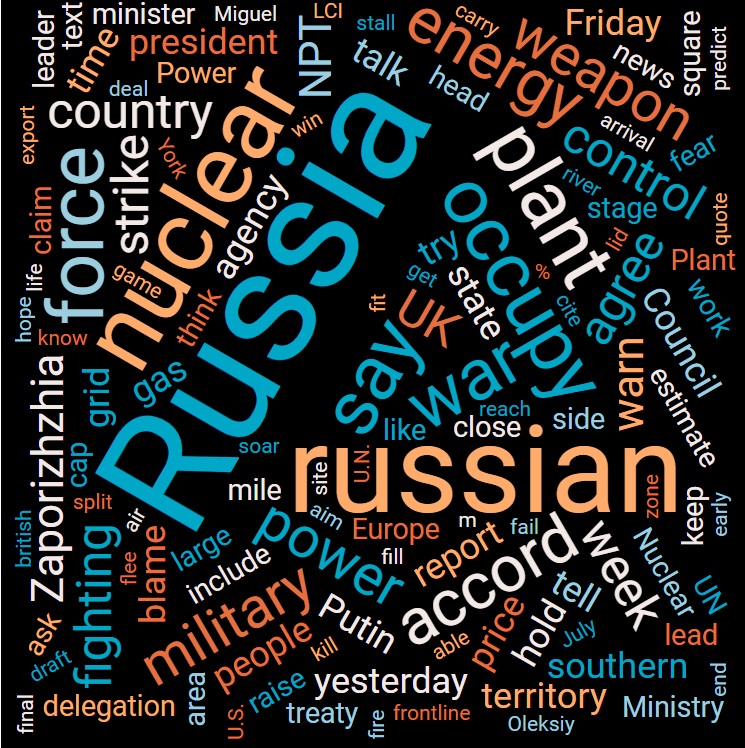
I’ve been receiving the New York Times daily newsletters on the war in Ukraine. In the early days, I was reading every item, every report, every commentary. This was on top of other reports from television, radio, papers (The Observer, I Paper) and magazines (The New Yorker, The Atlantic). As the days turned into weeks and now months, I’ve been skimming the reports and reading only the commentaries, looking for predictions of when and how the war will end. By skimming, I’m left with something like a word cloud in my mind. This week’s reports look like this:

As for the predictions, I’m reminded of lines from Robert Frost’s famous poem:

Some say the world will end in fire,

Some say in ice.

From what I’ve tasted of desire

I hold with those who favor fire.

Today, the New York Times announced that it was ending the daily newsletter: ‘The pace of news has changed from the initial furious days of the war. And so, we’re changing too. Beginning next week, we’ll be landing in your inbox three times per week: Monday, Wednesday and Friday.’ With this, the NYT is admitting that the war is dragging on and is less newsworthy given the international financial crisis, the pandemic fallout and climate change. In Britain, the news this week has been dominated by rising fuel prices and the shooting death of a nine-year old girl in Liverpool. The Ukrainian war seems further than the 1,500 miles between London and Kiev.

This concerns me. Other recent wars have continued for years and petered out of our collected consciousness in the West, such as in Iraq, Syria and Afghanistan. Official conflicts over, they seem to leave behind anti-western sentiments and percolating terrorists’ cells. But these are problems western governments deal with, experiencing mixed results among peaks and troughs of public interest. The situation with Russia is different. In Putin we see an unpredictable leader, who conducts cyberattacks on foreign powers, imprisons and poisons his personal enemies and makes strategic military mistakes, which are covered up by propaganda. Above all else, Putin’s government, which doesn’t look like it’s crumbling down any time soon, has nuclear weapons – even the smallest ground missiles can destroy crops and cause illnesses well-beyond Ukraine – and Putin’s Russia could damage and is currently circling nuclear power stations in Ukraine.

This is where I’m at after continuing to read the commentaries. I’m afraid the word cloud has been replaced by a mushroom cloud.