I’ve become a Substack reader but remain a devoted WordPress blogger. Political journalism and commentary thrive on Substack – the stuff of the chattering classes, to which I freely admit I belong. Yet for all its growth, Substack still can’t match WordPress’s audience reach. It tickles me to see analytics showing someone in Bangladesh reading my piece ‘Patriarchy and Harari’ and that my most popular post over the past year was ‘Titanic Languages.’ I follow other bloggers, literary journals, and arts magazines on WordPress, and after nearly a decade, the platform feels like home. If you’re reading this, WordPress, for our tenth anniversary, a gift subscription would be most welcomed.
Recently, I’ve been working on the appearance of these WordPress pages, and it’s been quite an undertaking. After scrolling through dozens of new themes and giving several a trial run, I ended up keeping my old theme but changing the colours. While in this digital housekeeping mode, I discovered that what looks good and professional on a laptop could appear dreadful and amateurish on a phone. For several of my postings, the image got in the way of the text, crunching words into the margin. Since most people read on their phones these days, I’ve been resizing, repositioning and replacing images while listening to Max Richter’s complete 16-hour playlist on Spotify. It’s been a journey.
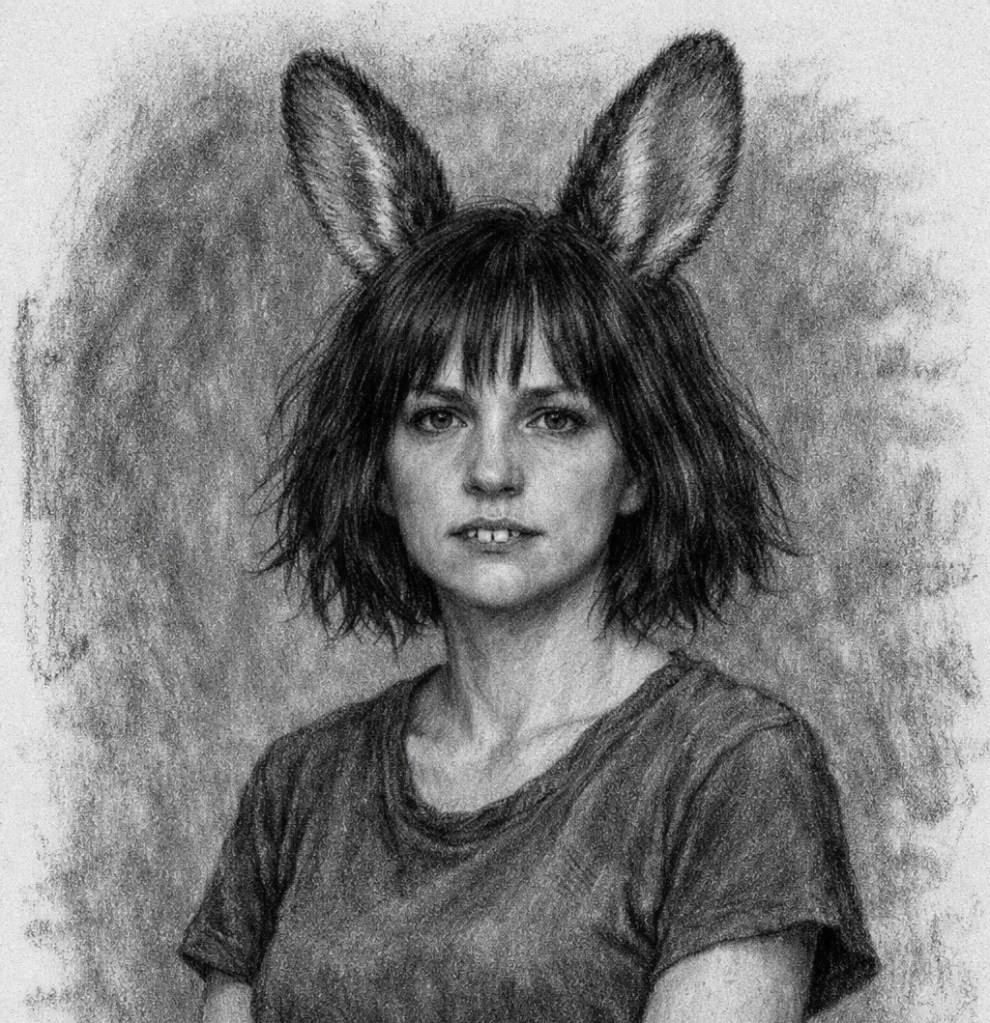
The main image that needed to be replaced was the feature for the first instalment of my fictional prose pieces called ‘Bunny’s Vignettes.’ I had decided to employ the help of AI to get an image that I could use repeatedly with each instalment. When I explained to Copilot that I wanted a crayon-drawn image of an adult woman who was part rabbit, part woman, they gave me a beautiful sex kitten, complete with busty cleavage. Six prompts later, after I put her into a t-shirt, cut her hair, and revealed her bucked teeth, I was closer to what I wanted, but it didn’t seem to understand that she was still too attractive. ‘Make her normal,’ I protested. It wasn’t until I asked Copilot to make her ‘older’ that it understood ‘less attractive.’ Yes, AI reflects our society.

What I’ve been reading
A lot about dying and death. Joyce Carol Oates’s Breathe is a transformative novel that recounts how a 37-year-old woman, Michaela, navigates through her husband’s dying days and the months following his death. At times this is a love story, brought about through reminiscences and through her denial and later imaginings of her dead husband calling her to join him. Stylistically, the novel uses a fascinating form of free indirect speech. Often, we’re inside Michaela’s mind in a stream of consciousness. At other times, the narration steps outside her thoughts to record dialogue and scenes from her perspective. Occasionally the narration moves further still into a detached commentary that seems to arise from Michaela’s perceptions but with more sobriety. In one such moment, the narrator offers this gem:
‘The ontological mystery of Death: that the dead vanish and never reappear except in dreams. They are gone from us, and we cannot see them, speak with them, touch them, breathe with them. No matter how we yearn for them.’
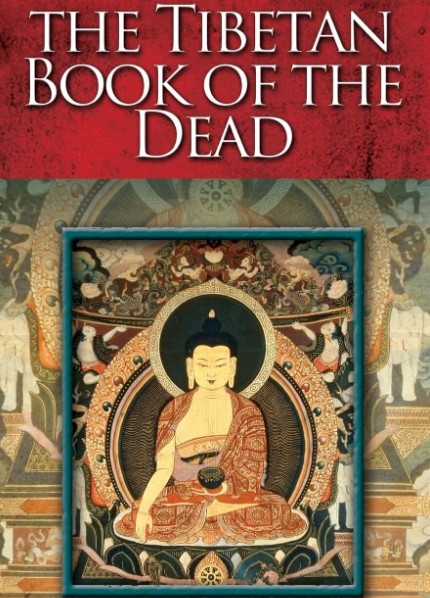
I understand why this book resonates with support groups for those who have lost loved ones. But here I become the resisting reader. I couldn’t feel complete empathy with Michaela because I take a more Buddhist approach. Ideally, living in the moment, I resist grief that pulls me into the past and leaves me with a present defined by absence. In mindfulness, denial of the present has no place, nor do thoughts of the future that so easily stir up fear. I refer to The Tibetan Book of the Dead – which is not a book about death but really a study of the mind at the moment of death when illusions of what we perceive as life fall away. For the living, this classic tome on Tibetan Buddhism reframes death as part of a continuous cycle, encouraging a less fearful and confused relationship with mortality.
I am aware that this act of blogging is at times my way of working through these beliefs on death and dying.