Replacing Twitter

Yes, I’m still referring to it as Twitter and not by its new name of X, a desperate rebranding by man-child Elon Musk. Afterall, some symbol formerly known as Prince is still called Prince today.

Nomenclature aside, soon after Musk purchased and destroyed Twitter, I joined the exodus to Mastodon. Several months later, bored rigid with Mastodon, I decided to close that account as well. I haven’t been tempted to migrate over to the recently launched Threads. I already have Facebook, WhatsApp and a mothballed Instagram account. I don’t wish to be owned by the ethically dubious Meta.

I’m starting to wonder why I need to continue with any massive social media platform like Twitter. Most of the accounts I followed belong to news outlets, political groups or organisations. Mostly I liked and retweeted within my bubble of like-minded acquaintances and strangers while ignoring the occasional hostilities of Brexiteers. Were these worthwhile ‘conversations’?

Cal Newport, who lectures in computer science at Georgetown University, argues that we don’t need a new Twitter. Newport calls Twitter at its best: ‘a global conversation platform on which everyone can gather to make sense of ideas and events, or, failing that, at least identify some strangely entertaining memes.’ Agreed. But at its worst, Twitter has been a victim of its own selection bias, which places popular and fast-spreading tweets ahead of others for users to see. Newport explains that with Twitter’s selection bias system of promoting some tweets over others, ‘the more aggressive messages are more likely to succeed in catching the attention of a sufficient number of retweeters to drive viral expansion…The result is a Faustian bargain for our networked era: trusting the wisdom of crowds to identify what’s interesting can create an intensely compelling stream of shared content, but this content is likely to arrive drenched in rancour.’ Indeed, that is the main drawback of Twitter, and it was made worse by Musk inviting hatemongering influencers back to the platform.

Newport also notes the flipside of this – on Twitter, breaking news can spread quickly. That for me was part of the appeal of the platform, a sense of having a finger on the pulse of the latest happenings in the UK and abroad. It was feeding this news junkie’s habit. Of course, other ways of getting up to the minute news can be had through apps and newsletters. Newport’s article came to my attention from a New Yorker newsletter sent to my email inbox.

Getting news in these Twitter or non-Twitter ways is rather passive and spectator-like. For want of conversation within like-minded groups, I joined a few Facebook groups, but they either don’t have much activity or are ennuidated with minutia of personal stories. I have however found a digital home of sorts on LinkedIn. I reopened my account with them after a five-year break to bring in some new writing and editing business. Surprisingly, LinkedIn has morphed into a network that goes beyond the curriculum vitae. Yes, identity on LinkedIn still revolves around careers, but I have found news sources and political action groups and organizations. When I post something or repost something, I can receive various reactions and occasionally a comment. A mini conversation forms. Unlike Twitter, I haven’t witnessed any rage or nastiness. I suspect this could have something to do with the politeness of writing professionals in the format of LinkedIn. I know, writers have been involved in cantankerous verbal sparring on Twitter and long before the internet through newsprint, television and by any means available.

Newport ends up dismissing the mega-platforms like Twitter and Threads that try to play the role of being a global town square, ‘aggregating as many of its potential connections as possible into a single service.’ Instead, Newport recognises the value of ‘small groups that gather in their own bespoke corners of cyberspace.’ This includes conversation threads of niche and hobbyist websites, podcasts and email newsletters. To this, I add finding stimulating conversations in the comments that follow digital news stories.

I agree too with Newport’s conclusions and borrow them for my own: ‘To make the online experience less hostile, we don’t need ever-more complicated algorithms deployed by ever-larger platforms. It’s enough to instead return to a conception of digital interaction that occurs on a much more human scale.’

One of my LinkedIn images.

Unfriending in the time of Tr**p

For the first time in my Facebook life, I’ve unfriended someone because of their politics. I didn’t do this easily. I tolerated this old school friend’s comments about Democrat Congresswomen Maxine Waters and Nancy Pelosi as being ‘unhinged’ after they rightly (in my opinion) attacked Tr**p on several counts. Of course, the current US president is far from ‘unhinged’ – a ‘stable genius,’ to use his own words. In this case, my tolerance was enabled by my enjoyment of irony.

I also overlooked this now former friend’s lambasting ‘crazy liberals’ for wanting to knock down a statue of Abraham Lincoln. I agreed – that does sound crazy, and it would have been if it were true. In that case, I forgave my old classmate for being misinformed and posting this falsehood on Facebook in error. Mistakes happen.

What finally tipped me over the polite Facebook friendship line was my friend’s commentary on Tr**p’s 4th of July ceremony at Mt Rushmore. During his speech, Tr**p announced, ‘I am here as your President to proclaim, before the country and before the world, this monument will never be desecrated,’ even though there is no movement intent on desecrating the mountain sculpture. America’s most infamous president slid his way down more slippery slope arguments with, ‘Our nation is witnessing a merciless campaign to wipe out our history, defame our heroes, erase our values, and indoctrinate our children.’ But that wasn’t enough. This orange president added, ‘In our schools, our newsrooms, even our corporate boardrooms, there is a new far left fascism that demands absolute allegiance.’ (These are just some highlights – the full speech can be found at the US government website)

On Facebook, my high school friend posted a photo Tr**p at Rushmore with the caption that it was a ‘great speech,’ the president’s ‘best speech ever’ and advised his friends to ignore what they’ve been hearing in the ‘lying left media.’ Saying that this was a great speech, if I’m generous, is a matter of opinion. Advising people that reports on this speech are lies because most of them questioned the veracity and reasoning behind the president’s bizarre comments is simply wrong. In democracies, reporters scrutinise the comments and proclamations of their leaders. I welcome the media outlets that are constantly fact-checking the current US president.

Back to Facebook. After a Tr**p supporter agreed with my friend about the Mt Rushmore speech, the friend replied, ‘Yeah, Trump loves America. Obama hated America.’ Even though it is hard to imagine that Tr**p loves anyone or anything aside from himself, I don’t doubt that in his own way this US president – or any president, including Obama – loves his country.

It was clear that this ‘friend’ was actively engaging in propaganda. I kick myself as I should have seen this with his posting about the Lincoln statue. That was no mistake. I was being taken for a fool. I went to my list of friends, found this old school friend and I clicked on ‘unfriend.’

I can only hope that others reacted the way that I did or at the very least have seen these postings for what they are. I’m reminded of a famous Mark Twain comment: ‘It’s easier to fool people than convince them that they have been fooled.’

Of course, the person I should really unfriend is Mark Zuckerberg. While I don’t literally follow him on Facebook, using his platform does make me a friend of sorts. As plenty of pundits have pointed out, Facebook’s practices could help Tr**p to get re-elected. After all, Facebook sold its algorithms to political campaigns helping to get Trump elected the first time and played a part in the outcome of the UK referendum on the EU. In a recent article on Facebook, investigative journalist supremo Carole Cadwalladr explains how Facebook is dangerous for democracy. After suggesting that if Facebook were a country, it would be like North Korea, Cadwalladr clarifies, ‘Zuckerberg is not Kim Jong-un. He’s much, much more powerful.’

Facebook 2
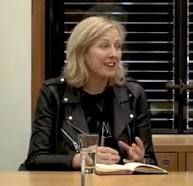
Carole Cadwalladr

Another Guardian writer, Rashad Robinson notes that not only did Facebook contribute to Tr**p’s election victory in 2016, ‘in 2020, Facebook’s indulgent and laissez-faire policies have already enabled hateful harassment, rampant misinformation and disinformation, and the suppression of Black organizers.’ After investigating Facebook’s content policies, Robinson concludes that ‘the rules are often so vague as to even allow for someone as clumsy as Trump to weave right through them.’

Having said of all this, I don’t see myself leaving Facebook. Not yet. This powerful form of communication is the only way I can participate in certain writers’ groups and in groups dedicated to political and social activism and (ironically) understanding. During this Covid-19 lockdown, Facebook has provided a forum for people in my town of Ely to share vital information and to help out their neighbours. It also enables me to keep in touch with friends, relatives, former colleagues and students across the world – people who don’t use email or write letters. Quitting Facebook would be akin to saying that I’m no longer going to allow any post to come through my letterbox. Even though the internet has reduced the amount of post I get, it still comes in and I still need to deal with at least some of it. Like the post I receive, a lot of what is on Facebook can be ignored.

By unfriending my Tr**p supporting old school friend, I’ve taken it a step further. I’m not only ignoring what is being sent, I’m telling the postal courier to not bother delivering anything from this person to my door. This act of defiance might seem small against the colossus that is Mark Zuckerberg’s empire, but it is satisfying. Moreover, it reduces my traffic on Facebook. I know that I’m not the only one doing this when confronted by these right-wing propagandists. And that too, I find gratifying.