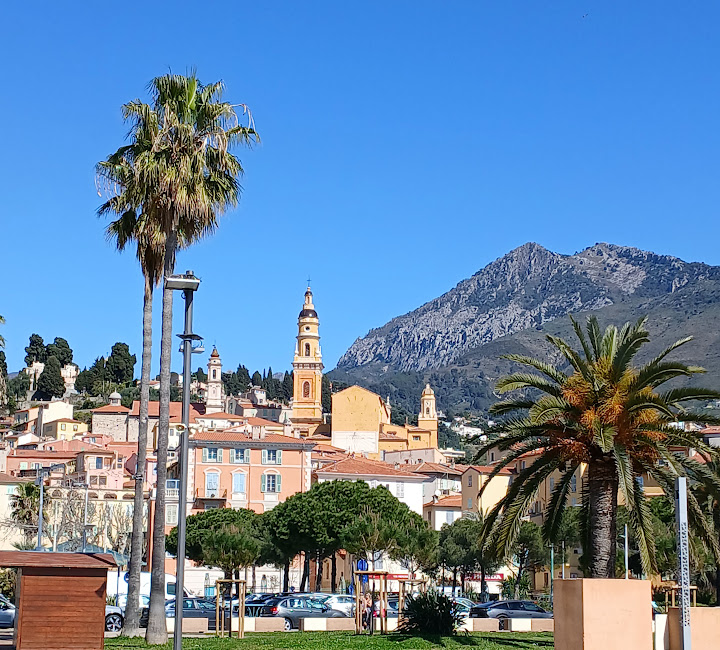
Last week, Nice experienced an earthquake. A 4.1 on the seismometer, it wasn’t dramatic, more of a mini quake that nonetheless managed to scar some apartment walls with cracks. Fortunately, no injuries, no fatalities. Here in Menton, some 30 kilometres away, we were having an apéro with friends on the seventh floor of the Méditerranée Hotel when I felt the floor beneath me shake and shift. We looked at each other and David said, ‘I think it’s a tremor.’ But by the time he got that out it petered into a gentle vibration and then stopped. Unnerving for this earthquake novice, I felt my heart racing while I sat still waiting for the next wobble and wondered how much worse this was going to get. Another tremor quivered in Menton a few hours later. But it was so minor, it went unnoticed in our first-floor apartment, where the sound-space continuum is regularly jolted by a stomping child next door and the rubbish collection just below our balcony.
The south of France is not California or Japan and is not known for its seismic activity, but it does experience a few minor earthquakes each year due to its proximity to tectonic plate boundaries. As I write this, more harrowing stories are emerging from Myanmar following its 7.7 earthquake, which put my experience and western privilege into perspective.
All of this has made me think about the sensation of being on firm ground one minute and then being shifted and jiggled around the next by forces well beyond my control. This triggers thoughts of another kind of tremor, a sensation that is equally jarring and taps into my feeling of fright and bewilderment. What Tr*mp is doing to America and the world is an earth tremor for some, a damaging earthquake for most of us and for others a deadly catastrophe – the latter is no exaggeration, considering the lives already lost to cuts in USAID and America’s withdrawal from WHO.
The disaster that is the current US administration overwhelms me with bloggable topics. Rather than pick one subject, for now what I offer are personal observations and mental recordings of conversations held with Americas who are not politicians or journalists.
Here in France, I’ve met an American woman who came here at the start of the year. As she explains it, ‘I just left and now I’m looking for someplace to live.’ She didn’t merely throw a dart at a map and decide on Menton. She has friends here that she stayed with until she could find an apartment to rent. Now she’s in that apartment looking for an apartment to buy. Conversations with her are about the property market, French bureaucracy and getting French residency. When someone brings up the situation in America, a lost and angry expression comes over her. She’s reluctant to talk beyond the generalised phrases – ‘it’s awful,’ ‘it’s scary,’ and ‘I’ve escaped.’
Others, still living in America are more willing to talk to anyone who will listen. Forever the scriptwriter, I hear their turns of phrase in my head days later – a kind of ear worm from the furious and isolated. Here’s a prosy poem of what that worm’s been chanting:
Cult, cult. When did they get so stupid? Our generation were the lucky ones. Those Trumplicans – my neighbour – my husband – my old friend. I still can’t believe people would vote for this again – yeah, Covid response – Capitol riots – BS about the election results. They’re hurting now. Oh, no they’re not. Cult, cult. People have been pickled. President Musk. Young men with masculinity poisoning. If we could leave, we would. And they think I need psychological help. What will happen to our schools? Our healthcare, our air, our universities, our freedoms, our farms? Who can speak? You cannot speak to the cult, cult.
What I’ve been reading
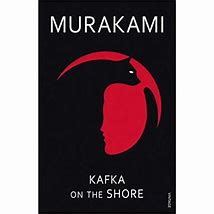
Haruki Murakami’s 600 pager Kafka on the Shore has been delighting and mesmerizing my reading time for the past four weeks. A slower reading pace than usual as I’ve tackled it in French – so that’s Kafka sur le Rivage. Since the original was written in Japanese, I figured I’d be reading something in translation anyhow. If I reduce the novel to its bones, it’s a coming-of-age story melted into a post-war saga of love and loss up to the present day, with a mysterious murder, via magical realism. But it’s so much more than these plot descriptors because of the way it tells its stories through metaphors and strange happenings – talking cats, a rainstorm of mackerel and a backstory involving a group of children who fall into temporary comas on a school trip in the final days of WWII – their malady lays suspicion on the American military presence. The characters express themselves with an awareness of Greek tragedies, modern and classical music and a sophisticated blend of philosophy and psychology.
I’ve also been enjoying my subscription to The New Yorker, in particular the essays and analysis on the rolling news of events brought on by you-know-who. My favourite of these has been an essay by Hillary Clinton about Signalgate and the current administration’s version of ‘diplomacy’ (note the quote marks). The title says it all: This Is Just Dumb With experience and eloquence, another American grapples with the shaking ground beneath us all.
 Paola Trimarco