Black Friday

Black Friday didn’t start with Amazon, gift wrapping or 30% off this or that. It didn’t even start, as the story goes, with shopkeepers coming out of the red and into the black due to the hordes of Christmas shoppers on the day after Thanksgiving.

The first Black Friday was on 18 November 1910, and it was in England. This was the day that some 300 women marched on Parliament, furious that Prime Minister Asquith called an election, meaning that Parliament would soon be dissolved and that the Conciliation Bill, giving some women the right to vote, was going to be scuppered. The Conciliation Bill was far from ideal, allowing only women property owners to vote, but it had already passed its first and second readings and was likely to pass into law. This was going to be momentous, a start of things to come on the road to full suffrage for women.

The women who converged on Parliament were angry and loud, but not violent. The violence came from police officers and men in the crowd. Some 30 women were seriously injured and a few days later two women died from what some sources believe d were conditions brought on by the police beatings.

Equally disturbing was the level of sexual violence perpetrated on these women. One suffragette noted: ‘Several times constables and plain-clothes men who were in the crowds passed their arms round me from the back and clutched hold of my breasts in as public a manner as possible, and men in the crowd followed their example… My skirt was lifted up as high as possible, and the constable attempted to lift me off the ground by raising his knee. This he could not do, so he threw me into the crowd and incited the men to treat me as they wished.’ (Source: British Museum)

Black Friday has come to mean an orgy of consumerism, the start of the Christmas shopping season. On the internet it takes place all weekend and in France it’s a week of ‘Black Fridays’. (Obviously, something got misplaced in translation.) So far removed from its original use and so little known to the average English-speaking person, Black Friday serves as a reminder of what we have come to value and what we choose to forget.

black friday

‘Man up’ – Johnson’s Sexist Parlance Continues

This time it’s a phrasal verb that demonstrates Prime Minister Johnson’s fluency in sexist language. While Johnson didn’t invent the phrase to man up, he has borrowed it from the underbelly of popular culture. According to the Google dictionary, it means to ‘be brave or tough enough to deal with an unpleasant situation.’ Yet, the definition is more than that. To man up is one of those expressions that carries its etymology with it – that is, its full meaning is to be brave and tough like a man. Many phrases and words in English (and other languages) linguistically operate in this metaphorical way. We have to break the ice and cherry picking, to name a couple. Unlike these examples, to man up gets its meaning from gender stereotyping, from a world where men are brave and tough and women are the antithesis. It’s a fantasy world that has disregarded women’s work and women’s voices for centuries.

Whenever I see what I think is sexist language or behaviour, I check myself by running the reversal test – I first heard of this back in the early 90s from American feminist Gloria Steinem. It goes like this – replace ‘woman’ with ‘man’ or ‘man’ with ‘woman’ and see what you get. I’ve never heard of ‘woman up.’ Pulling yourself together and acting like a woman is not in our public discourse. Further, whereas the underlying sense of ‘to act like a man’ means to be brave, ‘to act like a woman’ is nearly always used as a slur, saying that someone is emotional or bitchy.

It could be argued that Johnson is merely reflecting in his language the sexism that festers in our society. Maybe Johnson is copying a phrase that has a modern ring about it. But this PM has already leapt farther than that. He recently called Jeremy Corbyn a ‘big girl’s blouse’ when the Labour leader argued against a snap election.  Similarly sophomoric, Johnson referred to former PM David Cameron as a ‘girly swot.’ I find these examples of degradation by feminisation even more disturbing than using man up. These boys’-school-sounding phrases are not found in dictionaries. Both expressions are unique to the Johnson idiolect, no mimicry of popular culture or trying to sound cool involved.

What does that say about the man-child living at 10 Downing Street?

Suzy
Suzy Kassem

While Johnson has not turned his sexism into misogynistic legislation in the way Tr**p has (e.g. removing funding for women’s health in developing countries), I don’t think we should take the PM’s language lightly. To quote poet Suzy Kassem, ‘Never underestimate the power of a single word, and never recklessly throw around words. One wrong word, or misinterpreted word, can change the meaning of an entire sentence – and even start a war. And one right word, or one kind word, can grant you the heavens and open doors.’


Throwaway Thoughts on Politics and Religion

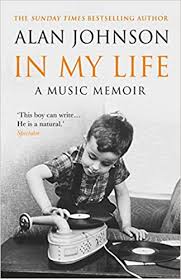
They say you should never talk politics or religion in polite company. As blogs are the antithesis of polite company, I can share a passage that struck me from Alan Johnson’s memoir In My Life:

‘Mine is a privileged generation. Not only have we prospered from the postwar rise in living standards, the creation of the NHS, significant advances in science and technology, the virtual eradication of diseases such as polio and diphtheria and the absence of world wars, we have also witnessed a transformation in public attitudes away from the casual barbarity of previous decades towards ethnic minorities, the disabled, the mentally ill, homosexuals and single mothers. Ironically, as the country has become less Christian in its adherence to religion, it has become more Christian in its way of life.’

This sound observation is one that we can see in other countries in recent decades, where the inverse has happened and more religious governments have stripped away peoples’ freedoms and equalities. I’m thinking about countries like Iran, which I remember being more liberal and women having more rights before the revolution and the religious state that followed.

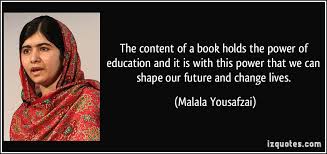
Yet, the correlation between the dwindling numbers engaged in formal religions and the increase in liberalism isn’t as straightforward as this or as Alan Johnson would like us to believe. The advances in science and technology, which Johnson mentions,  and the accessibility of education, which he doesn’t,  are more likely contributors to marginalising religion while at the same time replacing intolerance and discrimination with acceptance and equality. When Nelson Mandela said, ‘Education is the most powerful weapon you can use to change the world,’ he was talking about making the world fairer and less impoverished.

Where Johnson writes of a ‘more Christian in its way of life,’ he is referring more generally to society and the laws that protect ethnic minorities, the disabled etc. I accept this generalisation, but at the same time I despair at all of the present-day laws that work to the detriment of women. (Dear Reader, please read Caroline Criado Perez’s Invisible Women: Exposing Data Bias in a World Designed for Men, if you haven’t already.)

To be fair to Alan Johnson, what I have quoted was probably not intended to be dissected like this. A passage of deep thought in an otherwise light romp through the former politician’s childhood, these lines give the book more weight and texture. Perhaps too, I don’t want to be too hard on any writer who names each volume of his memoir after a Beatles song.

Malala
Malala’s version of the Mandela quote.

Coming to Terms with Invisible Women

I’m currently reading Caroline Criado Perez’s wonderful book Invisible Women: Exposing Data Bias in a World Designed for Men. She addresses many issues convincingly, such as the way drivers’ seats in cars are made and safety tested with men in mind and the amount of medical research that uses male as the default, leaving women’s health and medicine in the Middle Ages.  Statistics and studies are blended with entertaining – though often infuriating – anecdotes.

But I do have a bone to pick. After discussing the male-voice bias in voice recognition databases, raising some good points, Perez tackles corpora of written texts, which she notes are used by translators, CV-scanning software and web search algorithms. She failed to mention that these corpora were compiled by linguists, who are the main users of these databases for language research.  Because she has missed this point, her own research using corpora comes up short. This is what she did:

‘Searching the BNC [British National Corpus] (100 million words from a wide range of late twentieth century texts) I found that female pronouns consistently appear at around half the rate of male pronouns. The  520-million-word Corpus of Contemporary American English (COCA) also has a 2:1 male to female pronoun ratio despite including texts as recent as 2015.’

From this, Perez criticises the ‘gap-ridden corpora’ for giving ‘the impression the world is actually dominated by men.’

As someone who has used both corpora, I have a problem here. Representativeness is always taken into account when drawing data from these large corpora.  It is as much as part of the discussion as the results of the research itself. If I were looking at gendered pronoun use, I would first isolate my search to newspapers only, where I would expect the ratio of male to female pronouns to be even higher than what Perez found looking at all text types. Newspapers are not only written mostly by men, but report and comment on the world around us – its predominantly male politicians and public figures. And then there are the sports pages, where women’s sports struggle to get even a tenth of the column inches given to men’s sports. That is, newspapers, one of the main sources in the BNC, skew the figures. It might be more accurate to say that the world of news print is ‘actually dominated by men.’

Furthermore, corpus research is not just about frequency – it’s also about the context these search terms appear in. For example, a search on the word ‘hysterical’ will show that it is often in the context of ‘she’ or some women mentioned by name. This for me is more telling than the frequency of ‘she’ in printed texts. There is so much more to learn about gendered pronouns in a more rigorous search. The conclusions could reflect the biases in our societies more than the biases in the collection of data.

hysterical
Taken from a quick search on Webcorp of internet texts.


Okay, I’ve had my linguist’s rant and I don’t wish to labour the point. Many of the studies in this book – and it is an avalanche of studies – are thoroughly considered against other studies, often revealing gaps in data, where sex difference hasn’t been taken into account, or where it has, women have been deliberately and shamefully excluded.

Pronoun Problems

Schools in Brighton have begun issuing gender pronoun badges in an attempt to support trans students. The badges read: ‘My pronouns are she/her/hers,’ ‘My pronouns are he/him/his,’ ‘My pronouns are they/them/theirs.’  Hang on a minute. How can ‘my’ a singular pronoun match up with plural pronouns ‘they/them/theirs’? I have seen this number-agreement abomination a couple of times recently but only in publications of the sort that still want to spell ‘woman’ as ‘womyn.’  It was easy to ignore ‘I interviewed them’ instead of ‘I interviewed her’ thinking this trend would fade. But putting ‘My…they…’ on a badge – that’s another matter.

Sidebar – really, when it comes to language, like any self-respecting linguist, I’m a descriptivist and not a prescriptivist. Language is not about correct versus incorrect. I describe language – warts and all, changes and fashions – language is constantly growing and developing. And I love it for those reasons.

At the risk of sounding like a prescriptivist, referring to a single individual as ‘they’ rubs me the wrong way. I don’t see it as being inclusive as much as I see it as annoying and potentially confusing. I appreciate the sentiment of not wanting to be identified by ones birth gender if you are transitioning, but messing with number agreement seems a linguistic step too far.

Ideally, one could follow the principles of number agreement and refer to oneself gender-neutrally as ‘it.’ No, of course not. In English, ‘it’ is the table, the chair, the concept and a multitude of other things. People are offended if they are referred to as ‘it’ – they don’t even refer to their pets as ‘it.’

Is it just number agreement or do I have a subconscious dislike of ‘they’? It is something of a weasel word, used without specific meaning for all of those people out there, used by armchair commentators, used by racists.

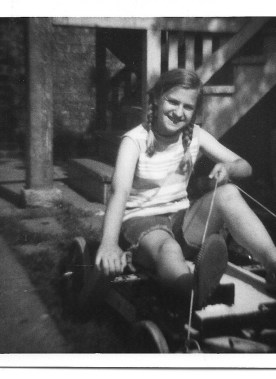
Language aside for a moment, this badging business has another problem built into it, or should I say ‘them’? When I was a child if someone had offered me a badge, I would have gone for the ‘My pronouns are he/him/his,’ not because I wanted to change my sex (such options weren’t on the table in those days), but simply because I didn’t want to be treated like a girl. I loved baseball, science fiction and chess. I preferred go-carts and photography over dolls and make-up. My badge would have been making a point about equality. Given the ubiquity of sexism these days, I could imagine young women feeling the same way today.

These days, I find myself more disposed to the ideas of gender hybridity, fluidity and neutrality.  This might not suit everyone, but I think in a liberal society, we have to respect our differences. As for language, I’d be quite happy to get rid of ‘he’ and ‘she’ altogether. That would leave us with ‘I,’ ‘you,’ ‘we,’ ‘it’ and – oh, dear – ‘they.’

Paola 1972 001
Me, aged 10, on my go-cart.

Magical Realism, Women Writers and Brexit

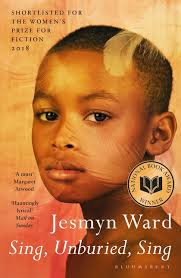
I was not not not going to write about Brexit this week. I started out a few days ago writing on Jesmyn Ward’s moving novel Sing Unburied Sing. This was going to be about women writers of magical realism in honour of International Women’s Day – okay, a few days late as that was 8 March, but I was in Italy, where everything runs late.

Ward’s novel is set in post-Hurricane-Katrina Mississippi and is about a culture trapped in poverty that spirals into drug abuse, violence, imprisonment and broken families brought together by older generations raising their grandchildren. This grim narrative is lifted by tender moments between the children and between the grandfather and his grandson and by the writing itself. Often poetic in its descriptions, the story abounds with metaphors that run throughout its telling. I was also carried along in what was otherwise bleak by imaginative scenes that would place this work in the category of magical realism. At least for me. I haven’t seen this novel treated as magical realism in any review.

What is magical realism then? In literature (it’s also found in other art forms) it refers to fiction that is set in the real world, but has some magical or fable-like elements to it. It differs from Sci-Fi and Fantasy by being in a highly plausible world and one that the reader recognises, such as modern-day America. The magical elements in such fiction are understood by the characters to be real – that is not in dreams or hallucinations. Some well-known examples are the novels and short stories of Gabriel Garcia Marquez and Franz Kafka and Salmon Rushdie’s’ Midnight’s Children.

Any online list on authors of magical realism tends to be a rather Y-chromosome affair. The exceptions are the odd book written by women writers, such as Allende’s House of the Spirits and Toni Morrison’s Beloved. There are plenty of women writers missing from these lists, including Ursula K Le Guin, who tends to be seen only for Fantasy, and Louise Erdrich, who gets lumped into Native American Literature.

Maybe these are just categories of interest to publishers and literary scholars, and ultimately they have nothing to do with enjoying such books. I accept that view. Yet, I wonder if magical realism has become a less-used category of writing because of the way modern readers are viewing the world around them. This is where Brexit reared its head. We live in an age of alternative truths and facticide, where magical thinking has become normalised.

Perhaps there is a danger in writing about magical realism while Parliament was once again voting against the government’s proposed Brexit deal. It appears as if a recurring dream, full of fanciful ideas and characters openly contradicting themselves with speeches of the sort found in Kafka’s The Castle. But we all know that these scenes are not from dreams or hallucinations.Brexit - next steps

Toxic Tribalism

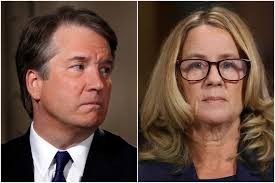
Dare I write about this subject at the risk of being trolled? Okay, I’m bursting to exorcise the feelings of revulsion I have been living with since Brett Kavanaugh was sworn into the Supreme Court.

Like millions of people, men as well as women, I believe Christine Blasey Ford’s testimony. More importantly, if I imagine that I did not believe her, I would still think that Judge Kavanaugh’s testimony was appalling. His display of petulance, self-pity and political partisanship is not befitting a member of America’s highest court.

With only one week allowed for the FBI to investigate and with a Republican majority in the Senate, Kavanaugh’s appointment came as no surprise. The appointment of Clarence Thomas in 1991 after the compelling testimony of workplace sexual harassment by Anita Hill yielded the same results. But here are the key differences that stirred my disgust these past weeks. Firstly, Anita Hill was alone in her allegations; two other women have come forward in the Kavanaugh case. The Hill vs Thomas standoff was over 30 years ago, before Harvey Weinstein and before #MeToo – this time, the nomination process could have ended differently. The greatest differences of all have been the reactions of the sitting presidents. In 1991, President George Bush (senior) accepted the Senate’s decision to place Clarence Thomas on the Supreme Court without accusing Anita Hill of giving ‘false testimony,’ as Trump did of Christine Blasey Ford. Nor did President Bush publicly mock Anita Hill or say anything to discredit her during the judge’s swearing in ceremony.

This country of polarised ideals has escalated into a cold civil war. And it didn’t start with Trump.  The conservative/liberal polemic has been deepening since the Clinton administration, when Speaker of the House Newt Gingrich went after all things liberal, especially the Clintons – a modern couple, where the lawyer wife earned more than her politician husband. This anti-liberal fervour took on another level with the Tea Party Movement, started during the Obama years.Tribalism 2

Unlike these other waves of intense opposition, this time the initial surge is not in reaction to the presidency, but is being instigated by it. Trump has fuelled old hatreds and fears, using rallies to drum home the message, touring the political polemic into tribalism.

Some members of the Republican tribe, mainly women, actually believed Ford’s testimony, but said that Ford was ‘mistaken’ about the identity of the perpetrator. They ignore (or think we won’t notice) the fact that Ford said she was ‘100%’ certain that it was Brett Kavanaugh. In other words, these Republicans know better, but pretend that they don’t in order to remain loyal to their tribe. I don’t meant to oversimplify this – of course, there’s also political motivation. Once the questions about Kavanaugh emerged, other conservative judges could have been nominated in Kavanaugh’s place, but given the realistic time constraints and the mid-term elections coming up, the Republicans couldn’t risk having an even harder time still if there were more Democrats in the Senate.

If, dear reader, you’ve been reading my blog for a while, you know that I too have strong political opinions. I’m a proud feminist and a liberal. I’d like to think that my feelings of being incensed over the Kavanaugh vs Ford spectacle have come from my intellect and not because I belong to a tribe that has been threatened. I fear that there could be a point in my future when my passionate views tip over into tribalism.

To Protest or Not To Protest

To quote Albert Einstein, ‘If I remain silent, I am guilty of complicity.’

President Tr**p arrives in Britain on Friday the 13th of July. (Supposedly – he could cancel at any minute.) When I first heard about this visit some two months ago, my gut instinct was to appear outside Downing Street with a placard saying ‘Women of the World Against Trump.’ This sign would sum up a number of issues ranging from ‘grabbing pussy’ to cutting off overseas aid for women’s health.

But two months is a long time in the hate-filled-mud-slinging world of this US president. Since the announcement of Tr**p’s upcoming visit, the US has pulled out of the Iran nuclear deal, the US Embassy has moved to Jerusalem (unravelling decades of diplomacy), some 2000 migrant children have been separated from their parents and put into detention centres, without tougher gun laws another 25 mass shootings occurred in America (including one yesterday at a newspaper in Maryland – hard to separate this from the anti-media atmosphere of this president), and now his Muslim travel ban has been given the go ahead. While all of this is going on, a slew of environmental protection laws are being axed. There’s simply too much to protest against and not enough placards to go around.

On the other hand, I wonder if I should show up at all. POTUS seems to thrive on attention, positive and negative. Since most of what he does is deserving of a negative response, I fear that giving him attention is going to produce more of the same. That is, we need child psychology for dealing with this man-child.

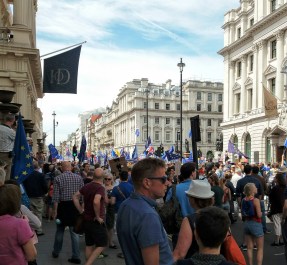
I also wonder about the power of protests. That sounds like a contradiction coming from me. Yes, of course, I was in London Saturday among the 100,000 plus anti-Brexit protesters demanding a people’s vote of the final Brexit deal. And it was a success. Our protest was the lead story on most of the news programmes that night and on the front covers of most of the newspapers Sunday morning. The initial analysis from the political pundits is that this protest sent a message to the minority of hard Brexiters in government and possibly the inert Jeremy Corbyn, along with jump starting some of those remainers who have given up the fight. That’s all fine and good.

protests against trump 2.jpg
People’s Vote march 23 June 2018.

A protest against Tr**p is another matter. It’s likely to be on the news, but what kind of message is it going to send? There’s no single solid message or legalisation coming up (as in the case of Brexit) to be impacted or potential votes to be lost by protesting against him.  Tr**p has secured his Alt-Right base, held on to reluctant Republican support with tax cuts and corporate welfare and normalised his hateful and child-like rhetoric through saturation.

Returning to Einstein, I refuse to remain silent. But I think there are more effective ways than another street protest for confronting Tr**p and all his nastiness. From this side of the Atlantic, petitioning and writing to our own governments to stand up to this US president on particular issues is a start. So too is supporting the many NGOs, such as Amnesty International and NRDC (Natural Resources Defence Council), whose organised lobbies and legal teams have a fighting chance. With these ideas in mind, this time, I’m staying at home with my cardboard and placard stick.

Women, Power and Mary Beard

FawcettThe Fawcett Society’s latest Sex and Power Index is a reminder that outrage and publicity aren’t enough. The study showed that in the UK, women currently make up just 6% of FTSE 100 CEOs, 16.7% of Supreme Court justices, 17.6% of national newspaper editors, 26% of cabinet ministers and 32% of MPs. I’m experiencing déjà vu. A few times a year, figures like this come out, whether from the UK, US or some international organisation. The women’s marches of the last couple of years and the media frenzy over Harvey Weinstein and #metoo seem to have had little impact when it comes to placing women in positions of power. This is made even more appalling by the fact that over the past decade women have surpassed men in numbers entering higher education – that is, we can no longer say that women aren’t qualified for such positions.
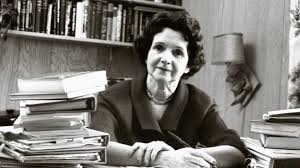
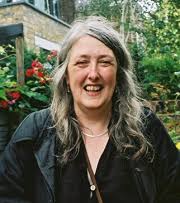
This brings me to Mary Beard, the Cambridge don and television classicist, whose recent book Women and Power: A Manifesto addresses this horrendous imbalance. While she gives some attention to modern examples where women in positions of power are treated differently and more negatively and sexually than their male counterparts – think Hillary Clinton – Beard looks mostly to history and ancient writings for the roots of misogyny and power relationships. She’s a master at relaying such accounts and the book is well worth a read.

But again, I experienced some déjà vu. Other feminist writers have pointed out the historical and institutional oppression of women. Gloria Steinem, Germaine Greer, Betty Friedan, to name a few.

I find some solace in the fact that Beard’s book has sold well and comes out at a time when a new generation of feminists is emerging. I do hope these young activists heed the advice on the back of Beard’s manifesto: ‘You can’t easily fit women into a structure that is already coded as male; you have to change the structure.’

Writing Essays

This was supposed to be a writer’s blog, writing about my writing and others’ writings. But other aspects of life have funnelled in – politics, feminism, visual arts. I make no apology. What brings all of these disparate parts together is actually essay writing. Blogs for me are a warm-up activity, a brain and language stretch for writing essays.

Before I write another word, I should explain that by ‘essay’ I mean creative non-fiction. What I don’t mean, for those of you who have searched #essay writing and landed here, is the formulaic student essay – that academic rag of assessment that takes all of the fun out of essay writing.

Without the structural constraints or the timeliness needed for newspaper articles or columnists’ pieces, essays can have a more varied existence. The Pulitzer Prize-winning author Annie Dillard once said ‘The essay is, and has been, all over the map. There’s nothing you cannot do with it; no subject matter is forbidden, no structure is proscribed.’

Annie Dillard
Annie Dillard

In some of my essays, I’ve worked within an overriding chronological story-telling, but without fictional characters to get in my way and with space for more philosophical ideas than I can get away with in fiction. With other essays, I’ve used more of a mini-collection style, with each vignette on the same theme and some indirectly answering to other vignettes. I try to not ramble in my essays. Perhaps it’s because I ramble in my journals or perhaps because I fear the work won’t get published – being mistaken for bad writing.

That reminds me of something I read a few years ago in Prospect Magazine: ‘The essay is more than an assembly of literary conventions: it ought to be an examination of the facts of the world. This has become clearer with the emergence of new technologies, which threaten to deprofessionalise one of the main historical strands of the essay, the egotistical ramble.’ (P. Hensher)

Aside from the above comment about rambling, this quote is also interesting for its inclusion of ‘facts.’ One thing I’ve learned from writing essays over the years is that while they are not fictional, their ownership of ‘facts’ or ‘truths’ is a bit slippery. I write about what I know to be factual at the time, sometimes having to rely on elusive memories that I’m aware are from my viewpoint. I choose to write about some facts and not others because this fact or that fact has been meaningful to me.

My favourite essayists have been mostly male. In part this is because men are more likely to have collections of essays published as single volumes. I’m thinking Gore Vidal and Clive James. I suspect this has its origins in the essays of the great Western philosophers. Women’s essays appear more often in anthology form along side other authors, such as the works of Rachel Carson and Margaret Atwood (underrated as an essayist).  I’ve noticed the trend too of the rare collection by a single female author being labled ‘women’s writing’ or ‘feminism.’

Well, if I’m going to buck this trend, I had better stop by rambling – I’ve exercised enough with this blog – and get on with essay writing.