
I’ve been absorbed in Jon Ronson’s BBC podcast, Things Fell Apart, about the origins of the culture wars going on in the West, especially in the US. It uncovers misunderstandings, misrepresentations and conflations that have morphed into the polemics of our times.
Ronson was recently interviewed in the New Yorker where it was noted that the title of the podcast comes from the W.B. Yeats poem ‘The Second Coming.’ When questioned about the centre crumbling and if he was trying to achieve a centre, his answer included: ‘For me, “things fall apart, the centre cannot hold”—it’s a sort of human centre of being curious and trying to understand people’s perspective and look for the nuances. It’s not the centre that, to be honest, the centrists talk about.’
This resonated with me as in recent years I’ve struggled to call myself a left-of-centre person. Politically, as the right becomes the far-right, the centre is tilting towards the right. Socially, what was once left-leaning liberalism has edged towards the acceptable centre. I don’t know what left or centre are anymore. Ronson’s humanist and less political take on this is a far more comfortable space for me to inhabit. It can also be found in Buddhism and in the self-therapy promoted by Judson Brewer (who helps people overcome anxiety and addiction). Both are integral to my daily life – my ‘practices’ as I call them. Yet, until I read Ronson’s comments, I wouldn’t have seen them as a kind of centrism – but now I do.
What I’ve been reading
Mostly, things Italian, though not intended to be a thematic spell of reading. Filling a gap in my George Elliot education, I thought I’d give Romola a go. It’s not her best work, written when she was steeped in philosophy and translating Spinoza, the novel comes off as a vehicle for ideas and debates rather than the evolving narrative and character study I would expect. It’s set in 15th century Florence and has been praised for its historical detail. Readers might also find it enjoyable in a nerdy way for its use of Latin and Italian.

A much better read was Elena Ferrante’s The Lying Life of Adults (translated into English by Ann Goldstein). Set in Naples and its environs like most of Ferrante’s work, the protagonist is a teenage girl dealing with her parents’ divorce, interfamilial feuds and the onset of womanhood. It’s full of memorable and gently humorous characters and renders deception into a truly creative act.
This Italian journey ended with Robert Harris’s Conclave, set in the Vatican during the election of a new pope. It has the intrigue that one would expect from Harris, along with his attention to liturgical detail and in this case a seasoning of Latin, culminating in a cracking good ending (I’ll stop myself there as this is a non-spoiler zone).
To close, and having nothing to do with Italy, the death of N. Scott Momaday last week has had me reading his poems again. Masterful.

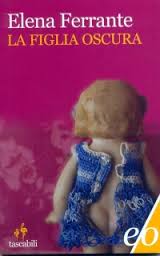 Leda narrates the story with frankness and self-reflection which are as refreshing as they are brutal. This, along with the intrigue of the plot and subplots, kept this reader engaged to the very end.
 Paola Trimarco