‘Where are you from?’ That is a question I get asked too often in the UK. If it’s from a complete stranger, I might say, ‘Mars.’ If it is someone who has already shown hostility towards me either because of my accent or because I’m wearing a pro-EU t-shirt, I say. ‘I’m from a country where it is considered impolite to ask people where they’re from.’
The problem with admitting where I’m from is that people assume I identify myself with my country of birth and what they think people from that country are like. This triggers a slew of assumptions about how I was raised, my political views, my faith, my class – all based on stereotypes – and most of them negative and miles off the mark. Making such assumptions are about turning individuals into members of a group and even with the most flattering of outcomes, individuality gets lost.
So, where am I from? I was born and raised in Chicago. But what identity do I ascribe to myself? Identity is a rather fluid concept and we all have multiple identities depending on what we’re doing and what context we’re talking about. Ethnically, I’m Italian-American. Legally, I’m American-British. Though if I were to pursue the paper trail, I can get an Italian passport and become legally Italian-American-British. I’ve spent most of my adult life in Britain and gaining my UK citizenship was a conscious act, as opposed to the Italian-American accident of my birth. I identify myself as more British than American as a result. This is not necessarily a good thing. Since Brexit, the Stupid American stereotype has been kicked aside by the Stupid Briton stereotype.
Seriously, since the EU Referendum, there’s been a lot of talk about identity and whether British people see themselves as European. As a British person, I personally do. But I’ll never forget when I first arrived in Britain in 1984. My fellow students, the British-born ones, referred to the rest of Europe, i.e. not Britain, as either ‘the continent’ or as ‘Europe’. I found this baffling. At school I was taught that the UK is part of the European Continent. At first I just thought that this was a linguistic tick, an abbreviated way of saying ‘continental Europe’ – the countries that were not on our little island. But it seems deeper than that as the debates around the referendum have illustrated. It appears that many British people see themselves as not European. Some say this is due to the geography of the British Isles being separate from the mainland of continental Europe. Do people in Greece and Malta refer to the rest of Europe as ‘Europe’ and question whether or not they are European? British separation from the rest of Europe is not just geographical, but deeply entrenched in imperial history and twentieth century politics.
The EU Referendum has also brought up the issue of immigration. I complicate matters more by identifying to myself as an ‘immigrant.’ I wish I had a five-pound note for every time someone has displayed shock at this. Perhaps Americans (which is how I’m perceived) are not allowed to be immigrants because they are from a country known for its accepting of immigrants and people outside the US seem to struggle to understand that anyone would want to emigrate away from it. Millions of Americans live permanently overseas. Many artists, writers, musicians prefer the lifestyles abroad, especially in Europe. Other Americans living abroad include teachers, scholars, aid workers and business people who fall in love with a foreign place and/or a foreign person. I have many reasons for emigrating from the US, including all of the above mentioned. To these I add escape from my dysfunctional family and national, humane healthcare.
There is the other, more unsavoury, possibility that people who have problems accepting that Americans can be immigrants in the UK reserve the ‘immigrant’ label for the ‘other’ – the non-white person or the person for whom English is not a first language. While not everyone who voted to leave the EU is a racist, it is clear to anyone living in Britain these days that the Brexit result has empowered the racists and xenophobes in this country.
I cannot change where I’m from, nor can I do much to change people’s negative stereotypes. Before the EU Referendum, I was more likely to identify myself as a writer, amateur golfer, woman, activist, half of a husband-wife team and a linguist before I would identify myself as Italian-American-British. Now, in the muddle of ethnicity and identity brought on by Brexit, I’m shirking further away still from any sense of ethnic identity.


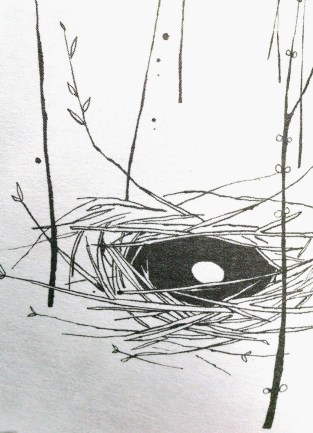 eggs on demand and wants to raise a chick of her own. But when she manages to escape the coop, she can no longer lay eggs. She happens upon an egg without its mother and lays on that until it hatches only to discover that it’s a duckling. This metaphorical tale raises issues about surrogacy, motherhood, tolerance and independence. Perhaps a chick-lit version (no pun intended) of Animal Farm, it packs a punch with its directness and use of animals who are all too human. With illustrations by Japanese artist Nomoco, this little gem is best read in its paper version.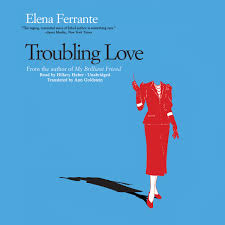




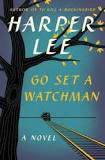 rongly disagrees with and that she shouldn’t run away from them. While Scout is the symapthetic protagonist here, I wasn’t completely taken in by her. She says that all people are equal, but she also believes that blacks are intellectually inferior and says that she wouldn’t date a black man. It made for some uncomfortable reading, but I pressed on in order to hear Atticus defend himself, which he does in a heated exchange with Scout – there are a few of these issue-focused arguments in the book, reminding me of two-hander political plays. What Atticus displays is a reasoned use of logic to justify his racism (which isn’t of the KKK variety, but racist nonetheless). But his logic only works if the premises about African-Americans were true, and most modern day readers would say they are not. This is one of these stories that needs to be placed in its social-historical context to be enjoyed. In the end, at least it hints that we are all fallible and subject to weak reasoning.
 Paola Trimarco