
Reading the Buchan novel in the present day, the hero’s language with its ‘good old fellow’ and stiff-upper lip euphemisms seems quaint and artificial. That aside, I did enjoy the sense of drama from this man-on-the-run thriller, along with its descriptive passages of the Scottish countryside and the humble and duplicitous characters that Richard Hannay encounters. But with this fictional drama, the true-to-life historical backdrop triggers a 21st century sense of foreboding.
Set on the eve of the First World War, the story is infused with political intrigue and spies, along with a strong sense of fear and uncertainty. As a modern-day reader, it’s hard to not think about the recent politically-motivated cyberattacks coming from Putin’s Russia, which has already displayed its military might in Chechnya, Crimea and Syria. Our present day also brings with it the destabilisation of America on the eve of the Trump presidency. We live in times that feel alarmingly pre-War.
The cliché about history repeating itself has become as worn and irritating as the need to use the other cliché – that people do not seem to learn from history. Such expressions bring with them the tendency to reduce and dismiss real dangers. Speaking more specifically and less glibly, in this week’s BBC Dateline, panellists brought in the analogy of how the First World War not ending with a viable treaty in Europe had set the stage for the Second World War being akin to the untidy fall of the Soviet Union leaving Europe vulnerable today. Given the mess that America is in at the moment, now is the time for a united Europe to do something to protect post-Soviet Europe. I don’t want to think that too much time has elapsed or that opportunities to do something have been missed. In this Dateline analogy lies a possibility of hope – agreements around trade, land and computer piracy need to be made with Russia to establish the rules of the new games. Will they break these rules? Probably, but doing so will be more difficult with international agreements in place and a united Europe to support these agreements.
As for me, I’ll stay p olitically active, with the occasional dip into escapism – classic thrillers, where the technology might be less sophisticated than today’s, but at least the good guy always wins.

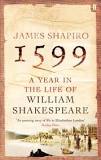 t together history and social context with textual analysis of Henry V, Julius Caesar and As You Like It, along with some of the influences on Hamlet, which Shakespeare started in that same year. While some critics felt this volume was too encyclopaedic and lacking in soul, it certainly whetted my appetite. Unfortunately, I had to wait some ten years.
 verged from it, rendering a much more complex ending. Shapiro has also unearthed the influence and direct borrowings from Harsnett’s Declaration of Egregious Popish Impostures, which gave guidance on how to spot people faking demonic possession – a popular topic at the time.


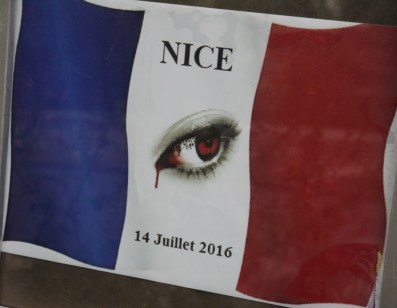 For Syria, Brexit and Trump, there are lists of hideous events and poisonous rhetoric that have helped to make 2016 notorious even before it’s ended. Finding the good in such a year is not only challenging, but necessary. The alternative would be to shut down and sulk, permitting the bad things to fester and grow worse in the mind’s eye.
 e – a sad, but fulfilling experience. Back in England and France, we have enjoyed good health and the company of friends and family, interspersed with reading, writing, playing golf and going to cinemas, concerts, galleries etc. Life has been full and satisfying, even under the cloud of this annus horribilis.
 and repeated so often, they are taken as fact. The word itself, apparently first coined by writer Norman Mailer, takes its ‘oid’ suffix form the Greek word for appearance or form. This definition has been expanded and according to a few online dictionaries, a factoid is also a small or trivial fact. In this newer definition lies another danger – factoids are no longer half-baked truths, they’re just mini-truths.






 Paola Trimarco