The Maaate Campaign and Sexist Language

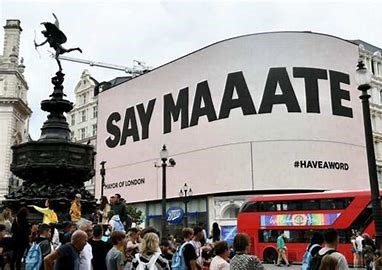
Barbara Ellen hijacked much of my blog this week with her excellent piece in The Sunday Observer about London Mayor Sadiq Khan’s campaign called Say Maaate to a Mate. The core idea is for men and boys to rebuke other male friends for using sexist language and talking about abusive behaviours that could lead to violence against women and girls. As the campaign website explains, ‘We know it’s not easy to be the one to challenge wrongdoing amongst your friends. That’s what say maaate to a mate is all about.’ 

This type of initiative is just ripe for satire, and I’m sure Ellen and I are not alone in rolling our eyes at it. As Ellen says, which I was going to say, ‘Well intentioned though it clearly is, it all comes across a tad woolly and over-idealised: this idea that, if some guy is making awful remarks, other blokes say “maaate” in a disappointed way and this magically banishes sexism and misogyny from the capital forever. Whaaat?’

Barbara (if I may), allow me to add a couple of points. Firstly, on the campaign website, there’s more guidance on how this airbrush approach to a serious problem works:

‘Mate is a word that needs no introduction. It’s familiar and universal. It can be used as a term of endearment and as a word of warning. This simple word, or a version of it, can be all you need to interrupt when a friend is going too far.’

This reminds me of Nancy Reagan’s anti-drug campaign in the 1980’s. ‘Just Say No’ to drugs was aimed at young people, who duly ignored it. The 1980s witnessed the highest rate of illegal drug use in America in the twentieth century. Like Regan’s ill-targeted campaign, the mayor’s approach to stopping violence against women doesn’t realise how feeble this language sounds in the context of a culture saturated with sexist behaviour and aggressive attitudes towards women. In 80s America, drugs were everywhere, not just on ghetto street corners, but also on public transport, in boardrooms and in bars and restaurants and a fixture of university campuses and high school playgrounds. The same can be said of demeaning and aggressive sexist language spoken to and about women and girls. It operates across class boundaries and can be heard in pubs and sporting events, in offices and classrooms, etc. Worst of all, language targeted against women and girls is pervasive in social media.

This leads me to my second point. Verbal hostility towards women and girls isn’t always so blatant as alcohol-fuelled pub banter or internet trolling. It can be indirect, insipid or give the appearance of even being a compliment. It can be cloaked in humour – and the person who doesn’t find it funny is accused of not understanding the joke. The maaate in these scenarios has plenty of wiggle room.

Barbara Ellen is also on mark when she points out that the funds for this lightweight campaign would have been better spent on policing and resources to help women fleeing domestic violence and for legal support to get convictions against the perpetrators. As that was going to be my closing, I’ll end this rant here and tip my hat to Barbara.

Indigenous in the Age of Identity Politics

Native Americans, Māori and Nahua, those are among the peoples I think of when I come across the word indigenous. What I don’t think of are the Mincéirs, one of several groups referred to as Irish Travellers. Their precise origins are unknown, but they broke away from Ireland to travel to other parts of Britain in the early 1600s. As a minority group that identifies themselves as indigenous, they have their spot on the UN’s List of Indigenous Peoples.

According to the UN, there are over 5000 groups of indigenous peoples, and nearly half a billion individuals qualify as indigenous. That’s larger than the population of the US. These large numbers have come about in part by removing the criteria of firstness. This appears odd given that our understanding of indigenous comes from colonialism, making a distinction between the people who were already occupying a land before the colonisers arrived.

Indigenous derives from the Latin indigena, meaning ‘native’ or ‘sprung from the land.’ Writing in The New Yorker, Manvir Singh observes that the word first appeared in English with reference to people in 1588. ‘Like “native,” “indigenous” was used not just for people but for flora and fauna as well, suffusing the term with an air of wildness and detaching it from history and civilization.’ Singh argues that the notion of indigenous peoples as ‘historical relics’ perpetuates their marginalization and hinders progress towards justice and equality. Indeed, according to the World Bank, although indigenous people make up just 6 percent of the global population, they account for about 19 percent of the extreme poor. 

Now, at least for the UN, indigenousness (try saying that after a few drinks) is determined by self-identification. Singh points out that ‘Many groups who identify as indigenous don’t claim to be first peoples’ like the Mincéirs, and that ‘many who did come first don’t claim to be indigenous.’ I understand the feelings of this latter group. This singular label oversimplifies the immense diversity among these communities, each with its own languages, cultures, and traditions, reflecting a rich tapestry of human history. Wearing my linguist’s hat, allow me to add that indigenous peoples account for over 4,000 languages.

Singh also confronts the harmful stereotypes and romanticized notions that persist about indigenous cultures – what I would call coloniality (I’ve waxed on about this before). The author aptly calls for a more nuanced and inclusive perspective on indigenous peoples, acknowledging their diversity and addressing the challenges they face as minority groups.

I agree with the need to reevaluate the concept of indigenous and to adopt a more comprehensive, empathetic, and respectful approach, understanding the intricacies and historical contexts of each community. Yet, I feel I’m being sucked into a wave of identity politics.

Like indigenousness, identity politics can be exploited by opposing sides. Claiming certain group identities or being sensitive to others’ identities makes one woke – in a negative sense – unless you flaunt or ‘protect’ your white identity or your male identity (for example). I know what side I lean towards in such debates, but the currency of these terms and their changing meanings can make it difficult to be understood. For those struggling against discrimination and poverty, the ambiguities surrounding indigenous and identity make it difficult to be heard.

Photo by Ganta Srinivas on Pexels.com

Inside France Looking Out

From Nice the riots in France can only be seen on television. Other French cities about the same size as Nice and many smaller ones have been subjected to violent protests and riots in the wake of the killing of a 17-year-old by a French police officer. We don’t know much about the young man. His name was Nahel Merzouk, but he is being referred to as Nahel, no last name, and his family has not released a picture of him.

The talking heads on the many French television and radio news programmes analyse all this rioting down to a few levels. On one level, it’s about police brutality. On another level it’s about the presupposition that the police officer who fired at point-blank range will get a light sentence. At another level still, this is an angry young generation protesting against their elders in the government. I realise this last level sounds rather vague, but therein lies its power. To paraphrase Niccolò Machiavelli, the simpler the idea, the more will follow and zealously support it.

Some expert-driven talk has hissed about the Americanisation of French culture. Is Nahel the French George Floyd? As Nahel is reportedly of Algerian Moroccan heritage, is this all about race? Are the violent reactions symptomatic of the anti-colonialism that has shaped other protests and the knocking down of statues? Some British papers have picked up on this, with The Times reporting the rioting as coming from the ‘radical left.’ I suspect the radical right would like us to believe that’s the case. From inside France, it appears that all extremes are using the incident and the violent reactions to castigate Macron. One of the Italian papers, La Repubblica, has made much of this political infighting to conclude that the rioting is another sign of a weak president.

The French media is also focused on the extent of the rioting itself, how many cars and buildings have been set ablaze, how many shops have had their windows broken and how many rioters have been arrested for vandalism, looting and attacking police officers. From local radio, I learned that last night Nice experienced some isolated incidences – broken glass and rubbish bins set alight. This all makes for captivating news and gives me the uncomfortable feeling that the rioters have won by stealing the country’s attention.

The foreign media has been intoxicated by these images as well. I see online that American and British holidaymakers are concerned about their safety in France. From inside, I’ll tell you that the resort of Nice doesn’t feel more unsafe than it normally does. It’s a large city, and it has its share of pickpockets and neighbourhoods I personally wouldn’t go into at night. So far, the only change in my life brought on by the rioting is that public transport has been ordered to shut down at 21.00 – a real problem for socialising at night or going to the cinema.

I don’t mean to make light of this. I understand people’s anger. A young man, apparently unarmed, had an altercation with a police officer and was killed. The non-violent protests – better still, the silent marches – express this anger. The rioting and damage to public property, along with the hundreds of injuries inflicted on police officers, express stupidity.

The BBC informs me that tonight French cities are ‘bracing themselves’ for more unrest. I’ll just go back to bracing myself for further onslaughts of dubious reporting and opining.

Nick Cohen – #HimToo

For years one of the joys of reading The Sunday Observer was tucking into the work of columnist Nick Cohen. Typical of the newspaper, Cohen could be counted on to write insightful, witty and sometimes foul-mouthed pieces. I recall in particular, Cohen’s brilliant and well-researched writing on ‘fairyland’ Brexit. While firmly left of centre, Cohen was also critical of the left and certainly opened my eyes over the years.

Then, one day, he wasn’t there. I assumed he was ‘away’ as the paper often puts it, taking a holiday or on sick leave. But there was no mention of anything like this. Another week passed and then another. No sign of Cohen’s column. I looked online for a story about him, but there was nothing. His name still appeared as if he worked for The Observer.

Months later, I received an email from Good Law Project, an organisation I strongly support. Environmental journalist Lucy Siegle, being represented by Good Law Project, was one of several women who spoke out about her experiences of sexual harassment by Nick Cohen. She made a formal complaint to The Guardian/Observer back in 2018, and she was ‘stonewalled.’  As reported by Good Law Project, the paper ‘actively discouraged complaints and refused to take action on widespread reports of Cohen’s misconduct for years.’ As other women had come forward, the paper had no choice but to suspend Cohen. But they did choose to not publish any explanation for Cohen’s departure. I heard Jolyon Maugham of Good Law Project explain how he had approached The Guardian/Observer Media Group about this case and others, and he ‘could not get them to take it seriously.’ Maugham urged the paper to be the first to put this in the public domain.

The story has finally been reported by the New York Times this week and is well worth a read. This NYT story isn’t just about Nick Cohen’s behaviour, it’s about the coverup conducted by the British media. It mentions how Financial Times, Sunday Times and Private Eye refused to run the story about Cohen’s behaviour and departure. To this I add something learned from a Good Law Project interview with Lucy Seigle that The Telegraph ran a story claiming that Nick Cohen was suspended because he was gender critical and spoke up against transactivists. In other words, for The Telegraph, this was another of these ‘cancel culture’ stories, popular with its readership. But it wasn’t one of those stories. After all, why would Cohen be suspended when other Observer columnists, such as Sonia Sodha and Kenan Malik, have clearly taken a gender critical position and have supported women’s sex-based rights – neither of them has been suspended.

There is a whiff of irony here. Cohen often wrote about the coverup culture in the British media. Example, post-Brexit Britain, where the fairy tale continues in the pro-Brexit press:

‘For the life of me, I do not understand why Labour and those parts of the broadcast media outside the control of the political right play along with the deception and pretend that the world as it is does not exist. It’s as if Britain were a Victorian family keeping up appearances. As if not just a government with every reason to conceal, but the opposition and media are bound by a promise to never wash Britain’s dirty laundry in public – even as its stink becomes overwhelming.’

I guess it’s okay if the stinking ‘dirty laundry’ is his own. (Forgive my euphemism, I know it’s more serious than that for the victims.)

I find myself writing this blog not just to voice my disappointment in yet another man whose talents I admired turning out to be a sexual predator. Move over Kevin Spacey, James Levine and Ben Affleck. My deep disappointment lies in The Guardian and The Observer, two progressive papers I have trusted for years to support women’s rights and rise above the culture of male privilege.

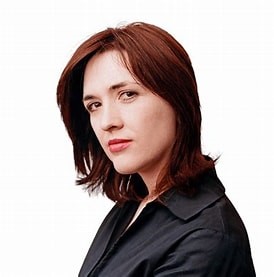
Journalist Lucy Siegle

Who/What is Woke?

Now that Ron DeSantis is officially in the running for US President, I suspect we’ll be hearing a lot more about woke culture, wokeness and ‘the woke mind virus,’ which according to DeSantis ‘is basically a form of cultural Marxism.’ I think he may have offended Marxists with that one while simultaneously whistling to antisemitic conspiracy theories of the World War 1 era.

The way ‘woke’ is getting bandied about these days, I’m starting to wonder if I know what it means. I’m not the only one, a survey conducted at King’s College London found that 25% of people think that ‘woke’ is a compliment, another 25% think it’s an insult and the rest either don’t know or have never even heard of the term.

According to the Oxford Online Dictionary, it’s an adjective meaning ‘alert to injustice and discrimination in society, especially racism.’ The dictionary cites these examples: “We need to stay angry, and stay woke” · “Does being woke mean I have to agree with what all other woke folks say should be done about issues in the black community?” · “The West Coast has the wokest dudes.”

The consensus is that ‘woke’ derived African American Vernacular English (also called Ebonics) and was originally about someone being alert to racial discrimination and prejudice. Some sources claim the word in this sense was coined by the novelist William Melvin Kelley, who in 1962 authored an essay for the New York Times entitled ‘If You’re Woke, You Dig It.’ The word didn’t catch on or acquire a more political or broader meaning to include discrimination other than racial until the earlier 2000’s. The singer Erykah Badu used the phrase ‘Stay woke’ in her song Master Teacher in 2008. Badu was singing about all types of injustices all over the world.

These definitions and uses make wokeness sound much more passive than it appears to be by those who attack it. More than just being alert, people who are labelled as woke want to change school curricula and laws that affect our jobs and ways of life. In a recent Wall Street Journal survey, 55 percent of US Republicans said, ‘Fighting woke ideology in our schools and businesses’ was more important than ‘protecting Social Security and Medicare.’

This so-called woke ideology that has entered American schools and universities has many progressive forms, such as Critical Race Theory. This approach to studying history is nothing more than understanding past events in their social and political contexts, acknowledging the roles of women and ethnic minorities. This makes people on the right uncomfortable as it destroys some of the myths of US history that have fed public discourse and patriotism for decades. This is nothing new. Throughout the twentieth century, plenty of scholars have posited revisionists histories, some leaking their way into popular writing – Gore Vidal’s brilliant Burr comes to mind.

‘Woke’ as something to spit at the left has also crept into British culture. The current Home Secretary Suella Braverman referred to Labour and Liberal Democrat supporters as ‘Guardian-reading, tofu-eating wokerati.’ For me this makes the label ‘woke’ a badge of honour.

But it’s not so straight forward. Popular media has linked wokeness to debates around cancel culture. Those who want to cancel scholars and public figures who are gender critical and want women’s sex-based rights protected. On this point, I feel very unwoke as I support freedom of speech and freedom of research (along with gender criticality). This makes me uncomfortably aligned with the American right and in search of a sick bucket.

I’m suspecting this is a generational issue as well with the young left wing taking progressive positions a step too far for some of us older progressives. Putting generational differences into the mix was mentioned in a recent BBC article. Ash Sarkar, contributing editor for Novara Media group, explained that differences on issues such as climate change and race are making the use of woke a pejorative term, and that it has become a ‘convenient vehicle for lots of right-wing anxieties about a generational divide in political outlook.’

Ultimately, woke has become multi-faceted and slippery and as complex as what it means to be liberal these days.

Difficult Women

Prime Minister Theresa May was once publicly referred to as a ‘bloody difficult woman’ by one of her own MPs, Kenneth Clarke. May revelled in it and used the label to raise her feminist credentials. But the more I read about ‘difficult women,’ the more I think May was undeserving of the accolade. Her brief time at No. 10 Downing Street left many of us wondering about her competence as she fumbled her way through Brexit negotiations that left all sides unhappy.

In Helen Lewis’s book Difficult Women: A History of Feminism in 11 Fights, the author looks at the lives of 19th and 20th century women who were judged as difficult women, but who were clearly breaking barriers, often risking their lives and destroying their and their families’ reputations. These stories make Theresa May look like a lightweight, if not a fraud among difficult women.

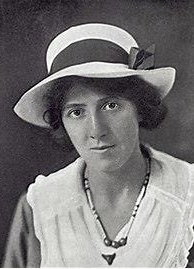
Among Lewis’s choices are the many little-known suffragettes, who spent years in prison for rioting, and women who weren’t allowed in universities, but having been accepted went anyway – with sympathetic male escorts. Lewis also writes about Marie Stopes, who was a palaeobotanist and campaigner for women’s right, perhaps best known for her book on the female body Married Love (1918), and for being the founder of Britain’s first birth control clinic. To Lewis’s credit, she points out that Stopes wasn’t a complete inspirational heroine. Stopes was a gushing admirer of Adolph Hitler, going so far to send him some of her love poems, and she was a strong advocate for eugenics. Lewis writes about her because she was complicated and because women’s histories tend to be selective in our modern search for feel-good role models and pioneers.

Bringing this topic back into the 21st century, I did a search on ‘difficult woman’ in the News on the Web Corpus of some 14 billion plus words, mostly from written language but including news transcripts. The Kenneth Clarke quote loomed large. Other women referred to as ‘difficult’ were Winnie Mandela, Megan Markle and Patti Smith, along with many people’s mothers. I did another search looking for occurrences of ‘difficult man’ in the news corpus. I expected to find fewer occurrences of ‘difficult man’ than ‘difficult woman,’ but the opposite was true. ‘Difficult man’ occurred 20% more frequently than ‘difficult woman.’ Why is this? I suspect, first of all, it’s because men are more likely than women to appear in the news. Examining the contexts of these occurrences more closely, I noticed that ‘difficult’ was often used to label the woman as if she belongs to a type of woman that didn’t need any further explaining. That’s who she is, and our culture understands what that means. Difficult man often appeared in phrases such as ‘a difficult man to pin down’ and ‘a difficult man to track down’ – the busy, important man – and in sports contexts, ‘a difficult man to mark’ and ‘a difficult man to stop’ – the heroes of the male-dominated sports news (oh, don’t get me started on that one – the lack of coverage of women’s sports).

Writing about this topic probably makes me a difficult woman. With this in mind, I’ll close with a quote from Helen Lewis: ‘Being a feminist unavoidably involves being a killjoy, because it involves puncturing the cosy bubble of consensus. That’s difficult, and it can make you seem difficult for doing it.’

Marie Stopes

India and the Global Majority

Here we are at the end of April 2023. What makes this date significant? This week, India’s population is expected to have reached 1,425,775,850, overtaking China as the world’s most populous country. This brings a few thoughts to mind.

First, I’ve always had a soft spot for India and its peoples. This might have something to do with my ‘spiritual’ childhood and attending the Temple of Kriya Yoga in Chicago at the age of ten. For a while I even identified myself as Hindu though I wasn’t really. In grown-up life India came to represent some of my favourite authors – Salman Rushdie, Anita Desai – and the music of Ravi Shankar and A.R. Rahman. When I finally travelled to India, I revelled in the colours and fragrances, its architecture rich in a multi-ethnic and multi-religious history and the experiences of seeing a tiger in the wild and riding through the crowded chaos of New Delhi in the back of a rickshaw. I also saw poverty on a scale I had never seen before. An enlightening experience all around.

The other idea that has surfaced with this population milestone is that of a global majority. Since the middle of the twentieth century, together China and India have accounted for over a third of the world’s population. For the entirety of my lifetime, the world has been predominately Asian. Yet for much of my early life – and perhaps I speak for other Westerners – my world view did not match this Asian reality.

That started to change with globalization – I know this is a swear word for many, but globalization is not just about a McDonald’s/Coca Cola world invasion, but also includes a spreading of Asian cultures and languages to the West. I went through a Japanese phase in the 80s when Japan was an economic powerhouse and Akira Kurosawa films regularly featured at the Edinburgh Film Festival. Living in Korea in the late-90s and travelling widely to neighbouring countries made America feel for me even less central to world cultures – a bit player. Today, I reflect on the power of ‘K’ – K-pop, K-design, K-cinema – as everything adorably Korean.

The concept of a global majority can also be seen through another lens. Writing about leadership in education, Rosemary Campbell-Stephens defines the global majority to include ‘people who identify as Black, African, Asian, Brown, Arab and mixed heritage, are indigenous to the global south, and/or have been racialised as ethnic minorities.’ Combined, these groups currently represent roughly eighty-five per cent of the world’s population. Campbell-Stephens adds that the term global majority was ‘coined to reject the debilitating implications of being racialised as minorities.’ Recognising the largest populations isn’t just about numbers, it is a move ‘towards reclaiming the autonomy and efficacy that the process of racialised categorisation and minoritisation removes.’ I can see the value of this – a challenge to prejudicial thinking. But it also misses the mark by not acknowledging racializing religious groups as found in antisemitism and, to bring this back to India, in Modi’s government, which is openly discriminating against Muslims.

As India’s population and economic power grows, so too does its place in the world. I watch this global power shift with fascination and a bit of unease.

The language of coloniality

This week Buckingham Palace announced that King Charles was supporting research into the royal family’s links to the transatlantic slave trade. This is along the lines of investigating any links between America and lunar exploration. It’s bleeding obvious and the stuff of history books, novels and films, and in the case of the latter -living memory for most of us. Of course, the moon landings don’t carry the shame of the colonisation and enslavement of peoples. It’s this shame that has allowed for this trick of the mind where people talk of the monarchy as both integral to the British Empire, and therefore colonialism and slavery, and yet, at the same time separate from the Empire when it comes to the well-documented atrocities and the financial gains that still exist today.

What’s going on here I think can be found in understanding the terms colonialism and coloniality. The withdrawal of European countries from their colonies represented the end of colonialism, the political and economic structures enforced by the colonisers to govern and exploit the colonised. But that wasn’t the true end of it. Sociologist Ramón Grosfoguel explained back in 2011 that ‘we have come out of a period of global colonialism to enter a period of global coloniality.’ In contrast to colonialism, coloniality refers to the hegemonic ways of thinking, doing and being that show power of one group over another even if the colonial governments are no longer in force. Coloniality has its roots in colonialism but is far more subtle and is disguised in the language of progress, modernization and development – I’m paraphrasing here from an insightful article I read recently by Pinky Makoe (2022), a sociolinguistic studying coloniality in education in South Africa.

Here’s an example of coloniality at work. A recent article in Nature pointed out how biological species have been traditionally named after persons, real and fictional. ‘Eponyms typically reflect benefactors, dignitaries, officials, the author’s family members and colleagues, or well-known cultural figure’ at the time of their so-called ‘discovery’ by westerners. This point is illustrated in the names given to animal and plant species in the continent of Africa, a strong majority were named after British men, followed by German men, followed by French men, followed by Belgium men – you get the idea. The fact that these names stayed in place for so long points to the coloniality that remained long after the colonisers were gone. The article was about the drive to replace these names, these relics of colonialism, by adopting the names used by local people where these species can be found.

At least we are talking about coloniality – in concept, where we are not using the word. This idea has finally come out of the shadows of academia and is making its way into the popular press. I guess I shouldn’t be too hard of King Charles. His ‘bold’ announcement is a step in the right direction and in its naivety is only trying to fit into popular thinking.

Five Vignettes About Trees

1.

I attended Joyce Kilmer Elementary School in Chicago, where the first line of Kilmer’s best-known poem was painted in old-worldly script above the stage of the auditorium: ‘I think that I shall never see a poem as lovely as a tree.’ The metaphor still works for me, but the rhymed couplets throughout the poem (I will spare you) edge close to doggerel. Thankfully, loads of other poems about trees have been published. I’ve recently discovered the French-Canadian poet Hélène Dorion, whose collection ‘Mes forêts,’ as the title suggests, features trees. Here’s a sample:

Trees bite into the soil
their bodies parched
in the cold of their roots
gaunt shadows bodies
pressed together
we hear the song
of fracture and desire
body like the tide going out
pale boat
lost in its night

body of love and storm
given over to the earth
that it licks as if
it were a wall to pierce through

  • Hélène Dorion (Translated by Susanna Lang)

2.

With talk of today being the Spring Equinox in the marginalia of the news, I was reminded of St Joseph’s Day. It’s the day before the equinox, but nevertheless it was for me as a child the Italo-American version of St Patrick’s Day. It was customary to wear red. In Italy, it’s also celebrated by gorging on a zeppola, a custard-filled pastry with cherries on top – the cherries represent the buds on the trees in spring.

3.

At the start of the year, I enrolled in another MOOC intended for French undergraduates to help me expand my French vocabulary. The course, entitled ‘Les Arbes,’ was about the biology of trees and their contribution to the Earth’s biodiversity. Once again, learning scientific French highlighted the paucity of my scientific English. Many of the words I looked up in French were the same or close to it in English.

4.

In Cambridgeshire where I live, a furore has erupted over new plans led by the county council to build a busway (a bus-only road) from a new 6000-home development to the town of Cambridge. Building such a road will involve cutting down 1,000 trees. The majority of these arboreal victims are in the Coton Orchard, one of the UK’s largest and oldest orchards, with a unique ecosystem that cannot be mitigated with planting new trees elsewhere. This is part of a pattern in Britain, where the mass felling of trees has been carried out in the interest of road building. In 2018, despite two years of protests from residents in Sheffield, the city council allowed for the felling of some 17,500 trees. It later turned out that the justification for this was based on misunderstandings of an environmental survey coupled with misinforming the public.

I’m not just being sentimental about trees – all trees everywhere. Trees are also a crop that provide wood for furniture and pulp for toilet paper, among other things. Some trees also need to be cut down due to disease or public health reasons. The destruction of trees in our parks and towns is a different matter altogether. With the loss of these trees, the bird and insect populations, already in catastrophic decline, suffer greatly. To this, it’s necessary to add negative effects of such barbarous acts on the human population, both in terms of our physical health (such as the quality of the air that we breathe) and psychological health (where studies have shown improvements in emotional well-being with the introduction of sylvan spaces).

5.

Every year, I buy an artsy calendar to add some colour and visual creativity to my home office in Ely. It’s also a place to jot down writing deadlines, meetings and health club activities – things that are on my phone calendar as well but are sometimes forgotten when my head is in the comfort of clouds. My 2023 calendar has a tree theme. Every month displays a painting of trees by some famous, and some not so famous, European artists. Looking at these photos of paintings everyday – these meadows, these tree-lined shores, these shaded forests – gives my days a natural sense of calm and beauty. Since according to a French professor lecturing on the MOOC, there are over 60,000 species of trees, every year could have a tree theme, a different tree calendar, and in the remainder of my lifetime, I still will have only scratched the surface.

Above: Emmanuel Gondouin, La Forêt, 1912
Feature image: Henri Charles Manguin, Les oliviers à Cavalière,  1905

Marking the one-year anniversary

As a news junkie, I’ve been on a seven-day high. As Friday saw the one-year anniversary of the start of the war in Ukraine, reviewing the year and predicting what is to come has dominated the news cycle. There was also a spattering of this weeks’ events featuring Biden’s surprise visit to Ukraine, Putin’s speech about a parallel universe with Ukrainian nazis attacking Russians and scenes of support rallies and vigils starring the familiar blue and yellow flag.

What have I learned from this week of international newspapers, podcasts, radio, television and magazines? President Zelensky is still the master craftsperson of public relations. Despite that, he’s not likely to get the full military support he craves for reasons to do with geopolitics and the practicalities of transporting and using these machines of war. It’s also not likely this war will end anytime soon as both sides are far from the negotiating table. One pundit predicted that this could last a generation.

The most thought-provoking commentaries came from the weekend papers. The Observer editorial put a spotlight on the results of this week’s UN resolution to condemn Russian aggression in Ukraine and demand an unconditional withdrawal. The resolution was supported by 141 countries, voted against by 7 and had 32 abstentions:

‘Worrying, even dismaying, is the realisation that important regional powers such as India, South Africa, Ethiopia and Algeria continue to sit on the fence. Foremost among them is China. Beijing is becoming, or already is, a global economic and military superpower. But with power must come responsibility – and its refusal to condemn, sanction or publicly criticise Russia is inexcusably irresponsible.’

Patrick Cockburn in the I Paper offered a sobering thought for us news addicts:

‘Biased reporting is inevitable in any war, but in this case the partisan news coverage has tended to over-focus on the military conflict in Ukraine and under-report the risks stemming from a growing confrontation between a confident America and a weakened Russia.’

Maybe I binged a bit too much on this news cycle as another take away from the week has been a feeling of worried ambivalence – if that’s not a contradiction in terms. This came to me as I was walking down the streets of Cambridge as part of a march and rally for Ukraine. Noting that fewer than 500 people showed up in this thriving student town made me think that this war is starting to drift from the collective consciousness – that was the worrying part. At the same time, I was growing detached from the event as the message wasn’t clear and at times made me feel ill at ease. This march was devoid of peace signs and the main message seemed to be that we are ‘standing with Ukraine.’ Are we standing with them as they fight, as this war is escalating and as more countries become involved? I agree with this in principle but feel uncomfortably militaristic with their application. I also didn’t see any signs or hear any chants or even casual talk about the thousands of Ukrainian children being taken by Russian troops to Russia to be re-educated – Putin is playing the long game by creating the next generation of pro-Russian nationalists.

My head spins with these thoughts, and I’m not really one to shut down and become ambivalent. Like a typical addict, I deal with these doubts and confusions by taking more of the drug that started it. Back to a podcast…