Facticide

I would have published this sooner if there hadn’t been for so many journalists beating me to the goalposts. I write this knowing I risk being just another voice waxing on angrily about the prevalence of lies that have produced the vote in Britain to leave the EU and Donald Trump’s presidential victory. Since most intelligent people are familiar with these lies, I won’t even start by listing the more outrageous or popular ones.

I’ll start with language. The word post-truth has gained currency in recent weeks. While it encapsulates the idea that we are beyond truths or are willing to ignore truths, I think it is far too gentle. Post-truth rings too much like postmodernism, poststructuralism or post-realism. I prefer facticide. This word more aptly suggests a killing of truths.

Of course, truth is a slippery concept. When we think of truths, we think of facts, those things that can be evidenced or scientifically tested. We all know how evidence and testing can be interpreted in different ways. And some truths can change over time. For instance, the BBC quiz programme QI, known for its thorough and accurate research, once acknowledged that many of its ‘correct answers’ of the not too distant past were no longer true or correct because new information and scientific research changed the so-called facts.

And then there’s factoids, untrue or unreliable ideas that have been reported trumpbsand repeated so often, they are taken as fact. The word itself, apparently first coined by writer Norman Mailer, takes its ‘oid’ suffix form the Greek word for appearance or form. This definition has been expanded and according to a few online dictionaries, a factoid is also a small or trivial fact. In this newer definition lies another danger – factoids are no longer half-baked truths, they’re just mini-truths.
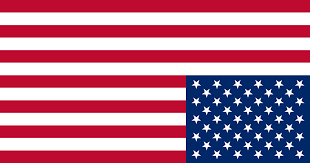
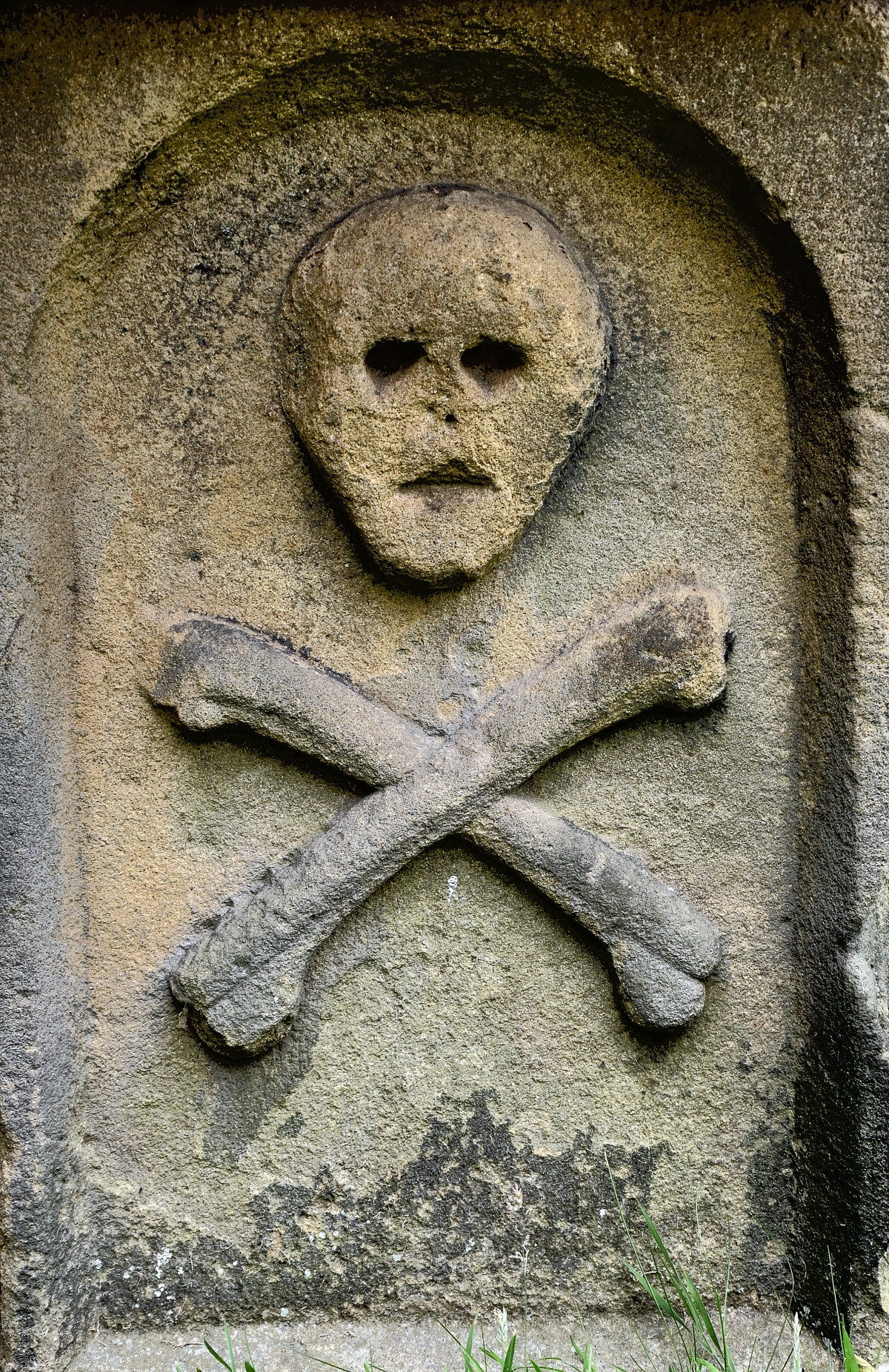
These are some of the subtle ways that truths can be tampered with. In recent months, the world has witnessed the more blatant attacks on facts, expertise and truths. But what has been more worrying are the falsehoods that are standing in their place. I know this is nothing new. Back in the fifth century BCE, Sophocles said, “What people believe prevails over truth.” It the time between then and our present day, many philosophers, artists and writers have made similar comments. But I’m more aware and fearful of this tendency now. The believed falsehoods of the Brexit and Trump campaigns, and their ilk in other parts of the world, are full of isolationism, nationalism and hate. I cannot see what good could possibly come from this.

American Patriotism and Me

A few days after the terrorists’ attack on the World Trade Center, I received a chain email that read ‘All Americans wear RED, WHITE and BLUE today.’ The email told its readers to pass this message on to ‘ten other Americans.’ In other words, members of the same club. It concluded with ‘Let’s unite against terrorists. GOD BLESS AMERICA.’ I coiled up in my revulsion and wondered if there were any way I could take the ‘dual’ out of my dual citizenship, cut my elongated vowels and just be British. I then braced myself for a round of nauseating American patriotism.

Over the years, I’ve run into non-Americans who assume that if someone is American, they are by definition patriotic. Not true. There’s something about American patriotism that has always gotten under my skin. Having spent most of my adult life outside of the US, I’ve clung to only a portion of my youth – the  unpatriotic portion. I was growing up when the Vietnam war and television characters like Archie Bunker made patriotism look foolhardy and ‘uncool.’ Certainly, other Americans grew up at this time – this awkward border between baby boomers and x-ers – but many of them seemed to have shaken off this brief trend of embarrassment at being American, this blip in American history.

Of course, my contemporaries were helped back into patriotism by the usual culprits, the US media and public relations firms. I recall in 1979 when Americans were being held hostage in Iran, marketers had discovered that patriotism could sell. Then, it was through advertising that ideas and trends gained their currency in America. The Pepsi ads that ran during the Iran-hostage crisis had pop stars singing about Pepsi as being ‘the American way’ while dancing in a sea of red, white and blue. Now, of course, this fervour is drummed up largely on social media.

Most of this patriotism has been harmless, but it does have an ugly side. I first experienced this nearly 30 years ago. I found myself in the States in 1990 just as the first Gulf War was starting. I strongly opposed US involvement and felt that the escapade was a set up to use the stockpile of arms left by President Reagan and to help his successor G.H. Bush overcome his image as a wimp. One morning, I stopped by my local convenience store in Boston to pick up a newspaper. When I was handed my change, the cashier held out a little foot-high American flag and said, ‘Here, Ma’am.’ The last thing I wanted was an American flag. What was I going to do with it? Wave it around like a cheerleader, promoting a country I was embarrassed to be from at a time when it was policing the world to the resentment of millions? Being polite, I simply said, ‘No thank you.’ I saw her mouth hang open and her eyes roll in disgust as I turned away to walk towards the door. I heard the cashier spit out the word, ‘Bitch.’ I knew it was meant for me, but I pretended that it was for someone else or that I hadn’t heard it. This stranger’s hostility shook me to the core.

Since then when the topic of American patriotism came up and someone would comment about my lack of it, I would give them one of two responses. One – I would remind them of Samuel Johnson, who once called patriotism ‘the last refuge of a scoundrel.’ Or two – I would confess to experiencing patriotic moments, such as when the American hockey team beat the Canadians at the winter Olympics or when Obama give his acceptance speech in Chicago on the night of his first presidential election. Honestly, goosebumps.

Flash forward to 2016. Donald Trump is running for president and he is gaining support. And this is not a joke. The people who support him are mostly the flag-waving, intensely patriotic Americans who seem to be the stuff of satire. Supporters of Trump’s opponents will wave flags at rallies, but are otherwise more subdued in their patriotism.

Throughout this presidential campaign, Trump spewed out racist, intolerant and misogynistic attacks – and gained patriotic supporters. Now here’s the strange thing – given my history with American patriotism, you would expect me to roll my eyes, get angry at the television and computer screen and feel even more alienated from American patriotism than ever. But that didn’t happen. Trump has injected poison into America. He’s ruining it.  In doing so, he has reminded me of the many good things America stands for – even if it doesn’t always get it right. Things like liberalism and democracy. Like many Americans, I find myself feeling protective and perhaps even patriotic over the country of my birth. Perhaps I have finally fallen into the grips of patriotism – the kind of patriotism that happens at a time of war when you don’t want to see your country destroyed. But, frightfully, in this war, the enemy is within.


The People of Eyam

Following the Brexit vote and the Trump win, it’s easy to wallow in despair and feel the weight of hatred. I’ve been grappling with the feeling that humans are innately derisive and clannish in their own self-identified groups. Especially in the face of fear, it seems people would choose blame and division over understanding and unity. But here’s a counter example from the past that I stumbled upon a couple of months ago when I visited Derbyshire. The village of Eyam (some pronounce it /i yam/ others /im/) today enjoys a small tourist trade because of something its citizens did in the seventeenth century. In 1665, a tailor in Eyam received a package of cloth from London. The tailor died and it was soon realised that the cloth carried the bubonic plague, which had already killed thousands in the nation’s capital but had not spread into the countryside.  With knowledge of this, the people of Eyam sealed off their village so that the disease would not spread to nearby villages or beyond. Their act of self-sacrifice meant that some 260 people died in the village of Eyam, but thousands of other lives were saved.eyam-plague-village-museum

Today many of the old homes carry signs, commemorations, with a list of those who once lived there and died of the plague. Whole families died, some losing children within days of each other. As sad as this is to contemplate and imagine living at such a time, I felt touched by this act of humanity.

Dealing with Hate

The hate bandwagon seems to be a long one these days, zigzagging through towns and country sides, extending their reach to help people climb aboard. For those of us who watch it go by and cover our ears against its noise, it’s something unreal – a trick of the mind – from a different time and place. It makes me think of historical times when people were less educated and fought with bayonets and canons. Or, more worryingly, recent historical times that still haunt the memories of older generations. I wonder if we haven’t learned any lessons at all. Perhaps in this surreal sense the hate-filled bandwagon rolls through another part of the world where deep-seated religious divides have fuelled irreversible resentment and our countries have changed places or merged into one. While some individuals might privately harbour hate towards others from different groups, this bandwagon doesn’t seem to belong in our modern democracies. Yet it does.

Of course, I’m angry at this hatred and its exponential growth and visibility.  I struggle for words to express this that aren’t full of aggression and don’t make me sound as if I have hopped onto a bandwagon myself. Now that I’ve grumbled and shared news stories on Twitter and Facebook, I wish to raise the argument above the specifics of post-referendum Britain, the presidential election in the US, the rise of the National Front in France, and so on.

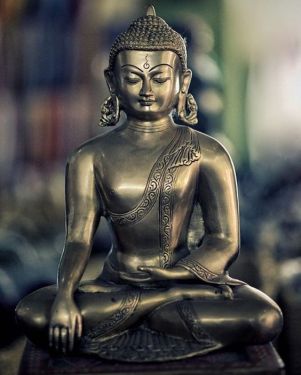
I’m reminded of a couple of quotes attributed to Buddha. The first – “Holding on to anger is like drinking poison and expecting the other person to die.”  This makes me want to do something useful or productive with my anger. I know, realistically this anger is not going to go away until the talk of hate and the hate crimes themselves go away. Thus, I continue to write and become more politically active, supporting human rights campaigns, news sources and political leaders whom I believe can help to bring about a more tolerant, inclusive society.buddha

The other quote from Buddha is one which I must apologised for even quoting. It’s a hackneyed line, having appeared on posters, bookmarks and Facebook pages for years.  Buddha said, “Hatred does not cease by hatred, but only by love.” I’m not a big enough human being to feel love for the hatemongers, but I can focus my energy away from my own anger and hatred to love and compassion for those who are victims of hate – whether verbal attacks or actual crimes – or subtle references which elude public condemnation, but work passively to alter mindsets.

It’s hard to imagine now, but I’d like to believe that in time the hate bandwagon will lose most of its followers and its cargo – or lose its momentum with one wheel after another falling off to a point where it can no longer parade down our roads. Idealistic? Perhaps, but worth aiming for.

Girl Flies

Occasionally, the death of a stranger can haunt us.

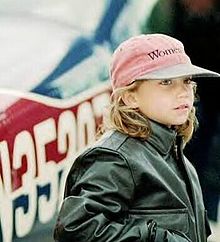
It was 1996, a time when most of my mornings were spent with my housemate Adonica in Seoul, South Korea. We would eat breakfast in front of the TV and watch CNN – the American edition for the US GIs. One news story that had us captivated was about Jessica Dubroff, an American child pilot. The seven-year old personified cute in her aviator’s leather jacket and her pink baseball cap, which, slightly too large, made her ears stick out between strands of stringy hair. The reporter explained how Jessica – aiming for The Guinness Book of World Records as the youngest pilot – had been flying across the United States in a Cessna Cardinal 177.

Her adult flight instructor was, legally speaking, ‘the pilot.’ But little Jessica sat in the pilot seat at the controls at all times. Her father sat in the back seat, supposedly cheering on his little girl. But I had also imagined him talking sports with the pilot during the long stretches of uneventful sky. The father had planned stops along the way, where television cameras, reporters and well-wishers were there to greet his daughter – the star attraction.

At the start of her journey, the girl was bubbly and excited about the trip and precocious in her knowledge of how planes worked. A few days into her voyage, Jessica appeared again on television, her face morphed into a droopy, pale mask, a forced smile. Between clenched teeth, she chirped, ‘It’s been a long day. I can’t wait to sleep. I had two hours of sleep last night.’

A couple of days later, we awoke to the news that Jessica had died. The Cessna with the seven-year-old pilot, her instructor and father crashed soon after take-off. There were no survivors.

It seemed that the cargo of gifts from Jessica’s fans, along with severe weather conditions, may have caused the plane to be out of balance, leading to confusion in the cockpit. The exact cause wouldn’t be known until an investigation was completed. Adonica and I talked about being shocked and not surprised at the same time. The shock was in being presented with a lightweight, good-news story that went terribly wrong – not the usual ending for such human-interest news. But not surprised as the risks were obvious and the girl we last saw was tired. Therein lies the sense of guilt. We were being entertained by a situation that we knew was endangering the life of a child.

Eyewitness accounts described how the plane flew some 300 yards, tilted and jerked and fell nose first into the ground. One witness had remarked, ‘Went into the ground like a dart.’ I envisioned Jessica in her pink baseball cap, panicking and screaming, tears rolling down a reddened face – the instructor trying to calm her and stop the plane going out of control. My imagination was shamelessly adding to the entertainment value.

A few weeks after the accident, The Guinness Book of World Records decided to stop the ‘youngest pilot’ category for fear of encouraging unsafe flights. A month after Jessica’s accident, investigators concluded that the ‘pilot’ was to blame for the crash because it was his/her decision to take off in bad weather. As the legal pilot was the instructor, some have seen it as his fault; as Jessica was the actual pilot in charge of the aircraft, others see her as culpible. The investigators also believed that ‘fatigue’ and ‘media attention’ may have contributed to an ‘improper decision’ to fly in such conditions. In other words, Jessica was simply too young to fly.

Years later, I still think about Jessica – the novelty of the story, the shock, the guilt and the sadness for this little girl I didn’t even know. Yet, memory can play tricks. I’ve wondered if it happened as I remember it. I scanned the archives and first found stories about Jessica’s flight at the start of it all – about a little girl with a big dream. In the CNN files the story was simply entitled ‘Girl Flies.’ I stopped myself there from searching any further.

Immigration Novels

I recently read Akhil Sharma’s Family Life about an Indian family who move to America only to find themselves dealing with tragedy – a son who becomes an invalid. It’s a beautifully written novel that manages to make misery entertaining. As much of this entertainment comes from the young narrator acclimatising to an alien culture, it’s had me thinking about other immigration literature.

Over the years, I’ve read countless books, fiction and non-fiction, about people who move from one country to another. Some stories are about the journey and the personal transformation that takes place when one lives in a different culture, while others pick up on the characters already living in their new country but being identified as immigrants. Before doing what every modern writer does – browsing a subject online – I considered my own list of favourite immigration novels. The firsts to come to mind were My Antonia by Willa Cather about a Czech community settling in Nebraska and Native Speaker by Chang Rae Lee about Koreans in California. I confess that the Lee book might be particularly memorable as I read it when I was living in South Korea, experiencing the flip-side. Also on my personal list are Jhumpa Lahiti’s The Lowland, Cristina Garcia’s Dreaming in Cuban, Andrea Levy’s Small Island and David Guterson’s Snow Falling on Cedars.28286-2013-edbl-chang-rae-lee-613x463

When I searched online for immigration literature I found books from my list alongside some unlikely choices – Steinbeck’s The Grapes of Wrath (I guess it’s immigration though within one country) and Nabokov’s Lolita (Humbert being the immigrant, though hardly the point in my opinion). Another book that appeared on one list was Husseini’s The Kite Runner, which I struggle to see immigrant fiction. So much of it takes place in Afghanistan and it doesn’t stick in my mind as a story about culture clash or transformation.

I’m sure I’ve left books out, and I am aware of the tendency of such lists, including my own, to be about people moving to countries like America and Britain. Immigration literature could include westerners moving to other lands – that’s another blog, as is immigration poetry.

Identity in the age of Brexit

‘Where are you from?’ That is a question I get asked too often in the UK. If it’s from a complete stranger, I might say, ‘Mars.’ If it is someone who has already shown hostility towards me either because of my accent or because I’m wearing a pro-EU t-shirt, I say. ‘I’m from a country where it is considered impolite to ask people where they’re from.’

The problem with admitting where I’m from is that people assume I identify myself with my country of birth and what they think people from that country are like. This triggers a slew of assumptions about how I was raised, my political views, my faith, my class – all based on stereotypes – and most of them negative and miles off the mark. Making such assumptions are about turning individuals into members of a group and even with the most flattering of outcomes, individuality gets lost.

So, where am I from? I was born and raised in Chicago. But what identity do I ascribe to myself? Identity is a rather fluid concept and we all have multiple identities depending on what we’re doing and what context we’re talking about. Ethnically, I’m Italian-American. Legally, I’m American-British. Though if I were to pursue the paper trail, I can get an Italian passport and become legally Italian-American-British. I’ve spent most of my adult life in Britain and gaining my UK citizenship was a conscious act, as opposed to the Italian-American accident of my birth. I identify myself as more British than American as a result. This is not necessarily a good thing. Since Brexit, the Stupid American stereotype has been kicked aside by the Stupid Briton stereotype.

Seriously, since the EU Referendum, there’s been a lot of talk about identity and whether British people see themselves as European. As a British person, I personally do. But I’ll never forget when I first arrived in Britain in 1984. My fellow students, the British-born ones, referred to the rest of Europe, i.e. not Britain, as either ‘the continent’ or as ‘Europe’. I found this baffling. At school I was taught that the UK is part of the European Continent. At first I just thought that this was a linguistic tick, an abbreviated way of saying ‘continental Europe’ – the countries that were not on our little island. But it seems deeper than that as the debates around the referendum have illustrated. It appears that many British people see themselves as not European. Some say this is due to the geography of the British Isles being separate from the mainland of continental Europe. Do people in Greece and Malta refer to the rest of Europe as ‘Europe’ and question whether or not they are European? British separation from the rest of Europe is not just geographical, but deeply entrenched in imperial history and twentieth century politics.

The EU Referendum has also brought up the issue of immigration. I complicate matters more by identifying to myself as an ‘immigrant.’ I wish I had a five-pound note for every time someone has displayed shock at this. Perhaps Americans (which is how I’m perceived) are not allowed to be immigrants because they are from a country known for its accepting of immigrants and people outside the US seem to struggle to understand that anyone would want to emigrate away from it. Millions of Americans live permanently overseas. Many artists, writers, musicians prefer the lifestyles abroad, especially in Europe. Other Americans living abroad include teachers, scholars, aid workers and business people who fall in love with a foreign place and/or a foreign person. I have many reasons for emigrating from the US, including all of the above mentioned. To these I add escape from my dysfunctional family and national, humane healthcare.

There is the other, more unsavoury, possibility that people who have problems accepting that Americans can be immigrants in the UK reserve the ‘immigrant’ label for the ‘other’ – the non-white person or the person for whom English is not a first language. While not everyone who voted to leave the EU is a racist, it is clear to anyone living in Britain these days that the Brexit result has empowered the racists and xenophobes in this country.

I cannot change where I’m from, nor can I do much to change people’s negative stereotypes. Before the EU Referendum, I was more likely to identify myself as a writer, amateur golfer, woman, activist, half of a husband-wife team and a linguist before I would identify myself as Italian-American-British. Now, in the muddle of ethnicity and identity brought on by Brexit, I’m shirking further away still from any sense of ethnic identity.

The Girl on the Train

In brief – a good thriller, but not a very good novel. It had all the page-turning qualities of a competent thriller, even though I suspected I knew whodunit about two thirds of the way in. Paula Hawkins’ novel is well written, a crisp prose with believable characters. But it is only just a thriller and as such at times I felt as if I were reading a detailed treatment of a screenplay. While that’s all fine for the thriller genre, this book doesn’t extend beyond that. In contrast, the Stieg Larsson books made for good thrillers and good novels. They explored social ills in Sweden, such as violence against women, while giving its readers thriller plotlines. So too with Gillian Flynn’s Gone Girl, which combined thriller with social satire. Once again, I’m left wondering what all the fuss is about.

The Colour of Milk

A deceptively simple book, The Colour of Milk is a story about a poor farm girl in the mid-19th century. Mary is sent away to earn money for her family working as a carer to the vicar’s invalid wife. There Mary learns to read and write. In the meantime her sister, still working on the farm, becomes pregnant by the vicar’s son, who escapes responsibility – and gets away with it. After the vicar’s wife dies, Mary experiences abuse. The treatment of women and the poor serves as the backdrop to this tale about empowerment. While the story might not be the most original, it is a worthwhile read just for the voice and lively expression of the first person narrator.

Essay: Matthew

Everything is an illusion. We live in the world of illusions. – Matthew

During my childhood, my mother was a devotee of self-proclaimed psychics and mystics like Uri Geller. She was part of the New Age movement in the seventies that saw signs in coincidences and spoke to spirits over Ouija boards. In this environment, it’s no surprise that I actually believed that I was psychic. A typical child, I was intuitive and good at guessing and saw things that adults missed because they were too busy looking. Whenever I had a psychic moment I would share it with my mother and she would beam with pride.

When I was twelve, my mother befriended Carla, a spiritual medium who lived in our neighbourhood in Chicago. On summer afternoons when I was off from school, my mother would suggest visiting Carla, in part because she had air-conditioning and we didn’t. I would have lemonade, my mother and Carla iced tea. We would talk about the latest films, pop music and the way clothes’ styles were changing. All of a sudden our chatter was interrupted – Carla’s voice would drop two octaves as her spirit guide, John, spoke through her. He used biblical language and advised us in ways that sounded to me suspiciously like the horoscope pages. ‘Worry not about the future for it is full of mystery. It is best to wait for things to come.’ That was one of John’s pearls of wisdom. My mother would nod profusely and thank John for talking to us. John would leave and Carla would go limp like a ragdoll and get back her energy with another iced tea and chocolate donut.

While I was out with friends, my mother would visit Carla on her own. I always learned about these meetings afterwards and, even though I had my doubts about John, I felt excluded. I was at that age where I needed to belong to one group or another.

By the end of that summer, I countered Carla’s John with Matthew – a name chosen to fit my mother’s Christian-spirituality phase. I would get an idea from one of her books or from a self-help coach on daytime television and attribute it to my spirit guide Matthew. Once he said, “The peoples of the world will have peace when they find inner peace.” And another time it was “All things are beautiful in themselves,” purloined from Kahlil Gibran. But I couldn’t bring myself to put on a fake baritone voice. I didn’t need to. Anytime I quoted Matthew, I became my mother’s best friend – mission accomplished.

Unlike my early childhood with psychic moments, I never believed that I was or could ever become a spiritual medium. By this time, Uri Geller had been debunked on national television when he couldn’t divine where objects were hidden or bend any spoons. And in sitcoms and films, the psychic charlatan became a stock character set up for mockery.

Within a year, I had grown up to appreciate my own friends more and the need to belong less. Feeling guilty for taking advantage of my mother’s gullibility, I gently phased Matthew out. I would tell her that I simply hadn’t heard from him as if he were an old friend who didn’t keep in touch.

Years later when I was in my thirties, visiting my mother, she asked if I was still psychic, like I was as a child. I explained that I was still intuitive and good at guessing, but that I didn’t see those things as psychic anymore – and there were plenty of times when my feelings and hunches proved terribly inaccurate.

I could tell that my response disappointed her.

“Have you heard from Matthew?”

“No,” was all I said.

Until the end of her life, my mother still consulted psychics and mystics – and believed her daughter once channelled a spirit named Matthew.