As soon as I crawl into bed, I set my watch to sleep mode. Every morning, somewhere between Le Monde and the puzzles in The Independent, I check my health app for my previous night’s sleep scores.
At first, seeing how much sleep I really got, and how much was deep sleep, light sleep or REM sleep, was fun and mildly interesting, but nothing to be taken too seriously. That is, until I started to notice patterns. On nights where I haven’t had any alcohol, I tend to sleep better. I also noticed that the day following a night of more deep sleep, I tend to write and edit more quickly, and I’d like to think with better results.
Armed with this information, I’ve changed some habits. I generally drink less alcohol, and when I do, it’s early in the evening and never close to bedtime. I’ve also started doing a short spell of yoga (twenty minutes) in the late afternoon. Before you think I’m tooting my own virtuous horn, I should point out that this is less about virtue and more about being extremely self‑competitive and goal‑oriented – the health app feeds off people like me. And there’s a downside – my tendency to spin into self-loathing when I haven’t achieved my goals. I’m trying to re-wire my brain on that score.
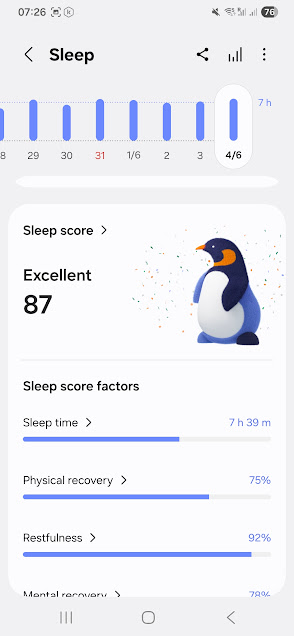
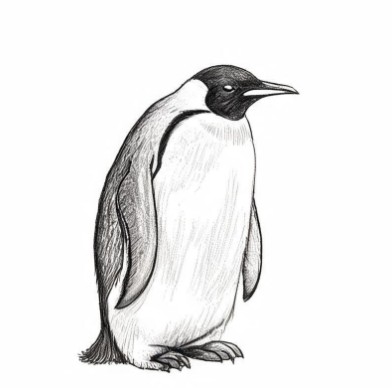
I’ve also taken from this the idea of identifying with the sleep patterns of animals. In its whimsical way, after the first week of recording my nightly sleep, the app describes what type of sleeper I am. Instead of the boring old ‘levels’, the watch wearer is assigned an animal from a typology of eight. I’m a penguin. According to the app, ‘To protect their eggs, penguins remain alert and watchful even while they sleep and keeping a regular schedule, but they tend to wake up too often at night.’ This is me to a T – minus the eggs. Since I’ve left fulltime employment and am no longer writing to someone else’s deadline, I’ve kept a regular schedule of getting to bed around eleven most nights. Waking up often during the night goes back to my earliest memories. Night‑time guard duties probably began with childhood fears, including a bout of neighbourhood arson attacks that always happened at night. Later came wakefulness over being criticised at home (my family’s preferred mode of communication), and in my working life, the buzzing after a busy day or the disentangling of a problematic one. I confess that the troubled world of recent years has also interrupted my z‑time.
Despite these human differences, I welcome the penguin metaphor. They’re adorable creatures – birds that can’t fly, but they’re great swimmers. I also like the idea of zoomorphising (the opposite of anthropomorphising) as it stems from shared characteristics and unites living creatures. While many sports personalities have been called sharks and tigers and other ferocious animals, I prefer the gentler analogies – according to a collection of letters between Virginia Woolf and her sister Vanessa Bell, Virginia was a monkey, Vanessa a dolphin and their younger brother Adrian, a wombat.
I don’t know what science these health apps are based on. I suspect it’s a bit of peer-reviewed research mixed in with folk medicine. Nonetheless, the importance of sleep cannot be overstated. Long before medical science and digital technology, Shakespeare had the right idea:
‘Sleep that knits up the ravelled sleeve of care,
The death of each day’s life, sore labour’s bath,
Balm of hurt minds, great nature’s second course,
Chief nourisher in life’s feast.’ (Macbeth, Act 2, Scene 2)
I know I’m not alone in this interest, this somnophilia. Only last week, I heard someone on radio say that sleep monitoring was the latest health craze. I guess, even this penguin can be trendy.
What I’ve been reading
Ali Smith never disappoints. Set in a dystopian near future, her novel Gliff follows the lives of two sisters in their early teens as they navigate alone in a fractured society. This society is a totalitarian Britain, where the girls’ family has been categorised as ‘Unverifiable’ – a cultural underclass. As such they have had their home outlined with red paint and later bulldozed. The story is narrated by the older sister, Bri, who is resourceful and rebellious, but most importantly (for this linguist-reader) she’s curious about language in a geeky way that helps to frame our disjected understanding of this brutal, bureaucratic and surveillance obsessed world. Gliff is the name of a horse the sisters manage to acquire. Gliff has many meanings including a brief glance, a sudden fright or a fleeting moment. The horse becomes a metaphor for freedom and resistance, and at the same time – because the word carries so many meanings – it gestures toward the polysemy of our possible futures. It’s a warning of what may come if technology is used in such ways.
Though not intended, it seems this blog has an animal theme. Whether imagined or real, literal or metaphorical, they live in symbiosis with us.


A penguin. I love it. I don’t have a watch with this kind of app, but I would hazard a guess that I am a cat kind of sleeper. Very light sleep, need to have door and window within sight, and need two sleeps a day.
LikeLike