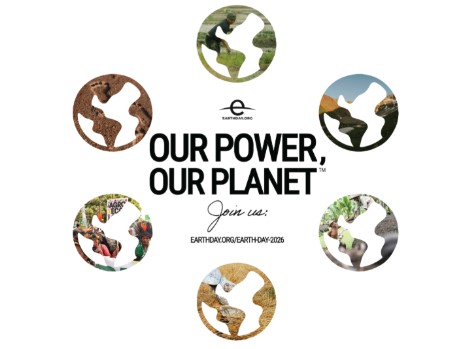
According to current online sources Earth Day 2026 has the global participation of over 193 countries, with ‘major involvement from workplaces, educators, environmental organisations, and local communities.’ Really? I’m not seeing any of this. Perhaps if I worked in a primary school, I’d witness the classic scenes of children picking up litter with metal claws. But in my actual local community, those scenes remain imaginary. Tree‑planting and recycling initiatives do happen, but sporadically, and not in any way tied to April 22. This is true of my life in France as much as in the UK. Even the French – for whom demonstrations are practically a civic pastime – seem to have skipped organising anything for Le Jour de la Terre this year.
It’s not just 2026. During my four years (2019-2023) as a Councillor in regional government in the UK, Earth Days past without notice. In recent years, I haven’t received emails from organisations, like Friends of the Earth or Greenpeace, announcing some sort of action, rally or demonstration. Last night and this morning, I checked the only two socials I still bother with – LinkedIn and Blue Sky – and found exactly one post acknowledging Earth Day. Thank you, António Guterres.
On April 22, 1970, 20 million Americans poured into the streets to support the first ever Earth Day. To date, it’s the largest demonstration in US history. In the intervening 56 years, a lot has happened to the green movement, good and bad, encouraging and soul-destroying. Today we are at a peak of awareness of the sorry state of our planet and simultaneously witnessing a growth of climate-change deniers and political backsliding. Governments and powerful actors are reversing gains that once felt irreversible.
I entitled this blog ‘Who Killed Earth Day?’ as an homage to the documentary ‘Who Killed the Electric Car?’ This 2006 film examined how the first modern electric cars (especially GM’s EV1) were created, briefly succeeded, and then abruptly withdrawn from the market. It argued that a combination of corporate, political and regulatory forces in the US contributed to the electric car’s demise. The parallels don’t need to be spelled out.
But if we extend the analogy, there’s room for cautious hope. Electric vehicles did return. In fact, global EV sales rose 20% last year. I learned this last night, ironically while searching for Earth Day activities and finding none. An email arrived from the New York Times – the Climate Forward newsletter – where David Gelles, in honour of Earth Day, shared a handful of encouraging stories, including: rising EV sales, and EU gas emissions dropping another 3%, now 40% below 1990 levels. Not the call to action I was looking for, but a necessary reminder that progress isn’t entirely stalled. A sprinkling of hope.
What I’ve been reading
I first discovered Octavia Butler’s Kindred when I had to review a research article about the novel. With no time to read it before the review was due, I relied on internet summaries, academic papers and my background in literary theory to critique the article’s publishability. That was enough to pique my interest and make me order the book from the public library. Good thing – a few weeks later, another article on Kindred appeared in my in-tray. Like the first article and ones that I encountered in my research, the themes of race and gender are central in analysing this time-traveller story. The present day of the story is 1976 America, where Dana, a Black woman, is repeatedly pulled back to a southern plantation in the 1800s to save the life of her white ancestor, Rufus. Dana must keep Rufus alive long enough for him to father her great‑great‑grandmother Alice, a free Black woman who is later forced into slavery. Dana has no choice but to confront slavery and womanhood not as history, but as lived reality. No spoilers here. I’ll just say that it’s a compelling, well‑crafted page‑turner, and its social commentary makes it fertile ground for literary theory.
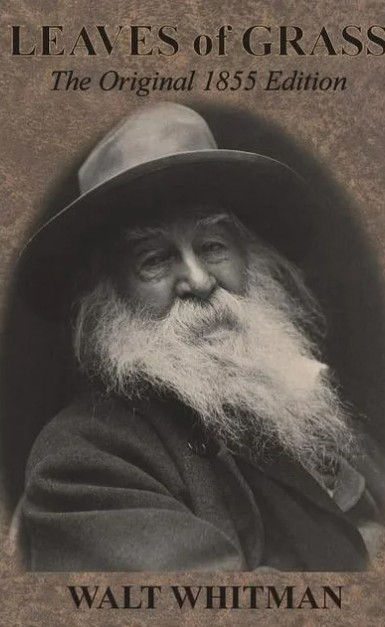
My bedtime read has me emersed in the poems of Walt Whitman. I read Leaves of Grass as a teenager and kept the paperback until the jaundiced pages started falling out. I still relish his free-verse expansiveness and the way his ideas about the self intertwine with nature. I imagine Whitman as an early environmentalist – though the word ‘environmentalist’ in the ecological sense didn’t come along until in the early 1970s – around the time of the first Earth Day.


