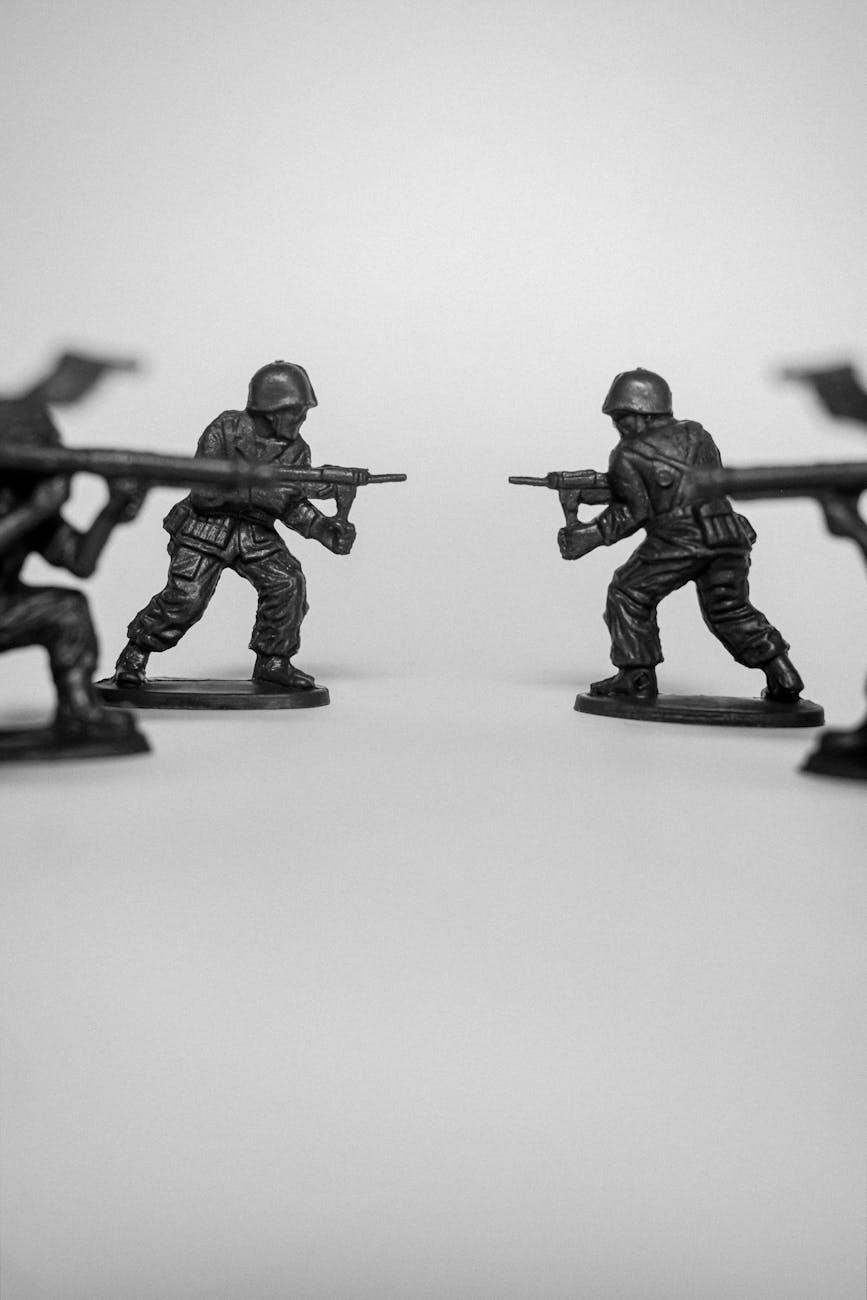
In linguistics we have the concept of framing to help explain how our brains move from word to meaning. The word war, for instance – one that has been on my mind and probably yours these days – instantly activates a frame of images and emotions – buildings blowing up, casualties, refugees, skies filled with grey planes, alongside feelings of fear and outrage. The word in isolation conjures up all of these things.
Frames are a convenient way for linguists to illustrate how encyclopaedic meanings work and how we create typical contexts when we see or hear certain words. The reality is that modern warfare and the reporting of it in Ukraine and the Middle East challenge the simplification effects of narrative frames. As drones and AI-generated war strategies reduce the number of boots on the ground, the familiar war narratives could give the false impression that these are ‘war-lite’ events.
Another example – The blocking of the Strait of Hormuz is being treated by the current US Administration as breaking the rules of war – that is, not fitting into the established war frame. Yet blocking shipping lanes as a war strategy is nothing new. Consider the British naval blockade during World War I, where maritime access was deliberately cut off to starve the Germans and weaken their economy.
This leads me to another point: the war frame also needs to include the lies of war. This too, is nothing new. In the 5th century BC, the Greek playwright Aeschylus is reported to have said, ‘In war, truth is the first casualty.’ The lies surrounding today’s wars are further complicated by an unlikely and prolific source – the President of the United States – and by the 24-hour news cycle – a melange of mainstream sources, podcasts and social media, pumping out falsehoods, verified reports and bias commentary simultaneously.
Given the war-induced tragedies unfolding before us, the best that I can offer for now is linguistic awareness. Naming and framing shapes not only how we understand – and misunderstand – events, but how we imagine their end.
What I’ve been reading
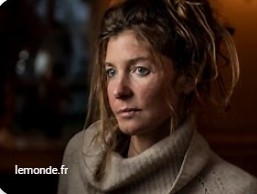
I found Nastassja Martin’s Croire aux fauves (called In the Eye of the Wild in its English edition) in the fiction section of the Menton library. While this book reads as literary fiction, rich in descriptive detail and figurative language, it turns out to be a memoire. In fact, The English publisher categorises the book as ‘Anthropological memoir/nature writing.’ However you label it, it’s a story well worth reading. Martin is a Russian French anthropologist who, while conducting research in the volcanos of Kamtchatka (the far east region of Russia), was brutally attacked by a bear and left seriously disfigured. The story starts with her admission to a Russian hospital and carries the reader through multiple operations, a transfer to a hospital in Paris, visits from horrified family and friends, more surgeries and eventually her return to the place where it all happened. While these events are taking place, Nastassja relives the attack, acutely aware of how it has altered her relationship with bears and seeing herself as a bear-woman – an idea drawn from Russian mythology. Upon returning to Russian, she discovers that her story had been reported in the news as a woman being attacked by a bear. But she understands it as ‘a bear and a woman meet and the boundaries between them implodes.’
Staying with the themes of hospitals and life-changing events, Rachel Clarke’s The Story of a Heart tells the real-life story of a heart transplant given to a 9-year-old boy. The book chronicles the medical and emotional events for the young recipient, the tragically young donor and their families. I wasn’t certain at first if I would like this nonfictional account having read Maylis de Kerangal’s masterfully written novel Réparer les Vivants on the same subject – which I blogged about. But I was pleasantly surprised. Running alongside the present-day drama, Clarke delves into the history of heart transplant medicine and the treatment of ill children, revealing some astonishing – and disturbing – facts. While her writing might lack the narrative complexity and metaphors of de Kerangal’s work, Clarke has flare and moments of panache: ‘No other part of the human body comes close to matching the metaphorical richness of the human heart. Hearts sing, soar, race, burn, break, bleed, swell, hammer and melt. They can be won or lost, cut or trampled, and hewn from oak or stone or gold.’
Away from wars and hospitals, I’ve been finding moments of introspection in a linguistically ludic poem by Mark Tardi, Eventual Horizon. Two points to make here: 1) I know Mark personally as we worked together at the University of Nizwa in Oman – yet another way of getting introduced to new poetry and a talented poet. And 2) Notice my phrasing above, ‘I’ve been finding…’, is in the present tense. Reading poetry – this poem in particular – involves rereading, thinking, experiencing and rereading again. With each reading, I suspect I am constructing new frames, only to dismantle them once more.

 Paola Trimarco